Volume: 16 Issue: 4 August 2018
FULL TEXT
Objectives: The low rate of consent by next of kin of donor-eligible patients is a major limiting factor in organ transplant. Educating health care professionals about their role may lead to measurable improvements in the process. Our aim was to describe the developmental steps of a communication skills training program for health care professionals using standardized patients and to evaluate the results.
Materials and Methods: We developed a rubric and 5 cases for standardized family interviews. The 20 participants interviewed standardized families at the beginning and at the end of the training course, with interviews followed by debriefing sessions. Participants also provided feedback before and after the course. The performance of each participant was assessed by his or her peers using the rubric. We calculated the generalizability coefficient to measure the reliability of the rubric and used the Wilcoxon signed rank test to compare achievement among participants. Statistical analyses were performed with SPSS software (SPSS: An IBM Company, version 17.0, IBM Corporation, Armonk, NY, USA).
Results: All participants received higher scores in their second interview, including novice participants who expressed great discomfort during their first interview. The participants rated the scenarios and the standardized patients as very representative of real-life situations, with feedback forms showing that the interviews, the video recording sessions, and the debriefing sessions contributed to their learning.
Conclusions: Our program was designed to meet the current expectations and implications in the field of donor consent from next of kin. Results showed that our training program developed using standardized patient methodology was effective in obtaining the communication skills needed for family interviews during the consent process. The rubric developed during the study was a valid and reliable assessment tool that could be used in further educational activities. The participants showed significant improvements in communication skills.
Key words : Standardized patient, Communication skills, Family interview, Organ procurement coordinator
Introduction
Organ transplant is the best option for end-stage organ diseases, offering a better quality of life. However, the low rate of consent from next of kin (NOK) of donor-eligible patients is a major limiting factor in the process. Although the demand for organ transplant has increased 70% during the past decade, consent rates are still 20% to 60%.1,2 The modifiable factors associated with the consent process are information discussed during the request, perceived quality of care of the donor, understanding brain death, specific timing of the request, setting in which the request is made, and the approach and skill of the professional in making the request.3 The consent process for organ and tissue donation is multifaceted and highly technical, not only for NOK but also for health care professionals.
It is widely acknowledged that doctors and nurses find it difficult to deal with death and dying. Conveying bad news, having to explain brain death, and approaching the NOK for permission to retrieve organs for donation all place considerable demands on these individuals. Lack of training in communication skills has been identified as an important barrier during the consent process. Experience and training can enhance confidence in approaching the NOK and can improve their manner in making donation requests.1,4
Educating health care professionals about the criteria for organ and tissue donation and underlining their role in making the request may lead to measurable improvements in the process. Initiatives designed for this purpose should include a combination of educational methods tailored to the working circumstances of the health care participants, which would allow maximal transfer to the health care professional’s work routine.5 Experiential teaching methods could be used to reinforce principles of good practice in the organ procurement process, allowing training participants the opportunity to apply these principles within simulated environments.
Two programs have been developed in Europe to address the educational needs of health care professionals involved in organ consent: the European Donor Hospital Education Programme (EDHEP) and the Transplant Procurement Management Courses. The European Donor Hospital Education Programme, initiated by the Eurotransplant International Foundation in 1991, is a highly interactive, 1-day workshop consisting of different working formats, including role playing with simulated relatives. The European Donor Hospital Education Programme has been implemented in over 30 countries and has been translated into 17 languages.1,4,6 The Transplant Procurement Management Course, also developed in 1991, has offered Spanish participants various levels of courses based on a learning-through-experience model of meeting local educational needs.7
Despite the comparative success of these training programs, the continued worldwide shortage of donor organs has led many countries to develop national systems for organ procurement and allocation. These systems comprise various combinations of legislation, organizations, training programs, publicity campaigns, and the appointment of a special workforce trained for this purpose.8 A member of this trained group of workers is the organ procurement coordinator (OPC), whose primary role is requesting organ donation from families of potential donors. The OPCs are trained to ensure that the legal NOK is provided the option of organ and tissue donation in a sensitive and caring manner and that the emotional and cultural needs of the NOK are met.9
In Turkey, the OPCs are graduates of health sciences schools (medicine, nursing, and social work) who have successfully completed a 40-hour face-to-face certification program. The Turkish Ministry of Health organizes the courses in collaboration with the Association of Organ Procurement Coordinators (AOPC), with the course hosted by a medical school or a training hospital and 20 to 40 participants invited to each course. The course consists of lectures, discussions, and role playing.
After a program evaluation in 2008, our group decided to implement new course sessions for OPCs to improve communication skills during the organ request process. The aim of this study is to describe the developmental steps and to evaluate the results of these sessions.
Materials and Methods
Study participants
Our study included 20 participants with different backgrounds and levels of
experience in organ procurement. Participants were informed about the study,
which had already been implemented in the course program. Participants provided
verbal consent to include their assessments and feedback forms in an anonymous
way for statistical purposes. Participants also provided written consent to
provide 6-month follow-up evaluations through e-mails about the effect of the
course on their professional development.
Rubric development
Our first step in developing an assessment tool was to identify from a
review of the literature important issues that arise during interviews with
families or NOK. The AOPC provided expectations received from coordinators while
interviewing families. Using these data, we defined the behaviors, tasks, and
responsibilities of an OPC during an interview with NOK, and 3 levels of
competency (unacceptable, acceptable, and successful). We preferred developing
an analytic rubric because the criteria were mostly comprehensive behaviors that
could be described in a phrase, sentence, or even a paragraph for each level of
competency. Thus, the raters had a better idea of what was to be evaluated
(Table 1). We sent the rubric to a group of experts from AOPC and asked the
experts to provide structured comments. Our group, medical educationists with
expertise in teaching and evaluating communication skills, next refined the
tool. Finally, we sent the rubric to course instructors for feedback. The
finalized rubric included 16 criteria (Table 2).
Case development
Developing the case is the initial step in standardized patient methodology.
We asked the members of AOPC for their experiences during interviews. Actual
cases and some scenarios used in previous role play sessions were included
during development. Five cases were developed, with each containing a primary
and a secondary challenging issue (Table 3). We sent the cases back to the AOPC
members for feedback. After confirmation, standardized patients were chosen and
trained to portray the cases.
Precourse questionnaire
We delivered a written questionnaire to the participants during the second
session of the course to identify whether participants previously had been
involved in a real family interview, to rate their level of competency with each
issue during the standardized patient encounters in the first session, and to
identify those issues that they need most improvement at the end of the course.
Program design
Participants were divided into 3 groups at the beginning of the course and
were invited to standardized family interviews in the first session. Cases were
appointed to participants according to the groups so that each participant could
review all of the cases during the group debriefing sessions. All interviews
were recorded. After participants completed the lecture and discussion sessions
of the course on clinical, ethical, administrative, and legal contents, they
participated in a debriefing session in the afternoon of the fourth day. They
watched the video recordings, discussed the challenging issues in each case, and
discussed the performance of each participant. Participants also reflected on
their performance during the interview, with other participants and the educator
providing feedback. During the debriefing session, all participants completed
the rubric for each participant for the precourse performances. During the
morning of the fifth and final day, all participants had their second
standardized family interviews, which was a different case from the first one.
Interviews were again recorded and discussed during the debriefing session in
the afternoon of the fifth day. The debriefing process and rubric evaluation for
the postcourse performance were held in the same way as for the precourse.
Feedback on standardized patient encounters
A feedback form was provided at the end of the second debriefing session
that asked participants to rate the standardized patient methodology using a
5-point Likert scale.
Validity and reliability of the rubric
We sent the rubric to a group of experts from AOPC and asked them to
evaluate the preliminary criteria with respect to content and construct
validity. The generalizability coefficient was used to evaluate the reliability
and the construct validity of the rubric. Generalizability theory extends
classic theory by estimating the magnitude of multiple sources of measurement
errors. Eighteen participants were assessed by 6 raters. For the equivalent of
interrater reliability, the facet of generalization is the rater. We estimated
variance components by using analysis of variance. We calculated the
generalizability coefficient using the formula for nested design.
Evaluation of the participants’ achievements
We calculated the mean precourse and postcourse evaluation scores from the 6
peer raters for each participant and used the Wilcoxon signed rank test for the
statistical analysis of their achievement.
Postcourse questionnaire
E-mails were sent to each participants (all participant signed the consent
forms) 6 months after the course to gather information about the effect of the
course on their practice.
Results
Precourse questionnaire
Participants had a wide range of experience regarding interviewing NOK (47% had
no experience, 29% had interviewed a few, and 24% had interviewed several).
During the first interview, the experienced participants rated themselves as
more competent than the novice participants, who felt very uncomfortable (Table
4).
Validity and reliability of the rubric
According to experts from the AOPC, the rubric had content and construct
validity. We evaluated the rubric as reliable and valid after calculating the
generalizability coefficient (σ12 = .801).
Evaluation of participants’ achievements
The performance of the participants was evaluated based on the mean score
from the 6 raters. All participants received higher scores for their second
performance. The increases in the subsequent scores for all participants were
statistically significant (Wilcoxon signed rank test; z score = 3.724; P
< .05).
Feedback on standardized patient encounters
The statements offered in the feedback form and the perceptions of the
participants on standardized patient methodology using the 5-point Likert scale
are shown in Table 5.
Postcourse questionnaire
Thirteen of 20 participants answered the questionnaire via e-mail at the 6-month
course evaluation follow-up. Participants noted from 2 to 8 family interviews
during this period, with increased consent rates at their institutions.
All of the participants expressed that the course had a positive effect on their daily practice, especially regarding skills acquired during the standardized family interviews (Table 6). Most participants suggested adding more experiential learning opportunities to the entire course program and especially more standardized family interviews.
Discussion
We developed a communication skills training program using standardized patient methodology for health care professionals who are in charge of the request process for organ donation. Our aim was to have participants with improved communication skills at the completion of training who felt more competent and confident in asking NOK for consent. We intended to overcome the dilemma of the high refusal rates from NOK. The latest studies on the organ procurement process have concluded that organ shortage continues to be a public health care crisis, and an inability to obtain consent from NOK remains a major factor limiting of organ donation.10-14
High level, complex training of health care professionals is a means to overcome this problem, and a number of programs introduced in North America and Europe over the past several years has sought to stimulate organ donation. Implementation of these programs has increased recovery rates; however, after a period of initial enthusiasm, a plateau or even slow recession subsequently occurs.10-12,14
As shown in previous analyses from various countries, the need for advanced educational opportunities and demands for training in communication skills using appropriate instructional methodologies continue for this group of health care workers.10-12,14-18 In line with the literature, our program is designed to meet the current expectations and implications in the field.
During program development, we determined the topics and interventional focuses by reviewing the literature and the experiences of our national experts regarding cultural diversity. Behavior and attitude during the NOK interview in explaining brain death, showing empathy while requesting consent, respecting the point of view of NOK, explaining the importance of organ donation, and replying to concerns from NOK (eg, regarding disfigurement, burial process, additional cost, appropriate organs, legal and religious implications) were addressed during program development. Our training program focused on communication skills, with theoretical content related to these issues provided during other sessions of the course program. Each topic chosen for our program has been mentioned in several studies as a problem to be overcome or has been a reason for family refusal.1,10,13,16 We used these topics from the literature to develop our assessment tool and our scenarios for standardized family interviews. In their evaluation of the rubric designed for assessment of family interviews, the experts from the AOPC and the educators of our course found content and construct validity in the rubric.
We developed 5 scenarios for standardized family interviews, each focusing on a primary and a secondary challenging issue. Standardized patient methodology was the best technique for helping participants to practice in an immersive and safe environment and for achieving improved communication skills. The use of standardized patients in case discussions, in role playing sessions and in practices have been shown to be preferred and effective instructional method in several studies.4,6,11,12,19-22 In studies conducted in US medical and nursing schools designed to increase the awareness of organ donation in undergraduate students, researchers used standardized patient methodology; however, the aim, content, and outcomes were completely different.19-22 The articles about EDHEP in the Netherlands, the United Kingdom, and Germany have described the use of simulated relatives during videotaped role playing. One-half of the participants were able to practice role playing, whereas the other one-half observed these interactions with predefined observation forms.1,4,6 Our unique training program using standardized patient methodology provided a real life-type environment and content for all of the participants to practice and to obtain feedback and for the educators to evaluate the interview performance of all participants before and after training.
According to the data from precourse feedback forms, some of our participants had the advantage of having family interviews before the course and were able to define their gaps. They provided feedback on standardized patient encounters after the second interview indicating that the scenarios and standardized patient performances were highly realistic. These participants agreed completely that the standardized patient methodology contributed to their learning. However, self-evaluation by participants regarding their confidence and competence at the end of the course should be supported with more objective evaluations, such as the assessment of their improvement or the integration of their performance into practice.
The participants’ pre- and posttraining interview performances were assessed by their peers using the rubric developed in our study. First, we evaluated the interrater reliability of this assessment tool. We calculated the generalizability coefficient as 0.801, which is acceptable. The mean scores of the participants from the 6 raters showed that participants had improved interview performances (P < .05). As a follow-up, we asked the participants whether the program affected their daily practice after a 6-month period. Participant response was positive regarding learned communication skills in family interviews.
A prospective study was conducted in the United Kingdom to determine the effect of EDHEP on communication skills, since EDHEP was designed as a workshop to improve donation awareness and did not include an objective evaluation process. The study included a 3-step evaluation process in an untreated control group design (pretest, posttest, and 6-mo follow-up). The participants did not receive any feedback on their interview performance during the process. The videotaped encounters for all steps were rated by 3 research assistants using the EDHEP communication skills assessment instrument. The generalizability coefficient for reliability was 0.81, and the participants rated the scenarios and standardized patient performances as realistic and acceptable. The authors concluded that attendance at EDHEP did lead to a significant improvement in some but not all communication skills.23 Although these results were almost the same as our findings, we concluded that our training program was more effective than the original EDHEP for a number of reasons: the original EDHEP did not include full participation of all participants, had only 1 session for standardized patient interviews, and had no evaluation process.
In conclusion, the training sessions we developed using standardized patient methodology was an effective program in improving communication skills needed for family interviews during the consent process. The program was rated highly by the participants. The rubric developed during the study was a valid and reliable assessment tool that could be used in further educational activities. The participants showed significant improvements in communication skills. Further investigations should be conducted to generalize the results for larger groups, as this study had the major limitation of being the pilot study on a small group.
References:
- Blok GA, van Dalen J, Jager KJ, et al. The European Donor Hospital
Education Programme (EDHEP): addressing the training needs of doctors and
nurses who break bad news, care for the bereaved, and request donation.
Transpl Int. 1999;12(3):161-167.
CrossRef - PubMed - Siminoff LA, Gordon N, Hewlett J, Arnold RM. Factors influencing
families' consent for donation of solid organs for transplantation. JAMA.
2001;286(1):71-77.
CrossRef - PubMed - Simpkin AL, Robertson LC, Barber VS, Young JD. Modifiable factors
influencing relatives' decision to offer organ donation: systematic review.
BMJ. 2009;338:b991.
CrossRef - PubMed - van Dalen J, Blok GA, Morley MJ, et al. Participants' judgements of the
European Donor Hospital Education Programme (EDHEP): an international
comparison. Transpl Int. 1999;12(3):182-187.
CrossRef - PubMed - Sanson-Fisher R, Cockburn J. Effective teaching of communication skills
for medical practice: selecting an appropriate clinical context. Med Educ.
1997;31(1):52-57.
CrossRef - PubMed - Muthny FA, Wiedebusch S, Blok GA, van Dalen J. Training for doctors and
nurses to deal with bereaved relatives after a sudden death: evaluation of
the European Donor Hospital Education Programme (EDHEP) in Germany.
Transplant Proc. 2006;38(9):2751-2755.
CrossRef - PubMed - Paez G, Valero R, Paredes D, et al. Evaluation of transplant procurement
management courses: an educational project as a tool for the optimization of
transplant coordination. Transplant Proc. 2003;35(5):1638-1639.
CrossRef - PubMed - Cohen B, Wight C. A European perspective on organ procurement: breaking
down the barriers to organ donation. Transplantation. 1999;68(7):985-990.
CrossRef - PubMed - The Organization for Transplant Professionals. NATCO Core Competencies for the Procurement Transplant Coordinator. Oak Hill, VA: NATCO; 2009.
- Salim A, Berry C, Ley EJ, et al. In-house coordinator programs improve
conversion rates for organ donation. J Trauma. 2011;71(3):733-736.
CrossRef - PubMed - Jansen NE, van Leiden HA, Haase-Kromwijk BJ, et al. Appointing 'trained
donation practitioners' results in a higher family consent rate in the
Netherlands: a multicenter study. Transpl Int. 2011;24(12):1189-1197.
CrossRef - PubMed - Kosieradzki M, Czerwinski J, Jakubowska-Winecka A, et al. Partnership
for transplantation: a new initiative to increase deceased organ donation in
Poland. Transplant Proc. 2012;44(7):2176-2177.
CrossRef - PubMed - Vincent A, Logan L. Consent for organ donation. Br J Anaesth. 2012;108
Suppl 1:i80-87.
CrossRef - PubMed - Manyalich M, Guasch X, Paez G, Valero R, Istrate M. ETPOD (European
Training Program on Organ Donation): a successful training program to
improve organ donation. Transpl Int. 2013;26(4):373-384.
CrossRef - PubMed - Eide H, Foss S, Sanner M, Mathisen JR. Organ donation and Norwegian
doctors' need for training. Tidsskr Nor Laegeforen. 2012;132(10):1235-1238.
CrossRef - PubMed - Smudla A, Mihaly S, Hegedus K, Nemes B, Fazakas J. Help, I need to
develop communication skills on donation: the "VIDEO" model. Transplant
Proc. 2011;43(4):1227-1229.
CrossRef - PubMed - Konaka S, Shimizu S, Iizawa M, et al. Current status of in-hospital
donation coordinators in Japan: nationwide survey. Transplant Proc.
2013;45(4):1295-1300.
CrossRef - PubMed - Jelinek GA, Marck CH, Weiland TJ, Neate SL, Hickey BB. Organ and tissue
donation-related attitudes, education and practices of emergency department
clinicians in Australia. Emerg Med Australas. 2012;24(3):244-250.
CrossRef - PubMed - Feeley TH, Tamburlin J, Vincent DE. An educational intervention on organ
and tissue donation for first-year medical students. Prog Transplant.
2008;18(2):103-108.
CrossRef - PubMed - Anker AE, Feeley TH, Friedman E, Kruegler J. Teaching organ and tissue
donation in medical and nursing education: a needs assessment. Prog
Transplant. 2009;19(4):343-348.
CrossRef - PubMed - Feeley, TH, Anker AE, Soriano R, Friedman E. Using standardized patients
to educate medical students about organ donation. Commun Educ.
2010;59:249-262.
CrossRef - Bramstedt KA, Moolla A, Rehfield PL. Use of standardized patients to
teach medical students about living organ donation. Prog Transplant.
2012;22(1):86-90.
CrossRef - PubMed - Morton J, Blok GA, Reid C, van Dalen J, Morley M. The European Donor
Hospital Education Programme (EDHEP): enhancing communication skills with
bereaved relatives. Anaesth Intensive Care. 2000;28(2):184-190.
PubMed

Volume : 16
Issue : 4
Pages : 481 - 487
DOI : 10.6002/ect.2015.0131
From the 1Department of Medical Education and Informatics,
Hacettepe University Faculty of Medicine, Ankara, Turkey; the 2Office
for Organ Donation and Transplantation, Medipol University Hospital, Istanbul,
Turkey; the 3Department of Urology, Hacettepe University Faculty of
Medicine, Ankara, Turkey; and the 4Organ Donation Master’s Program,
Bilim University Institute of Health Sciences, Istanbul, Turkey
Acknowledgements: The authors declare no funding or sponsorship for this
study and have no conflicts of interest to declare. The preliminary results of
this study were presented as the report of “research in progress” at 8th Annual
Conference of Association of Standardized Patient Educators in 2009.
Corresponding author: Melih Elcin, Department of Medical Education and
Informatics, Hacettepe University Faculty of Medicine, Sihhiye Campus, 06100
Ankara, Turkey
Phone: +90 312 305 2617
Fax: +90 312 310 0580
E-mail: melcin@hacettepe.edu.tr
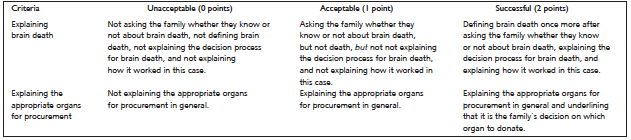
Table 1. Phrases Describing the 3 Levels of Competency for 2 Samples of the Criteria of the Rubric
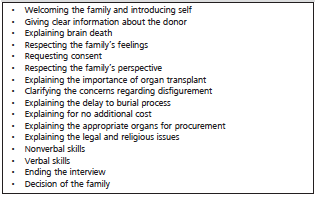
Table 2. Criteria Evaluated in the Rubric
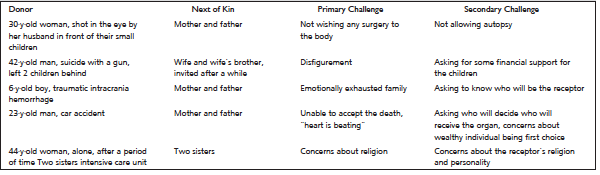
Table 3. List of Scenarios, Description of Next of Kin, and Challenges of Each Case
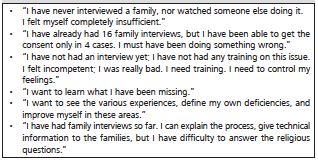
Table 4. Narrative Statements From the Precourse Questionnaire
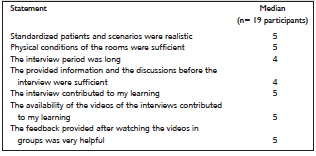
Table 5. Statements From Feedback Forms With 5-Point Likert Scale and Median Participant Evaluation Values
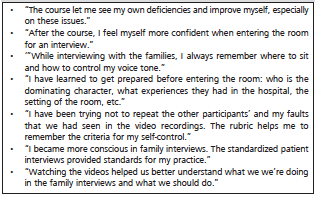
Table 6. Narrative Statements From the Postcourse Questionnaire