Volume: 16 Issue: 4 August 2018
FULL TEXT
Since the past 25 years, Professor Mehmet Haberal and Baskent University have been working with colleagues in the Mid Asia region to assist them in establishing successful treatments for end stage organ disease. It began in 1993, with the education and training of nephrologists from Azerbaijan at Baskent University Hospital in Ankara, followed, in the same year, with the establishment of a dialysis center in Baku. This was the first step in collaboration with the region at large.
Some years later, in 2014, Baskent University was approached for assistance and leadership in establishing liver transplantation in Kazakhstan. Having agreed to contribute in any way possible, a team from Baskent University, travelled to Astana in November 2014 to perform the first pediatric kidney transplant on a 9-year old girl (Figure 1) at the National Research Center for Maternal and Child Health. Same year, Prof. Haberal and his team again travelled to Astana to perform 4 transplants. Two liver transplants were performed on a 1-year old baby (Figures 2A, 2B) noted as the first pediatric liver transplant in the country, followed by a 6-month old baby (Figures 3 and 4) noted as the second pediatric liver transplant at the National Research Center for Maternal and Child Health, donor was father for both transplants. The following year, in 2015, the team returned to Astana to perform 2 liver and 1 kidney transplant at the JSC National Medical Center.
The transplant professionals in Kazakhstan in particular were keen to continue this cooperation. In ensuing discussions with Prof. Haberal, it was agreed that a transplant society for the region should be established to create an arena of communication and collaboration in the field of organ transplantation among the Turkic States of the world: Azerbaijan, Kazakhstan, Kyrgyzstan, Tajikistan, Turkey, Turkmenistan, and Uzbekistan.
As a result, the Turkic World Transplantation Society (TDTD) was founded by Professor Mehmet Haberal on December 15, 2014 and the 1st Congress of the Society was held shortly thereafter in Astana, Kazakhstan on May 20-22, 2015. The 2nd congress was held in Baku, Azerbaijan in 2016, the 3rd in Ankara, Turkey in 2017 (Figures 6, 7, 8), and the next one is currently being planned in Bishkek, Kyrgyzstan in 2019.
Prof. Haberal and his team also continued to travel abroad for the purpose of performing transplant surgeries and their initial surgeries in Kazakhstan were followed in April 2018 with 3 living-related kidney transplants at the Republic Research Center of Emergency Medicine in Tashkent, Uzbekistan (Figure 5). Of these 3 transplants, 1 was performed on a 14-year old patient and was the first pediatric kidney transplant in Uzbekistan. Just one month later, in May 2018, Prof. Haberal and his team returned to Tashkent to perform 6 more kidney transplants (a total of 12 surgeries) over a period of just 2 days. Of these, 1 was the first living transplant between spouses.
Successful organ transplantation improves the well-being of patients with end-stage organ failure. In low- and middle-income countries (LMICs) with inadequate facilities for dialysis, transplant appears to offer a better option for those patients. With their efforts in the area, Prof. Haberal and TDTD are actively encouraging LMIC centers to start kidney and liver transplant procedures to prevent patients seeking transplant services outside their country, which are often at exorbitant costs with equal if not less favorable results, and can even lead to cases of unethical transplantation practice.
Training of local health professionals is a key component of a successful program. In keeping with its goals, Baskent University took a leading role in promoting and encouraging education and research by accepting a large number of fellows from each country to train in the various disciplines, including surgery, anesthesiology, emergency and trauma care.
Of course, it goes without saying that education and public awareness of availability of the service is essential for these programs to flourish. As such, the organization of congresses, and use of the mass media becomes paramount in this effort to build successful transplant programs in these areas.
International partnerships have become essential for success. The cooperation between TDTD and the Turkish Transplantation Society is one such example. In this context, by creating a platform for education, training, and knowledge-sharing, TDTD has become the backbone for the development of such programs in the Turkic States.

Volume : 16
Issue : 4
Pages : 363 - 366
DOI : 10.6002/ect.2018.000e
From the 1Division of Transplantation, Department of General Surgery, and the 2Department of Anesthesiology and Reanimation, Baskent University, Ankara, Turkey
Corresponding author: Mehmet Haberal, Baskent University Hospital, Division of Transplantation, Department of General Surgery, Mareşal Fevzi Çakmak Cd. No:45, Ankara 06490, Turkey
Phone: +90 312 212 73 93
E-mail: rectorate@baskent.edu.tr
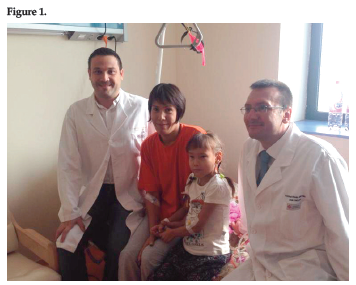
The first pediatric kidney transplant recipient in Kazakhstan with her mother (donor) just before her surgery at age 9.
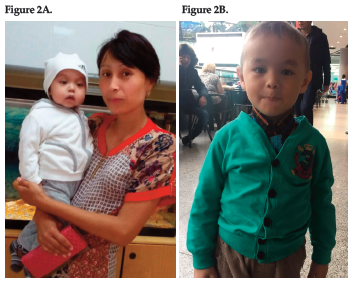
The first pediatric liver transplant recipient in Kazakhstan with his mother just before his surgery at age 1 (A), and 4 years later at age 5 (B).
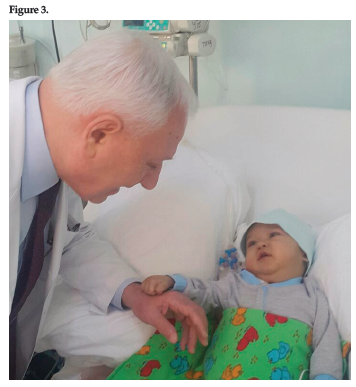
Prof. Haberal with the second pediatric liver transplant in Kazakhstan, then only 6 months old.
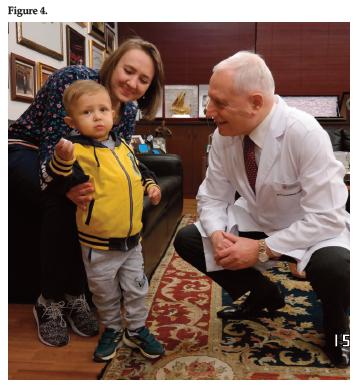
Prof. Haberal with the same patient, then 3 years old, and his mother.
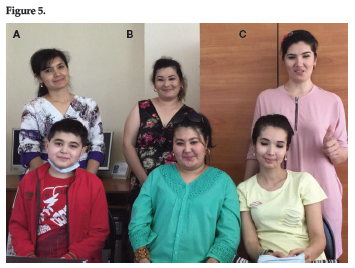
(A) The first pediatric kidney transplant, from father to son.
(B) Kidney transplant from sister to sister.
(C) Kidney transplant from mother to daughter.
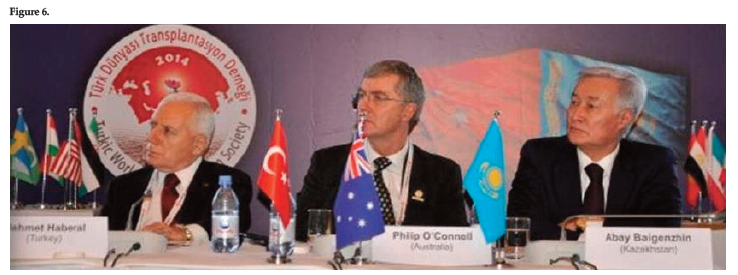
1st Congress of TDTD held in Astana, Kazakhstan on 20-22 May, 2015.
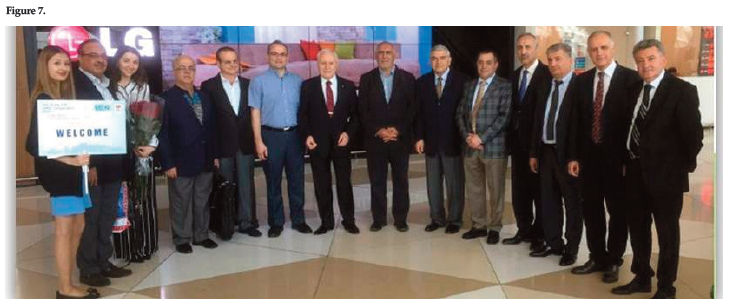
2nd Congress of TDTD held in Baku, Azerbaijan on 1-3 June, 2016.
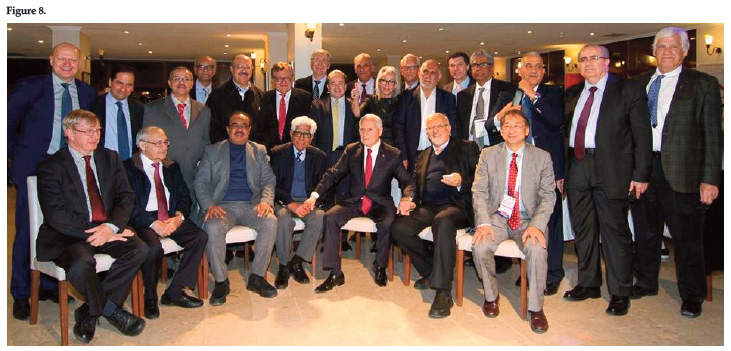
3rd Congress of TDTD held in Ankara, Turkey on 1-3 November, 2017.