Volume: 2 Issue: 1 June 2004
FULL TEXT
Objectives: The “piggyback” hepatic vein reconstruction and orthotopic liver transplantation (PBOLT) is a technique of liver transplantation that leaves the recipient inferior vena cava (IVC) intact, often avoiding the use of venovenous bypass (VVBP). Our study investigated whether patient morbidity and mortality after PB-OLT was comparable to that of the standard technique of orthotopic liver transplant (STD-OLT), which generally requires VVBP.
Materials and Methods: We reviewed 220 consecutive adult OLTs performed at a single institution. In the PB-OLT technique, the IVC was left intact. The suprahepatic IVC was anastomosed to a cuff, fashioned from the confluence of the recipient left and middle hepatic veins. The donor infrahepatic IVC was oversewn. The STD-OLT technique was used when patient conditions precluded PB-OLT. VVBP was required in 83% of STD-OLT cases and no cases of PB-OLT.
Key words : Venous anastamosis, Acute allograft congestion, Budd-Chiari syndrome, Vascular complications, Inferior vena cava
The classic technique of total hepatectomy for orthotopic liver transplantation (OLT), as described by Starzl et al [1], requires subdiaphragmatic clamping of the inferior vena cava (IVC) and resection of the retrohepatic IVC along with the recipient liver. This clamping of the IVC, however, decreases venous return to the heart and often results in hemodynamic instability, metabolic alterations, and low renal blood flow, and requires a large amount of intravenous volume infusion to avoid hypotension. To limit the hemodynamic consequences of IVC clamping, many surgeons have adopted the routine use of femoro-porto-axillary venovenous bypass (VVBP) [2-4]. This extracorporeal circuit routes the venous return from the portal and iliac veins to the axillary veins, maintaining preload to the heart. Although helpful in maintaining hemodynamics, VVBP has previously been associated with significant complications, including thromboembolism, hemolysis, vascular injury, hypothermia, and wound complications at cannulation sites [5].
Other means of preserving venous return during OLT have been described. Calne [6] in 1968 and Tzakis [7] in 1989 described the “piggyback” technique of recipient hepatectomy and orthotopic liver transplantation (PB-OLT). This technique preserves the recipient retrohepatic vena cava and avoids vena caval clamping, thus preserving venous return during the operation. An end-to-end anastomosis is created between the donor suprahepatic IVC to the cuffs of the recipient hepatic veins. The potential advantages of PB-OLT include: (1) avoiding the use of VVBP and its associated complications [3,8-10]; (2) reduced warm ischemia time and total operative time [11-12]; and (3) fewer complications associated with dissection of the retrohepatic IVC [13-15]. PB-OLT has been associated with complications related to the anastomosis between the donor suprahepatic IVC and the recipient hepatic veins, including suprahepatic IVC thrombosis or stenosis, venous congestion of the liver allograft, and an increased incidence of post-transplant ascites [12-14,16-20]. These complications stifled enthusiasm for the technique and have led several authors to make technical modifications to the original PB-OLT technique [7,20-22].
In this study, we describe a modification of the donor suprahepatic IVC-recipient hepatic vein anastomosis that does not require venoplasty or temporary portacaval shunting. The safety of this modified technique of PB-OLT was then assessed by examining the outcomes of 220 consecutive adult OLTs performed at a single center using the PB-OLT and standard orthotopic liver transplant (STD-OLT) technique.
Methods
Study Design
The records of adult patients who underwent OLT at The Methodist Hospital (Houston, Tex) between January 1st, 1999 and November 15th, 2003 were reviewed. The records of these patients were reviewed for age, sex, indication and date of transplant, date of discharge from the hospital, and any postoperative morbidity and mortality. The operative records were reviewed for method of performing anastomosis, amount of intraoperative blood products transfused, warm and cold ischemia times, and total operative time. Survival was derived from clinic records and from a database maintained by the Division of Transplantation. The only patients excluded from analysis were those who received a kidney transplant during the same operation as the OLT, as this additional procedure would confound the primary and secondary outcomes measures.
A power analysis was used to determine the number of patients per group needed to give the study sufficient power and avoid a type-II (ß) error. Assuming a 95% 1-year posttransplant survival rate for the control (STD-OLT) group, we calculated that having 79 or more patients in each group would give the study 90% power in detecting a 10% difference in posttransplant survival.
All OLTs were performed by one or both of the two faculty liver transplant surgeons. PB-OLT was the preferred technique of OLT. Factors that generally precluded the use of PB-OLT included: unfavorable anatomic variations such as a caudate lobe that completely surrounded the retrohepatic IVC, difficulty dissecting the liver off the retrohepatic inferior vena cava due to dense inflammatory adhesions, severe portal hypertension, accompanying liver tumor, and prolonged cold ischemia time. These factors were considered, but the ultimate choice of technique was made on an individual case-by-case basis by the faculty surgeons.
Primary Endpoints
Two main endpoints were used to compare the outcomes after PB-OLT and STD-OLT: (1) early post-transplant mortality; and (2) long-term patient survival. Early posttransplant mortality was defined as patient death within 30 days of OLT. Long-term survival of the two groups was compared using a log-rank test.
Secondary Endpoints
Several secondary endpoints were used to compare the posttransplant outcomes after PB-OLT and STDOLT. These endpoints included length of posttransplant hospital stay, operative time, total graft ischemia time (total of cold and warm ischemia times), and amount of packed red blood cells and fresh frozen plasma transfused during the operation. Length of posttransplant hospital stay was defined as the number of days between the transplant and the patient’s discharge from the hospital. The warm and cold ischemia times were gathered from the operative reports and summed to calculate the total ischemic time. The operative time, defined as the time from the first incision to the time the final dressing was applied, was calculated from the anesthesiologist records. The number of units of red transfused blood cells during the operation was also tallied from the anesthesia record and used to calculate median number of units of packed red cells transfused as well as the number of patients who did not receive any blood products during the operation.
The occurrence of complications related to the PBOLT technique and to VVBP were gathered from the inpatient and outpatient medical charts. In particular, attention was given to the occurrence of intraoperative allograft congestion, acute or chronic Budd-Chiari syndrome, posttransplant ascites, upper extremity venous congestion, or thromboembolic complications related to the use of VVBP. The frequency of these events was tallied for each group.
Data Analysis
Data were tabulated on a Microsoft Excel spreadsheet, then analyzed using various statistical tests as planned a priori. Unpaired t tests were used to compare the means of the two groups. Chi-square tests were used to detect differences in frequency of occurrence of events (viz. posttransplant morbidity) between the two groups. A log-rank test was used to detect differences in long-term survival between the two groups. Statistical significance was defined by an alpha of 0.05 or less. As discussed above, the group size of the study led to a beta of 0.90 in detecting a 10% survival difference in the two groups. To limit the risk for type I (a) errors, no post-hoc or subgroup statistical analyses were performed.
Description of Operation: PB-OLT and STD-OLT STD-OLT:
OLT performed in the standard fashion was initiated with a bilateral subcostal incision and midline extension. The left and right triangular ligaments were divided, and the porta hepatis was identified. Venovenous bypass was started at this point with cannulation of the portal vein, left axillary vein, and left iliac vein by way of the left greater saphenous vein. The portal vein, infrahepatic and suprahepatic inferior vena cava were sequentially clamped and divided, and the recipient hepatectomy was completed. A running Prolene suture was used for the suprahepatic and infrahepatic vena caval anastomoses, and a 1-1.5 cm “growth factor” was incorporated into the portal vein anastomosis. After reperfusion of the liver allograft VVBP was discontinued. The hepatic artery and common bile duct anastomoses were performed in the standard fashion, and the wound was closed.
PB-OLT surgical technique: A PB-OLT was begun with mobilization of the native liver by division of the left and right triangular, coronary, and gastrohepatic ligament. After dissection of the porta hepatis, the cystic duct, common hepatic duct, right hepatic artery and left hepatic arteries were ligated and divided. The portal vein was skeletonized with selective ligation and division of the anterior pancreatoduodenal vein. With medial rotation of the right lobe of the liver, the short hepatic veins draining the right and caudate lobes of the liver into the retrohepatic inferior vena cava were ligated and divided. Dissection of this plane continued in a cephalad direction until the right hepatic vein was dissected, divided between Glover clamps, and oversewn with a 4-0 running polypropylene suture.
At this point, inflow to the native liver was provided by the portal vein alone; outflow was provided by the middle and left hepatic veins. The portal vein was clamped with a Blalock-Taussig clamp. A Satinsky clamp was applied to the confluence of the middle and left hepatic veins. If the patient had maintained hemodynamic stability after clamping of the portal and hepatic veins, the recipient hepatectomy was completed. Portocaval shunting could have been used at this point had any patient become hemodynamically unstable; however, this did not occur, and no patient who underwent PB-OLT required shunting.
After the recipient hepatectomy was completed, a common cuff was created at the confluence of the middle and left hepatic veins by dividing the septum between the middle and left hepatic veins with Metzenbaum scissors (Figure 1A).
The donor liver was then brought into the operative field. The infrahepatic inferior vena cava of the donor liver was oversewn with a running 4-0 polypropylene suture. In contrast to previous publications, a venoplasty was not utilized for either the recipient hepatic veins or the donor inferior vena cava. Instead, the donor suprahepatic inferior vena cava was directly anastomosed to the recipient’s middle and left hepatic vein common cuff in an end-to-end fashion. The posterior row of sutures was performed through the vessel lumen, using a running 4-0 polypropylene suture placed in an everted fashion. The anterior row of interrupted sutures was placed in an interrupted fashion using 4-0 polypropylene sutures, approximating and everting the intima of each vessel (Figure 1B). While performing the anterior row of interrupted sutures, the liver was flushed with cold 5% albumin solution. Upon completion of the donor suprahepatic/recipient hepatic vein anastomosis, the portal vein anastomosis was performed in an end-to-end fashion using a 6-0 polypropylene running suture with a “growth factor.” The hepatic artery and the biliary anastomoses were performed in the usual manner thereafter, and the procedure was completed.
Results
A total of 245 OLTs were performed at the Methodist Hospital between January 1st, 1999 and June 30th, 2003. The records of 225 (92%) of these cases were available for review. Five patients who received both a liver and a kidney allograft during the same operation were excluded from the study. Of the remaining 220 patients, STD-OLT was performed in 98 (44.5%), while PB-OLT was performed in the remaining 122 patients (55.4%). VVBP was used in 74 (76%) of the patients in the STD-OLT group. Three patients in the STD-OLT group (3.1%) and 4 patients in the PB-OLT group (3.3%) received the right trisegmentectomy portion of split liver grafts. Demographics of these two groups are summarized in Table 1. The 3 mostcommon indications for OLT were viral hepatitis, hepatocellular carcinoma, and alcoholic cirrhosis. The indications for OLT did not differ significantly between the two groups (P = ns, chi-square test).
Primary Endpoints
Eight patients in the PB-OLT group (7.0%) died subsequent to liver transplantation. One intraoperative death in the PB-OLT group. This, however, was the only death in the early posttransplant period, yielding a postoperative mortality of 0.8%. The 1- and 3-year survival rates after PB-OLT were 96.3% and 87.8%, respectively (Figure 2). Comparison of posttransplant survival with the log-rank test showed no significant survival difference between the two groups (P = 0.65). Nine patients in the STD-OLT group (9.1%) died subsequent to liver transplantation. Two of these deaths occurred within 30 days of transplantation, yielding a early posttransplant mortality of 2.0%. The 1- and 3- year survival rates were 96.7% and 84.0%, respectively (Figure 2).
Secondary Endpoints
A comparison of secondary endpoints between the STD-OLT and PB-OLT groups is shown in Table 2. Both operative time and total ischemia time were shorter in the PB-OLT group than in the STD-OLT group (5:20 vs 5:47 and 5:32 vs 6:06, respectively). These differences, however, did not reach statistical significance. The median length of hospitalization of both the PB-OLT and STD-OLT groups were 7.0 days.
The frequency of early posttransplant mortality and complications that have previously been attributed to the PB-OLT technique and to VVBP are summarized in Table 3. Further details regarding these complications are as follows:
Allograft congestion: Following reperfusion, all grafts were assessed clinically for impairment of hepatic venous outflow and allograft congestion. Two patients (1.7%) in the PB-OLT group required a large amount of intravenous volume infusion to maintain hemodynamic stability following graft reperfusion. In both cases, significant allograft congestion was noted; neither had obvious intraabdominal bleeding. Inspection of the anastomosis of the donor suprahepatic inferior vena cava to the confluence of the recipient left and middle hepatic veins showed no obvious technical problems. Regardless, the venous outflow appeared inadequate, so an end-to-side donor infrahepatic inferior vena cava to recipient infrahepatic inferior vena cavo-cavostomy, utilizing an interrupted suture technique, was performed in both cases. The venous congestion was immediately resolved in both cases upon completion of the cavo-cavostomy. Hemodynamic stability was restored and no further problems arose. In contrast, no venous outflow abnormalities occurred in any patient undergoing STDOLT. Though allograft congestion occurred more often in the PB-OLT group than in the STD-OLT group, this difference failed to reach statistical significance (P = ns, Fisher’s exact test).
Acute or chronic Budd-Chiari Syndrome: With the exception of the two patients that required end-to-side cavo-cavostomy at the time of the liver transplant, no hepatic vein strictures or thromboses occurred in either group. Similarly, no IVC strictures or thromboses were seen in any patient in either group at any time point following transplant.
Hemorrhagic complications: Significant bleeding was not encountered in any of the PB-OLT retroperitoneal dissections. Regardless of technique used, no patient required reexploration for bleeding from the suprahepatic vena caval anastomosis. The median number of units of packed red blood cells transfused was 2.0 during both PB-OLT and STDOLT. Compared with the PB-OLT group, patients in the STD-OLT group required intraoperative fresh frozen plasma transfusion less often (23.5% vs 17.7%, respectively; P = ns, chi-square test). Likewise, a smaller portion of patients in the PB-OLT group required no intraoperative blood products compared with the STD-OLT group (31.0% vs 37.5%, respectively; P = ns, chi-square test).
Postoperative ascites: Eight patients (6.6%) who underwent PB-OLT and 8 patients (8.1%) who underwent STD-OLT developed ascites following liver transplantation (Table 3). Work-up utilizing Doppler ultrasound and magnetic resonance imaging showed no radiographic evidence of hepatic vein obstruction in any case. Further evaluation via inferior venacavogram and hepatic vein pressure measurements did not reveal a pressure gradient suggestive of anastomotic stricture, and no further intervention was required. In all cases, the ascites resolved with improvement in nutritional status.
Discussion
In the technique of orthotopic liver transplantation originally described by Starzl, the retrohepatic vena cava is excised along with the diseased native liver [6]. Venovenous bypass (VVBP) was introduced to maintain venous return to the heart and decrease the hypotension that had been seen during the hepatectomy and anhepatic phases of the operation [7]. The routine use of VVBP has been accepted by many institutions and has reduced the intraoperative blood loss and operative mortality of OLT, but is associated with thromboembolism, hemolysis, hypothermia, and wound complications at cannulation sites [5].
The “piggyback” technique of orthotopic liver transplantation (PB-OLT) introduced preservation of the native IVC during the recipient hepatectomy. As the clamps placed on the hepatic veins during recipient hepatectomy are tangential to the IVC, blood flow through the IVC is maintained in most cases, avoiding the need for VVBP. PB-OLT has the additional advantages of reducing warm ischemia and total operative times [11,12] and avoiding retroperitoneal dissection and its attendant complications [13-15]. While PB-OLT was initially thought feasible in only 19% of all OLT cases, the technique has recently been applied to a greater extent [2,8,9].
Perhaps the most-significant potential disadvantage of the PB-OLT technique is the increased risk of hepatic venous outflow obstruction, a technical complication that leads to stenosis of the recipient suprahepatic IVC-recipient hepatic vein anastomosis and/or suprahepatic thrombosis. Following STDOLT, on the other hand, this complication occurs only rarely and is usually related to recurrence of an underlying thrombotic disease process [10]. Hepatic venous outflow obstruction after PB-OLT has a significant impact on outcomes: a recent multicentric retrospective analysis of 1361 cases transplanted with preservation of the retrohepatic vena cava demonstrated a 1.5% rate of occlusive venous return with 24% mortality [5].
Hepatic outflow obstruction after PB-OLT may present as a wide spectrum of complications from simple positional allograft congestion to hepatic vein and/or IVC thrombosis. Simple allograft congestion is usually diagnosed during the transplant procedure and requires either repositioning of allograft with fixation to the abdominal wall or reducing the empty space. A rescue cavocavostomy between the donor and recipient vena cavae may be added to the procedure in piggybacked whole organ allografts if repositioning does not improve the venous drainage [13,14]. Acute Budd-Chiari syndrome has a very high retransplantation and mortality rate, while chronic cases can be managed by conservative treatment with diuretics followed by retransplantation [4,5]. Late-onset hepatic outflow anastomotic strictures are usually managed by percutaneous endoluminal balloon angioplasty or stenting [11,15,16]. Finally, hepatic venous outflow obstruction after PB-OLT may present as posttransplant ascites. The PB-OLT procedure has been associated with an increased rate of posttransplant ascites [19].
There has been some discussion in the literature regarding the optimal method of hepatic vein reconstruction in PB-OLT. We used the previously described technique of fashioning a common cuff from the confluence of the middle and left hepatic veins [8,17]. The concern with this technique, however, is that two hepatic veins may be insufficient to drain the liver and may result in an increased incidence of venous outflow obstruction [18,19]. Other options for reconstruction include combining the 3 recipient hepatic veins to fashion a larger cuff or performing a side-to-side cavocavostomy between the donor and recipient vena cavae.
We further modified the technique of PB-OLT by interrupting the anterior row of the sutures on the anastomosis between the donor IVC and the recipient left and middle hepatic veins. Interrupting the anterior row of sutures prevents a “purse string” effect that may be seen with continuous sutures, yet avoids hemorrhagic complications or prolongation of the ischemic time. As this row of sutures is anterior to the recipient IVC, it is not technically difficult to perform. Furthermore, the site is easily accessible should any anastomotic leak occur upon reperfusion of the graft. If the liver allograft demonstrates impaired drainage or allograft congestion, an anastomosis between the donor and recipient vena cavae may be used as a rescue outflow tract.
In the current study, we compared outcomes of 220 consecutive OLTs performed at a single institution using either STD-OLT or PB-OLT. Patient survival was used as the primary outcome. The use of blood products, operative time, total ischemia times, and length of posttransplant hospitalization were used as secondary outcomes in this study. We found no difference in survival between the PB-OLT and STD-OLT groups. One- and 3-year patient survival following PB-OLT was 96.3% and 87.8%, respectively, compared with 96.7% and 84.0% for STD-OLT. The median lengths of posttransplant hospitalization were identical for the two groups. There was no significant difference between the operative times and total ischemia times of the two groups.
The use of blood products was not significantly different in the PB-OLT and STD-OLT groups. We avoided significant hemorrhage during PB-OLT by limiting the depth of retroperitoneal dissection, thereby encountering a smaller number of retroperitoneal collaterals. As a result, significant bleeding was not encountered in any of the PB-OLT retroperitoneal dissections. Anastomotic leaks were controlled with interrupted sutures at the time of the transplant, and no patient required reexploration for hemorrhage from the suprahepatic vena caval anastomosis regardless of technique used.
The study design employed and the a priori sample size calculation were used to investigate whether the use of PB-OLT, in selected patients, was comparable in safety to STD-OLT. The results demonstrate that PB-OLT is as safe as STD-OLT in certain patients. As mentioned above, many of the factors that precluded the use of PB-OLT were anatomic variations in position of the caudate lobe relative to the IVC. Other factors that precluded the use of PB-OLT such as portal hypertension and prolonged ischemia time may, however, influence survival. Though the authors did not intentionally select lower-risk patients to undergo PB-OLT, the lack of randomization prevents a direct comparison of efficacy of these two techniques.
These results compare favorably to other series describing outcomes after PB-OLT. In a recent series of PB-OLT from Stanford University, Busque et al [20] found that 1-year patient survival from this series was 87%, slightly lower than the 96% 1-year patient survival seen in the PB-OLT cohort from this series. The operative times of PB-OLTs in this series are also shorter (mean of 5:28) than in the previous series (mean 8:36). The average amount of pRBCs transfused is similar (2.0 units) in both series as is the number of patients who did not require transfusion of any pRBCs (34% in Stanford series versus 31% in current series).
In conclusion, these data demonstrate that interrupting the anterior row of the hepatic vein anastomosis is feasible, safe, and efficient in PB-OLT. We did not experience any major complications leading to allograft loss or patient death following hepatic vein reconstruction. Two hepatic veins provide sufficient venous outflow for the entire liver unless an anastomotic stricture is present. This technique has low complication rates and may lead to excellent outcomes following liver transplantion.
References:
- Starzl TE, Groth CG, Brettschneider L, Penn I, Fulginiti VA, Moon JB, et al. Orthotopic homotransplantation of the human liver. Ann Surg 1968; 168: 392-415
- Shaw BW Jr, Martin DJ, Marquez JM, Kang YG, Bugbee AC Jr., Iwatsuki S, et al. Venous bypass in clinical liver transplantation. Ann Surg 1984; 200: 524-534
- Paulsen AW, Whitten CW, Ramsay MA, Klintmalm GB. Considerations for anesthetic management during veno-venous bypass in adult hepatic transplantation. Anesth Analg 1989; 68: 489
- Paulsen AW, Valek TR, Blessing WS, Johnson DD, Parks RI, Pyron JT, et al. Hemodynamics during liver transplantation with veno-venous bypass. Transplant Proc 1987; 19: 2417-2419
- Kang YG, Freeman JA, Aggarwal S, DeWolf AM. Hemodynamic instability during liver transplantation. Transplant Proc 1989; 21: 3489-3492
- Calne RY, Williams R. Liver transplantation in man. I. Observations on technique and organization in five cases. Br Med J 1968; 4: 535-540
- Tzakis A, Todo S, Starzl TE. Orthotopic liver transplantation with preservation of the inferior vena cava. Ann Surg 1989; 210: 649-652
- Khoury GF, Mann ME, Porot MJ, Abdul-Rasool IH, Busuttil RW. Air embolism associated with veno-venous bypass during orthotopic liver transplantation. Anesthesiology 1987; 67: 848-851
- Navalgund AA, Kang Y, Sarner JB, Jahr JS, Gieraerts R. Massive pulmonary thromboembolism during liver transplantation. Anesth Analg 1988; 67: 400-402
- Ellis JE, Lichtor JL, Feinstein SB, Chung MR, Polk SL, Broelsch C, et al. Right heart dysfunction, pulmonary embolism, and paradoxical embolization during liver transplantation. A transesophageal two-dimensional echocardiographic study. Anesth Analg 1989; 68: 777-782
- Cherqui D, Lauzet JY, Rotman N, Duvoux C, Dhumeaux D, Julien M et al. Orthotopic liver transplantation with preservation of the caval and portal flows. Technique and results in 62 cases. Transplantation 1994; 58: 793-796
- Jovine E, Mazziotti A, Grazi GL, Ercolani G, Masetti M Morganti M, et al. Piggy-back versus conventional technique in liver transplantation: report of a randomized trial. Transpl Int 1997; 10: 109-112
- Lerut JP, Molle G, Donataccio M, De Kock M, Ciccarelli O, Laterre PF, et al. Cavocaval liver transplantation without venovenous bypass and without temporary portocaval shunting: the ideal technique for adult liver grafting? Transpl Int 1997; 10: 171-179
- Stieber AC. One surgeon's experience with the piggyback versus the standard technique in orthotopic liver transplantation: is one better than the other? Hepatogastroenterology 1995; 42: 403-405
- Salizzoni M, Andorno E, Bossuto E, Cerutti E, Livigni S, Lupo F, et al. Piggyback techniques versus classical technique in orthotopic liver transplantation: a review of 75 cases. Transplant Proc 1994; 26: 3552-3553
- Lerut J, Gertsch P. Side-to-side cavo-cavostomy: a useful aid in "complicated" piggy-back liver transplantation. Transpl Int 1993; 6: 299-301
- Fleitas MG, Casanova D, Martino E, Maestre JM, Herrera L, Hernanz F, et al. Could the piggyback operation in liver transplantation be routinely used? Arch Surg 1994; 129: 842-845
- Ducerf C, Rode A, Adham M, De la Roche E, Bizollon T, Baulieux J et al. Hepatic outflow study after piggyback liver transplantation. Surgery 1996; 120: 484-487
- Cirera I, Navasa M, Rimola A, Garcia-Pagan JC, Grande L, Garcia-Valdecasas JC, et al. Ascites after liver transplantation. Liver Transpl 2000; 6: 157-162
- Busque S, Esquivel CO, Concepcion W, So SK. Experience with the piggyback technique without caval occlusion in adult orthotopic liver transplantation. Transplantation 1998; 65: 77-82
- Belghiti J, Panis Y, Sauvanet A, Gayet B, Fekete F. A new technique of side to side caval anastomosis during orthotopic hepatic transplantation without inferior vena caval occlusion. Surg Gynecol Obstet 1992; 175: 270-272
- Tzakis AG, Reyes J, Nour B, Marino IR, Todo S, Starzl TE. Temporary end to side portacaval shunt in orthotopic hepatic transplantation in humans. Surg Gynecol Obstet 1993; 176: 180-182

Volume : 2
Issue : 1
Pages : 189 - 195
1Baylor College of Medicine, Michael E DeBakey Department of Surgery, Houston TX, USA
2Department of Surgery, Ege University Medical School and Hospital, Izmir, Turkey
Acknowledgments: The authors would like to thank Debbie Washington for their help in preparing this manuscript.
Address reprint requests to: John A Goss, MD, Baylor College of Medicine Liver Center, Michael E DeBakey Department of Surgery, Baylor College of Medicine, 6550 Fannin, Suite 1628, Houston TX 77030, USA, Phone: 713-798-8355 E-mail: jgoss@bcm.tmc.edu
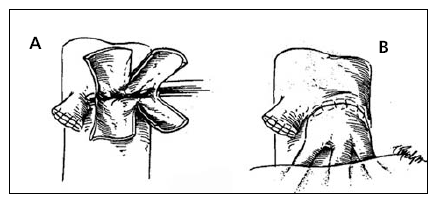
Figure 1. The anastomosis of the donor suprahepatic inferior vena cava to the recipient hepatic veins: (A) Creating a common cuff from the confluence of the left and middle hepatic veins by dividing the septum between these vessels; (B) the anterior row of interrupted sutures is made using 4-0 polypropylene (from Tzakis A, et al. Ann Surg 1989; 210:651).
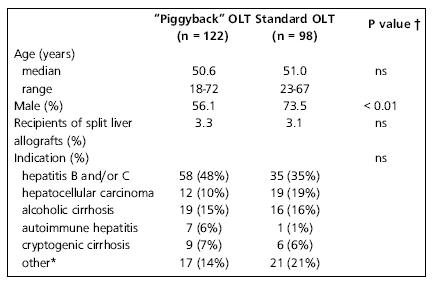
Table 1. Characteristics of the patients who underwent OLT according to treatment group.
* other indications included: primary biliary cirrhosis, sclerosing cholangitis, Wilson’s disease, alpha-1 antitrypsin deficiency, familial amyloid neuropathy, hemochromatosis, primary oxaluria, and hemangioendothelioma.
† A chi-square test was used to detect differences, considering alpha < 0.05 to be significant. The abbreviation”ns” denotes results that are not significant.
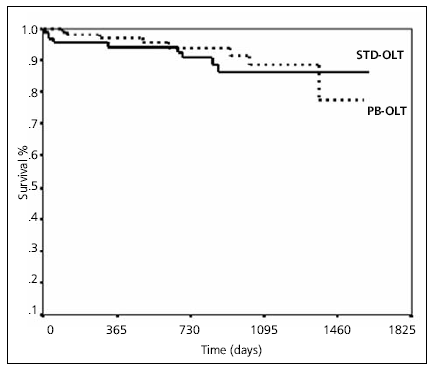
Figure 2. A Kaplan-Meier curve showing posttransplant survival in the standard and “piggyback” OLT groups.
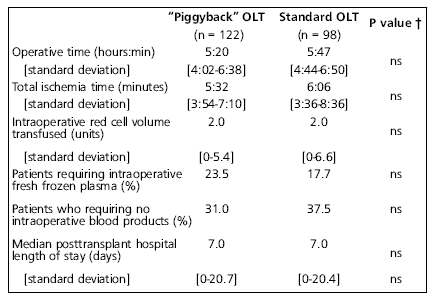
Table 2. Median values of secondary endpoints according to treatment group.
† Comparison between the two groups was done with a two-tailed t test, using a P value of 0.05 or less as significant.
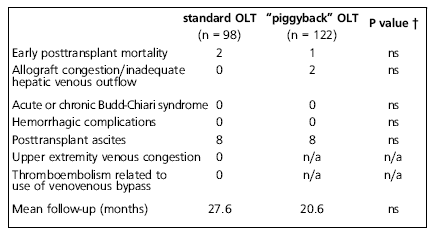
Table 3. A comparison of complications in patients who underwent OLT according to treatment group.
† Frequency of posttransplant ascites between the two groups was compared with the chi-square test. Because of the low frequency of early posttransplant mortality and allograft congestion, Fisher’s exact test (conventional approach) was used to compare these statistics for the two groups.