Volume: 24 Issue: 9 September 2026
FULL TEXT
Etiologies and Independent Risk Architecture of 7-Day Graft Loss in Adult Liver Transplantation: A National Registry Analysis
Objectives: Seven-day graft loss (first postoperative week graft failure or recipient death) has not been systematically characterized at a national scale in adult liver transplantation. We identified etiologies and independent predictors of 7-day graft loss, primary nonfunction, and 7-day posttransplant death in adult deceased donor liver transplant recipients.
Materials and Methods: We retrospectively analyzed 54 646 adult deceased donor liver transplant reci-pients (Organ Procurement and Transplantation Network, 2015-2024) and evaluated etiologies and independent predictors of 7-day graft loss, primary nonfunction, and 7-day posttransplant death using multivariable logistic regression.
Results: Among 1442 events of 7-day graft loss (2.6%), primary nonfunction predominated (43.6%), followed by graft thrombosis (10.3%) and infection (3.8%). Cardiovascular failure (42.6%) was the leading cause of 7-day death. Retransplant (odds ratio 3.72; P < .001), Status 1 (odds ratio 2.24; P < .001), donation after circulatory death (odds ratio 1.82; P < .001), dialysis dependence (odds ratio 1.79; P < .001), and Black recipient race (odds ratio 1.74; P < .001) independently predicted 7-day graft loss. Male recipient sex was protective (odds ratio 0.86; P = .01). Each additional hour of cold ischemia time increased 7-day graft loss odds by 10% (odds ratio 1.10; P < .001). The primary nonfunction model identified Hispanic (odds ratio 1.27; P = .03) and Asian (odds ratio 1.60; P = .02) recipient race as additional predictors, with 34% lower odds from 2020 onward (odds ratio 0.66; P < .001), coincident with acuity circle allocation and expanded machine perfusion adoption. The 7-day death model added recipient age ≥60 years (odds ratio 1.58; P < .001) and elevated Model for End-Stage Liver Disease score (odds ratio 1.01; P = .003) as inde-pendent contributors.
Conclusions: Every predictor is ascertainable before transplant, supporting risk stratification during organ offers, informed donor-recipient matching, and perioperative optimization to reduce early graft loss.
Key words : Key words: Cold ischemia time, Donor-recipient matching, Graft thrombosis, Primary nonfunction, Risk assessment
Introduction
Liver transplant (LT) is the only definitive therapy for patients with end-stage liver disease.1 Hepatic disease accounts for approximately 4% of all deaths globally.2 In the United States, 11 770 adult LTs were performed in 2025 (based on Organ Procurement and Transplantation Network [OPTN] data as of April 7, 2026). Despite sustained growth in transplant volume, organ availability remains inadequate.
Early graft loss, traditionally defined as graft failure within 30 to 90 days of transplant, threatens recipient survival and places additional demand on a limited donor supply. Etiologies span primary nonfunction (PNF), hepatic artery or portal vein thrombosis, infection, acute rejection and diffuse cholangiopathy.3 Despite extensive investigation of early graft loss, 7-day graft loss (7DGL), defined as graft failure or recipient death within the first postoperative week, has not been systematically delineated in adult LT, yet recipients who experience it face immediate retransplant under rapid physiologic deterioration, consuming an additional organ in a system where scarcity is absolute.4
No prior national-scale analysis has quantified the independent risk architecture specific to 7DGL in adult deceased donor LT (DDLT). In this analysis, we characterize the etiologic distribution and quantify the independent predictors of 7DGL, PNF, and 7-day posttransplant death (7DD) among adult DDLT recipients in the United States from 2015 to 2024. By identifying modifiable and nonmodifiable predictors across recipient, donor, and transplant domains, our results can delineate clinical determinants of recipient and graft vulnerability, supporting preoperative risk stratification, informed consent, and donor-recipient matching optimization during the most conse-quential postoperative interval.
Materials and Methods
Study design
For this retrospective cohort analysis, we used the OPTN Standard Transplant Analysis and Research (STAR) files provided by the United Network for Organ Sharing (UNOS) from January 1, 2015, through December 31, 2024. Adult (≥18 years old) DDLT recipients were identified irrespective of induction status. Multiorgan transplant recipients and living donor LT recipients were excluded from the primary analyses. Recipients with graft loss occurring between postoperative days 8 and 364 were excluded, as their risk profiles overlap with those of 7DGL recipients and inclusion would have obscured early risk signals that this analysis was intended to detect.
Outcome definitions
The primary outcome was 7DGL, defined as graft failure or recipient death within 7 days of transplant, without death censoring. The comparison cohort comprised recipients achieving graft survival of at least 1 year.
Primary causes of graft failure encompassed
PNF, graft thrombosis, infection, rejection, diffuse cholangiopathy, recurrent nonhepatitis disease, de novo hepatitis, and recurrent hepatitis, as docu-mented in OPTN center-reported fields. Events without a documented primary etiology were classified as “Other/unknown” and retained in all analyses. All cases coded as PNF were classified as 7DGL. Primary nonfunction was further analyzed in a dedicated regression model given its predominance among 7DGL etiologies. Other causes were not modeled separately due to insufficient event counts.
Seven-day posttransplant death (7DD), defined as recipient death within 7 days of transplant regardless of graft function status, was evaluated as a distinct endpoint within the 7DGL composite. Cause of death was classified through a hierarchical, person-level collapsed framework applied to registry-reported fields (COD1-COD3). A parallel subanalysis com-pared 7DD recipients with the same reference cohort.
Variables
Recipient-level variables comprised sex, age, race and ethnicity (White, Black, Hispanic, Asian, and Other), body mass index (BMI, calculated as kilograms body weight per meter squared) at transplant (continuous and categorical), diabetes mellitus, dialysis depen-dence at registration, retransplant status, hepatitis C virus (HCV) seropositivity, history of malignancy, transjugular intrahepatic portosystemic shunt placement, hepatocellular carcinoma (HCC) diagnosis, Model for End-Stage Liver Disease (MELD) score at transplant, international normalized ratio, serum albumin, artificial liver use, wait list duration, and Status 1 designation.
Primary diagnosis at the time of listing was recorded for descriptive characterization of the cohort and included alcoholic cirrhosis, metabolic dysfunction-associated steatohepatitis-related cir-rhosis, HCC with and without cirrhosis, autoimmune hepatitis-related cirrhosis, cryptogenic cirrhosis, and acute alcohol-associated hepatitis.
Donor-level variables comprised sex, age, race and ethnicity, BMI at time of death (continuous and categorical), history of hypertension, history of diabetes mellitus, HCV seropositivity, history of cigarette use, cause of death, donation type (donation after brain death [DBD] or donation after circulatory death [DCD]), and laboratory indices including blood urea nitrogen, aspartate aminotransferase, alanine aminotransferase, serum creatinine, total bilirubin, amylase, and lipase.
Transplant-level variables included cold ischemia time (CIT) modeled continuously and categorically, human leukocyte antigen mismatch level, donor-recipient sex matching, organ-sharing geography, and transplantation era. Transplants before February 2020 were classified under the geographic allocation model (local, regional, and national) and those from February 2020 onward under the distance-based acuity circle framework (by nautical mile bands). The allocation era dichotomy (pre-2020 versus 2020-2024) was incorpo-rated as an adjustment variable reflecting the contem-poraneous introduction of the acuity circle model and expansion of machine perfusion technology.
Statistical analyses
We summarized baseline characteristics descriptively and presented categorical variables as frequencies with percentages, which we compared using the Pearson χ2 test or the Fisher exact test as appropriate. We expressed continuous variables as means with SD or medians with interquartile ranges, which we compared using t tests or Wilcoxon rank-sum tests, respectively. We constructed multivariable logistic regression models to identify independent predictors of 7DGL, PNF, and 7DD. We identified candidate covariates a priori on the basis of clinical relevance and refined through backward elimination. We presented results as odds ratios (with 95% CI). Statistical significance was defined as a 2-sided P < .05. Multivariable regression models were fit on recipients with complete covariate data. We used R software (version 4.4.3; R Foundation for Statistical Computing, Vienna, Austria) to conduct the analyses.
All data were deidentified and publicly available through the OPTN registry. This research was exempt from institutional review board approval, as all data were deidentified and publicly available (45 CFR, section 46.104). Exempt status follows United States Department of Health and Human Services regulations governing the protection of human subjects at Title 45, Code of Federal Regulations, Part 46, under which secondary research using publicly available, deidentified data is exempt from institutional review board review. This investigation was conducted in accordance with the 2013 Declaration of Helsinki and the 2018 Declaration of Istanbul. This cohort analysis is reported in accordance with the Strengthening the Reporting of Observational Studies in Epidemiology guidelines.
Results
Between 2015 and 2024, there were 76 317 adult LTs performed in the United States. After we applied exclusion criteria, the final cohort included 54 646 adult DDLT recipients; specifically, 1442 (2.6%) experienced 7DGL and 53 204 (97.4%) survived with a functioning graft beyond 1 year (Table 1).
A secondary analysis of 7DD included 847 events versus 53 265 recipients achieving ≥1-year recipient survival (Table 2).
Etiologies of 7-day graft loss
Primary nonfunction was the predominant cause of graft failure within the 7DGL cohort, followed by graft thrombosis, infection, diffuse cholangiopathy, recurrent nonhepatitis disease, and rejection (Table 1). Death was documented in more than half of 7DGL events. Among recipients who died within 7 days, cardiovascular failure was the most frequently recorded cause of death, followed by hemorrhage, graft failure, multisystem failure, and cerebrovascular accident. Within the 7DD cohort, PNF and graft thrombosis accounted for the large share of identifiable etiologies, mirroring the 7DGL hierarchy (Table 2).
Recipient, donor, and transplant characteristics
Retransplant, dialysis dependence at registration, Status 1 designation, and higher mean MELD score were overrepresented among 7DGL and 7DD recipients, whereas transjugular intrahepatic por-tosystemic shunt placement was more frequently observed in 7DD recipients. Class II obesity and increased international normalized ratio were also associated with both 7DGL and 7DD. Black recipients were disproportionately represented in the 7DGL and 7DD group. Recipients of male sex, White race, healthy or overweight BMI, and age 40 to 59 years demonstrated lower 7DGL and 7DD rates. Alcoholic cirrhosis was less common among 7DGL recipients, and autoimmune hepatitis-related cirrhosis was more prevalent.
Donor history of hypertension, diabetes mellitus, DCD, and class II obesity were more frequent among 7DGL events. Cerebrovascular accident was the most common mechanism of donor death in the 7DGL group, with elevated blood urea nitrogen and aspartate aminotransferase being overrepresented as well. Donors aged 40 to 59 years were more prevalent in the 7DGL group. White race, healthy BMI, and head trauma as mechanism of death were associated with lower 7DGL rates.
Mean CIT was longer in the 7DGL group, increasing beyond 6 hours. National organ sharing and allocation ranges of 150 to 249 nautical miles were more common among 7DGL events. Male donor to female recipient pairing was associated with higher 7DGL and 7DD rates, and male-to-male pairing conferred lower risk (Table 1, Table 2).
Multivariable predictors of 7-day graft loss, primary nonfunction, and 7-day posttransplant death
Retransplant and Status 1 designation ranked as the strongest recipient predictors of 7DGL. Black race, dialysis dependence, shorter wait list duration, and elevated BMI each independently predicted risk. Male recipient sex was protective. Asian donor race, history of hypertension, history of diabetes, and DCD independently predicted 7DGL at the donor level. Each additional hour of CIT increased 7DGL odds by approximately 10% (Table 3).
The PNF model shared several predictors with the 7DGL model but differed in 2 respects. Hispanic and Asian recipient race independently predicted PNF but not 7DGL. Transplantation in the modern era (2020-2024) was independently associated with 34% lower PNF odds (Table 4).
The 7DD model captured a distinct risk profile. Primary nonfunction carried the strongest association with early death, followed by graft thrombosis. Beyond the shared predictors of retransplant, Status 1 designation, dialysis dependence, Black race, and elevated BMI, we observed that recipient age ≥60 years and elevated MELD were independent contributors unique to 7DD. Male recipient sex was protective. Donor BMI at time of death was the sole significant donor predictor. Each additional hour of CIT increased 7DD odds by approximately 12%. Recurrent nonhepatitis disease and diffuse cholan-giopathy were inversely associated with 7-day death (Table 5). Descriptive characteristics of the 7DD cohort are reported in Table 2.
Discussion
In 2024, there were 42 497 LTs performed across 71 countries, reaching historic highs.5 In the United States, LT volume increased 71% from 2013 to 2023.6 Early graft failure remains a clinically significant complication, yet risk factors specific to 7DGL have not been previously isolated. The present analysis addresses this gap at a national scale, distinguishing which established risk factors retain predictive power within the 7-day time frame and identifying patterns unique to this window. Every predictor identified in the multivariable models is ascertainable before transplant, supporting risk stratification at the time of organ offer and informed consent.
The predominant etiology of 7DGL was PNF, which accounted for 43.6% of events. Its pathogenesis is incompletely understood but attributed to severe ischemia-reperfusion injury compounded by sub-optimal graft selection.7 Also, PNF carried the strongest association with 7DD, underscoring its fatal trajectory in the absence of retransplant. The concentration of PNF within the 7-day window is expected, but its magnitude relative to other early graft loss etiologies has not been previously quantified in a dedicated 7DGL cohort. The odds for PNF declined 34% in the modern transplant era (2020-2024).
Thrombosis was the second most common etio-logy of 7DGL and was strongly associated with 7DD. A recent systematic review identified aspirin as the only prophylactic agent with evidence of reducing post-LT hepatic artery thrombosis incidence, and therapeutic-dose anticoagulation did not decrease thrombotic events but increased bleeding risk.8 The role of routine thromboprophylaxis following adult LT lacks consensus, with considerable institutional variability underscoring the need for standardized perioperative anticoagulation strategies in high-risk recipients.
Cardiovascular failure was the leading cause of 7DD, followed by hemorrhage and graft failure. The predominance of cardiovascular death reflects the convergence of cirrhosis-associated cardiomyopathy, volume overload from hepatic decompensation, intraoperative hemodynamic instability, and preex-isting cardiovascular comorbidity, suggesting that cardiovascular collapse rather than primary graft dysfunction drives most ultra-early posttransplant deaths. Development of a validated cardiac risk assessment tool specific to LT candidates represents an unmet need.9
Infection accounted for 3.8% of 7DGL cases. Intrahepatic cholestasis, surgical leak, and reo-peration are established contributors to early post-transplant infection.3 Rejection represented a small proportion of 7DGL, consistent with the immuno-tolerant profile of the liver and effective early immunosuppression.10 Significant association of both rejection and infection in 7DGL highlights the need to balance rejection prevention against immunosup-pression-induced infection risk perioperatively.
Recurrent nonhepatitis disease and diffuse cholangiopathy were inversely associated with 7DD, reflecting typical onset beyond the first postoperative week.11,12
Retransplant was the strongest predictor of 7DGL, PNF, and 7DD. Recipients undergoing repeat LT face increased operative complexity from intraab-dominal adhesions, reconstructed vasculature, and frailty.13 Prior UNOS analyses demonstrated that 19% of liver retransplants occur within the first week, an interval associated with higher mortality despite fewer adhesions.14,15 Machine perfusion has demonstrated superior short-term graft survival versus cold static storage in the retransplant setting.16 A recently developed Early Liver Retransplantation Score has incorporated recipient, donor, and graft factors to predict retransplant outcomes, with sur-vival further varying by indication.17 Retransplant thus functions as both a risk factor and a con-sequence of 7DGL, reinforcing the imperative to reduce modifiable contributors to early graft failure.
Status 1 designation predicted 7DGL and 7DD, consistent with the acuity of recipients in fulminant hepatic failure. Dialysis dependence predicted all 3 adverse outcomes, reflecting diminished tolerance for perioperative stress from hepatorenal syndrome compounded by immunosuppressant-induced renal injury.18 The MELD achieved significance on 7DD multivariable analysis, highlighting disease severity as a driver of short-term survival independent of graft function. Recipients who experienced 7DD spent less time on the wait list, likely reflecting prioritization of candidates whose illness severity confers greater posttransplant mortality.
Elevated recipient BMI predicted 7DGL, 7DD, and PNF. Obesity increases operative time, blood loss, and ventilation duration, thereby reducing physiologic reserve and impairing graft perfusion.19,20 Comorbid metabolic syndrome and metabolic dysfunction-associated steatotic liver disease (MASLD) frequently recur after LT, conferring long-term risk.21
Recipients aged ≥60 years predicted 7DD but not 7DGL or PNF, indicating adequate graft function but insufficient physiologic reserve to survive peri-operative stress. Preoperative optimization of older candidates may reduce posttransplant mortality in a population expanding as MASLD and HCC increase and viral etiologies decline.22 Donors aged 40 to 59 years were overrepresented in the 7DGL group. Recent evidence indicates that recipients younger than 35 years old experience increased graft loss when paired with donors older than 45 years, and recipients older than 65 years appear largely unaffected by donor age.23 Optimal age-discordance thresholds at the time of organ offer have not been established.
Black race predicted all 3 adverse outcomes. Within the first postoperative week, medication access and clinical follow-up are institutionally managed, making postoperative social determinants an unlikely driver of graft loss. The mechanism underlying this association remains incompletely characterized. Center-level variation in post-transplant outcomes24 and disparities in access to listing25 warrant further investigation. The dispro-portionate rise in alcohol-associated liver disease as a primary LT indication coupled with persistently higher MELD scores in Black recipients illustrate how social determinants shape outcomes in this population.26 Hispanic and Asian recipients ex-hibited elevated PNF risk, potentially reflecting higher MASLD burden and MASLD-related HCC prevalence, respectively.27 Lower transplant rates among Hispanic recipients at comparable MELD scores underscore persistent systemic inequities.28,29 Seropositivity for HCV was associated with lower 7DGL risk, attributable to direct-acting antiviral therapy.30,31
Male recipient sex was protective against 7DGL and 7DD. Sex matching was not significant on multivariable analysis, but male-to-male transplants conferred lower 7DGL risk on descriptive analysis. Female-to-male transplants may contribute to early graft dysfunction through small-for-size physiology.32
Asian donor race predicted 7DGL and PNF, an association that did not persist in prior analyses after adjustment for donor comorbidities and height.33 Donor hypertension predicted 7DGL and PNF, ref-lecting chronic microvascular disease that predisposes to ischemic injury. Donor diabetes was similarly associated, consistent with reports linking donor diabetes to hepatic steatosis and posttransplant vascular complications.34 Elevated donor BMI predicted 7DGL and 7DD. A recent meta-analysis found no significant difference in graft survival between obese and nonobese donors,35 but grafts combining macrosteatosis and high BMI produce the worst outcomes.36
Donors with cerebrovascular accident were over-represented in the 7DGL cohort on descriptive analysis. This association did not persist on multi-variable analysis after adjustment for donor hyper-tension and diabetes, suggesting that the observed signal reflects chronic comorbidity burden rather than acute stroke-related graft injury. Elevated donor aspartate aminotransferase predicted 7DGL and PNF, and higher blood urea nitrogen predicted PNF alone. Effect sizes were small but suggest preexisting or ischemia-reperfusion-induced hepatic and renal injury. These patterns contrast with a European registry analysis in which donor transaminases did not predict graft outcome, potentially reflecting cohort size and the specificity of the 7-day endpoint.37
The DCD grafts demonstrated elevated risk of 7DGL and PNF. Cumulative warm and cold ischemia in DCD grafts may exceed the threshold for viable allograft function, and cold static storage carries significant ischemia-reperfusion burden and ische-mic cholangiopathy risk. Machine perfusion con-tinues to improve graft viability and reduce organ nonutilization in this setting.38
CIT demonstrated a strong association with 7DGL and 7DD on multivariable analysis, with each additional hour producing a measurable increase in risk and cold ischemia exceeding 12 hours observed at twice the rate in the 7DGL cohort. As the most modifiable predictor of early LT outcomes, prolonged CIT exacerbates ischemia-reperfusion injury and increases the risk of PNF.39 Ischemia exceeding 6 hours was associated with increased posttransplant complications, corroborating estab-lished thresholds.40
Locally shared grafts were associated with lower 7DGL and 7DD rates, and regionally and nationally shared grafts were overrepresented among events, reflecting longer CIT inherent to greater procurement distances.41 Within the post-2020 distance-based system, transport of 150 to 249 nautical miles was associated with 7DGL, consistent with ischemic burden at distances not yet triggering machine perfusion initiation.42 Modern era LT (2020-2024) conferred a 34% reduction in PNF odds. Acuity circle allocation improved organ access for high-MELD candidates.43,44 The persistence of the protective effect of modern era transplantation methods despite CIT remaining a predictor across all 3 models suggests a net benefit that outweighs the ischemic cost of broader sharing. These predictors can inform the evolving definition of acceptable marginal donors in LT to expand the donor pool without compromising early outcomes.
Cold ischemia time emerged as the most modifiable predictor across all 3 models. Hypothermic oxy-genated machine perfusion reduced ischemic cholangiopathy and improved graft survival in DCD LT,45 and normothermic machine perfusion conferred independent protection in DCD recipients.46 Ischemia-free LT eliminates ischemia-reperfusion injury entirely, although its application is confined to DBD donors at specialized centers.47 Future analyses should evaluate whether graft preservation tech-nique modifies the risk architecture defined here.
The predictors identified across each outcome model span every domain evaluated. Recent kidney allograft data demonstrated that survival prediction improves substantially only when recipient variables are incorporated alongside donor indices.48 The present analysis extends this principle to LT, confirming that the risk architecture governing 7DGL is dyad-dependent and not reducible to organ-quality metrics alone. Because every predictor is ascertainable before transplantation, development of a pretransplant risk score to integrate the donor, recipient, and procedural variables quantified here, while accounting for persistent racial disparity, is the necessary next phase. Recent validation of a pre-transplant biomarker panel that stratifies 1-year post-LT mortality with strong discrimination, as measured by the c statistic, demonstrates the feasibility and prognostic value of such tools, although no single instrument is a panacea for risk assessment in LT.49 The registry-derived predictors quantified here define the clinical layer into which biomarker data can be incorporated to guide perioperative optimization and advance individualized donor-recipient matching. Intraoperative viscoelastic assessment of fibrinolytic phenotype at the time of graft reperfusion has been associated with PNF50 and represents one such variable that merits prospective capture. Future investigation should additionally prioritize standardized capture of perioperative clinical variables absent from the current STAR file.
Limitations
The observational design precludes causal inference, and residual confounding from unmeasured variables cannot be excluded. The registry lacks granularity in surgical technique, intraoperative detail, preservation method, anticoagulation protocols, and real-time laboratory data. The transplant landscape is tran-sitioning toward routine machine preservation, a development not captured with sufficient gra-nularity during the present observation period. These data establish a pre-machine-perfusion ba-seline against which future 7-day outcomes can be measured as perfusion technology supplants cold static storage as the standard of graft preservation. Cause-of-failure and death data were missing for a subset of events. A large proportion of 7DGL recipients were classified under “Other/unknown” diagnoses, limiting full etiologic classification. These gaps likely reflect incomplete center-reported coding rather than true absence of graft-failure mechanism, consistent with known variability in early event reporting across programs. Rare etiologies including hyperacute rejection and diffuse ischemia not attributable to thrombosis may be underreported or miscoded, and the absence of biopsy-confirmed rejection further limits definitive attribution. Standardized definitions of graft failure and early failure etiologies do not exist across the field, constraining cross-study comparison and rein-forcing the need for uniform early failure coding within the OPTN/UNOS framework. Associations drawn from racial variables may be subject to residual confounding by unmeasured social deter-minants of health. Racial and ethnic minorities remain small in certain subgroups, reducing precision around effect estimates. This analysis is restricted to United States registry data and may not generalize internationally. Induction immunotherapy stratification was not incorporated, as subgroup sizes would have been insufficient for stable estimation without compromising the primary models analyzed.
The breadth of the dataset, the consistency of risk patterns across recipient, donor, and transplant domains, and the reproducibility of major risk signals support the validity and generalizability of the present results. Prospective multicenter analyses incorporating variables absent from the current STAR file represent the necessary next phase of investigation, directed by the risk factors and high-risk populations identified here. Concurrently, standardized mandatory early failure coding in the OPTN/UNOS database is essential to improve the quality and comparability of registry-based research in this domain.
Conclusions
Seven-day graft loss in adult DDLT is an uncommon but catastrophic event shaped by the interaction of recipient, donor, and procedural factors. Retransplant, Status 1 designation, dialysis dependence, elevated recipient and donor BMI, Black recipient race, DCD donation, and prolonged CIT emerged as dominant predictors across the 7DGL, PNF, and 7DD models. Primary nonfunction was the predominant etiology of 7DGL and the strongest predictor of 7DD. The odds of PNF declined 34% under modern allocation policy, but it remains the leading contributor to early graft failure and the primary target for further reduction. The CIT was the most modifiable predictor, and its dose-dependent association across all 3 outcomes positions ischemia reduction as the highest-yield perioperative target. By enabling risk stratification specific to individual donor-recipient pairings at the time of organ offer, these data facilitate more informed matching decisions, targeted peri-operative management, and expansion of the donor pool without compromising early outcomes.
References:
- Gadour E. Lesson learnt from 60 years of liver transplantation: Advancements, challenges, and future directions. World J Transplant. 2025;15(1):93253. doi:10.5500/wjt.v15.i1.93253
CrossRef - PubMed - Devarbhavi H, Asrani SK, Arab JP, Nartey YA, Pose E, Kamath PS. Global burden of liver disease: 2023 update. J Hepatol. 2023;79(2):516-537. doi:10.1016/j.jhep.2023.03.017
CrossRef - PubMed - Kok B, Dong V, Karvellas CJ. Graft dysfunction and management in liver transplantation. Crit Care Clin. 2019;35(1):117-133. doi:10.1016/j.ccc.2018.08.002
CrossRef - PubMed - Likhitsup A, Fontana RJ. Indications and outcomes with liver retransplantation in 2025. Dig Dis Sci. 2025;70(1):29-38. doi:10.1007/s10620-024-08741-x
CrossRef - PubMed - Martin F, Carmona M, Mahillo B, et al. Organ donation and Transplantation Worldwide: The global observatory on donation and transplantation 2024 report. Transplantation. 2026;110(3):e655-e669. doi:10.1097/tp.0000000000005657
CrossRef - PubMed - Kwong AJ, Kim WR, Lake JR, et al. OPTN/SRTR 2023 Annual Data Report: Liver. Am J Transplant. 2025;25(2S1):S193-S287. doi:10.1016/j.ajt.2025.01.022
CrossRef - PubMed - Hartog H, Hann A, Perera MT. Primary nonfunction of the liver allograft. Transplantation. 2021;106(1):117-128. doi:10.1097/tp.0000000000003682
CrossRef - PubMed - Kirchner VA, O’Farrell B, Imber C, et al. What is the optimal management of thromboprophylaxis after liver transplantation regarding prevention of bleeding, hepatic artery, or portal vein thrombosis? A systematic review of the literature and expert panel recommendations. Clin Transplant. 2022;36(10):e14629. doi:10.1111/ctr.14629
CrossRef - PubMed - Barman PM, VanWagner LB. Cardiac risk assessment in liver transplant candidates: Current controversies and future directions. Hepatology. 2021;73(6):2564-2576. doi:10.1002/hep.31647
CrossRef - PubMed - Montano-Loza AJ, Rodríguez-Perálvarez ML, Pageaux GP, Sanchez-Fueyo A, Feng S. Liver transplantation immunology: Immunosuppression, rejection, and immunomodulation. J Hepatol. 2023;78(6):1199-1215. doi:10.1016/j.jhep.2023.01.030
CrossRef - PubMed - Graziadei IW. Recurrence of nonviral liver diseases after liver transplantation. Clin Liver Dis. 2014;18(3):675-685. doi:10.1016/j.cld.2014.05.009
CrossRef - PubMed - Mourad MM, Algarni A, Liossis C, Bramhall SR. Aetiology and risk factors of ischaemic cholangiopathy after liver transplantation. World J Gastroenterol. 2014;20(20):6159-6169. doi:10.3748/wjg.v20.i20.6159
CrossRef - PubMed - López MJ, Franco CC, Artacho GS, et al. Results of early liver retransplantation. Transplant Proc. 2020;52(5):1486-1488. doi:10.1016/j.transproceed.2020.02.055
CrossRef - PubMed - Rana A, Petrowsky H, Kaplan B, et al. Early liver retransplantation in adults. Transpl Int. 2013;27(2):141-151. doi:10.1111/tri.12201
CrossRef - PubMed - Li L, Zhang Y, Xiao F, Qu W, Zhang H, Zhu Z. Liver retransplantation: Timing is equally important. Medicine (Baltimore). 2023;102(37):e35165. doi:10.1097/MD.0000000000035165
CrossRef - PubMed - Desai S, Cracco A, Ancheta A, et al. Liver retransplantation in the era of machine perfusion. Liver Transpl. 2026;32(5):678-684. doi:10.1097/lvt.0000000000000773
CrossRef - PubMed - Robin F, Jasseron C, Legeai C, et al. Decision-making tool for early liver retransplantation: The early liver retransplantation score. Transplantation. 2026;110(1):e185-e196. doi:10.1097/TP.0000000000005476
CrossRef - PubMed - Kanduri SR, Velez JC. Kidney dysfunction in the setting of liver failure: Core curriculum 2024. Am J Kidney Dis. 2024;83(3):386-401. doi:10.1053/j.ajkd.2023.08.013
CrossRef - PubMed - Zeiner S, Kothari RP, Reddy M, et al. High body mass index at liver transplantation: A retrospective single-center analysis of blood product utilization and postoperative outcomes. Am J Transplant. 2026;26(1):160-172. doi:10.1016/j.ajt.2025.08.018
CrossRef - PubMed - Tejedor-Tejada J, Garcia-Pajares F, Safadi R, et al. The impact of obesity on postoperative complications and short-term survival after liver transplantation. Eur J Gastroenterol Hepatol. 2023;35(7):782-789. doi:10.1097/MEG.0000000000002574
CrossRef - PubMed - Villeret F, Dharancy S, Erard D, et al. Inevitability of disease recurrence after liver transplantation for NAFLD cirrhosis. JHEP Rep. 2023;5(3):100668. doi:10.1016/j.jhepr.2022.100668
CrossRef - PubMed - Younossi ZM, Stepanova M, Al Shabeeb R, et al. The changing epidemiology of adult liver transplantation in the United States in 2013-2022: The dominance of metabolic dysfunction-associated steatotic liver disease and alcohol-associated liver disease. Hepatol Commun. 2023;8(1):e0352. doi:10.1097/HC9.0000000000000352
CrossRef - PubMed - Elias C, Mial-Anthony J, Abdullah A, et al. Interactions between donor and recipient age in liver transplantation: Implications for donor and recipient matching. Transplantation. 2026;110(5):e1004-e1015. doi:10.1097/tp.0000000000005632
CrossRef - PubMed - Ross-Driscoll K, Kramer M, Lynch R, Plantinga L, Wedd J, Patzer R. Variation in racial disparities in liver transplant outcomes across transplant centers in the United States. Liver Transpl. 2021;27(4):558-567. doi:10.1002/lt.25918
CrossRef - PubMed - Rosenblatt R, Wahid N, Halazun KJ, et al. Black patients have unequal access to listing for liver transplantation in the United States. Hepatology. 2021;74(3):1523-1532. doi:10.1002/hep.31837
CrossRef - PubMed - Lee BP, Dodge JL, Terrault NA. Changes and mediators of survival disparity among black liver transplant recipients in the United States. Am J Transplant. 2021;21(12):3883-3893. doi:10.1111/ajt.16767
CrossRef - PubMed - Pinheiro PS, Zhang J, Setiawan VW, Cranford HM, Wong RJ, Liu L. Liver cancer etiology in Asian subgroups and American Indian, Black, Latino, and White populations. JAMA Netw Open. 2025;8(3):e252208. doi:10.1001/jamanetworkopen.2025.2208
CrossRef - PubMed - Althoff AL, Ali MS, O’Sullivan DM, et al. Short- and long-term outcomes for ethnic minorities in the United States after liver transplantation: Parsing the Hispanic paradox. Transplant Proc. 2022;54(8):2263-2269. doi:10.1016/j.transproceed.2022.08.038
CrossRef - PubMed - Cumpian NA, Gutierrez JA, Wu W, Saab S. Targeting MASLD and MASH in the US Hispanic/Latino population. JAMA Intern Med. 2025;185(11):1376. doi:10.1001/jamainternmed.2025.4769
CrossRef - PubMed - Cotter TG, Paul S, Sandikçi B, et al. Improved graft survival after liver transplantation for recipients with hepatitis C virus in the direct-acting antiviral era. Liver Transpl. 2019;25(4):598-609. doi:10.1002/lt.25424
CrossRef - PubMed - Punjala SR, Logan AJ, Subramanian J, et al. Outcomes of liver transplantation from hepatitis C virus-positive DCD donors and its utilization among centers in the United States. Transplantation. 2024;109(1):186-195. doi:10.1097/tp.0000000000005174
CrossRef - PubMed - Lai Q, Giovanardi F, Melandro F, et al. Donor-to-recipient gender match in liver transplantation: A systematic review and meta-analysis. World J Gastroenterol. 2018;24(20):2203-2210. doi:10.3748/wjg.v24.i20.2203
CrossRef - PubMed - Asrani SK, Lim YS, Therneau TM, Pedersen RA, Heimbach J, Kim WR. Donor race does not predict graft failure after liver transplantation. Gastroenterology. 2010;138(7):2341-2347. doi:10.1053/j.gastro.2010.02.008
CrossRef - PubMed - Brüggenwirth IMA, van Reeven M, Vasiliauskaitė I, et al. Donor diabetes mellitus is a risk factor for diminished outcome after liver transplantation: A nationwide retrospective cohort study. Transpl Int. 2021;34(1):110-117. doi:10.1111/tri.13770
CrossRef - PubMed - Alnagar AMT, Hajibandeh S, Hajibandeh S, Hakeem AR, Dasari BVM. Impact of donor obesity on graft and recipient survival outcomes after liver transplantation: A systematic review and meta-analysis. Transplant Direct. 2024;10(9):e1656. doi:10.1097/TXD.0000000000001656
CrossRef - PubMed - Northup PG, Intagliata NM, Davis JPE, Argo CK, Pelletier SJ. Macrosteatotic allografts and obese recipients have nearly equal negative impact on liver transplant survival. Transplantation. 2020;104(6):1193-1200. doi:10.1097/TP.0000000000002990
CrossRef - PubMed - Tingle SJ, Bramley R, Goodfellow M, et al. Donor liver blood tests and liver transplant outcomes: UK registry cohort study. Transplantation. 2023;107(12):2533-2544. doi:10.1097/tp.0000000000004610
CrossRef - PubMed - Patrono D, Del Prete L, Eden J, et al. Machine perfusion of liver grafts: Hypothermic versus normothermic versus normothermic regional perfusion. Int J Surg. 2025;111(9):5768-5782. doi:10.1097/JS9.0000000000002648
CrossRef - PubMed - Cesaretti M, Izzo A, Pellegrino RA, Galli A, Mavrothalassitis O. Cold ischemia time in liver transplantation: An overview. World J Hepatol. 2024;16(6):883-890. doi:10.4254/wjh.v16.i6.883
CrossRef - PubMed - Ruiz de Azúa-López Z, Naranjo-Izurieta JR, Lameirao J, et al. Cold ischemia time as a factor in post-transplantation complications for orthotopic hepatic transplantation. Transplant Proc. 2018;50(2):637-639. doi:10.1016/j.transproceed.2017.11.054
CrossRef - PubMed - Imaoka Y, Bozhilov KK, Bekki Y, et al. Breaking distance barriers in liver transplantation: Risk factors and outcomes of long-distance liver grafts. Surgery. 2024;175(2):513-521. doi:10.1016/j.surg.2023.09.052
CrossRef - PubMed - Wisel SA, Steggerda JA, Kim IK. Use of machine perfusion in the United States increases organ utilization and improves DCD graft survival in liver transplantation. Transplant Direct. 2024;10(12):e1726. doi:10.1097/TXD.0000000000001726
CrossRef - PubMed - Tanaka T, Wehby G, Vander Weg M, Mueller K, Axelrod D. US population size and outcomes of adults on liver transplant waiting lists. JAMA Netw Open. 2025;8(3):e251759. doi:10.1001/jamanetworkopen.2025.1759
CrossRef - PubMed - Wey A, Noreen S, Gentry S, et al. The effect of acuity circles on deceased donor transplant and offer rates across model for end‐stage liver disease scores and exception statuses. Liver Transpl. 2022;28(3):363-375. doi:10.1002/lt.26286
CrossRef - PubMed - Haugen CE, Pratt CG, Kelty C, et al. Improved outcomes with hypothermic machine perfusion in donation after circulatory death liver transplantation. J Am Coll Surg. 2026;242(4):775-781. doi:10.1097/XCS.0000000000001790
CrossRef - PubMed - Okumura K, Dhand A, Misawa R, Sogawa H, Veillette G, Nishida S. Normothermic machine perfusion is associated with improvement in mortality and graft failure in donation after cardiac death liver transplant recipients in the United States. Transplant Direct. 2024;10(8):e1679. doi:10.1097/TXD.0000000000001679
CrossRef - PubMed - Fernandes FW, Schlegel A. Ischemia-free liver transplantation: The end of reperfusion injury or the beginning of a new challenge? Transplantation. 2026;110(4):e755-e756. doi:10.1097/TP.0000000000005674
CrossRef - PubMed - Potluri VS, Rubin J, Zee J, et al. Assessing deceased-donor kidneys through posttransplant survival prediction algorithms. Am J Kidney Dis. 2026;87(1):18-30. doi:10.1053/j.ajkd.2025.07.016
CrossRef - PubMed - Panayotova GG, Simonishvili S, Jin L, et al. Development and internal validation of a pretransplant biomarker panel for mortality prediction following liver transplant. JAMA Surg. 2026;161(4):339-350. doi:10.1001/jamasurg.2025.6539
CrossRef - PubMed - Moore HB, Yaffe H, Pomposelli JJ, et al. Detection of early allograft dysfunction at 30 min of reperfusion in liver transplantation: An intraoperative diagnostic tool with real time assessment of graft function. Am J Surg. 2020;220(6):1518-1525. doi:10.1016/j.amjsurg.2020.08.018
CrossRef - PubMed

Volume : 24
Issue : 9
Pages : 716 - 727
DOI : 10.6002/ect.2026.0119
From the 1Department of Primary Care, Touro College of Osteopathic Medicine, and the 2Department of Surgery, Garnet Health Medical Center, Middletown, New York; the 3Schar School of Policy and Government, George Mason University, Fairfax, Virginia; the 4School of Medicine, Ponce Health Sciences University, Ponce, Puerto Rico; and the 5Department of Medicine, Albany Medical Center, Albany, New York, United States
Acknowledgements: The authors have not received any funding or grants in support of the presented research or for the preparation of this work and have no declarations of potential conflicts of interest.Data Accessibility: The data reported here have been supplied by the United Network for Organ Sharing as the contractor for the Organ Procurement and Transplantation Network. These data are accessible through a formal data request to the Organ Procurement and Transplantation Network (https://hrsa.unos.org/data/view-data-reports/request-data/). The interpretation and reporting of these data are the responsibility of the author(s) and in no way should be seen as an official policy of or interpretation by the Organ Procurement and Transplantation Network or the United States Government. [dataset] Organ Procurement and Transplantation Network (OPTN)/United Network for Organ Sharing (UNOS). Standard Transplant Analysis and Research (STAR) files, 2015-2024.
*Sohail Khan and Melanie Vugelman are joint first authors and contributed equally to this work.
Corresponding author: Sohail Khan, 60 Prospect Avenue, Middletown, NY 10940, USA
Phone: +1 610 422-8333 E-mail:skhan49@touro.edu
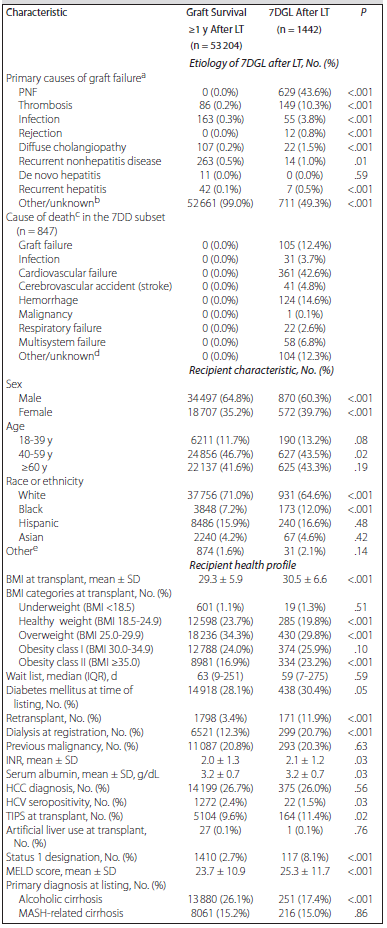
Table 1. Etiologies of 7-Day Graft Loss and Recipient, Donor, and Transplant Characteristics Among Deceased Donor Adult Liver Transplant Recipients (2015-2024)
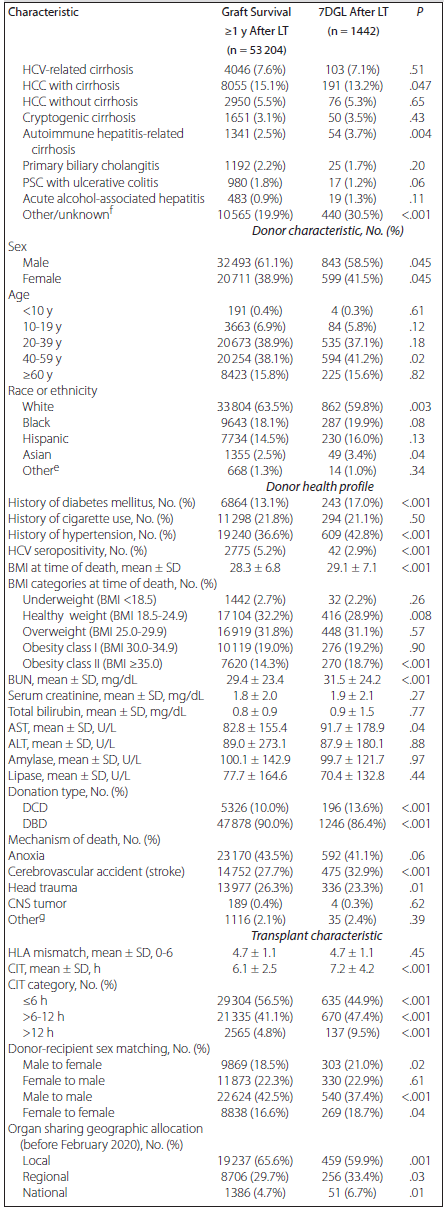
Table 1 (Cont.). Etiologies of 7-Day Graft Loss and Recipient, Donor, and Transplant Characteristics Among Deceased Donor Adult Liver Transplant Recipients (2015-2024)
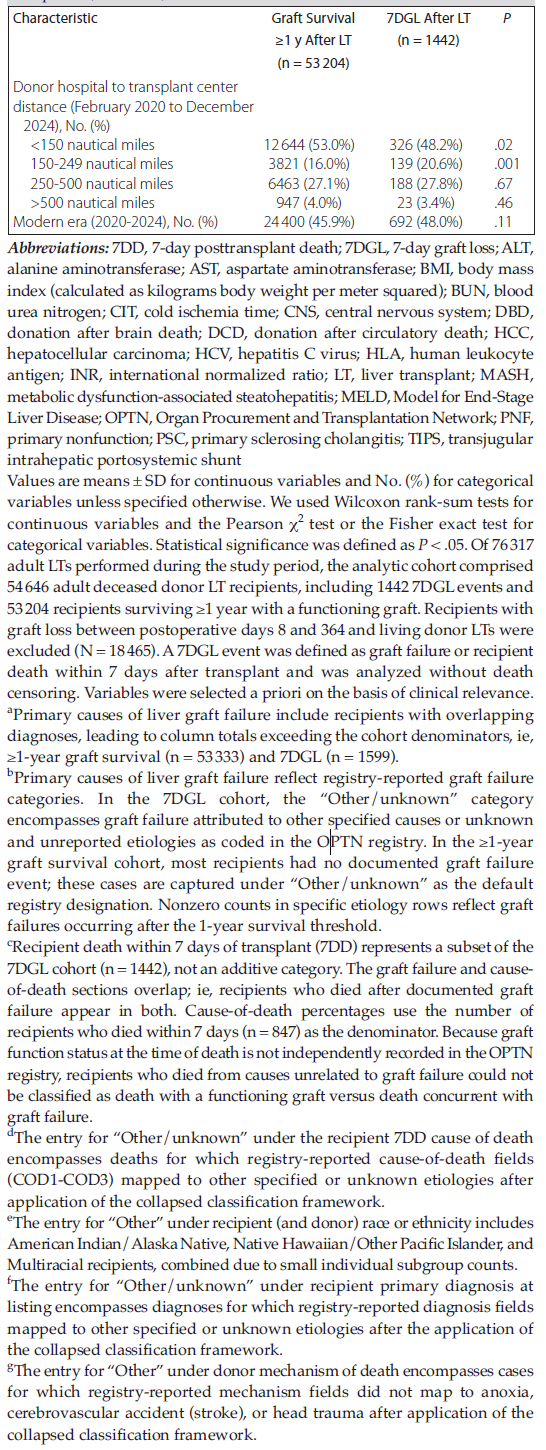
Table 1 (Cont.). Etiologies of 7-Day Graft Loss and Recipient, Donor, and Transplant Characteristics Among Deceased Donor Adult Liver Transplant Recipients (2015-2024)
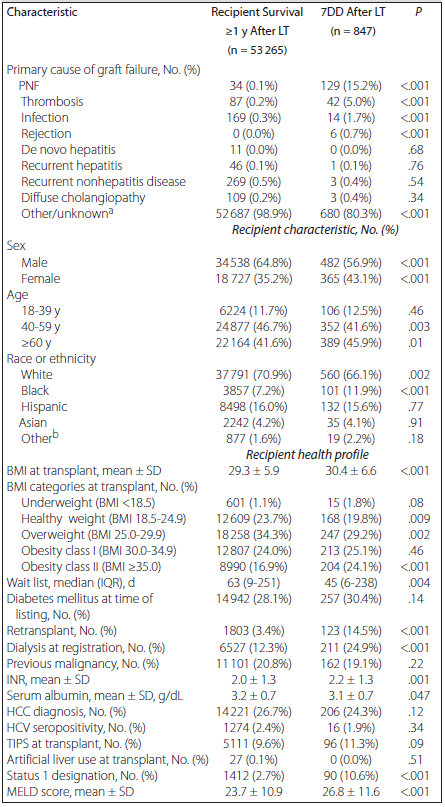
Table 2. Recipient, Donor, and Transplant Characteristics Among Adult Liver Transplant Recipients With 7-Day Posttransplant Death Versus ≥1-Year Recipient Survival (2015-2024)
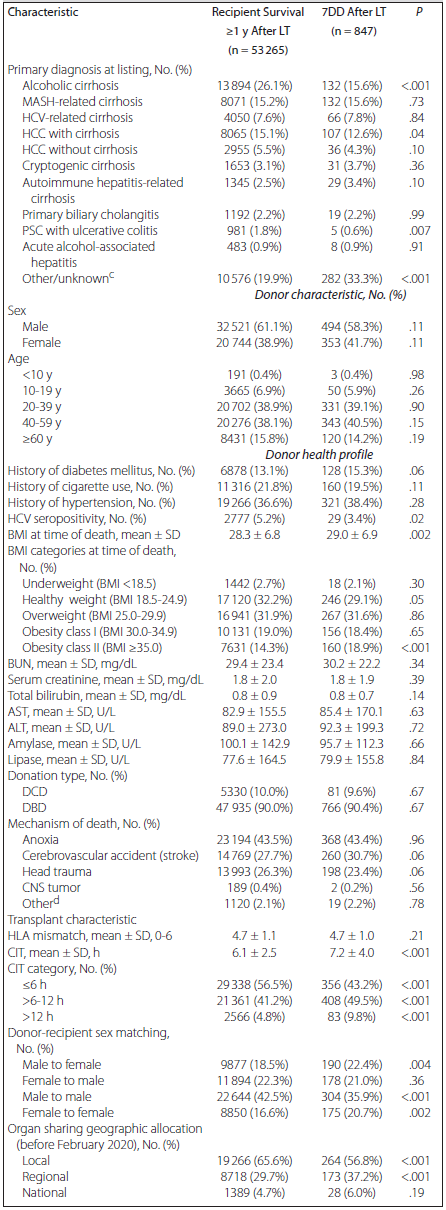
Table 2(Cont.). Recipient, Donor, and Transplant Characteristics Among Adult Liver Transplant Recipients With 7-Day Posttransplant Death Versus ≥1-Year Recipient Survival (2015-2024)
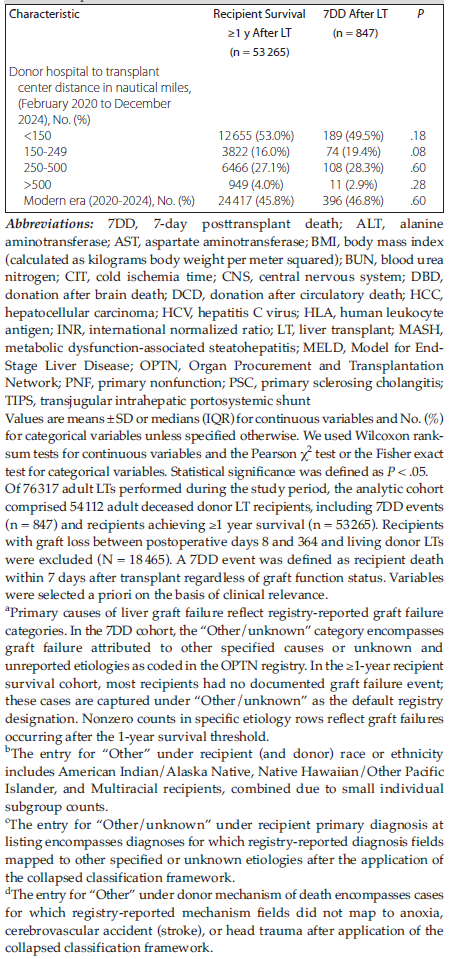
Table 2(Cont.). Recipient, Donor, and Transplant Characteristics Among Adult Liver Transplant Recipients With 7-Day Posttransplant Death Versus ≥1-Year Recipient Survival (2015-2024)
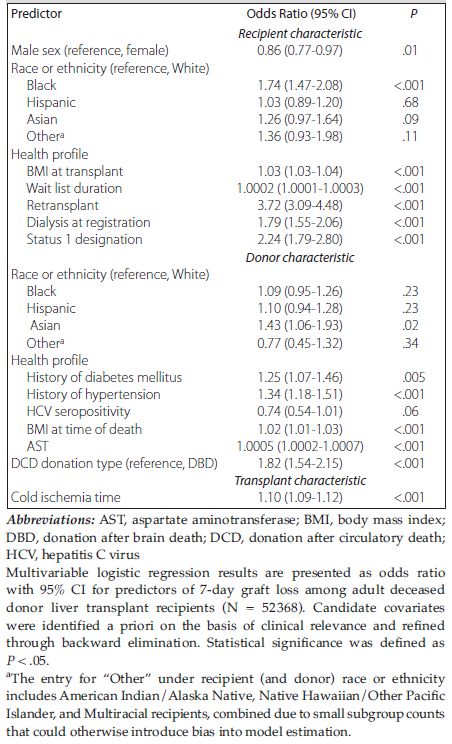
Table 3. Multivariable Logistic Regression Model of 7-Day Graft Loss in Adult Deceased Donor Liver Transplant Recipients (2015-2024)
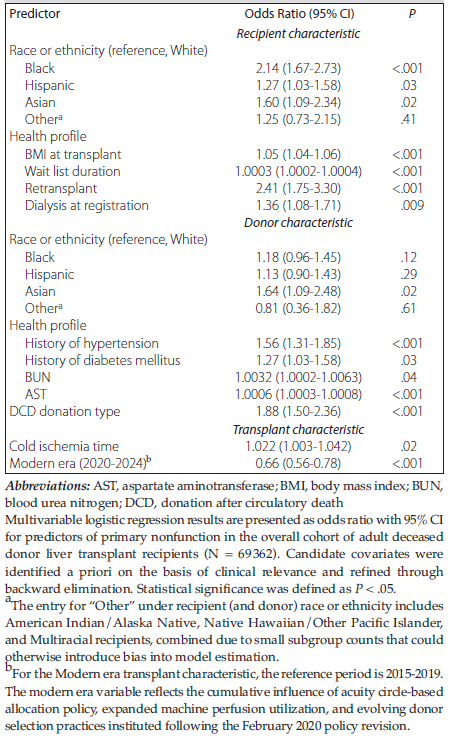
Table 4. Multivariable Logistic Regression Model of Primary Nonfunction in Adult Deceased Donor Liver Transplant Recipients (2015-2024)
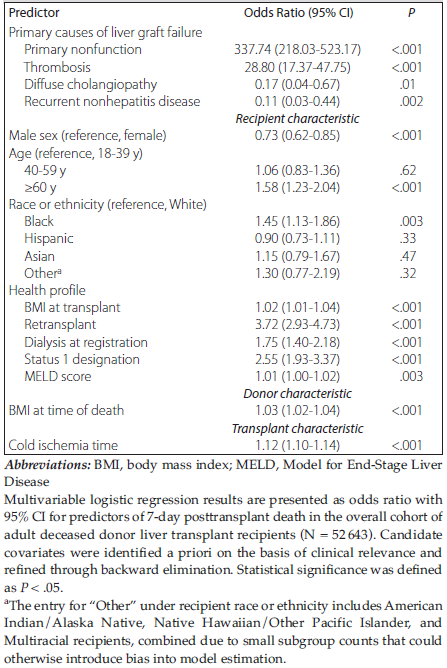
Table 5. Multivariable Logistic Regression Model of 7-Day Posttransplant Death in Adult Deceased Donor Liver Transplant Recipients (2015-2024)