Volume: 24 Issue: 8 August 2026
FULL TEXT
Late Ischemic Cholangiopathy After Liver Transplantation From a Deceased Donor With Situs Inversus Totalis: A Case Report
Situs inversus totalis is a rare congenital anomaly in which the thoracic and abdominal viscera are arranged in mirror image. The use of liver grafts from deceased donors with situs inversus totalis is a challenge because of the profound anatomical and technical variations that complicate implantation. Approximately 11 such transplants have been reported worldwide. Here, we present a case of orthotopic liver transplant in a 66-year-old man with hepatitis C-related cirrhosis and hepatocellular carcinoma in which the graft was from a 17-year-old deceased donor with situs inversus totalis. The graft, which displayed mirror-image hilar anatomy, was implanted with a modified piggyback technique, orienting the donor right lobe anteriorly; direct duct-to-duct biliary reconstruction was performed. Graft function was preserved through most of the first postoperative year, after which the patient developed progressive cholestasis and diffuse biliary strictures. Allograft biopsies demonstrated ischemic changes of the bile ducts and parenchyma consistent with ischemic cholangiopathy in the absence of hepatic arterial thrombosis, without evidence of acute rejection but potential features of subtle chronic rejection. The patient was not a candidate for retransplant and died 14 months after transplant. This case illustrates a technically successful situs inversus totalis donor graft that was complicated by late, diffuse, and irreversible biliary obstruction.
Key words : Anatomical variation, Biliary complications, Graft positioning, Mirror-image hilar anatomy
Introduction
Situs viscerum inversus describes a spectrum of anatomical variation found in approximately 0.01% of the population. Situs inversus totalis, in which the entire thoracic and abdominal anatomy is reversed, is rarer still, occurring in roughly 1 in 8000 to 1 in 10 000 individuals.1 Although kidneys from such donors raise few concerns, the liver has historically been regarded as difficult or unsuitable for transplant because mirror-image vascular and biliary anatomy complicates both procurement and implantation.1
Transplant into a recipient with situs inversus is comparatively well-described, with more than 50 re-ported cases. In contrast, transplant from a donor with situs inversus is far rarer, with approximately 16 cases published to date, 11 of which involved deceased donors.2-6 Several implantation strategies have been described for the latter, including the retroversus technique (a 180° rotation of the graft along the caval axis)2 and orthotopic rotation of the graft, with intraoperative flexibility between approaches recommended.3 We present a case in which a graft from a deceased donor with situs inversus was implanted successfully but was ultimately lost to ischemic cholangiopathy. Written informed consent for publication of clinical details and images was obtained from the patient.
Case Report
Donor
A 17-year-old male patient was referred as a potential brain-dead organ donor after anoxic brain injury. Situs inversus was identified during standard donor evaluation: cross-sectional imaging demonstrated mirror-image thoracic and abdominal anatomy, and echocardiography confirmed dextrocardia. Liver function tests were normal, viral hepatitis serologies were negative, and the liver was macroscopically normal. The liver and kidneys were used for transplant. The organ recovery surgery was perfor-med in a standard fashion, and organs were flushed using University of Wisconsin solution. The back-table preparation showed mirror-image anatomy (Figure 1A).
Recipient
The recipient was a 66-year-old man with decom-pensated hepatitis C-related cirrhosis and hepato-cellular carcinoma. His course before transplant was marked by recent hepatic decompensation, portal vein thrombosis, and placement of a transjugular intrahepatic portosystemic shunt. He was in the intensive care unit at the time of the offer, with a Model for End-Stage Liver Disease score of 20 and a Karnofsky performance status of 20.
Operation
Through a bilateral subcostal incision, the recipient hepatectomy was performed with preservation of the retrohepatic inferior vena cava. Marked ascites and portal hypertension were present. The donor liver had conventional arterial anatomy and displayed the expected mirror-image hilar configuration. The graft was implanted with a modified piggyback technique with slight counterclockwise rotation of the anastomosis: the right hepatic lobe was oriented anteriorly, and the suprahepatic donor cava was anastomosed to the recipient hepatic vein cuff (predominantly middle and left) with running 3-0 polypropylene (Figure 1B). The portal vein was reconstructed end-to-end with running 5-0 polypropylene, and a portal vein clot was extracted. After reperfusion, the graft was uniformly well perfused. Arterial inflow was reestablished by anas-tomosing the donor celiac axis on an aortic Carrel patch to a branch patch at the confluence of the recipient right and left hepatic arteries with running 6-0 polypropylene; portal flow was 1.9 L/min, and hepatic arterial flow was 600 mL/min, with appropriate waveforms. A cholecystectomy was performed, and biliary continuity was restored with a tension-free, wide, direct duct-to-duct anastomosis using running 6-0 polydioxanone. The orientation of the graft was rechecked and found satisfactory. The cold ischemia time was 4 hours 11 minutes, the warm ischemia time was 40 minutes, and estimated blood loss was 2 L.
Early course
The early postoperative course was complicated by postoperative hemorrhage requiring re-exploration twice during the first postoperative week. At the first re-exploration, 2 L of hemoperitoneum and unusual multilobe and recurring subcapsular hematomas were managed with capsular hemostasis. The arterial and portal anastomoses were intact, and the graft was soft and well perfused. The patient subsequently stabilized and was discharged. Over the following months, he developed acute kidney injury that progressed to dialysis-dependent end-stage renal disease, and he was subsequently listed for kidney transplant. Through most of the first postoperative year, graft function was preserved, with liver enzymes and bilirubin near the normal range; surveillance computed tomography at 1 year demon-strated patent vasculature and the expected mirror-image configuration of the portal, arterial, and hepatic venous systems (Figure 1, C and D). Three-dimensional reconstruction further confirmed patency of the mirror-image vascular anatomy and reversed portal, arterial and venous territories characteristic of situs inversus totalis (Figure 1, E and F).
Graft dysfunction
Approximately 11 months after transplant, the patient had a peritoneal catheter placement that was complicated by severe bleeding and hypotension, and he later developed rising transaminases and cholestasis. Endoscopic retrograde cholangiography demonstrated a suspected biliary anastomotic stricture, but endoscopic intervention was not feasible because of marked tortuosity of the reconstructed duct; therefore, percutaneous transhepatic biliary drainage was established and showed multiple multifocal biliary strictures. One year after transplant, he was admitted with jaundice and total bilirubin level of 16.4 mg/dL. A transjugular allograft biopsy showed cholestasis with features of biliary obstruction and no clear evidence of rejection. Despite biliary drainage, the bilirubin continued to rise.
Extensive evaluation followed. Pancytopenia prompted a bone marrow biopsy, which excluded posttransplant lymphoproliferative disorder and a myelodysplastic syndrome. Cross-sectional imaging confirmed the situs inversus orientation of the graft, with the right lobe lying anteriorly, and showed angulation at the portal vein anastomosis with mild narrowing of the portal vein. Computed tomographic angiography demonstrated diminished hepatic arte-rial opacification; at catheter angiography, the hepatic artery was patent, but flow was sluggish and improved substantially after intra-arterial nitroglycerin, raising the possibility of arterial vasospasm. There was no fixed arterial stenosis or thrombosis. A low-dose calcium channel blocker and a low-dose heparin infusion were started. A repeat transjugular biopsy showed ischemic changes invol-ving the bile ducts and parenchyma, with damaged and attenuated bile ducts and associated cholestasis, consistent with ischemic cholangiopathy, with pos-sible features of chronic rejection. The course was further complicated by multidrug-resistant Klebsiella oxytoca bacteremia and recurrent gastrointestinal bleeding.
Outcome
The patient developed progressive cholestatic graft failure, with total bilirubin peaking at 41.1 mg/dL. After multidisciplinary review, he was judged not to be a candidate for retransplant because of active infection, profound cytopenia, physical deconditioning, and limited social support. After discussions with the patient and his family, care was transitioned to a comfort-focused approach, and he died 14 months after transplant.
Discussion
Liver transplant using a graft from a deceased donor with situs inversus totalis remains exceedingly rare. Including the present case, 12 transplants using grafts from deceased donors and 5 using grafts from living donors have been reported (Table 1). The 2 principal approaches are retroversus implantation and ortho-topic graft rotation, with technique selection guided by donor and recipient anatomy.2,3,6 In the present case, a modified piggyback implantation with anterior orientation of the donor right lobe achieved satisfactory graft positioning, standard vascular reconstruction, and duct-to-duct biliary anastomosis.
The principal contribution of this report is its documentation of late graft failure despite initial technical success. As summarized in Table 1, nearly every previously published deceased-donor case describes early graft function and short- to medium-term survival; long-term follow-up is frequently absent.6 Our patient maintained excellent graft function for nearly 1 year before developing progressive cholestasis, ischemic cholangiopathy, and ultimately fatal graft failure. This delayed course highlights the importance of reporting an unfavorable outcome.
The dominant lesion was ischemic cholangiopathy, and its origin in this patient was genuinely uncertain. Several features that usually protect against ischemic-type biliary injury were present: a young, hemodyna-mically stable donor after brain death, conventional arterial anatomy, a short cold ischemia time (4 hours 11 minutes), and a patent arterial reconstruction without fixed stenosis or thrombosis. Two expla-nations remained, and they are not mutually exclusive. The first was a generic ischemic insult: the early postoperative hemorrhage and the later catheter-related bleeding with hypotension could each have compromised peribiliary perfusion inde-pendently of the donor anatomy. The second was specific to the graft: implantation required orienting the donor’s right lobe anteriorly, and 1-year imaging demonstrated angulation at the portal vein anas-tomosis with mild portal venous narrowing, an objective, positioning-related geometric abnormality. Reorientation of a mirror-image graft may introduce subtle torsion of the inflow or biliary structures and alter perfusion of the peribiliary plexus that supplies the donor duct; the angiographic finding of sluggish flow that improved with intra-arterial vasodilator is at least compatible with this mechanism. A single case cannot adjudicate between these possibilities.
Several practical points follow. First, the donor and recipient should be matched with the graft’s added demands in mind: a situs inversus totalis graft requires geometric reorientation with no equivalent in standard transplantation, and it asks the recipient to tolerate precisely the perfusion insult that this critically ill patient could not. Second, because reorientation is the one variable fully under operative control, its result should be confirmed objectively at implantation and on close postoperative imaging. Reconstruction type is secondary: the diffuse, multifocal strictures seen here reflected ischemic cholangiopathy of the entire biliary tree and would not have been prevented by the choice of anastomosis, although a reconstruction that preser-ves future endoscopic or percutaneous access remains worthwhile.2,3,7,8 Finally, the irreducible ambiguity of a single case is the strongest argument for a coordinated, multicenter registry capturing unfavorable and favorable outcomes; only pooled data can establish whether these grafts carry an intrinsic late biliary hazard.
References:
- Eitler K, Bibok A, Telkes G. Situs inversus totalis: a clinical review. Int J Gen Med. 2022;15:2437-2449. doi:10.2147/IJGM.S295444
CrossRef - PubMed - Pomposelli JJ, DaCosta MA, McPartland K, Jenkins RL. Retroversus implantation of a liver graft: a novel approach to the deceased donor with situs inversus totalis. Am J Transplant. 2007;7(7):1869-1871. doi:10.1111/j.1600-6143.2007.01843.x
CrossRef - PubMed - Reimondez S, Alcaraz Á, Giordano Segade E, Agüero Ramaccioni N, Casarez Díaz G, Maraschio MA. Liver transplant from a donor with situs inversus totalis using orthotopic and retroversus technique: a case report. Transplant Proc. 2019;51(2):585-588. doi:10.1016/j.transproceed.2018.12.002
CrossRef - PubMed - Herrera LA, Castillo J, Martino E, Rabanal JM, Fleitas MG. Orthotopic liver transplantation from a donor with abdominal situs inversus. Transplantation. 1996;62(1):133-135. doi:10.1097/00007890-199607150-00027
CrossRef - PubMed - Guidetti C, Odorizzi R, Catellani B, et al. Matching the opposites: liver transplantation from a situs viscerum inversus totalis donor. Updates Surg. 2025;77(1):77-82. doi:10.1007/s13304-024-01968-3
CrossRef - PubMed - Shamsaeefar A, Masjedi F, Roozbeh J, et al. Liver and pancreas transplantation in adult donor and recipients with situs inversus totalis: a case series and review of the literature. J Med Case Rep. 2024;18(1): 398. doi:10.1186/s13256-024-04720-y
CrossRef - PubMed - Selvakumar N, Goyal N, Nayeem M, Vohra S, Gupta S. Does situs inversus totalis preclude liver donation in living donor liver transplantation? A series of 3 cases from single institution. Int J Surg Case Rep. 2016;21:23-25. doi:10.1016/j.ijscr.2016.01.033
CrossRef - PubMed - Asfar S, Ozcay N, Grant D, Wall W. Transplantation of the liver from a donor with complete situs inversus and dextrocardia. Transplantation. 1995;59(3):442-444.
CrossRef - PubMed - Braun F, Rodeck B, Lorf T, et al. Situs inversus of donor or recipient in liver transplantation. Transpl Int. 1998;11(3):212-215. doi:10.1007/s001470050130
CrossRef - PubMed - Chun JM, Jung GO, Choi GS, et al. Living donor liver transplantation using a graft from a donor with situs inversus totalis. Liver Transpl. 2009;15(6):666-669.
CrossRef - PubMed - Dou J, Yang T, Cao JL, Gao QJ, Su YL, Zhu ZJ. Classical orthotopic liver transplantation from a donor with situs inversus totalis using slight rotation of the liver graft. Chin Med J (Engl). 2010;123(10):1353-1355.
CrossRef - PubMed - Sun XY, Qin K, Dong JH, et al. Liver transplantation using a graft from a donor with situs inversus totalis: a case report and review of the literature. Case Rep Transplant. 2013;2013: 532865. doi:10.1155/2013/532865
CrossRef - PubMed - Moon DB, Lee SG, Ha TY. Novel technique of implantation for reversed modified right lobe graft from a donor with situs inversus totalis: new challenge in adult living donor liver transplantation. Transpl Int. 2013;26(10):e88-90. doi:10.1111/tri.12136
CrossRef - PubMed - Manzia TM, Tariciotti L, Angelico R, Toti L, Anselmo A, Tisone G. Side-to-side caval anastomosis in a patient receiving a liver graft from a marginal donor with situs inversus totalis. Int J Surg Case Rep. 2015;6c:222-225. doi:10.1016/j.ijscr.2014.10.037
CrossRef - PubMed - Lopez-Andujar R, Andrea B, Javier M, Cristina B, David C, Vicente I. Liver transplantation technique from a cadaveric donor with situs inversus totalis review and a new case. Japanese J Gastro Hepato. 2021;6(21):1-5. doi:10.47829/JJGH.2021.62101
CrossRef - PubMed

Volume : 24
Issue : 8
Pages : 654 - 658
DOI : 10.6002/ect.2026.0180
From the 1Division of Transplantation, Department of Surgery, University of Maryland School of Medicine, Baltimore, Maryland; the 2Division of Transplantation, Department of Surgery, Johns Hopkins University School of Medicine, Baltimore, Maryland; and the 3Department of Diagnostic Radiology and Nuclear Medicine, University of Maryland School of Medicine, Baltimore, Maryland, USA
Acknowledgements: The authors have not received any funding or grants in support of the presented research or for the preparation of this work and have no declarations of potential conflicts of interest. AI-assisted tools were used to support drafting and editing of the manuscript text; all content was reviewed and verified by the authors, who take full responsibility for its accuracy and integrity.
Corresponding author: Raphael P. H. Meier, Department of Surgery, University of Maryland School of Medicine, 22 South Greene Street, Baltimore, MD 21201, USA
Phone: +1 (410) 328 5408 E-mail:rmeier@som.umaryland.edu
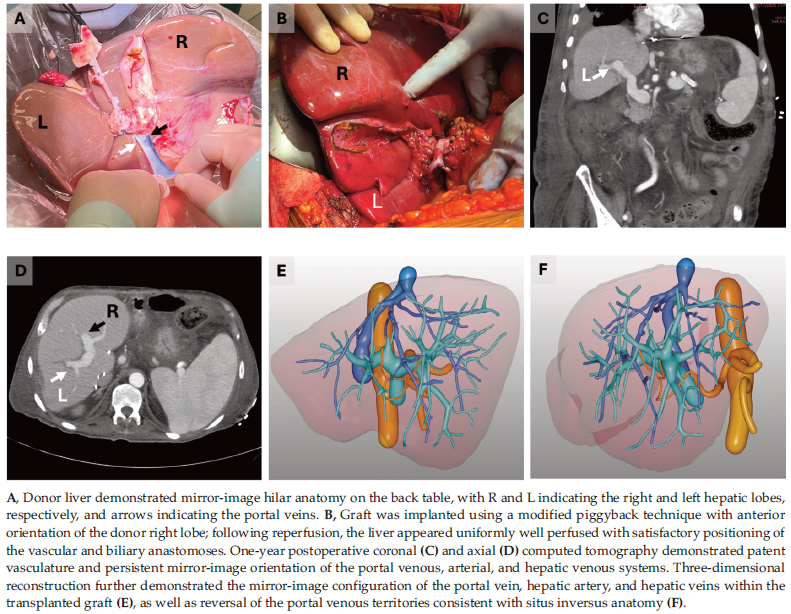
Figure 1. Orthotopic Liver Transplant Using a Graft From a Deceased Donor With Situs Inversus Totalis
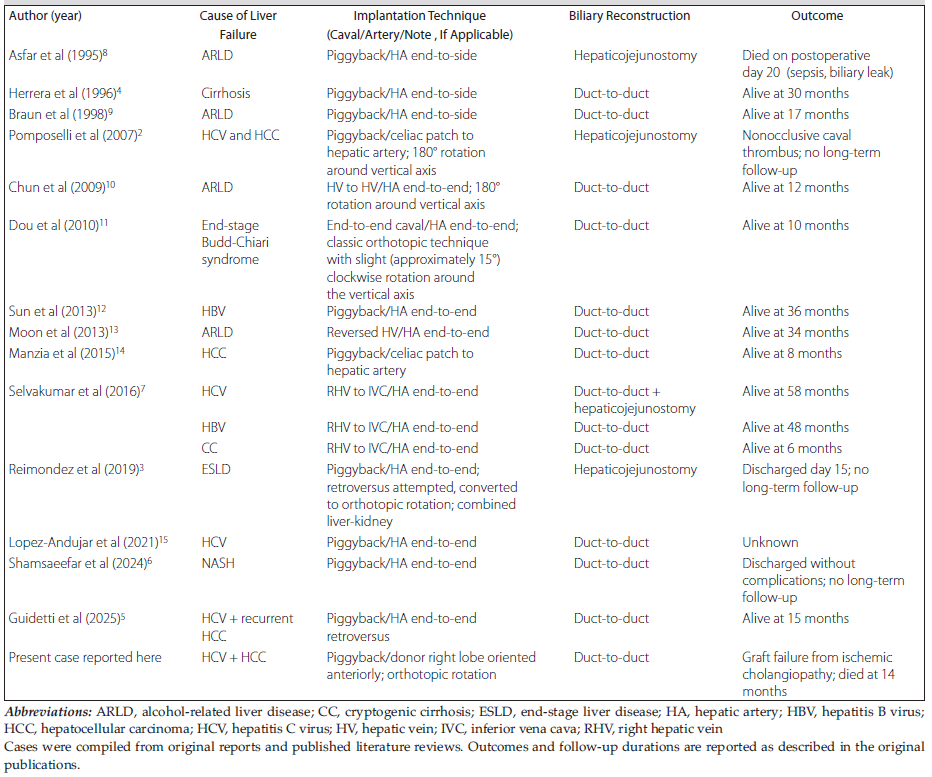
Table 1. Reported Cases of Liver Transplant With Grafts From Donors With Situs Inversus Totalis