Volume: 24 Issue: 4 April 2026
FULL TEXT
Prognostic Significance of miR-181a and miR-181b Expression and NPM1 Mutations in Patients With Acute Myeloid Leukemia Undergoing Hematopoietic Stem Cell Transplant
Objectives: MicroRNAs play an essential role in acute myeloid leukemia pathogenesis, including cell survival, differentiation, and proliferation. We aimed to examine miR-181a and miR-181b expression levels in patients with recently diagnosed acute myeloid leukemia, focusing on those who developed acute graft-versus-host disease, and to characterize NPM1 mutations present in these patients.
Materials and Methods: We compared miR-181a and miR-181b expression levels in 150 newly diagnosed patients with acute myeloid leukemia and NPM1 mutation subtypes and healthy controls, along with various risk groups (high, intermediate, favorable risk), M3 versus non-M3, with and without graft-versus-host disease, and response or no response to therapy. We used quantitative SYBR green real-time polymerase chain reactions for evaluations.
Results: Patients with acute myeloid leukemia and NPM1 mutation B exhibited significantly higher miR-181a expression (3.4-fold increase, P = .008), whereas miR-181b was reduced across all patients with acute myeloid leukemia (18.3-fold decrease, P < .001). Receiver operating characteristic analysis demonstrated that miR-181a distinguished acute myeloid leukemia from controls (area under the curve of 0.81). Among recipients of hematopoietic stem cell transplant, those with versus those without acute graft-versus-host disease and NPM1 mutation C showed significantly elevated miR-181a expression (P = .002), with 80.0% sensitivity and 85.7% specificity for predicting acute graft-versus-host disease. Baseline miR-181a expression in patients with NPM1 mutation B was significantly associated with response to therapy (P = .001). Expression of miR-181a also differed between M3 and non-M3 French-American-British subtypes (P = .05). NPM1 mutation A was significantly more prevalent in patients with acute myeloid leukemia compared with controls (P = .04).
Conclusions: miR-181a is a potential diagnostic and prognostic biomarker in acute myeloid leukemia, particularly for distinguishing French-American-British subtypes and predicting acute graft-versus-host disease in patients with NPM1 mutations undergoing hematopoietic stem cell transplant. These findings warrant further validation in larger cohorts.
Key words : Acute graft-versus-host disease, French-American-British subtype, microRNA, NPM1
Introduction
Acute myeloid leukemia (AML) is a hematologic neoplasm characterized by unregulated expansion of immature myeloid cells.1 Acute myeloid leukemia is the most prevalent form of acute leukemia in adults, with 4.3 new cases per 100 000 annually in the United States.2,3 Allogeneic hematopoietic stem cell transplant (HSCT) is often used to treat AML, which can be curative by eradicating leukemic cells through both chemotherapy and the acute graft-versus-host disease (aGVHD) effect of donor immune cells.4,5 After HSCT, AML patients with severe aGVHD (grade III-IV) have a poor overall survival, with reported high mortality rate.6
The analysis of AML is historically decided through particular chromosomal translocations. One approach is checking levels of microRNAs. Distinct microRNA expression profiles have been identified for different AML subtypes, allowing for the detection of unique and significant microRNA signatures associated with each subtype.7 MicroRNAs are short noncoding RNA molecules (19-25 nucleotides)8 that regulate posttranscript gene expression by binding to target microRNAs, leading to translational repression or microRNA degradation. MicroRNAs are increasingly recognized as promising biomarkers in AML and prediction of GVHD.9,10 Many genomic alterations, including translocations, insertions, deletions, and, much less frequently, somatic copy number adjustments that have an effect on microRNA genes, can reason aberrant microRNA expression related to AML.11 The expression of microRNAs in AML has been the subject of numerous investigations. As part of the disease process in AML, certain members of the miR-181 family affect how leukemia cells live and develop. Given that their expression patterns have been predictive of clinical outcomes, they may serve as biomarkers.12,13
The pathogenesis and prognosis of AML are strongly related with miR-181a and miR-181b expression, which influence the differentiation of hematopoietic cells, including B cells, T cells, and natural killer cells.14 The miR-181 family members (miR-181a and miR-181b) can inhibit granulocytic and macrophage-like differentiation of leukemic cells by targeting genes such as PRKCD, CTDSPL, and CAMKK1. Overexpression of miR-181 can block myeloid differentiation, even as inhibition of miR-181 can in part oppose this block, enhancing differentiation and decreasing leukemic burden in preclinical models.15 Increased miR-181a expression is related to positive clinical prognosis, especially in cytogenetically normal AML with CEBPA mutations and AML subtypes with favorable cytogenetics (t[8;21], inv[16], t[15;17]).14 High expression level of miR-181, particularly miR-181a and miR-181b, is generally related to improved clinical results in AML, including greater rates of complete remission rates, longer overall survival, and longer disease-free survival, especially in cytogenetically normal AML.14,16,17
Different cytogenetic subtypes of AML and sure mutations found in cytogenetically everyday AML instances, consisting of the ones regarding NPM1, FLT3, and CEBPA, were determined to show of distinct microRNA expression patterns.18-21 Mutations in the nucleophosmin (NPM1) gene are among the most prevalent genetic mutations associated with AML.22 NPM1 mutations are responsible for about 30% of adult AML cases and a smaller percentage of pediatric AML cases.23,24
The NPM1 gene mutations in AML are classified into several molecular subtypes based on specific 4-base pair insertions in exon 11 (formerly exon 12)25: NPM1 mutation A (TCTG insertion, 69-80% of cases), mutation B (CATG insertion, 10-11%), mutation C (rare), mutation D (CCTG insertion, ~8%), and mutation E (rare). All mutations result in cytoplasmic NPM1 mislocalization, contributing to leukemogenesis.25-27
The primary goal of this study was to examine levels of expression of particular microRNAs, such as miR-181a and miR-181b, in patients with AML, those receiving HSCT, and those experiencing aGVHD. This study also aimed to examine mutations of the NPM1 gene, a prevalent and clinically significant genomic mutation that causes AML. Ultimately, the findings may contribute to improved prognostic stratification, personalized therapeutic strategies, and better posttransplant monitoring in AML patients.
Materials and Methods
This cross-sectional study enrolled 150 newly diagnosed adult patients with de novo AML admitted to Namazi Hospital (Shiraz, Iran) between March 2020 and February 2024. Patients were categorized into 5 groups: (1) total AML cohort (n = 150); (2) HSCT recipients (n = 47); (3) aGVHD subgroup (n = 16); (4) non-aGVHD subgroup (n = 31); and (5) healthy controls (n = 100). Exclusion criteria were those aged <18 years, prior chemotherapy, other malignancies, active infections, refusal of consent, poor RNA quality, and unrelated/mismatched donors for HSCT. An oncologist used immunophenotyping, cytochemistry, and morphology to diagnose AML. Clinical and laboratory data were also collected, such as French-American-British (FAB) subtype, hemoglobin level, complete blood count, and blast percentage.
All patients with AML received normal initiation chemotherapy, which included daunorubicin 45 mg/m2 on days 1 to 3 and cytarabine 100 - 200 mg/m2 on days 1 to 7, after receipt of high dosages of a cytarabine-based consolidation phase (3 g/m2 cytarabine every 12 hours for 3 days, repeated for 2-3 cycles). In addition to the usual beginning of chemotherapy treatment, patients with acute promyelocytic leukemia received 2 split doses of arsenic trioxide (0.15 mg/kg/day intravenously) and all-trans retinoic acid alone (45 mg/m2/day) until bone marrow remission was reached. Among patients with AML, 47 were tracked for aGVHD after receiving HSCT from related, HLA-matched donors. Consequently, 16 patients developed aGVHD and 31 patients did not. All stages of investigation were approved by the Ethics Committee of Shiraz University of Medical Sciences (Code: IR.SUMS.REC.1401.114).
Acute GVHD was assessed prospectively according to standard Glucksberg-Seattle criteria and International Bone Marrow Transplant Registry criteria, with evaluations performed at least weekly during the first 100 days posttransplant or until death or relapse, whichever occurred first. The median time to aGVHD onset was 32 days (range, 12-89 days). All patients developing aGVHD within this 100-day window were included in the aGVHD subgroup (n = 16). These 16 cases represented the complete incidence of aGVHD among the 47 HSCT recipients during the study period; no patients meeting inclusion criteria were excluded from analysis. Patients who died (n = 3) or experienced disease relapse (n = 5) prior to day 100 without developing aGVHD were retained in the non-aGVHD group for primary analysis but were considered competing events in cumulative incidence analyses.
Cytogenetic analyses
Karyotype was investigated with the conventional G-banding process. To evaluate for chromosomal abnormalities in AML1-ETO and CBFB-MYH11, the reverse transcriptase polymerase chain reaction (PCR) technique was used. Patients were diagnosed with cytogenetically normal AML if they tested negative for certain chromosomal abnormalities. Of the 150 AML patients, 107 exhibited an aberrant karyotype and 43 had normal cytogenetics.
Sample collection and ribonucleic acid isolation
Before patients had chemotherapy, 5 mL of peripheral blood were drawn from both healthy controls and every patient at the time of identification in tubes containing EDTA. Both patient and control peripheral blood mononuclear cells were isolated with Ficoll-hypaque density gradient centrifugation. To extract total RNA, Invitrogen TRIZOL reagent was utilized. The amount of extracted RNA was measured using Nanodrop (Thermo Fisher Scientific) followed by Prime Script RT reagent kit (Takara) and the T100 thermocycler (Bio-Rad Laboratories), For each microRNA, specific stem-looped primers were used to convert total RNA into complementary DNA.
Quantification of miR-181a and miR-181b expression levels by SYBR green real-time polymerase chain reaction
Expression levels of miR-181a and miR-181b were quantitatively examined using the SYBR green real-time PCR method. SYBR Premix Ex TaqTM II (Tli RNaseH Plus; Takara) and specially created primers for each microRNA were used in an iQ5 thermocycler (BioRad Laboratories). The internal control was the U6 gene. At the conclusion of the program, a melt curve measurement was conducted to verify the specificity of the reaction. To normalize the expression levels of miR-181a and miR-181b, the U6 gene was used. Differences in the relative expression levels of miR-181a and miR-181b were determined using the double delta Ct (DCt) method, where DCt = (Ct [sample] – Ct [housekeeping gene]) and double DCt = (DCt [patients] – DCt [controls]). At least 2 duplicate wells were used for each real-time PCR experiment.
Statistical analyses
We used SPSS version 20 for statistical analyses and R software version 4.1.0 with the "cmprsk" package for competing risks analysis. We also used Arlequin V311 for the analysis. We conducted receiver operating characteristic (ROC) curve analysis to determine optimal cut-off values for miR-181a and miR-181b expression that best discriminated between clinical outcomes. We used the Youden index (sensitivity + specificity - 1) to identify optimal threshold values. We calculated area under the curve (AUC) with 95% CI, and AUC >0.70 was considered indicative of good discriminatory performance. We estimated cumulative incidence functions for aGVHD and relapse with the Fine-Gray subdistribution hazard model, with competing events defined as follows: for aGVHD analysis, relapse and death without aGVHD were treated as competing events; for relapse analysis, death without relapse was treated as a competing event. We used the Gray test to compare cumulative incidence curves between groups stratified by microRNA expression status (high vs low based on ROC-derived cut-offs). We calculated subdistribution hazard ratios (SHRs) with 95% CIs to quantify effect sizes. All analyses were performed for the total cohort and repeated after stratification by NPM1 mutation subtype (mutations A, B, and C and wild-type). P < .05 was considered statistically significant, and all tests were 2-sided.
Results
Among 150 patients with new AML diagnosis, 78 (52.5%) were men and 72 (48%) were women. Mean age of patients with AML was 43 ± 1.4 years (range, 20-75 years) (Table 1). Fifty-two of 150 AML patients (34.6%) had a FLT3-ITD mutation. Mean white blood cell count was 51 134 ± 9364, platelet count was 59 234 ± 6354, hemoglobin level was 9.3 ± 0.54 g/dL, and lactate dehydrogenase level was 1564 ± 197 U/L. The median bone marrow blast percentage was 83% (range, 20%-98%), and the median peripheral blood blast percentage was 59% (range, 18%-90%). According to cytogenetic/molecular risk classification, 34 patients (22.6%) were classified as favorable risk, 21 patients (36.0%) as intermediate risk, and 52 patients (41.3%) as poor risk. Regarding response to induction chemotherapy, 103 patients (68.6%) achieved complete remission, and 47 patients (31.3%) did not achieve complete remission.
Aberrant miR-181a and miR-181b expression in patients with acute myeloid leukemia
Patients with AML and controls were compared in terms of miR-181a and miR-181b expression levels. Analysis showed that AML patients had significantly greater (3.4-fold) miR-181a expression than healthy controls in patients with NPM1 mutation B (0.66 ± 0.65 vs 3.6 ± 0.7; P = .008). In contrast, miR-181b levels in patients with AML were significantly lower (18.3 times) than those of healthy controls (6.6 ± 0.51 vs 2.7 ± 1.07; P < .001).
miR-181a and miR-181b expression in patients with hematopoietic stem cell transplant who developed acute graft-versus-host disease
Expression levels of miR-181a and miR-181b were examined in patients who did and did not develop aGVHD. Results showed that miR-181a expression was significantly upregulated in patients with NPM1 mutation C (1.32 ± 0.23 vs 4.42 ± 2.35; P = .002). Furthermore, miR-181a and miR-181b expression levels were higher in HSCT patients with high-grade (grade III-IV) aGVHD than in patients with low-grade (grade 0-II) aGVHD; however, differences were not significant.
miR-181a expression in patients with acute myeloid leukemia who responded to treatment
Degree of response to treatment was used to determine the baseline expression levels of miR-181a in AML patients. Our findings showed a significant association between patients with NPM1 mutation B and response to therapy (P = .001). Both miR-181a gene expression levels were higher in AML patients who did not respond to treatment than in those who did; however, the difference was not significant.
miR-181a and miR-181b expression levels according to cytogenetic status and French-American-British groups
Regarding FAB classification, the most common subtype was M2 (41.3%), followed by M3 (22.6%), M4 (14.0%), M5 (9.3%), M0 (8.0%), M6 (2.6%), and M7 (1.3%) (Table 1). miR-181a and miR-181b expression levels were compared using chromosomal aberrations in AML patients. Results showed that patients with various cytogenetic abnormalities did not differ in expression levels of miR-181a and miR-181b.
We separated AML patients into M3 and non-M3 groups based on cytogenetic aberration because the FAB group of some of them was not determined. We next compared expression of miR-181a and miR-181b in these groups. Consequently, of 107 individuals with aberrant cytogenetics, 73 patients (68.2%) were in the non-M3 group and 34 patients (31.7%) were in the M3 group. Patients with AML and M3 and non-M3 FAB subtypes did differ in expression levels of miR-181a (P = .05).
NPM1 mutation analysis: frequency distribution and association with clinical outcomes
Analysis of NPM1 mutation frequencies revealed that NPM1 mutation A was significantly more prevalent in AML patients compared with healthy controls (90.0% vs 81%; P = .04, odds ratio = 2.1, 95% CI, 0.95-4.7) (Table 2). No significant differences were observed between patients and healthy controls for other NPM1 mutation subtypes (mutation B to mutation E; all P > .05). Analyses of association between NPM1 mutations and treatment response showed no significant differences between patients who achieved complete remission and those who did not for any NPM1 mutation subtype (all P > .05) (Table 2). Comparison of NPM1 mutation frequencies between M3 and non-M3 AML patients also revealed no significant differences (all P > .05) (Table 2), consistent with the known rarity of NPM1 mutations in acute promyelocytic leukemia.
Receiver operating characteristic curve analysis for miR-181a and miR-181b as diagnostic and predictive biomarkers
To determine the optimal cut-off values for miR-181a and miR-181b expression and to evaluate their performance as biomarkers, ROC curve analysis was performed for 3 clinical outcomes: distinguishing AML patients from healthy controls, predicting aGVHD development in HSCT recipients, and predicting response to induction chemotherapy. The AUC, optimal cut-off values (determined by the Youden index), sensitivity, specificity, positive predictive value (PPV), and negative predictive value (NPV) for each outcome are summarized in Table 3.
To distinguish AML patients from healthy controls, ROC analysis revealed that miR-181a had an AUC of 0.81 (95% CI, 0.74-0.88; P < .001). The optimal cut-off value of >2.8-fold change (relative to controls) yielded a sensitivity of 76.5% and specificity of 82.0%, with a positive predictive value of 86.4% and negative predictive value of 69.5%. For miR-181b, the AUC was 0.76 (95% CI, 0.69-0.83; P < .001), with an optimal cut-off of <0.4-fold change providing 71.3% sensitivity and 79.0% specificity (PPV = 83.6%, NPV = 64.8%).
Among HSCT recipients, miR-181a demonstrated significant predictive value for aGVHD development, with an AUC of 0.73 (95% CI, 0.61-0.85; P = .008). The optimal cut-off of >3.5-fold change identified patients at risk for aGVHD with 68.8% sensitivity and 77.4% specificity, corresponding to a PPV of 61.1% and NPV of 82.8%. When stratified by NPM1 mutation status, the predictive performance of miR-181a for aGVHD was substantially improved in specific subgroups. In patients with NPM1 mutation C, the AUC reached 0.89 (95% CI, 0.78-1.00; P = .001), with 80.0% sensitivity and 85.7% specificity at the same cut-off of >3.5-fold (PPV = 80.0%, NPV = 85.7%). For NPM1 mutation B patients, the AUC was 0.76 (95% CI, 0.64-0.88; P = .017), with 66.7% sensitivity and 76.9% specificity (PPV = 55.6%, NPV = 83.3%). In contrast, miR-181a did not show significant predictive value for aGVHD in patients with wild-type NPM1 (AUC = 0.58; 95% CI, 0.43-0.73; P = .38) (data not shown).
For predicting response to induction chemotherapy, ROC analysis of baseline miR-181a expression yielded an AUC of 0.76 (95% CI, 0.68-0.84; P < .001), with an optimal cut-off of >2.8-fold change discriminating responders from nonresponders with 71.8% sensitivity and 68.1% specificity (PPV = 82.2%, NPV = 54.2%).
These findings established optimal cut-off values for miR-181a and miR-181b that could be used for risk stratification in AML patients. Notably, the predictive performance of miR-181a for aGVHD was markedly enhanced in patients with specific NPM1 mutations, particularly NPM1 mutation C, suggesting that mutation status should be considered when interpreting miR-181a levels for clinical decision-making. All ROC analysis results are summarized in Table 3.
Association between baseline miR-181a expression and treatment response
Of the 150 AML patients, 103 (68.6%) achieved complete remission after induction chemotherapy, and 47 (31.3%) had no response (no complete remission). In ROC analysis, an optimal cut-off of >2.8-fold change was identified for miR-181a to discriminate responders from nonresponders (AUC = 0.76; 95% CI, 0.68-0.84; P < .001). Cumulative incidence of relapse was analyzed with death as a competing event. Patients with high baseline miR-181a expression (>2.8-fold) had a significantly lower 2-year cumulative incidence of relapse (24.6%; 95% CI, 16.2%-33.0%) compared with those with low expression (41.3%; 95% CI, 31.8%-50.8%; Gray test P = .012), corresponding to a SHR of 0.58 (95% CI, 0.38-0.89; P = .012) (Table 4). When analyzed according to NPM1 mutation status, the protective effect of high miR-181a expression was most pronounced in patients with NPM1 mutation B, where the 2-year cumulative incidence of relapse was 18.2% (95% CI, 5.6%-30.8%) in the high expression group versus 47.6% (95% CI, 32.4%-62.8%) in the low expression group (SHR = 0.41; 95% CI, 0.21-0.80; P = .008). A significant association was also observed in NPM1 mutation C patients (SHR = 0.52; 95% CI, 0.28-0.97; P = .042), whereas no significant association was found in patients with wild-type NPM1 (SHR = 0.81; 95% CI, 0.51-1.29; P = .38).
Discussion
In this study, we investigated the expression levels of miR-181a and miR-181b in 150 newly diagnosed AML patients, with particular focus on their association with NPM1 mutation subtypes, response to therapy, and development of aGVHD after HSCT. Through comprehensive statistical analyses including ROC curve determination, cumulative incidence functions with competing risks, and NPM1 mutation-stratified subgroup analyses, we identified several novel findings with potential clinical implications.
Our findings demonstrated that miR-181a is significantly upregulated in AML patients with NPM1 mutation B compared with healthy controls, while miR-181b is markedly downregulated across all AML patients. These results align with previous studies reporting dysregulation of miR-181 family members in AML.17,28,29
The contrasting expression patterns of miR-181a and miR-181b in the same patients suggest distinct regulatory roles in AML pathogenesis, consistent with previous reports that miR-181 family members can have opposing effects depending on cellular context and target genes.17,29 These findings provide quantitative thresholds that could potentially be used in diagnostic settings, although validation in larger cohorts is needed. Qiang and colleagues17 demonstrated that AML patients exhibit significantly higher expression of miR-181a-3p compared with healthy controls, with this expression being associated with therapy response and prognosis.
Receiver operating characteristic curve analysis demonstrated that both miR-181a and miR-181b could distinguish AML patients from healthy controls with acceptable sensitivity and specificity. These findings provide quantitative thresholds that could potentially be used in diagnostic settings, although validation in larger cohorts is needed.
NPM1 mutations are among the most prevalent genetic anomalies in adult AML, occurring in approximately 30% to 35% of cases overall and in 50% to 60% of patients with normal karyotype.30,31
Our finding that miR-181b was significantly downregulated in AML aligns with most studies reporting lower miR-181b expression in patients with poor prognoses or treatment resistance.32,33 However, some reports indicated upregulation of miR-181b in certain AML subtypes, highlighting possible heterogeneity based on genetic background or disease stage.34
A key clinical finding of our study was the strong association between baseline miR-181a expression and subsequent aGVHD in HSCT recipients. After adjusting for competing risks, we found that patients with high miR-181a levels had a significantly higher cumulative incidence of aGVHD, indicating that miR-181a expression is an independent predictor of aGVHD risk. This association was particularly pronounced in patients with NPM1 mutation C, where miR-181a predicted aGVHD with high sensitivity (80.0%) and specificity (85.7%). The interplay between miR-181a and NPM1 mutations is complex. Although increased miR-181a expression has been related to better outcomes in some AML contexts, this may vary depending on mutation status and AML subtype.35
Our findings are consistent with studies reporting that patients with aGVHD have significantly higher levels of miR-181a expression compared with those without aGVHD.36 However, contrasting results from another study reported that miR-181a downregulation may be a prognostic sign for aGVHD,37 suggesting that the role of miR-181a may be context-dependent, possibly influenced by disease type, timing of measurement, or patient-specific factors such as NPM1 mutations.20,38 Regarding transplant outcomes, allo-HCT in NPM1-mutated AML shows variable results depending on measurable residual disease status and co-mutations, with some studies suggesting that pretransplant measurable residual disease and FLT3-ITD status influence relapse and survival posttransplant.39,40
We found that higher baseline miR-181a expression was associated with a lower relapse rate in AML patients, indicating a protective role against disease recurrence. This favorable effect was most pronounced in patients with NPM1 mutation B. These findings are consistent with previous studies showing that elevated miR-181a expression predicts better outcomes in AML, particularly in cytogenetically normal cases and those with wild-type NPM1 or FLT3-ITD mutations.13,38 Mechanistically, miR-181a functions as a tumor suppressor by targeting the RAS/MAPK signaling pathway, thereby reducing leukemic cell proliferation and enhancing chemotherapy sensitivity.27,41 The stronger effect observed in patients with NPM1 mutations may reflect interactions with HOX gene regulatory networks known to be dysregulated in these leukemias.21
NPM1 mutations are typically associated with better prognosis and greater response to induction therapy.42,43 Mechanistically, NPM1 mutations lead to altered cellular pathways, including downregulation of FOXM1 transcriptional activity, which has been linked to enhanced chemotherapy response and favorable prognosis.44 Specific subtypes of NPM1 (mutation B and D) are among the more common variants and have been studied for their clinical impact. Although the literature often groups NPM1 mutations collectively, some reports note that NPM1 mutation B accounts for approximately 10% of cases.45 Other research has identified molecular subtypes within NPM1-mutated AML, such as "primitive" and "committed," which differ in gene expression profiles, disease differentiation, and survival outcomes,46 potentially explaining the heterogeneity in prognosis and treatment response among patients with NPM1 mutations.
A novel finding of our study was the significant difference in miR-181a expression between M3 and non-M3 FAB subtypes. This observation aligns with reports that AML M3 has a distinct gene expression signature compared with other AML subtypes,36 reflecting different underlying biology and possibly explaining the distinct miR-181a expression patterns observed between M3 and non-M3 groups.47
Our study found a significant association between AML patients with NPM1 mutation A and healthy controls. In adult AML, NPM1 mutation A is one of the most common genetic mutations, occurring in about one-third of cases and typically associated with favorable outcome and normal karyotype AML. This finding aligned with our finding of higher prevalence in AML patients. Döhner and colleagues48 and Falini and colleagues23 have shown that NPM1 mutation A is common in AML. In support of its function as a biomarker for AML diagnosis and prognosis, Sohrabi and colleagues discovered that plasma levels of NPM1 mutation A are noticeably higher in AML patients than in healthy controls, with higher levels correlating with poorer overall and relapse-free survival.49
Limitations
This study had several limitations. First, the inclusion of M3 patients may introduce heterogeneity, although sensitivity analyses that excluded these cases confirmed the robustness of our main findings. Second, the small sample size for rare NPM1 mutation subtypes (mutation C, D, E) limited statistical power for subgroup analyses. Third, as a single-center study, our findings require external validation in independent cohorts. Fourth, the retrospective data collection for some variables may introduce information bias, although rigorous verification procedures were implemented. Fifth, the ROC-derived cut-offs require prospective validation before clinical implementation. Finally, we did not assess the impact of co-occurring mutations such as FLT3-ITD, DNMT3A, or TET2, which are known to modify prognosis in NPM1-mutated AML.
Conclusions
This study demonstrated that miR-181a is a promising biomarker in AML, with established ROC-derived cut-offs showing diagnostic and prognostic value. High miR-181a expression predicted increased aGVHD risk, particularly in patients with NPM1 mutation C and was associated with reduced relapse, especially in NPM1 mutation B. The differential expression between M3 and non-M3 subtypes further supported its clinical utility. These findings highlight the importance of integrating miR-181a with molecular subtyping for improved risk stratification. Prospective validation in multicenter cohorts is warranted to facilitate clinical implementation.
References:
- Saadi MI, Tahmasebijaroubi F, Noshadi E, et al. Dysregulated expression of MiR-19b, MiR-25, MiR-17, WT1, and CEBPA in patients with acute myeloid leukemia and association with graft versus host disease after hematopoietic stem cell transplantation. South Asian J Cancer. 2022;11(4):346-352. doi:10.1055/s-0042-1742593
CrossRef - PubMed - Khalafi-Nezhad A, Iravani Saadi M, Noshadi N, et al. Change in programmed death-1 and inducible costimulator expression in patients with acute myeloid leukemia following chemotherapy and its cytogenetic abnormalities. Galen Med J. 2022;11:e2394. doi:10.31661/gmj.v11i.2394
CrossRef - PubMed:
- Lowenberg B, Downing JR, Burnett A. Acute myeloid leukemia. N Engl J Med. 1999;341(14):1051-1062. doi:10.1056/NEJM199909303411407
CrossRef - PubMed - Debnath A, Nath S. Prognosis and treatment in acute myeloid leukemia: a comprehensive review. Egypt J Med Human Genet. 2024;25(1):91. doi:10.1186/s43042-024-00563-w
CrossRef - PubMed:
- Shokouhi S, Bray S, Bakhtiyari S, Sayehmiri K, Alimoghadam K, Ghavamzadeh A. Effects of aGVHD and cGVHD on survival rate in patients with acute myeloid leukemia after allogeneic stem cell transplantation. Int J Hematol Oncol Stem Cell Res. 2015;9(3):112-121.
CrossRef:
PubMed - Bao H, Kolluri VK, Chen J, et al. Immune response in patients diagnosed with non-muscle invasive bladder cancer treated with CIMAvax-EGF concomitant with intravesical Bacillus Calmette-Guerin. J Cancer Sci Clin Therap. 2020;4(4):369-381. doi:10.26502/jcsct.5079079
CrossRef - PubMed:
- Saadi MI, Bozorgi H, Ramzi M, et al. Characterization of MiR-92b, 1275 and 551 in patients with acute myeloid leukemia and their association with acute graft versus host disease after hematopoietic stem cell transplantation. Int J Hemat Ther. 2020;6(1):1-6.
CrossRef:
PubMed:
- Iravani Saadi M, Noshadi E, Aahmadyan M, et al. Expression of MiR-222 and MiR-15a in patients with transfusion-dependent thalassemia and its association with torque teno virus and cytomegalovirus infections. Heliyon. Available at SSRN: https://papers.ssrn.com/sol3/papers.cfm?abstract_id=4177734
CrossRef:
PubMed:
- da Costa IB, de Melo AC, Callera F, Leão MV. Biomarkers for graft-versus-host disease in hematopoietic stem cell transplant patients. Braz J Transplant. 2025;28:e1025. doi:10.53855/bjt.v28i1.664_ENG
CrossRef - PubMed:
- Saadi MI, Hosseini F, Rostamipour HA, et al. Investigating apoptotic effect through blocking miR-181b and miR-222 using LNA-anti-miRNA in HL-60 cell line: strategies to improve hematopoietic stem cell transplantation. Int J Organ Transplant Med. 2024;15(1).
CrossRef - PubMed:
- Li S, Hu W, Qian L, Sun D. Insights into non-coding RNAS: biogenesis, function and their potential regulatory roles in acute kidney disease and chronic kidney disease. Mol Cell Biochem. 2025;480(3):1287-1304. doi:10.1007/s11010-024-05083-0
CrossRef - PubMed - Wallace JA, O'Connell RM. MicroRNAs and acute myeloid leukemia: therapeutic implications and emerging concepts. Blood. 2017;130(11):1290-1301. doi:10.1182/blood-2016-10-697698
CrossRef - PubMed - Marcucci G, Mrozek K, Radmacher MD, Garzon R, Bloomfield CD. The prognostic and functional role of microRNAs in acute myeloid leukemia. Blood. 2011;117(4):1121-1129. doi:10.1182/blood-2010-09-191312
CrossRef - PubMed - Weng H, Lal K, Yang FF, Chen J. The pathological role and prognostic impact of miR-181 in acute myeloid leukemia. Cancer Genet. 2015;208(5):225-229. doi:10.1016/j.cancergen.2014.12.006
CrossRef - PubMed - Su R, Lin HS, Zhang XH, et al. MiR-181 family: regulators of myeloid differentiation and acute myeloid leukemia as well as potential therapeutic targets. Oncogene. 2015;34(25):3226-3239. doi:10.1038/onc.2014.274
CrossRef - PubMed - Butrym A, Rybka J, Baczynska D, Poreba R, Mazur G, Kuliczkowski K. Expression of microRNA-181 determines response to treatment with azacitidine and predicts survival in elderly patients with acute myeloid leukaemia. Oncol Lett. 2016;12(4):2296-2300. doi:10.3892/ol.2016.4970
CrossRef - PubMed - Qiang P, Pan Q, Fang C, et al. MicroRNA-181a-3p as a diagnostic and prognostic biomarker for acute myeloid leukemia. Mediterr J Hematol Infect Dis. 2020;12(1):e2020012. doi:10.4084/MJHID.2020.012
CrossRef - PubMed - Garzon R, Garofalo M, Martelli MP, et al. Distinctive microRNA signature of acute myeloid leukemia bearing cytoplasmic mutated nucleophosmin. Proc Natl Acad Sci U S A. 2008;105(10):3945-3950. doi:10.1073/pnas.0800135105
CrossRef - PubMed - Cancer Genome Atlas Research N, Ley TJ, Miller C, et al. Genomic and epigenomic landscapes of adult de novo acute myeloid leukemia. N Engl J Med. 2013;368(22):2059-2074. doi:10.1056/NEJMoa1301689
CrossRef - PubMed - Marcucci G, Maharry K, Radmacher MD, et al. Prognostic significance of, and gene and microRNA expression signatures associated with, CEBPA mutations in cytogenetically normal acute myeloid leukemia with high-risk molecular features: a Cancer and Leukemia Group B Study. J Clin Oncol. 2008;26(31):5078-5087. doi:10.1200/JCO.2008.17.5554
CrossRef - PubMed - Marcucci G, Radmacher MD, Maharry K, et al. MicroRNA expression in cytogenetically normal acute myeloid leukemia. N Engl J Med. 2008;358(18):1919-1928. doi:10.1056/NEJMoa074256
CrossRef - PubMed - Falini B, Nicoletti I, Bolli N, et al. Translocations and mutations involving the nucleophosmin (NPM1) gene in lymphomas and leukemias. Haematologica. 2007;92(4):519-532. doi:10.3324/haematol.11007
CrossRef - PubMed - Falini B, Brunetti L, Sportoletti P, Martelli MP. NPM1-mutated acute myeloid leukemia: from bench to bedside. Blood. 2020;136(15):1707-1721. doi:10.1182/blood.2019004226
CrossRef - PubMed - Sharma N, Liesveld JL. NPM 1 Mutations in AML-the landscape in 2023. Cancers (Basel). 2023;15(4). doi:10.3390/cancers15041177
CrossRef - PubMed - Alpermann T, Schnittger S, Eder C, et al. Molecular subtypes of NPM1 mutations have different clinical profiles, specific patterns of accompanying molecular mutations and varying outcomes in intermediate risk acute myeloid leukemia. Haematologica. 2016;101(2):e55-58. doi:10.3324/haematol.2015.133819
CrossRef - PubMed - Davoudi M, Davoodi P. Nucleophosmin 1 expression in acute myeloid leukemia. Rev Clin Med. 2015;2(4):209-211.
CrossRef:
PubMed:
- Hindley A, Catherwood MA, McMullin MF, Mills KI. Significance of NPM1 gene mutations in AML. Int J Molec Sc. 2021;22(18):10040. doi:10.3390/ijms221810040
CrossRef - PubMed - Koolivand M, Ansari M, Moein S, Afsa M, Malekzadeh K. The inhibitory effect of sulforaphane on the proliferation of acute myeloid leukemia cell lines through controlling miR-181a. Cell J. 2022;24(1):44-50. doi:10.22074/cellj.2022.7508
CrossRef - PubMed - Saadi MI, Arandi N, Yaghobi R, Azarpira N, Geramizadeh B, Ramzi M. Up-regulation of the miR-92a and miR-181a in patients with acute myeloid leukemia and their inhibition with locked nucleic acid (LNA)-antimiRNA; introducing c-kit as a new target gene. Int J Hematol Oncol. 2018;35(3):238-247.
CrossRef - PubMed:
- Moassass F, Moualla Y, Al-Halabi B, Khamis A, Al-Achkar W. The clinical impact of NPM1 mutations and the effect of concurrent mutations in acute myeloid leukemia: unraveling the prognostic significance. Health Sci Rep. 2024;7(12):e70231. doi:10.1002/hsr2.70231
CrossRef - PubMed - Falini B, Sciabolacci S, Falini L, Brunetti L, Martelli MP. Diagnostic and therapeutic pitfalls in NPM1-mutated AML: notes from the field. Leukemia. 2021;35(11):3113-3126. doi:10.1038/s41375-021-01222-4
CrossRef - PubMed - Lu F, Zhang J, Ji M, et al. miR-181b increases drug sensitivity in acute myeloid leukemia via targeting HMGB1 and Mcl-1. Int J Oncol. 2014;45(1):383-392. doi:10.3892/ijo.2014.2390
CrossRef - PubMed - Lu H, Ding Y, Dong Y, et al. MicroRNA-181b-5p insufficiency predicts treatment response failure risk and unfavorable event-free survival as well as overall survival in acute myeloid leukemia patients. Oncol Lett. 2022;24(4):330. doi:10.3892/ol.2022.13450
CrossRef - PubMed - Iravani Saadi M, Arandi N, Yaghobi R, Azarpira N, Geramizadeh B, Ramzi M. Aberrant expression of the miR-181b/miR-222 after hematopoietic stem cell transplantation in patients with acute myeloid leukemia. Indian J Hematol Blood Transfus. 2019;35(3):446-450. doi:10.1007/s12288-018-01066-6
CrossRef - PubMed - Walker A, Marcucci G. Molecular prognostic factors in cytogenetically normal acute myeloid leukemia. Expert Rev Hematol. 2012;5(5):547-558. doi:10.1586/ehm.12.45
CrossRef - PubMed - Chandraprabha Vineetha R, Anitha Geetha Raj J, Devipriya P, Sreelatha Mahitha M, Hariharan S. MicroRNA-based therapies: revolutionizing the treatment of acute myeloid leukemia. Int J Lab Hematol. 2024;46(1):33-41. doi:10.1111/ijlh.14211
CrossRef - PubMed - Sang W, Zhang C, Zhang D, et al. MicroRNA-181a, a potential diagnosis marker, alleviates acute graft versus host disease by regulating IFN-gamma production. Am J Hematol. 2015;90(11):998-1007. doi:10.1002/ajh.24136
CrossRef - PubMed - Schwind S, Maharry K, Radmacher MD, et al. Prognostic significance of expression of a single microRNA, miR-181a, in cytogenetically normal acute myeloid leukemia: a Cancer and Leukemia Group B study. J Clin Oncol. 2010;28(36):5257-5264. doi:10.1200/JCO.2010.29.2953
CrossRef - PubMed - Al Hamed R, Labopin M, Daguindau E, et al. Measurable residual disease, FLT3-ITD mutation, and disease status have independent prognostic influence on outcome of allogeneic stem cell transplantation in NPM1-mutated acute myeloid leukemia. Cancer Med. 2022;11(4):1068-1080. doi:10.1002/cam4.4218
CrossRef - PubMed - Karas M, Steinerova K, Lysak D, et al. Pre-transplant quantitative determination of NPM1 mutation significantly predicts outcome of allogeneic hematopoietic stem cell transplantation in patients with normal karyotype AML in complete remission. Anticancer Res. 2016;36(10):5487-5498. doi:10.21873/anticanres.11130
CrossRef - PubMed - Xian J, Shao H, Chen X, et al. Nucleophosmin mutants promote adhesion, migration and invasion of human leukemia THP-1 cells through MMPs up-regulation via Ras/ERK MAPK signaling. Int J Biol Sci. 2016;12(2):144-155. doi:10.7150/ijbs.13382
CrossRef - PubMed - Wang R, Xu P, Chang LL, Zhang SZ, Zhu HH. Targeted therapy in NPM1-mutated AML: knowns and unknowns. Front Oncol. 2022;12:972606. doi:10.3389/fonc.2022.972606
CrossRef - PubMed - Falini B, Martelli MP, Bolli N, et al. Acute myeloid leukemia with mutated nucleophosmin (NPM1): is it a distinct entity? Blood. 2011;117(4):1109-1120. doi:10.1182/blood-2010-08-299990
CrossRef - PubMed - Khan I, Kaempf A, Raghuwanshi S, et al. Favorable outcomes of NPM1(mut) AML patients are due to transcriptional inactivation of FOXM1, presenting a new target to overcome chemoresistance. Blood Cancer J. 2023;13(1):128. doi:10.1038/s41408-023-00898-4
CrossRef - PubMed - Falini B, Dillon R. Criteria for diagnosis and molecular monitoring of NPM1-mutated AML. Blood Cancer Discov. 2024;5(1):8-20. doi:10.1158/2643-3230.BCD-23-0144
CrossRef - PubMed - Mer AS, Heath EM, Madani Tonekaboni SA, et al. Biological and therapeutic implications of a unique subtype of NPM1 mutated AML. Nat Commun. 2021;12(1):1054. doi:10.1038/s41467-021-21233-0
CrossRef - PubMed - Haferlach T, Kohlmann A, Schnittger S, et al. AML M3 and AML M3 variant each have a distinct gene expression signature but also share patterns different from other genetically defined AML subtypes. Genes Chromosomes Cancer. 2005;43(2):113-127. doi:10.1002/gcc.20175
CrossRef - PubMed - Dohner H, Gaidzik VI. Impact of genetic features on treatment decisions in AML. Hematology Am Soc Hematol Educ Program. 2011;2011:36-42. doi:10.1182/asheducation-2011.1.36
CrossRef - PubMed - Sohrabi T, Ayatollahi H, Rokni M, et al. Correlation of BCRP expression to NPM1 mutations in acute myeloid leukemia. Int J Hemat Oncol. 2018;35(2):186-186.
CrossRef:
PubMed:

Volume : 24
Issue : 4
Pages : 343 - 352
DOI : 10.6002/ect.2025.0309
From the 1Hematology Research Center, Shiraz University of Medical Sciences, Shiraz, Iran; the 2Hematology, Oncology, and Bone Marrow Transplantation Department, Shiraz University of Medical Sciences, Shiraz, Iran; the 3Hormozgan University of Medical Sciences, Bandar Abbas, Hormozgan, Iran; and the 4Transplant Research Center, Shiraz University of Medical Sciences, Shiraz, Iran
Acknowledgements: The authors have not received any funding or grants in support of the presented research or for the preparation of this work and have no declarations of potential conflicts of interest.
Corresponding author: Mahdiyar Iravani Saadi, Hematology Research Center, Shiraz University of Medical Sciences, Shiraz, Iran
Phone: +98 713 6122265
E-mail: mahdiiravani@yahoo.com
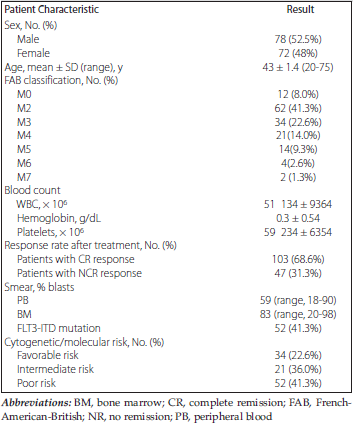
Table 1. Demographic and Clinical Characteristics of Patients With Acute Myeloid Leukemia
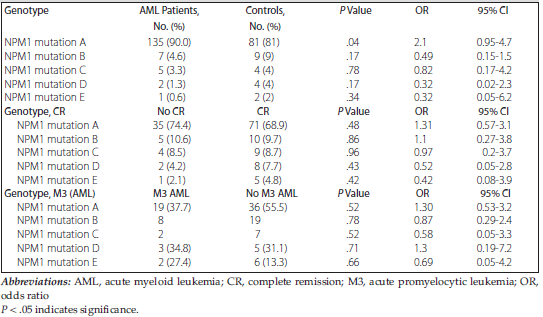
Table 2. NPM1 Mutation Frequencies in Patients With Acute Myeloid Leukemia Versus Healthy Controls and According to Treatment Response and French-American-British Subtypes
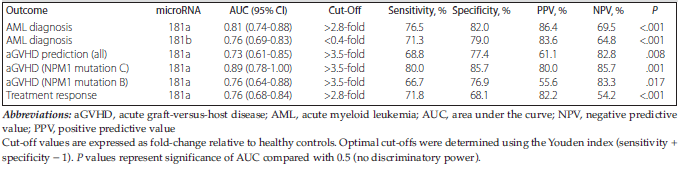
Table 3. Receiver Operating Characteristic Curve Analysis for miR-181a and miR-181b as Diagnostic and Predictive Biomarkers
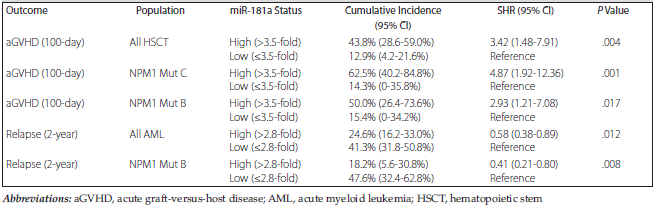
Table 4. Cumulative Incidence of Relapse According to Baseline miR-181a Expression and NPM1 Mutation Status