Volume: 24 Issue: 3 March 2026
FULL TEXT
Attitude of Mexican University Students Toward Organ Donation and Transplantation
Objectives: In this study, we evaluated the willingness to donate organs after death among Mexican university health students using a validated psychometric instrument. Our aim was to identify sociodemographic, religious, and psychosocial factors associated with positive donation attitudes.
Materials and Methods: A cross-sectional study was conducted among 2447 health science students from 7 academic programs at a Mexican public university. Student participants completed the “PCID-DTO-RIOS” questionnaire via direct interview. We collected data on age, sex, socioeconomic status, religion, academic field, social interactions, knowledge of brain death, and attitudes toward donation, which we analyzed using descriptive statistics, t tests, and χ2 tests (P < .05).
Results: The sample consisted of 72.4% female students, with a mean age of 20.2 years. Overall, 75.6% of students expressed willingness to donate their organs after death. Positive attitudes were signi-ficantly more frequent among women than men (78.1% vs 68.9%; P < .001) and nonpracticing religious individuals than among practicing religious individuals (78.5% vs 76.1%; P = .001). Willingness to donate after death correlated significantly with discussing donation with family and friends, knowing family members’ opinions, and understanding brain death (all P < .05). Only 18.3% were current blood donors.
Conclusions: Most Mexican health science students demonstrated favorable attitudes toward deceased organ donation, influenced by social interaction, religious practice, and knowledge of brain death. These findings underscore the importance of targeted educational interventions during university training to enhance donation advocacy, particularly in contexts where cardiovascular and other organ shortages persist.
Key words : Brain death, Educational intervention, Health education, Health students, Mexico
Introduction
Organ donation is the act by which a person, either during their lifetime or after their death, gives their organs or tissues for transplantation to another person who needs them to live or improve their health.1 This process improves the quality of life of patients with end-stage organ failure, whether acute or chronic.1 The donor may be a deceased person, in which case the organs or tissues are removed after death, or a living person, in which case the donation is made during their lifetime.2 Living donors can donate a whole kidney, segments of the liver, lung, pancreas, small intestine, blood cell precursors, bone tissue, amniotic membrane, and skin.1,3 Organ donation is an altruistic and noncommercial activity.4 In general, more organ transplants are performed from deceased donors than from living donors. In 2023, the Global Observatory on Donation and Transplantation reported 172?409 organ transplants worldwide.5 Of note, 39% of these transplants were from living kidney donors and 25% of liver transplants also came from living donors.5
Several factors favor organ donation. These include the expressed desire to donate, the donor’s good health, altruism and motivation to help others, family communication on the subject, family consent, religious beliefs of both the family and individual, educational and socioeconomic level, the number of beds in hospitals in the community, and knowledge about the risks and benefits of donation, whether during life or after death.6-8 On the other hand, living organ donation is discouraged by a lack of knowledge about the processes involved, fear and mistrust of the procedure, and concerns about medical complications.6 In the case of deceased organ donation, factors such as family disapproval, fear of mutilation, religious or cultural beliefs, lack of understanding of brain death, and the desire to maintain body integrity for religious funeral rites all serve as deterrents.6
Health care personnel play a vital role in the successful promotion of organ donation. They serve as a link between the health care system and potential donors and their families.9 Health care personnel demystify the process, offer support and reassurance to donors and their families, provide training, and foster a culture of solidarity, humanizing the process and giving hope to those in need.9 In this regard, most education and training activities on organ donation and transplantation take place at the university level. In a study that assessed the knowledge and attitudes of medical, nursing, dental, and health care technician students toward organ donation, 65.5% of students were in favor, 9% were opposed, and 25.5% were undecided.10 Notably, the main reason for disapproval was a concern about illegal behavior. Furthermore, a statistical relationship was observed between students’ willingness to donate organs and female sex.10
In another study, the validated questionnaire “Proyecto Colaborativo Internacional Donante sobre DonaciÓn y Trasplante de Órganos (Questionnaire on Attitudes Toward Organ Donation for Transplantation; PCID-DTO RIOS) was used to survey Spanish undergraduate nursing students; the study found that 78% (n = 7040) of students would donate their organs after death.11 Several variables influenced this favorable attitude, including discussing the topic
and seeking the opinions of family and partners, demonstrating greater knowledge and interest in related discussions, and not expressing concern about possible body mutilation after donation.11 In a recent meta-analysis that examined medical students’ attitudes toward organ donation and transplantation,12 69% of students supported organ donation after death, 12% opposed it, and 18% were undecided. The study suggested that targeted educational interventions, especially for younger or early-year students, could increase support for organ donation.12,13
In another study, 2563 Mexican medical students were assessed to determine their knowledge of organ transplantation and organ donation.14 The average score in this study was 4.02 on a scale of 0 to 10, underscoring a critical and persistent knowledge gap on this important topic. A lack of knowledge may limit the ability of students to effectively counsel patients or promote organ donation in their future medical practice.14 Other studies have found that between 66.2% and 92% of Mexican medical students and between 80% and 82.8% of Mexican nursing students are willing to donate their organs after death.15-18
The PCID-DTO-RIOS questionnaire has been administered to nonstudent Mexican people.19 This test has also been administered to Mexican university medical students but not to other Mexican university students.18 Therefore, the primary objective of this study was to assess the attitudes toward deceased organ donation and transplantation among Mexican university health students using the PCID-DTO-RIOS questionnaire. This validated instrument was used to assess attitudes and knowledge about organ donation after death to better understand perceptions of students. The results could help guide educational interventions to clarify doubts and address myths, thereby improving donation rates.
Materials and Methods
Study design and study population
We conducted a prospective, descriptive, analytical, and cross-sectional study to evaluate university students’ attitudes toward organ donation and transplantation. The investigation was conducted from February 2023 through January 2024 at the Institute of Health Sciences of the Universidad Autónoma del Estado de Hidalgo (Hidalgo, Mexico).
The Institute of Health Sciences offers 7 different university courses of study: medicine, nursing, nutrition, dentistry, pharmacy, psychology, and gerontology. A total of 2447 university students answered an anonymous multiple-choice question-naire. Participants who met the following criteria were included: aged >17 years, enrolled in one of
the 7 university programs, voluntarily agreed to participate in the study, signed the informed consent form, and had time available to complete the entire survey. The exclusion criteria were refusal to participate and failure to fully complete the survey. The study protocol was approved by the Ethics Committee (ICSa147 2022) of the ICSA of the Universidad Autónoma del Estado de Hidalgo, and the study was conducted in accordance with the Declaration of Helsinki. Respondents were informed about the purpose of the study, were free to withdraw at any time, and were assured of complete anonymity and confidentiality, as well as given the freedom to ask questions about the study at any time.
Measurement instrument and data collection
A questionnaire was used to collect the individual student data required for the study. We used a validated Spanish version of the questionnaire of attitudes toward organ donation and transplantation (PCID-DTO RIOS, designed by the International Collaborative Organ Donation Project on Organ Transplantation and Donation (Proyecto Colaborativo Internacional Donante sobre la DonaciÓn y Transplante de Organos), developed Ríos and colleagues.19,20 Attitude toward organ donation was considered the dependent variable; independent variables were (1) personal-social, (2) information and knowledge about organ donation and transplantation, (3) social interaction, (4) prosocial behavior, (5) religion, and (6) attitude toward the body. The Cronbach alpha reliability coefficient for the Spanish version of the questionnaire is 0.834.
Variables considered and statistical analyses
We entered the data into a computerized database. We used SPSS version 24 for Windows (SPSS, Inc) for descriptive and inferential statistical analyses. We presented the numerical variable of age as mean ± SD. We analyzed academic area, sex, socioeconomic level, and variables related to organ donation and transplantation as categorical variables, which we presented as frequencies and percentages. We perfor-med exploratory analysis using t test and the Pearson χ2 test. Significance level was determined at P < .05.
Results
Participants
Among 2447 university students included in the analyses, 1772 (72.4%) participants were female and 675 (27.6%) were male. Students had mean age
of 20.2 ± 1.9 years. Among all health area students, 145 (5.9%) studied nutrition, 130 (5.3%) studied gerontology, and 190 (7.8%) studied pharmacy. In addition, 297 (12.1%) were dentistry students, 457 (18.7%) were medicine students, and 657 (26.8%) were nursing students.
When asked about donation of their organs after death, 1849 students (75.6%) responded positively and 598 students (24.4%) responded negatively. Among those who responded positively, 16 (0.9%) cited moral obligation, 605 (32.7%) named solidarity, 566 (30.6%) chose reciprocity, and 662 (35.8%) selected a combination of these reasons. For those
not in favor, 126 (21.1%) feared bodily mutilation,
385 (64.4%) worried about organ removal before death, 73 (12.2%) had religious or personal reasons, and 14 (2.3%) reported a combination of these concerns.
We investigated how attitudes toward organ donation and transplantation after death are affected by age, sex, socioeconomic status, religion, and aca-demic field. Our results showed that women and nonpracticing religious individuals had significantly more positive attitudes than men and practicing religious individuals, respectively (P < .05) (Table 1).
A significant relationship was found between agreeing to donate and believing the country lacks sufficient organ donors (Table 2). A significant relationship was also found between agreeing to donate and being informed about the possibility of organ donation, as well as accepting the possibility of donating organs for a family member (P < .05) (Table 2). Regarding social interaction variables, a significant relationship was found between accep-tance of organ donation and transplantation and having discussed the topic with family and friends, as well as knowing the opinions of their parents and partner on the topic (P < .05) (Table 3). Based on prosocial behavior variables, 447 students (18.3%) were current blood donors, 1910 students (78.1%) were nondonors who are willing to donate, and 90 students (3.7%) were nondonors who are not willing to donate. Conversely, 282 student participants (11.5%) collaborated with nongovernmental organi-zations in social assistance activities. Among the 2447 students, 1965 (80.3%) did not participate but would be willing to do so, whereas 200 (8.2%) neither parti-cipated nor intended to do so. A significant rela-tionship was shown between agreeing to be an organ donor and participating in social assistance activities (P < .05), indicating those willing or enga-ged in social assistance are more likely to agree to organ donation.
When asked about kidney donation and its risks, significant relationships were shown between the opinion that donation is of low risk and being in favor of organ donation and transplantation, accepting being a kidney donor, and donation of a kidney to a relative (P < .005) (Table 4). When asked about living liver segment donation and its risks, a significant relationship was found between sup-porting organ donation and transplantation and willingness to donate a liver segment, willingness to donate a liver segment to a relative, and a perception that donating a liver segment is of low risk (P < .05) (Table 5).
When asked how students acquired information on organ donation and transplantation, 1475 students (60.3%) received positive information from health professionals, 1398 students (57.1%) received infor-mation from documentary films, and 1218 students (49.8%) received information from television programs. When asked “How do you consider your level of knowledge about organ donation?,” 1773 of 2447 students (72.5%) students considered having poor knowledge, 504 (20.6%) considered having good knowledge, and 170 (6.9%) considered having no knowledge. We noted a significant relationship between students’ self-perceived good level of knowledge and their support for organ donation and transplant (P < .001). When asked “Do you think a talk about organ donation would be interesting for you?,” 2087 of 2447 students (85.3%) responded positively, 321 (13.1%) were unsure, and 39 (1.6%) responded negatively. Here, we noted a significant relationship between interest in organ donation talks and support for organ donation and transplantation (P < .001).
Students who were not concerned about bodily mutilation during organ donation were more in favor of organ donation and transplantation (P < .05) (Table 6). Similarly, those more likely to accept autopsies or cremations also favored organ donation and transplantation compared with those who did not (P < .05) (Table 6). Another important factor was the degree of knowledge about brain death. Students with greater knowledge of this topic were more likely to be in favor of organ donation and transplantation (P < .05) (Table 6).
Discussion
The PCID-DTO-RIOS questionnaire is primarily used to assess attitudes and, to a lesser extent, knowledge about organ donation and transplantation. The questionnaire was developed within the framework of the International Collaborative Donor Project and has demonstrated high reliability (Cronbach ?) and statistical validity across diverse populations, including Mexican people.21-24
In the present study, we used the PCID-DTO-RIOS questionnaire to assess university students in the health field, which showed that 75.6% (n = 1849 of 2447) of student participants responded positively to the question about organ donation after death. Our result was lower than the 86% reported in a study of undergraduate health students in the United States who were willing to donate organs.21 This difference was likely due to the type of questionnaire that was administered and the university health programs that were included. On the other hand, our results were slightly higher than results from health students in Northern Cyprus, in which 64% of students stated that they were willing to donate organs for transplant after death.25 This difference may be explained by variations in the health university programs represented or by differences in survey methodologies across studies. In our study, 76.3% of medical students and 77.9% of nursing students responded positively when asked if they would like to donate their organs after death.
For medical students, our rate of 76.3% was slightly higher than the 69.2% reported in a meta-analysis of 57 worldwide studies.12 Our result was also similar to the 74% observed in a study of medical students in northern Mexico,18 yet lower than the 92% found among Mexican medical students.15 The notable difference versus the latter study may be because of the use of a different instrument. Among nursing students, the percentage who responded positively to organ donation after death in our study (77.9%) was lower than that of nursing students in the United States22 (86%) and similar to that of nursing students in another study from Mexico (80%).15 Although further work is needed to increase acceptance of organ donation and transplantation among our health students, we believe the results are relatively high and encouraging compared with those of similar cohorts in previous assessments.12
Our study showed no significant age differences between students who responded positively and who did not respond positively to organ donation and transplantation. However, female students made up a significant proportion of those who agreed to organ donation among our student participants. Our findings differed from studies that showed that male or female sex in general student populations had no influence on acceptance of organ donation.12,23-26 In contrast, our results were similar to those of studies specific to medical students, which found that being a female student increased the likelihood of becoming an organ donor.17,27 Furthermore, some studies have suggested that women are more likely than men to accept organ donation because of factors such as better preparation, an instinct to care for family, and a greater willingness to donate during life, whereas men have a higher likelihood than women of donation after death through injury.28
With regard to the relationship between religious affiliation and the desire to be an organ donor, our study showed that significantly more students who identified as atheist or agnostic accepted organ donation and transplant versus students who identified with a religion. This finding aligned with other studies that have identified a significant correlation between being an atheist or agnostic health student and having a positive desire to be an organ donor.23,23,27 In contrast, our results differed from studies that found a significant positive relationship between Catholicism and the desire to be an organ donor.12 The rules, ideas, precepts, and laws regarding organ donation vary widely across the world’s religions.29 However, most major religions (Christianity, Islam, Judaism, Hinduism, and Buddhism, among others) generally accept organ donation, viewing it as an act of charity and love for one’s neighbour.29 Key differences include the levels of acceptance of the concept of brain death (defined as the irreversible loss of all brain function), problems and conditions to be considered during organ donation during life or after death (such as requiring written consent or family permission), and specific requirements and recommendations.29 A lack of information can limit organ donation in these populations. Therefore, providing clear information and dispelling misconceptions are essential.
Our study found that students who disagreed with the statement that the rate of organ donation is sufficient in our country were significantly more likely to favor becoming organ donors themselves (Table 2). In addition, students who were informed about organ donation and students who would consent to donate to a family member were significantly more likely to be in favor of organ donation after death (Table 2). Furthermore, all study questions measuring social interaction variables were positively correlated with a favorable attitude toward organ donation after death (Table 3). These results are consistent with those reported in medical student populations.17,27,30
Understanding the perspectives of family members, partners, and friends on organ donation is essential to fulfilling a person’s wishes and easing emotional burdens during difficult times. Understan-ding and honoring a loved one’s wishes can help avoid family conflicts, ease grieving, raise com-munity awareness, dispel myths, and serve as a support network.31 Nonetheless, even when an individual wishes to donate after death, the family often makes the final decision.29,32
More than 70 years ago, the first successful kidney transplant was performed. In this procedure, the donor retained 1 kidney and was able to live a normal, healthy life.31 More than 60 years ago, the first successful whole-liver transplant was performed with organs from deceased donors.31 About 37 years ago, the first living donor liver transplant was performed, in which a portion of the donor’s liver was removed and transplanted into a recipient. The donor was able to live a normal, healthy life with the remaining portion because of the liver’s ability to regenerate and return to its original size within a few months.31
Our study showed that support for organ donation after death was significantly associated with positive attitudes toward kidney and liver segment transplants, including willingness to be on the donor wait list, perceptions of low risk, and donation to a family member. Our finding suggested that information about organ and tissue donation should first be communicated efficiently to health care students and then continually reinforced as they enter professional practice. These results align with previous studies of medical students.19,23 However, we found a key difference: supporting organ donation after death did not predict willingness to receive a liver or kidney transplant from a relative. This may be because donation from a deceased donor avoids risks to the living relative, reduces feelings of indebtedness, and minimizes fears of poor outcomes.33,34 Our findings suggested that attitudes toward organ donation after death do not necessarily translate to willingness to involve relatives as living donors, highlighting the complexity of decision-making in organ donation.
Our study showed a significant correlation between being in favor of organ donation after death and lack of fear of mutilation or scarring after donation, acceptance of autopsy, and acceptance of cremation. However, no such correlation was found with burial. These results are consistent with those of previous studies of medical students.19,27 Building on this, in a recent study that assessed how liver donors felt about their scars following donation,35 donors viewed the scar as both a sign of their satisfaction with the donation experience and a physical reminder of their role as a donor. That is, donors perceived the scar as a reminder that their donation had a recipient and that the scar raised their awareness of the effect of their action. The only concern identified was that the scar could potentially threaten their anonymity. Therefore, it is important to clearly explain to donors the absolute confi-dentiality that they will maintain after donation.36
Limitations
Our study had several limitations. First, the level of commitment shown in the responses may have been influenced by the fact that participants were health students. Second, because the study sample con-sisted solely of health students, our results may have not reflected the attitudes or behaviors of the wider general population. However, it is important to note that training received during the students’ education as future health professionals is intended to equip students to efficiently identify donors, follow-up with donors and recipients, and effectively commu-nicate with families.36-38
Conclusions
Our study showed that a significant proportion of health care students had a positive attitude toward organ donation after death. These findings under-score the importance of targeted training for health care students, as attitudes toward organ donation after death were positively correlated with variables such as social interaction, prosocial behavior, being a kidney or liver donor, and attitude toward one’s body.
References:
- Olawade DB, Marinze S, Qureshi N, Weerasinghe K, Teke J. Transforming organ donation and transplantation: strategies for increasing donor participation and system efficiency. Eur J Intern Med. 2025;133:14-24. doi:10.1016/j.ejim.2024.11.010
CrossRef - PubMed - Trela KC, Salerno CT, Chuba E, Dhawan R. Donation after circulatory death heart transplantation: a narrative review. J Cardiothorac Vasc Anesth. 2024;38(9):2047-2058. doi:10.1053/j.jvca.2024.03.045
CrossRef - PubMed - Zhou Q, Li T, Wang K, et al. Current status of xenotransplantation research and the strategies for preventing xenograft rejection. Front Immunol. 2022;13:928173. doi:10.3389/fimmu.2022.928173
CrossRef - PubMed - Lentine KL, Waterman AD, Cooper M, et al; Donation Workgroup Collaborators. Expanding opportunities for living donation: recommendations from the 2023 Santander Summit to ensure donor protections, informed decision making, and equitable access. Transplantation. 2025;109(1):22-35. doi:10.1097/TP.0000000000005124
CrossRef - PubMed - Global Observatory on Donation and Transplantation. Organ donation and transplantation: activities, laws and organization. 2023. Accessed August 11, 2025. http://www.transplant-observatory.org/
CrossRef:
PubMed:
- Carola V, Morale C, Vincenzo C, Cecchi V, Errico L, Nicolais G. Organ donation: psychosocial factors of the decision-making process. Front Psychol. 2023;14:1111328. doi:10.3389/fpsyg.2023.1111328
CrossRef - PubMed - Qu Z, Oedingen C, Bartling T, Schrem H, Krauth C. Factors influencing deceased organ donation rates in OECD countries: a panel data analysis. BMJ Open. 2024;14(2):e077765. doi:10.1136/bmjopen-2023-077765
CrossRef - PubMed - Colak M, Ersoy K, Haberal M, Gürdamar D, Gerçek O. A household study to determine attitudes and beliefs related to organ transplantation and donation: a pilot study in Yapracık Village, Ankara, Turkey. Transplant Proc. 2008;40(1):29-33. doi:10.1016/j.transproceed.2007.11.002
CrossRef - PubMed - Fernández-Alonso V, Palacios-Ceña D, Silva-Martín C, García-Pozo A. Facilitators and barriers in the organ donation process: a qualitative study among nurse transplant coordinators. Int J Environ Res Public Health. 2020;17(21):7996. doi:10.3390/ijerph17217996
CrossRef - PubMed - Goz F, Goz M, Erkan M. Knowledge and attitudes of medical, nursing, dentistry and health technician students towards organ donation: a pilot study. J Clin Nurs. 2006;15(11):1371-1375. doi:10.1111/j.1365-2702.2006.01431.x
CrossRef - PubMed - Martínez-Alarcón L, Balaguer A, Santainés-Borredá E, et al; Research group: International Collaborative Donor Project. Nursing students faced with organ donation: multicenter stratified national study. Nurse Educ Pract. 2022;63:103394. doi:10.1016/j.nepr.2022.103394
CrossRef - PubMed - Iniesta-Sepúlveda M, López-Navas AI, Gutiérrez PR, Ramírez P, Ríos A. The willingness to donate organs in medical students from an international perspective: a meta-analysis. Transpl Int. 2022;35:10446. doi:10.3389/ti.2022.10446
CrossRef - PubMed - Tokalak I, Kut A, Moray G, et al. Knowledge and attitudes of high school students related to organ donation and transplantation: a cross-sectional survey in Turkey. Saudi J Kidney Dis Transpl. 2006;17(4):491-496.
CrossRef:
PubMed - Ayala-García MA, Ríos Zambudio A, Martínez-Martínez OI, et al. Multicentric study to evaluate Mexican medical students’ knowledge of transplants and organ donation. Transplant Proc. 2020;52(4):1030-1035. doi:10.1016/j.transproceed.2020.02.002
CrossRef - PubMed - Marván ML, Orihuela-Cortés F, Álvarez del Río A. General knowledge and attitudes toward organ donation in a sample of Mexican medical and nursing students. Rev Cienc Salud. 2020;18(2):1-19.
CrossRef:
PubMed:
- Mendoza-Rea AD, Barrientos-Núñez ME, Pérez-Fuentes R. [Level of knowledge and attitude towards organ donation and transplantation in students of the Faculty of Medicine of the Benemérita Universidad Autónoma de Puebla]. Rev Mex Traspl. 2022;11(2):52-58. doi:10.35366/105692
CrossRef - PubMed:
- Hernández Salinas N, López Ramírez DS, Pinacho López S, et al. [Perception of organ donation in nursing students]. Rev Espacio Univ. 2021;16(43):14-26.
CrossRef:
PubMed:
- Sebastián-Ruiz MJ, Guerra-Sáenz EK, Vargas-Yamanaka AK, et al. [Knowledge and attitude towards organ donation of medicine students of a Northwestern Mexico public university]. Gac Med Mex. 2017;153(4):430-440. doi:10.24875/GMM.17002573
CrossRef - PubMed - Ríos A, López-Navas A, Ayala-García MA, et al. Spanish-Latin American multicenter study of attitudes toward organ donation among personnel from hospital healthcare centers. Cir Esp. 2014;92(6):393-403. doi:10.1016/j.ciresp.2013.12.017
CrossRef - PubMed - Ríos A, López-Navas AI, De-Francisco C, et al. Psychometric characteristics of the attitude questionnaire toward the donation of organs for transplant (PCID-DTO-RIOS). Transplant Proc. 2018;50(2):345-349. doi:10.1016/j.transproceed.2017.11.063
CrossRef - PubMed - García-Galicia A, Alonso-Torres G, Montiel-Jarquín ÁJ, et al. [Transculturation and validation of a questionnaire factors influencing organ donation]. Rev Med Inst Mex Seguro Soc. 2023;61(6):776-787. doi:10.5281/zenodo.10064317
CrossRef - PubMed - Mikla M, Cybulska AM, Schneider-Matyka D, et al. A multicentre study of the attitude of medical students towards organ donation and transplantation in Poland. Int J Environ Res Public Health. 2023;20(4):3711. doi:10.3390/ijerph20043711
CrossRef - PubMed - Qian L, Li MT, King KL, Husain SA, Cohen DJ, Mohan S. Healthcare students support opt-out organ donation for practical and moral reasons. J Med Ethics. 2022;48(8):522-529. doi:10.1136/medethics-2020-107053
CrossRef - PubMed - Aytar A, Aytar A, Altintas A, Ayvazoglu Soy EH, Akdur A, Haberal M. Organ Donation Decisional Balance Survey: reliability and validity of the Turkish version. Exp Clin Transplant. 2020;18(Suppl 2):58-64. doi:10.6002/ect.rlgnsymp2020.L9
CrossRef - PubMed - Bayraktar N, Bayraktar Ü. A cross-sectional study of university students' awareness, knowledge, and attitudes on organ donation and transplantation in Northern Cyprus. Medicine (Baltimore). 2024;103(26):e38701. doi:10.1097/MD.0000000000038701
CrossRef - PubMed - Sağiroğlu M, Günay O, Balci E. Attitudes of Turkish medical and law students towards the organ donation. Int J Organ Transplant Med. 2015;6(1):1-7.
CrossRef:
PubMed - Ríos A, López-Navas A, López-López A, et al. A multicentre and stratified study of the attitude of medical students towards organ donation in Spain. Ethn Health. 2019;24(4):443-461. doi:10.1080/13557858.2017.1346183
CrossRef - PubMed - Rota-Musoll L, Brigidi S, Molina-Robles E, Oriol-Vila E, Homs-Del Valle M, Subirana-Casacuberta M. [Sex and gender in kidney donation: views from the clinic]. Enferm Nefrol. 2021;24(4):365-377. doi:10.37554/enf-nef.127-2021-4-312
CrossRef - PubMed:
- Doerry K, Oh J, Vincent D, Fischer L, Schulz-Jürgensen S. Religious and cultural aspects of organ donation: narrowing the gap through understanding different religious beliefs. Pediatr Transplant. 2022;26(7):e14339. doi:10.1111/petr.14339
CrossRef - PubMed - Atay Doyğacı AG, Doğan A, Abalı AE, Gülşen M, Haberal M. Awareness on organ donation among young people. Exp Clin Transplant. 2024;22(Suppl 5):124-131. doi:10.6002/ect.pedsymp2024.P9
CrossRef - PubMed - Phillips M, Lorié Á, Lauricella T, Begin AS, Riess H. Communication strategies to enhance organ donation requests across cultures: a review of the literature. J Commun Healthc. 2025;18(3):160-173. doi:10.1080/17538068.2025.2462424
CrossRef - PubMed - Dash SC, Nair R, Behera V. Kidney transplantation: the journey across a century. Med J Armed Forces India. 2023;79(6):631-637. doi:10.1016/j.mjafi.2023.08.013
CrossRef - PubMed - Meirelles Júnior RF, Salvalaggio P, Rezende MB, et al. Liver transplantation: history, outcomes and perspectives. Einstein (Sao Paulo). 2015;13(1):149-152. doi:10.1590/S1679-45082015RW3164
CrossRef - PubMed - Zouaghi S. Receiving an organ: the ambivalence of the debt and the question of giving back. Recherche Appl Mark. 2023;38(2):57-79. doi:10.1177/20515707231161217
CrossRef - PubMed:
- Krause S, Pritlove C, Abbey S, Jung J. The meaning behind the scar: anonymous live liver donors’ perceptions of their surgical scars. Transplantation. 2021;105(5):1039-1043. doi:10.1097/TP.0000000000003333
CrossRef - PubMed - Witjes M, Jansen NE, van der Hoeven JG, Abdo WF. Interventions aimed at healthcare professionals to increase the number of organ donors: a systematic review. Crit Care. 2019;23(1):227. doi:10.1186/s13054-019-2509-3
CrossRef - PubMed - Ozsoy B, Herrera-Gayol A, Unal Y, Askar M, Haberal M, Cantarovich M. Impact of religion on opinions about organ donation and transplantation in university students from a single university in Turkey. Exp Clin Transplant. 2021;19(7):645-650. doi:10.6002/ect.2021.0054.
CrossRef - PubMed - Akgün HS, Bilgin N, Tokalak I, Kut A, Haberal M. Organ donation: a cross-sectional survey of the knowledge and personal views of Turkish health care professionals. Transplant Proc. 2003;35(4):1273-5. doi:10.1016/s0041-1345(03)00437-8.
CrossRef - PubMed

Volume : 24
Issue : 3
Pages : 274 - 281
DOI : 10.6002/ect.2025.0287
From the 1Área Académica de Medicina del Instituto de Ciencias de la Salud de la Universidad Autónoma del Estado de Hidalgo, Pachuca, Hidalgo, Mexico; and the 2Área Académica de Odontología del Instituto de Ciencias de la Salud, Universidad Autónoma del Estado de Hidalgo. Pachuca, Hidalgo, Mexico
Acknowledgements: The authors did not receive any funding or grants for the research presented or for the preparation of this work; it is hereby stated that there is no conflict of interest.
Corresponding author: Mario I. Ortiz, Área Académica de Medicina del Instituto de Ciencias de la Salud, Universidad AutÓnoma del Estado de Hidalgo, Dr. Eliseo Ramírez Ulloa 400, Col. Doctores, Pachuca, Hgo, 42090, Mexico
Phone: +52 77 1717 2000, extension 41654
E-mail: mortiz@uaeh.edu.mx and mario_i_ortiz@hotmail.com
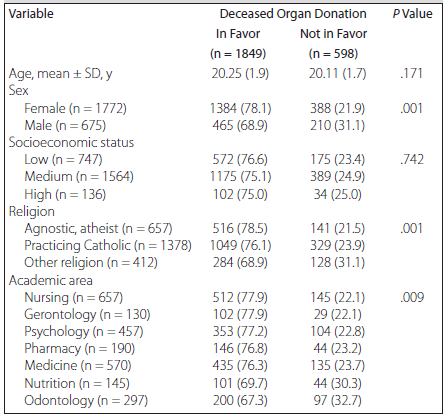
Table 1. Socio-Personal and University Variables Influencing Mexican Health Science Students’ Attitudes Toward Deceased Organ Donation
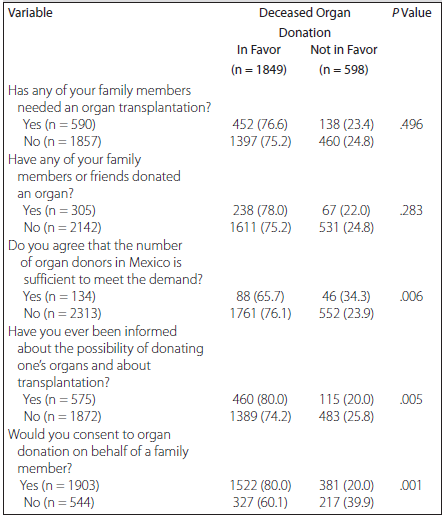
Table 2. Variables Related to Organ Donation Affecting Mexican Health Science Students’ Attitudes Toward Deceased Organ Donation
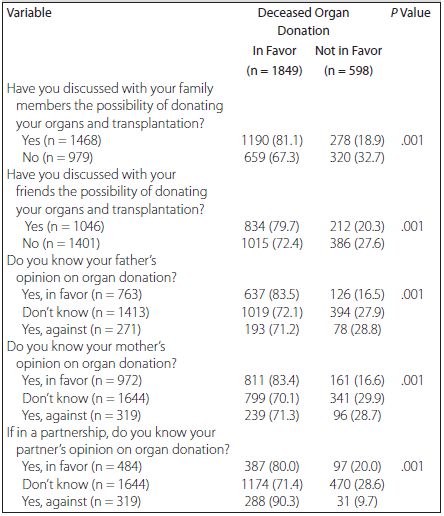
Table 3. Variables of Social Interaction Affecting Mexican Health Sciences Students’ Attitudes Toward Deceased Organ Donation
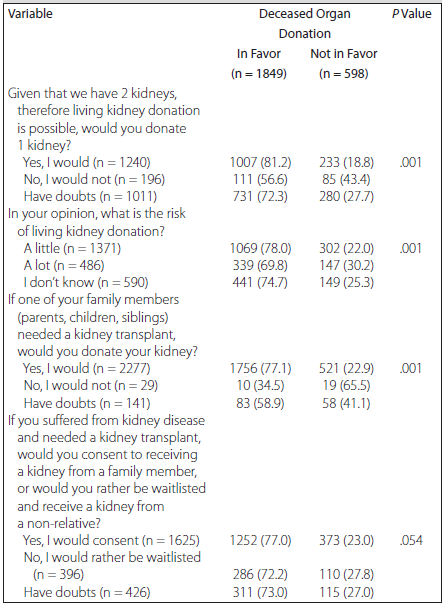
Table 4. Effect of Selected Variables of Kidney Transplantation on the Answer to the Question: “Would You Consider Donating Your Organs After Death?” Among Mexican Health Science Students
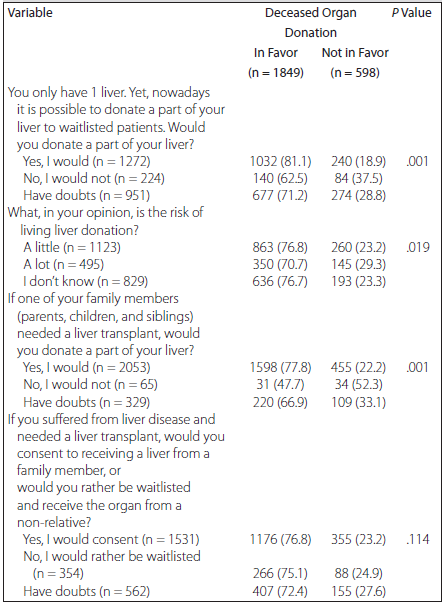
Table 5. Effect of Selected Variables of Liver Transplantation on the Answer to the Question: “Would You Consider Donating Your Organs After Death?” Among Mexican Health Science Students
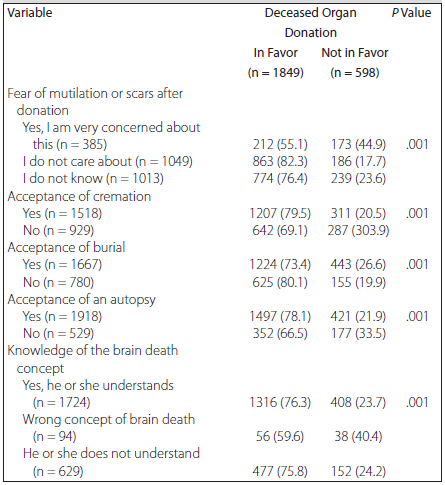
Table 6. Variables of Attitude Toward the Body Affecting Mexican Health Science Students’ Attitudes Towards Organ Donation After Death