Volume: 24 Issue: 3 March 2026
FULL TEXT
Racial, Ethnic and Sex Disparities in Lupus Patients With Kidney Transplant: A UNOS Database Analysis
Objectives: Lupus nephritis disproportionately affects women and the Black population. Kidney transplan-tation is the gold standard treatment for patients who progress to end-stage kidney disease. We investigated whether disparities continue after transplant, through analysis of differences in outcomes in lupus kidney recipients stratified by sex and by race and ethnicity.
Materials and Methods: We conducted a retrospective United Network for Organ Sharing database analysis (January 1, 2010, through December 31, 2024) to include kidney transplant recipients with systemic lupus erythematosus as the primary diagnosis. We assessed donor and recipient characteristics, graft failure, and mortality by sex and by race and ethnicity and analyzed data with Kaplan-Meier survival curves and multivariate Cox regression.
Results: Of the 8726 transplants with a lupus nephritis etiology, 81.7% were female patients (n = 7133), with racial composition of 41.7% Black, 25.3% non-Hispanic White, 23.1% Hispanic, and 7.7% Asian. Lupus nephritis 1-year graft failure rate was 10.2% (n = 893/8718) and 1-year mortality was 8.7% (n = 760/8726). Male sex correlated with higher graft failure (hazard ratio 1.20; P = .018) and mortality (hazard ratio 1.30; P = .009). Graft failure was highest among Black recipients (22.4%). Mortality was highest in non-Hispanic White (11.7%) and Black recipients (11.0%). Black race correlated with higher odds of death in both lupus (hazard ratio 1.60) and non-lupus (hazard ratio 1.14) deceased donor kidney transplants.
Conclusions: Male sex correlated with increased death and graft loss in deceased donor kidney transplant recipients. These outcomes were also worse among the Black population, with higher odds of death in the lupus group compared with the group without lupus. Additional investigation is required to understand the discrepancies in access to transplant and outcomes in relation to lupus.
Key words : Lupus nephritis, Renal transplant, Systemic lupus erythematosus
Introduction
In the United States, 72 to 143 individuals per 100 000 are affected by systemic lupus erythematosus (SLE).1-3 Up to half of these patients will develop lupus nephritis (LN), with 22% further progressing to end-stage kidney disease (ESKD).4,5 Development and progression of SLE vary across both patient sex and race. Women are disproportionately affected at a ratio of 6:1, yet men are more likely to have a severe phenotype.1,6 Similar disease inequity exists across racial and ethnic groups. Despite comprising 13.7% of the US population, Black patients account for 38.5% of all SLE cases. Black patients are 3.8 times more likely to develop LN than non-Hispanic White (hereinafter White) patients.1,7 When LN does occur, Black and Hispanic patients have increased mortality and progression to ESKD compared with other races and ethnicities.8
Kidney transplant remains the only definitive treatment for ESKD. Successful kidney transplant is multifactorial, depending on a combination of donor, recipient, immunologic, and socioeconomic factors.9 Female patients experience lower rates of living donations, longer wait list times, and lower rates of placement on the waitlist. Counterintuitively, outcomes among female patients, including graft survival and mortality, outperform those in male patients.10 Racial and ethnic minority groups expe-rience lower rates of kidney transplant evaluation completion, preemptive transplant, and wait list time, with longer wait times. These factors result in worse outcomes for Black patients. Graft survival and mortality are superior in Hispanic compared with White patients, a well-established phenomenon.11
Despite past investigations on the effects of sex and race on SLE and LN, the effects of these factors on kidney transplant remain understudied in the modern transplant era. Previous analyses derived from data collected more than 10 years ago suggested that racial inequities in transplant outcomes are similar between LN and all-cause kidney transplant. These disparities resolved after accounting for socioeconomic differences.12,13 Given the rate of advancements in both transplant and medical equity, this topic warrants reassessment. We aimed to investigate the disparities of race and ethnicity and sex among kidney transplant recipients for LN in the modern era through analysis of the UNOS database. Primary outcomes included graft failure and mortality. We also analyzed a cohort without lupus to provide insight on whether the observed disparities were unique to LN. We expected overall higher risk transplant characteristics and poorer outcomes for kidney transplant recipients who are male or identify as Black or Hispanic, as these groups are associated with more severe LN.
Materials and Methods
Data and data sources
We conducted a retrospective analysis using data from the UNOS database from January 1, 2010, through December 31, 2024. We obtained data from kidney transplant recipients with SLE or lupus as the primary diagnosis. Individuals aged 17 years or below and those with multiple-organ transplants were excluded. Data to support findings of this study are available in the UNOS database, and access to the dataset requires approval via the Organ Procurement and Transplantation Network. The protocols and data utilized in this study used deiden-tified information, and the study did not require institutional approval before study start. Protocols conformed to the ethical guidelines of the 1975 Helsinki Declaration.
Population and variables
Outcomes, including graft failure and mortality with a diagnosis of lupus, were assessed by sex (male and female) and race and ethnicity (White, Black, Hispanic, Asian, and Other). Recipient characteristics in the analysis were age, days on the wait list, retransplant recipient, diabetes status, dialysis status, glomerular filtration rate (GFR), body mass index (BMI), and calculated panel reactive antibody (cPRA) at the time of transplant. For donors, we analyzed data on age, sex, race and ethnicity, BMI, creatinine, history of hypertension, and measures of organ quality, including Kidney Donor Profile Index (KDPI), and kidneys from donors after circulatory death (DCD). We also analyzed data on HLA mismatch level, cold ischemia time (CIT), and organ sharing status.
Statistical analyses
We compared basic patient, donor, and transplant characteristics by sex and by race and ethnicity with t test/Wilcoxon-Mann-Whitney test and x2/Fisher exact tests, depending on the sample size and distribution of included variables. Mortality and graft survival rates (at 3 months, 6 months, and 1, 3, and 5 years posttransplant) were analyzed. We used the Kaplan-Meier product limit method to obtain survival curves and estimates for outcomes. For survival analysis of outcomes, death and graft failure were the endpoints. Recipients who did not experience any of the endpoints or whose patient survival status and graft status were unknown were censored on the last follow-up or the last day of the analysis. We used multivariate Cox regression analyses to account for clinically suspected risk factors. These potential risk factors include recipient and donor demographics, clinical factors, donor characteristics linked to organ quality, including KDPI and additional donor charac-teristics that are not part of the KDPI calculation, and transplant-related variables. P < .05 was significant. The final regression models accounted for all variables presented in the descriptive analysis, but variables found to be of lesser importance or not significant were excluded from the final reporting of results.
Results
Demographics according to sex in the lupus population
Compared with female patients with lupus, male patients with lupus were more likely aged <40 years (52.2% vs 48.4%; P = .005) (Table 1). Male patients were more likely than female patients to receive pretransplant dialysis (80.0% vs 84.0%; P = .001) and comprised 18.3% of the transplanted lupus popu-lation (n = 1593 of 8726) (Table 1).
Female patients received thymoglobulin at a lower rate and interleukin 2 receptor antagonists at a higher rate than male patients. No significant dif-ference in use of alemtuzumab, rituximab, or main-tenance regimen steroid use were shown between men and women. Male patients had lower cPRA (17.9 vs 30.7; P < .001) and shorter time on dialysis (4.39 vs 4.7 years, P = .004) than female patients. Donor and transplant characteristics in males were more favorable, with more living donations (36.2% vs 33.4%; P = .03) and locally shared kidneys (81.17% vs 78.1%; P = .007), while experiencing shorter CIT (12.34 vs 13.07 h; P = .012). No significant differences in KDPI, DCD, expanded criteria donors, and HLA mismatch were shown between male and female recipients (Table 1).
Demographics according to race and ethnicity in the lupus population
Male recipients were more likely to be White (30.7% vs 24.1%; P < .001), and female recipients were more likely to be Black (42.5% vs 38.5%; P = .003) or Asian (8.12% vs 5.90%, P = .003) (Table 1). White recipients were the most likely to be older than 60 years. Results for cPRA, rate of DCD, and CIT were highest among Black and Hispanic recipients, although rate of local kidney sharing was the lowest in these 2 groups. Results for KDPI and rate of expanded criteria donors among Hispanics were lower than results among White, Black, and Asian recipients (0.28 vs 0.32, 0.32, and 0.32; P < .001 and 5.2% vs 7.9%, 6.8%, 6.5%; P = .03, respectively). Across all races and ethnicities, HLA mismatch level was highest in Black recipients at 4.16. Immunosup-pressive regimens differed, with Black recipients more likely to receive thymoglobulin induction (70.7%; P < .001) and maintenance regimen steroids (82.3%; P < .001) than other races and ethnicities (Table 2).
Graft and patient outcomes in the lupus population
Older recipient age was associated with marginally improved graft survival but higher mortality.In deceased donor kidney transplants (DDKT), male sex, Black recipient race, White recipient race, elevated cPRA, and elevated KDPI correlated with increased graft failure and death. In living donor kidney transplant (LDKT), only receipt of a kidney from a Black donor correlated with both worse graft survival and mortality. Induction im-munosuppression with thymoglobulin, alemtuzumab, inter-leukin 2 receptor antagonist or rituximab, and maintenance regimens with steroid use were not associated with differences in graft failure. Alemtuzumab use cor-related with worse survival after LDKT (HR 1.84; P = .002) (Table 3 and Table 4).
Comparison of outcomes in the lupus versus non-lupus population
Recipients with lupus were mainly female (81.8%), whereas the general non-lupus recipients were mostly male (61.6%) (Table 1). Lupus recipients were more likely to be aged <40 years and less likely to be aged >60 years (P < .001). Patients with LN were more likely to be on dialysis at time of transplant (80.8% vs 74.3%; P < .001), had a longer wait time (518 vs 456 days; P < .001), and had a longer dialysis duration (4.64 vs 4.21 years; P < .001) (Table 5).
Lupus recipients were less likely to be White and more likely to be Black, Hispanic, or Asian compared with non-lupus patients. Donors for lupus recipients were more likely to be living donors and Black, Hispanic, or Asian and less likely to be White (Table 6).
HLA matching was similar between lupus and non-lupus recipients. Although cPRA was higher in lupus patients (28.41 vs 21.57; P < .001), KDPI was higher in non-lupus patients (0.39 vs 0.31; P < .001). Immunosuppression was more likely to include thymoglobulin (65.4% vs 60.4%; P < .001) in the LN group, with a higher likelihood of using rituximab (0.5% vs 0.3%; P < .001) and steroids with calcineurin inhibitors and mycophenolate mofetil (MMF) (79.8% vs 70.3%; P < .001) (Table 5).
Older recipient age correlated with lower graft failure in lupus patients, whereas it correlated with higher rate of graft failure in the non-lupus cohort (hazard ratio 0.991, P = .001 vs hazard ratio 1.019, P < .001). The remainder of the variables trended in the same direction; however, hazard ratios for ethnic and racial groups were higher in terms of graft loss or patient death in both the DDKT and LDKT groups (Table 3 and Table 4).
Discussion
Despite several decades of improvements in kidney transplant leading to increased survival, disparities in outcomes across racial and ethnic groups and male and female patients persist.10,11,14,15 Our analysis assessed kidney transplant recipients with LN as a cause of their ESKD, with parallel assessment of a transplant group without lupus in an attempt to isolate the risk factors unique to those with lupus.
Male and female patient disparities
In a US Renal Data System-based analysis from 2005 through 2011, 18.9% of lupus patients with ESKD were male.16 Similarly, our data demonstrated that 18.3% of kidney transplant recipients with LN were male. This finding was in line with the cohort wit-hout lupus, where males comprised similar pro-portions of patients on dialysis (62.2% per 2023 US Renal Data System report) and with kidney transplant (61.6%) (Table 1).11 These results suggested that no sex-based discrepancy was shown in access to transplant for LN. To fully assess whether such a discrepancy exists, waitlist status stratified by sex should be investigated. Unfortunately, a limitation of the Scientific Registry of Transplant Recipients (SRTR) database used in our analysis is the lack of extensive waitlist data. A 2022 database study de-monstrated lower rates of kidney transplant referrals in female LN patients in the Southeastern United States.17 Further investigations of generalizable, country-wide referral and waitlist data would provide a more complete understanding of disparities to transplant access in male versus female patients with lupus.
Among patients before transplant, lupus is a disease that disproportionately occurs in female patients.18 Despite this predilection, male patients have a more aggressive phenotype, with disease occurring at older age at diagnosis, increased disability, increased renal disease, and increased development of deep vein thrombosis, myocardial infarction, and death.19 Our results demonstrated that this trend of worse disease in male patients continues after kidney transplant. Despite increased immunologic risks in female patients (elevated cPRA, decreased living donors, and higher dialysis vintage), being male correlated with increased graft loss and death following DDKT. These disparities were in line with the general kidney transplant population, as the respective hazard ratios between outcomes in lupus and non-lupus kidney transplant groups were comparable: 1.20 versus 1.21 for graft failure and 1.30 versus 1.25 for survival. Differences in outcomes between female and male patients therefore were likely due to general protective factors present in all females. Proposed factors include better therapy compliance leading to greater immunosup-pressive adherence and higher levels of circulating estrogen, which provides protection against ischemia and reperfusion injury.10,20 Given these protective factors among female patients regardless of lupus status, assessment of a patient’s risk based on sex should be used in both LN and non-LN patients.
Disparities according to race and ethnicity
The effects of race and ethnicity on transplant is multifactorial, resulting in generally worse outcomes for Black patients. Not all contributing factors are known, but differing rates of referral, bias in care, social determinants of health (SDOH) and genetic/epigenetic influences may play a role.21-25 The influence of race and ethnicity on LN is equally complex and unevenly affects Black patients. Of note, outcomes of LN are negatively affected by SDOH, such as unreliable health insurance, poverty, and non-English native language. The effects of these factors are particularly strong in non-White racial and ethnic groups who are more likely than White patients to face these challenges. 26 Unfortunately, metrics relating to SDOH and bias were not readily available in the SRTR database.
Access to transplant appeared to inequitably favor non-White groups. In a study from O’Shaughnessy and colleagues, among ESKD patients, White transplant recipients with lupus etiology comprised 43.4% of the transplant population compared with 25.3% in our study.27 Access to transplant among Black recipients appeared to be more in line with their disease incidence (48.6% ESKD vs 41.7% kidney transplant). Hispanic and Asian patients appeared to have the best access. Given the limitations of the database, additional investigations are needed to confirm the significance of these findings and determine the root cause. We suggest that conscious bias did not create worse access for White patients. Instead, pretransplant factors such as mortality, access to dialysis, and preemptive transplant likely contributed.
Our data demonstrated higher cPRA, DCD rate, CIT, and HLA mismatch in Black patients with lupus, representing a higher baseline immunological risk. Identifying as White and Black corresponded to an increased risk of graft failure and death. This finding is concordant with results on LN kidney transplant outcomes from earlier transplant eras.12,13 Thus, des-pite an improved understanding of the factors leading to disparities in transplant, underlying mechanisms persist. One such mechanism is the continued under-representation of racial minorities in kidney transplant clinical trials.28 However, Contreras and colleagues reported equivocal mortality and graft failure rates among matched White and Black cohorts, suggesting modifiable social influences play the greatest role in the inequity present in LN kidney transplant.12
Compared with our reported group without lupus, the hazard ratio for mortality in our lupus group was greater in White (1.61 vs 1.10) and Black (1.60 vs 1.14) patients. Two possible causes for the discrepancy in lupus versus non-lupus are lupus recurrence and steroid use. Lupus recurrence can affect graft function and exacerbate lupus-related comorbidities, such as stroke and myocardial infarction.29 Recurrence of LN after transplant was shown to occur in 2.44% of cases.30 At such a low recurrence rate, it is unlikely that repeat kidney disease was the sole cause of the increased mortality in the LN cohort. Steroid use was higher in the lupus group and was associated with increased mortality in all non-lupus and LDKT lupus patients (unpublished observations). Steroid use can both increase the risk of cardiovascular death and act as a marker for difficult or failing grafts.31 The increased use of steroids in kidney transplant recipients with LN may be due to increased risk of rejection in patients with LN or a misguided attempt to limit recurrence. Unfortunately, no data are available to support the use of glucocorticoids to limit recurrence. In addition, database analysis is required to confirm significance of the mortality difference and to investigate the underlying cause.
Use of T-cell-depleting agents (thymoglobulin or alemtuzumab) was lower in the non-LN group, suggesting that LN patients were assessed as higher risk transplants. In our LN group, Black patients were as likely to receive T-cell-depleting agents (thymoglobulin or alemtuzumab) as other groups. This was at odds with the non-lupus population, where Black patients received more thymoglobulin and T-cell depletion due to increased immunologic risk factors. The cause of the relative increase in T-cell depletion in LN non-Blacks remains unclear. The most likely reason is a disproportionate increase in the perceived immunologic risk in non-Black patients, as a result of underlying immunologic disease. This occurred despite an increase in markers of poor immunologic performance in Black patients, who should accordingly receive higher potency immuno-suppressants. Appropriate assessment of immunologic risk with established metrics such as HLA and cPRA remains paramount. Novel techniques to further aid in induction selection include eplet matching, donor-specific antibody levels, and genetic panels, including APOL1, may provide additional information to appropriately stratify transplant candidates.
Outcomes in lupus versus non-lupus populations
Outcomes after kidney transplant were largely similar between the LN and non-LN groups, sug-gesting that sex and racial and ethnic disparity factors occurred on a societal level, affecting all patients. Lupus nephritis recipients were more likely to be young and female, an expected finding given the demographic of patients with SLE. Interestingly, in LN recipients, older age correlated with better outcomes. This was likely a reflection of the severity of disease, as younger patients who require transplant have more severe disease. Among non-LN kidney transplant recipients, younger age was associated with improved outcomes, an expected result. All other risk factors related to graft failure and mortality correlated in a similar manner between lupus and non-lupus patients.
Limitations and strengths
Our study had several limitations. First, the retros-pective design limited conclusions to correlations without establishing causality. Although use of a national database allowed generalizability, our analysis was limited to specific variables, leading to an incomplete view of the driving mechanisms for the observed disparities. We therefore were not able to investigate certain comorbidities or socioeconomic determinants as risk factors for poor outcomes.
Second, options for racial and ethnic characteristics included Black, White, Hispanic, Asian, and Other, limiting our analysis to these categories. However, these are the major racial and ethnic groups based on the US Census Bureau. Available data on gender was limited to male and female patients, preventing analysis of the full gender spectrum’s effect on kidney transplant.
Other limitations included data not generalized to those under aged 17 years or with multiple-organ transplants as these were omitted. Investigated transplant outcomes were limited to those with the greatest clinical consequence: death and graft failure. Omitting secondary endpoints, such as rejection, cytomegalovirus occurrence, length of hospitalization, and time to rehospitalization kept our primary outcomes focused but limited the conclusions that could be drawn. Induction immunosuppression and steroid use was adjusted for, focusing on calcineurin inhibitors plus MMF population for better homo-geneity based on therapy. Data on APOL1 gene status, tacrolimus levels, or estrogen levels were not available. Including these factors could present further insight into the cause of the reported disparities, as they all provide a possible biological explanation of discrepancies in kidney transplant.
The greatest strength of our research was our large sample size of a less common diagnosis, LN, with use of a database allowing us to analyze 8725 kidney transplant recipients with LN. Comparison with the non-LN population allowed the detection of differences that are specific to kidney transplant recipients with LN.
Conclusions
Trends in characteristics and outcomes among kidney transplant recipients with LN were mostly in line with those without LN, but some differences were present. Our findings suggested that White patients receive kidney transplant at a lower rate than other racial or ethnic groups, inviting future analyses to investigate transplant allocation in LN. In addition, Black patients were less likely to receive increased cell depletion in LN. Male and Black lupus patients are disproportionately affected by LN and progression to ESKD. This trend continued after kidney transplant with lower graft and patient survival rates. Notably, male, White, and Black recipients with LN experienced higher odds of graft loss and death than the non-lupus population in DDKT. Our results invite the scientific community to question the differences in care among ethnic and racial groups in SLE to help remove disparities where they exist.
References:
- Feldman CH, Hiraki LT, Liu J, et al. Epidemiology and sociodemographics of systemic lupus erythematosus and lupus nephritis among US adults with Medicaid coverage, 2000-2004. Arthritis Rheum. 2013;65(3):753-763. doi:10.1002/art.37795
CrossRef - PubMed - Lim SS, Bayakly AR, Helmick CG, Gordon C, Easley KA, Drenkard C. The incidence and prevalence of systemic lupus erythematosus, 2002-2004: the Georgia Lupus Registry. Arthritis Rheumatol. 2014;66(2):357-368. doi:10.1002/art.38239
CrossRef - PubMed - Somers EC, Marder W, Cagnoli P, et al. Population-based incidence and prevalence of systemic lupus erythematosus: the Michigan Lupus Epidemiology and Surveillance program. Arthritis Rheumatol. 2014;66(2):369-378. doi:10.1002/art.38238
CrossRef - PubMed - Tektonidou MG, Dasgupta A, Ward MM. Risk of end-stage renal disease in patients with lupus nephritis, 1971-2015: a systematic review and Bayesian meta-analysis. Arthritis Rheumatol. 2016;68(6):1432-1441. doi:10.1002/art.39594
CrossRef - PubMed - Almaani S, Meara A, Rovin BH. Update on lupus nephritis. Clin J Am Soc Nephrol. 2017;12(5):825-835. doi:10.2215/cjn.05780616
CrossRef - PubMed - Schwartzman-Morris J, Putterman C. Gender differences in the pathogenesis and outcome of lupus and of lupus nephritis. Clin Dev Immunol. 2012;2012:604892. doi:10.1155/2012/604892
CrossRef - PubMed - US Census Bureau. Quickfacts United States – Race and Hispanic Origin. 2024.https://www.census.gov/
CrossRef:
PubMed:
- Korbet SM, Schwartz MM, Evans J, Lewis EJ; Collaborative Study Group. Severe lupus nephritis: racial differences in presentation and outcome. J Am Soc Nephrol. 2007;18(1):244-254. doi:10.1681/asn.2006090992
CrossRef - PubMed - Oweira H, Ramouz A, Ghamarnejad O, et al. Risk factors of rejection in renal transplant recipients: a narrative review. J Clin Med. 2022;11(5):1392. doi:10.3390/jcm11051392
CrossRef - PubMed - Katz-Greenberg G, Shah S. Sex and gender differences in kidney transplantation. Semin Nephrol. 2022;42(2):219-229. doi:10.1016/j.semnephrol.2022.04.011
CrossRef - PubMed - Lentine KL, Smith JM, Lyden GR, et al. OPTN/SRTR 2023 annual data report: kidney. Am J Transplant. 2025;25(2s1):S22-S137. doi:10.1016/j.ajt.2025.01.020
CrossRef - PubMed - Contreras G, Mattiazzi A, Schultz DR, et al. Kidney transplantation outcomes in African-, Hispanic- and Caucasian-Americans with lupus. Lupus. 2012;21(1):3-12. doi:10.1177/0961203311421208
CrossRef - PubMed - Contreras G, Li H, Gonzalez-Suarez M, et al. Kidney allograft survival of African American and Caucasian American recipients with lupus. Lupus. 2014;23(2):151-158. doi:10.1177/0961203313513819
CrossRef - PubMed - Gordon EJ, Lee J, Kang R, Uriarte J, Caicedo JC. Disparities persist among hispanic patients: completing evaluation, waitlisting, and receiving a kidney transplant. Transplant Direct. 2024;10(3):e1595. doi:10.1097/txd.0000000000001595
CrossRef - PubMed - Hariharan S, Israni AK, Danovitch G. Long-term survival after kidney transplantation. N Engl J Med. 2021;385(8):729-743. doi:10.1056/NEJMra2014530
CrossRef - PubMed - Plantinga LC, Patzer RE, Drenkard C, et al. Comparison of quality-of-care measures in U.S. patients with end-stage renal disease secondary to lupus nephritis vs. other causes. BMC Nephrol. 2015;16:39. doi:10.1186/s12882-015-0037-1
CrossRef - PubMed - Smothers L, Patzer RE, Pastan SO, DuBay D, Harding JL. Gender disparities in kidney transplantation referral vary by age and race: a multiregional cohort study in the Southeast United States. Kidney Int Rep. 2022;7(6):1248-1257. doi:10.1016/j.ekir.2022.03.027
CrossRef - PubMed - Jorge A, Fu X, Cook C, et al. Kidney transplantation and cardiovascular events among patients with end-stage renal disease due to lupus nephritis: a nationwide cohort study. Arthritis Care Res (Hoboken). 2022;74(11):1829-1834. doi:10.1002/acr.24725
CrossRef - PubMed - Tan TC, Fang H, Magder LS, Petri MA. Differences between male and female systemic lupus erythematosus in a multiethnic population. J Rheumatol. 2012;39(4):759-769. doi:10.3899/jrheum.111061
CrossRef - PubMed - Boucquemont J, Pai ALH, Dharnidharka VR, Hebert D, Furth SL, Foster BJ. Gender differences in medication adherence among adolescent and young adult kidney transplant recipients. Transplantation. 2019;103(4):798-806. doi:10.1097/tp.0000000000002359
CrossRef - PubMed - Purnell TS, Luo X, Cooper LA, et al. Association of race and ethnicity with live donor kidney transplantation in the United States from 1995 to 2014. JAMA. 2018;319(1):49-61. doi:10.1001/jama.2017.19152
CrossRef - PubMed - Peek ME, Odoms-Young A, Quinn MT, Gorawara-Bhat R, Wilson SC, Chin MH. Race and shared decision-making: perspectives of African-Americans with diabetes. Soc Sci Med. 2010;71(1):1-9. doi:10.1016/j.socscimed.2010.03.014
CrossRef - PubMed - Norton JM, Moxey-Mims MM, Eggers PW, et al. Social determinants of racial disparities in CKD. J Am Soc Nephrol. 2016;27(9):2576-2595. doi:10.1681/asn.2016010027
CrossRef - PubMed - Taber DJ, Hamedi M, Rodrigue JR, et al. Quantifying the race stratified impact of socioeconomics on graft outcomes in kidney transplant recipients. Transplantation. 2016;100(7):1550-1557. doi:10.1097/tp.0000000000000931
CrossRef - PubMed - Zhang Z, Sun Z, Fu J, et al. Recipient APOL1 risk alleles associate with death-censored renal allograft survival and rejection episodes. J Clin Invest. 2021;131(22):e146643. doi:10.1172/jci146643
CrossRef - PubMed - Garg S, Sweet N, Boderman B, et al. Multiplicative impact of adverse social determinants of health on outcomes in lupus nephritis: a meta-analysis and systematic review. Arthritis Care Res (Hoboken). 2024;76(9):1232-1245. doi:10.1002/acr.25359
CrossRef - PubMed - O’Shaughnessy MM, Montez-Rath ME, Lafayette RA, Winkelmayer WC. Patient characteristics and outcomes by GN subtype in ESRD. Clin J Am Soc Nephrol. 2015;10(7):1170-1178. doi:10.2215/cjn.11261114
CrossRef - PubMed - Hazan I, Hirani R, Agrawal S, et al. Racial and sex disparities in US kidney transplant clinical trials: a comparative analysis with national transplant registry data. J Surg Res. 2025;314:305-311. doi:10.1016/j.jss.2025.07.036
CrossRef - PubMed - Yazdany J, Pooley N, Langham J, et al. Systemic lupus erythematosus; stroke and myocardial infarction risk: a systematic review and meta-analysis. RMD Open. 2020;6(2):e001247. doi:10.1136/rmdopen-2020-001247
CrossRef - PubMed - Contreras G, Mattiazzi A, Guerra G, et al. Recurrence of lupus nephritis after kidney transplantation. J Am Soc Nephrol. 2010;21(7):1200-1207. doi:10.1681/asn.2009101093
CrossRef - PubMed - Pujades-Rodriguez M, Morgan AW, Cubbon RM, Wu J. Dose-dependent oral glucocorticoid cardiovascular risks in people with immune-mediated inflammatory diseases: a population-based cohort study. PLoS Med. 2020;17(12):e1003432. doi:10.1371/journal.pmed.1003432
CrossRef - PubMed

Volume : 24
Issue : 3
Pages : 210 - 219
DOI : 10.6002/ect.2025.0275
From the 1Jacobs School of Medicine and Biomedical Sciences, University at Buffalo, Buffalo, New York, USA; the 2Department of Surgery, Garnet Health Medical Center, Middletown, New York, USA; 3Chantilly High School, Greenbriar, Virginia, USA; the 4Schar School of Policy and Government, George Mason University, Arlington, Virginia, USA; and the 5Department of Medicine, Division of Nephrology at Albany Medical Center, Albany, New York, USA
Acknowledgements: The authors have not received any funding or grants in support of the presented research or for the preparation of this work and have no declarations of potential conflicts of interest.
Author contribution: Macrae Kozody provided writing of original draft and writing review and editing. Jorge Ortiz provided writing review and editing, supervision, and conceptualization. Shriya Endlaw provided formal analysis. Meng-Hao Li provided data curation, formal analysis, investigation, and methodology. Yang Yu provided Data curation, formal analysis, and investigation. Naoru Koizumi provided data curation, formal analysis, and investigation. Giovanni Faddoul provided writing of original draft, writing review and editing, project administration, and supervision.
Corresponding author: Macrae Kozody, University at Buffalo, Jacobs School of Medicine and Biomedical Sciences, 955 Main St, Buffalo, NY 14203, USA
Phone: +1 585 953-8460 E-mail: macraeko@buffalo.edu
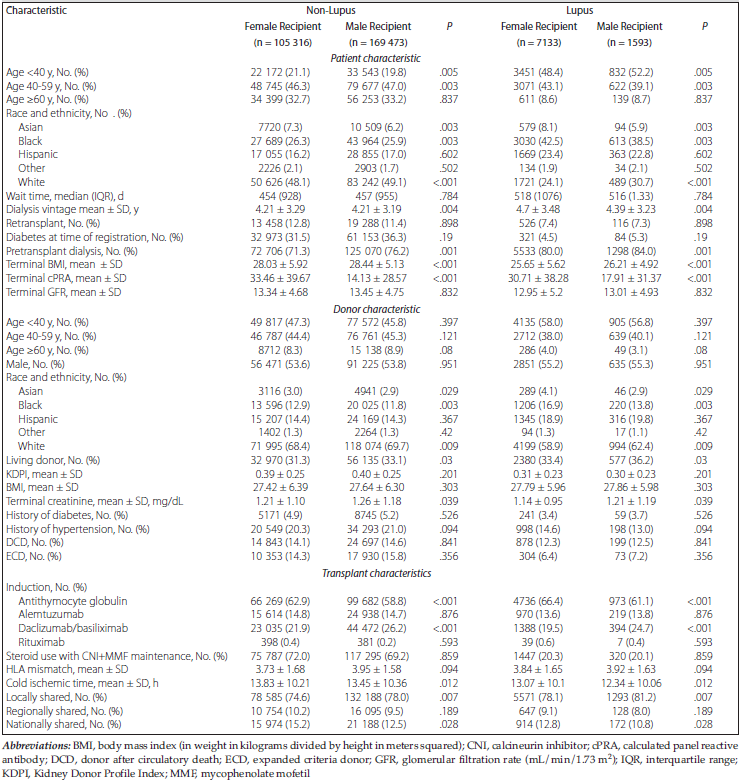
Table 1. Population Characteristics in Lupus and Non-Lupus Kidney Transplant Recipients, Stratified Based on Sex
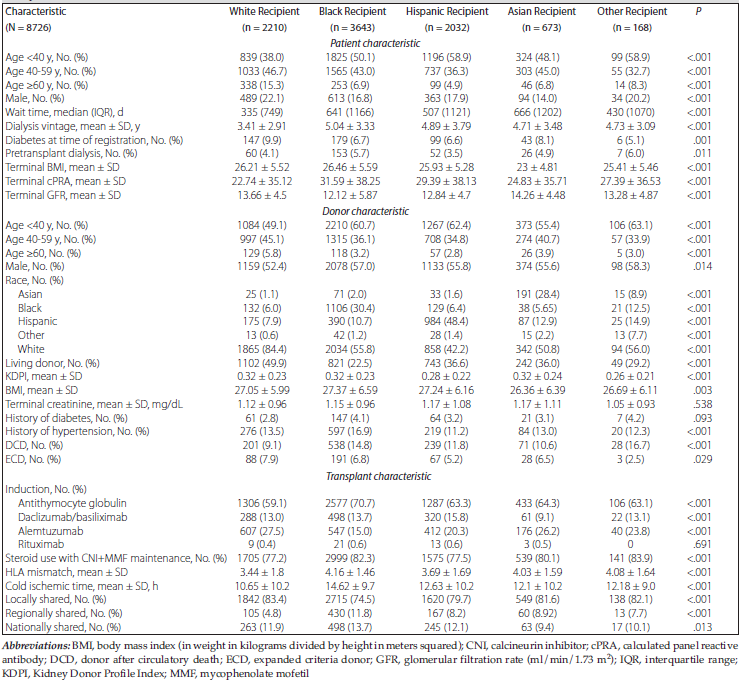
Table 2. Population Characteristics of Transplant Recipients With Lupus Nephritis as Cause of End-Stage Kidney Disease, Stratified by Racial and Ethnic Group
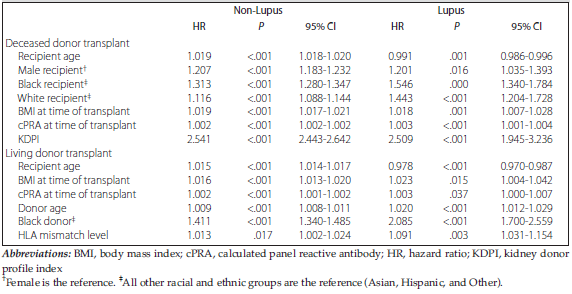
Table 3. Cox Regression for Risk Factors of Graft Failure in Lupus and Non-Lupus Kidney Transplant
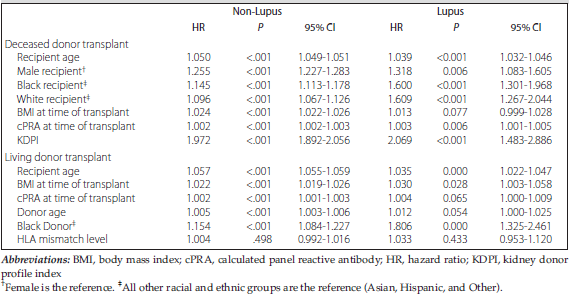
Table 4. Cox Regression for Risk Factors of Patient Survival in Lupus and Non-Lupus Kidney Transplant Recipients
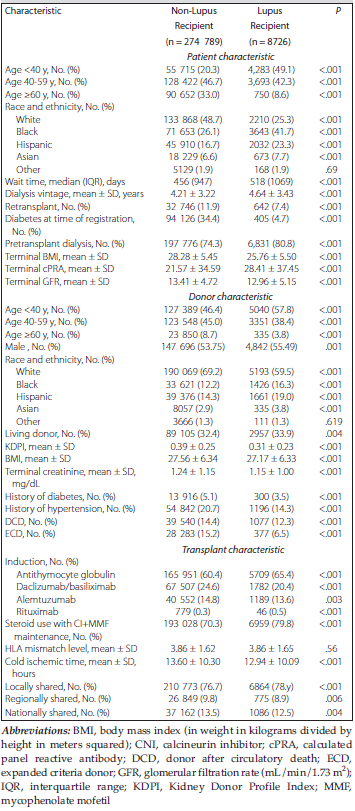
Table 5. Comparison of Population Characteristics Between Lupus and Non-Lupus Kidney Transplant Recipients
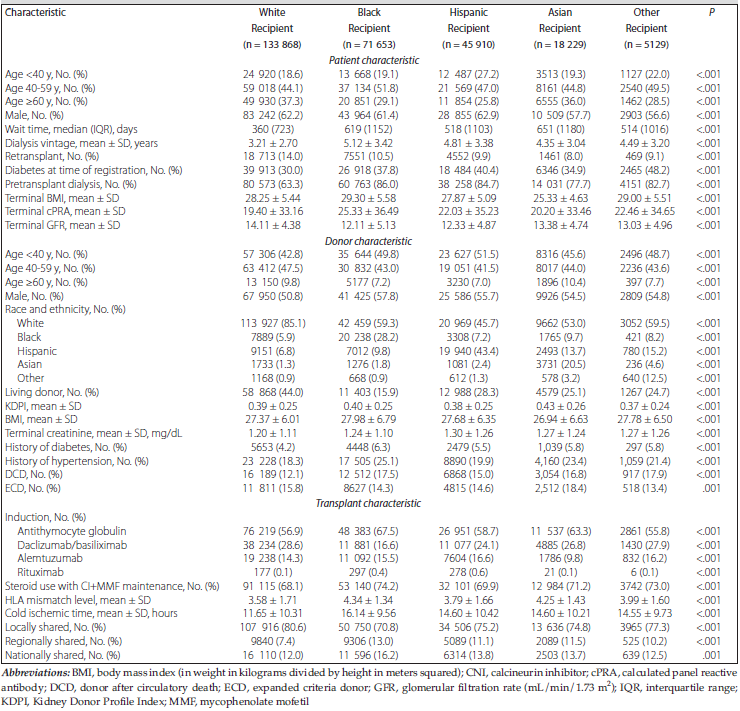
Table 6. Population Characteristics of Kidney Transplants With Non-Lupus as Cause of End-Stage Kidney Disease, Stratified by Racial and Ethnic Group