Volume: 24 Issue: 2 February 2026
FULL TEXT
Organ Donation: Knowledge, Attitudes, and Willingness Among Patients, Their Families, and Society About Lung Transplant
Objectives: Organ transplantation is a life-saving treatment. The higher the awareness about organ donation in a society, the higher the number of lives saved through organ transplant. We evaluated the knowledge, attitudes, and willingness concerning organ donation among patients who had received a lung transplant and their family members as well as the wider population.
Materials and Methods: Study participants were divided into the following 3 groups: 56 transplant patients, 69 family members of the included transplant patients, and 77 community members. An online questionnaire was sent to all of the participants to enquire about their knowledge of and attitudes toward organ donation and their willingness to engage in organ donation. Answers from the 3 groups were evaluated comparatively.
Results: Study participants were generally knowled-geable about organ donation and wanted to donate, but they did not do so for various reasons. The most common ones were distrust of the health care system, lack of knowledge of donation procedures, and the possibility that the recipient was not a “good” person (that is, not someone who is useful to society and humanity). The study observed that, as the participants’ level of education increased, the number of people who were willing to donate decreased.
Conclusions: With the increased number of people with chronic diseases and needing organ transplant, thousands of patients on organ transplant wait lists die every year. Individuals should be accurately informed about organ donation, and they should be encouraged to donate.
Key words : Beliefs, Education, Lung transplantation
Introduction
Organ transplantation is an effective method to
treat end-stage chronic diseases that are medically incurable. The first example of this treatment was a kidney transplant performed by Joseph Murray and David Hume in 1953. The first lung transplant
was conducted in 1963; however, these patients died soon after the procedures as a result of various complications. However, since the 1980s, new surgical techniques, increasing experience, and the introduction of immunosuppressive drugs have produced suc-cessful results in organ transplantation, including of the lungs.1 This success has led to a rise in the global demand for transplants and an insufficient supply of donor organs. Even in countries that dominate the transplant statistics, donations do not yet meet demand.
In 2021, 144302 organs were transplanted worldwide. In Turkey, 4950 transplant procedures were performed (3.43% of the total).2 Both globally and in Turkey, most of these procedures are kidney and liver transplants. The number is significantly lower for procedures without the possibility of a living donor, such as heart and lung transplants.3 With increasing levels of chronic diseases worldwide, the number of patients on wait lists is increasing daily. However, the chances of receiving a healthy organ are diminishing, worsening the mortality rate of those waiting for transplant. These circumstances have led to increased financial burden of having a chronic disease. Expanding the donor pool would be the best solution for this problem, which has led to more efforts directed at achieving this.
The lack of available organs has been linked to people’s reluctance to donate organs of their deceased relatives, education levels, socioeconomic status, and cultural and religious differences. Therefore, under-standing the attitudes and beliefs concerning organ donation is important to boost donor numbers.4 In this study, we aimed to shed light on which social and public steps can be taken to enhance organ donation by comparing the relevant knowledge, attitudes, and behaviors of patients who have undergone lung transplantation, their families, and society.
Materials and Methods
An online survey was sent to study participants between January 26 and March 25, 2023. Three groups were formed. Group 1 consisted of 56 patients who had undergone lung transplant operations and were being followed up at the Ankara City Hospital Lung Transplant Clinic. Group 2 comprised 69 family members of the transplant patients, and group 3 consisted of 77 participants randomly selected from the community. In group 2, first-degree relatives (mother, father, sibling, or child) living in the same house as the lung transplant patient and acting as
their primary caregiver were preferred. The survey included 18 questions regarding participant age and sociodemographic information (Table 1),their knowledge about organ transplantation and donation (Table 2), and their attitude toward organ donation (Table 3 and Table 4). The items on the questionnaire were prepared by the authors based on a review of the literature. A validated questionnaire was not used. Approval from the Ethics Committee of Ankara City Hospital was obtained on January 25, 2023 (number E1-23-3220). The participants were informed about the study.
Statistical analyses
We used SPSS for Windows version 22.0 (SPSS Inc) for data analyses. Categorical data are presented as number of cases (%). Categorical variables were compared using the Pearson χ2 test or the Fisher exact test. P < .05 was considered significant.
Results
Among participants, 99 (49.01%) were female, and 103 (50.99%) were male. Age, sex, and educational level of participants are listed in Table 1. Group 1 had more male participants, and the mean age was higher. In terms of education, group 3 had the highest number of university graduates, whereas group 1 had the lowest number.
Table 2 shows the survey results with regard to the participants’ awareness and knowledge of organ donation. All 3 groups had high percentages of “Yes” answers to the question “Do you know what organ donation is?” All 3 groups had high rates of the correct answer to the question “Is organ transplantation a life-saving treatment?” However, a significantly lower rate of “Yes” answers was shown in group 3 compared with the other 2 groups (P = .024). Participants in groups 1 and 2 had a higher level of knowledge regarding the question “What is brain death, and how is it detected?” In all 3 groups, a high percentage of correct answers was given to the question “Is it possible to continue living after brain death?” In groups 1 and 2, the most common answer to the question “If you have information about organ donation, where did you get it from?” was “Physician/health worker”; however, group 3 mostly replied “Physician/health worker” and “Social media/television” (P < .001).
As shown in Table 2, a high percentage of “I already knew about it’’ answers were given to the question “When did you learn about organ donation?” in group 3 (P = .001); however, “I learned about it when I got sick” was the most common answer in group 1. The number of participants who answered “No” or “I am not sure” to the question “Do you think that the detection methods used to decide on brain death are reliable?” was significantly higher in group 3 than in groups 1 and 2 (P = .026).Table 3 shows results on participants’ behaviors and attitudes toward organ donation. In group 3, the number of individuals who answered “Yes” to the question “Are you willing to donate your organs?” was lower than in the other 2 groups, whereas the number of those who answered “No” or “I am not sure” was significantly higher (P = .002). Although the question “Have you applied for an organ donation card/do you have an organ donation card?” had a low rate of “Yes” answers; these were more frequent in groups 1 and 2 compared with group 3 (P > .05). The number of participants who answered “Yes” to the question “Have any of your family/relatives donated their organs?” was significantly lower in group 3 compared with groups 1 and 2 (P < .001). The number of individuals who responded “Yes” to the question “Would you be willing to donate an organ to someone you do not know?” was significantly lower in group 3 than in groups 1 and 2 (P = .001). The number of participants who replied “Yes” to the question “If you donated your organs, would your family react positively?” was significantly lower in group 3 than in groups 1 and 2 (P = .034). The 3 groups had high rates of positive responses to the question “Would you accept an organ transplant if you needed one?”
Table 4 shows participants’ reasons for not donating organs. No significant differences were shown among the 3 groups in terms of motivations for not donating organs (P > .05). However, participants noted lack of detailed information about organ transplantation and donation procedures (36.4%, 37.8%, and 39% for groups 1, 2 and 3, respectively). Participants in groups 2 and 3 were concerned about having their organs removed before they died (13.5% and 13.6%, respectively). Participants in groups 1 and 3 were troubled by the thought that a donated organ might go to someone who would do harm to society (18.2% and 18.6%, respectively). Group 2 exhibited the least amount of religious concern for not donating organs (8.1%).
Discussion
Organ transplantation is the only life-saving treatment for patients with end-stage organ failure.5 Unfortunately, both in Turkey and worldwide, there is a severe lack of donations for transplants, leading to patients dying while waiting for the transplant procedure. The continuity of organ donation is of particular importance for successful and developing transplant medicine.6,7
The donor pool for transplantation consists of living donors and deceased donors. Deceased donations can be after brain death (DBD) or after cardiac death. Living donors and DBDs are legally used in Turkey. After a brain death diagnosis, the family needs to approve the donation of an organ.8,9
Turkey is a leading country in terms of solid-organ transplant procedures and performs almost as many transplants as Europe annually. However, although 20% to 25% of the donor pool consists of living donors in Europe and North America, living donors make up 75% to 80% of transplant procedures in Turkey. The main reason for this difference is that, in an Eastern society such as the one in Turkey, there is little willingness to donate an organ to a stranger after death; at the same time, family bonds are tight, so people tend to donate only within the family.8 In our study, approximately 95% of the participants noted that they preferred donating organs to their relatives, and the idea of doing so for someone they did not know was favored by 70% to 75% of the sample. This seems to be one of the causes of the low occurrence of DBDs in Turkey. Thus, the balance might have shifted toward the living donor side to overcome this problem. However, increasing morbi-dity by using a healthy donor because of the low rate of DBDs should not be seen as a success. It is necessary to explain the importance of DBD, which could solve the problem rapidly and without creating further morbidity, through all possible channels so that every segment of society may be reached.
The COVID-19 pandemic has deepened the problem of DBD shortages in Turkey, and there has been a noticeable decline in the number of organ donations and transplants during this period.10 Brain death detections decreased to 1400 from more than 2000 before the pandemic. The DBD rate, which was approximately 26% to 28% of all transplants, decreased to around 16% to 18% during and after the pandemic.3 Unfortunately, as a result of this trend, the living donor rate, which had been 75% on average, now exceeds 80% of all transplants. These rates are much higher than those for Europe and the United States, which are between 10% and 30%.3,11
Among studies conducted with healthy samples and groups with chronic diseases, knowledge of organ donation has been shown to be between 50% and 95%.12,13 Among our healthy population, the rate was 94.8%. When compared with the literature, the highest rates were found both in chronic disease groups and the general population.6,14
In our study, knowledge about brain death was highest in group 2 and lowest in group 3. This may indicate that participants had acquired knowledge about complex medical issues after a family member developed a chronic disease or when such issues become relevant to their health. However, some studies found opposite results.14
Compared with previous research, the partici-pants in our study were more aware of the fact that brain death is a clear indicator of death. Only a few individuals were unsure about the possibility of returning to life after being declared as brain dead (3.6%, 8.7%, and 14% for groups 1, 2, and 3, respectively). In similar previous studies, the rate was around 50%.12,14
In the literature, participants from the wider society usually answer the question “What was your source of information regarding organ donation?” by referring to the internet, television, and word of mouth; among health care professionals, this knowledge is obtained through in-service training.7,15,16 In our study, groups 1 and 2 mostly received the information in question from physicians or health workers, whereas many individuals in group 3 obtained it from social media platforms or television in addition to clinicians. One of the reasons why more participants in group 3 had doubts about the fact that brain death is a clear sign of death might be that the wider population receives considerable amounts of information from the internet, where misinformation is high. Considering all this evidence, to increase organ donations and educate society on this matter, our most powerful tools are knowledge building from physicians, the media, and social media platforms.
In our evaluation of attitudes toward organ transplantation and donation among participants, we found that, although 50% to 70% of those in groups 2 and 3 were willing to donate, only 13% to 26.1% of had formally applied or obtained an organ donation card (Table 3). To our knowledge, there are no studies on this topic among transplant patients or their first-degree relatives. Therefore, we cannot make a direct comparison. The donation rate has been reported to be between 2.1% and 4.5% in studies conducted among the wider population, nursing students, relatives of patients, and individuals with or without a chronic disease, and the rate of having a donation card was significantly higher among Iranian nurses (27.6%) and medical students in Italy (63%).4,17-20 This evidence suggests that knowledge of and attitudes toward organ donation improve as the level of education increases. Our data indicated the opposite; participants with higher levels of education preferred to help those who could be more useful to society and humanity based on rational considerations rather than emotional choices.
Stated reasons for not donating organs among our participants were a lack of detailed and reliable information, not knowing the procedure, not needing to donate, a concern that the organ might be used to help someone who may harm society, and distrust of the health care system or of physicians. In the literature, these reasons include distrust of physicians or the health care system, the thought that there may be a chance of returning to life after brain death, concern regarding not being treated properly if one were to become a donor, and violation of religious beliefs. We found fewer religious concerns than in existing research.4,21,22 Some studies on this aspect have been conducted in Muslim countries. In Saudi Arabia and Pakistan, 30% to 40% and 45%, res-pectively, of participants stated that organ donation is not religiously appropriate.23-25 In a study conducted at the University of Oman, the rate was considerably lower (5.4%).26 In these studies on religious concerns, participants emphasized that bodily integrity should not be disturbed from a religious point of view.
In a study from Turkey that evaluated dialysis patients, 27% to 28% indicated being unsuitable for organ donation because of their religion. In a second study from Turkey, 3% of medical students stated that they did not want to donate organs because of religious concerns. In a third study from Turkey, 5% of nursing students declared the same thing.4,14,27 When we compared the results of our research and the literature, fewer religious concerns regarding organ donation are found in Turkey compared with other Muslim countries. We believe that the fatwas and sermons on this topic, as well as the possibility of constantly accessing information in our technological age, may have produced this result.
Another finding of our study that differs from the existing research is that the organ donation procedure was not sufficiently known by participants. We have already mentioned that, although many participants declared their willingness to donate organs, the number of people who had applied for a donation card was low. The reason for this may be that people do not know how to proceed.
We found that 18% of those in groups 1 and 3 cared about who would receive their organ. They stated that they wanted recipients to be a good person (that is, someone who would help society and humanity). We suggest that this might be one of the underlying reasons for the high number of living donors in Turkey. Individuals may prefer to donate an organ to someone they know while they are alive, a person they believe to be good rather than doing so after they die. There is evidence in the literature that people prefer to donate organs to family members or someone they know.14,17 In our study, participants stated that it was important who would receive their organ; however, in contrast to the literature, 75% of those in groups 1 and 2 and 50% of those in group 3 said that they would donate their organs to strangers. Despite this evidence, official data showed that family approval for donation from patients after brain death was obtained in 26% to 27% of cases before the pandemic and 16% to 18% of cases after the pandemic.3 The fact that more than 50% of participants in our survey stated that they would donate their organs to someone they did not know does not reflect reality.
Our study reported donation rates up to 26%; unfortunately, this does not correspond to the actual situation. In Turkey, individuals who have donated organs and who have an organ donation card are not accepted as donors after their death without the consent of their family members.9 Unfortunately, emotions caused by the loss of a loved one might cause family members to decline this consent, leading to low organ donation rates. Therefore, it is necessary to ensure that decisions made by people while they are alive are safeguarded by the state after their death; it is also important to prevent vital choices (eg, organ donation) from being taken under emotional circumstances. The family approval requirement must be removed, and the legal arrangement to make the donation, which the deceased chose before their death, must be respected.
Our study had some limitations. The sample size was small, and the research was performed at a single center. In addition, there was no match in the groups in terms of education and age, although the results of this mismatch were mentioned in the discussion. Finally, we did not use a validated questionnaire.
Conclusions
Our study showed that study participants possessed some knowledge of organ donation; however, there were hesitations regarding this practice because of lack of information about the donation process and procedure and because of wrong information. These problems need to be corrected. The organ donation procedure must be simplified. The public should be informed by health experts and nongovernmental organizations, whose opinions should be conveyed primarily on social media, television, and the internet as well as through conferences. With regard to specific concerns in Turkey, perhaps the most important issues are the lack of validity of organ donation cards and the postmortem family approval requirement. It would be useful to remove this requirement for those individuals who decided to be organ donors while alive. In addition, to incentivize people to donate, public institutions could adopt positive discrimination and priority measures for families who agree to donate organs (eg, priority in hospitals and tax deductions). Unless the situation changes, the development of transplant medicine in countries such as Turkey, where DBD is used, and the advancement of DBD-based programs, especially for lung and heart transplants, will not improve. People whose lives could be saved will continue to die while on transplant wait lists.
We believe that our study will shed light on how organ donation is evaluated in society, the reasons behind the inadequate number of donations, and what kind of arrangements should be made to increase this number. However, further studies are needed to ensure the adequate development of this field; the same is true of incentives and information provided by the state.
References:
- Türkkan S, Yekeler E. Akciğer Nakli Sonrası Hava Yolu Komplikasyonları ve Yönetimi. Güncel Göğüs Hastalıkları Serisi. 2020;8 (1):61-67.
CrossRef - PubMed:
- Global Observatory on Donation and Transplantation, International Report on Organ Donation and Transplantation Activities. 2021. https://www.transplant-observatory.org/wp-content/uploads/2022/12/2021-data-global-report-1.pdf
CrossRef:
PubMed:
- Akciğer nakilleri. https://organkds.saglik.gov.tr/dss/PUBLIC/Transplant_Lung.aspx
CrossRef:
PubMed:
- Özkan S, Yilmaz E. Hasta yakınlarının organ bağışı ile ilgili bilgi ve tutumları. Sosyal Politika Çalışmaları Dergisi. 2009;17(17):18-29.
CrossRef:
PubMed:
- Fan X, Li M, Rolker H, et al. Knowledge, attitudes and willingness to organ donation among the general public: a cross-sectional survey in China. BMC Public Health. 2022;22(1):918. doi:10.1186/s12889-022-13173-1
CrossRef - PubMed - Dibaba FK, Goro KK, Wolide AD, et al. Knowledge, attitude and willingness to donate organ among medical students of Jimma University, Jimma Ethiopia: cross-sectional study. BMC Public Health. 2020;20(1):799. doi:10.1186/s12889-020-08931-y
CrossRef - PubMed - Akbulut S, Demyati K, Tamer M, Unsal S, Beyoglu S, Saritas H. Knowledge levels, attitudes, and awareness of nurses toward organ donation. North Clin Istanb. 2022;9(4):367-375. doi:10.14744/nci.2022.24478
CrossRef - PubMed - Turkkan S, Yilmaz E, Bindal M, et al. The effect of ideal/standard donor and marginal donor use on primary graft dysfunction after lung transplantation in Turkey. Eurasian J Med. 2023;55(1):69-73. doi:10.5152/eurasianjmed.2023.23007
CrossRef - PubMed - Organ Nakli Hizmetleri Yönetmeliği: 32038. Resmî Gazete. Accessed December 9, 2022. https://www.resmigazete.gov.tr/eskiler/2022/12/20221209-3.htm
CrossRef:
PubMed:
- Sahin MF, Beyoglu MA, Turkkan S, Tezer Tekce Y, Yazicioglu A, Yekeler E. Donor lung evaluation and lung transplantation in the COVID-19 era. Exp Clin Transplant. 2022;20(9):842-848. doi:10.6002/ect.2020.0567
CrossRef - PubMed - Şantaş G, Şantaş F. Türkiye’de organ bağışının mevcut durumu ve organ bağışında stratejik iletişimin önemi. Süleyman Demirel Üniversitesi Sağlık Bilimleri Dergisi. 2018;9(2):163-168.
CrossRef - PubMed:
- Asimakopoulou E, Stylianou V, Dimitrakopoulos I, Argyriadis A, Bellou-Mylona P. Knowledge and attitudes regarding organ transplantation among Cyprus residents. J Nurs Res. 2020;29(1):e132. doi:10.1097/jnr.0000000000000409
CrossRef - PubMed - Pouraghaei M, Tagizadieh M, Tagizadieh A, Moharamzadeh P, Esfahanian S, Nia KS. Knowledge and attitude regarding organ donation among relatives of patients referred to the emergency department. Emergency. 2015;3(1):33.
CrossRef:
PubMed - Uyar M, Demir LS, Durduran Y, Evci R, Diker Ardic Z, Sahin TK. Patient knowledge, attitudes, and behaviors associated with organ donation. Ann Transplant. 2019;24:407-411. doi:10.12659/AOT.916824
CrossRef - PubMed - Sharaan R, Alsulami S, Arab R, et al. Knowledge, attitude, and willingness toward kidney donation among health sciences students at King Saud Bin Abdulaziz University. Front Public Health. 2021;9:667582. doi:10.3389/fpubh.2021.667582
CrossRef - PubMed - Kose OO, Onsuz MF, Topuzoglu A. Knowledge levels of and attitudes to organ donation and transplantation among university students. North Clin Istanb. 2015;2(1):19-25. doi:10.14744/nci.2015.58070
CrossRef - PubMed - Khalid F, Khalid AB, Muneeb D, Shabir A, Fayyaz D, Khan M. Level of knowledge and attitude regarding organ donation: a community-based study from Karachi, Pakistan. BMC Res Notes. 2019;12(1):309. doi:10.1186/s13104-019-4345-6
CrossRef - PubMed - Sayin Y, Dağci M. Attitude, knowledge and donor card volunteering of nursing students regarding organ donation. Bezmialem Sci. 2022;10(4):512-517.
CrossRef - PubMed:
- Janatolmakan M, Soroush A, Nouri R, Andayeshgar B, Khatony A. Knowledge, attitude, and performance of ICU, CCU, and emergency wards nurses in Kermanshah, Iran, regarding organ donation. Crit Care Res Pract. 2020;2020:5167623. doi:10.1155/2020/5167623
CrossRef - PubMed - Burra P, De Bona M, Canova D, et al. Changing attitude to organ donation and transplantation in university students during the years of medical school in Italy. Transplant Proc. 2005;37(2):547-550. doi:10.1016/j.transproceed.2004.12.255
CrossRef - PubMed - Almutairi S. Knowledge, attitude, and willingness towards organ donation among medical and health sciences students in central region, Saudi Arabia. Transpl Res Risk Mgmt. 2020;12:23-28.
CrossRef - PubMed:
- Mohamed E, Guella A. Public awareness survey about organ donation and transplantation. Transplant Proc. 2013;45(10):3469-3471. doi:10.1016/j.transproceed.2013.08.095
CrossRef - PubMed - Somaili M, Masmali A, Haqawi I, et al. Knowledge and attitude toward organ donation among the adult population in Jazan, Saudi Arabia. Cureus. 2022;14(7):e27002. doi:10.7759/cureus.27002
CrossRef - PubMed - Alessa MY, Albedaiwi MS, Al Mousa AM, Alhassan GM, Alnefaie BT. Knowledge and attitude of organ donation in the Eastern region of Saudi Arabia and the influence of social media campaigns: a cross-sectional study. Ann Med Surg (Lond). 2023;85(3):394-401. doi:10.1097/MS9.0000000000000258
CrossRef - PubMed - Saleem T, Ishaque S, Habib N, et al. Knowledge, attitudes and practices survey on organ donation among a selected adult population of Pakistan. BMC Med Ethics. 2009;10:5. doi:10.1186/1472-6939-10-5
CrossRef - PubMed - Alwahaibi N, Al Wahaibi A, Al Abri M. Knowledge and attitude about organ donation and transplantation among Omani university students. Front Public Health. 2023;11:1115531. doi:10.3389/fpubh.2023.1115531
CrossRef - PubMed - Nacar M, Cetinkaya F, Baykan Z, Elmali F. Knowledge attitudes and behaviors about organ donation among first- and sixth-class medical students: a study from Turkey. Transplant Proc. 2015;47(6):1553-1559. doi:10.1016/j.transproceed.2015.02.029
CrossRef - PubMed

Volume : 24
Issue : 2
Pages : 182 - 188
DOI : 10.6002/ect.2023.0118
From the University of Health Sciences, Ankara City Hospital, Department of Thoracic Surgery and Lung Transplantation Clinic, Ankara, Turkey
Acknowledgements: The authors have not received any funding or grants in support of the presented research or for the preparation of this work and have no declarations of potential conflicts of interest. This manuscript was presented as a poster presentation at the official annual congress of Türkiye Solunum Araştırmaları Derneği, Solunum 2022 Congress and was awarded as the best poster presentation, 5-10 November 2022, Girne Acapulco Otel, Northern Cyprus Turkish Republic.
Corresponding author: Fatmanur Celik Basaran, University of Health Sciences, Ankara City Hospital, Thoracic Surgery and Lung Transplantation Clinic, Üniversiteler Mahallesi 1604. Cadde No: 9 Çankaya/Ankara, Turkey
E-mail: fatmanner@hotmail.com
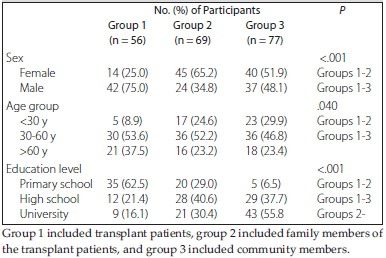
Table 1. Survey Responses From Participants on Age and Sociodemographic Information
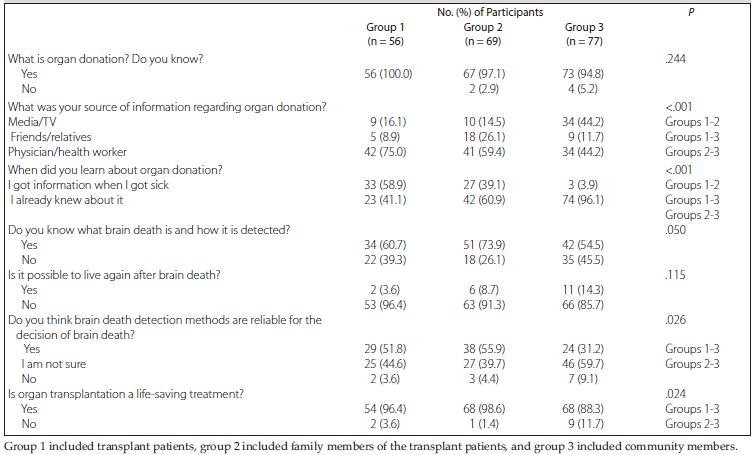
Table 2. Survey Responses From Participants Regarding Knowledge on Organ Transplantation and Donation

Table 3. Survey Responses From Participants Regarding Attitude Toward Organ Donation
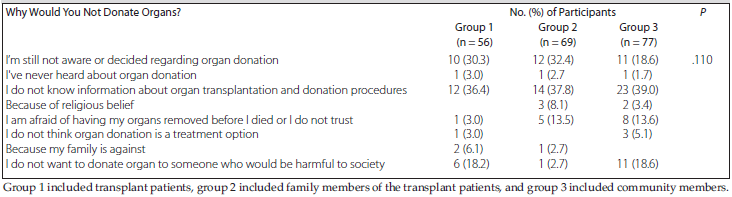
Table 4. Survey Responses From Participants Regarding Why They Would Not Donate