Volume: 24 Issue: 1 January 2026
FULL TEXT
Severe Left Ventricular Outflow Tract Obstruction in Living Donor Liver Transplant: A Case Report
Liver transplant involves major hemodynamic changes due to hypovolemia, altered vascular resistance, and postreperfusion syndrome. Dynamic left ventricular outflow tract obstruction may occur during surgery and cause cardiovascular compromise. Early recognition is crucial to prevent adverse outcomes. A 55-year-old female patient with alcoholic liver disease underwent living donor liver transplant. Preoperative echo-cardiography showed a hyperdynamic left ventricle with preserved systolic function. During surgery, the patient developed hypotension, tachycardia, and desaturation. Transesophageal echocardiography revealed severe mitral regurgitation and turbulent flow consistent with left ventricular outflow tract obstruction. Hemodynamic stability was achieved through vasopressor therapy and volume management. The patient developed pulmonary edema but subsequently recovered and was discharged on day 35. This case demonstrates the importance of intraoperative transesophageal echo-cardiography to identify left ventricular outflow tract obstruction during liver transplant. Dynamic left ventricular outflow tract obstruction should be considered in hemodynamic collapse, and early echocardiographic assessment can guide effective intervention.
Key words : Left ventricular outflow obstruction, Liver transplantation, Transesophageal echocardiography
Introduction
Liver transplant (LT) has become a routine procedure for end-stage liver disease due to advancements in anesthetic and surgical techniques. Hemodynamic instability is commonly observed during LT, primarily due to hypovolemia caused by surgical bleeding and reduced venous return from caval clamping, the hyperdynamic circulation characteristic of end-stage liver disease with high cardiac output and low systemic vascular resistance, and postreperfusion syndrome.1,2 These conditions also predispose patients to dynamic left ventricular outflow tract (LVOT) obstruction. During LT, LVOT obstruction can occur at any stage of the surgery, including the liver resection phase, anhepatic phase, and postreperfusion period.1-4 Early recognition and appropriate management are crucial. In previously reported cases of LVOT obstruc-tion during LT, hypotension was the primary clinical manifestation. In contrast, our present case represents the first case reported in the literature of severe LVOT obstruction associated with concomitant desaturation and postoperative pulmonary edema during LT.
Case Report
A 55-year-old female patient with alcoholic liver disease (Model of End-Stage Liver Disease sodium score 26, body weight 80.7 kg, height 158.6 cm) underwent a living donor LT, with her 34-year-old son serving as the donor. Her history included hepatorenal syndrome, refractory ascites (requiring percutaneous drainage), and left lower leg cellulitis. The patient underwent routine preoperative evaluation at our institution, including electrocardiogram, adenosine technetium Tc-99m single-photon emission computed tomography myocardial perfusion imaging, and transthoracic echocardiography. Preoperative elec-trocardiography showed normal sinus rhythm, and chest radiography demonstrated normal heart size with no remarkable findings. Cardiac evaluation, including single-photon emission computed tomog-raphy myocardial perfusion imaging and coronary computed tomography, revealed no abnormalities. Routine preoperative transthoracic echocardiography showed a hyperdynamic left ventricle with normal systolic function and ejection fraction of 72%. The mitral valve had unremarkable morphology with trivial regurgitation, and continuous-wave Doppler ultrasonography of the LVOT demonstrated peak systolic flow velocity of 1.65 m/s. The interven-tricular septum and left ventricular posterior wall thicknesses during diastole were 7.4 mm and 8.7 mm, respectively (Figure 1).
General anesthesia was induced with midazolam 5 mg and propofol 80 mg. Neuromuscular blockade was achieved with rocuronium 100 mg. Anesthesia was maintained with continuous remifentanil and 4 volume percent desflurane in 40% oxygen air mixture. Two large-bore catheters were inserted into the right internal jugular vein for venovenous bypass and pulmonary artery catheter placement. A central venous catheter was inserted into the right subclavian vein for inotropic infusion. Femoral arterial and venous catheters were placed. A transesophageal echocardiography (TEE) probe was inserted for intraoperative monitoring. Vital signs were auto-matically recorded every 5 minutes with some para-meters documented at 30-minute intervals. A TEE examination was performed before skin incision.
Massive bleeding occurred early in the resection procedure, which required transfusion, volume resuscitation, and norepinephrine infusion. Before native liver explant, the patient developed sudden hemodynamic instability with hypotension, tachy-cardia, increased airway pressure, and desaturation (peripheral oxygen saturation decreased to 92%) (Figure 2).
Intraoperative TEE revealed severe central mitral regurgitation and LVOT mosaic flow pattern not seen on baseline examination (Figure 3). For suspected LVOT obstruction, inspired oxygen was increased to 100%, and vasopressor infusion (norepinephrine 0.2 µg/kg/min, vasopressin 0.05 U/min, terlipressin 2 µg/kg/h) and volume management were initiated. Bolus doses of phenylephrine (100 µg and 200 µg), norepinephrine (10 µg), and vasopressin (1 U) were given. Due to persistent instability, milrinone infusion (0.25 µg/kg/min) was started while con-tinuing volume resuscitation and vasopressors. The patient stabilized, allowing milrinone disconti-nuation and vasopressor tapering. Postreperfusion syndrome occurred but resolved after a 50-µg bolus of norepinephrine.
The operation was completed without further complications, and the patient was transferred to the intensive care unit. Postoperative chest radio-graphy showed pulmonary edema. The patient recovered and was discharged on postoperative day 35.
Discussion
There have been several reports of LVOT obstruction occurring during LT documented in all surgical phases, including the resection phase, anhepatic phase, and postreperfusion period. Reported treatment strategies have varied and have included intravenous vasopressors (phenylephrine, terlipressin, or vasopressin) as bolus or continuous infusion, intravenous short-acting β-blockers such as esmolol, discontinuation of inotropic agents, and manual compression of the abdominal aorta.1-6
Pulmonary edema resulting from LVOT obstruc-tion has been reported in nonsurgical cases of hypertrophic cardiomyopathy, primarily due to secondary mitral regurgitation caused by dynamic LVOT obstruction.7 However, unlike nonsurgical cases, for which the patient’s volume status can be more easily controlled, intraoperative management during LT poses substantial challenges, particularly in the presence of massive bleeding and substantial intravascular volume shifts. To the best of our knowledge, this is the first reported case of severe LVOT obstruction during LT accompanied by desaturation and an increase in airway pressure, followed by postoperative pulmonary edema.
In the treatment of patients with LVOT obstruction, it is crucial to avoid factors that could exacerbate the condition, such as hypovolemia and increased myo-cardial contractility. From this perspective, the use of milrinone could potentially aggravate LVOT obstruction. However, in our case, milrinone was administered at a low dose to treat hemodynamic instability that persisted despite the use of vaso-pressors, accompanied by elevated central venous pressure and mean pulmonary artery pressure, as well as clinical signs suggestive of pulmonary edema, including increased airway pressure and desaturation. Previous studies have demonstrated that, although milrinone is an inotropic agent, it lacks β-adrenergic effects and acts effectively as a pulmonary vasodilator.8,9 Moreover, in our case, milrinone infusion was promptly discontinued after the patient recovered from LVOT obstruction, and the total administered dose of milrinone was small compared with the vasopressor; thus, our dose of milrinone is unlikely to have worsened the LVOT obstruction.
Intraoperative TEE plays a crucial role in diagnosis and management, providing real-time visualization of systolic anterior motion, ventricular filling status, and therapeutic response. Intraoperative TEE enables prompt differentiation of LVOT obstruction from other causes of hemodynamic instability and guides inter-ventions such as volume resuscitation, β-blocker administration, and avoidance of inotropes. Incorpo-ration of routine TEE monitoring in LT allows early detection and targeted management of LVOT obstruction and thereby facilitates hemodynamic stability and overall improvement of patient outcomes.10
In conclusion, LVOT obstruction due to systolic anterior motion can manifest at any stage during LT and should be considered when persistent refractory hemodynamic instability is observed. Real-time evaluation via TEE can be highly useful in such cases. Moreover, clinicians should be aware that LVOT obstruction may cause not only hypotension and tachycardia but also oxygen desaturation; thus, early recognition and aggressive management are essential to mitigate perioperative adverse complications.
References:
- Lee AR, Kim YR, Ham JS, Lee SM, Kim GS. Dynamic left ventricular outflow tract obstruction in living donor liver transplantation recipients: a report of two cases. Korean J Anesthesiol. 2010;59(Suppl):S128-S132.
CrossRef - PubMed - Cywinski JB, Argalious M, Marks TN, Parker BM. Dynamic left ventricular outflow tract obstruction in an orthotopic liver transplant recipient. Liver Transpl. 2005;11(6):692-695. doi:10.1002/lt.20440
CrossRef - PubMed - Roy D, Ralley FE. Anesthetic management of a patient with dynamic left ventricular outflow tract obstruction with systolic anterior movement of the mitral valve undergoing redo-orthotopic liver transplantation. J Cardiothorac Vasc Anesth. 2012;26(2):274-276. doi:10.1053/j.jvca.2011.02.014
CrossRef - PubMed - Aniskevich S, Shine TS, Feinglass NG, Stapelfeldt WH. Dynamic left ventricular outflow tract obstruction during liver transplantation: the role of transesophageal echocardiography. J Cardiothorac Vasc Anesth. 2007;21(4):577-580. doi:10.1053/j.jvca.2006.07.024
CrossRef - PubMed - Mukhtar A, Aboulfetouh F, Salah M, Hamza A, Elmeteini M. The use of terlipressin for management of dynamic left ventricular outflow tract obstruction complicating orthotropic liver transplantation: a case report. Transplant Proc. 2011;43(5):2075-2077. doi:10.1016/j.transproceed.2011.01.170
CrossRef - PubMed - Moon YJ, Park JH, Oh J, Lee S, Hwang GS. Harmful effect of epinephrine on postreperfusion syndrome in an elderly liver transplantation recipient with sigmoid ventricular septum: A case report. Medicine (Baltimore). 2016;95(34):e4394. doi:10.1097/MD.0000000000004394
CrossRef - PubMed - Bui QM, Ang L, Phreaner N. A case report of cardiogenic shock from takotsubo cardiomyopathy with left ventricular outflow tract obstruction: fundamental lessons in cardiac pathophysiology. Eur Heart J Case Rep. 2021;5(4):ytab127. doi:10.1093/ehjcr/ytab127
CrossRef - PubMed - Park JH, Kwon MA, Kim DH, et al. Effectiveness of milrinone for cardiogenic shock due to massive pulmonary aspiration: a case report. Korean J Anesthesiol. 2014;66(6):476-480. doi:10.4097/kjae.2014.66.6.476
CrossRef - PubMed - Zanza C, Saglietti F, Tesauro M, et al. Cardiogenic pulmonary edema in emergency medicine. Adv Respir Med. 2023;91(5):445-463. doi:10.3390/arm91050034
CrossRef - PubMed - Wilke TJ, Vail EA, Gold AK, et al. 2024 Clinical update in liver transplantation. J Cardiothorac Vasc Anesth. 2025;39(6):1547-1555. doi:10.1053/j.jvca.2025.02.032
CrossRef - PubMed

Volume : 24
Issue : 1
Pages : 74 - 77
DOI : 10.6002/ect.2025.0247
From the Department of Anesthesiology and Pain Medicine, Inje University Haeundae Paik Hospital, Busan, Republic of Korea
Acknowledgements: The authors have not received any funding or grants in support of the presented research or for the preparation of this work and have no declarations of potential conflicts of interest.
Corresponding author: Jae Hwan Kim, Department of Anesthesiology and Pain Medicine, Inje University Haeundae Paik Hospital, Busan 612-896, Korea
Phone: +82 51 797 0410 E-mail: h00696@paik.ac.kr
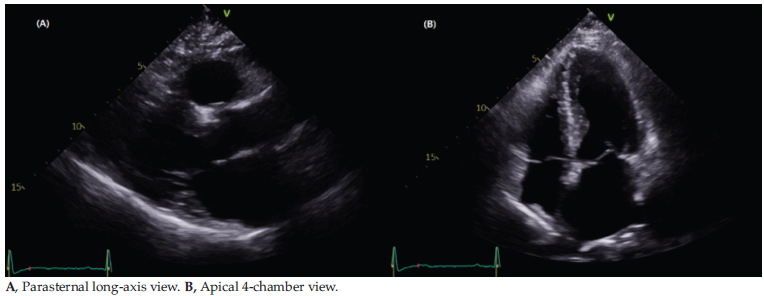
Figure 1. Preoperative Transthoracic Echocardiography
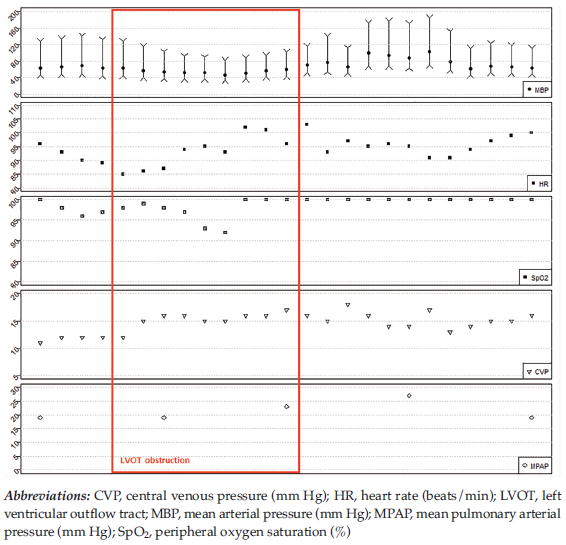
Figure 2. Vital Signs During Left Ventricular Outflow Tract Obstruction
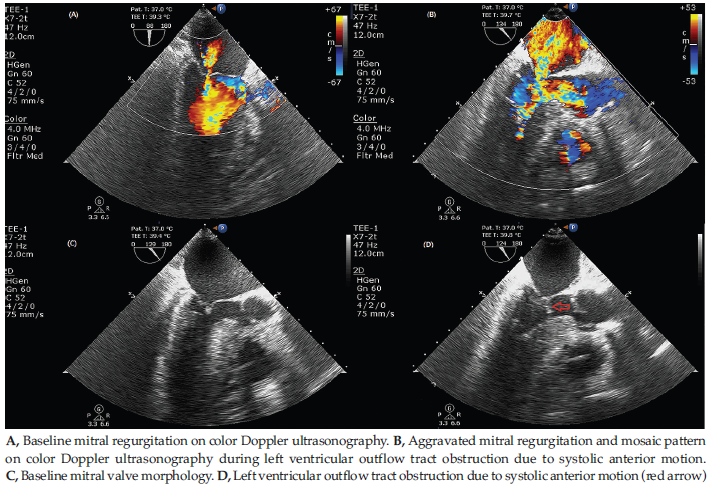
Figure 3. Transesophageal Echocardiography: Mid-esophageal Long-Axis View During Left Ventricular Outflow Tract Obstruction and Baseline Before Surgical Incision