Volume: 24 Issue: 1 January 2026
FULL TEXT
Custodiol-MP in Rewarming Machine Perfusion Up to Normothermia for Porcine Kidney Grafts
Objectives: Controlled oxygenated rewarming is an effective strategy to minimize tissue alterations upon reperfusion after cold preservation and ensures better graft function after transplant. Custodiol-MP, a modification of the classical HTK solution, has been further developed specifically for use in machine perfusion of organs with the intention to meet clinical standards. Here, we compared Custodiol-MP with AQIX RS-I solution for rewarming machine perfusion from hypo- up to normothermic temperature.
Materials and Methods: Porcine kidney grafts that were ischemically predamaged were cold stored for 18 hours in HTK solution. Kidneys were then connected to a machine perfusion device and treated with controlled oxygenated rewarming from 8 to 35 °C using either AQIX RS-I or Custodiol-MP solution. Kidneys were then evaluated using an established ex vivo reperfusion model.
Results: Controlled rewarming with either AQIX RS-I or Custodiol-MP solution resulted in an overall improved kidney performance compared with simply cold storage of kidneys in terms of glomerular capacity, tubular function, and cellular damage. No major differences between rewarming with AQIX RS-I or Custodiol-MP were noted. However, controlled oxyge-nated rewarming with Custodiol-MP resulted in slight improvements in urine production, protein urea, and efficiency of oxygen utilization.
Conclusions: Custodiol-MP seems to be at least equally suitable for controlled oxygenated rewarming up to normothermia versus AQIX RS-I solution, with a tendency to improved support of glomerular function and mitochondrial recovery.
Key words : AQIX RS-I, Controlled oxygenated rewarming, Organ preservation, Transplantation
Introduction
The persistent organ shortage and the growing need for donor organs pose major challenges for transplant medicine.1 The resulting expansion of acceptance criteria for donor organs (ie, advanced age) requires new approaches in the field of organ preservation. Although the increased use of extended criteria donor organs for transplant has enabled expansion of the donor pool, these less than optimal grafts are susceptible to preservation and/or reper-fusion injury and are thus prone to reduced function and graft survival in the recipient.2,3
Experimental data have shown that, with increas-ing duration of cold ischemia time, cellular ho-meostasis is disturbed and the tissue becomes more sensitive to the sudden shift from cold storage temperature to normothermia during revasculariza-tion and reperfusion.4,5 This so-called “rewarming injury” represents a pivotal part in the pathogenesis of ischemia-reperfusion injury. The sudden energy demand after reperfusion cannot be met by the metabolically still inert cells, which leads to the activation of damaging cascades and a permanent impairment of the organ integrity.6 With use of slow and gradual warming of the organ during ex vivo machine perfusion, energy-dependent metabolic processes can gently adapt to the rising temperatures, leading to improved preparation of the graft for subsequent reperfusion.6-8 It could be shown expe-rimentally that controlled oxygenated rewarming (COR) is particularly effective at the mitochondrial site and supports the restoration of electron transport for the production of ATP, thus preventing oxidative injury and proinflammatory and apoptotic mechanisms.9
In addition to the technical requirements of the machine to implement the rewarming protocol in clinical routine, the choice of a suitable perfusion solution is also a key issue, as the solution must be adequate over a wide temperature range. Initially, blood-based perfusion solutions were assumed to be mandatory for normothermic machine perfusion, as they simulate a physiological environment and include erythrocytes as oxygen carriers. However, recent data have consistently indicated that the addition of red blood cells is not obligatory for adequate ex vivo perfusion at normothermia.10,11 A high oxygen supply at appropriate flow rates seems to be sufficient for tissue oxygenation, and putative detrimental side effects derived from blood-based perfusates, such as free hemoglobin-induced kidney damage, can be reduced.12
AQIX RS-I is a serum-like, non-phosphate-buf-fered extracellular-type solution that was initially designed to be used for static storage and transport for a variety of organs at any temperature.13 This solution was also found to be appropriate for use in machine perfusion of livers and kidneys at hypo- and normothermia.10,14,15
A new solution for machine perfusion of organs is Custodiol-MP, which is based on the well-known histidine-tryptophan-ketoglutarate (HTK) solution with the addition of iron chelators and the amino acids glycine and alanine. Custodiol-MP was originally designed for use in cold aerobic perfusion of organ grafts. The solution has flexible use because of the possibility of variable colloid addition and is intended to meet clinical standards.16 In a porcine kidney perfusion model, Custodiol-MP was found to be safe during rewarming up to 20 °C and equally effective as the common perfusion solution Belzer MPS.17
In this study, we aimed to compare the applicability and efficacy of AQIX RS-I versus Custodiol-MP in the setting of a rewarming protocol from hypothermia up to normothermia during isolated perfusion of pre-viously cold-stored porcine kidney grafts. The kidneys were evaluated in an isolated reperfusion model to determine the effect of rewarming with the different solutions.
Materials and Methods
Porcine kidney grafts
We conducted experiments on isolated kidneys retrieved from dead female pigs weighing between 25 kg and 30 kg after euthanasia by intravenous injection of potassium chloride in deep anesthesia. The procedure of euthanasia for organ retrieval was conducted in accordance with § 4 Abs. 3, TSG (German legislation on animal protection) and approved by the responsible authority LANUK (Landesamt für Natur, Umwelt und Klima NRW, Germany). The procedures also followed the US National Institutes of Health’s principles of laboratory animal care (publication no. 85-23, revised 1985).
Kidneys were removed 20 minutes after circu-latory standstill and flushed on the back-table by 100 cm gravity with cold HTK solution until the effluent became clear. No heparin was given at any time. Grafts were subsequently stored for 18 hours in a beaker filled with HTK solution and a tempe-rature regulated to 4 °C by means of a cryothermostat.
Experimental groups
Kidneys were randomly assigned to 1 of 3 groups (n = 6 each). Group 1 (AQIX RS-I group) received end-ischemic machine perfusion for 2 hours with AQIX RS-I solution (LSP-Life Science Production), supplemented with 40 g/L of bovine serum albumin. As proposed earlier,8,18 perfusion was started at 8 °C, and COR of the perfusate was initiated thereafter in a hyperbolic pattern from 8 °C to 35 °C during the first 90 minutes, accompanied by an adapted pres-sure increase from 30 to 75 mm Hg. The last 30 minutes of perfusion were kept constant at 35 °C. Group 2 (Custodiol-MP group) received end-ische-mic machine perfusion with Custodiol-MP (Köhler Chemie) solution as described for group 1. Custodiol MP (800 mL base solution) was supplemented with 200 mL of human albumin solution (20 g/L) according to the manufacturer’s instructions to obtain a 4% colloidal support, which was judged appropriate for kidney perfusion in this context. Glucose (1.75 g/L) was added for nutritional support. Supplementation was adjusted to match AQIX RS-I solution to create comparable conditions between groups. Group 3 (control, cold storage only group) received no additional end-ischemic machine perfusion.
Isolated kidney reperfusion model
Renal recovery from preservation/reperfusion injury was evaluated by using an established in vitro reperfusion model as described previously.10
In brief, before reperfusion, all kidneys were cold flushed with 100 mL of saline solution and then kept at room temperature for 20 minutes to simulate the second warm ischemia period during surgical implantation in vivo. This time was also used for cannulation of the ureter with a large tubing to allow for urine collection upon reperfusion.
Kidneys were placed in a thermostatically controlled Plexiglas chamber and reperfused with acellular Krebs Henseleit buffer (Sigma Aldrich) via the renal artery at a mean pulsatile pressure of 90 mm Hg.19 The venous effluent drained free into the reservoir. Oxygenation of the perfusate was performed with 95% O2-5% CO2 using a thermo-controlled hollow fiber oxygenator. Arterial pressure was maintained with a servo-controlled roller pump in conjunction with a pressure transducer connected to the arterial perfusion cannula. Urine was collected from the PE tubing inserted into the ureter. Every 100 mL of collected urine were filtered and reinfused to the reservoir to maintain constant electrolyte composition of the perfusate over time.
Analytical procedures
Analytical procedures were performed as described previously.10 Concentrations of aspartate aminot-ransferase (AST) and creatinine were determined in a routine fashion by reflectance photometry on a biochemical immunoassay analyzer (RC3X, Scil Animal Care Co). Clearances were calculated for the respective intervals as urinary creatinine × urine flow/perfusate creatinine.
Protein concentration in urine was measured in a routine fashion at the Laboratory Center of the University Hospital, with amount of protein normalized against the corresponding concentrations of creatinine as urinary protein-to-creatinine ratio (UPCR).
Oxygen partial pressure and perfusate con-centrations of sodium and glucose were measured with a pH blood-gas analyzer (ABL 815flex acid-base laboratory, Radiometer).
Renal oxygen consumption (mL/100 g/min) was calculated from arterial and venous oxygen partial pressures as detailed previously,20 taking into account the respective flow rates and kidney mass.
The efficiency of renal O2 utilization was ap-proximated by the ratio of total tubular transport of Na (TNa), accounting for the vast majority of energy consuming processes in the kidney,21 and oxygen consumption per unit time, with TNa being equal to filtered sodium minus excreted sodium: TNa = (glomerular filtration rate × perfusate sodium) – (urinary sodium × urine flow). Fractional excretion of sodium was calculated as follows: urine sodium × perfusate creatinine/perfusate sodium × urine creatinine × 100.
Statistical analyses
Values are expressed as means ± SD of n = 6 kidneys per group. Differences among groups were tested by 1-way analysis of variances followed by the Student-Newman-Keuls test, unless otherwise indicated. Statistical significance was set at P < .05.
Results
Renal perfusate flow upon reperfusion was similar in all groups, and flow values reached steady-state conditions during ongoing perfusion, with average values at the end of perfusion of 368 ± 129 versus 360 ± 50 versus 291.5 ± 60.3 mL/min (group 3 [cold storage] vs group 1 [AQIX RS-I group] vs group 2 [Custodiol-MP group]; P > .05).
Urine production upon reperfusion was sig-nificantly increased in kidneys in groups that underwent COR before reperfusion with either AQIX RS-I (385 ± 139 mL) or Custodiol-MP (469 ± 114 mL) compared with the control group (140 ± 53 mL) (P < .05 vs cold storage). Likewise, proteinuria monitored by UPCR could be clearly reduced (P < .05) by COR with either AQIX RS-I solution (29.85 ± 38.92) or Custodiol-MP solution (21.25 ± 12) versus cold storage (198.25 ± 80.88). Total urine production was slightly higher and UPCR lower in kidneys perfused with Custodiol-MP during rewarming machine perfusion than kidneys perfused with AQIX RS-I, but the difference did not reach statistical significance (Figure 1).
Glomerular function of reperfused kidneys, as assessed by creatinine clearance, increased during ongoing kidney perfusion, and values were consis-tently comparable between group 1 (AQIX RS-I) and group 2 (Custodiol-MP) with a final value of 8.17 ± 4.03 mL/min versus 10.15 ± 2.25 mL/min after 90 minutes of reperfusion; use of COR with either solution resulted in a significantly higher creatinine clearance than only cold storage of kidneys (1.5 ± 0.8 mL/min; P < .05 vs cold storage) (Figure 2).
The reabsorption of sodium from the blood via the renal tubular cells is by far the most energy-consuming process in the kidneys.21 Thus, the relationship between sodium transport and oxygen consumption (TNa+/oxygen consumption per unit time) is an important indicator of tubule function. Tubular cell function after isolated reperfusion in vitro could be improved by the interposed rewar-ming protocol. Fractional excretion of sodium was significantly reduced by COR with either perfusion solution (48.3 ± 15.7 % [AQIX RS-I group] and 43.6 ± 9.3% [Custodiol-MP group] versus 70.2 ± 12.7% [control group]; P < .05) (Figure 3). Interestingly, oxygen consumption was lower during 90 minutes of reperfusion in the Custodiol-MP group than in the AQIX RS-I and control groups, with values of 4.21 ± 1.11 versus 5.56 ± 0.48 versus 5.1 ± 0.73 mL/min/100 g, respectively (P < .5 vs AQIX RS-I). Ratio of TNa+/oxygen consumption was clearly improved in kidneys treated with COR, with slightly higher value in the Custodiol-MP group (4.15 ± 3.11, 5.61 ± 3.76, and 0.3 ± 0.2 for the AQIX RS-I, Custodiol-MP, and cold storage groups, respectively; P < .05 vs cold storage group) (Figure 4).
Release of AST during perfusion is considered an indicator of cell damage and injury. In the control group, a steep rise in perfusate AST was observed within the first 60 minutes of reperfusion, reaching a value of 734 ± 347 U/L after 90 minutes; in contrast, AST release remained constant at a low level in both COR groups with comparable values at the end of reperfusion for the AQIX RS-I and Custodiol-MP groups (140.2 ± 73.6 and 198 ± 178 U/L, respectively) (Figure 5). It should be emphasized that the absolute AST values at the end of COR with either solution were much lower than AST values reported for the control group during the entire reperfusion period. Thus, a washout effect of the enzyme in the pretreated groups can be ruled out.
Of note, release of AST was significantly higher when COR was performed with AQIX RS-I (38.35±18.09 U/L) compared with perfusion with Custodiol-MP (8.46 ± 3.23 U/L) (P < .05).
Discussion
Controlled oxygenated rewarming is an effective strategy to minimize tissue alterations on reperfusion after cold preservation and ensures better graft function after transplant.22,23 The protective effect of controlled warming is attributed to the mitigation of cellular injury, which occurs when the high metabolic demand during normothermic reperfusion cannot yet be met by the still cold and inert tissue (“rewarming injury”).6 Because of the controlled increase in temperature during COR, the perfusion solution used for this purpose should be effective across a wide temperature range. In this experimental study, we investigated 2 different solutions in isolated pig kidney perfusion (AQIX RS-I and Custodiol-MP).
AQIX RS-I is a non-phosphate-buffered solution developed for hypothermic and normothermic storage and transport of cell and tissue samples. This solution is an extracellular-type solution that provides a homeostatic environment, supports mitochondrial energy metabolism, and maintains pH stability in isolated cells and tissues for up to 72 hours.24 In the field of organ preservation, the solution has been reported to achieve warm ischemic storage of pig kidneys for 6 hours without loss of organ viability.13 The solution has also been used with success as perfusate in machine perfusion of liver and kidney grafts at temperatures up to normothermia.10,14
In contrast, Custodiol-MP is a modification of the classical HTK solution, a standard solution for visceral organ preservation and cardioplegia, which has been further developed specifically for the use in machine perfusion of organ grafts. The main modifications are the implementation of iron chelators deferoxamine and LK-614, which reduce oxygen free radical-mediated iron-dependent damage, as well as the membrane-stabilizing amino acids glycine and alanine and the nitric oxide precursor L-arginine. In addition, the buffer substance histidine from the HTK solution has been largely replaced by the less cytotoxic N-acetyl histidine. Custodiol-MP is now intended for the use in routine clinical machine perfusion. The flexible addition of colloid allows the adaptation to the individual needs of the perfused organ.16 In a porcine isolated lung perfusion model, Custodiol-MP was shown to be at least equally effective as the established Steen solution for ex vivo lung perfusion, and perfusion with Custodiol-MP resulted in even lower lactate levels and better oxygenation capacity.16 Likewise, Custodiol-MP could compete with Belzer MPS in rewarming pig kidney perfusion up to 20 °C.17
In our study, all kidneys undergoing COR before reperfusion showed an overall improved functional performance compared with kidneys that were only preserved by static cold storage. Controlled oxygenated rewarming resulted in a more efficient glomerular capacity, increased tubular function, and less cellular enzyme leakage. Our results are largely consistent with previous studies on graft rewarming before normothermic reperfusion.11,22 However, the aim of the present study was to investigate if and how the type and composition of the perfusate solution would affect organ function on or after hypo- to normothermic machine perfusion.
Major differences between the 2 perfusion solu-tions used for the rewarming protocol could not be shown in our experimental setup. Although glome-rular function, determined by clearance of creatinine from the circulating perfusate, urine output, and protein loss in urine during reperfusion tended to be higher in the Custodiol-MP group, which could indicate a certain benefit to the glomeruli from perfusion with Custodiol-MP, the differences were not pronounced. Nevertheless, previous data have also shown a slight improvement in creatinine clearance in kidneys perfused subnormothermically with Custodiol-MP compared with kidneys perfused with Belzer MPS.17
Oxygen consumption during perfusion in the Custodiol-MP group was lower than in the AQIX RS-I group. This decrease was accompanied by a slightly more efficient oxygen utilization in relation to total sodium transport, which is consistent with the observations of Kalka and colleagues in isolated lung perfusion16 and could suggest an improved mitoc-hondrial recovery in the kidneys that were perfused with Custodiol-MP instead of AQIX RS-I before reperfusion.
Cellular release of AST, depicting an injury marker, was similarly reduced for both solutions. Vekemans and colleagues showed, in a porcine liver transplant model, that hypothermic machine perfusion with AQIX RS-I led to pronounced endothelial cell dysfunction compared with KPS-1; however, their sample size was small (n = 3) and in contrast hypothermic perfusion with AQIX RS-I reduced Kupffer cell activation after reperfusion.15
Conclusions
We conclude that the importance of the perfusion solution for COR appears to be of minor relevance and seems to be inferior to the actual advantage of the rewarming machine perfusion itself. Altogether, AQIX RS-I has already been proven in several studies as a normothermic perfusion solution for kidney grafts.9,10,12 Although Custodiol-MP was originally designed for cold machine perfusion, this solution did not show any disadvantages compared with AQIX RS-I in the warm perfusion period, with a tendency to even better support glomerular function and mitochondrial recovery. Thus, based on the available results, Custodiol-MP is suitable and safe for renal perfusion from hypo- to normothermia, providing the opportunity for clinical applicability.Although the preclinical model used in our study closely approximates actual physiological conditions, validation in a larger cohort and in an in vivo transplant model would be reasonable.
References:
- Matas AJ, Smith JM, Skeans MA, et al. OPTN/SRTR 2013 annual data report: kidney. Am J Transplant. 2015;15(Suppl 2):1-34. doi:10.1111/ajt.13195
CrossRef - PubMed - Treckmann J, Moers C, Smits JM, et al. Machine perfusion versus cold storage for preservation of kidneys from expanded criteria donors after brain death. Transplant Int. 2011;24(6):548-554. doi:10.1111/j.1432-2277.2011.01232.x.
CrossRef - PubMed - Lee CY, Mangino MJ. Preservation methods for kidney and liver. Organogenesis. 2009;5(3):105-112. doi:10.4161/org.5.3.9582
CrossRef - PubMed - Rauen U, de Groot H. New insights into the cellular and molecular mechanisms of cold storage injury. J Investig Med. 2004;52(5):299-309. doi:10.1136/jim-52-05-29
CrossRef - PubMed - Rauen U, Polzar B, Stephan H, Mannherz HG, de Groot H. Cold-induced apoptosis in cultured hepatocytes and liver endothelial cells: mediation by reactive oxygen species. Faseb J. 1999;13(1):155-168. doi:10.1096/fasebj.13.1.155
CrossRef - PubMed - Minor T, von Horn C. Rewarming injury after cold preservation. Int J Mol Sci. 2019;20(9):2059. doi:10.3390/ijms20092059
CrossRef - PubMed - Gallinat A, Lu J, von Horn C, et al. Transplantation of cold stored porcine kidneys after controlled oxygenated rewarming. Artif Organs. 2018;42(6):647-654. doi:10.1111/aor.13096
CrossRef - PubMed - Schopp I, Reissberg E, Luer B, Efferz P, Minor T. Controlled rewarming after hypothermia: adding a new principle to renal preservation. Clin Transl Sci. 2015;8(5):475-478. doi:10.1111/cts.12295
CrossRef - PubMed - Zlatev H, von Horn C, Minor T. Preservation of mitochondrial coupling and renal function by controlled oxygenated rewarming of porcine kidney grafts. Biomolecules. 2021;11(12):1880. doi:10.3390/biom11121880
CrossRef - PubMed - Minor T, von Horn C, Paul A. Role of erythrocytes in short-term rewarming kidney perfusion after cold storage. Artif Organs. 2019;43(6):584-592. doi:10.1111/aor.13403
CrossRef - PubMed - Zlatev H, von Horn C, Kaths M, Paul A, Minor T. Clinical use of controlled oxygenated rewarming of kidney grafts prior to transplantation by ex vivo machine perfusion. A pilot study. Eur J Clin Invest. 2021;52(2):e13691. doi: 10.1111/eci.13691
CrossRef - PubMed - von Horn C, Zlatev H, Luer B, Malkus L, Ting S, Minor T. The impact of oxygen supply and erythrocytes during normothermic kidney perfusion. Sci Rep. 2023;13(1):2021. doi:10.1038/s41598-023-29031-y
CrossRef - PubMed - Kay MD, Hosgood SA, Harper SJ, et al. Static normothermic preservation of renal allografts using a novel nonphosphate buffered preservation solution. Transpl Int. 2007;20(1):88-92. doi:10.1111/j.1432-2277.2006.00390.x
CrossRef - PubMed - von Horn C, Baba HA, Hannaert P, et al. Controlled oxygenated rewarming up to normothermia for pretransplant reconditioning of liver grafts. Clin Transplant. 2017;31(11). doi:10.1111/ctr.13101
CrossRef - PubMed - Vekemans K, Liu Q, Heedfeld V, et al. Hypothermic liver machine perfusion with EKPS-1 solution vs Aqix RS-I solution: in vivo feasibility study in a pig transplantation model. Transplant Proc. 2009;41(2):617-621. doi:10.1016/j.transproceed.2008.12.022
CrossRef - PubMed - Kalka K, Keldenich Z, Carstens H, et al. Custodiol-MP for ex vivo lung perfusion - a comparison in a porcine model of donation after circulatory determination of death. Int J Artif Organs. 2022;45(2):162-173.
CrossRef - PubMed - von Horn C, Wilde B, Rauen U, Paul A, Minor T. Use of the new preservation solution Custodiol-MP for ex vivo reconditioning of kidney grafts. Artif Organs. 2021;45(9):1117-1123. doi:10.1111/aor.13951
CrossRef - PubMed - Minor T, Efferz P, Fox M, Wohlschlaeger J, Lüer B. Controlled oxygenated rewarming of cold stored liver grafts by thermally graduated machine perfusion prior to reperfusion. Am J Transplant. 2013;13(6):1450-1460. doi:10.1111/ajt.12235
CrossRef - PubMed - von Horn C, Minor T. Isolated kidney perfusion: the influence of pulsatile flow. Scand J Clin Lab Invest. 2018;78(1-2):131-135. doi:10.1080/00365513.2017.1422539
CrossRef - PubMed - Koetting M, Luer B, Efferz P, Paul A, Minor T. Optimal time for hypothermic reconditioning of liver grafts by venous systemic oxygen persufflation in a large animal model. Transplantation. 2011;91(1):42-47. doi:10.1097/TP.0b013e3181fed021
CrossRef - PubMed - Pei L, Solis G, Nguyen MT, et al. Paracellular epithelial sodium transport maximizes energy efficiency in the kidney. J Clin Invest. 2016;126(7):2509-2518. doi:10.1172/JCI83942
CrossRef - PubMed - von Horn C, Minor T. Improved approach for normothermic machine perfusion of cold stored kidney grafts. Am J Transl Res. 2018;10(6):1921-1929.
CrossRef - PubMed - Minor T, von Horn C, Gallinat A, et al. First-in-man controlled rewarming and normothermic perfusion with cell-free solution of a kidney prior to transplantation. Am J Transplant. 2020;20(4):1192-1195. doi:10.1111/ajt.15647
CrossRef - PubMed - Elliott TR, Nicholson ML, Hosgood SA. Normothermic kidney perfusion: an overview of protocols and strategies. Am J Transplant. 2021;21(4):1382-1390. doi:10.1111/ajt.16307
CrossRef - PubMed

Volume : 24
Issue : 1
Pages : 16 - 22
DOI : 10.6002/ect.2025.0261
From the Department of Surgical Research, University Hospital Essen, Germany
Acknowledgements: The authors have not received any funding or grants in support of the presented research or for the preparation of this work and have no declarations of potential conflicts of interest.
Corresponding author: Charlotte von Horn, Surgical Research Department, Clinic for General, Visceral, and Transplantation Surgery, University Duisburg-Essen, Hufelandstr. 55, D-45147 Essen, Germany
Phone: +49 201 723-82250
E-mail: charlotte.von-horn@uk-essen.de
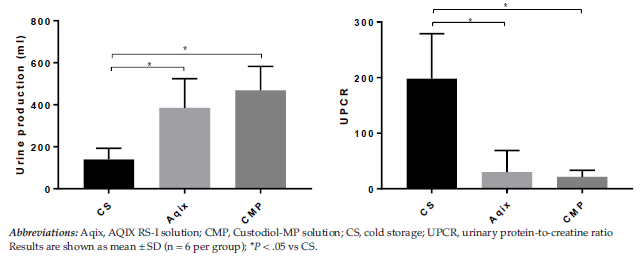
Figure 1.Urine Production and Urinary Protein-to-Creatinine Ratio of Kidneys Upon Reperfusion After 18 Hours of Cold Storage and Controlled Oxygenated Rewarming With Either AQIX RS-I or Custodiol-MP Solution
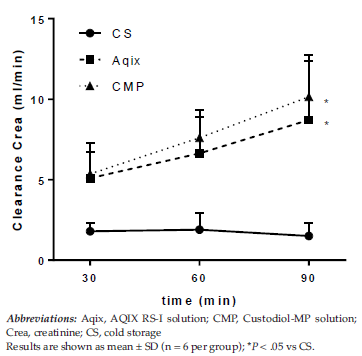
Figure 2.Clearance of Creatinine as Readout of Glomerular Function of Kidneys Upon Reperfusion After 18 Hours of Cold Storage and Controlled Oxygenated Rewarming With Either AQIX RS-I or Custodiol-MP Solution
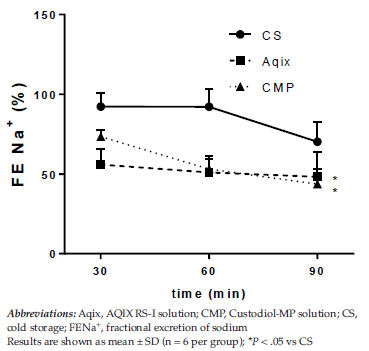
Figure 3.Fractional Excretion of Sodium of Kidneys Upon Reperfusion After 18 Hours of Cold Storage and Controlled Oxygenated Rewarming With Either AQIX RS-I or Custodiol-MP Solution
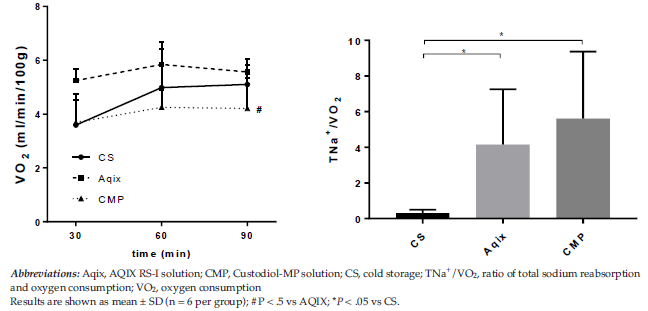
Figure 4.Oxygen Consumption and Efficiency of Oxygen Utilization of Kidneys Upon Reperfusion After 18 Hours of Cold Storage and Controlled Oxygenated Rewarming With Either AQIX RS-I or Custodiol-MP Solution
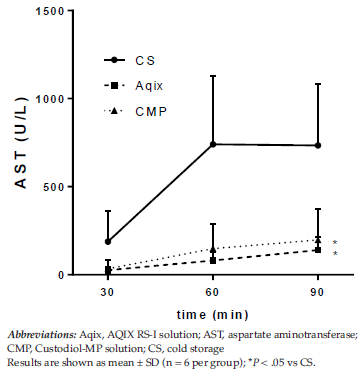
Figure 5.Release of Aspartate Aminotransferase of Kidneys Upon Reperfusion After 18 Hours of Cold Storage and Controlled Oxygenated Rewarming With Either AQIX RS-I or Custodiol-MP Solution