Volume: 23 Issue: 4 April 2025
FULL TEXT
The BK virus has become a substantial threat to transplanted kidneys. Yet, the present understanding of the clinical course and postoperative management of BK virus infections remains inadequate. Here, we report a case of a male transplant recipient with rapid graft loss due to BK virus-associated nephropathy after the second renal transplant, who had previously experienced failure of his first kidney allograft for the same reason. The posttransplant period was uneventful until serum creatinine rose to 2.30 mg/dL on postoperative day 59. Puncture biopsy was postponed because of swelling in the transplanted kidney, and acute rejection was considered as a source of the swelling because the repetitive results of blood BK virus DNA tests were negative. Methylprednisolone 500 mg was administered empirically for 3 days, followed by a 5-day course of anti-thymocyte globulin 100 mg. On postoperative day 83, SV40 T-antigen antibody immunostaining confirmed the diagnosis of BK virus nephropathy. However, it took only 28 days for this patient to progress from abnormal kidney function to the loss of the secondary transplanted kidney, and dialysis was initiated on postoperative day 87. To our knowledge, this is the first report of BK virus resulting in acute failure of a transplanted kidney. An early biopsy is crucial, and a negative test for viremia is not sufficient to exclude the recurrence of BK virus.
Key words : BK virus-associated nephropathy, Kidney transplantation, Retransplantation
Introduction
The BK virus (BKV) has emerged as an increasingly important risk factor for kidney transplant (KT) recipients in this era of new immunosuppressants.1,2 A BKV infection in an immunocompromised transplant recipient typically occurs in the following chro-nological stages: BK viruria, BK viremia, and BKV-associated nephropathy (BKVN). Once infection progresses to BKVN, about 50% of patients with BKVN experience graft dysfunction. Screening strategies for BKV have been key to initiate and guide the stepwise management of immunosuppression. Preemptive immunosuppression reduction has been shown to be effective for prevention of allograft loss from BKV infections.3,4 However, the present understanding of the clinical course of BKV infections remains insuf-ficient. Previous records of BKV as a causative factor for the rapid loss of transplanted kidneys are rare. Here, we report a case of a young male patient who experienced failure of consecutive kidney allografts as a result of BKV infections. Our case indicated that underestimation of BKV as a detrimental factor in acute kidney injury may lead to devastating outcomes.
Case Report
We performed this study according to the principles of the Declaration of Helsinki. Because this is an anonymized case report, this study has been granted an exemption from the institutional review board, Tongji Hospital, Tongji Medical College, Huazhong University of Science and Technology. Written informed consent to participate in this study was provided by the participant and his spouse.
The KT patient was a 28-year-old man (height, 172cm; weight, 65kg). The patient’s primary nephro-pathy was chronic glomerulonephritis, and he had been receiving regular dialysis for 1year. The recipient underwent KT from a deceased donor in November 2019. Initial immunosuppression con-sisted of tacrolimus, mycophenolate mofetil (MMF), and prednisone, with anti-thymocyte globulin (ATG) induction. Tacrolimus trough levels were 8 to 10 ng/mL for the first 3 months and 6 to 8 ng/mL thereafter. The posttransplant period was uneventful with a baseline serum creatinine (SCr) of 1.92 to 2.04 mg/dL. Ten months after transplant, the SCr increased to 3.76 mg/dL. Polymerase chain reaction for BKV DNA was 6.7 × 10⁸ copies/mL in urine and 8.2 × 10³ copies/mL in serum. Biopsy revealed viral inclusion bodies and severe interstitial fibrosis (>50%), thus confirming the diagnosis of BKVN. Immunosup-pressants were reduced, and sirolimus was substituted for tacrolimus to prevent virus replication. Levels of BKV disappeared rapidly in blood but persisted in urine with a DNA load range of 104 to 107 copies/mL thereafter. However, the allograft gradually deteriorated, and he resumed dialysis again in February 2021. While awaiting a second kidney allograft, he continued immunosuppression therapy with tacrolimus (5 to 6 ng/mL) and MMF.
In July 2021, the patient underwent a retransplant with a deceased donor renal allograft. The previous allograft was preserved. Before retransplant, BK viremia was negative and BK viruria was 3.20 × 10⁴ copies/mL. Donor-specific anti-human leukocyte antigen antibodies and panel reactive antibodies were also negative. He was maintained on tacrolimus, MMF, and prednisone, without induction. The patient reached a baseline SCr of 0.81 to 1.38 mg/dL. Because of a potential risk of BKV recurrence, screening for BKV and JC virus (JCV) was conducted monthly postoperatively. On postoperative day (POD) 59, his SCr suddenly increased to 2.30 mg/dL. Viruria of BKV increased to 3.98 × 10⁷ copies/mL, and JC viruria was first detected at 1.56 × 10⁶ copies/mL. However, the viremia was persistently negative, which was a key predictor for BKVN. Puncture biopsy was postponed because of swelling in the transplanted kidney. Considering the possibility of rejection, a 3-day course of methylprednisolone 500 mg was administered empirically, followed by a 5-day course of ATG 100 mg. This regimen produced no substantial effect, as SCr increased to 5.09 mg/dL on POD83, and the biopsy results highlighted evidence of intranuclear BKV inclusion bodies, accompanied by tubular epithelial necrosis and extensive lymphocytic infiltration (Figure 1A). Strong positive immunostaining of SV40 T-antigen antibody (>10%) was reported via immunohis-tochemistry (Figure 1B). Under electron microscopy, we observed large numbers of viral particles in the nuclei of tubular epithelial cells (Figure 1C). The diagnosis of BKVN grade 3 (Banff criteria 2019) was therefore confirmed.
Accordingly, the immunosuppression regimen for our patient was modified to a new panel, which comprised cyclosporin A (100 mg, twice daily), mizoribine (100 mg, twice daily), and prednisone (5 mg/d). Meanwhile, a course of intravenous immunoglobulin (10 g/d) was administered over the subsequent 5 days. However, the patient resumed dialysis on POD87, in response to a rapid increase of SCr to 7.40 mg/dL. On POD93, we first detected BKV in the serum of 1.85 × 10⁶ copies/mL, urine BKV DNA load was 1.56 × 10⁸ copies/mL, and JCV DNA load was 8.5 × 10⁵ copies/mL. Test results for JC viremia were negative. The BKV responded well to immunosuppression reduction and disappeared in blood 2 weeks later, and BK viruria decreased to 3.5 × 10³ copies/mL on POD166 and remained at a similar level thereafter. However, damage to the renal allograft was irreversible. Eight months later, a repeat biopsy revealed persistent viral inclusion bodies, as well as massive interstitial fibrosis. A summary of events is depicted in Figure 2.
Discussion
To our knowledge, this is the first report of BKV resulting in acute failure of a transplanted kidney, which indicated a scenario quite different from the traditional impression of the chronic procession of BKVN. Previous studies suggested that renal transplant recipients with BKVN usually demons-trate poor long-term outcomes due to the absence of specific antivirus drugs and effective therapies, whereas good short-term prognoses have been often observed.2 No clear documentation has been reported that BKV could cause acute damage to allograft. However, in our patient, the pathology took only 28 days to progress from first detection of abnormal kidney (POD59) to dialysis (POD87). Puncture biopsy reported on POD83 verified the diagnosis of BKVN, and electron microscopy results demonstrated a large number of BKV particles in the allograft. The retransplanted kidney was destroyed by the extensive damage of renal tubules caused by BKV and subsequent lymphocytes infiltration, whereas collagen deposition and interstitial fibrosis were not observed on POD87. Despite timely medication adjustments and control of the virus, the damage to the kidney was irreversible. Our case has uniquely shown that BKV can destroy the graft within an unanticipated brief time period, similar to other acute postoperative complications, such as rejection.
The rapidly elevated SCr of 1.82 mg/dL on POD59 was first considered as a sign of acute rejection, because plasma BKV DNA repetitive screens produced consistently negative results. The subsequent methylprednisolone and ATG therapy could be a factor to trigger BKV activation and proliferation. Meanwhile, swelling in the allograft postponed punctual biopsy and the additional time required to produce the biopsy report contributed to delayed diagnosis of BKVN. Schaub and colleagues reported that two-thirds of renal transplant recipients had undergone empirical antirejection therapy before the diagnosis of BKVN.5 It is difficult to establish an early diagnosis based on the similar onset time and clinical manifestation between graft rejection and BKVN. Our case further emphasized the potential that the alternative treatment could be devastating in this situation.
The presently established guidelines have also considered viremia as an indicator for therapeutic intervention.2,3 Serum BKV DNA has shown a positive predictive value of 50% to 82% for BKVN, which increases to >90% with BKV DNA levels >106 copies/mL.3 Nevertheless, while typically dormant in the renal tubular epithelium, BKV may relapse and cause extensive localized destruction throughout the local capillaries before entering the bloodstream, which could delay the diagnosis of BK viremia. Under this circumstance, negative results for a BKV DNA blood test may mask the severity and extent of disease progression. Thus, the diagnosis of rejection based on a negative viremia, as a method to rule out BKV recurrence, should be made with extreme cautions.
Biopsy remains the gold standard to distinguish BKVN from rejection. However, puncture is invasive, and the time-consuming pathology tests may delay therapeutic intervention. Noticeably, 30% of BKVN patients may present false-negative results because of the focal nature of virus.2 Thus, new noninvasive predictors are urgently needed.
Recently, greater numbers of biomarkers have been studied with the emergence of new technologies. Decoy cells6 and Haufen test positivity7 are early manifestations of BKV infection and usually appear before viruria and viremia. Donor-derived cell-free DNA may be a useful noninvasive method for assessment of the progression of BKV to BKVN.8
The level of BKV-miR-B15p, a microRNA formed during the process of BKV replication, could predict viral infectivity, and this could represent a potential specific biomarker for active BKV replication.9 Furthermore, metabolomic and proteomic analyses of urine and blood samples from KT patients have led to the discovery of S100A8/A9 calcium-binding proteins, which have been shown to be effective predictors of elevated creatinine levels due to BKV infection.10 Although the discovery of these biomarkers have provided additional potential tools for early BKV diagnosis, the accuracy and reliability in clinical monitoring remain under investigation for further application.
The reason for the loss of the first transplanted kidney was considered to be BKVN because biopsy results showed viral inclusion bodies together with viremia and viruria. Several studies have previously demonstrated that retransplant of organs in cases of previous BKVN is feasible and associated with satisfactory allograft outcomes.11,12 However, secon-dary transplants face a higher BKVN recurrence rate of 18% versus other potential causes.12 A study by Geetha and colleagues concluded that viral clearance is the single most important factor for graft survival, and retransplants are usually effective in such cases of cleared viremia.11 The established guidelines also indicate that BKV should be cleared in blood to minimize recurrence in retransplant.2,3 In our case, the viremia test results were consistently negative before retransplant. The aggressive recurrence of BKV infection in the early postoperative period suggests that viruria may also be a risk factor and a source of rapid BKV recurrence. Therefore, we propose that BKV should be frequently screened and proactively considered in high-risk patients after transplant.
To date, no effective anti-BKV drugs have been identified or developed. For patients with clinically significant infections, reduction of immunosup-pression is still the cornerstone of management. Early detection of infection and timely reduction in immunosuppression lead to an effective improvement for BKV infection outcomes.4 A recently published systematic review has shown insufficient evidence to support any other intervention for BKV infection in KT recipients.4
Our patient tested positive (twice) for urinary JCV after retransplant, despite JC viremia test results being negative during the whole course. Previous studies have suggested that JCV has little effect on transplanted kidney functions and even competes with BKV.13 Whether the coinfection of BKV and JCV serves as a causative factor of the severe disease progression remains unclear and requires further study.
Conclusions
We have reported a challenging case with a mix of rejection, treatment of rejection, and BKVN that finally led to graft failure. We also revealed a rare phenomenon that BKV activation could cause acute and irreversible damage to a transplanted kidney and could thereby result in allograft dysfunction in an extremely brief period. An early biopsy is crucial, and a negative result for viremia was insufficient to exclude the recurrence of BKVN. Gaps in knowledge remain in the diagnosis and treatment of BKV, and new noninvasive predictors are urgently needed.
References:
- Tang Y, Wang Z, Du D. Challenges and opportunities in research on BK virus infection after renal transplantation. Int Immunopharmacol. 2024;141:112793. doi:10.1016/j.intimp.2024.112793
CrossRef - PubMed - Hirsch HH, Randhawa PS, AST Infectious Diseases Community of Practice. BK polyomavirus in solid organ transplantation: guidelines from the American Society of Transplantation Infectious Diseases Community of Practice. Clin Transplant. 2019;33(9):e13528. doi:10.1111/ctr.13528
CrossRef - PubMed - Kotton CN, Kamar N, Wojciechowski D, et al. The Second International Consensus Guidelines on the Management of BK Polyomavirus in Kidney Transplantation. Transplantation. 2024;108(9):1834-1866. doi:10.1097/TP.0000000000004976
CrossRef - PubMed - Wajih Z, Karpe KM, Walters GD. Interventions for BK virus infection in kidney transplant recipients. Cochrane Database Syst Rev. 2024;10(10):CD013344. doi:10.1002/14651858.CD013344.pub2
CrossRef - PubMed - Schaub S, Hirsch HH, Dickenmann M, et al. Reducing immunosuppression preserves allograft function in presumptive and definitive polyomavirus-associated nephropathy. Am J Transplant. 2010;10(12):2615-2623. doi:10.1111/j.1600-6143.2010.03310.x
CrossRef - PubMed - Chakera A, Dyar OJ, Hughes E, Bennett S, Hughes D, Roberts ISD. Detection of polyomavirus BK reactivation after renal transplantation using an intensive decoy cell surveillance program is cost-effective. Transplantation. 2011;92(9):1018-1023. doi:10.1097/TP.0b013e318230c09b
CrossRef - PubMed - Singh HK, Reisner H, Derebail VK, Kozlowski T, Nickeleit V. Polyomavirus nephropathy: quantitative urinary polyomavirus-Haufen testing accurately predicts the degree of intrarenal viral disease. Transplantation. 2015;99(3):609-615. doi:10.1097/TP.0000000000000367
CrossRef - PubMed - Kant S, Bromberg J, Haas M, Brennan D. Donor-derived cell-free DNA and the prediction of BK virus-associated nephropathy. Transplant Direct. 2020;6(11):e622. doi:10.1097/TXD.0000000000001061
CrossRef - PubMed - Demey B, Bentz M, Descamps V, et al. BK Polyomavirus bkv-miR-B1-5p: a stable micro-RNA to monitor active viral replication after kidney transplantation. Int J Mol Sci. 2022;23(13):7240. doi:10.3390/ijms23137240
CrossRef - PubMed - Wang S, Su M, Lin J, et al. S100A8/A9, an upregulated host factor in BK virus infection after kidney transplantation, is associated with allograft function impairment. J Proteome Res. 2022;21(10):2356-2366. doi:10.1021/acs.jproteome.2c00219
CrossRef - PubMed - Geetha D, Sozio SM, Ghanta M, et al. Results of repeat renal transplantation after graft loss from BK virus nephropathy. Transplantation. 2011;92(7):781-786. doi:10.1097/TP.0b013e31822d08c1
CrossRef - PubMed - Leeaphorn N, Thongprayoon C, Chon WJ, Cummings LS, Mao MA, Cheungpasitporn W. Outcomes of kidney retransplantation after graft loss as a result of BK virus nephropathy in the era of newer immunosuppressant agents. Am J Transplant. 2020;20(5):1334-1340. doi:10.1111/ajt.15723
CrossRef - PubMed - Cheng XS, Bohl DL, Storch GA, et al. Inhibitory interactions between BK and JC virus among kidney transplant recipients. J Am Soc Nephrol. 2011;22(5):825-831. doi:10.1681/ASN.2010080877
CrossRef - PubMed

Volume : 23
Issue : 4
Pages : 310 - 314
DOI : 10.6002/ect.2024.0273
From the Institute of Organ Transplantation, Tongji Hospital, Tongji Medical College, Huazhong University of Science and Technology; Key Laboratory of Organ Transplantation, Ministry of Education; NHC Key Laboratory of Organ Transplantation; Key Laboratory of Organ Transplantation, Chinese Academy of Medical Sciences, Wuhan, China
Acknowledgements: The authors have not received any funding or grants in support of the presented research or for the preparation of this work and have no declarations of potential conflicts of interest.*Z. Wang and Y. Zhao contributed equally to this work and share first authorship.
Corresponding author: Dunfeng Du, Institute of Organ Transplantation, Tongji Hospital, Tongji Medical College, Huazhong University of Science and Technology, Jiefang Road No. 1095, Wuhan 430030, Hubei Province, China
Phone: +86 139 7131 2233
E-mail: dfdu@tjh.tjmu.edu.cn
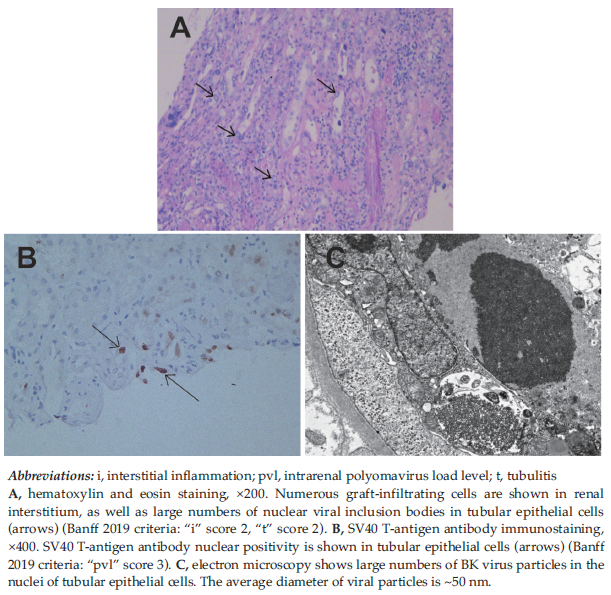
Figure 1. Allograft Biopsy Specimen Obtained on Postoperative Day 83
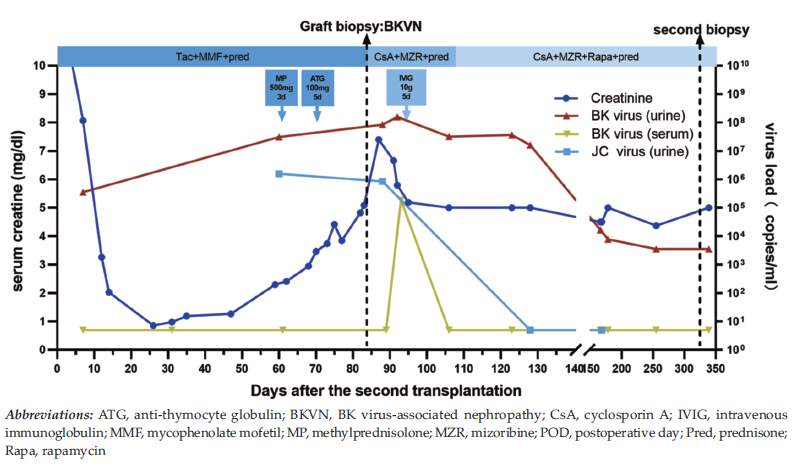
Figure 2. Drug Therapy, Serum Creatinine, and Polyomavirus DNA Load During the Clinical Course After Second Renal Transplant