Volume: 23 Issue: 4 April 2025
FULL TEXT
Abstract: Objectives: Our objective was to investigate the average Kidney Donor Profile Index in the Serbian kidney donor population and its influence on kidney transplant function.
Materials and Methods: We conducted a noninterventional retrospective study that included brain dead donors with data between 2010 and 2016. We analyzed the following donor data: sex, age, body mass, body height, race, hypertension and diabetes mellitus, cause of death, terminal creatinine level, hepatitis C positivity, existence of circulatory death before donation, and calculated Kidney Donor Profile Index. We analyzed the following recipient data: sex, age, primary kidney disease, HLA mismatches, cold ischemia time, delayed graft function, acute rejection, surgical complications, and infections after transplant. We used descriptive and analytical statistical methods and used SPSS version 29.0 for all analyses.
Results: Our study included 61 organ donors (27 men and 34 women) of mean age 50.93 ± 13.29 years. The average Kidney Donor Profile Index of our donors was 53.98 ± 27.41%. We did not find that Kidney Donor Profile Index influenced the occurrence of delayed graft function. Kidney transplant recipients who received kidneys with Kidney Donor Profile Index ?20% had significantly lower serum creatinine level and higher creatinine clearance at 1 year and 3 years after kidney transplant and had lower proteinuria at 1 year posttransplant compared with recipients who received kidneys with higher Kidney Donor Profile Index. Multivariate regression analysis showed that Kidney Donor Profile Index ?20% was a significant independent predictor of transplanted kidney function at 1 and 3 years posttransplant.
Conclusions: Kidney Donor Profile Index was significantly associated with allograft function at 1 and 3 years after kidney transplant in our Serbian cohort. Kidney Donor Profile Index ?20% was shown as an independent predictor of transplanted kidney function.
Key words : Deceased donor, Kidney allograft function, Organ quality
Introduction
End-stage chronic kidney disease requires treatment with renal replacement therapy (RRT), with kidney transplant often regarded as the method of choice. Kidney transplant enables the longest patient survival and the best quality of life compared with peritoneal dialysis and hemodialysis.1,2 The epidemic proportions of chronic kidney disease and the upsurge of patients on wait lists for kidney transplant have not been accompanied by an increase in the number of available organ donors.3 For optimal use of available kidneys, but also to allocate kidneys to recipients who will benefit the most, systems have been developed that can comprehensively evaluate the quality of organs from a deceased donor. The advantages of transplant from marginal donors compared with remaining on the wait list were described in the early 2000s, primarily based on the Spanish experience. Accordingly, in 2001, the definition of a kidney donor with expanded criteria was established.4,5 However, the binary classification of standard versus extended criteria donor has not proven to be the best way to assess the adequacy of donor organs, and a better system was needed. In 2009, Rao and associates proposed a new way of quantifying the quality of organs from a deceased donor: the Kidney Donor Risk Index (KDRI), which can estimate the relative risk of impaired function of the transplanted kidney from each individual donor compared with the average donor of the previous year in the United States. This index is based on 10 donor characteristics shown to be associated with transplanted kidney function and 4 transplant characteristics.6 In 2014, the term Kidney Donor Profile Index (KDPI) was introduced into the US allocation system, based on 10 characteristics of donors determined by the KDRI. The KDPI maps KDRI on a percentage scale, positioning each kidney from a deceased donor on a scale of 0 to 100%. A lower KDPI means a better quality of a given kidney. In the United States, KDPI is used together with estimated survival after transplant (estimated posttransplant survival) so that the best kidney allocation can be achieved.7 Thus, a system is in place to have the “highest quality kidneys” allocated to recipients who will live the longest (ie, benefit the most from a transplanted kidney).8 In European countries, KDPI is not routinely used. The Eurotransplant Kidney Allocation System and the European Senior Program for older donors are scoring systems used in Eurotransplant. Nevertheless, in addition to these 2 programs, the global shortage of organs and the increasingly long wait times for transplant are the reasons why KDPI, together with the estimated posttransplant survival score (calculated based on recipient’s age, time spent on dialysis, previous transplant, and presence of diabetes mellitus), has been analyzed in Eurotransplant.9 In this study, we investigated the average KDPI in a Serbian donor population and its influence on kidney transplant function.
Materials and Methods
We conducted this noninterventional retrospective study in the Clinic of Nephrology and in the Emergency Center of the University Clinical Center of Serbia. We included brain dead donors whose diagnosis of brain death was confirmed in the period from the beginning of 2010 to the end of 2016. The family’s consent for organ donation was obtained after brain death was confirmed. Demographic and clinical data of donors and recipients were obtained from medical history. We recorded the following donor data: sex, age, body mass, body height, race, hypertension and diabetes mellitus, cause of death, terminal creatinine level, hepatitis C positivity, and existence of circulatory death before donation. We recorded the following recipient data: sex, age, primary kidney disease, HLA mismatches, cold ischemia time, delayed graft function (DGF), acute rejection (AR), surgical complications, and infections after transplant. The KDPI was calculated with the use of the Organ Procurement and Transplantation Network calculator (https://optn.transplant.hrsa.gov/resources/allocation-calculators/kdpi-calculator). We defined DGF as a need for hemodialysis during the first 2 weeks after transplant. Acute rejection was diagnosed by allograft biopsy or on the basis of deterioration of allograft function that had improved after high-dose corticosteroid therapy.
Statistical analyses
We used descriptive and analytical statistical methods in our study. Descriptive data were presented as absolute and relative numbers (number, %), measures of central tendency (arithmetic mean), and measures of dispersion (standard deviation). For statistical analyses, we used parametric (t test) and nonparametric (Mann-Whitney U test, Kruskal-Wallis test) tests. We used Spearman correlation analysis to test the association between numerical and ordinal observational features. The choice of correlation method depended on the type of data, the distribution, and the relationship being examined. We used linear regression analysis, univariate and multivariate, for association analyses. We used SPSS version 29.0 (IBM Corp) R version 3.4.2 (R Foundation for Statistical Computing) for all data analyses.
Results
The study included 61 organ donors (27 men and 34 women) of mean age 50.93 ± 13.29 years. All donors were White and were hepatitis C negative. None had diabetes mellitus or circulatory death before donation. Hypertension was shown in 36% of donors. Cerebrovascular insult was the predominant cause of death over traumatic head injury. The average serum creatinine level immediately before kidney donation was 95.34 ± 50.21 ?mol/L. The average KDPI of donors was 53.98 ± 27.41%. Most donors had a KDPI between 21% and 80%; 18% had a KDPI of 20% or less, and 16.4% had KDPI equal to or higher than 81% (Table 1). From 61 organ donors, 103 kidneys were transplanted to recipients in our center. The remaining 19 kidneys were either allocated to another transplant center or were not of satisfactory quality after procurement and thus were not accepted for transplant. Unlike donors, most recipients were male, and recipients were on average 4 years younger than donors. The cause of chronic kidney disease in most recipients was hypertension (24.27%), followed by primary glomerulonephritis (23.30%) and polycystic kidney disease (11.65%). In 22% of our kidney recipients, the primary kidney disease was unknown. Most recipients received a kidney from a donor with whom they had 4 HLA mismatches (48.54%), and no donor-recipient pair had 5 HLA mismatches or a complete HLA match. Kidney transplant was performed after an average duration of cold ischemia of 19.72 hours. Among recipients, 72.81% had DGF and one-third had AR. Surgical complications were recorded in 45 patients, whereas infectious complications occurred in 59 recipients (Table 2). The best quality kidneys with KDPI ?20% were allocated to 19 recipients (18.45%). Of 103 recipients, 68 (66.02%) received kidneys with KDPI between 21% and 80%, whereas 16 (15.53%) received a kidney with KDPI of 81% or higher. We did not find that KDPI influenced the occurrence of DGF (Figure 1). On the other hand, we found no significant difference in the mean KDPI value of donors who donated kidneys to kidney recipients with and without DGF after transplant (54.45 ± 26.43 vs 50.11 ± 29.15; P > .05). Kidney transplant function was monitored 1 year and 3 years after transplant, measured by serum creatinine, creatinine clearance and 24-hour proteinuria. The effect of KDPI on graft function was analyzed in 86 recipients, that is, those who continued follow-up visits in our center. Our results showed a significant correlation of KDPI with all 3 of these investigated variables at 1 year and 3 years after kidney transplant. The correlation was positive with creatinine and proteinuria and negative with creatinine clearance (Table 3). Kidney recipients with KDPI ?20% had significantly lower serum creatinine level and proteinuria and higher creatinine clearance compared with recipients who received kidneys with higher KDPI at 1 year after kidney transplant. The same result was obtained in terms of creatinine level and creatinine clearance even after 3 years, whereas no significant difference was shown in proteinuria level at 3 years after transplant (Table 4). We further analyzed the influence of recipient characteristics and KDPI on transplanted kidney function measured by creatinine clearance at 1 and 3 years after transplant. Univariate regression analysis showed that KDPI ?20% and KDPI of 21% to 80% had a significant effect on creatinine clearance 1 year after transplant (Table 5). When we analyzed the influence of these 2 variables on creatinine clearance 1 year posttransplant by multivariate regression analysis, only KDPI ?20% showed a significant influence. Analysis of the effect of variables on creatinine clearance 3 years after transplant confirmed that KDPI ?20% and KDPI of 21% to 80% were significant in univariate analysis for creatinine clearance; however, only KDPI ?20% was a significant independent predictor of transplanted kidney function (Table 6 and Table 7).
Discussion
The adequate allocation of organs from deceased donors is one of the biggest challenges of modern transplant medicine. Like walking a tightrope, allocation requires precise navigation: on one hand, procurement of organs from deceased donors, especially elderly donors and donors with comorbidities, carries the risk of poorer transplant kidney function, numerous complications, and a subsequent return to dialysis. On the other hand, missing the chance for a transplant means remaining on dialysis and on the waiting list for the foreseeable future.10,11 In 2014, KDPI became part of the new allocation system in the United States with the aim of better utilization of organs from deceased donors.7 However, in the Republic of Serbia, this method of assessment of the quality of donors has not been used in research or in daily practice so far. Of the 10 donor characteristics that define the KDPI, donor age has the greatest negative effect on the value of the KDPI, especially if the donor is older than 50 years or younger than 18 years.12 The average age of donors in our sample was 51 years, which is in line with the average age of donors in Eurotransplant,13,14 as well as in non-European countries where KDPI validation is performed, such as Australia.15 These donor age values are a result of the growing gap between supply and demand for potential donors, as well as the aging of the general population, resulting in the need to accept older donor organs. More than one-third (36%) of our donors had hypertension, which is more than other European populations such as Belgium, Greece, or Germany with 19.1%, 29.7%, and 31.4%, respectively.12,16,17 This finding can be explained by the fact that Serbia, with a prevalence of hypertension of 42.7% in the general population, is among countries with a high prevalence of this disease.18 Another reason is aging of the population. The average age of residents in Serbia in 2022 was 43.85 years.19 An expected consequence of these data is that the cause of death of about 75% of our donors was stroke, with the remaining 25% dying from head trauma. Average terminal creatinine level in our donor population was 95.34 ± 50.21 ?mol/L (1.08 mg/dL). Our donors did not differ from each other in terms of race, presence of diabetes mellitus, hepatitis C status, and donation after circulatory death, so these variables had no influence on the KDPI. After the implementation of KDPI in the allocation system, US data showed that the half-life of a kidney from a deceased donor with a KDPI <20% was almost equal to the half-life of a kidney from a living donor (11.4 vs 12 y), whereas the half-life of kidneys with a KDPI >85% was over twice as short.20 The average KDPI of our donors was 54% (53.98 ± 27.41%), which is equal to the KDPI in the Greek population, similar to the KDPI of Australian donors (51%), and lower compared with donors from the Munich area in Germany (71%).12,15,17 The fact that our donors had a KDPI comparable to countries with a developed transplant program, such as Greece and Australia, indicated that the selection of donors was based on the need to increase the number of transplants, but not at the cost of an unacceptably lower donor quality. Delayed graft function is a frequent complication of kidney transplant in the early postoperative period, and it is primarily a consequence of ischemia-reperfusion damage. According to data from the available literature, DGF occurs with a frequency ranging from 25% to 35%,21,22 with frequency of up to 50% in deceased donor transplants.23 According to our results, DGF was present in as many as 72.81% of recipients. Possible explanations for such a high frequency of DGF included that all transplants were performed from deceased donors and that the average time of cold ischemia in our sample was 19.72 hours. Evidence is not sufficient on a connection between KDPI and DGF. We found that KDPI had no influence on the occurrence of DGF in our patient sample, neither when the average KDPI of the whole sample was analyzed nor when we analyzed KDPI in intervals. A study from Pittsburgh showed that, in a sample of 605 kidney recipients, a higher KDPI was associated with a higher frequency of DGF and, by multivariate analysis, that KDPI was an independent predictor of the occurrence of DGF.24 On the other hand, Arias-Cabrales and associates, in a study of 720 recipients of kidneys from deceased donors, confirmed the negative effect of DGF on poorer allograft function 12 months after transplant but not KDPI’s effect on the development of DGF.25 With regard to the relationship between KDPI and function of the transplanted kidney, we showed a significant correlation between KDPI and serum creatinine, creatinine clearance, and 24-hour proteinuria at 1 and 3 years after transplant. As expected, the correlation was positive with creatinine and proteinuria and negative with creatinine clearance. When we analyzed levels of KDPI, kidneys with KDPI ?20% had significantly better function than kidneys with higher KDPI at 1 and 3 years after transplant. Thus, our results, as well as results of other studies,7,16,24,26 confirmed the association between low KDPI values and better allograft function. The most significant negative predictors of function in the transplanted kidney have been shown as AR and the HLA mismatches.27 The probability of the occurrence of AR increases with the presence of DGF, but DGF independently of AR has a negative effect on the outcome of a kidney transplant.25 In addition, we know that donor characteristics, such as age, sex, primary kidney disease, and complications posttransplant, affect function of the transplanted kidney.28 According to the results of our study, KDPI ?20% was the only significant predictor of kidney function among the examined variables. Conclusions from studies of other European populations undoubtedly have confirmed the association between KDPI and transplanted kidney function; however, in contrast to US results, the predictive ability of KDPI for survival of the transplanted kidney in European countries has not been shown to be significant.15,17,28 Considering that we monitored kidney function for only 1 year and 3 years after transplant, we cannot analyze the effects of KDPI on long-term survival of either kidneys or their recipients. Possible explanations for the differences in the predictive ability of KDPI in the United States and in Europe are mainly greater racial diversity in the United States and less frequent organ donation after circulatory death in Europe compared with the United States. In this way, the number of variables that affect the value of KDPI in Europe has been reduced, so some kind of modification or adaptation of KDPI to European conditions is unquestionably needed.
Conclusions
We found that KDPI, which averaged 53.98 ± 27.41% in our sample, did not have an influence on DGF but did have a significant effect on allograft function at 1 and 3 years after transplant. A KDPI of ?20% was shown to be an independent predictor of transplanted kidney function. However, considering that we monitored kidney function for only 1 and 3 years after transplant, longer follow-up is needed.
References:
- Danovitch MG. Handbook of Kidney Transplantation. 5th ed. Wolters Kluwer 2010;1:1-19.
CrossRef - PubMed - Rabbat CG, Thorpe KE, Russell JD, Churchill DN. Comparison of mortality risk for dialysis patients and cadaveric first renal transplant recipients in Ontario, Canada. J Am Soc Nephrol. 2000;11(5):917-922. doi:10.1681/ASN.V115917
CrossRef - PubMed - US Department of Health and Human Services. Organ Procurement and Transplantation Network. Accessed August 19, 2020. https://optn.transplant.hrsa.gov/
CrossRef - PubMed - Wolfe RA, Ashby VB, Milford EL, et al. Comparison of mortality in all patients on dialysis, patients on dialysis awaiting transplantation, and recipients of a first cadaveric transplant. N Engl J Med. 1999;341(23):1725-1730. doi:10.1056/NEJM199912023412303
CrossRef - PubMed - Ojo AO, Hanson JA, Meier-Kriesche H, et al. Survival in recipients of marginal cadaveric donor kidneys compared with other recipients and wait-listed transplant candidates. J Am Soc Nephrol. 2001;12(3):589-597. doi:10.1681/ASN.V123589
CrossRef - PubMed - Rao SP, Schaubel ED, Guidinger KM, et al. A comprehensive risk quantification score for deceased donor kidneys: the kidney donor risk index. Transplantation. 2009;88(2):231-236. doi:10.1097/TP.0b013e3181ac620b
CrossRef - PubMed - Chopra B, Sureshkumar KK. Changing organ allocation policy for kidney transplantation in the United States. World J Transplant. 2015;5(2):38-43. doi:10.5500/wjt.v5.i2.38
CrossRef - PubMed - Lee D, Kanellis J, Mulley WR. Allocation of deceased donor kidneys: a review of international practices. Nephrology (Carlton). 2019;24(6):591-598. doi:10.1111/nep.13548
CrossRef - PubMed - Schulte K, Klasen V, Vollmer C, Borzikowsky C, Kunzendorf U, Feldkamp T. Analysis of the Eurotransplant Kidney Allocation Algorithm: how should we balance utility and equity? Transplant Proc. 2018;50(10):3010-3016. doi:10.1016/j.transproceed.2018.08.040
CrossRef - PubMed - Massie AB, Luo X, Chow EK, Alejo JL, Desai NM, Segev DL. Survival benefit of primary deceased donor transplantation with high-KDPI kidneys. Am J Transplant. 2014;14(10):2310-2316. doi:10.1111/ajt.12830. Erratum in: Am J Transplant. 2015;15(7):2013. doi:10.1111/ajt.13411
CrossRef - PubMed - Savoye E, Tamarelle D, Chalem Y, Rebibou JM, Tuppin P. Survival benefits of kidney transplantation with expanded criteria deceased donors in patients aged 60 years and over. Transplantation. 2007;84(12):1618-1624. doi:10.1097/01.tp.0000295988.28127.dd
CrossRef - PubMed - Dahmen M, Becker F, Pavenstädt H, Suwelack B, Schütte-Nütgen K, Reuter S. Validation of the Kidney Donor Profile Index (KDPI) to assess a deceased donor’s kidneys’ outcome in a European cohort. Sci Rep. 2019;9(1):11234. doi:10.1038/s41598-019-47772-7
CrossRef - PubMed - Eurotransplant International Foundation. Eurotransplant Annual Report 2016. https://www.eurotransplant.org/wp-content/uploads/2019/12/AR2016.pdf
CrossRef - PubMed - Port FK, Bragg-Gresham JL, Metzger RA, et al. Donor characteristics associated with reduced graft survival: an approach to expanding the pool of kidney donors. Transplantation. 2002;74:1281-1286. doi:10.1097/00007890-200211150-00014
CrossRef - PubMed - Prunster J, Wong G, Larkins N, et al. Kidney Donor Profile Index and allograft outcomes: interactive effects of estimated post-transplant survival score and ischaemic time. Clin Kidney J. 2022;16(3):473-483. doi:10.1093/ckj/sfac243
CrossRef - PubMed - Philipse E, Lee A, Bracke B, et al. Does Kidney Donor Risk Index implementation lead to the transplantation of more and higher-quality donor kidneys? Nephrol Dial Transplant. 2017;32(11):1934-1938. doi:10.1093/ndt/gfx257
CrossRef - PubMed - Darema M, Athanasopoulou D, Bellos I, et al. Evaluation of Kidney Donor Risk Index/Kidney Donor Profile Index as predictor tools of deceased-donor kidney transplant outcomes in a Greek cohort. J Clin Med. 2023;12(6):2439. doi:10.3390/jcm12062439
CrossRef - PubMed - Lovic D, Stojanov V, Jakovljevi? B, et al. Prevalence of arterial hypertension in Serbia: PAHIS study. J Hypertens. 2013;31(11):2151-2157. doi:10.1097/HJH.0b013e328364c2a2
CrossRef - PubMed - Statistical Office of the Republic of Serbia. Demographic Yearbook 2023. https://www.stat.gov.rs/sr-latn/vesti/20230525-starost-i-pol/
CrossRef - PubMed - National Institute of Diabetes and Digestive and Kidney Disease. US Renal Data System. 2016 Annual Data Report: Atlas of End Stage Renal Disease in United States. https://www.niddk.nih.gov/about-niddk/strategic-plans-reports/usrds/prior-data-reports/2016
CrossRef - PubMed - Mannon RB. Delayed graft function: the AKI of kidney transplantation. Nephron. 2018;140(2):94-98. doi:10.1159/000491558
CrossRef - PubMed - Bahl D, Haddad Z, Datoo A, Qazi YA. Delayed graft function in kidney transplantation. Curr Opin Organ Transplant. 2019;24(1):82-86. doi:10.1097/MOT.0000000000000604
CrossRef - PubMed - Irish WD, Ilsley JN, Schnitzler MA, Feng S, Brennan DC. A risk prediction model for delayed graft function in the current era of deceased donor renal transplantation. Am J Transplant. 2010;10(10):2279-2286. doi:10.1111/j.1600-6143.2010.03179.x
CrossRef - PubMed - Molinari M, Kaltenmeier C, Liu H, et al. Function and longevity of renal grafts from high-KDPI donors. Clin Transplant. 2022;36(9):e14759. doi:10.1111/ctr.14759
CrossRef - PubMed - Arias-Cabrales CE, Pérez-Sáez MJ, Redondo-Pachón D, et al. Relevance of KDPI value and acute rejection on kidney transplant outcomes in recipients with delayed graft function - a retrospe study. Transpl Int. 2020;33(9):1071-1077. doi:10.1111/tri.13654
CrossRef - PubMed - Gupta A, Francos G, Frank ??, Shah AP. KDPI score is a strong predictor of future graft function: Moderate KDPI (35 - 85) and high KDPI (> 85) grafts yield similar graft function and survival. Clin Nephrol. 2016;86(10):175-182. doi:10.5414/CN108858
CrossRef - PubMed - Goldfarb-Rumyantzev AS, Naiman N. Genetic predictors of acute renal transplant rejection. Nephrol Dial Transplant. 2010;25(4):1039-1047. doi:10.1093/ndt/gfp782
CrossRef - PubMed - Tepel M, Nagarajah S, Saleh Q, et al. Pretransplant characteristics of kidney transplant recipients that predict posttransplant outcome. Front. Immunol. 2022;13:945288. doi:10.3389/fimmu.2022.945288
CrossRef - PubMed

Volume : 23
Issue : 4
Pages : 252 - 258
DOI : 10.6002/ect.2025.0028
From the 1Clinic of Nephrology, University Clinical Center of Serbia, Belgrade, Serbia; the 2Faculty of Medicine, University of Belgrade, Belgrade, Serbia; and the 3Institute of Medical Statistics and Informatics, Belgrade, Serbia
Acknowledgements: The authors have not received any funding or grants in support of the presented research or for the preparation of this work and have no declarations of potential conflicts of interest.
Corresponding author: Milica Kravljaca, University Clinical Center of Serbia, Paster 2 Street, 11000 Belgrade, Serbia
Phone: +381 631220404
E-mail: mkravljaca@gmail.com
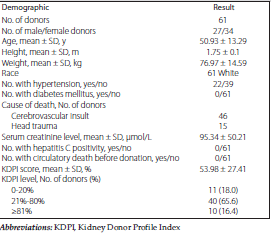
Table 1. Donor Demographic and Clinical Data
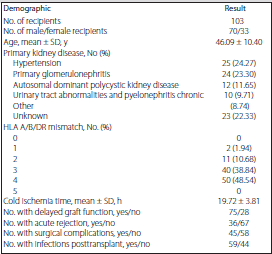
Table 2. Recipient Demographic and Clinical Data
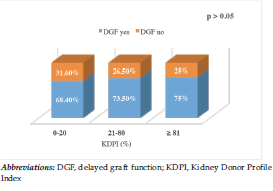
Figure 1. Delayed Graft Function in Relation to Kidney Donor Profile Index
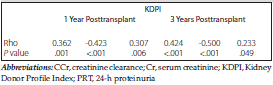
Table 3. Kidney Donor Profile Index and Kidney Transplant Function
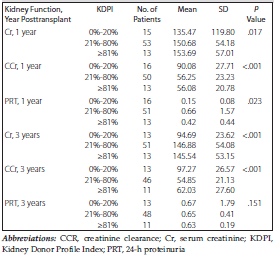
Table 4. Kidney Donor Profile Index Level and Kidney Function 1 and 3 Years After Transplant
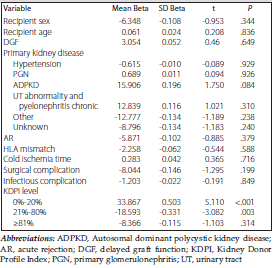
Table 5. Univariate Regression Analysis of Influence of Factors on Creatinine Clearance 1 Year After Kidney Transplant
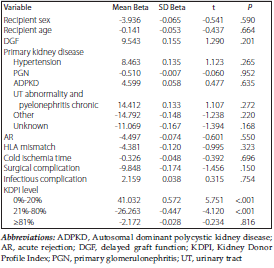
Table 6. Univariate Regression Analysis of Influence of Factors on Creatinine Clearance 3 Year After Kidney Transplant
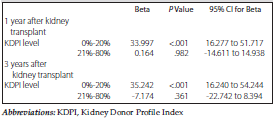
Table 7. Multivariate Regression Analysis of Influence of Factors on Creatinine Clearance 1 and 3 Years After Kidney Transplant