Volume: 23 Issue: 12 December 2025
FULL TEXT
Short-Term Semaglutide Improves Safety in High Body Weight Recipients Undergoing Living Donor Liver Transplant: A Case Report
Living donor liver transplant has recently become increasingly important as a solution to the shortage of deceased donor livers. The success of adult-to-adult living donor liver transplant depends on achievement of an appropriate graft-to-recipient weight ratio to prevent complications like small-for-size syndrome. This case report describes the use of oral semaglutide, a glucagon-like peptide-1 receptor agonist, to faci-litate pretransplant weight loss in an obese patient (body mass index 39.1, in kg/m2) undergoing living donor liver transplant. The patient experienced a significant weight loss of 10 kg during a period of 19 days with semaglutide treatment, which improved the graft-to-recipient weight ratio (from 0.66% to 0.786%) and resulted in an uneventful living donor liver transplant procedure with no postoperative issues. This case marks the first documented case of using semaglutide for pretransplant weight loss in liver transplant recipients, highlighting its potential to improve surgical outcomes for overweight patients awaiting transplant.
Key words : Living donor liver transplantation, Pretransplant weight loss
Introduction
With shortages of deceased donor livers, living donor liver transplant (LDLT) has become a primary method to increase transplant opportunities. In adult-to-adult LDLT, ensuring the graft size meets the metabolic needs of the recipient while maintaining the safety of the donor is critical.
The appropriate graft size is usually determined by the graft-to-recipient weight ratio (GRWR). When the donor liver volume is insufficient, there is a higher risk of small-for-size syndrome (SFSS), which raises the risk of early graft dysfunction and graft failure.1 Generally, a GRWR greater than 0.8 is considered the safest value.2 Recent studies suggest that, with appropriate intraoperative interventions, a GRWR between 0.6 and 0.8 may also be acceptable.3 However, a multicenter cohort study showed that patients with a GRWR less than 0.8 have a lower survival rate than patients with a GRWR of 0.8 or higher.4 A systematic review also highlighted that, in patients with hepatocellular carcinoma (HCC), especially those with a larger tumor burden exceeding the Milan criteria, use of a smaller graft (GRWR <0.8) in LDLT is linked to lower overall survival rates.5
When GRWR is less than 0.8 or smaller grafts are used, previous studies have suggested that portal venous pressure modulation during LDLT can reduce the incidence of SFSS. When portal venous pressure is lowered to less than 15 mm Hg, the risk of graft injury from elevated portal perfusion pressure can be minimized, thereby increasing the safety of smaller graft transplants.6 However, the successful imple-mentation of portal venous pressure modulation requires a highly skilled team with ample experience. Furthermore, it remains uncertain whether exces-sively high portal venous pressure can lead to insufficient portal blood flow.6
Another straightforward approach to reduce the occurrence of SFSS is to increase the GRWR. This can be achieved by optimization of the preoperative condition of the recipient and reduction of body weight. As patient weight decreases, the required graft size diminishes, which in turn increases the GRWR. However, common weight loss methods such as exercise or dietary control often take more time and may produce uncertain results, potentially delaying the transplant schedule. For patients with liver cancer or end-stage liver disease, extended wait times can be harmful to the transplant process eligibility.
Here, we report a case where combined tradi-tional weight loss methods (increased exercise and dietary control) were used along with oral semag-lutide therapy. Semaglutide, a glucagon-like peptide-1 receptor agonist (GLP-1RA), is primarily used to control blood sugar levels in patients with type 2 diabetes. However, because it suppresses appetite and slows gastric emptying, semaglutide also greatly aids weight loss. In our patient, this approach resulted in a successful weight loss of 10 kg during a period of 19 days, decreasing body weight from 87 to 77 kg before LDLT. Ultimately, the GRWR improved from 0.66% to 0.786%. The patient eventually underwent surgery and was safely discharged 24 days after transplant. The Institutional Review Board of Chang-Gung Memorial Hospital (IRB No. 202401251B0) approved this study.
Case Report
The patient was a 70-year-old woman diagnosed with decompensated cryptogenic cirrhosis (Child-Pugh class B) who presented with new-onset hepatic encephalopathy, ascites, and hypoalbuminemia. In accordance with the Couinaud classification system for anatomic segments of the liver, multiple HCC tumors were observed in the S2 (2.4 cm), S3 (1 cm), and S8 (2.5 cm) segments. With a diagnosis of stage B HCC according to the Barcelona Clinic Liver Cancer Classification system, the patient underwent a com-bination therapy of transarterial chemoembolization, percutaneous radiofrequency ablation, and sorafenib for 6 months.
After treatment, no viable tumors were visible on imaging. The positron emission tomography scan also showed no signs of extrahepatic distant me-tastasis or intrahepatic high-signal lesions. The preoperative Model for End-Stage Liver Disease (MELD) score was 7. The patient was 149 cm tall and weighed 87 kg (body mass index [BMI, measured as kilograms body weight per meter squared] of 39.1). The living donor was her 45-year-old daughter, who was 160 cm tall and weighed 48 kg (BMI = 18.7). The total liver volume calculated by computed tomog-raphy scan was 1033 cm3, 56% of which was the right lobe of the liver (approximately 577 cm3), and no fatty liver was observed (Figure 1A). Specifically, the estimated GRWR was 0.66%. We preoperatively assessed that the liver volume might be too small, which could increase postoperative risk.
We created a weight loss plan for the patient, focusing on lowering carbohydrate intake. The medication approach began with oral semaglutide 7 mg daily for 3 days, followed by assessment of the patient’s response. After 3 days of medication, the patient experienced mild abdominal bloating and lost her appetite, resulting in her weight dropping to 84.5 kg (a loss of 2.5 kg). The dose was increased to 14 mg for an additional 5 days, followed by another check. She had similar symptoms, and her weight decreased to 81 kg. Without major adverse side effects, the medication was continued until the day before surgery. After 19 days of treatment, the patient’s weight fell to 77 kg.
During LDLT, actual graft weight of the right lobe was 613 g, and GRWR was 0.786%. To prevent steal syndrome, a prominent splenorenal shunt was ligated. The portal venous flow after reperfusion, measured by a flowmeter, ranged from 800 to 1100 mL/min. The patient recovered well, with no episodes of SFSS after the operation. A follow-up abdominal computed tomography scan on postoperative day 14 showed an expanded graft volume of 1115.7 mL, indicating a 1.8-fold increase (Figure 2B). Immediately after surgery, the patient did not experience significant liver dysfunction. The recovery was swift, attributed to the rapid growth of the graft within the first 2 weeks (Figure 2), and the patient was discharged on postoperative day 24 without any complications. The patient’s body weight did not continue to decline after surgery (Figure 2). Over a 1-year follow-up, liver function remained stable, and body weight was consistently maintained at 78 kg. This progress highlighted the positive effect of preoperative weight reduction.
Discussion
Semaglutide is a GLP-1RA that mimics the action of endogenous GLP-1. The hormone GLP-1 is an incretin hormone that stimulates insulin secretion and suppresses glucagon release, thereby reducing hepatic glucose production and lowering blood sugar levels. Originally, this medication was used as the first-line treatment for type 2 diabetes. Later, researchers discovered that GLP-1 can also slow gastric emptying and suppress appetite, leading to effective weight loss.7 As a result, the US Food and Drug Administration approved its subcutaneous formulation for weight management in 2021. Here, we reported the first case of oral GLP-1RA use for pre-LT weight loss and emphasized that short-term use of the medication in obese patients with cirrhosis and low MELD scores improved GRWR, improving the safety of liver transplant without delay of surgery.
When a weight discrepancy occurs, it is more common to allow donors to gain weight, since the recipient is usually too ill to lose weight. Obesity is not only linked to preoperative comorbidities but also creates surgical challenges and complicates postoperative recovery care.8 Regarding poor post-LT outcomes, the European Association for the Study of the Liver clinical practice guidelines consider a BMI ≥40 to be a relative contraindication for liver transplant.9 Bariatric surgery is an extreme option for recipients with a BMI of 35 or higher to reach acceptable weight.10 Fortunately, in addition to traditional lifestyle modifications and surgery, GLP-1RA now offers a new option. Our recipient (BMI = 39.1) and the living donor (BMI = 18.7) had a significant weight difference of 39 kg, resulting in a GRWR far below the ideal threshold. After 19 days of pharmacotherapy and dietary intervention, the patient successfully lost 10 kg and ultimately achieved an acceptable GRWR.
In this case, oral semaglutide was administered in an off-label context under strict clinical supervision, with informed consent and institutional review board approval, primarily to accommodate the patient’s thrombocytopenia and minimize bleeding risk asso-ciated with subcutaneous injections. Although the patient’s MELD score indicated relatively preserved liver function, the urgency for transplant was heigh-tened by recurrent hepatic encephalopathy, HCC, and donor availability. Given the markedly lower bioavailability of oral semaglutide compared with its subcutaneous counterpart,11 the dosing regimen was adjusted to achieve a comparable therapeutic effect within a limited timeframe. Throughout the 19-day treatment period, the patient was closely monitored for adverse events, and no significant complications were observed. Intensive inpatient observation prior to surgery ensured optimal management of nutritional and metabolic parameters. Notably, rapid preoperative weight loss did not result in perioperative or metabolic complications, and both liver function and body weight remained stable during 1 year of follow-up. This case highlighted the potential for individualized, ethically justified off-label use of oral semaglutide in complex clinical scenarios, provi-ded that rigorous monitoring and multidisciplinary coordination are maintained.
Semaglutide does not require dose adjustment for patients with mild to moderate hepatic or renal im-pairment. However, because of insufficient evidence, semaglutide is not recommended for patients with severe hepatic or renal impairment.12 The most common adverse side effects are gastrointestinal symptoms, including nausea, diarrhea, vomiting, and decreased appetite. Because stimulation of GLP-1 receptors can cause gastroparesis, even though there is no conclusive data, anesthesiologists recommend cessation of daily GLP-1 regimens 1 day before or on the day of surgery. Previous studies on GLP-1RA and chronic liver disease have often focused on patients with type 2 diabetes and metabolic dysfunction-associated steatotic liver disease. A retrospective cohort study indicated that GLP-1RA could reduce long-term adverse liver outcomes such as portal hypertension, HCC, and liver transplant.13 Another study examined patients with type 2 diabetes and chronic liver disease and showed that GLP-1RA reduced the 10-year risk of major adverse liver outcomes.14 After liver transplant, GLP-1RA can be used safely for glycemic control and weight mana-gement controls.15 Among these studies, none highlighted the use of GLP-1RA for improvement of GRWR before liver transplant.
Although semaglutide has demonstrated pro-mising short-term results, further research is needed to understand its long-term effectiveness, safety, and suitability for patients with various liver diseases. The interactions between GLP-1RA and other medications, particularly immunosuppressants, also require careful monitoring. In the future, specific biomarkers might be identified to predict individual responses to GLP-1RA, offering more accurate guidance for clinical practice.
In conclusion, compared with lifestyle modifi-cations, bariatric surgery, or dual left lobe transplant, GLP-1RA provides an alternative that not only improves the GRWR but also lowers risks for living donors, thereby providing new possibilities in the field of liver transplant for obese recipients.
References:
- Dahm F, Georgiev P, Clavien PA. Small-for-size syndrome after partial liver transplantation: definition, mechanisms of disease and clinical implications. American Journal of Transplantation. 2005;5(11):2605–2610. doi:10.1111/j.1600-6143.2005.01081.x.
CrossRef - PubMed - Lee HH, Joh JW, Lee KW, et al. Small-for-size graft in adult living-donor liver transplantation. Transplant Proc. 2004;36(8):2274-2276. doi:10.1016/j.transproceed.2004.09.004
CrossRef - PubMed - Kaido T, Mori A, Ogura Y, et al. Lower limit of the graft-to-recipient weight ratio can be safely reduced to 0.6% in adult-to-adult living donor liver transplantation in combination with portal pressure control. Transplant Proc. 2011;43(6):2391-2393. doi:10.1016/j.transproceed.2011.05.037
CrossRef - PubMed - Kim DG, Hwang S, Kim JM, et al. Outcomes and risk factors for liver transplantation using graft-to-recipient weight ratio less than 0.8 graft from living donors: multicentric cohort study. Ann Surg. 2024;279(6):1018-1024. doi:10.1097/SLA.0000000000006104
CrossRef - PubMed - Parente A, Cho H-D, Kim K-H, Schlegel A. Association between hepatocellular carcinoma recurrence and graft size in living donor liver transplantation: a systematic review. Int J Mol Sci. 2023;24(7):6224. doi:10.3390/ijms24076224
CrossRef - PubMed - Uemura T, Wada S, Kaido T, et al. How far can we lower graft-to-recipient weight ratio for living donor liver transplantation under modulation of portal venous pressure? Surgery. 2016;159(6):1623-1630. doi:10.1016/j.surg.2016.01.009
CrossRef - PubMed - Andersen A, Knop FK, Vilsboll T. A Pharmacological and clinical overview of oral semaglutide for the treatment of type 2 diabetes. Drugs. 2021;81(9):1003-1030. doi:10.1007/s40265-021-01499-w
CrossRef - PubMed - Spengler EK, O’Leary JG, Te HS, et al. Liver transplantation in the obese cirrhotic patient. Transplantation. 2017;101(10):2288-2296. doi:10.1097/TP.0000000000001794
CrossRef - PubMed - Ahmed Z, Khan MA, Vazquez-Montesino LM, Ahmed A. Bariatric surgery, obesity and liver transplantation. Transl Gastroenterol Hepatol. 2022;7:25. doi:10.21037/tgh-2020-14
CrossRef - PubMed - Lin MY, Tavakol MM, Sarin A, et al. Laparoscopic sleeve gastrectomy is safe and efficacious for pretransplant candidates. Surg Obes Relat Dis. 2013;9(5):653-658. doi:10.1016/j.soard.2013.02.013
CrossRef - PubMed - Bouhajib M, Tayab Z, Di Marco C, Suh DD. The pharmacokinetics and comparative bioavailabilty of oral and subcutaneous semaglutide in healthy volunteers. J Basic Clin Physiol Pharmacol. 2025;36(2-3):221-227. doi:10.1515/jbcpp-2025-0026
CrossRef - PubMed - Lyseng-Williamson KA. Glucagon-like peptide-1 receptor analogues in type 2 diabetes: their use and differential features. Clin Drug Investig. 2019;39(8):805-819. doi:10.1007/s40261-019-00826-0. Published correction appears in Clin Drug Investig. 2019;39(9):915-916.
CrossRef - PubMed - Elsaid MI, Li N, Firkins SA, et al. Impacts of glucagon-like peptide-1 receptor agonists on the risk of adverse liver outcomes in patients with metabolic dysfunction-associated steatotic liver disease cirrhosis and type 2 diabetes. Aliment Pharmacol Ther. 2024;59(9):1096-1110. doi:10.1111/apt.17925.
CrossRef - PubMed - Wester A, Shang Y, Grip ET, Matthews AA, Hagström H. Glucagon-like peptide-1 receptor agonists and risk of major adverse liver outcomes in patients with chronic liver disease and type 2 diabetes. Gut. 2024;73(5):835-843. doi:10.1136/gutjnl-2023-330962
CrossRef - PubMed - Atthota S, Joyal K, Cote M, et al. Modern glucose-lowering drugs in liver transplant recipients: improvement in weight, glycemic control, and potentially allograft steatosis. Front Transplant. 2023;2:1223169. doi:10.3389/frtra.2023.1223169
CrossRef - PubMed

Volume : 23
Issue : 12
Pages : 838 - 841
DOI : 10.6002/ect.2025.0244
From the 1Nursing Department, Chang Gung Memorial Hospital at Linkou, Taoyuan; the 2School of Nursing, College of Medicine, Chang Gung University, Taoyuan; the 3Division of Liver and Transplantation Surgery, Chang Gung Memorial Hospital at Linkou, Taoyuan; the 4Chang-Gung University College of Medicine, Taoyuan; and the 5Division of General Surgery, Chang-Gung Memorial Hospital, Keelung, Taiwan
Acknowledgements: The authors have not received any funding or grants in support of the presented research or for the preparation of this work and have no declarations of potential conflicts of interest.
Corresponding author: Chen-Fang Lee or Ting-Jung Wu, 5, Fusing st., Gueishan Dist., Taoyuan County 333, Taiwan
Phone: +886 3 328 1200 ext 3366
E-mail: chenfanglee@gmail.com; wutj5056@gmail.com
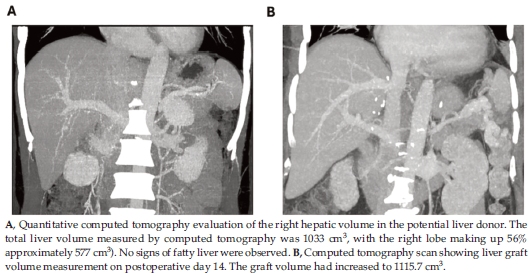
Figure 1.Liver Quality and Volume Assessment By Computed Tomography Scans Before And After Transplant
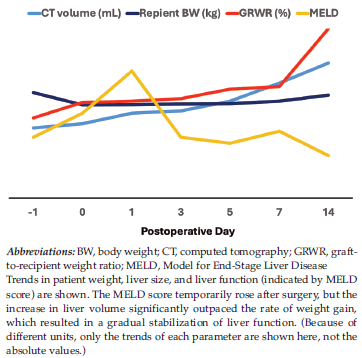
Figure 2.Trends of Liver Function, Body Weight, and Graft Size