Volume: 23 Issue: 12 December 2025
FULL TEXT
Liver Transplant in a Patient With Infrahepatic Interruption of the Inferior Vena Cava: A Case Report
Although infrahepatic inferior vena cava interruption has been reported in patients undergoing liver transplant, details on perioperative management are scarce. Here, we present a patient with a congenital inferior vena cava anomaly, characterized by infra-hepatic interruption of the inferior vena cava accom-panied by azygos continuation, who underwent orthotopic liver transplant. Patients with anomalies of the inferior vena cava require important considerations during preoperative, intraoperative, and postoperative phases of liver transplant. These considerations, which led to our patient having a good outcome that continued 2 years after transplant, are detailed in this report.
Key words : Anatomic anomaly, Duplicated inferior vena cava, Vascular anastomosis
Introduction
Infrahepatic interruption of the inferior vena cava (IVC) is a rare congenital anomaly that is typically associated with additional IVC anomalies and azygos vein continuation.1-3 This anomaly is usually diagnosed in childhood and is rarely identified in asymptomatic adults, often being discovered inci-dentally during preoperative evaluation. Identifi-cation of this anomaly before liver transplant is important, as it can alter routine back-table pre-paration and vascular anastomosis.2
Although several cases of infrahepatic IVC inter-ruption have been reported in patients undergoing liver transplant, most have focused on embryological aspects, and few have provided detailed discussions on perioperative management.1-3 Here, we present a patient with a congenital IVC anomaly, characterized by infrahepatic interruption of the IVC accompanied by azygos continuation, who underwent orthotopic liver transplant with an uneventful intraoperative and postoperative course. Written informed consent for publication of this case report, including accom-panying images and clinical details, was obtained from the patient.
Case Report
The patient was a 61-year-old man with a history of decompensated alcoholic cirrhosis, hypertension, and hyperlipidemia. He had a Model for End-Stage Liver Disease score of 21, and his cirrhosis was complicated by hepatic encephalopathy, recurrent ascites, and esophageal varices. As part of the pre-operative evaluation, contrast-enhanced abdominal computed tomography (CT) revealed duplicated IVC and infrahepatic interruption of the IVC with azygos continuation (Figure 1).
The patient underwent a deceased donor liver transplant from a brain-dead donor aged in their 50s. The IVC was absent in its usual anatomic location, and the hepatic veins drained directly into the right atrium (Figure 2A). As a result, hepate-ctomy was technically simplified because there were no short hepatic veins to dissect or manage.
The vascular clamp was applied across the 3 hepatic veins (Figure 2B), and this resulted in no hemodynamic compromise. The openings were con-nected to form a single large cuff, and this was anastomosed with the donor’s suprahepatic IVC. Portal vein and hepatic artery anastomoses were performed in a standard fashion, followed by duct-to-duct biliary reconstruction, thus completing the surgery. Estimated blood loss was 2200 mL, and the operation time was 298 minutes. Postoperative reco-very was uneventful, and the patient was discharged on postoperative day 8. He continues to do well 2 years after transplant.
Discussion
A specific variation in anatomy that is pertinent to liver transplant arises from the embryological development of the IVC. The IVC is a composite structure derived from 3 pairs of embryonic veins, and variations in this embryological development can generate IVC anomalies.4 Common anomalies include duplication, left-sided IVC, aplasia, and hypoplasia. Our patient had aplasia of the infrahepatic segment of the IVC, which is a rare congenital anomaly estimated to occur in 0.3% to 0.6% of the population. Although these anomalies are typically clinically silent, such anomalies are important to recognize to better prepare for surgical procedures. In liver transplant for patients with such IVC anomalies, several important consi-derations span the preoperative, intraoperative, and postoperative phases, which will be discussed below.
First, meticulous preoperative evaluation is critical. Screening for congenital heart disease is important, as IVC anomalies are frequently associated with con-genital heart disease.5,6 Undiagnosed congenital heart disease can lead to significant perioperative compli-cations, including hemodynamic instability and pulmonary hypertension, thereby affecting transplant outcomes. Early identification allows for appropriate risk stratification. Furthermore, ensuring preoperative communication with the anesthesiology team is essential. Anomalies, specifically the dilated azygos vein, can be misinterpreted during intraoperative transesophageal echocardiography as aortic pathology, such as aortic dissection or aneurysm, or such anomalies may appear as a mediastinal mass or lymphadenopathy on chest radiography or CT.7 Clear communication among surgeons and anesthesiologists facilitates smooth interpretation of imaging and prevents unnecessary interventions or delays, ensuring operative safety and efficiency.
Second, for intraoperative management, several key points should also be considered. Venovenous bypass is often unnecessary, as hepatic vein clamping typically does not cause significant hemodynamic compromise resulting from the systemic venous return being diverted through the azygos vein.3 In addition, because there is no need to manage multiple short hepatic veins, hepatectomy is often simplified. However, surgeons must be prepared for technical modifications. A side-to-side cavocaval anastomosis is impossible due to the absent recipient IVC; therefore, an end-to-end anastomosis between the donor suprahepatic IVC and the recipient’shepatic vein confluence or short suprahepatic IVC segment becomes necessary. Anticipating this modifi-cation is crucial to avoid intraoperative challenges. Given the direct drainage into the right atrium, deep clamping and preservation of adequate recipient vessel length are vital for a secure anastomosis. In living donor liver transplants with right lobe graft, specific back-table reconstruction may be needed. Dönmez and colleagues reported a case requiring back-table reconstruction of donor hepatic veins using an aortic graft from a deceased donor because no recipient IVC was available for direct anastomosis.2
Finally, careful attention should be given to the risk of deep vein thrombosis in the postoperative period. The altered venous return and potential for venous stasis may contribute to thromboembolism.8 Therefore, close monitoring for deep vein thrombosis and pulmonary embolism and consideration of appropriate anticoagulation therapy are necessary.
Conclusions
In this report, we presented a patient with infrahepatic interruption of the IVC with azygos continuation who successfully underwent orthotopic liver transplant. Although hepatectomy may appear simplified in these anatomically unique cases, this report underscores that careful attention to several critical preoperative, intraoperative, and postoperative considerations is essential for achieving successful outcomes.
References:
- Coelho JC, Ramos EJ, da Costa MA, Pissaia A Jr, Ivantes C. Liver transplantation in a patient with complex anomaly of the inferior vena cava. Hepatobiliary Surg Nutr. 2014;3(4):212-215. doi:10.3978/j.issn.2304-3881.2014.05.03
CrossRef - PubMed - Dönmez R, Kargi A, Yazar S, Aslan S, Peker K, Polat KY. Liver transplantation in a patient with absent inferior vena cava: case report. Duzce Med J. 2020;22(1):60–62. doi:10.18678/dtfd.678944
CrossRef - PubMed - Zinser MJ, Hanto DW. Liver transplantation in a patient with developmental interruption of the inferior vena cava with azygos substitution. Transplant Proc. 2012;44(5):1460-1463. doi:10.1016/j.transproceed.2012.01.121
CrossRef - PubMed - Kim H, Labropoulos N, Blake AM, Desai K. Prevalence of inferior vena cava anomalies and their significance and impact in clinical practice. Eur J Vasc Endovasc Surg. 2022;64(4):388-394. doi:10.1016/j.ejvs.2022.05.045
CrossRef - PubMed - Barman PM, VanWagner LB. Cardiac risk assessment in liver transplant candidates: current controversies and future directions. Hepatology. 2021;73(6):25642576. doi:10.1002/hep.31647
CrossRef - PubMed - Madan N, Arnon R, Arnon R. Evaluation of cardiac manifestations in pediatric liver transplant candidates. Pediatr Transplant. 2012;16(4):318-328. doi:10.1111/j.1399-3046.2012.01667.x
CrossRef - PubMed - Blanchard DG, Sobel JL, Hope J, Raisinghani A, Keramati S, DeMaria AN. Infrahepatic interruption of the inferior vena cava with azygos continuation: a potential mimicker of aortic pathology. J Am Soc Echocardiogr. 1998;11(11):1078-1083. doi:10.1016/s0894-7317(98)70160-9
CrossRef - PubMed - Namisaki H, Nishigami K, Murakami M, Yamamoto T, Ogata Y, Tomita A. Congenital absence of inferior vena cava with azygos continuation revealed by vascular echo in a patient with pulmonary thromboembolism and deep vein thrombosis: a case report. Ann Vasc Dis. 2013;6(2):195-197. doi:10.3400/avd.cr.12.00104
CrossRef - PubMed

Volume : 23
Issue : 12
Pages : 830 - 832
DOI : 10.6002/ect.2025.0165
From the 1Department of Surgery, Division of Transplant Surgery, Hume- Lee Transplant Center, Virginia Commonwealth University School of Medicine, Richmond, Virginia, USA; and the 2Department of Radiology, Virginia Commonwealth University School of Medicine, Richmond, Virginia, USA
Acknowledgements: The authors have not received any funding or grants in support of the presented research or for the preparation of this work and have no declarations of potential conflicts of interest.
Corresponding author: Yuzuru Sambommatsu, Department of Surgery, Division of Transplant Surgery, Hume- Lee Transplant Center, Virginia Commonwealth University School of Medicine, West Hospital 15th Floor, North Wing, 1200 E. Broad Street, Richmond, VA 23298, USA
Phone: +1 804 828 9298
E-mail: yuzuru.sambommatsu@vcuhealth.org
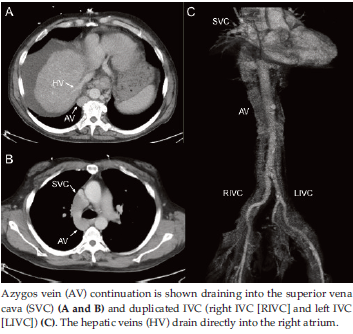
Figure 1.Preoperative Contrast-Enhanced Computed Tomography Illustrating Infrahepatic Interruption of the Inferior Vena Cava
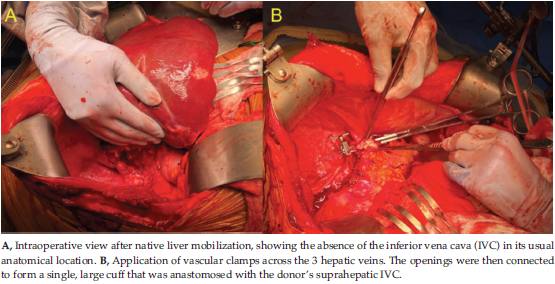
Figure 2.Intraoperative Findings