Volume: 23 Issue: 12 December 2025
FULL TEXT
Objectives: We aimed to investigate the findings of anterior and posterior segments among patients with end-stage renal disease who underwent cataract surgery after renal transplant.
Materials and Methods: In this cross-sectional study, we included patients who underwent cataract surgery after renal transplant in our hospital between December 2017 and March 2023. We collected ocular biometric measurements, including axial length, white-to-white distance, anterior chamber depth, corneal keratometry, degree of astigmatism, and lens thickness. We also reviewed retinal thickness measure-ments (measured with optic coherence tomography), which we compared versus measurements from healthy controls.
Results: We included findings of 48 eyes from patients who underwent cataract surgery after renal transplant and findings of 48 eyes from the control group. Corneal keratometry (P < .001, P < .001) and lens thickness (P = .002) were significantly higher in the transplant group versus the control group, but axial length (P < .001) and white-to-white distance (P = .021) were significantly higher in the control group. Notably, we found a significant difference in retinal thickness in all preoperative parafoveal quadrants (P = .002,P = .011, P < .001, P = .002) and inferior and temporal perifoveal quadrants (P = .012, P = .059). Posto-peratively, foveal thickness average and all parafoveal quadrants remained significantly different (P < .001), along with superior and nasal perifoveal quadrant measurements (P = .045, P = .004).
Conclusions: Anterior and posterior segment para-meters were significantly different between renal transplant recipients and healthy individuals, possibly because of the effects of renal transplant on ocular microcirculation and metabolism. These insights could guide the selection of intraocular lens power in cataract surgery for transplant patients. However, further research with larger sample sizes is needed to fully grasp the long-term implications of these changes. Exploration of potential links with specific immunosuppressive medications would offer valuable insights.
Key words : Kidney transplantation, Ocular biometry, Optic coherence tomography, Retinal thickness
Introduction
Renal transplantation (RTx), whether from a living or deceased donor, stands as the paramount therapeutic recourse for individuals with end-stage renal disease (ESRD).1 End-stage renal disease, or stage 5 kidney failure, is characterized by glomerular filtration rate of less than 15 mL/min. In patients with ESRD, metabolic dysfunction and endocrine dysfunction lead to various clinical symptoms in which fluid, electrolyte, and acid-base balance cannot be maintained.2
Revolutionary strides in RTx techniques and postoperative immunosuppression have substan-tially elevated graft survival rates, rendering it the optimal solution for patients with ESRD.1,2 However, the efficacy of transplant survival is tempered by the challenges posed by immunosuppressive drugs, particularly steroids like prednisone and prednisolone, which, although are meant to thwart rejection, give rise to a spectrum of adverse effects.3 Patients navigating ESRD after RTx often contend with a constellation of comorbidities, including hypertension, diabetes, and cardiovascular ailments, as well as heightened susceptibility to cataracts, exacerbated by factors such as age, diabetes, hemodialysis, and steroid use.3
Cataracts are a common ocular condition characterized by the clouding of the natural lens in the eye. Age-related cataracts are prevalent; however, there is a specific subset of patients who face unique challenges: those who have undergone RTx. Renal transplant recipients require intensive immunosup-pressant therapy to prevent organ rejection, but this treatment regimen can have systemic and ocular side effects, including the development of cataracts.4
Patients with ESRD after RTx usually have comorbidities such as hypertension, diabetes, cardio-vascular disease, or glaucoma. After RTx, patients are also more prone to cataracts. Risk factors predisposing to cataract development after RTx include age, diabetes, hemodialysis, and use of large doses of steroids. At present, many types of cataract are diagnosed in patients after RTx. Thus, RTx recipients are in the high-risk group of progression of any coexisting eye diseases and of development of new ones.4 Ocular examinations have emerged as a critical facet of preoperative and postoperative care of RTx recipients, given the potential effects of these surgeries on ocular structures. The myriad ocular complications reported after RTx underscore the necessity of routine ophthalmologic scrutiny, encom-passing visual acuity, intraocular pressure, anterior segment, fundus, and optical coherence tomography (OCT) assessments.5
Berindan and colleagues reported decreased visual acuity, keratoconjunctivitis sicca, pinguecula, arcus lipoides, glaucoma, retinal drusen, decreased retinal nerve fiber layer (RNFL) thickness, and hypertensive or atherosclerotic retinopathy in the period after RTx. The investigators also observed cataracts in 57.1% of patients and established a positive correlation between age and methylprednisolone use.5
Although the existing literature has acknowledged posttransplant ocular manifestations, there is a notable dearth in studies probing alterations in biometric parameters following RTx. This study sets out to bridge this gap by scrutinizing the effects of RTx on ocular biometric measurements and exploring potential implications for intraocular lens power calculation in cataract surgery planning. The hypot-hesis posits that changes in biometric parameters, attributed to RTx, may precipitate variations in intraocular lens power calculations.6
According to the literature, changes in lens thickness are due to glucose, electrolyte, and uremic toxin levels.7,8 In patients with ESRD, increased levels of metabolic products (such as 500-1500 Da of uremic toxins) also affect cornea endothelia and lens epithelium function.6 Renal changes can cause changes in acid-base and electrolyte balance.2 We suggest that the renal removal of metabolic molecules (such as 500-1500 Da of uremic toxins) and the kidney’s regulatory effect on acid-base balance after RTx may cause changes in central corneal thickness and lens thickness. To our knowledge, no study in the literature has examined changes in biometric parameters after RTx; thus, the effects of RTx on ocular biometric parameters and its effect on intraocular lens (IOL) power calculation in potential cataract surgery is unknown. Our hypothesis was that changes in biometric parameters because of RTx may also lead to changes in IOL power calculation. We aimed to determine whether changes in renal function parameters would affect ocular biometric measurements and also to investigate whether these changes would cause differences in IOL power calculation when planning cataract surgery.6
Studies have demonstrated associations between retinopathy, transplant function, and microcirculation damage. Therefore, RTx recipients should undergo comprehensive evaluations of both anterior and posterior segment changes using optical biometry and OCT.6 After RTx, retinopathy associated with worse transplant function and microcirculation damage have been previously demonstrated.2 Macular vessel density measurements have also been shown to be affected in transplant patients.9
Two cutting-edge technologies have revolu-tionized our understanding of ocular dimensions and pathology: ocular biometry and OCT. Ocular biometry involves precise measurements of various eye structures, including axial length, anterior chamber depth, and lens thickness. These dimensions play a crucial role in determining the appropriate IOL power for cataract surgery.
Optical coherence tomography is akin to an ocular magnetic resonance imaging. This technique captures high-resolution cross-sectional images of ocular tissues, revealing intricate details invisible to the naked eye. By directing low-coherence light waves into the eye, OCT measures tissue reflectivity and produces exquisite images of the retina, optic nerve, and anterior segment. Optical coherence tomography assists in diagnosing and monitoring conditions like macular degeneration, glaucoma, and diabetic retinopathy. The technique is indispensable for assessing retinal thickness and detecting subtle abnormalities.
Noninvasive monitoring of corneal and retinal structures of the eye could be a predictor for systemic microvasculature in RTx recipients. Therefore, in this study, we aimed to evaluate the anterior and posterior segment changes in patients who had undergone cataract surgery after RTx, using optical biometry and optical coherence tomography.
Materials and Methods
This retrospective, cross-sectional study received approval from the local ethics committee of Başkent University and complied with the principles outlined in the 1975 Declaration of Helsinki. Approval for the study was granted by the Başkent University Institutional Review Board (project No. KA24/116) and received support from the Başkent University Research Fund.
We included patients who had undergone RTx surgery from December 2017 to March 2023 at the Başkent University Department of General Surgery and age-matched and sex-matched healthy partici-pants (control group).
We collected data on best-corrected visual acuity, slit-lamp biomicroscopy, dilated fundus examination findings, and OCT parameters for all patients. We evaluated demographic characteristics, ophthalmo-logic examination findings, and OCT test results for RNFL and macular thickness of the patients. Only patients with a signal strength ≥6/10 on OCT were included. Exclusion criteria for both groups were the presence of severe media opacities, such as corneal opacities or dense vitreous hemorrhage, that would interfere with OCT image quality; refractive errors of 6 diopters or more; any additional retinal and systemic vascular diseases; chronic and uncontrolled hypertension and diabetes; any optic nerve diseases; and any history of ocular trauma or intraocular surgery. Patients with retinopathy related to their primary disease were also excluded.
We evaluated the following ocular biometric measurements with the ZEISS IOLMaster 700 (Carl Zeiss Meditec AG): axial length, white-to-white (WTW) distance, anterior chamber depth, corneal keratometry (K1 and K2), degree of astigmatism, and lens thickness. Retinal thickness was measured and compared with healthy control subjects by OCT (Heidelberg Spectralis OCT-Heidelberg Engineering).
We used SPSS version 25.0 (IBM SPSS Inc) for statistical analyses. To examine normal distribution of variables, we used the Kolmogorov-Smirnov test. We presented descriptive statistics for quantitative variables as mean, standard deviation, median, minimum, and maximum values. Because variables did not show normal distribution, we used the nonparametric 2-group comparison test, Mann-Whitney U test, to investigate whether there were significant differences in quantitative variables between the RTx group and the control group. We presented descriptive statistics as frequency and percentage. We examined differences between males and females between groups by using the Fisher-Freeman-Halton Exact test. P < .05 was considered statistically significant.
Results
Data from 87 patients who underwent RTx surgery were reviewed. Among them, 31 RTx patients met the inclusion criteria and were enrolled in this study. We included 48 eyes of 31 RTx patients (24 males, 7 females) and 48 eyes of 32 healthy controls (25 males, 7 females). No significant difference in sex between the RTx and the control group was shown (P = .999), as well as no significant difference in laterality (P = .838). The median age at cataract surgery was 54.5 years for the RTx group and 54 years for the control group, with no significant difference between the groups (P = .749).
The median preoperative spherical equivalent was -1.50 diopters for the RTx group and -1.0 diopters for the control group (P = .999). The postoperative spherical equivalent was -0.25 diopters for the RTx group and -0.50 diopters for the control group (P = .157).
The median preoperative intraocular pressure was 20 mm Hg for the RTx group and 17.5 mmHg for the control group, showing no significant difference (P = .958). Postoperative intraocular pressure was 15.5 mm Hg for both groups (P = .547).
The median preoperative visual acuity, evaluated using the logMAR chart, was 0.4 for the RTx group and 0.3 for the control group. Median postoperative visual acuity was 0.0 for both groups. There were no signi-ficant differences between the groups in preoperative (P = .490) or postoperative (P = .429) visual acuity.
Significant differences were shown in ocular biometric parameters between the groups. Corneal keratometry (K1 and K2) (P < .001, P < .001) and lens thickness (P = .002) were significantly higher in the RTx group. Axial length (P < .001) and WTW (P = .021) measurements were significantly higher in the control group. Table 1 shows results between groups.
Significant differences in retinal thickness were shown in preoperative superior, nasal, inferior, and temporal parafoveal measurements (P = .002, P = .011, P < .001, P = .002, respectively) and inferior and temporal perifoveal quadrant measurements (P = .012, P = .059, respectively). Postoperative foveal thickness average and superior, nasal, inferior, and temporal parafoveal (P < .001) and superior and nasal perifoveal quadrant measurements (P = .045, P = .004, respectively) were significantly different (Table 2).
We reviewed OCT features, including foveal average thickness and values for superior, nasal, inferior, and temporal parafoveal retinal thickness, both before and after RTx. In the preoperative phase, significant differences were observed in retinal thickness for the superior, nasal, inferior, and temporal parafoveal quadrants (P = .002, P = .011, P < .001, P = .002, respectively) and for the inferior and temporal perifoveal quadrants (P = .012, P = .059, respectively). Similarly, in the postoperative phase, significant differences were noted in the foveal thickness average and values for the superior, nasal, inferior, and temporal parafoveal quadrants (P < .001), as well as for the superior and nasal perifoveal quadrants (P = .045, P = .004, respectively) (Table 2).
Discussion
Our study delved into the comprehensive evaluation of ocular biometric parameters in RTx recipients who subsequently experienced cataract development. Our findings showed significant differences in both anterior and posterior segment parameters between the RTx group and the control group, shedding light on the potential effect of RTx on ocular microcircu-lation and metabolism.
The analysis of ocular biometric measurements demonstrated noteworthy variations in key parameters. In the RTx group, corneal keratometry (K1 and K2) and lens thickness were significantly higher than in the control group (Table 2). These findings may be indicative of altered corneal and lens properties in patients after RTx. The observed changes in these parameters could be attributed to the complex interplay of factors such as metabolic alterations, uremic toxins, and the regulatory effects of the transplanted kidney on acid-base balance.1 The increased lens thickness might be influenced by the removal of metabolic molecules, including uremic toxins, by the transplanted kidney, affecting the corneal endothelium and lens epithelium function.
Aksoy and colleagues similarly observed notable reductions in axial length, lens thickness, and central corneal thickness, alongside an increase in anterior chamber depth, consistent with our findings.6 They highlighted that RTx surgery has minimal effect on astigmatism, predicted refractive error, corneal keratometry, or intraocular pressure. These changes do not result in significant changes in IOL power calculation for planned cataract surgery. Their research proposed that enhancements in acid-base balance and electrolyte levels and decreased toxic substances posttransplant can play a role in the alterations observed in ocular biometrics. Our study showed that axial length and WTW measurements were significantly greater in the control group, indicating possible disparities in eye dimensions and geometry. These differences could be attributed to factors independent of RTx, underscoring the necessity of accounting for baseline ocular traits in individuals undergoing cataract surgery after RTx. Similarly, Akbulut and colleagues stressed the importance of extra caution before, during, and after cataract surgery in this specific patient population.10
The retinal thickness analysis using OCT revealed compelling insights into the posterior segment changes. Preoperatively, significant differences were observed in all parafoveal quadrants and the perifoveal quadrant measurements, indicating alterations in retinal microstructure in the RTx group compared with the control group. Postoperatively, the foveal thickness average and all parafoveal quadrants, as well as the superior and nasal perifoveal quadrant measurements, continued to exhibit significant differences (Table 2). These findings underscore the need for a meticulous assessment of both anterior and posterior segments in the pre- and postoperative phases of cataract surgery in RTx recipients.2 The study by van Dijk and colleagues suggested that retinal changes in RTx patients may be related to both renal disease and steroid use, highlighting the complexity of ocular manifestations after RTx.11
Our study also underscored the importance of meticulous screening for optic nerve conditions in patients with chronic renal failure, as previously shown by Demir and colleagues. Their findings revealed a notable decrease in RNFL thickness among patients with chronic renal failure compared with a control group. This suggests that chronic renal failure may potentially trigger false-positive diagnoses of glaucomatous optic neuropathy. Consequently, their study underscored the importance of meticulous screening for optic nerve conditions in patients with chronic renal failure with the use of OCT.12 Retinopathy also correlated with the duration of sustaining steroid treatment. Recipients with retinopathy were mainly in the group that received steroids for 6 or fewer months. Theoretically, that may indicate that steroid use has a protective effect for retinopathy.13
Sarıgül and colleagues discovered significant decreases in macular vessel densities among transplant recipients, indicating microvascular alterations following transplant and suggesting a potential application of optic coherence tomography angiography (OCTA) in monitoring postoperative changes; OCTA presents a promising noninvasive method to assess microcirculation in pediatric transplant recipients. This technology has the potential to assist in postoperative monitoring and prognosis evaluation.9
The implications of our study extend beyond the realm of ocular biometry, as the observed alterations may have profound consequences for IOL power calculations in this unique patient population. The changes in corneal and lens parameters emphasize the importance of customized approaches in cataract surgery planning for RTx patients. Clinicians should consider these variations to optimize visual outco-mes and patient satisfaction.
Our study had several limitations, including the relatively small sample size and the cross-sectional design. Larger-scale, longitudinal studies are war-ranted to further elucidate the long-term implications of RTx on ocular health and to explore potential associations with specific immunosuppressive medications.
Conclusions
Our study unveiled crucial insights into the anterior and posterior segment changes observed in RTx patients who undergo cataract surgery, highlighting notable alterations in ocular biometric parameters. Our findings underscore the multifaceted effect of RTx on ocular microcirculation and metabolism, offering valuable guidance for clinicians in tailoring surgical approaches to optimize visual outcomes for this unique patient cohort. However, continued research is imperative to validate and extend our findings, advancing our understanding of ocular health in the complex realm of RTx.
References:
- Pochineni V, Rondon-Berrios H. Electrolyte and acid-base disorders in the renal transplant recipient. Front Med (Lausanne). 2018;5:261. doi:10.3389/fmed.2018.00261
CrossRef - PubMed - Dhondup T, Qian Q. Acid-base and electrolyte disorders in patients with and without chronic kidney disease: an update. Kidney Dis (Basel). 2017;3(4):136-148. doi:10.1159/000479968
CrossRef - PubMed - Ślizień M, Bzoma B, Raczyńska D, et al. Ophthalmologic diseases in kidney transplant recipients: a single-center prospective study. Transplant Proc. 2020;52(8):2417-2422. doi:10.1016/j.transproceed.2020.02.098
CrossRef - PubMed - Thapa M, Shrestha GB, Gautam P, Sigdel MR. Cataract among patients with renal transplantation in a tertiary care centre: a descriptive cross-sectional study. JNMA J Nepal Med Assoc. 2023;61(257):64-67. doi:10.31729/jnma.7946
CrossRef - PubMed - Berindán K, Nemes B, Szabó RP, Módis L Jr. Ophthalmic findings in patients after renal transplantation. Transplant Proc. 2017;49(7):1526-1529. doi:10.1016/j.transproceed.2017.06.016
CrossRef - PubMed - Aksoy M, Asena L, Gungor SG, Soy EH, Akman A, Haberal M. Changes in ocular biometric parameters after renal transplantation. Int Ophthalmol. 2020;40(9):2283-2289. doi:10.1007/s10792-020-01411-7
CrossRef - PubMed - Angra SK, Goyal JL. Haemodialysis cataract. Indian J Ophthalmol. 1987;35(2):82-83.
CrossRef:
PubMed - Bargman JM, Skorecki K. Chronic kidney disease. In: Loscalzo J, Fauci A, Kasper D, Hauser S, Longo D, Jameson J. eds. Harrison's Principles of Internal Medicine. 21st edition. McGraw-Hill Education; 2022.
CrossRef:
PubMed:
- Sarıgül Sezenöz A, Tortumlu G, Akkoyun I, Oto S, Haberal M. Macular vessel density measurement in pediatric renal and liver transplant. Exp Clin Transplant. 2022;20(Suppl 3):89-95. doi:10.6002/ect.PediatricSymp2022.O31
CrossRef - PubMed - Akbulut A, Tayanç E, Cetinkaya A, et al. Results of cataract surgery in renal transplantation patients. Eye (Lond). 2003;17(3):346-349. doi:10.1038/sj.eye.6700365
CrossRef: https://doi.org/10.1038/sj.eye.6700365
PubMed - van Dijk EHC, Soonawala D, Rooth V, et al. Spectrum of retinal abnormalities in renal transplant patients using chronic low-dose steroids. Graefes Arch Clin Exp Ophthalmol. 2017;255(12):2443-2449. doi:10.1007/s00417-017-3823-6
CrossRef - PubMed - Demir MN, Eksioglu U, Altay M, et al. Retinal nerve fiber layer thickness in chronic renal failure without diabetes mellitus. Eur J Ophthalmol. 2009;19(6):1034-1038. doi:10.1177/112067210901900621
CrossRef - PubMed - Penn JS, Rajaratnam VS, Collier RJ, Clark AF. The effect of an angiostatic steroid on neovascularization in a rat model of retinopathy of prematurity. Invest Ophthalmol Vis Sci. 2001;42(1):283-290.
CrossRef:
PubMed

Volume : 23
Issue : 12
Pages : 796 - 801
DOI : 10.6002/ect.2024.0094
From the 1Ophthalmology Department, the 2Biostatistics Department, and the 3General Surgery Department, Baskent University Medical Faculty, Ankara, Turkey
Acknowledgements: The authors received financial support from the Baskent University Research Fund and have no declarations of potential conflicts of interest.
Corresponding author: Umit Eksioglu, Baskent University Faculty of Medicine, Başkent University, Faculty of Medicine, Department of Ophthalmology, Fevzi Çakmak Caddesi, 06490, Bahçelievler, Ankara, Turkey
Phone: +90 5322462000 E-mail: eksioglu@gmail.com
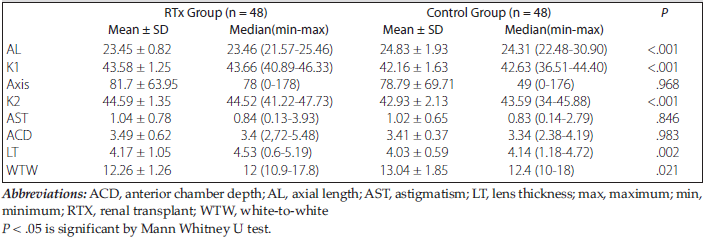
Table 1. Ocular Biometric Measurements of Groups

Table 2. Retinal Thickness of Groups