Volume: 22 Issue: 9 September 2024
FULL TEXT
Objectives: Bariatric surgery can greatly ameliorate obesity and its associated metabolic disorders. Alteration of foregut anatomy, as is seen after Roux-en-Y gastric bypass and biliopancreatic diversion
with duodenal switch, renders traditional access to
the biliary tree difficult, if not impossible. This may complicate management of anastomotic biliary complications after liver transplant.
Materials and Methods: In this single-center study, we retrospectively reviewed all adult patients with a history of any bariatric surgery who underwent liver transplant during the period January 2017 to December 2022. We obtained demographic information of donors and recipients. Outcomes of interest included the modality in which the anastomotic biliary complications were managed.
Results: Of 261 patients who underwent liver transplant at our center during the study period, 9 had a history of bariatric surgery. Anastomotic biliary complications occurred in 3 of 9 patients (33%). No significant differences were shown in donor age, ischemia time, etiology of liver disease, or Model for End-Stage Liver Disease sodium score at time of transplant between the 2 groups. All anastomotic biliary complications occurred in patients with a history of Roux-en-Y gastric bypass or biliopancreatic diversion with duodenal switch. Interventions included advanced endoscopy, endoscopic ultrasonography, and lumen-apposing metal stent to access the remnant stomach and biliopancreatic limb (n = 2) and surgical revision following percutaneous transhepatic biliary drain placement (n = 1). At the end of the study, none experienced recurrent stricture.
Conclusions: Anastomotic biliary complications are well-described after liver transplant. A multidisciplinary approach with interventional radiology and inter-ventional gastroenterology can be beneficial to address strictures that arise in recipients with a history of Roux-en-Y gastric bypass or biliopancreatic diversion with duodenal switch.
Key words : Biliopancreatic diversion with duodenal switch, Endoscopic ultrasonography, Liver transplantation, Roux-en-Y gastric bypass
Introduction
Nearly 25% of adults worldwide are affected by the rising obesity epidemic that is contributing to the increasing number of patients with metabolic dysfunction-associated steatotic liver disease (MASLD).1 Prediction models estimate the preva-lence of MASLD will increase by 18% by 2030.2 Metabolic dysfunction-associated steatohepatitis (MASH), an inflammatory subtype with hepato-cellular injury, can progress to fibrosis and cirrhosis. The MASH subtype has become the leading indication for liver transplant in women and is expected to become the leading indication for transplant for all patients within the next few years.3
Lifestyle modifications aimed at weight loss have been shown to slow progression of MASH and induce regression of fibrosis, but fewer than 50% of patients are able to achieve their target weight through diet and exercise alone.4 Bariatric surgery addresses morbid obesity and comorbid metabolic conditions, such as hypertension and diabetes that accompany these conditions, but some patients with MALSD will still progress to cirrhosis or develop hepatocellular carcinoma and require liver transplant. Various bariatric surgical procedures that are offered to these patients broadly are either gastric sleeve surgery (SG), Roux-en-Y gastric bypass (RYGB), or biliopancreatic diversion with duodenal switch (BPD-DS), all of which alter the foregut anatomy.
With increasing use of grafts from both living donors and donors after cardiac determination of death, the number of biliary complications in the form of leak or strictures are increasing.5,6 Endos-copic retrograde cholangiopancreatography (ERCP) remains the main modality for the assessment and treatment of biliary complications, but bariatric surgery other than SG abrogates the traditional approach to the biliary tree by ERCP. Alternative options to gain biliary access include balloon ente-roscopy-assisted ERCP, laparoscopic-assisted ERCP, or percutaneous transhepatic biliary drainage.7,8 More recently, groups have explored the use of endoscopic ultrasonography-directed transgastric ERCP wherein the biliopancreatic limb is accessed from the gastric pouch by creating an endoscopic gastrogastric fistula.8
Limited data exist on biliary complications and the management of these complications in patients who have undergone liver transplant with the history of bariatric surgery. The aim of this study was to evaluate the incidence and management of biliary complications following liver transplant in patients with a history of bariatric surgery at a single center.
Materials and Methods
We retrospective reviewed all patients who under-went liver transplant at a single center from January 2017 through December 2022 (hereinafter referred to as participants). Adult participants with a history of bariatric surgery including SG, RYGB, or BPD-DS were included. Medical records were accessed for demographic information, including age at time of transplant, sex, primary etiology of liver disease, comorbidities, Model for End-Stage Liver Disease sodium (MELD-Na) score, and body mass index (BMI, measured as kilograms body weight per meter squared). Information about the donors, including age, donation after brain death versus donation after circulatory death, and ischemia times, was also collected. Postoperative biliary compli-cations and management were reviewed. Participants were designated to have biliary strictures if they had laboratory evidence of cholestasis and cross-sectional imaging findings consistent with stricture.
This study was performed with approval from the University of North Carolina Institutional Review Board and in accordance with the Declarations of Helsinki and Istanbul.
Continuous variables are reported as median (with IQR). Continuous variables were compared with Mann-Whitney U test. Categorical variables were compared with the ?2 test. Data were analyzed using SPSS software (version 28).
Results
There were 261 adult candidates who underwent liver transplant at our program from January 2017 to December 2022. Of those, 9 patients (3.4%) had a prior history of bariatric surgery. The operations included RYGB (n = 5), BPD-DS (n = 3), and SG (n = 1).
Demographic data are summarized in Table 1. Median age at time of liver transplant was 41 years (27-56 years). All 9 participants were women, and all 9 received isolated liver grafts from brain death donors. The most common indication for transplant was MASLD (n = 4), followed by alcohol-associated liver disease (n = 3). One participant had primary sclerosing cholangitis, and another participant had acute liver failure of unclear etiology. Median native MELD-Na score was 28 (19-38). One participant was listed at status 1A for medical urgency. Median time between bariatric surgery and liver transplant was 65 months (33-154 months). Median donor age was 41 years (24-58 years). Median cold ischemia time was 395 minutes (290-498 minutes), and median warm ischemia time was 54 minutes (39-69 minutes). Biliary reconstruction was performed in a duct-to-duct fashion in all participants; none required a Roux-en-Y hepaticojejunostomy.
Anastomotic biliary complications occurred in 3 participants (33%). There were no bile leaks. Description of the management of biliary strictures is detailed below. We found no significant difference in recipient age, etiology of liver disease, type of bariatric surgery the patient had previously undergone, native MELD-Na score at time of transplant, donor age, warm ischemia time, or cold ischemia time in the patients with a biliary stricture versus patients who did not have biliary strictures.
Other complications included biopsy-proven acute cellular rejection (n = 2). Neither of these 2 patients had biliary strictures, and both were resolved with pulse dose corticosteroids. Another participant (no biliary stricture) developed severe macrosteatosis (70%) in the allograft and died 34 months after liver transplant secondary to culture-negative sepsis. Median follow-up was 33 months (28-42 months) after liver transplant. The remainder of the patients were alive at follow-up.
Case 1
A 37-year-old woman with a remote history of a RYGB developed MASLD and underwent liver transplant. Two months after surgery she developed cholestasis (total bilirubin 4.1 mg/dL, alkaline phosp-hatase 1104 U/L, and ?-glutamyl transpeptidase 284 U/L). The ERCP was attempted but the ampulla of Vater was inaccessible. Interventional radiology was performed to facilitate percutaneous transhepatic balloon angioplasty, and a stent was placed across the stricture. The stricture persisted after 2 additional attempts at dilation. She was taken for exploration and biliary reconstruction. The options were to revise her bariatric operation and create a new limb to drain her biliary secretions (which was difficult in the setting of dense adhesions and her immunocom-promised state) or to directly anastomose the donor duct to the recipient’s duodenum. The decision was to proceed with the direct anastomosis, as this would allow for a tension-free duct-to-mucosa biliary enteric anastomosis. She recovered well from the operation and continues to have stable graft function without biochemical evidence of cholestasis.
Case 2
A 28-year-old woman with a history of a BPD-DS underwent liver transplant for alcohol-associated cirrhosis. Five months after transplant, she presented with fever over 39 °C and abnormal laboratory test results with both a hepatocellular and cholestatic pattern of injury. She underwent endoscopy. Endoscopic ultrasonography was used to identify and access the biliopancreatic limb using a lumen-apposing metal stent. The native bile duct was accessed endoscopically, and a stent was placed across the anastomosis. The stent was removed 6 weeks later. She has not needed further endoscopic intervention, and her allograft continues to function well.
Case 3
A 46-year-old woman with a history of a RYGB underwent liver transplant for alcohol-associated cirrhosis using a graft from a brain death donor. One month after transplant, she developed graft dys-function and cholestasis (total bilirubin 5.1 mg/dL, alkaline phosphatase 586 U/L, and ?-glutamyl transpeptidase 335 U/L). A therapeutic echoen-doscope was used to access the remnant stomach from the gastric pouch using a lumen-apposing metal stent to create a gastrogastric fistula. An endoscope was then passed into the remnant stomach, and the bile duct was accessed for balloon dilation and stent placement (Figure 1). Four weeks after this proce-dure, a repeat endoscopy demonstrated resolution of the stricture. The biliary stent and lumen-apposing metal stent were removed at that time. Her graft continues to function well with no evidence of recurrent stricture.
Discussion
With the increasing incidence of obesity, we are likely to encounter more patients needing liver transplant who have a prior history of bariatric surgery. As a result of the benefit seen in metabolic comorbidities including liver disease, the indications for bariatric surgery are increasing to include patients with a BMI of 30 to 34.9 and poorly controlled diabetes or, in Asian patients, a BMI as low as 27 with poorly controlled diabetes.9 In this single-center cohort, we identified 9 liver transplant recipients with a history of bariatric surgery, comprising 3.4% of all adults who had a liver transplant at our center over the study period. To our knowledge, this is the first report to describe management options for biliary strictures in this patient population. Unfortunately, registries including the Scientific Registry of Transplant Recipients and the American Society of Metabolic and Bariatric Surgery lack the granularity to study this group.
Anastomotic biliary complications were deemed the so-called Achilles’ heel of liver transplant at the field’s inception due to the tenuous nature of blood supply to the bile duct.10 This has remained true in the modern era, with rates of early biliary comp-lications remaining stable and ranging from 15% to 30%.11-15 Efforts to expand the donor pool have led to increasing use of donors after circulatory deter-mination of death, split grafts from deceased donors, and living donors. Recipients of these organs have an increased risk for biliary complications, which are most often strictures.5,12,14
In patients with native foregut anatomy, tradi-tional management of biliary strictures often begins with ERCP with stricture dilation and duct drainage.12,13,16 Percutaneous transhepatic biliary drainage with dilation and stent placement is another option, but endoscopic interventions have become the preferred primary modality of choice, given ease and availability.17 Surgical revision of the biliary anastomosis to a Roux-en-Y hepatico-jejunostomy is reserved for refractory cases.16 In patients with a history of a RYGB, creation of a hepaticojejunostomy to address a biliary comp-lication would require significant revision of the index bariatric operation.
The standard approach of ERCP in patients with bariatric surgery can be difficult, necessitating physicians to look for other approaches. To our knowledge, this is the first report to describe detailed management of biliary complications in a population with both bariatric surgery and a liver transplant. Navigation of the biliopancreatic limb in patients with a prior RYGB presents a technical challenge and is not possible after BPD-DS. Other options to address the biliary tract in RYGB patients include balloon-assisted endoscopy and laparoscopic-assisted endoscopy. Balloon-assisted endoscopy has demonstrated suboptimal technical success rates.8,18 Laparoscopic-assisted endoscopy carries a risk of open conversion in the standard postsurgery bariatric patient, which is likely to be higher in patients who have also undergone a recent liver transplant. Availability of an advanced endoscopy team allows for innovative methods to access the bile duct endoscopically. Use of endoscopic ultra-sonography and lumen-apposing metal stents allows access to the remnant stomach and duodenum or to the afferent biliary limb to allow traditional ERCP to be performed, with standard forward-viewing and side-viewing endoscopes with the complement of accessories; endoscopists can then dilate biliary strictures, perform sphincterotomy, and place stents. Although the current series is limited in its sample size, we have experienced technical success in accessing the biliary system with advanced endoscopy without evidence of stricture recurrence. We propose that these novel procedures can be used in the liver transplant population with a history of RYGB or BPD-DS when endoscopic expertise is available.
References:
- Younossi ZM, Golabi P, Paik JM, Henry A, Van Dongen C, Henry L. The global epidemiology of nonalcoholic fatty liver disease (NAFLD) and nonalcoholic steatohepatitis (NASH): a systematic review. Hepatology. 2023;77(4):1335-1347. doi:10.1097/HEP.0000000000000004
CrossRef - PubMed - Estes C, Razavi H, Loomba R, Younossi Z, Sanyal AJ. Modeling the epidemic of nonalcoholic fatty liver disease demonstrates an exponential increase in burden of disease. Hepatology. 2018;67(1):123-133. doi:10.1002/hep.29466
CrossRef - PubMed - Sheka AC, Adeyi O, Thompson J, Hameed B, Crawford PA, Ikramuddin S. Nonalcoholic steatohepatitis: a review. JAMA. 2020;323(12):1175-1183. doi:10.1001/jama.2020.2298
CrossRef - PubMed - Vilar-Gomez E, Martinez-Perez Y, Calzadilla-Bertot L, et al. Weight loss through lifestyle modification significantly reduces features of nonalcoholic steatohepatitis. Gastroenterology. 2015;149(2):367-378 e365; quiz e314-365. doi:10.1053/j.gastro.2015.04.005
CrossRef - PubMed - Abu-Gazala S, Olthoff KM. Status of adult living donor liver transplantation in the united states: results from the adult-to-adult living donor liver transplantation cohort study. Gastroenterol Clin North Am. 2018;47(2):297-311. doi:10.1016/j.gtc.2018.01.004
CrossRef - PubMed - Meier RPH, Kelly Y, Braun H, et al. Comparison of biliary complications rates after brain death, donation after circulatory death, and living-donor liver transplantation: a single-center cohort study. Transpl Int. 2022;35:10855. doi:10.3389/ti.2022.10855
CrossRef - PubMed - Martin H, El Menabawey T, Webster O, et al. Endoscopic biliary therapy in the era of bariatric surgery. Frontline Gastroenterol. 2022;13(2):133-139. doi:10.1136/flgastro-2020-101755
CrossRef - PubMed - Runge TM, Chiang AL, Kowalski TE, et al. Endoscopic ultrasound-directed transgastric ERCP (EDGE): a retrospective multicenter study. Endoscopy. 2021;53(6):611-618. doi:10.1055/a-1254-3942
CrossRef - PubMed - Telem DA, Jones DB, Schauer PR, et al. Updated panel report: best practices for the surgical treatment of obesity. Surg Endosc. 2018;32(10):4158-4164. doi:10.1007/s00464-018-6160-x
CrossRef - PubMed - Calne RY. A new technique for biliary drainage in orthotopic liver transplantation utilizing the gall bladder as a pedicle graft conduit between the donor and recipient common bile ducts. Ann Surg. 1976;184(5):605-609. doi:10.1097/00000658-197611000-00012
CrossRef - PubMed - Kaldas FM, Korayem IM, Russell TA, et al. Assessment of anastomotic biliary complications in adult patients undergoing high-acuity liver transplant. JAMA Surg. 2019;154(5):431-439. doi:10.1001/jamasurg.2018.5527
CrossRef - PubMed - Axelrod DA, Lentine KL, Xiao H, et al. National assessment of early biliary complications following liver transplantation: incidence and outcomes. Liver Transpl. 2014;20(4):446-456. doi:10.1002/lt.23829
CrossRef - PubMed - Senter-Zapata M, Khan AS, Subramanian T, et al. Patient and graft survival: biliary complications after liver transplantation. J Am Coll Surg. 2018;226(4):484-494. doi:10.1016/j.jamcollsurg.2017.12.039
CrossRef - PubMed - Goldberg DS, Karp SJ, McCauley ME, et al. Interpreting outcomes in DCDD liver transplantation: first report of the multicenter IDOL consortium. Transplantation. 2017;101(5):1067-1073. doi:10.1097/TP.0000000000001656
CrossRef - PubMed - Navez J, Iesari S, Kourta D, et al. The real incidence of biliary tract complications after adult liver transplantation: the role of the prospective routine use of cholangiography during post-transplant follow-up. Transpl Int. 2021;34(2):245-258. doi:10.1111/tri.13786
CrossRef - PubMed - Gastaca M. Biliary complications after orthotopic liver transplantation: a review of incidence and risk factors. Transplant Proc. 2012;44(6):1545-1549. doi:10.1016/j.transproceed.2012.05.008
CrossRef - PubMed - Akamatsu N, Sugawara Y, Hashimoto D. Biliary reconstruction, its complications and management of biliary complications after adult liver transplantation: a systematic review of the incidence, risk factors and outcome. Transpl Int. 2011;24(4):379-392. doi:10.1111/j.1432-2277.2010.01202.x
CrossRef - PubMed - Shah RJ, Smolkin M, Yen R, et al. A multicenter, U.S. experience of single-balloon, double-balloon, and rotational overtube-assisted enteroscopy ERCP in patients with surgically altered pancreaticobiliary anatomy (with video). Gastrointest Endosc. 2013;77(4):593-600. doi:10.1016/j.gie.2012.10.015
CrossRef - PubMed

Volume : 22
Issue : 9
Pages : 686 - 690
DOI : 10.6002/ect.2024.0124
From the 1Department of Surgery and the 2Department of Medicine, University of North Carolina, Chapel Hill, North Carolina, USA
Acknowledgements: The authors have not received any funding or grants in support of the presented research or for the preparation of this work and have no declarations of potential conflicts of interest.
Corresponding author: Melissa Chen, 101 Manning Dr., Chapel Hill, NC 27514, USA
Phone: +1 984 974 0140
E-mail: gmelissa_chen@med.unc.edu
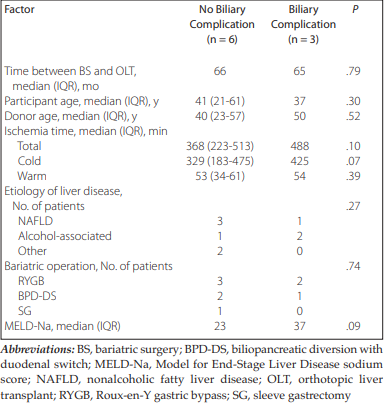
Table 1.Characteristics of Liver Transplant Recipients Without and With Anastomotic Biliary Complications
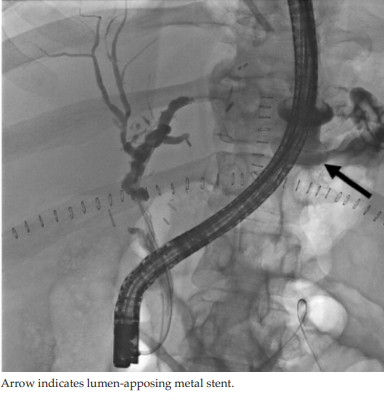
Figure 1.Radiography Image of Endoscopy of Remnant Stomach, for Bile Duct Access and Balloon Dilation and Stent Placement