Volume: 22 Issue: 8 August 2024
FULL TEXT
Abstract
Objectives: The proportion of older transplant recipients has increased. Cognitive impairment is not rare after kidney transplant, but data on this issue in liver transplant recipients are scarse.
Materials and Methods: In this cross-sectional study, we evaluated all liver transplant recipients from a single center in Brazil from July 2018 to June 2020 in terms of cognitive performance to determine the prevalence of neurocognitive disorder. We compared liver transplant recipients with neurocognitive disorder with liver transplant recipients without neurocognitive disorder. We also compared those with an alcoholic cause of liver transplant with other patients. The presence of depressive symptoms was assessed. We performed correlations of clinical data with cognitive scores.
Results: In a sample of 100 recipients with median age of 62 years (interquartile range, 56.2-69 y), neurocognitive disorder was present in 21% of the group. Patients with cognitive impairment were older (68 y [61-72] vs 61 y [52-68]; P = .019) and had a trend to higher proportion of persistent kidney injury (33.3% vs 13.9%; P = .055) versus patients without cognitive impairment. Recipients with alcoholic cause of liver transplant exhibited worse cognitive performance in the Mini-Mental State Examination (score of 26 [23.7-28.2] vs 28 [26-29]; P = .024) and the Alzheimer Disease Assessment Scale-cognitive (score of 10.4 [8.6-14.2] vs 8 [6.3-10]; P = .008) than other patients. Weak negative correlations were shown in cognitive performance scores versus recipient age (Semantic Verbal Fluency test, r = -0.334 [P = .001]; Clock Drawing test, r = -0.209 [P = .037]; Alzheimer Disease Assessment Scale-cognitive, r = -0.323 [P = .001]).
Conclusions: Neurocognitive disorder was common in liver transplant recipients, in part due to increased age. This study also suggested a role for alcoholic cause of liver transplant and persistent kidney injury in the development of cognitive impairment.
Key words : Lung transplantation, Physiotherapy, Respiratory muscles
Introduction
Solid-organ transplantation represents one of the most important medical advances of the 20th century, granting longer survival to patients with major organ failures, despite several complications, most of them related to immune suppression. The number of elderly patients placed on wait lists has increased dramatically,1 raising concern on a possible change in the profile of neurological complications among transplant recipients, including the occurrence of cognitive decline.
The knowledge about this theme is more extensive regarding chronic renal disease leading to transplant. Polycystic kidney disease,2 slow deterioration of renal functioning,3 and especially chronic kidney disease have been linked to cognitive decline.4 Cognitive function may improve after transplant,4,5 although to a lesser extent among frail recipients.6 In a series of transplant recipients composed mostly of renal transplant recipients, dementia was so rare that the authors suggested that the calcineurin inhibitors should be tested for treating Alzheimer disease.7 On the other hand, a large series that assessed the characteristics of older kidney transplant recipients at transplant found 10-year dementia risk ranging from 5.1% for recipients aged 55 to 60 years to 17.0% for recipients aged ?75 years.8 Patients with cognitive impairment exhibited pronounced risk of graft loss and mortality, and previous diagnosis of diabetes also contributed to higher risk of developing neurocognitive disorder.8 Another study suggested that cytomegalovirus infection is linked to higher probability of dementia in patients with end-stage organ diseases.9 Delirium affects about 5% of kidney transplant recipients and may be a marker of those who are more prone to development of chronic neurocognitive disorder.10,11 In an American series of 894 patients who underwent renal transplant, delirium occurred in 4.8% and was associated with over 7-fold greater risk of dementia.11
If neurocognitive disorder seems not to be so rare in kidney transplant recipients, data are absolutely absent about bone marrow transplantation and just preliminary concerning heart transplantation. Only a small study with 37 subjects addressed cognitive function among long-term survivors of heart transplant, revealing a rate of almost 40% among transplant survivors with impaired test performance.12 One recipient was diagnosed with dementia, and 30.1% qualified for mild cognitive impairment; those with mild cognitive impairment had lower hemoglobin levels than those without.12
Data on hepatic tranplant regarding cognitive impairment are scarse. Similar to that observed with chronic renal damage, advanced liver fibrosis could be a long-term predictor of overall neurocognitive disorder in older adults with physical frailty.13 Undoubtfully, alcohol-related neurocognitive disor-der is a main concern in evaluations before liver transplant because this condition may be con-founded with hepatic encephalopathy,14 requiring cognitive assessment and ancyllary tests. Despite heavy alcohol use being associated with cognitive decline and being a main cause of hepatic failure,15 no evidence exists that a diagnosis of end-stage alcoholic cirrosis in pre-liver transplant evaluations influences the incidence of neurocognitive disorder in liver transplant recipients.
The sole study that measured the prevalence of neurocognitive disorder after liver transplant was a survey undertaken in a national health database from England.16 The overall prevalence was 4.9%, but the rates have increased along the eras, from 2.3% in 1997-2000 to 7.3% in 2006-2010. This diagnosis did not have a significant effect on mortality in any period. As a limitation of such a survey, it was not possible to ascertain precisely the individual clinical data. More recently, a study performed in Norwegian children after liver transplant revealed that young age and large blood transfusions during transplant are risk factors for poor cognitive performance later in life.17
Thus, the issue of cognitive impairment in liver transplant recipients represents a field for investigation and is the theme of this survey. Our hypothesis is that neurocognitive disorder could be a late complication of liver transplant.
Materials and Methods
This cross-sectional study was conducted in the Hospital São Vicente de Paulo, a regional transplant center located in Passo Fundo, RS, Brazil. We received approval for this study from the local ethics committee (Comitê de Ética em Pesquisa em humanos da Universidade de Passo Fundo: approval No. 2.628.708) in April 2018. The study was con-ducted in accordance with both the Declarations of Helsinki and Istanbul.
From July 2018 to June 2020, all liver transplant recipients in the transplant center were invited to participate in the study and gave their written consent. No patient declined participation. After consent, liver transplant recipients underwent a cognitive evaluation composed of the following tests: the Mini-Mental State Examination,18 the Clock-Drawing test,19 the Semantic Verbal Fluency test,20 and the Alzheimer Disease Assessment Scale-cognitive test (ADAS-Cog).21 The presence of depressive symptoms as a comorbidity was assessed with the Beck Depression Inventory22 or, for patients aged ?60 years, the 15-item Geriatric Depression Scale (GDS-15).23 We collected demographic and clinical characteristics from medical records and from history obtained from patients and their relatives, with special concern to cognitive performance during daily activities.
Neurocognitive disorder is conventionally stated as a substantial cognitive decline from a previous level of performance in one or more cognitive domains based on patient history and quantified by some kind of asssessment.24 For the purpose of our study, we documented the presence of neurocognitive disorder if there was a complaint of acquired impairment in memory associated with a prejudice in any of the cognitive aspects, together with a lower than expected performance in at least 2 of the following tests: the Mini-Mental State Examination, the Clock-Drawing test, and the Semantic Verbal Fluency test. If cognitive deficit was remarkable and was interfering with independence in everyday activities, we termed the neurocognitive disorder as major; otherwise, the neurocognitive disorder was termed minor.24 A neurologist confirmed the diagnosis of neurocognitive disorder, who also excluded the presence of hepatic encephalopathy or an episode of delirium caused by other conditions at the time of cognitive evaluation. Patients identified with neurocognitive disorder were referred to neurological investigation and management, if not already seeing such specialists. In November 2022, we retrieved medical records to assess whether a specific etiological diagnosis for cognitive impairment was established and to assess survival.
On the basis of studies that evaluated samples among the Brazilian population,18,20 the following minimal threshold scores were defined as normal in the Mini-Mental State Examination and the Semantic Verbal Fluency tests, respectively, according to years of education: illiterate = 20 and 12 (rounding value); 1 to 4 years = 25 and 12 (rounding value); 5 to 8 years = 27 and 14; 9 to 11 years = 28 and 17 (rounding value); and >11 years = 29 and 18 (rounding value). Accordingly, a score lower than 4 in the Clock-Drawing test assessed by the Pfizer system was considered abnormal.19 A score higher than 9 in the Beck Depression Inventory22 or more than 4 in the GDS-15 was considered positive for depressive symptoms.23
Statistical analyses
We used the chi-square test (or Fisher exact test, if necessary) for analyses of categorical variables. We used the Mann-Whitney U test to compare groups if continuous data exhibited asymmetric distribution; for variables that had normal distribution, we compared groups with t tests. We determined the Spearman rank correlation coefficient to correlate the main continuous variables with the cognitive performance in the sample. Similarly, we used multiple linear regression analyses to investigate predictive roles of such variables on the scores of cognitive tests. P ? .05 was established as significant. We used IBM SPSS Statistics for Windows, version 24.0, for statistical analyses.
Results
Table 1 lists the clinical and demographical characteristics of the sample. Men comprised the majority of the population included in the study. Major causes of liver injury were hepatitis B virus, hepatitis C virus, and alcohol. Three patients had double infection. Five recipients had autoimmune hepatitis, 3 had Wilson disease, 2 had Budd-Chiari syndrome, 2 had cryptogenic cirrhosis, and 2 had neoplastic liver compromise other than hepatocellular carcinoma. Remaining causes for liver transplant comprised 1 case each of hemochromatosis, nonal-coholic steatohepatitis, drug-induced liver failure, Caroli disease, polycystic liver disease, and familial amyloidosis. No patient whose liver injury was due to alcohol returned to alcoholism after transplant.
Patients with neurocognitive disorder were compared with other recipients (Table 2). Table 3 compares demographic and clinical characteristics from recipients with and without alcohol as a cause for hepatic failure that led to transplant. Table 4 shows the analysis of correlations between main continuous variables and cognitive performance in the study sample.
From variables with significant results in the correlation analysis, we performed a multiple linear regression model to estimate the predictive power of education level, age, and age at transplant on cognitive performance. Only education level exhibited significant regression in determining an overall better cognitive performance, although with a small size of effect (Mini-Mental State Examination: R2 = 0.048, beta = 0.219, t = 2.21, P = .029; Semantic Verbal Fluency test: R2 = 0.065, beta = 0.254, t = 2.604, P = .011; Clock Drawing test: R2 = 0.072, beta = 0.269, t = 2.763, P = .007; ADAS-Cog: R2 = 0.047, beta = -0.216, t = -2.187, P = .031). Age reached significance in determining Semantic Verbal Fluency test scores when education level was added to the model (R2 = 0.123, beta = -0.286, t = -2.549, P = .012), but also to a lesser extent.
From the 21 recipients who had neurocognitive disorder, 10 had etiologic diagnosis that was deter-mined (4 with probable Alzheimer disease, 2 with vascular dementia, 1 with mixed vascular dementia and Alzheimer disease, 2 with dementia in Parkinson disease, and 1 with HIV-associated neurocognitive decline) at the time of evaluation or thereafter. All 10 patients had cognitive impairment classified as major neurocognitive disorder. The remaining 11 patients with neurocognitive disorder did not receive a specific etiologic diagnosis. This occurred mainly because most died before reevaluation of medical records, in November 2022, and a thorough etiolo-gical investigation was lacking. Indeed, 20% of the cohort died before November 2022.
Discussion
This cross-sectional study aimed to assess the frequency of cognitive impairment in a series of liver transplant recipients; patients on transplant wait lists have been increasing in age,1 and the consequent possibility that neurocognitive disorder, a chronic condition usually linked to aging, could become a common long-standing complication posttransplant. In fact, epidemiological data from England pointed to such a trend, with a rate of 7.3% in the 2006-2010 era,16 but our series showed a marked higher prevalence. This finding brings great concern in terms of health care of such a population, since the development of cognitive impairment was not previously shown to be common in liver transplant recipients.
From all patients in our cohort detected with neurocognitive disorder, only a minority had this diagnosis at the time of evaluation. This situation is particularly worrying because cognitive impairment could jeopardize the recipient’s adherence and consequently affect the viability of the organ. After kidney transplant, recipients with cognitive impair-ment exhibited pronounced risk of graft loss and mortality,8 although, in the English epidemiological survey on liver transplant, this diagnosis did not lead to higher mortality.16
In our analyses of characteristics of our patient sample, we aimed to determine factors that could contribute to cognitive impairment. The finding of older patients in the group with neurocognitive disorder may be the main explanation because it is recognized that the risk of developing neuro-cognitive disorder is higher in older people.25 However, we found just a weak correlation of age with scores in the Semantic Verbal Fluency test, the Clock-Drawing test, and ADAS-Cog, whereas we observed no correlation with the score in the Mini-Mental State Examination. Moreover, the multiple linear regression model demonstrated just a weak predictive power of age on Semantic Verbal Fluency test scores when we added education level to the model, and no regression on other cognitive results. Our interpretation is that the difference between the age medians was not large enough to justify the occurrence of neurocognitive disorder entirely. The age when patients underwent transplant was not statistically different between the groups with and without neurocognitive disorder. Thus, we explored the possibility that factors other than age at evaluation could have contributed to such a remarkable prevalence of cognitive impairment.
A recent prospective cohort study demonstrated an association between age of onset of multi-morbidity and incidence of neurocognitive disorder, particularly when onset is in midlife rather than in late life.26 A morbidity that may be considered is chronic renal disease. This is not rare after liver transplant,16 and deterioration of renal functioning has been linked to cognitive impairment.3,4 We found a trend to higher prevalence of persistent kidney injury in the group of recipients with neurocognitive disorder. Previous diagnosis of diabetes also con-tributed to a higher risk of developing dementia in kidney transplant recipients,8 although this was not the case in our series. Advanced liver fibrosis was pointed as a long-term predictor for overall dementia in older adults with physical frailty, giving rise to the possibility that the chronic hepatic dysfunction that resulted in transplant for the majority of our patients (only a few patients underwent transplant because of acute liver failure) could be a contributing factor for development of neurocognitive disorder.13
Heavy alcohol use is an established cause of changes in brain structures, cognitive impairments, and an increased risk of all types of dementia.27 We observed no difference in the frequency of alcohol-induced liver failure between the groups with and without neurocognitive disorder in our series. However, we compared the results of the main continuous variables between those whose hepatic damage before transplant had total or partial alcoholic cause and those who did not drink alcohol at all. The only variables that exhibited significant difference were Mini-Mental State Examination and ADAS-Cog scores, with worse performance in the alcohol group. This suggests a relation between cognitive impair-ment and alcoholic cause for transplant.
Injection of cyclosporine A to hippocampus in rats has been used as an animal model of Alzheimer disease, in which rats showed phosphorylation of tau proteins and abnormal behavior.28 However, we did not find any relation of immunosuppressants or their doses with cognitive impairment in our patient sample.
We devoted special attention to exclude hepatic encephalopathy when patients were evaluated, because this could be a confounding factor because of the reversibility of the cognitive dysfunction caused by encephalopathy.29 Similarly, assessment of the presence of depression is important when evaluating cognitive function to avoid confounding bias.30 We found no difference in the frequency of depressive symptoms between liver transplant recipients with and without neurocognitive disorder. Moreover, we found no correlation of depression scores with the cognitive performance evaluated through the tests. Thus, we can ascertain that depressive symptoms were not linked to the cognitive impairment shown in our patient sample.
Finally, education level may be a determinant of cognitive performance in adults and elderly people.31 In our study, a correlation between years of education and better results in cognitive tests was found, as well as a role for education level as a predictive factor for cognitive performance in the regression model. However, the size of such effect was small in both the correlation and regression analyses. Consequently, we cannot attribute education level as having a central role in the cognitive performance in our patient sample.
Our study had several limitations. The sample size may be not enough to reveal differences with a lesser magnitude, but the issue may be a topic for further investigation in larger series. A thorough cognitive assessment was not performed before transplant for purpose of comparison to the results that we obtained. Roughly half of the group with neurocognitive disorder had not received a precise etiological diagnosis, mostly because of short survival. Thus, a suitable analysis could not be performed in terms of which type of neurocognitive disorder was more common after transplant. Further important limitations were missing data on patterns of alcohol intake among patients and the lack of a control group of nonrecipients to determine dif-ferences of preva-lence or risk factors controlling for age and education level.
Conclusions
Neurocognitive disorder was common among our liver transplant recipients, with increased age partially responsible for this finding. A possible relation between alcoholic damage and cognitive impairment was shown, as well as a possible role for persistent kidney injury and low education level.
References:
- Kniepeiss D, Wagner D, Pienaar S, et al. Solid organ transplantation: technical progress meets human dignity a review of the literature considering elderly patients’ health related quality of life following transplantation. Ageing Res Rev. 2012;11(1):181-187. doi:10.1016/j.arr.2011.06.003
CrossRef - PubMed - Yu TM, Chuang YW, Sun KT, et al. Polycystic kidney disease is significantly associated with dementia risk. Neurology. 2017;89(14):1457-1463. doi:10.1212/WNL.0000000000004434
CrossRef - PubMed - Bikbov B, Soler MJ, Pesic V, et al. Albuminuria as a risk factor for mild cognitive impairment and dementia – what is the evidence? Nephrol Dial Transplant. 2021;37(Suppl 2):ii55-ii62. doi:10.1093/ndt/gfab261
CrossRef - PubMed - Zhang CY, He FF, Su H, Zhang C, Meng XF. Association between chronic kidney disease and Alzheimer’s disease: an update. Metab Brain Dis. 2020;35(6):883-894. doi:10.1007/s11011-020-00561-y
CrossRef - PubMed - van Sandwijk MS, Ten Berge IJ, Caan MW, et al. Cognitive improvement after kidney transplantation is associated with structural and functional changes on MRI. Transplant Direct. 2020;6(3):e531. doi:10.1097/TXD.0000000000000976
CrossRef - PubMed - Chu NM, Gross AL, Shaffer AA, et al. Frailty and changes in cognitive function after kidney transplantation. J Am Soc Nephrol. 2019;30(2):336-345. doi:10.1681/ASN.2018070726
CrossRef - PubMed - Taglialatela G, Rastellini C, Cicalese L. Reduced incidence of dementia in solid organ transplant patients treated with calcineurin inhibitors. J Alzheimers Dis. 2015;47(2):329-333. doi:10.3233/JAD-150065
CrossRef - PubMed - McAdams-DeMarco MA, Bae S, Chu N, et al. Dementia and Alzheimer’s disease among older kidney transplant recipients. J Am Soc Nephrol. 2017;28(5):1575-1583. doi:10.1681/ASN.2016080816
CrossRef - PubMed - Lee KH, Kwon DE, Han KD, La Y, Han SH. Association between cytomegalovirus end-organ diseases and moderate-to-severe dementia: a population-based cohort study. BMC Neurol. 2020;20(1):216. doi:10.1186/s12883-020-01776-3
CrossRef - PubMed - Cengiz N, Adibelli Z, Yakupoglu YK, Turker H. Neurological complication of renal transplantation: a retrospective clinical study. Noro Psikiyatr Ars. 2015;52(4):331-335. doi:10.5152/npa.2015.9876
CrossRef - PubMed - Chu NM, Bae S, Chen X, et al. Delirium, changes in cognitive function, and risk of diagnosed dementia after kidney transplantation. Am J Transplant. 2022;22(12):2892-2902. doi:10.1111/ajt.17176
CrossRef - PubMed - Bürker BS, Gude E, Gullestad L, et al. Cognitive function among long-term survivors of heart transplantation. Clin Transplant. 2017;31(12). doi:10.1111/ctr.13143
CrossRef - PubMed - Solfrizzi V, Scafato E, Custodero C, et al. Liver fibrosis score, physical frailty, and the risk of dementia. Alzheimers Dement (N Y). 2020;6(1):e12065. doi:10.1002/trc2.12065
CrossRef - PubMed - Gaglio Jr PJ, Gaglio Sr PJ. Complications in patients with alcohol-associated liver disease who undergo liver transplantation. Clin Liver Dis. 2012;16(4):865-875. doi:10.1016/j.cld.2012.08.013
CrossRef - PubMed - Rehm J, Hasan OSM, Black SE, Shield KD, Schwartzinger M. Alcohol use and dementia: a systematic scoping review. Alzheimers Res Ther. 2019;11(1):1. doi:10.1186/s13195-018-0453-0
CrossRef - PubMed - Tovikkai C, Charman SC, Praseedom RK, Gimson AE, van der Meulen J. Time-varying impact of comorbidities on mortality after liver transplantation: a national cohort study using linked clinical and administrative data. BMJ Open. 2015;5(5):e006971. doi:10.1136/bmjopen-2014-006971
CrossRef - PubMed - Ostensen AB, Skarbo A-B, Sanengen T, Line PD, Almaas R. Impaired cognitive performance in children after liver transplantation. J Pediatr. 2022;234:135-141.e2. doi:10.1016/j.jpeds.2021.12.033
CrossRef - PubMed - Brucki SMD, Nitrini R, Caramelli P, Bertolucci PH, Okamoto IH. [Suggestions for utilization of the mini-mental state examination in Brazil]. Arq Neuropsiquiatr. 2003;61(3B):777-781. doi:10.1590/s0004-282x2003000500014
CrossRef: https://doi.org/10.1590/S0004-282X2003000500014
PubMed - Graeff DB, Lui LM, Zucco ND, Alves ALS, Forcelini CM, Dalmolin BM. Clock drawing test: comparison between the Pfizer and the Shulman systems. Dement Neuropsychol. 2021;15(4):480-484. doi:10.1590/1980-57642021dn15-040009
CrossRef - PubMed - Brucki SMD, Rocha MSG. Category fluency test: effects of age, gender and education on total scores, clustering and switching in Brazilian Portuguese-speaking subjects. Braz J Med Biol Res. 2004;37(12):1771-1777. doi:10.1590/s0100-879x2004001200002
CrossRef - PubMed - Mohs RC, Knopman D, Petersen RC, et al. Development of cognitive instruments for use in clinical trials of antidementia drugs: additions to the Alzheimer’s Disease Assessment Scale that broaden its scope. The Alzheimer's Disease Cooperative Study. Alzheimer Dis Assoc Disord. 1997;11(Suppl 2):S13-S21.
CrossRef - PubMed - Beck AT, Steer RA, Garbin MG. Psychometric properties of the Beck Depression Inventory: twenty-five years of evaluation. Clin Psychol Rev. 1988;8:77-100. doi:10.1016/0272-7358(88)90050-5
CrossRef - PubMed - Sheikh JA, Yesavage JA. Geriatric Depression Scale (GDS): recent findings and development of a shorter version. In: Brink TL, ed. Clinical Gerontology: A Guide to Assessment and Intervention. Howarth Press; 1986.
CrossRef - PubMed - American Psychiatric Association. Diagnostic and Statistical Manual of Mental Disorders. 5th ed. American Psychiatric Association; 2022.
CrossRef - PubMed - Olfson M, Scott Stroup T, Huang C, Wall MM, Gerhard T. Age and incidence of dementia diagnosis. J Gen Intern Med. 2021;36(7):2167-2169. doi:10.1007/s11606-020-05895-y
CrossRef - PubMed - Hassen CB, Fayosse A, Landré B, et al. Association between age at onset of multimorbidity and incidence of dementia: 30 year follow-up in Whitehall II prospective cohort study. BMJ. 2022;376:e068005. doi:10.1136/bmj-2021-068005
CrossRef - PubMed - Rehm J, Hasan OS, Black SE, Shield KD, Schwartzinger M. Alcohol use and dementia: a systematic scoping review. Alzheimers Res Ther. 2019;11(1):1. doi:10.1186/s13195-018-0453-0
CrossRef - PubMed - Wang Q, Wang J. Injection of bradykinin or cyclosporine A to hippocampus induces Alzheimer-like phosphorylation of Tau and abnormal behavior in rats. Chin Med J. 2002;115(6):884-887.
CrossRef - PubMed - Adejumo A, Noll A, Rogal SS, et al. Dementia frequently coexists with hepatic encephalopathy but not other cirrhosis complications in US veterans. Am J Gastroenterol. 2023;118(3):474-480. doi:10.14309/ajg.0000000000002189
CrossRef - PubMed - Moulton CD, Tharmaraja T, Dumbrill JL, Hopkins CW. Cognitive impairement after kidney transplant: a hidden consequence of depression? J Am Soc Nephrol. 2019;30:1547. doi:10.1681/ASN.2019030317
CrossRef - PubMed - Lövdén M, Fratiglioni L, Glymour MM, Lindenberger U, Tucker-Drob EM. Education and cognitive functioning across the life span. Psychol Sci Public Interest. 2020;21(1):6-41. doi:10.1177/1529100620920576
CrossRef - PubMed

Volume : 22
Issue : 8
Pages : 622 - 628
DOI : 10.6002/ect.2024.0065
From the 1Escola de Medicina, Universidade de Passo Fundo, Passo Fundo, RS, Brazil; and the 2Hospital São Vicente de Paulo, Passo Fundo, RS, Brazil
Acknowledgements: The authors have not received any funding or grants in support of the presented research or for the preparation of this work and have no declarations of potential conflicts of interest.
Corresponding author: Cassiano Mateus Forcelini, R. Teixeira Soares 817, CEP 99010-080, Passo Fundo, RS, Brazil
Phone: +55 54 3316 8553
E-mail: cmforcelini@gmail.com
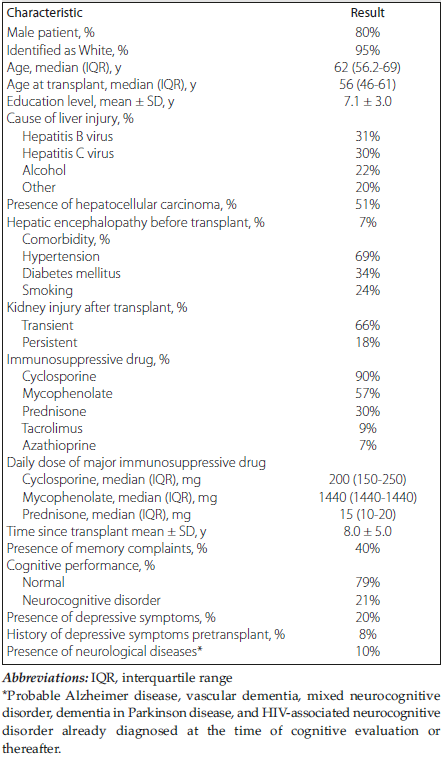
Table 1. Clinical and Demographic Characteristics of the Study Sample (N = 100 Liver Transplant Recipients)
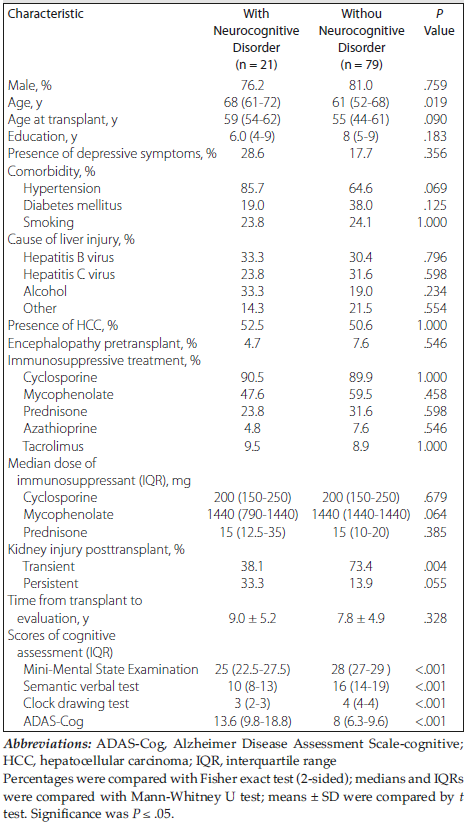
Table 2. Comparison of Clinical Characteristics Between Patients With and Without Neurocognitive Disorder
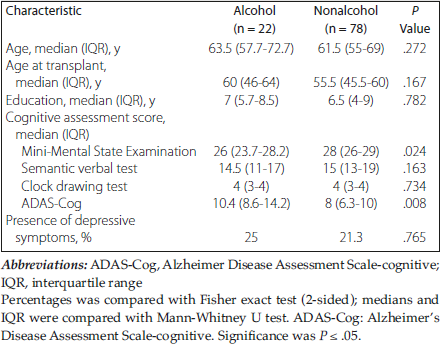
Table 3. Comparison of Some Clinical Characteristics Between Recipients With Alcohol as a Main Cause for Hepatic Failure Leading to Transplant and Those Without Any Alcohol Contribution
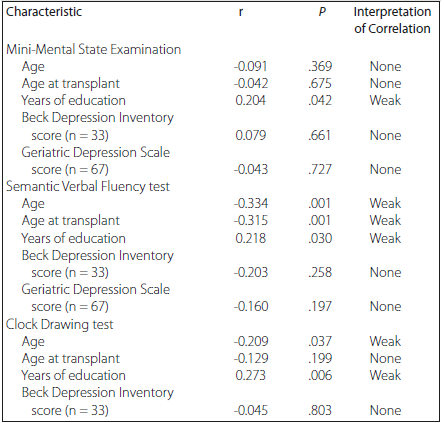
Table 4. Spearman Rank Correlations Between Main Continuous Variables and Cognitive Performance in the Study Sample (N = 100 Liver Transplant Recipients)
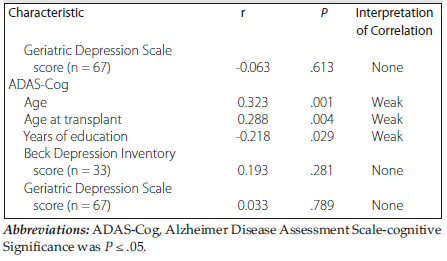
Table 4 (Cont). Spearman Rank Correlations Between Main Continuous Variables and Cognitive Performance in the Study Sample (N = 100 Liver Transplant Recipients)