Volume: 22 Issue: 10 October 2024
FULL TEXT
Splenic Artery Ligation Versus Splenectomy for Portal Inflow Modulation in Adult Living Donor Liver Transplant: Effects on Early Graft Function, A Prospective Study
Objectives: Portal inflow modulation is currently an essential step in living donor liver transplantation, particularly among patients with portal hypertension who receive small grafts. This study compared splenic artery ligation with splenectomy as a method for portal inflow modulation.
Material and Methods: We compared 31 consecutive prospective adult patients who had splenic artery ligation during living donor liver transplant with either right or left lobe donation performed from July 2021 to March 2024 with 22 consecutive retrospective patients who had splenectomy performed imme-diately before July 2021.
Results: No differences were shown between splenic artery ligation and splenectomy groups in demog-raphic data, indication, and Model for End-Stage Liver Disease score. Patients in the splenic artery ligation group had significantly smaller grafts than patients in the splenectomy group (graft-to-recipient weight ratio of 0.89 ± 0.23 vs 1.19 ± 0.24; P < .001) and less right lobes (41.9% [n = 13] vs 90.9% [n = 20]; P < .001). No significant differences between groups were shown for cold and warm ischemic times and estimated blood loss. Operative time was significantly shorter for patients in the splenic artery ligation versus splenectomy group (8.85 ± 1.33 vs 10.49 ± 0.75 h; P < .001). In the splenic artery ligation group, median portal vein pressure decreased from 19 (range, 16-23) to 14 (range, 11-20) mm Hg. In the splenectomy group, portal vein pressure decreased from 20.5 (range, 17-24) to 14.5 (range, 12-17) mm Hg. Both techniques showed no differences regarding effect on portal inflow modulation (P = .21). Incidence of small-for-size syndrome was not significantly different between groups.
Conclusion: Splenic artery ligation was not inferior to splenectomy as a method to perform portal inflow modulation to alleviate graft dysfunction in living donor liver transplant with portal hypertension.
Key words : Portal hypertension, Portal venous pressure, Small-for-size syndrome
Introduction
Liver transplant is a well-established treatment for patients with end-stage liver failure. In some countries, only living donor liver transplant (LDLT) is possible.1 Portal hypertension is common among patients who undergo LDLT.2 Portal hypertension can cause detrimental effects in the implanted grafts and can lead to histological and biochemical changes that may end in graft failure.3,4
Many centers have recently accepted smaller grafts and left lobes.5 Smaller grafts are more prone to damage by portal hypertension and development of small-for-size syndrome (SFSS).6 To decrease this deleterious effect, portal inflow modulation (PIM) is necessary. The most commonly used surgical techniques for PIM are splenectomy and splenic artery ligation (SAL). Other methods are various portocaval shunts, nonsurgical radiological interventions, and pharmacological methods.7
Portal inflow modulation in the form of splenec-tomy adds additional operative time and is associated with potential blood loss in addition to its technical difficulty due to excessive collaterals.7 Our center recently opted to a protocol change to perform SAL and reserve splenectomy if portal vein pressure (PVP) did not decrease adequately despite SAL. We conduc-ted this study to compare results of both techniques.
Materials and Methods
We conducted this prospective comparative study at the HPB Surgery and Liver Transplantation Unit, El-Rajhy Liver Hospital, Assiut University, Egypt. The Ethical and Scientific Committee of our medical school (IRB code 17200627) approved this study in accordance with the Code of Good Practice and the guidelines of the Declaration of Helsinki (7th revision, 2013 abide by the 2018 Declaration of Istanbul). All patients included in this research gave written informed consent for publication of the data contained within this study. The study protocol was registered at ClinicalTrials.gov (NCT04988100). We included all adult patients who had LDLT with either right or left lobe donation. We excluded patients who had splenectomy before transplant. We did not exclude patients who had portal vein thrombosis. All grafts were procured from related donors (up to the fourth degree) who were aged >18 years.
We compared 2 groups: SAL group and splenec-tomy group. The SAL group included 31 consecutive prospective patients who received the procedure from July 2021 to March 2024. The splenectomy group included 22 consecutive retrospective patients who received the procedure immediately before the pro-tocol change in July 2021. We retrieved retros-pective data from a prospectively maintained database.
In both groups, PIM was done if PVP was more than 15 mm Hg. We recorded PVP immediately after reperfusion irrespective of graft-to-recipient weight ratio (GRWR). We considered GRWR of less than 0.8 as a small-for-size graft.8
All donors and recipients were evaluated according to the local hospital protocol. The decision to procure the right or left lobe was dependent on volumetric assessment of the left lobe. We proceeded with left lobe donation as a first option unless GRWR was less than 0.8 provided that the residual volume was more than 35%. The recipient’s portal hyper-tension was not a factor to decide on graft type.
The surgical technique has been described previously.9 During the recipient operation, PVP was measured by direct cannulation of portal vein by a 23G needle that was connected to a pressure transducer via an extension-arterial line.
In the SAL group, PVP was measured 3 or 4 times. The first reading was recorded before clamping of the portal vein (initial reading). The second reading was done after declamping of the portal vein (ie, after reperfusion). If PVP was more than 15 mm Hg, we performed SAL. This step was done before arterial reconstruction. After arterial reconstruction, PVP was measured for a third time; if PVP was still higher than 15 mm Hg, we performed a splenectomy. After splenectomy, we measured the final reading before abdominal closure; if PVP was more than 15 mm Hg, no further surgical steps were done.
In the splenectomy group, only 2 readings were taken. The first reading was after declamping of portal vein; if PVP was more than 15 mm Hg, splenectomy was done. The final reading was done before closure. No further actions were done irrespective of this final reading.
The technique of SAL was by proximal ligation of splenic artery as described by Troisi and colleauges.10 Splenectomy was done by individual ligation of splenic vessels close to the spleen to avoid injury to the pancreatic tail. All visible shunts were ligated, especially lienorenal and left gastric shunts, before biliary anastomosis. We measured operative time and blood loss as described previously.11
Graft dysfunction was assessed by measurement of international normalized ratio (INR), bilirubin level, and drain output on postoperative days 7 and 14. Small-for-size syndrome was defined and graded into 3 grades according to a recently published proposed grading system.12
We used SPSS software (version 22.0) for statistical analyses. We presented categorical data as number of patients (with percentage), with comparisons performed by the chi-square test or the Fisher exact test. We presented numerical data as mean values (with SD) or median values (with range), for which we used the t test or the Mann-Whitney U test or analysis of variance test as appropriate. P < .05 was considered significant.
Results
Among 53 patients included in our study, 31 were in the SAL group and 22 in the splenectomy group. (Table 1) shows no difference between SAL and splenectomy groups in demographic data, body mass index (weight in kilograms divided by the height in meters squared), indication for transplant, Model of End Stage Liver Disease score, and presence of portal vein thrombosis.
Significantly more left lobe donations were in the SAL group than in the splenectomy group; consequently, actual GRWR was significantly smaller (Table 2). No significant differences between groups were shown with cold and warm ischemic times and estimated blood loss. The operative time was significantly longer in the splenectomy group than in the SAL group.
(Table 3) shows PVP measurements in both study groups. In the SAL group, median PVP after portal vein declamping was 19 mm Hg. After ligation of splenic artery, PVP decreased to 14 mm Hg (Figure 1). In the splenectomy group, PVP decreased from 20.5 to 14.5 mm Hg (Figure 2). The effect of both techniques on PIM was not significantly different (P = .21).
In the SAL group, PVP measurements decreased below 15 mm Hg after ligation of splenic artery in all patients except for 5 patients. Median PVP among these 5 patients after SAL was 18 mm Hg (range, 16-20 mm Hg). Subsequently, splenectomy was added as per our protocol. The median of the final PVP reading among these patients was 17 mm Hg (range, 16-19 mm Hg). This decline was not significantly different from the reading before splenectomy reading (P = .54).
Postoperative outcomes were not significantly different between groups (Table 4). Incidence of SFSS was also not significantly different between groups. In the splenectomy group, 1 patient had pancreatic fistula that was managed conservatively. Three patients had splenic bed hematomas; 1 required peritoneal lavage and the other 2 required percu-taneous drainage. In the SAL group, 3 patients developed splenic infarction diagnosed by abdo-minal computed tomography and were managed conser-vatively. In the SAL group, 2 patients died; both had developed SFSS grade C; in the splenectomy group, 1 patient died who also had SFSS grade C.
Discussion
There is a growing trend among LDLT experts to accept smaller grafts, as they are potentially more safe to donors despite carrying additional acceptable risks to recipients; this change has been sometimes termed as “shift-to-left phenomenon.”5 The main risk to recipients is the development of SFSS; to decrease this detrimental outcome, PIM is unanimously practiced.13
In our present study, SAL was found to be not inferior to splenectomy regarding its role to effec-tively decrease PVP below 15 mm Hg and was associated with similar incidences of early graft dysfunction compared with splenectomy. It is widely accepted that PVP should be kept less than 15 mm Hg, especially in the setting of small-for-size grafts.7,14
Although many studies have compared different surgical techniques for PIM in the setting of portal hypertension in LDLT, to our knowledge, after extensive literature research in PubMed, Embase, Google Scholar, and Cochrane Library databases, we did not find any direct prospective comparison between splenectomy and SAL either in the presence of low GRWR or not.
Su and colleagues, in a retrospective study comparing PIM versus no PIM, found in subgroup analysis of 36 patients who had PIM (19 splenectomy and 17 SAL) that splenectomy was more capable of reducing portal vein flow compared with SAL. In addition, operative outcomes (operative time and blood loss) and postoperative outcomes (SFSS and hospital stay) were similar between the subgroups. Unlike our study, the investigators did not directly compare the 2 methods head to head as they initially performed SAL to all PIM group followed by splenec-tomy if portal vein flow stayed persistently high. They measured both portal vein flow and PVP. Either of these can be used to measure portal hyperperfusion.15
Similar to Su and colleagues, Emond and collea-gues performed splenectomy when the effect of SAL was insufficient to reduce PVP and retrospectively compared both techniques. They found that both modalities had comparable reductions in portal pressure with better graft dysfunction in the sple-nectomy subgroup, although their numbers were too small for proper statistical comparisons.16
Similarly, other authors have reported performing splenectomy if SAL was not sufficient to lower PVP.17-20 In essence, these comparisons were between a group in which SAL could effectively decrease PVP and a group in which SAL failed to effectively decrease PVP and hence required splenectomy.
In our present study, 5 patients in the SAL group required splenectomy. This subset of patients had their median PVP decrease from 18 to 17 mm Hg after splenectomy. This decrease was not statistically significant, probably because of the small sample size. Of note, this subset may require exclusion from the SAL group before comparisons are made to show the true difference between SAL and splenectomy. However, we opted to keep them in the SAL group as we were looking for patient-oriented outcomes, essentially early graft dysfunction. Unlike previously mentioned studies,15-20 the outcomes of those 5 patients who had splenectomy are still included in the SAL group and not in splenectomy group.
In our analysis, we adopted a SFSS grading system, in which 3 grades were proposed. Grade A, pre-SFSS stage, is characterized by bilirubin >5 mg/dL on postoperative day 7 or bilirubin >5 mg/dL or ascites output >1 L/d on day 14. Grade B, portal hypertensive phase of SFSS, is characterized by bilirubin >10 mg/dL or INR >1.6 on day 7 or bilirubin >10 mg/dL and ascites >1 L/d on day 14. Grade C, hepatic failure phase, is characterized by bilirubin >10 mg/dL and INR >1.6 on day 7 or bilirubin >20 mg/dL on day 14.12
In our present study, the decision to do PIM was based on postreperfusion pressure reading and not the initial reading before portal vein clamping, which is consistent with a recent recommendation.7
In our study patients, the splenic artery was preferentially ligated proximally not distally, as recommended by a recent consensus.7 Distal occlusion of splenic artery by interventional radiology in the setting of liver transplant has been reported to be associated with increased risk of splenic abscess and sepsis complications.21
In our splenectomy group, despite a significantly longer operative time, our patients showed no increase in intraoperative blood loss and no posto-perative morbidity. This low morbidity has been similarly reported by many large volume centers who routinely perform splenectomy for PIM, and this can be explained by the continuously evolving refinements in surgical techniques and instru-mentations.22-24
Our study had some limitations. There were differences in graft type and size between both groups, although significantly more left lobes and lower graft size in the SAL group; this fact was explained by our growing tendency to accept smaller and left lobe grafts. We also did not analyze the long-term effects of graft dysfunction and splenectomy. In addition, our study involved a single transplant center with a small sample of patients.
Conclusions
Splenic artery ligation is not inferior to splenectomy as a method to perform PIM to alleviate graft dysfunction in LDLT with portal hypertension.
References:
- Rela M, Rammohan A. Why are there so many liver transplants from living donors in Asia and so few in Europe and the US? J Hepatol. 2021;75(4):975-980. doi:10.1016/j.jhep.2021.05.036
CrossRef - PubMed - European Association for the Study of the Liver. EASL Clinical Practice Guidelines: liver transplantation. J Hepatol. 2016;64(2):433-485. doi:10.1016/j.jhep.2015.10.006
CrossRef - PubMed - Iwakiri Y. Pathophysiology of portal hypertension. Clin Liver Dis. 2014;18(2):281-291. doi:10.1016/j.cld.2013.12.001
CrossRef - PubMed - Uslu N, Aslan H, Tore HG, et al. Doppler ultrasonography findings of splenic arterial steal syndrome after liver transplant. Exp Clin Transplant. 2012;10(4):363-367. doi:10.6002/ect.2012.0007
CrossRef - PubMed - Roll GR, Parekh JR, Parker WF, et al. Left hepatectomy versus right hepatectomy for living donor liver transplantation: shifting the risk from the donor to the recipient. Liver Transpl. 2013;19(5):472-481. doi:10.1002/lt.23608
CrossRef - PubMed - Ikegami T, Yoshizumi T, Sakata K, et al. Left lobe living donor liver transplantation in adults: what is the safety limit? Liver Transpl. 2016;22(12):1666-1675. doi:10.1002/lt.24611.
CrossRef - PubMed - Hakeem AR, Mathew JS, Aunes CV, et al. Preventing small-for-size syndrome in living donor liver transplantation: guidelines from the ILTS-iLDLT-LTSI consensus conference. Transplantation. 2023;107(10):2203-2215. doi:10.1097/TP.0000000000004769
CrossRef - PubMed - Gavriilidis P, Azoulay D. Graft inflow modulation in living donor liver transplantation with a small-for-size graft: a systematic review and meta-analysis. Chirurgia (Bucur). 2022;117(3):245-257. doi:10.21614/chirurgia.2705.
CrossRef - PubMed - Taha AM, Abdalla AM, Hassan RA, et al. Outflow reconstruction in right lobe living donor liver transplant: middle hepatic vein reconstruction versus separate tributaries to inferior vena cava anastomosis. Exp Clin Transplant. 2023;21(3):245-250. doi:10.6002/ect.2022.0417
CrossRef - PubMed - Troisi R, Hoste E, Van Langenhove P, et al. Modulation of liver graft hemodynamics by partial ablation of the splenic circuit: a way to increase hepatic artery flow? Transplant Proc. 2001;33(1-2):1445-1446. doi:10.1016/s0041-1345(00)02547-1
CrossRef - PubMed - Taha AM, Elkoussy AM, Hamad MA, et al. Early hepatoduodenal ligament occlusion versus classic technique during recipient hepatectomy for living donor liver transplant. Exp Clin Transplant. 2023;21(4):345-349. doi:10.6002/ect.2023.0016
CrossRef - PubMed - Kow AW, Liu J, Patel MS, et al. Post living donor liver transplantation small-for-size syndrome: definitions, timelines, biochemical, and clinical factors for diagnosis. Guidelines from the ILTS-iLDLT-LTSI consensus conference. Transplantation. 2023;107(10):2226-2237. doi:10.1097/TP.0000000000004770
CrossRef - PubMed - Troisi RI, Berardi G, Tomassini F, Sainz-Barriga M. Graft inflow modulation in adult-to-adult living donor liver transplantation: a systematic review. Transplant Rev (Orlando). 2017;31(2):127-135. doi:10.1016/j.trre.2016.11.002
CrossRef - PubMed - Rammohan A, Rela M, Kim DS, et al. Does modification of portal pressure and flow enhance recovery of the recipient after living donor liver transplantation? A systematic review of literature and expert panel recommendations. Clin Transpl. 2022;36(10):e14657. doi:10.1111/ctr.14657
CrossRef - PubMed - Su CM, Chou TC, Yang TH, Lin YJ. Graft inflow modulation in living-donor liver transplantation: Hepatic hemodynamic changes in splenic artery ligation and splenectomy. Ann Transplant. 2022:27:e936609. doi:10.12659/AOT.936609
CrossRef - PubMed - Emond JC, Goodrich NP, Pomposelli JJ, et al. Hepatic hemodynamics and portal flow modulation: the A2ALL experience. Transplantation. 2017;101(10):2375-2384. doi:10.1097/TP.0000000000001823
CrossRef - PubMed - Lauro A, Diago UT, Quintini C, et al. Adult-to-adult living donor liver transplantation using left lobes: the importance of surgical modulations on portal graft inflow. Transplant Proc. 2007;39(6):1874-1876. doi:10.1016/j.transproceed.2007.05.052
CrossRef - PubMed - Ogura Y, Hori T, El Moghazy WM, et al. Portal pressure <15 mm Hg is a key for successful adult living donor liver transplantation utilizing smaller grafts than before. Liver Transpl. 2010;16(6):718-728. doi:10.1002/lt.22059
CrossRef - PubMed - Ou HY, Huang TL, Chen TY, Tsang LL, Chen CL, Cheng YF. Early modulation of portal graft inflow in adult living donor liver transplant recipients with high portal inflow detected by intraoperative color Doppler ultrasound. Transplant Proc. 2010;42(3):876-878. doi:10.1016/j.transproceed.2010.02.064
CrossRef - PubMed - Vasavada B, Chen CL, Zakaria M. Using low graft/recipient’s body weight ratio graft with portal flow modulation an effective way to prevent small-for-size syndrome in living-donor liver transplant: a retrospective analysis. Exp Clin Transplant. 2014;12(5):437-442.
CrossRef - PubMed - Igus B, Boyvat F, Ozen O, et al. Role of interventional radiology in the management of early vascular complications after liver transplant. Exp Clin Transplant. 2022;20(12):1085-1093. doi:10.6002/ect.2022.0244
CrossRef - PubMed - Yoshizumi T, Itoh S, Shimokawa M, et al. Simultaneous splenectomy improves outcomes after adult living donor liver transplantation. J Hepatol. 2021;74(2):372-379. doi:10.1016/j.jhep.2020.08.017
CrossRef - PubMed - Fujiki M, Hashimoto K, Quintini C, et al. Living donor liver transplantation with augmented venous outflow and splenectomy: a promised land for small left lobe grafts. Ann Surg. 2022;276(5):838-845. doi:10.1097/SLA.0000000000005630
CrossRef - PubMed - Athanasiou A, Moris D, Damaskos C, Spartalis E. Splenectomy is not indicated in living donor liver transplantation. Liver Transpl. 2017;23(4):561-562. doi:10.1002/lt.24723
CrossRef - PubMed

Volume : 22
Issue : 10
Pages : 794 - 799
DOI : 10.6002/ect.2024.0213
From the 1HPB Surgery and Liver Transplantation Unit, El-Rajhy Liver Hospital, Assiut University, Assiut, Egypt
Acknowledgements: The authors have not received any funding or grants in support of the presented research or for the preparation of this work and have no declarations of potential conflicts of interest.
Corresponding author: Abdallah R. Temerik, Assiut University Hospital, Surgery Department, Second Fl, Assiut, Egypt
Phone: +20 101 5001867
E-mail: drabdallahtemerik@aun.edu.eg
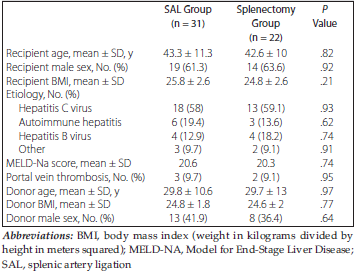
Table 1.Demographic and Preoperative Clinical Data in Patient Groups
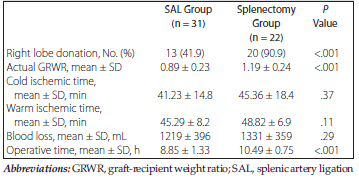
Table 2.Operative Data in Patient Groups
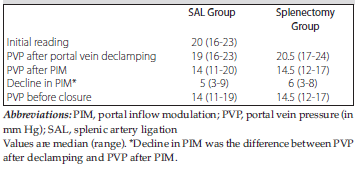
Table 3.Portal Vein Pressure Measurements in Patient Groups
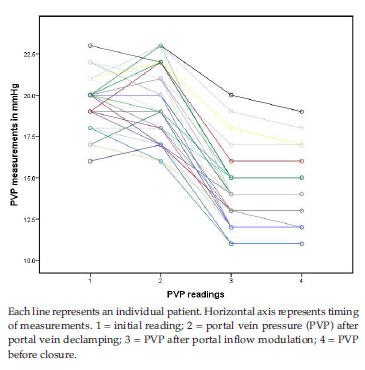
Figure 1.Effects of Portal Inflow Modulation on Portal Venous Pressure Measurements in Splenic Artery Ligation Group
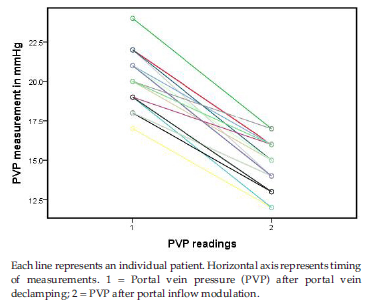
Figure 2.Effects of Portal Inflow Modulation on Portal Venous Pressure Measurements in Splenectomy Group
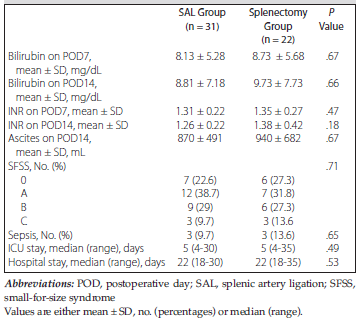
Table 4.Postoperative Outcomes