Volume: 21 Issue: 7 July 2023
FULL TEXT
Objectives: Pancreas transplant can have serious complications requiring salvage pancreatectomy, and surgical approaches should be carefully considered, with jejunal or ileal anastomoses most often employed. The jejunum may reduce gastrointestinal disturbance, whereas the ileum is more immunogenic. Proximal gastrointestinal anastomoses pose challenges with salvage pancreatectomy and creation of high-output stoma, often in the context of end-stage renal failure. Here, we compared outcomes between these techniques.
Materials and Methods: We retrospectively analyzed patient records of simultaneous pancreas and kidney transplants at a single center between 2013 and 2015, with follow-up to 2020.
Results: Our center performed 86 simultaneous pancreas and kidney transplants during the study period; 10 patients were excluded because of incomplete records of anastomosis type. Of included recipients, 59.2% were men (mean age 41.5 ± 8.4 y), 72.4% were donors after brain death, and 98.7% had received a first pancreas transplant. Forty-three simultaneous pancreas and kidney transplants were performed with ileal anastomosis and 33 with jejunal anastomosis. We found no significant differences in recipient or donor factors or immunosuppression regimen between anastomosis groups and no significant differences in overall patient, pancreas, or kidney graft survival or in gastrointestinal complications. Hospital length of stay was higher with ileal anastomosis (median 14 vs 19 days; P < .05), as was cold ischemic time (median 8:48 vs 9:31 hours; P < .05). Three patients required salvage pancre-atectomy and loop ileostomy formation with multiorgan support, prolonged intensive care unit stay, relaparotomy, and/or laparostomy. Conclusions: Long-term outcomes were comparable between our patient groups. Catastrophic complica-tions occur in a minority of cases, requiring salvage surgery. More complications occurred with ileal anastomosis, but this approach allows graft pancreatectomy and formation of loop ileostomy, avoiding a more proximal stoma in clinically unstable patients. Further studies are needed to examine the impact of enteric anastomosis site.
Key words : Anastomoses, Pancreas transplant, Pancreatectomy
Introduction
Pancreas transplant (PT) is the treatment of choice for patients with complicated type 1 diabetes mellitus.1 Successful PT can facilitate euglycemia, insulin independence, and stabilization or improvement of diabetic complications.2 Pancreas transplant is accepted as an established and effective method of treating type 1 diabetes mellitus for those with either end-stage diabetes complications, including nephropathy, or life-threatening conditions, such as hypoglycemic unawareness.3 Rate of mortality for patients on wait lists is 30% compared with 9% after transplant, with the predominant cause of mortality being cardiovascular disease.4 Improved post-transplant glycemic control is thought to facilitate an improvement in the cardiovascular risk profile.5,6
Pancreas transplant is mostly performed simul-taneously with kidney transplant (SPK), after a prior renal transplant kidney, or alone when renal function is preserved but glycemic control is challenging with hypoglycemic unawareness.3 Implantation techniques typically involve an arterial anastomosis that incorporates a Y-graft of the donor iliac bifurcation to join the donor superior mesenteric artery and splenic artery to native right iliac arteries or aorta, with the pancreatic head orientated cranially. Donor systemic venous drainage is most commonly achieved by portal venous anastomosis to native right iliac veins or inferior vena cava. Alternatively, the donor portal vein is anastomosed to the native portal venous system to potentially achieve a more physiological insulin bioavailability profile.7 In most cases, exocrine drainage is achieved via enteric anastomosis; bladder drainage is also used but is now less favored.8,9 Bladder drainage permitted monitoring of urinary amylase for graft dysfunction; however, this method is associated with urological complications, dehydration, and metabolic acidosis, leading to a deleterious impact on quality of life.10
The optimal site of exocrine drainage into the gut remains elusive. The exact location along the length of the small intestine is chosen according to the surgeons’ preferences and experience. Some centers advocate a duodenoduodenostomy or gastroduo-denostomy to facilitate endoscopic access,11,12 whereas most center use a jejunal or ileal anastomosis, either in continuity or with a Roux limb.13,14
Anatomic differences can influence transplant outcomes, including with regard to blood supply, immunogenicity, and lumen diameter. The jejunum has a more extensive and invested blood supply compared with the ileum.15 The ileum is regarded as an immune structure due to the presence of Peyer’s patches, which are found throughout the gut but are concentrated in the ileum, potentially increasing rejection risk. The jejunum also has a larger lumen diameter than the ileum.15 This may have medium and long-term implications for the incidence of intestinal obstruction and the side-effect profile. Of note, immunosuppressant regimens can cause gastrointestinal side effects.16,17 Mycophenolate and tacrolimus are associated with good long-term graft outcomes but high rates of gastrointestinal toxicity, which is typically managed by dosing alterations.18,19
Although there have been significant improve-ments in PT outcomes over the preceding decades, early technical complications have persisted in some patients, which can include intra-abdominal sepsis, vascular complications, or rejection. Devastating complications often lead to the requirement of graft pancreatectomy with the possible requirement of stoma formation. Closure of the enterotomy in this scenario is challenging given the contaminated environment in patients with critical disease with risks of further anastomotic dehiscence resulting from an unfavorable environment for healing. Consequently, the ileum may represent a preferable site of anastomosis for improved stoma management after salvage surgery, due to its more distal site, thereby minimizing the risk of high-output stoma sequelae and technical concerns.
Variance in practice persists with no supporting evidence to guide clinicians. Here, we aimed to analyze our center’s experience to support decision making in this context.
Materials and Methods
We performed a retrospective analysis of electronic data and patient records of SPK transplants at Manchester University Hospitals NHS Foundation Trust between 2013 and 2015. Follow-up was completed until 2020. All SPK transplants were included. Cases were excluded if details of exocrine anastomosis were not available. The primary outcome was overall patient survival; secondary outcomes included kidney and pancreas graft survival, frequency of gastrointestinal complications, and length of hospital stay.
We used IBM SPSS Statistics version 25 for statistical analyses. We used the Mann-Whitney U test, t test, chi-square test, and log-rank test for survival analysis as appropriate.
Results
Recipient and donor characteristics
During the study period, 88 SPK transplants were performed. Ten SPK transplants were excluded because of incomplete records of anastomosis type. Among included recipients, 59.2% were men with mean age of 41.5 ± 8.4 years and 98.7% (n = 75) had received their first PT. Most SPK transplants were performed with pancreas positioned “head up” (duodenum cranially) (51.3%, n = 40), with anastomosis to inferior vena cava (73.1%, n = 57) and common iliac artery (71.8%, n = 56). Fifty-eight patients (74.4%) received alemtuzumab and methylprednisolone at induction, and 64 patients (84.2%) received tacrolimus and mycophenolate mofetil for maintenance immunosuppression (Table 1).
Most donors were male (59.0%, n = 46), and 72.4% (n = 55) were donors after brain death. Mean age was 33.1 ± 13.6 years, and mean body mass index was 23.7 ± 2.7. Among donors, 41.0% (n = 32) of donors were nonsmokers and 9.0% (n = 7) had a history of alcohol excess. Median cold ischemic time was 9 hours and 23 minutes (interquartile range, 8 h, 6 min to 10 h, 35 min).
Five-year patient, pancreas, and kidney graft survival rates were 92.1%, 84.2%, and 89.5%, respectively. Median length of hospital stay was 17.0 days (interquartile range, 13.0-25.0).
Anastomoses and survival
Forty-three SPK transplants were performed with ileal anastomoses, and 33 SPK transplants were performed with jejunal anastomoses. We observed no significant differences in demographics of recipients, donors, or immunosuppression regimens between anastomosis groups. We observed significant dif-ferences in the venous anastomoses between groups and pancreatic positioning; cold ischemia time was also longer in the ileal group (Table 1).
We observed no significant differences in overall patient, pancreas, or kidney graft survival rates (all P > .05) (Figure 1, Figure 2, and Figure 3).
Gastrointestinal complications
We observed no significant differences in frequency of gastrointestinal complications (12 in the jejunal group vs 18 in the ilial group; P > .05). Diarrhea was the most frequently experienced complication in 15 cases, with 3 cases of constipation. Other reported gastrointestinal side effects included gastroesophageal reflux disease and dysphagia. Because of gastrointestinal complications, immuno-suppressive regimens were altered in 6 patients. One patient required reduced tacrolimus dose, 2 patients required reduced MMF dose, and 1 patient required MMF discontinuation, whereas the dose was split to a twice daily dose in 2 patients.
Three patients experienced pancreatic graft complications requiring salvage pancreatectomy due to 2 cases of anastomotic leak at exocrine drainage site, 1 with concomitant graft pancreatitis. The third case was due to severe gastrointestinal hemorrhage due to mycotic aneurysm formation. All 3 cases resulted in formation of loop ileostomy, after ileal anastomosis, multiple relaparotomies, and pro-longed critical care admissions, with 1 patient requiring long-term laparostomy and 2 fatalities in this group (Table 3).
Discussion
We found no differences in patient survival or pancreas or kidney graft survival between the 2 groups of anastomoses sites of enteric drainage. Both anastomotic options provided good results, with low numbers in both groups developing graft loss. This suggests that the location of enteric anastomosis had no effect on graft survival, although this should be interpreted with caution given the low numbers in each group and the risk of a type II error. Furthermore, we noted no differences in patient survival, which again should be interpreted with caution, given the overall high levels of 5-year survival after SPK procedures.
When assessed globally, we noted no difference in prevalence of gastrointestinal side effects. Few patients in either group required further inves-tigation or major intervention, suggesting mild symptoms, although severity was not recorded. Anecdotally, the jejunal approach has been favored because it is associated with fewer gastrointestinal side effects, which will not prompt alterations in immunosuppression posttransplant if thought to be the reason for this type of complication. In the follow-up period, our results suggested that, no matter the cause, the clinical picture was not severe enough to cause an alteration in the immunosup-pressive regimen in most cases.
Methods to mitigate risk should be considered when considering surgical techniques. Although outcomes for transplant recipients are improving, complications following PT can be catastrophic in the event of rejection, intra-abdominal sepsis, graft thrombosis, or pancreatitis. This issue was highlighted in this cohort of patients, with 3 SPK transplant recipients requiring pancreatectomy and stoma formation due to recurrent gross intra-abdominal sepsis.
Such sequelae are accompanied by severe clinical deterioration requiring prompt graft pancreatectomy and salvage surgery. The use of an ileal anastomosis facilitates fewer predicted side effects. We suggest that ileostomy is safer compared with jejunostomy in this scenario. In gastrointestinal surgery, jejunostomy is associated with multiple challenges, including possible requirements for parenteral nutrition and associated vascular complications, as well as high gastrointestinal fluid losses contributing to electrolyte disturbance alongside challenges with drug absorption.20,21 This is particularly pertinent in the context of simultaneous renal transplant where there may be concurrent electrolyte abnormalities and dialysis requirements with complex fluid balance issues, which will only be compounded by high-output stoma. The 3 patients who required pancreatectomy in our cohort had previous ileal anastomoses; thus, it is worth considering if the jejunal approach may be superior owing to improved blood supply, promoting a reduced risk of anastomotic leak. However, only 1 case was due to primary anastomotic leak, with the others emanating from graft pancreatitis and delayed mycotic aneurysm, which are unrelated to anatomic implantation site. There were also proportionally more patients in the ileal group in this cohort.
From analysis of our cohort, we suggest that the site of enteric anastomosis has no effect on graft or patient survival. However, as discussed, this needs to be considered in the context of the small sample size alongside the retrospective single-center study design. A larger population with prolonged follow-up may reveal significant differences between groups. In particular, the effects of the role of ileal lymphoid aggregations on immunogenicity over the longer term may be overlooked. We also acknowledge the lack of data on pretransplant gastrointestinal symptoms, as gastroparesis is often seen in this patient group.22 We also assessed gastrointestinal symptoms in a binary fashion with no qualitative assessment on quality of life. Finally, any differences in primary anastomotic leak rate should be robustly assessed with an appropriately powered study. A future randomized control trial with long-term follow-up could be used to investigate this.
Conclusions
Patient, pancreatic, and kidney graft survival rates over 5 years were comparable between ileal and jejunal enteric anastomoses in our cohort of SPK recipients. Prevalence of gastrointestinal side effects, patient survival, and hospital length of stay were also comparable. Gastrointestinal side effects resulted in alterations in immunosuppression in only a few cases. Although outcomes of SPK transplant continue to improve, catastrophic complications continue to occur in some patients, requiring salvage surgery. In our cohort, 3 patients had ileal anastomosis, but enteric exocrine drainage to ileum may allow greater surgical safety to facilitate graft pancreatectomy and formation of loop ileostomy, ameliorating consequ-ences of a more proximal stoma in a clinically unstable patient. Further powered studies are needed to examine anastomosis site and outcomes.
References:
- Kelly WD, Lillehei RC, Merkel FK, Idezuki Y, Goetz FC. Allotransplantation of the pancreas and duodenum along with the kidney in diabetic nephropathy. Surgery. 1967;61(6):827-837.
CrossRef - PubMed - Giannarelli R, Coppelli A, Sartini M, et al. Effects of pancreas-kidney transplantation on diabetic retinopathy. Transpl Int. 2005;18(5):619-622. doi:10.1111/j.1432-2277.2005.00108.x
CrossRef - PubMed - Dean PG, Kukla A, Stegall MD, Kudva YC. Pancreas transplantation. BMJ. 2017;357:j1321. doi:10.1136/bmj.j1321
CrossRef - PubMed - van Dellen D, Worthington J, Mitu-Pretorian OM, et al. Mortality in diabetes: pancreas transplantation is associated with significant survival benefit. Nephrol Dial Transplant. 2013;28(5):1315-1322. doi:10.1093/ndt/gfs613
CrossRef - PubMed - Montagud-Marrahi E, Molina-Andujar A, Pane A, et al. Impact of simultaneous pancreas-kidney transplantation on cardiovascular risk in patients with diabetes. Transplantation. 2022;106(1):158-166. doi:10.1097/TP.0000000000003710
CrossRef - PubMed - Jukema JW, Smets YF, van der Pijl JW, et al. Impact of simultaneous pancreas and kidney transplantation on progression of coronary atherosclerosis in patients with end-stage renal failure due to type 1 diabetes. Diabetes Care. 2002;25(5):906-911. doi:10.2337/diacare.25.5.906
CrossRef - PubMed - Diem P, Abid M, Redmon JB, Sutherland DE, Robertson RP. Systemic venous drainage of pancreas allografts as independent cause of hyperinsulinemia in type I diabetic recipients. Diabetes. 1990;39(5):534-540. doi:10.2337/diab.39.5.534
CrossRef - PubMed - Liong SY, Dixon RE, Chalmers N, Tavakoli A, Augustine T, O'Shea S. Complications following pancreatic transplantations: imaging features. Abdom Imaging. 2011;36(2):206-214. doi:10.1007/s00261-010-9632-6
CrossRef - PubMed - El-Hennawy H, Stratta RJ, Smith F. Exocrine drainage in vascularized pancreas transplantation in the new millennium. World J Transplant. 2016;6(2):255-271. doi:10.5500/wjt.v6.i2.255
CrossRef - PubMed - Gruessner RW. Recipient procedures. Transplant Pancreas. Springer-Verlag; 2004:150-178..
CrossRef - PubMed - Hummel R, Langer M, Wolters HH, Senninger N, Brockmann JG. Exocrine drainage into the duodenum: a novel technique for pancreas transplantation. Transpl Int. 2008;21(2):178-181. doi:10.1111/j.1432-2277.2007.00591.x
CrossRef - PubMed - Shokouh-Amiri H, Zakhary JM, Zibari GB. A novel technique of portal-endocrine and gastric-exocrine drainage in pancreatic transplantation. J Am Coll Surg. 2011;212(4):730-738; discussion 738-739. doi:10.1016/j.jamcollsurg.2010.12.045
CrossRef - PubMed - Amin I, Butler AJ, Defries G, et al. A single-centre experience of Roux-en-Y enteric drainage for pancreas transplantation. Transpl Int. 2017;30(4):410-419. doi:10.1111/tri.12920
CrossRef - PubMed - Lindahl JP, Horneland R, Nordheim E, et al. Outcomes in pancreas transplantation with exocrine drainage through a duodenoduodenostomy versus duodenojejunostomy. Am J Transplant. 2018;18(1):154-162. doi:10.1111/ajt.14420
CrossRef - PubMed - Standring S. Gray’s Anatomy. The Anatomical Basis of Clinical Practice. Elsevier Health Sciences; 2015.
CrossRef - PubMed - Mayer AD, Dmitrewski J, Squifflet JP, et al. Multicenter randomized trial comparing tacrolimus (FK506) and cyclosporine in the prevention of renal allograft rejection: a report of the European Tacrolimus Multicenter Renal Study Group. Transplantation. 1997;64(3):436-443. doi:10.1097/00007890-199708150-00012
CrossRef - PubMed - Pirsch JD, Miller J, Deierhoi MH, Vincenti F, Filo RS. A comparison of tacrolimus (FK506) and cyclosporine for immunosuppression after cadaveric renal transplantation. FK506 Kidney Transplant Study Group. Transplantation. 1997;63(7):977-983. doi:10.1097/00007890-199704150-00013
CrossRef - PubMed - Gruessner RW. Tacrolimus in pancreas transplantation: a multicenter analysis. Tacrolimus Pancreas Transplant Study Group. Clin Transplant. 1997;11(4):299-312.
CrossRef - PubMed - Davies NM, Grinyo J, Heading R, Maes B, Meier-Kriesche HU, Oellerich M. Gastrointestinal side effects of mycophenolic acid in renal transplant patients: a reappraisal. Nephrol Dial Transplant. 2007;22(9):2440-2448. doi:10.1093/ndt/gfm308
CrossRef - PubMed - Nightingale JMD. How to manage a high-output stoma. Frontline Gastroenterol. 2022;13(2):140-151. doi:10.1136/flgastro-2018-101108
CrossRef - PubMed - Lawinski M, Haraszczuk D, Gradowska A, Kostro JZ, Bzikowska A, Sobocki J. Strategies for early metabolic disturbances in patients with an end jejunostomy or end ileostomy. Experience from a specialized Home Parenteral Nutrition (HPN) center. Prz Gastroenterol. 2017;12(2):111-117. doi:10.5114/pg.2016.58599
CrossRef - PubMed - Kofod-Andersen K, Tarnow L. Prevalence of gastroparesis-related symptoms in an unselected cohort of patients with Type 1 diabetes. J Diabetes Complications. 2012;26(2):89-93. doi:10.1016/j.jdiacomp.2012.02.009
CrossRef - PubMed

Volume : 21
Issue : 7
Pages : 586 - 591
DOI : 10.6002/ect.2022.0342
From the 1Department of Renal and Pancreatic Transplantation, Manchester University Hospitals NHS Foundation Trust, Manchester, UK; and the 2Faculty of Biology, Medicine & Health, University of Manchester, Manchester, UK
Acknowledgements: The authors have not received any funding or grants in support of the presented research or for the preparation of this work and have no declarations of potential conflicts of interest.
Corresponding author: Daniel T. Doherty, 1Department of Renal and Pancreatic Transplantation, Manchester University Hospitals NHS Foundation Trust, Oxford Road, Manchester M13 9WL, UK
E-mail: daniel.doherty@postgrad.manchester.ac.uk
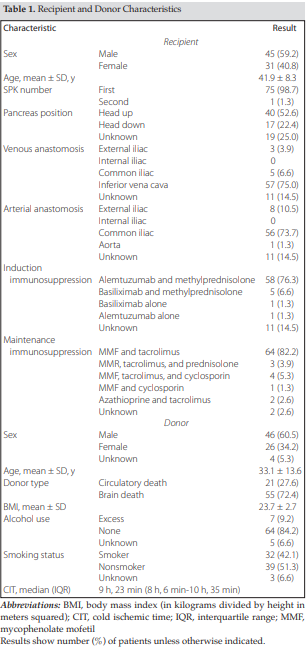
Table 1. Recipient and Donor Characteristics
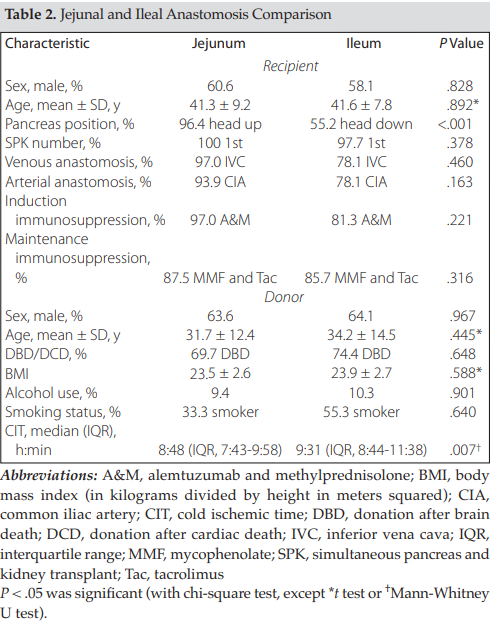
Table 2. Jejunal and Ileal Anastomosis Comparison

Table 3. Complications Requiring Stoma Formation
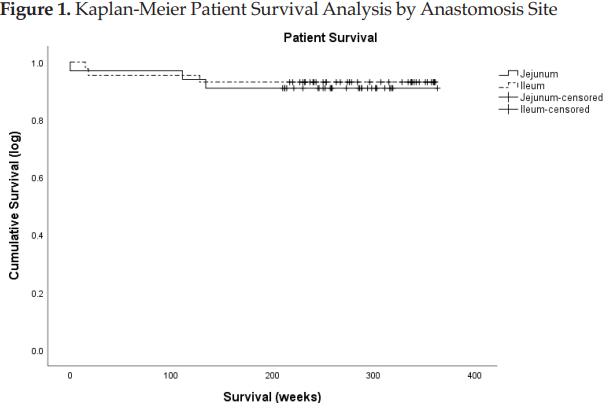
Figure 1. Kaplan-Meier Patient Survival Analysis by Anastomosis Site
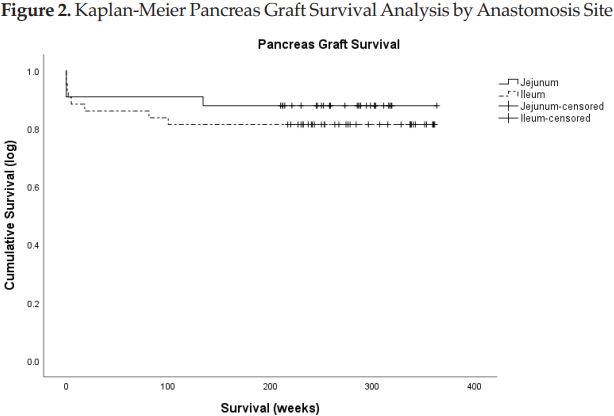
Figure 2. Kaplan-Meier Pancreas Graft Survival Analysis by Anastomosis Site
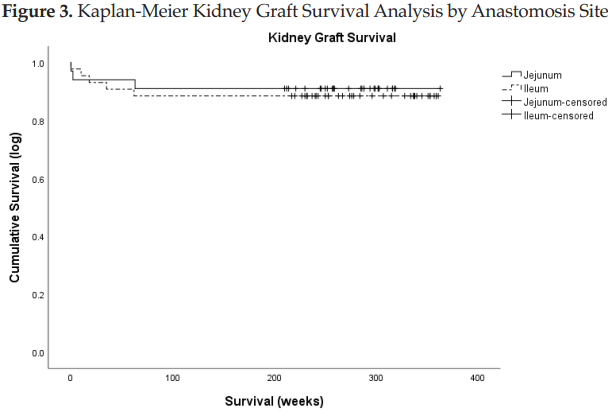
Figure 3. Kaplan-Meier Kidney Graft Survival Analysis by Anastomosis Site