Volume: 19 Issue: 4 April 2021
FULL TEXT
Abstract
Objectives: The number of elderly kidney transplant recipients is increasing, and age-tailored induction immunosuppression regimens are needed. We compared safety and efficacy of basiliximab versus thymoglobulin at various dosages.
Materials and Methods: Of 590 kidney transplants at our center from 2012 to 2019, 119 (20.1%) were for recipients over 65 years of age; 118 patients received deceased donor kidneys, and 1 received a related living donor kidney. We retrospectively reviewed medical records for demographics, baseline characteristics, donor characteristics, induction regimens, infectious complications, graft function, and patient survival.
Results: Patients were subdivided into the following
4 induction immunosuppression groups: basiliximab (n = 15, 12.6%), 3 mg/kg thymoglobulin (n = 8, 6.7%), 4.5 mg/kg thymoglobulin (n = 67, 56.3%), and 6 mg/kg thymoglobulin (n = 29, 24.4%). All patients received pulse doses of methylprednisolone followed by a prednisone taper. Other maintenance immunosuppression agents included tacrolimus and mycophenolic acid. Recipients in the basiliximab and 3 mg/kg thymoglobulin groups were older (median age >70 years; P < .001). The 4.5 and 6 mg/kg thymoglobulin groups had higher proportions of African American patients and patients with calculated panel reactive antibody over 20%. There were significantly fewer infectious complications in the basiliximab and
3 mg/kg thymoglobulin groups. Despite differences
in biopsy-proven acute rejection rates, estimated glomerular filtration rate and graft and patient survival rates at 1 year were similar across groups. All patients with biopsy-proven acute rejection were African American patients.
Conclusions: Kidney transplant in patients ≥65 years is safe and feasible. Changes in this unique population’s immune system warrant age-tailored regimens. We found that patients at low immunologic risk would benefit from basiliximab or thymoglobulin at 3 mg/kg. Regardless of calculated panel reactive antibodies, African American patients should be considered as high immunologic risk group for rejection, and higher thymoglobulin dosing should be considered.
Key words : Geriatric population, Immunosuppression, Renal transplant
Introduction
The number of kidney transplants in patients over 65 years old quadrupled from 4.2% in 1992 to 17.2% in 2012.1 Now, more than ever, understanding the risks and benefits of available induction immunosuppression therapies is critical for provision of comprehensive transplant care in this unique population. As the elderly kidney transplant recipients’ immune response varies from their younger counterparts (a result of immunosenescence), it is necessary to investigate the safety of the available induction therapy regimens in this vulnerable population. Presently, we are in unprecedented times where the severe acute respiratory syndrome coronavirus 2 (SARS-CoV-2) pandemic has emphasized further need for implementation of personalized induction immunosuppression regimens to reduce unwarranted infectious risks on balance with rejection risks.
Induction agents are used to prevent or delay the onset of acute rejection, reduce the severity of acute rejection, and allow for the delay in the therapeutic effect of maintenance immunosuppression regimens. Induction agents have proved to be superior to pulse-dose methylprednisolone when combined with standard maintenance regimens.2 The most common induction agent in use is rabbit antithymocyte globulin (Thymoglobulin), a T-cell-depleting agent that is administered at variable dosages based on patient immunologic risk factors. Alemtuzumab (Campath) is a recombinant monoclonal anti-CD52 antibody, another T-cell-depleting agent with restricted use because the availability of alemtuzumab is reliant on a distribution program. Basiliximab (Simulect) is a non-T-cell-depleting chimeric interleukin 2 inhibitor that is often used in kidney transplant recipients with low immunologic risk. Thymoglobulin has been shown to be more effective in risk reduction of early acute rejection than other therapies but has been associated with higher risk of infection, malignancy, and adverse hematologic effects.3
This is a single-center, retrospective study that examined different regimens for kidney transplant induction immunosuppression in elderly recipients (≥65 years old). We compared the incidences of rejection, infectious complications, early operative take-backs (within 7 days of transplant surgery), and graft and patient survival at 1 year after transplant.
Materials and Methods
Induction agents
We retrospectively reviewed medical records of all kidney transplants performed from 2012 to 2019. Patients ≥65 years of age were included in the study. Patients who had less than 1 year follow-up were excluded from the analysis. The patients were subdivided into the 4 groups based on the induction agent and dose regimen they had received.
According to center-specific protocols, patients were typically considered to have low immunologic risk if they were 70 years or older, not African American, frail, or with a history that included significant cardiovascular disease (arrhythmias, borderline ejection fraction less than 45%, or coronary artery disease), malignancy (any type including skin cancers), or significant thrombocytopenia (platelet count <100 000/mL). Patients with high immunologic risk were typically younger than 70 years of age, African American, had calculated panel reactive antibodies (cPRA) ≥20% or with a donor-specific antibody on crossmatch, or had a previous history of kidney transplant. Patients who were considered to have a low immunologic risk received basiliximab or 3 mg/kg thymoglobulin as induction therapy, whereas those who were considered to be at high risk received 6 mg/kg thymoglobulin. Patients 65 to 75 years of age who did not match the criteria for either low or high immunologic risk received 4.5 mg/kg thymoglobulin as induction. Basiliximab, 20 mg, was administered on postoperative day 0 (POD0) and POD4. In those who received thymoglobulin, the first dose of thymoglobulin was given intraoperatively on POD0, with a subsequent dose(s) of 1.5 mg/kg daily. Thymoglobulin doses were delayed if platelet counts were less than 50 000/mm3 or the absolute neutrophil count was less than 1000/mm3. Our center induction protocol restricted alemtuzumab to patients younger than 65 years of age. Additionally, a tapered regimen of methylprednisolone (500, 250, 125, and 60 mg) was given daily on POD0 through POD3 for all patients.
Maintenance immunosuppression
After completion of tapered regimen of methylprednisolone, all patients received 20 mg prednisone on POD4 with a taper of 5 mg every 2 to 4 weeks to a goal dose of 5 mg by 6 to 12 weeks. Other maintenance immunosuppression agents included 720 mg mycophenolic acid twice daily started on POD0 and maintained (unless there is a need to reduce the dosage or hold secondary to opportunistic infections, malignancy, or cytopenia concerns) and tacrolimus (target trough levels of 8-10 ng/mL in the first month, 7-9 ng/mL in the second month, 6-8 ng/mL in the third month, and 5-7 ng/mL thereafter). Patients are seen in clinic in the first month 2 to 3 times a week with blood draws and level checks, weekly in the second month, every 2 weeks in the third month, and thereafter monthly if stable.
End points
Demographics included recipient and donor kidney characteristics. Efficacy end points included delayed graft function (DGF, ie, the need for dialysis within 7 days of transplant), biopsy-proven acute rejection (BPAR), acute cellular rejection (ACR), or antibody-mediated rejection (AMR), which were diagnosed according to the Banff Classification of Renal Allograft Pathology by an independent nephropathologist, graft function as demonstrated by eGFR, graft survival, and patient survival at 1 year. Safety end points included incidence of early postoperative take-backs (within 7 days of transplant surgery), infectious complication, and malignancy. Infectious complications were defined as any recorded infections that patients had within 1 year of transplant. Infectious complications were identified by positive laboratory test values, cultures, and clinical documentation. Cytomegalovirus (CMV) and BK virus (BKV) were detected by plasma polymerase chain reaction or cytopathic and pathologic changes. Urinary tract infections (UTI) were defined as >100 000 colony forming units per milliliter on urine cultures in addition to documented symptoms in clinical assessment. Time from transplant to infection diagnosis was recorded.
Statistical analyses
Categorical variables are summarized as numbers and percentages. Continuous variables are summarized as median values. Descriptive statistics were analyzed using the Fisher exact chi-square test. We used the Kruskal-Wallis test for comparison of median values across groups, to account for nonnormal distribution. Statistical analyses were performed with SAS software (version 9.4).
Results
Baseline characteristics
A total of 590 kidney transplants were performed
at our center from 2012 to 2019. Of these patients,
143 (24%) were 65 years of age or older. Patients with at least 1 year follow-up after transplant (119 patients, 20%) were included in the analysis. Of these 119 patients, 1 patient received a related living donor kidney (transplanted from mother to daughter), and the remaining recipients received deceased donor kidneys. In this cohort, 15 patients (12.6%) received induction therapy with basiliximab, and 104 patients (87.4%) received induction therapy with thymoglobulin. Of the patients who received thymoglobulin, 8 patients (6.7%) received 3 mg/kg, 67 patients (56.3%) received 4.5 mg/kg, and 29 patients (24.4%) received 6 mg/kg.
Baseline characteristics of recipients and donors are shown in Table 1. Patients who received basiliximab and thymoglobulin at 3 mg/kg were significantly older (median age 72 and 71 years, respectively), predominantly male, not African American, and with median cPRA of 0%. The 4.5 and 6 mg/kg thymoglobulin groups had more African American recipients (P < .001) and more recipients with cPRA >20% (P < .001). The 6 mg/kg thymoglobulin group had a median cPRA of 22% (range, 0%-97%). Donor kidneys had median kidney donor profile index (KDPI) values ranging from 64.5% to 77.5%, terminal serum creatinine levels of 0.8 to 1.5 mg/dL, cold ischemia times of 17 to 20.1 hours, and warm ischemia times of 0.48 to 0.5 hours. These findings were not significantly different between groups. The rate of donation after cardiac death was significantly higher in the 3 and 4.5 mg/kg thymoglobulin groups (25% and 35.8%, respectively; P < .001).
Efficacy end points
Posttransplant outcomes are described in Table 2. Incidence of DGF was 33.3% in the basiliximab group and 37.5% in the 3 mg/kg thymoglobulin group. These incidence rates were significantly higher compared with those in the 4.5 mg/kg thymoglobulin group (11.9%) and in the 6 mg/kg thymoglobulin group (17.2%) (P = .001). Incidence of BPAR is described in Table 2. The basiliximab group experienced a BPAR rate of 6.67% (n = 1; ACR
Banff 2). An 80-year-old African American male with cPRA of 0% experienced DGF and was diagnosed with ACR at 19 days posttransplant. He was on belatacept initially but was switched to tacrolimus maintenance after diagnosis. The 3 mg/kg thymoglobulin group experienced a rejection rate of 12.5% (n = 1; ACR Banff 1A). This event occurred in a 67-year-old African American male with cPRA of 4%, on second week postoperatively. He was on tacrolimus and had achieved therapeutic levels by POD7. The 4.5 mg/kg thymoglobulin group experienced no rejections. The 6 mg/kg thymoglobulin group experienced a BPAR rate of 6.9% (n = 2; ACR Banff 1A and AMR); both of these patients were 68-year-old African American females with cPRA of 80% and 97%, respectively. The patient who was diagnosed with ACR had experienced this 6 months after her transplant date and achieved therapeutic tacrolimus by POD9. The patient diagnosed with AMR had a donor-specific antibody at baseline, achieved therapeutic tacrolimus level on POD14, and developed the rejection on POD19.
At 1 year posttransplant, the median eGFR values were 50, 58.5, 58, and 60 mL/min/1.73 m2 (P = .461) for the basiliximab and 3, 4.5, and 6 mg/kg thymoglobulin groups, respectively. The basiliximab and 3 mg/kg thymoglobulin groups had 100% rates at 1 year for patient and graft survival. The 4.5 and 6 mg/kg thymoglobulin groups had 1 patient death each, which resulted in 98.5% and 96.6% patient and graft survival rates, respectively. Causes of death were myocardial infarction and squamous cancer of the mandible, respectively. There was no statistically significant difference in survival rates among groups (P = .051).
Safety end points
The basiliximab and 3 mg/kg thymoglobulin groups had no operative take-backs, whereas the 4.5 and
6 mg/kg thymoglobulin groups had a significantly higher rate of return to the operating room within the first week of transplant (3% and 20.7%; P = .001). The recorded indications were all cases of retroperitoneal bleeding. Review of infectious complications showed that the 3 most common infections were CMV, BKV, and UTI. Patients in the 4.5 mg/kg thymoglobulin group and the 6 mg/kg thymoglobulin group experienced a higher rate of infectious complications than the basiliximab and 3 mg/kg thymoglobulin groups
(P = .001). The basiliximab group experienced an infection rate of 66.67% (n = 10), with 30% due to UTI. The 3 mg/kg thymoglobulin group experienced an infection rate of 50% (n = 4), with 25% due to BKV. The 4.5 mg/kg thymoglobulin group experienced an infection rate of 83.6% (n = 56), with 46.3% due to UTI. The 6 mg/kg thymoglobulin group experienced an infection rate of 86.2% (n = 25), with 62.1% due to UTI.
Three malignancies occurred in the study cohort. Two patients (2.9%) in the 4.5 mg/kg thymoglobulin group were diagnosed with cancer, one with acute myeloid leukemia and other with squamous cell carcinoma of the mandible. A patient who received
6 mg/kg thymoglobulin (3.4%) was diagnosed with meningioma within 1 year posttransplant.
Discussion
More than 20% of the kidney transplant recipients at our center were elderly (≥65 years old) with 32.9% of these patients over the age of 70 years. These numbers reflect the increasing rate of transplant in the elderly population.4 This significant increase compels our transplant community to address the needs of this unique population. Immunosenescence describes the elderly patients’ altered ability to mount alloimmune responses. Aging leads to a change in the subsets of lymphocytes as well as a lower ability of T and NK cells to proliferate in response to mitotic stimuli. Thymic involution causes a shift from naive CCR7+/CD45RA+ cells to effector memory CCR7-/CD45RA- cells and leads to lower
T cell production.5 It has been demonstrated that certain phenotypic changes occur with aging, such as lower CD28 expression on CD4+ and CD8+ T cells. This lower expression has been shown to correlate with reduced acute rejection rate after kidney transplant.6 Historically, there have been no universal recommendations for induction therapy in elderly patients, and strategies vary across transplant centers. Now, more than ever, with the SARS-CoV-2 pandemic in our midst, we need to reexamine the standard regimens to determine those that are safe for this population, because elderly patients are more likely to succumb to infection but less likely to experience acute rejection.7 In our single-center experience, the elderly population had an impressive overall 98.8% 1-year graft survival rate. These elderly patients were often offered “marginal kidneys.” Despite donor kidneys with higher KDPI values, median eGFR values at 1 year in all groups were
50 to 60 mL/min/1.73 m2. Previously, Haberal and colleagues reported robust experiences with satisfactory outcomes when transplanting kidneys from elderly living donors. Despite the donor age of 60 to 76 years, the authors observed 97% patient survival rate at 1 year and 85.29% graft survival rate at 1 year.8,9 Our data support the substantial evidence of the survival benefit of transplant over dialysis in the elderly population,10 who have a death rate that is 2 times higher on dialysis.11
Thymoglobulin is indicated for kidney transplant induction at a dose of 1.5 mg/kg/d for 4 to 7 days. Our institutional protocol generally requires 4.5 to 6 mg/kg total thymoglobulin (over 3-4 days) in the nonelderly population. Other centers have investigated the use of thymoglobulin at even lower dosing. Laftavi and colleagues performed a retrospective study of 269 patients (cPRA <30%) on triple maintenance immunosuppression and showed that low-dose thymoglobulin (3-5 mg/kg total) was associated with a lower rate of acute rejection in the living donor group compared with patients who received basiliximab.12 Patel and colleagues compared the use of a single dose of 1.5 mg/kg thymoglobulin versus basiliximab induction in a nonelderly living donor recipient population. The study found 1-year graft function was improved and 1-year patient survival was improved in the thymoglobulin group, and there were lower incidence rates of BPAR and infectious complications compared with the basiliximab group.13 Chen and colleagues retrospectively compared 3 mg/kg thymoglobulin with basiliximab and noted that, in the short-term, the thymoglobulin group had statistically significant lower incidence rates of DGF, acute rejection, and chronic rejection, but there were no statistically significant differences in long-term outcomes. Of note, CMV, leukopenia, and thrombocytopenia rates were significantly higher in the thymoglobulin group.14 Yang and colleagues showed that low-dose thymoglobulin (2.5 mg/kg) has a similar BPAR to 6 mg/kg thymoglobulin (17.9% vs 16.7%, respectively) but with a statistically significant lower incidence of infection (10.3% versus 30%, respectively).15 In our experience, the basiliximab and 3 mg/kg thymoglobulin groups were comparable in terms of patient demographics and outcomes. For elderly patients, especially those who are older than 70 years, with low cPRA, either agent may be an appropriate choice for induction when balanced with the risks of rejection and infectious complications.
Moreover, it is also critical to determine other characteristics of patients who are considered low versus high immunologic risk for selection of appropriate induction regimens. We found that, of the 2 patients in the basiliximab and 3 mg/kg thymoglobulin groups that experienced BPAR, both patients were African American. Both patients had a low cPRA, were ultimately considered “low immunologic risk,” and subsequently experienced moderate rejection episodes. The other kidney recipients in our study with BPAR were also African American. Other studies have demonstrated that African American ethnicity is an independent risk factor for rejection.16,17 Our study also supports the consideration of African American ethnicity as a high immunologic risk factor for selection of an appropriate induction regimen and that higher dosages of thymoglobulin may be warranted to reduce risk of BPAR.
In our study, despite similar donor kidney characteristics, we observed lower rates of DGF in the thymoglobulin 4.5 and 6 mg/kg groups. This finding is supported by other studies that reported lower rates of DGF with use of thymoglobulin as induction versus basiliximab. Lee and colleagues discussed the potential protective effect of thymoglobulin in kidneys with Acute Kidney Injury Network scores of 1 and 2.18 However, Butler and Hayde reported no association between thymoglobulin and DGF.19 As DGF rates can be confounded by other variables, such as machine perfusion, we cannot directly attribute higher risk of DGF to a particular induction agent.
In our study, there was a statistically significant increase in operative take-backs associated with more aggressive induction immunosuppression use. A contributing risk factor could potentially be dose-related thrombocytopenia with thymoglobulin. However, this was not extensively investigated in our study and may be confounded by other factors such as baseline thrombocytopenia, use of anti-platelet therapies pretransplant, and initiation of anticoagulation posttransplant. Among the elderly population, in addition to cardiovascular events, a major cause of death is incidence of infectious complications.20 The infectious complication risk in our study increased with higher cumulative dosages of thymoglobulin. Urinary tract infection and CMV infection were the most commonly observed infections in our cohorts. Despite this, the rates of patient survival at 1 year were similar across all groups.
Our center does not use alemtuzumab in patients over 65 years of age because of lack of access, and so we did not evaluate this agent in our study. Gill and colleagues reported that alemtuzumab use was associated with a higher risk of acute rejection, death, and all-cause graft loss in patients over 60 years old.21 Hurst and colleagues further identified a higher risk of graft loss and death for patients who received induction therapy with alemtuzumab compared with thymoglobulin.22 However, Yakubu and colleagues found similar outcomes in elderly patients who received alemtuzumab and basiliximab inductions.23 Regardless, alemtuzumab use is currently restricted to institutions with an established inventory for transplant induction with the Campath Distribution Program.
Our study is retrospective and subject to several limitations, including small sample size and incomplete data reporting. Multiple factors may affect BPAR and graft/patient outcomes such as maintenance immunosuppression therapies and noncompliance/adherence, and these factors were not thoroughly investigated in our study. A prospective randomized trial to examine different induction agents and dosages in this patient population is warranted.
Conclusions
Kidney transplant in patients ≥65 years of age is safe and feasible. Patients with low immunologic risk would benefit from basiliximab or thymoglobulin at 3 mg/kg. Regardless of cPRA level, African American patients should be considered as high immunologic risk group for rejection, and therefore higher thymoglobulin dosing should be considered.
References:
- Sorensen SS. Rates of renal transplantations in the elderly: data from Europe and the US. Transplant Rev (Orlando). 2015;29(4):193-196. doi:10.1016/j.trre.2015.04.005
CrossRef - PubMed - Shapiro R, Young JB, Milford EL, Trotter JF, Bustami RT, Leichtman AB. Immunosuppression: evolution in practice and trends, 1993-2003. Am J Transplant. 2005;5(4 Pt 2):874-886. doi:10.1111/j.1600-6135.2005.00833.x
CrossRef - PubMed - Webster AC, Ruster LP, McGee R, et al. Interleukin 2 receptor antagonists for kidney transplant recipients. Cochrane Database Syst Rev. 2010(1):CD003897. doi:10.1002/14651858.CD003897.pub3
CrossRef - PubMed - Tso PL. Access to renal transplantation for the elderly in the face of new allocation policy: a review of contemporary perspectives on “older” issues. Transplant Rev (Orlando). 2014;28(1):6-14. doi:10.1016/j.trre.2013.10.002
CrossRef - PubMed - Koch S, Larbi A, Derhovanessian E, Ozcelik D, Naumova E, Pawelec G. Multiparameter flow cytometric analysis of CD4 and CD8 T cell subsets in young and old people. Immun Ageing. 2008;5:6. doi:10.1186/1742-4933-5-6
CrossRef - PubMed - Seyda M, Quante M, Uehara H, Slegtenhorst BR, Elkhal A, Tullius SG. Immunosenescence in renal transplantation: a changing balance of innate and adaptive immunity. Curr Opin Organ Transplant. 2015;20(4):417-423. doi:10.1097/MOT.0000000000000210
CrossRef - PubMed - Tullius SG, Tran H, Guleria I, Malek SK, Tilney NL, Milford E. The combination of donor and recipient age is critical in determining host immunoresponsiveness and renal transplant outcome. Ann Surg. 2010;252(4):662-674. doi:10.1097/SLA.0b013e3181f65c7d
CrossRef - PubMed - Haberal M, Sert S, Altunkan S, Gulay H, Hamaloglu E, Bulut O. Kidney transplantation from elderly living donors. Int J Artif Organs. 1991;14(6):335-337.
CrossRef - PubMed - Haberal M, Gulay H, Koc M, Guven S, Karamehmetoglu M, Hamaloglu E. Kidney transplantation from aged donors. Transplant Proc. 1991;23(5):2624-2625.
CrossRef - PubMed - Rao PS, Merion RM, Ashby VB, Port FK, Wolfe RA, Kayler LK. Renal transplantation in elderly patients older than 70 years of age: results from the Scientific Registry of Transplant Recipients. Transplantation. 2007;83(8):1069-1074. doi:10.1097/01.tp.0000259621.56861.31
CrossRef - PubMed - Maggiore U, Abramowicz D, Budde K. Renal transplantation in the elderly. Transplant Rev (Orlando). 2015;29(4):191-192. doi:10.1016/j.trre.2015.09.003
CrossRef - PubMed - Laftavi MR, Alnimri M, Weber-Shrikant E, et al. Low-dose rabbit antithymocyte globulin versus basiliximab induction therapy in low-risk renal transplant recipients: 8-year follow-up. Transplant Proc. 2011;43(2):458-461. doi:10.1016/j.transproceed.2011.01.035
CrossRef - PubMed - Patel HV, Kute VB, Vanikar AV, et al. Low-dose rabbit anti-thymoglobin globulin versus basiliximab for induction therapy in kidney transplantation. Saudi J Kidney Dis Transpl. 2014;25(4):819-822. doi:10.4103/1319-2442.135057
CrossRef - PubMed - Chen G, Gu J, Qiu J, et al. Efficacy and safety of thymoglobulin and basiliximab in kidney transplant patients at high risk for acute rejection and delayed graft function. Exp Clin Transplant. 2013;11(4):310-314. doi:10.6002/ect.2012.0103
CrossRef - PubMed - Yang JW, Wang JN, Men TY, et al. Comparison of clinical outcome of low-dose and high-dose rabbit antithymocyte globulin induction therapy in renal transplantation: a single-center experience. Ann Transplant. 2014;19:277-282. doi:10.12659/AOT.890069
CrossRef - PubMed - Taber DJ, Egede LE, Baliga PK. Outcome disparities between African Americans and Caucasians in contemporary kidney transplant recipients. Am J Surg. 2017;213(4):666-672. doi:10.1016/j.amjsurg.2016.11.024
CrossRef - PubMed - Foster CE 3rd, Philosophe B, Schweitzer EJ, et al. A decade of experience with renal transplantation in African-Americans. Ann Surg. 2002;236(6):794-804; discussion 804-805. doi:10.1097/00000658-200212000-00012
CrossRef - PubMed - Lee CH, Gwon JG, Jung CW. Effectiveness of thymoglobulin induction therapy in kidney transplant from deceased donor with mild to moderate acute kidney injury. Transplant Proc. 2019;51(8):2611-2614. doi:10.1016/j.transproceed.2019.02.061
CrossRef - PubMed - Butler T, Hayde N. Impact of induction therapy on delayed graft function following kidney transplantation in mated kidneys. Transplant Proc. 2017;49(8):1739-1742. doi:10.1016/j.transproceed.2017.06.032
CrossRef - PubMed - Awan AA, Niu J, Pan JS, Erickson KF, Mandayam S, Winkelmayer WC, et al. Trends in the causes of death among kidney transplant recipients in the United States (1996-2014). Am J Nephrol. 2018;48(6):472-481. doi:10.1159/000495081
CrossRef - PubMed - Gill J, Sampaio M, Gill JS, et al. Induction immunosuppressive therapy in the elderly kidney transplant recipient in the United States. Clin J Am Soc Nephrol. 2011;6(5):1168-1178. doi:10.2215/CJN.07540810
CrossRef - PubMed - Hurst FP, Altieri M, Nee R, Agodoa LY, Abbott KC, Jindal RM. Poor outcomes in elderly kidney transplant recipients receiving alemtuzumab induction. Am J Nephrol. 2011;34(6):534-541. doi:10.1159/000334092
CrossRef - PubMed - Yakubu I, Ravichandran B, Sparkes T, Barth RN, Haririan A, Masters B. Comparison of alemtuzumab versus basiliximab induction therapy in elderly kidney transplant recipients: a single-center experience. J Pharm Pract. 2021;34(2):199-206. doi:10.1177/0897190019850934
CrossRef - PubMed

Volume : 19
Issue : 4
Pages : 297 - 303
DOI : 10.6002/ect.2020.0434
From the 1Medical City Fort Worth Transplant Institute, Fort Worth, Texas, USA; and the 2Tarrant Nephrology Associates/Premier Physicians Group Health, Fort Worth, Texas, USA
Acknowledgements: We thank Nirali Shah (PPD Pharmaceuticals). The authors have not received any funding or grants in support of the presented research or for the preparation of this work and have no declarations of potential conflicts of interest
Corresponding author: Amanda El-Hag, 909 Ninth Avenue, Suite 300, Fort Worth, TX 76104, USA
E-mail: amanda.elhag@outlook.com
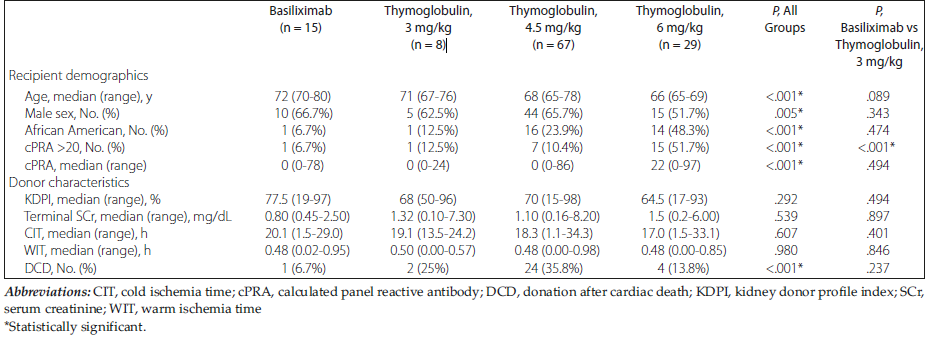
Table 1. Baseline Characteristics
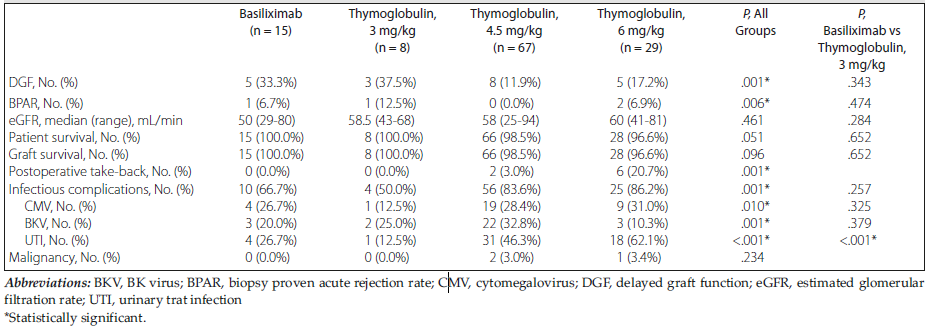
Table 2. Posttransplant Outcomes