Volume: 24 Issue: 7 July 2026
FULL TEXT
Rabbit Anti-Thymocyte Globulin Versus Basiliximab in Spousal Kidney Transplant: Early Immunological and Clinical Outcomes
Objectives: Spousal living donor kidney transplant is commonly performed; however, the optimal induction immunosuppression strategy in recipients with low immunological risk remains unclear. We compared the early clinical and immunological outcomes of low-dose rabbit anti-thymocyte globulin and basiliximab in low-risk spousal kidney transplant recipients.
Materials and Methods: We retrospectively analyzed 43 recipients with low immunological risk who underwent spousal living donor kidney transplant and received induction therapy with either rabbit anti-thymocyte globulin (n = 20) or basiliximab (n = 23). Low immunological risk was defined as first-time transplant with negative panel reactive antibody and negative complement-dependent cytotoxicity crossmatch. Primary endpoints were early graft function, as assessed by serum creatinine trends, and biopsy-proven acute rejection within the first 2 postoperative months. Secondary endpoints included perioperative lymphocyte dynamics and documented infections, including cytomegalovirus and urinary tract infections.
Results: Peripheral blood lymphocyte counts were significantly lower in the group treated with rabbit anti-thymocyte globulin on postoperative day 1 and day 7 versus the basiliximab-treated group (P < .001). In contrast, no significant differences were observed between groups in early graft function trajectories (P = .71) or the incidence of biopsy-proven acute rejection (rabbit anti-thymocyte globulin, 3 of 20; vs basiliximab, 2 of 23; P > .05). All documented urinary tract infections (n = 3) and the single cytomegalovirus infection occurred in the group treated with rabbit anti-thymocyte globulin; however, these differences were not statistically significant (P > .05).
Conclusions: In spousal kidney transplant recipients with low immunological risk, low-dose rabbit anti-thymocyte globulin (4.5 mg/kg) and basiliximab provide comparable early graft function and similar protection against acute rejection. Although rabbit anti-thymocyte globulin induces more pronounced lymphocyte depletion, this observation does not translate into superior early clinical outcomes in this patient population.
Key words : Induction immunosuppression, Kidney transplantation, Kidney transplant rejection, Renal allograft outcomes
Introduction
Kidney transplant is the most effective treatment modality for patients with end-stage renal disease, providing significant improvements in both survival and quality of life.1 Nevertheless, immunological rejection remains a leading cause of early and late graft loss after transplant. Prevention of acute rejection is of critical importance, particularly for preservation of early postoperative graft function and improvement of long-term transplant outcomes.2 Therefore, induction immunosuppression aimed to suppress the post-transplant immune response has become a standard component of kidney transplant protocols.3
Among living donor kidney transplants, spousal transplants represent a frequently treated subgroup in clinical practice. Although spousal transplants are theoretically associated with a higher potential for human leukocyte antigen mismatches due to their nonrelated donor status, contemporary practice has demonstrated favorable short-term and long-term outcomes in carefully selected recipients with low immunological risk, as assessed via comprehensive immunological screening.4 Nevertheless, immuno-logical factors such as prior alloantigen exposure and a history of pregnancy in recipients require careful consideration for the selection of an appropriate induction immunosuppression strategy in spousal transplants.
The most commonly used agents for induction immunosuppression include basiliximab, an interleukin-2 receptor antagonist, and rabbit anti-thymocyte globulin (r-ATG), which induces T-cell depletion. Basiliximab is widely preferred in patients with low immunological risk due to its selective mechanism of action and favorable safety profile. In contrast, r-ATG provides more potent and rapid T-cell suppression with the potential to reduce rejection rates; however, r-ATG may be associated with deeper lymphopenia and an increased risk of infections, particularly cytomegalovirus (CMV) infection, necessitating more cautious use.3,5,6
Although the efficacy and safety of r-ATG and basiliximab have been compared in numerous studies across different patient populations, real-world data focusing specifically on spousal living donor kidney transplants remain limited. In particular, studies simultaneously evaluating early biochemical graft function, peripheral lymphocyte dynamics, biopsy-proven acute rejection (BPAR), and CMV infection in low immunological risk spousal transplant recipients are scarce.
In this study, we aimed to compare the clinical and immunological outcomes of patients with low immunological risk who underwent spousal living donor kidney transplant at our center and received either r-ATG or basiliximab as induction immuno-suppression.
Materials and Methods
Study design
This single-center, retrospective, observational cohort study was approved by the Ethics Committee of Başkent University Faculty of Medicine and conducted in accordance with the principles of the Declaration of Helsinki (project No. DA 26/132). Patients who underwent spousal living donor kidney transplant at our center were retrospectively screened.
The study focused on early postoperative outcomes, and all analyses were performed using data from patients with at least 2 months of complete posttransplant follow-up. To assess early graft function, serum creatinine levels were recorded at regular intervals during the first 2 months after transplant. Any deviation from the expected decline in creatinine levels or an increase in serum creatinine was evaluated clinically for possible rejection.
To evaluate the early immunological effects of induction immunosuppression, peripheral blood lymphocyte counts were measured preoperatively and on postoperative day 1 and postoperative day 7. Absolute values and temporal changes across these time points were analyzed.
During the first 2 months after transplant, kidney biopsy was performed in patients who developed clinical and/or laboratory findings suggestive of rejection. Rejection was diagnosed based on histo-pathology, and biopsy specimens were reported according to the Banff classification. Acute cellular rejection and antibody-mediated rejection were recorded separately. Treatments administered for rejection episodes, including high-dose corticosteroids, intravenous immunoglobulin, rituximab, and/or plasmapheresis, were documented.
Inclusion and exclusion criteria
All recipients included in the study underwent spousal living donor kidney transplants. Demographic and clinical data of both recipients and donors were obtained from electronic hospital records.
Patients who received r-ATG or basiliximab as induction immunosuppression and had complete early follow-up data for at least 2 months after transplant were included in the study.
In this study, low immunological risk was defined as first-time kidney transplant, negative panel reactive antibody testing, and a negative comple-ment-dependent cytotoxicity crossmatch test.
Induction therapy
The r-ATG was administered intravenously on the day of transplant (day 0) and on postoperative day 2 and day 4, with a planned total cumulative dose of 4.5 mg/kg. Basiliximab was administered intra-venously according to the standard protocol at a dose of 20 mg on day 0 and postoperative day 4.
All patients received standard maintenance immunosuppression in addition to induction therapy. Maintenance immunosuppression consisted of a combination of calcineurin inhibitors (tacrolimus or cyclosporine), mycophenolate mofetil, and corticosteroids.
Cytomegalovirus and urinary tract infections
Documented CMV infections and urinary tract infections occurring during the posttransplant period were evaluated separately. All patients received oral valganciclovir prophylaxis for the first 90 days after transplant.
The diagnosis of CMV infection was based on the detection of CMV DNAemia by polymerase chain reaction (ie, polymeraus chain reaction in the presence of compatible clinical findings). Urinary tract infection was diagnosed based on clinical findings accompanied by positive and clinically significant results of a urine culture.
Outcome measures
The primary endpoints of the study were early graft function, assessed by serum creatinine trends, and the presence of BPAR. Secondary endpoints included documented CMV infection and urinary tract infections during the early posttransplant period.
Statistical analyses
As this was a retrospective study, no a priori sample size or power calculation was performed. All eligible patients who underwent spousal living donor kidney transplant within the specified study period and met the inclusion criteria were included in the analysis. We retrospectively data collected from hospital records and transferred the data to a Microsoft Excel spreadsheet prior to analysis. We used GraphPad Prism and SPSS software (version 27; IBM) for all statistical analyses.
Continuous variables were summarized using descriptive statistics as appropriate, and categorical variables were presented as frequencies and per-centages. Longitudinal postoperative creatinine measurements and perioperative lymphocyte counts were analyzed using a mixed-effects model (restricted maximum likelihood) to account for repeated measurements within individuals.
Comparisons between groups were performed using the Fisher exact test for categorical variables and the Mann-Whitney U test for continuous variables. For repeated-measures outcomes, the Sidak multiple comparisons test was applied for between-group comparisons at individual time points when ap-propriate. All statistical tests were 2-sided tests, and P < .05 was considered statistically significant.
Results
From October 2021 to July 2025, retrospective analyses showed 49 patients who underwent spousal living donor kidney transplant. Six patients were excluded from our study due to missing laboratory data in the archive records. Consequently, a total of 43 patients were included in the final analysis.
Among the included patients, 20 received r-ATG and 23 received basiliximab as induction immuno-suppression. Baseline recipient and donor demog-raphic characteristics are summarized in Table 1. No significant differences were observed between the r-ATG and basiliximab groups with respect to age, sex, or the number of human leukocyte antigen mismatches (all comparisons P > .05).
Perioperative lymphocyte dynamics
Peripheral blood lymphocyte counts demonstrated a significant change across perioperative time points (preoperative, postoperative day 1, and posto-perative day 7) (P = .0087). In addition, a significant overall treatment effect was observed, with lymp-hocyte counts consistently lower in the r-ATG group versus the basiliximab group across all time points (P = .0016).
In Sidak-adjusted comparisons at individual time points, lymphocyte counts were significantly higher in the basiliximab group on postoperative day 1 than in the r-ATG group (mean difference, 538.6; 95% CI, 318.2-759.1; P < .001). Similarly, lymphocyte counts on postoperative day 7 remained significantly higher in the basiliximab group (mean difference, 797.5; 95% CI, 303.7-1291; P < .001).
The time-by-treatment interaction was not statistically significant (P = .7604), indicating that although lymphocyte levels differed between induc-tion strategies, the temporal pattern of change during the early postoperative period did not differ signi-ficantly between groups.
Early graft function
Serum creatinine levels changed significantly over time during the postoperative period (P < .001). However, no significant overall treatment effect was observed between the r-ATG and basiliximab groups (P = .71). In addition, the time-by-treatment interac-tion was not significant (P = .90). These findings indicate that early postoperative creatinine trajec-tories were similar between the 2 induction strategies (Figure 1).
Rejection and clinical outcomes
During the follow-up period, a total of 5 patients developed BPAR. Two rejection episodes occurred in the basiliximab group, and 3 rejection episodes occurred in the r-ATG group (Table 2).
Treatment of rejection episodes included high-dose corticosteroids for cellular rejection and additional immunomodulatory therapies (intravenous immuno-globulin, rituximab, and/or plasmapheresis) in cases of antibody-mediated rejection. There was no signi-ficant difference in rejection rates between the r-ATG and basiliximab groups (P > .05).
Cytomegalovirus infection and urinary tract infection
During the posttransplant follow-up period, docu-mented CMV infection was observed in only 1 patient, who belonged to the r-ATG group. No CMV infection was detected in the basiliximab group. The difference between groups with respect to CMV infection was not significant (P > .05).
Documented urinary tract infections were observed exclusively in the r-ATG group (3 of 20), whereas no urinary tract infections were detected in the basiliximab group (0 of 23). However, this difference was not significant (P > .05).
Discussion
The main findings of the present study demonstrate that induction with r-ATG resulted in a more pro-nounced suppression of peripheral blood lymphocyte counts versus with basiliximab. However, no signi-ficant differences were observed between the 2 induc-tion strategies with respect to early graft function, BPAR, or early posttransplant complications.
The principal advantage of r-ATG in induction immunosuppression lies in its rapid and potent T-cell-depleting effect. This biologic property has been well documented in previous studies and was clearly reflected in our cohort by the marked and sustained reduction in lymphocyte counts on postoperative day 1 and day 7 in the r-ATG group.7 In contrast, the more limited degree of lymphocyte suppression observed in the basiliximab group is consistent with its selective mechanism of action as an interleukin-2 receptor antagonist.8 These findings indicate that the immunological effects of the 2 induction agents are readily distinguishable during the early postoperative period.
With regard to rejection outcomes, BPAR was observed in both groups, without a significant dif-ference between r-ATG treatment and basiliximab treatment. The occurrence of 3 rejection episodes in the r-ATG group and 2 rejection episodes in the basiliximab group suggests that, in spousal living donor kidney transplant recipients with low immunological risk, both induction strategies provide comparable clinical efficacy to prevent early acute rejection. These results are in line with previous reports that have demonstrated similar outcomes between low-dose r-ATG treatment and basiliximab treatment in comparable patient populations, including the studies by Martinez and colleagues and Masset and colleagues.6,9
Early graft function, assessed by postoperative serum creatinine trends, showed the expected impro-vement over time in both groups. The absence of a significant difference in creatinine trajectories between r-ATG and basiliximab suggests that, in recipients with low immunological risk, the choice of induction agent may not have a decisive effect on early graft function. When interpreted alongside the similar rejection rates, these findings support the notion that both agents can provide adequate im-munological protection when used in appropriately selected patients. Comparable observations have also been reported in previous real-world and cohort studies.6,9
Only 1 case of CMV infection was documented in our study, which occurred in a patient from the r-ATG group, whereas no CMV infection was observed in the basiliximab group. Although this difference did not reach statistical significance, the numerically higher incidence in the r-ATG group is consistent with trends reported in the literature and current guideline recommendations.3,7 Nevertheless, the universal administration of valganciclovir prophylaxis during the first 90 days after transplant and the very low absolute number of CMV events in our cohort suggest that the clinical relevance of this finding is limited.
All documented urinary tract infections in our study occurred in the r-ATG group; however, the small number of events precludes firm conclusions regarding a meaningful difference between groups. Previous studies, such as the study from Brennan and colleagues,7 have reported higher overall infection rates in r-ATG-treated patients, particularly in cohorts including recipients with high immuno-logical risk and deceased donor transplants. In contrast, the relatively low cumulative r-ATG dose used in our study and the restriction to living donor recipients with low immunological risk may explain the more limited and manageable infection profile observed in our cohort.
With respect to r-ATG dosing, the total cumulative dose of 4.5 mg/kg used in this study reflects an attempt to balance effective rejection prophylaxis with an acceptable safety profile. Despite more pronounced lymphocyte depletion, rejection rates for r-ATG treatment were similar to rates observed with basiliximab, suggesting that more aggressive induction strategies may not confer additional benefit in spousal transplant recipients with low immunological risk. This observation is consistent with previous reports indicating that low-dose r-ATG regimens can achieve comparable outcomes to basiliximab.9,10 These findings emphasize the importance of individualized risk assessment for selection of an induction immunosuppression strategy.
Several limitations of this study should be acknowledged. The retrospective, single-center design introduces the potential for selection bias and unmeasured confounding. The relatively small sample size limits statistical power, particularly for infrequent outcomes such as rejection and infection. Nonetheless, our study also has notable strengths, including the analysis of a homogeneous patient population, restriction to spousal living donor transplants, and the use of biopsy-proven diagnoses for rejection.
Conclusions
In this single-center retrospective study, low-dose r-ATG (cumulative dose 4.5 mg/kg) and basiliximab were compared as induction immunosuppression strategies in recipients with low immunological risk undergoing spousal living donor kidney transplant. Both induction regimens were associated with similar early graft function and comparable rates of BPAR. Although r-ATG resulted in more pronounced immunological suppression, this observation did not translate into a clinically meaningful advantage in early postoperative outcomes. Our findings suggest that, in spousal kidney transplants, the selection of induction immunosuppression should consider not only rejection risk but also infection profile and patient-specific risk factors.
References:
- Belani KG, Palahniuk RJ. Kidney transplantation. Int Anesthesiol Clin. 1991;29(3):17-39. doi:10.1097/00004311-199122000-00003
CrossRef - PubMed - Nankivell BJ, Alexander SI. Rejection of the kidney allograft. N Engl J Med. 2010;363(15):1451-1462. doi:10.1056/NEJMra0902927
CrossRef - PubMed - Kidney Disease: Improving Global Outcomes (KDIGO) Transplant Work Group. KDIGO clinical practice guideline for the care of kidney transplant recipients. Am J Transplant. 2009;9 Suppl 3:S1-155. doi:10.1111/j.1600-6143.2009.02834.x
CrossRef - PubMed - Shao M, Ming Y, Cheng K, Yang M, Ye Q. Comparison of clinical outcomes between spousal and living-related donor kidney transplantation in mainland China: a single-center experience. Transplant Proc. 2017;49(6):1276-1279. doi:10.1016/j.transproceed.2017.03.077
CrossRef - PubMed - Lee JH, Kim KY, Song JH, et al. Effectiveness of antithymocyte globulin induction dosing regimens in kidney transplantation patients: a network meta-analysis. Transplant Proc. 2019;51(8):2606-2610. doi:10.1016/j.transproceed.2019.04.079
CrossRef - PubMed - Martinez-Mier G, Moreno-Ley PI, Budar-Fernández LF, et al. Low-dose thymoglobulin versus basiliximab induction therapy in low-risk living related kidney transplant recipients: Three-year follow-up study. Arch Med Res. 2024;55(6):103047. doi:10.1016/j.arcmed.2024.103047
CrossRef - PubMed - Brennan DC, Daller JA, Lake KD, Cibrik D, Del Castillo D; Thymoglobulin Induction Study Group. Rabbit antithymocyte globulin versus basiliximab in renal transplantation. N Engl J Med. 2006;355(19):1967-1977. doi:10.1056/NEJMoa060068
CrossRef - PubMed - Mourad G, Garrigue V, Squifflet JP, et al. Induction versus noninduction in renal transplant recipients with tacrolimus-based immunosuppression. Transplantation. 2001;72(6):1050-1055. doi:10.1097/00007890-200109270-00012
CrossRef - PubMed - Masset C, Kerleau C, Blancho G, et al.; Nantes DIVAT Consortium. Very low dose anti-thymocyte globulins versus basiliximab in non-immunized kidney transplant recipients. Transpl Int. 2023;36:10816. doi:10.3389/ti.2023.10816
CrossRef - PubMed - Wong W, Agrawal N, Pascual M, et al. Comparison of two dosages of thymoglobulin used as a short-course for induction in kidney transplantation. Transpl Int. 2006;19(8):629-635. doi:10.1111/j.1432-2277.2006.00270.x
CrossRef - PubMed

Volume : 24
Issue : 7
Pages : 522 - 527
DOI : 10.6002/ect.2026.0056
From the 1Department of General Surgery, the 2Department of Anesthesiology, and the 3Department of Nephrology, Başkent University, Ankara, Türkiye
Acknowledgements: The authors have not received any funding or grants in support of the presented research or for the preparation of this work and have no declarations of potential conflicts of interest.
Corresponding author: Adem Şafak, Baskent University, Faculty of Medicine, Department of General Surgery, Fevzi Cakmak Caddesi 10, Sokak No:45 Bahcelievler, 06490 Ankara, Türkiye
Phone: +90 312 203 6868 (ext. 4871)
E-mail: sademsafak@gmail.com
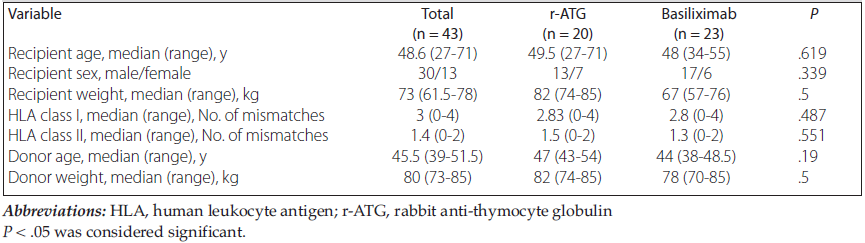
Table 1. Baseline Characteristics of Recipients With Low Immunological Risk Who Underwent Spousal Living Donor Kidney Transplant and Received Induction Therapy With Either Rabbit Anti-Thymocyte Globulin or Basiliximab
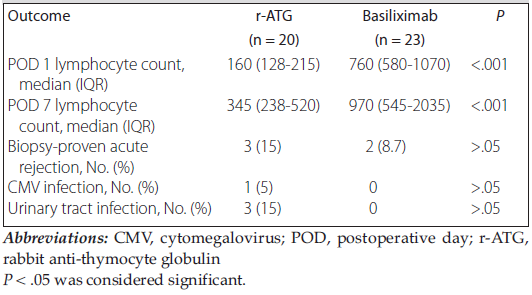
Table 2. Clinical Outcomes According To Induction Therapy: Rabbit Anti-Thymocyte Globulin or Basiliximab
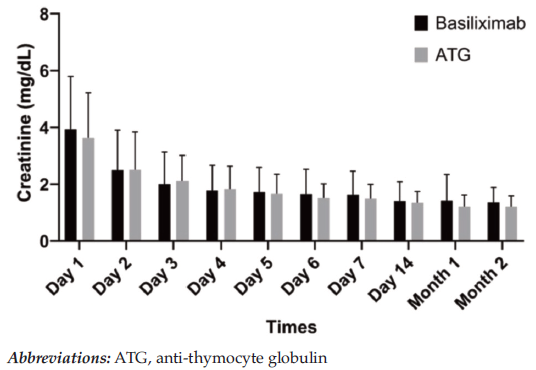
Figure 1. Postoperative Serum Creatinine Levels in Recipients Who Received Basiliximab or Anti-Thymocyte Globulin