Volume: 24 Issue: 5 May 2026
FULL TEXT
Chronological Changes in Causes of Death in Brain Death Donors: A 7-Year Analysis in the Tuscany Region
Objectives: During the past 5 years, donation from donors after circulatory death has increased by 4% worldwide, whereas donation from donors after brain death has remained unchanged. Organs from circulatory death donors are known to be less performative than organs from brain death donors, and the pool of brain death donors remains the main source of organ transplants in many countries. Chronological changes in the criteria for brain death in donors have occurred in many countries.
Materials and Methods: We describe chronological changes in causes of death in 2877 brain death donors consecutively assessed in Tuscany from 2015 to 2024. Two different periods were considered: 2015 to 2019 (period 1) and 2021 to 2024 (period 2).
Results: Significant increases in postanoxic encepha-lopathy (P = .037) and in “other causes” (P = .002) were observed in period 2 versus period 1. A significant decrease in traumatic brain injury (P = .002) was also detected. The number of utilized donors significantly increased in period 2 with an increase in liver transplants and kidney transplants.
Conclusions: Our investigation of a large cohort of brain death donors assessed in the Tuscany region from 2015 to 2024 showed dynamic changes in the etiologies of brain death, mainly with an increase in postanoxic encephalopathy and a reduction in ischemic stroke. Nevertheless, utilization rate increased recently, with a rise in liver transplants and kidney transplants. Our data strongly suggest the importance of transplant authorities to monitor epidemiological changes in causes of death in brain death donors, to identify areas for potential improvement.
Key words : Transplant, Utilization rate
Introduction
According to the 2022 report from the Global Observatory on Donation and Transplantation,1 worldwide activity in solid-organ transplantation is meeting <10% of the global need.2,3 During the past 5 years, donation from donors after circulatory death (DCD) has increased by 4% worldwide, whereas donation from donors after brain death (DBD) has remained static.4
In Italy at the end of 2024, the Italian National Transplant Center5 documented an increase in donors with respect to 2023 (3092 donors in the year 2023 vs 3192 donors in the year 2024, which is an increase of 3.2%). This increase was mainly due to DCD activity; in 2024, there were 95 more DCD donors than in 2023. This DBD activity remained stable throughout 2024 in Italy (5 more DCD donors in 2024 versus 2023). In the Tuscany region, the number of donors has remained stable during recent years (about 100 per million population per year)6 with an increase in DCD activity (both uncontrolled and controlled DCD).
Overall, organs from DCD are known to be less performative than organs from DBD, and DBD activity remains the main source of organ transplants in many countries. Here, we describe the chrono-logical changes in causes of death in 2877 DBDs consecutively assessed in Tuscany from 2015 to 2024.
Materials and Methods
We included all DBD assessed by the Tuscany Regional Transplant Center from 2015 to 2024. We considered 2 different periods: period 1 was defined as the 5-year period from 2015 to 2019, and period 2 was defined as the 4-year period from 2021 to 2024. The year of the COVID-19 pandemic (2020) was excluded. All research was conducted in accordance with the Declaration of Helsinki and the Declaration of Istanbul.
Diagnosis of death was confirmed by strict adherence to standardized clinical, neurological, and electroencephalography criteria in accordance with Italian law (clinical and neurological criteria, confirmed by electroencephalography after 6 hours of observation by an independent committee of 3 specialists) and related guidelines.6-9 Data were prospectively recorded and retrospectively analyzed.
Clinical data included age, sex, and etiology of brain death. Among causes of brain death, we used the term “other” to indicate infectious etiologies (such as meningoencephalitis) or neoplasms (such as primary brain neoplasms and brain metastases).We did not analyze posttransplant follow-up data.
Definitions
An actual donor was defined as a deceased person from whom at least 1 solid organ was retrieved for the purpose of transplantation.10 The utilization rate of organ donors was calculated as the percentage of potential donors who were accepted to become actual donors. The number of organs transplanted per donor was calculated by dividing the number of organs transplanted as solid organs from donors by the number of donors.
Statistical analyses
We used SPSS software (version 20; IBM) for data analyses. A 2-tailed result of P < .05 was considered statistically significant. We reported categorical variables as frequencies (with percentages) and continuous variables as mean values (with SD). For continuous variables, we conducted between-groups comparisons with t test or analysis of variance (followed by Bonferroni posttests, if overall P was significant) and compared categorical variables with the χ2 test.
Results
Our study population included 2877 DBDs (1548 in period 1 and 1329 in period 2). Table 1 shows the causes of death year by year in period 1 (2015-2019), during which the Tuscany region had a median of 319 (range, 274-385) DBD donors each year. A reduction in traumatic brain injury and an increase in postanoxic encephalopathy were observed in period 1. In period 2 (2021-2024) a decrease in ischemic stroke was observed, whereas there was an increase in the number of DBDs with postanoxic encephalopathy Table 2). During period 2, the Tuscany region had a median of 325 (range, 320-346) DBDs donors each year.
Table 3 shows the comparison of period 1 versus period 2. Postanoxic encephalopathy (P = .037, χ2 test) and other causes (P = .002) significantly inc-reased in period 2 versus period 1. Incidence of traumatic brain injury also significantly increased (P = .002). With regard to clinical characteristics (age and sex), we observed a reduction in the number of female donors among the group of DBD with pos-tanoxic encephalopathy for period 1 versus period 2. Donors who died from other causes were older and were more frequently male donors in period 2 versus period 1.
During the study period, the percentage of poten-tial DBDs whose donor status was refused remained unchanged. In the comparison of period 1 versus period 2, the number of utilized donors significantly increased in period 2 (Table 4). Transplants are reported in Table 2. An increase in liver transplants and kidney transplants was observed in period 2 versus period 1.
Discussion
Our investigation of a large cohort of DBD in the Tuscany region from 2015 to 2024 showed the following main findings: (1) the etiologies of brain death changed throughout the study period, mainly with an increase in postanoxic encephalopathy and a reduction in traumatic brain injury; (2) utilization rate increased in period 2 versus period 1; and (3) an increase in liver transplants and kidney transplants was observed in period 2 versus period 1.
Causes of death in DBD donors may vary across countries. In Iran, among 934 actual DBD donors (63.6% male), the cause of death was nontraumatic intracranial hemorrhage in 43.3% of cases, followed by trauma, hypoxia, cerebrovascular accident, toxicity, and brain tumor, respectively.11 In a recent study from the United States, the authors assessed trends in causes of death among 80 282 DBD donors according to data from the United Network for Organ Sharing database (for the period 2013-2022).12 Causes of death were reported as follows: anoxia in 39.8%, cerebro-vascular/stroke in 30.1%, head trauma in 27.7%, and central nervous system issues in 0.39%. Overall, the donor population began to experience a steady increase in donors with anoxia, and in recent years the incidence of drug intoxication increased dramatically. A comparison of Organ Procurement and Transplant Network data from 2021 versus 2011 demonstrated that, although the overall incidence of stroke and incidence of head trauma increased, the percentage of donors attributed to these causes declined (incidence of stroke among donors dec-reased from 36.1% to 25%, and incidence of head trauma among donors decreased from 33% to 24.1%). Interestingly, the per-centage of donors who died from anoxia increased from 28% to 47.3%.13 Data from Canada14 and Belgium15 indicated a relative decline in the proportion of donors with traumatic brain injury, as well as an increase in donors with anoxic brain injury.
Demographic data of brain death from a single center in Korea (2000-2020) revealed that causes of death were primarily from head trauma (34.4%), cerebral aneurysm (21.7%), spontaneous intracerebral hemorrhage (21.3%), and asphyxia/hanging (16.3%).16 In contrast to other countries, trauma was the still most common cause of brain death in Korea, with suicides being frequent. In a previous retrospective analysis, we studied 1286 DBDs ≤60 years old (potential heart donors) in the Tuscany region (about 3.6 million residents) from 2001 to 2016 in which age increased among DBD donors and traumatic brain injury decreased.9
Available evidence highlights a constantly evol-ving landscape of causes of death in DBD, which suggests the need for transplant authorities to monitor these changes to identify areas for potential impro-vement, mainly concerning hemodynamic treatment of DBD and, eventually, ex vivo organ perfusion.
Our findings agree with previous studies perfor-med in other countries. Similar to data from the United States,12,13 an increase in postanoxic encep-halopathy was observed in the Tuscany region, as well as a decrease in ischemic stroke and traumatic brain injury. The latter 2 findings may be related to the implementation of the 2 lifesaving time-depen-dent networks for stroke and traumatic brain injury, respectively, in the Tuscany region since 2016.
In a single-center study from Gachon University Gil Medical Center (Korea), demographic data of DBD were reported before and after the estab-lishment of a regional trauma center (2003-2022).17 There was no significant change in causes of death among DBDs, except for an increase in suicide cases (from 11.5% to 21.3%). According to the authors, this finding was related to the fact that Gachon Medical Center was still a referral hospital for trauma.
The most frequent cause of brain death remained cerebral hemorrhage in Tuscany, with no changes in prevalence of age and sex. In the Global Burden of Disease database, data for 2021 regarding stroke showed that among noncommunicable diseases, stroke remains the second leading cause of death (about 7 million) and the third leading cause of death, despite heterogeneity among countries.18
Despite dynamic changes in causes of death, the utilization rate increased in recent years, with an increase in liver transplants and kidney transplants. In our opinion, this phenomenon may be related to the fact that the Tuscany Transplant Authority introduced strict hemodynamic monitoring of each DBD donor until organ retrieval. According to our protocol, in the presence of hemodynamic instability, organ retrieval is scheduled within 2 to 4 hours after the end of the 6-hour observation period.6,8,19
Limitations
Our investigation was performed in a single Italian region. However, the Tuscany region has a high rate of donation activity (about 100 donors per million population).
Conclusions
Our large cohort study of DBD in the Tuscany region from 2015 to 2024 documented dynamic changes in the etiologies of brain death, mainly with an increase in postanoxic encephalopathy and a reduction in ischemic stroke. Nevertheless, the utilization rate increased in recent years, with a rise in liver transplants and kidney transplants. Our data strongly suggest the importance of transplant authorities to monitor epidemiological changes in causes of death in DBDs so that areas of potential improvement can be identified. In this context, artificial intelligence may help transplant authorities to define trajectories of epide-miological changes in the DBD landscape, provided the availability of a reliable database. Epidemiological changes in causes of death may induce specific areas of potential improvement in transplant medicine, such as hemodynamic DBD treatments tailored on causes of death6,8,19 and/or (from an organizational perspective) the implemen-tation/maintenance of additive donor programs such as DCD activity.
References:
- Gardiner D, McGee A, Al Oblaidli AA, et al. Developing and expanding deceased organ donation to its maximum therapeutic potential: an actionable global challenge from the 2023 Santander Summit. Transplantation 2025;109(1):10-21. doi:10.1097/TP.0000000000005234
CrossRef - PubMed - Weiss MJ, Cantarovich M, Chaudhury P, et al. International donation and transplantation legislative and policy forum: Methods and purpose. Transplant Direct. 2023;9(5):e1351. doi:10.1097/TXD.0000000000001351
CrossRef - PubMed - Participants to the Global Summit in Transplantation, organized by the Organización Nacional de Trasplantes under the Spanish Presidency of the Council of the European Union, the European Directorate for the Quality of Medicines and Healthcare−Council of Europe, the European Society for Organ Transplantation, and The Transplantation Society, co-sponsored by the World Health Organization and supported by the International Society of Nephrology in Santander, Spain, November 9 and 10, 2023. Santander Statement: Towards global convergence in transplantation: sufficiency, transparency, and oversight. Transplantation. 2025;109(1):7-9. doi:10.1097/TP.0000000000005286
CrossRef - PubMed - Global Observatory on Donation and Transplantation. International report on organ donation and transplantation activities 2022. https://www.transplant-observatory.org/wp-content/uploads/2025/02/2023-data-global-report-20022025.pdf
CrossRef:
PubMed:
- Italian National Transplant Center. https://www.trapianti.salute.gov.it/
CrossRef:
PubMed:
- Lazzeri C, Ghinolfi D, Santini LE, Procissi APO, Cultrera D, Peris A. Improved utilization rate in solid organ donors ≥80 years: the 7-year Tuscany experience. Clin Transplant. 2025;39(4):e70142. doi:10.1111/ctr.70142
CrossRef - PubMed - Lazzeri C, Bonizzoli M, Ghinolfi D, et al. Comorbidities and age in brain-dead donors and liver transplantation: a 15-year retrospective investigation. Exp Clin Transplant. 2020;18(1):60-64. doi:10.6002/ect.2019.0168
CrossRef - PubMed - Lazzeri C, Bonizzoli M, Batacchi S, et al. Haemodynamic management in brain death donors: influence of aetiology of brain death. World J Transplant. 2023;13(4):183-189. doi:10.5500/wjt.v13.i4.183
CrossRef - PubMed - Peris A, Lazzeri C, D’Antonio L, et al. Epidemiological changes in potential heart donors after brain death: a retrospective 15 year cohort study. Intern Emerg Med. 2019:14(3):371-375. doi:10.1007/s11739-018-1897-8
CrossRef - PubMed - Lomero M, Gardiner D, Coll E, et al.; European Committee on Organ Transplantation of the Council of Europe (CD-P-TO). Donation after circulatory death today: an updated overview of the European landscape. Transpl Int. 2020;33(1):76-88. doi:10.1111/tri.13506
CrossRef - PubMed - Hasanzade A, Nejatollahi SMR, Mokhber Dezfouli M, et al. Assessment of the effect of brain death etiologies on organs transplanted per donor. Exp Clin Transplant. 2025;23(2):103-110. doi:10.6002/ect.2024.0255
CrossRef - PubMed - Akabane M, Imaoka Y, Esquivel CO, Sasaki K. Landscape of donor cause of death and its impact on liver transplant outcomes: a ten-year analysis from the UNOS database. HPB (Oxford). 2024;26(9):1141-1147. doi:10.1016/j.hpb.2024.05.019
CrossRef - PubMed - Israni AK, Zaun DA, Gauntt K, et al. OPTN/SRTR 2021 Annual Data Report: deceased organ donation. Am J Transplant. 2023;23(2 Suppl 1):S443-S474. doi:10.1016/j.ajt.2023.02.010
CrossRef - PubMed - Kramer AH, Baht R, Doig CJ. Time trends in organ donation after neurologic determination of death: a cohort study. CMAJ Open. 2017;5(1):E19-E27. doi:10.9778/cmajo.20160093
CrossRef - PubMed - Desschans B, Evrard P; Coordinator Transplant Section of the Belgian Transplant Society. Organ donation and transplantation statistics in Belgium for 2012 and 2013. Transplant Proc. 2014;46(9):3124-6. doi:10.1016/j.transproceed.2014.09.170
CrossRef - PubMed - Lee WS, Choi S, Kang J, Kim D, Chun Y. Changes in clinical features and demographics in donors after brain death over the past 20 years: a single-center experience in the Republic of Korea. Exp Clin Transplant. 2021;19(6):522-526. doi:10.6002/ect.2020.0543
CrossRef - PubMed - Jang MJ, Choi ST, Lee GJ, Kim DJ, Lee WS. Changes in the clinical features and demographics of donors after brain death, before and after the establishment of a regional trauma center: 20 years of experience at a single center in Korea. J Trauma Inj. 2025;38(1):14-21. doi:10.20408/jti.2024.0068
CrossRef - PubMed - Fleigin VL, Barinin M, Norrving B, et al. World Stroke Organization: global stroke fact sheet 2025. Int J Stroke. 2025;20(2):132-144. doi:10.1177/17474930241308142
CrossRef - PubMed - Bonizzoli M, Lazzeri C, Di Valvasone S, et al. Active donor management goals in serial donors after brain death. Exp Clin Transplant. 2024;22(3):180-184. doi:10.6002/ect.2024.0030
CrossRef - PubMed

Volume : 24
Issue : 5
Pages : 377 - 381
DOI : 10.6002/ect.2025.0316
From the 1Tuscany Regional Transplant Center, the 2Intensive Care Unit and Extracorporeal Membrane Oxygenation Center, Careggi University Hospital, and the 3Coordinamento Area Vasta Centro, Florence; the 4Coordinamento Area Vasta Nord Ovest, Pisa; the 5Coordinamento Area Vasta Sud Est, South-East Tuscany Local Health Authority, Grosseto; the 6Coordinamento Locale Livorno, Livorno; and the 7Coordinamento Locale Pistoia, Pistoia, Italy
Acknowledgements: The authors have not received any funding or grants in support of the presented research or for the preparation of this work and have no declarations of potential conflicts of interest.
Author contributions: CL, AP, M. Bombardi, and M. Bonizzoli conceived and designed the study. PLP, EG, DC, LES, and APP analyzed and interpreted the data. CL and M. Bonizzoli drafted the manuscript. AP and CL critically revised the manuscript. CL, AP, M. Bombardi, M. Bonizzoli, PLP, EG, DC, LES, and APP approved the final draft.
Corresponding author: Chiara Lazzeri, Regional Transplant Center, Largo Brambilla, 3, 50134 Florence, Italy
E-mail: lazzeric@libero.it
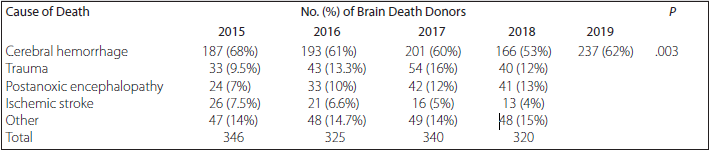
Table 1. Causes of Death in Brain Death Donors Before COVID-19 Pandemic (Period 1)
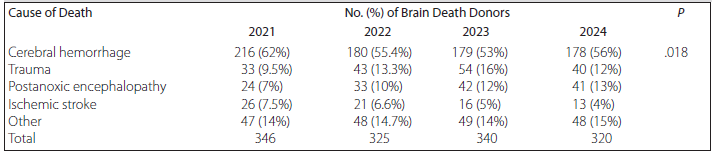
Table 2. Cause of Death in Brain Death Donors After COVID-19 Pandemic (Period 2)
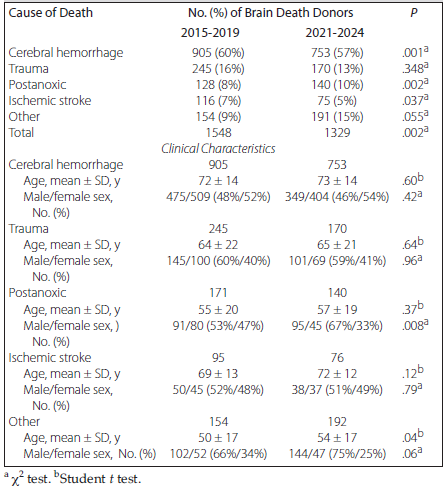
Table 3. Comparison of Cause of Death in Brain Death Donors Before and After COVID-19 Pandemic
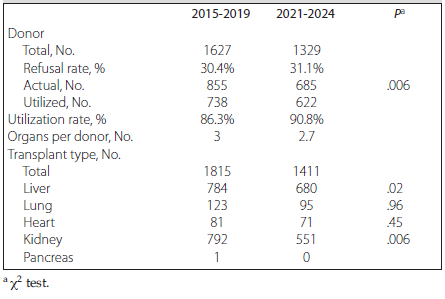
Table 4. Utilization Rate and Transplants During the Periods 2015-2019 and 2021-2024