Volume: 24 Issue: 4 April 2026
FULL TEXT
Aspergillus Infection of the Thyroid in a Patient Who Had Undergone Liver Transplant: A Case Report
Aspergillus species are opportunistic fungi that can cause severe, potentially life-threatening infections, particularly in immunocompromised individuals. Invasive aspergillosis most commonly affects the lungs (70%–90%) but may also involve other organs, including the central nervous system (10%–25%), heart (5%–10%), kidneys (5%–10%), liver and spleen (5%–8%), and gastrointestinal tract (2%–5%). The incidence of aspergillosis is markedly increased among solid-organ transplant recipients due to prolonged immunosuppression. Thyroid involvement is extremely rare (<1%) and is most often reported in autopsy studies. Infection of the thyroid gland may occur through hematogenous dissemination, direct extension from adjacent structures, or iatrogenic routes. Herein, we describe a liver transplant recipient who developed thyroid aspergillosis, emphasizing the importance of considering fungal infections in the differential diagnosis of thyroid lesions in immunosuppressed patients.
Key words : Immunosuppression, Invasive fungal infection, Opportunistic infection
Introduction
Aspergillus species are opportunistic fungi that can cause severe infections, particularly in immunosuppressed individuals.1 Invasive aspergillosis is a disease that primarily affects the lungs (70%-90%) but can occasionally involve other organs and has the potential to follow a fatal course, with subsequent involvement of the central nervous system (10%-25%), heart (5%-10%), kidneys (5%-10%), liver and spleen (5%-8%), and gastrointestinal tract (2%-5%). The risk of developing aspergillosis is greatly increased in patients who have undergone solid-organ transplant.2
Thyroid aspergillosis is an extremely rare clinical entity and has mostly been identified in autopsy series. It is believed that thyroid aspergillosis may spread via hematogenous dissemination, via direct extension from adjacent structures, or through iatrogenic pathways.3
In this report, we present a case of invasive aspergillosis identified in the thyroid of a patient who had undergone liver transplant.
Case Report
A 54-year-old male patient had undergone a deceased donor liver transplant at our center 8 years previously, due to cirrhosis secondary to chronic alcohol use. In the fourth month posttransplant, he presented with headache, and subsequent investigations led to the diagnosis of cranial aspergillus infection. As a result, he was treated for 120 days with intrathecal and intravenous liposomal amphotericin B and voriconazole. However, during the course of treatment, impaired cerebrospinal fluid drainage developed, which necessitated the placement of a ventriculoperitoneal (VP) shunt. After treatment was completed, multiple follow-up cultures returned negative results, which confirmed the clearance of the fungal infection.
Eight years after antifungal treatment, the patient presented with intermittent episodes of dyspnea. Thyroid ultrasonography revealed an enlarged thyroid gland with multiple nodules. In the upper pole of the right lobe, a solid, hypoechoic nodule measuring 13 × 30 × 2 mm was observed, with lobulated margins, heterogeneous internal structure, and calcification areas. This lesion was classified as category 5 according to the Thyroid Imaging Reporting and Data System (TIRADS). Beneath this nodule, a second solid nodule measuring 8 × 6 × 7 mm with well-defined borders and a homogeneous structure was also detected, as shown in Figure 1.
Because of the presence of multiple nodules, compressive symptoms related to goiter, and suspicion of malignancy, a thyroidectomy was planned. A fine-needle aspiration biopsy performed from the TIRADS category 5 nodule prior to surgery was reported as a nondiagnostic result. No pathological lymph nodes were detected on neck ultrasonography. The patient subsequently underwent bilateral total thyroidectomy. No intraoperative complications occurred, and the integrity of the thyroid capsule was preserved. Postoperative pathology revealed that the TIRADS category 5 lesion was a follicular tumor of uncertain malignant potential (according to the World Health Organization 2022 classification of thyroid tumors). Additionally, a 5-mm necrotic nodule in the right lobe contained areas of necrosis with fungal hyphae consistent with Aspergillus species, as shown in Figure 2.
Given the small size of the Aspergillus-positive nodule, the absence of evidence supporting active infection in both preoperative and postoperative evaluations, and the patient's close clinical follow-up, antifungal therapy was deemed unnecessary.
Discussion
Invasive aspergillosis can cause life-threatening systemic infections, particularly in immunosuppressed patients. Patients who have undergone solid-organ transplant are at significantly increased risk due to prolonged immunosuppression therapy. Thyroid aspergillosis is extremely rare and, in the literature, has typically been reported in immunosuppressed patients with disseminated invasive aspergillosis or identified in autopsy series.4
Thyroid aspergillosis is most commonly reported in the form of case reports. In a case presented by Kishi and colleagues, invasive aspergillosis involving the thyroid in a patient with hematologic malignancy extended into the tracheal lumen, ultimately leading to the patient's death.5 Similarly, Marui and colleagues reported a case in which Aspergillus was identified as the causative agent of a suppurative thyroid infection in a patient receiving immunosuppression therapy for lupus; the infection proved fatal.6
Thyroid aspergillosis in a liver transplant recipient was first reported in the literature by Matsui and colleagues in 2006. In that case, a patient who had received a living donor liver transplant for fulminant hepatic failure was found to have thyroid inflammation on posttransplant day 109. Following thyroidectomy, extensive Aspergillus infiltration was identified in the resected tissue. However, the patient ultimately died due to sepsis caused by Pseudomonas aeruginosa.3
Thyroid aspergillosis may present with symptoms such as thyroid enlargement, pain, dyspnea, and dysphagia. However, distinguishing these lesions from other thyroid pathologies with imaging techniques is often challenging. Ultrasonography offers limited discriminatory power, and no specific sonographic features have been defined. In some cases, cystic abscess-like lesions have been reported. In our case, retrospective evaluation revealed that the ultrasonographic appearance of the lesion was not distinctive for Aspergillus infection.4,7
What is particularly noteworthy in our case is the patient's prior history of cranial aspergillosis and the placement of a VP shunt. These previous Aspergillus infections highlight the extent of the patient's immunosuppression. Although the exact route of spread to the thyroid gland remains unclear, hematogenous dissemination is the most likely mechanism. However, we also consider the possibility of local extension facilitated by anatomic alterations in the neck region due to the previously placed VP shunt.
Conclusions
Our case is significant because we demonstrated that rare Aspergillus infections can also occur in liver transplant recipients. Invasive fungal infections can develop as a consequence of immunosuppression in solid-organ transplant patients. Even when these infections are successfully treated, as seen in our patient with the emergence of an Aspergillus lesion in the thyroid, a risk of recurrence or involvement of other organs remains. Therefore, it is crucial to evaluate any new lesions in immunosuppressed individuals with a history of Aspergillus infection for potential fungal involvement.
References:
- Machado M, Fortún J, Muñoz P. Invasive aspergillosis: a comprehensive review. Med Clin (Barc). 2024;163(4):189-198. doi:10.1016/j.medcli.2024.01.045
CrossRef - PubMed - Barchiesi F, Mazzocato S, Mazzanti S, et al. Invasive aspergillosis in liver transplant recipients: epidemiology, clinical characteristics, treatment, and outcomes in 116 cases. Liver Transplant. 2015;21(2):204-212. doi:10.1002/lt.24032
CrossRef - PubMed - Matsui Y, Sugawara Y, Tsukada K, Kishi Y, Shibahara J, Makuuchi M. Aspergillus thyroiditis in a living donor liver transplant recipient. J Infect. 2006;53(6):e231-233. doi:10.1016/j.jinf.2006.02.007
CrossRef - PubMed - Nguyen J, Manera R, Minutti C. Aspergillus thyroiditis: a review of the literature to highlight clinical challenges. Eur J Clin Microbiol Infect Dis. 2012;31(12):3259-3264. doi:10.1007/s10096-012-1704-9
CrossRef - PubMed - Kishi Y, Negishi M, Kami M, et al. Fatal airway obstruction caused by invasive aspergillosis of the thyroid gland. Leuk Lymphoma. 2002;43(3):669-671. doi:10.1080/10428190290012263
CrossRef - PubMed - Marui S, de Lima Pereira AC, de Araújo Maia RM, Borba EF. Suppurative thyroiditis due to aspergillosis: a case report. J Med Case Reports. 2014;8:379. doi:10.1186/1752-1947-8-379
CrossRef - PubMed - Kim SH, Kim JY, Park WC, Kim MK, Kim TJ. Sequential sonographic features of primary invasive aspergillosis involving only the thyroid gland: a case report and literature review. Iran J Radiol Q. 2016;13(1):e27890. doi:10.5812/iranjradiol.27890
CrossRef - PubMed:

Volume : 24
Issue : 4
Pages : 353 - 355
DOI : 10.6002/ect.2025.0210
From the Baskent University, Faculty of Medicine, Department of General Surgery, Ankara, Turkey
Acknowledgements: The authors have not received any funding or grants in support of the presented research or for the preparation of this work and have no declarations of potential conflicts of interest. The patient presented in this report was treated at Baskent University Hospital.
Corresponding author: Adem Şafak, Baskent University, Faculty of Medicine, Department of General Surgery, Fevzi Cakmak Caddesi 10, Sokak No:45 Bahcelievler, 06490 Ankara, Turkey
Phone: +90 312 203 68 68 4867
E-mail: sademsafak@gmail.com
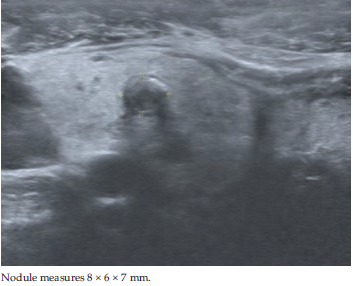
Figure 1. Thyroid Ultrasonography Showing an Enlarged Thyroid Gland With Multiple Nodules, Including a TIRADS Category 5 Lesion in the Upper Pole of the Right Lobe
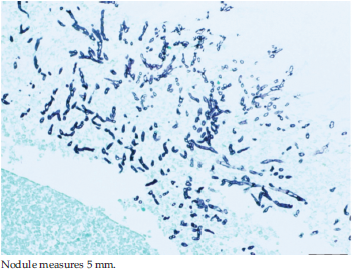
Figure 2. Histopathological Examination of the Necrotic Nodule in the Right Thyroid Lobe Showing Fungal Hyphae Consistent With Aspergillus Species