Volume: 24 Issue: 4 April 2026
FULL TEXT
Risk Factors and Outcomes of Bowel Complications in Single-Site Donor Nephrectomy: A Retrospective Analysis of 350 Consecutive Cases
Objectives: This study evaluated the incidence, risk factors, and management of bowel complications in a consecutive series of laparoendoscopic single-site donor nephrectomy procedures.
Materials and Methods: A retrospective analysis was performed on 350 consecutive laparoendoscopic single-site donor nephrectomy cases (68% male donors; mean age 31.5 ± 8.2 years; mean body mass index 26.1 ± 4.8; 8.6% with prior abdominal surgery) seen from September 2017 through July 2025 at a high-volume center.
Results: The bowel complication rate was 1.14% (4 of 350). Etiologies included internal herniation (n = 1), adhesive obstruction (n = 1), obstruction postserosal repair (n = 1), and bowel perforation (n = 1). All cases required surgical management, including 3 bowel resections and 1 laparoscopic defect closure. The 4 affected donors had a higher mean age (40.1 ± 3.9 years) and mean body mass index (33.7 ± 1.9), and 50% had received prior abdominal surgery, both of which significantly exceeded the cohort baseline. No complications stemmed from initial port insertion or thermal injury. The overall 30-day readmission rate was 2.28%, and the recipient 1-year graft survival rate was 97.3%.
Conclusions: Bowel complications following laparoendoscopic single-site donor nephrectomy are rare but clinically significant, predominantly presenting postoperatively and requiring surgical intervention. High body mass index and a history of abdominal surgery are key associated risk factors. Meticulous surgical technique remains paramount to minimize risk. Therefore, meticulous surgical technique and careful patient selection, particularly in donors with obesity or prior abdominal surgery, are more critical to bowel safety than the choice of a minimally invasive approach.
Key words : Laparoendoscopic single-site donor nephrectomy, Obesity, Reoperative surgery, Surgical outcomes
Introduction
Laparoscopic donor nephrectomy (LDN) is the established standard for living kidney donation and offers substantial advantages over open surgery, including reduced postoperative pain, shorter duration of hospital stays, and faster donor recovery.1 Continued innovation in minimally invasive techniques has led to the development of laparoendoscopic single-site (LESS) donor nephrectomy (DN), a refinement that aims to further minimize surgical trauma and improve cosmetic outcomes.2-4
Despite its benefits, LDN, including the LESS approach, is not without risk. Bowel injury represents a serious, albeit rare, complication, with reported incidence ranging from 0.1% to 1.0% in the LDN literature.5-7 Mechanisms include mechanical trauma during access (Veress needle or trocar insertion), thermal injury from energy devices, and traction-related damage during colonic mobilization.8 In the context of living donation, a purely altruistic procedure performed on healthy individuals, even a single preventable complication carries substantial ethical and clinical implications.9
To date, most published data on bowel injury in DN derive from traditional multiport laparoscopic or hand-assisted series.3,10 Focused analyses of bowel injury risk specific to the LESS technique remain scarce, particularly in high-volume, structured environments such as Armed Forces Hospitals, which often benefit from standardized protocols and experienced surgical teams.
In this retrospective study, we reviewed 350 consecutive LESS-DN procedures performed at the Armed Forces Hospitals, Southern Region (Khamis Mushayt), Saudi Arabia, from September 2017 through July 2025. Our primary aim was to characterize the incidence, mechanisms, and risk factors of bowel injury in this contemporary cohort of single-port donor nephrectomies. We hypothesized that the incidence of bowel complications in LESS-DN would be comparable with incidence of bowel complications in conventional multiport LDN and that identifiable donor factors, such as elevated body mass index (BMI, measured as kilograms body weight per meter squared) and prior abdominal surgery, would be associated with an increased risk. To our knowledge, this study is among the largest single-center analyses of bowel complications specific to the LESS-DN technique and provides unique insights from a high-volume military hospital with standardized protocols.
Materials and Methods
Study design and ethical approval
This retrospective, single-center cohort study was conducted at the Armed Forces Hospitals, Southern Region (Khamis Mushayt), Kingdom of Saudi Arabia. Because the study used anonymized clinical data and was retrospective, the institutional review board waived the typical requirement for written informed consent. All procedures were conducted in accordance with the ethical standards of the 1964 Declaration of Helsinki and its subsequent amendments.
Patient population
All consecutive living kidney donors who underwent LESS-DN from September 2017 through July 2025 were included. Donors who underwent conventional multiport, hand-assisted, robotic, or open DN during the same period were excluded. A total of 350 consecutive donors met the inclusion criteria and were included in the analysis. All patients had received living related donor transplants, specifically, first-degree and second-degree living related donors only.
Donor evaluation and perioperative management
All potential donors underwent a comprehensive multidisciplinary preoperative evaluation, including medical, psychosocial, and financial assessments. A detailed anatomic assessment was performed using computed tomography angiography. A standardized dataset was prospectively maintained, incorporating donor demographics, operative parameters (operative time, warm ischemia time, and estimated blood loss), and postoperative outcomes, including renal function, length of hospital stay, Visual Analogue Scale pain scores, and complications categorized as short-term (≤30 days) or long-term (≤1 year). Donor satisfaction with cosmetic outcomes was evaluated using a validated scar satisfaction questionnaire at postoperative months 6, 9, and 12.
Surgical technique and team
After they received preoperative counseling, which included discussion of LESS-DN as an evolving alternative procedure with potentially longer operative times versus conventional LDN, donors underwent surgery in a 45-degree flank position. A 5-cm transumbilical incision was created, and a transanal access platform (GelPoint; Applied Medical) was inserted to accommodate one 12-mm and two 10-mm trocars. A 30-degree laparoscope and standard laparoscopic instruments were used.
The surgical steps mirrored those of conventional multiport DN, including medial mobilization of the colon via incision of the white line of Toldt, identification and proximal dissection along the ureter and gonadal vessels, ligation of the adrenal vein, skeletonization of the renal hilum, and posterior renal mobilization. Before graft extraction, the 12-mm port was replaced with a 15-mm port to facilitate the introduction of a specimen retrieval bag. The ureter and renal vessels were transected using a vascular stapler, the graft was retrieved, and meticulous hemostasis was confirmed. No intra-abdominal drains were placed, and the incision was closed in layers, as previously described.11 All LESS-DN procedures were performed by a fellowship-trained transplant surgeon with >10 years of experience in LDN and >50 prior LESS-DN cases. The center performs more than 60 living donor nephrectomies annually, thereby maintaining proficiency with the technique.
Definitions
Warm ischemia time was defined as the interval between application of the first laparoscopic stapler to the renal artery and initiation of cold perfusion of the graft on the back table, in accordance with previously published definitions.12
Postoperative follow-up
Donors were followed according to a structured protocol, with visits every 2 weeks during the first postoperative month and every 3 months thereafter until 1 year after donation. Each follow-up visit included a complete physical examination, assessment of vital signs and body weight, and laboratory evaluation of renal function. The estimated glomerular filtration rate was calculated using the Modification of Diet in Renal Disease equation. This structured follow-up protocol primarily captures complications within the first year. Donors were advised to report any subsequent abdominal symptoms, and hospital readmission records were screened indefinitely, although systematic active follow-up beyond 1 year was not part of the protocol.
Data collection and outcomes
We systematically extracted clinical data from electronic medical records, operative reports, and nursing documentation. Collected variables included donor demographic information (age, sex, BMI, and prior abdominal surgery), operative details (operative time, warm ischemia time, conversions, and intraoperative complications), and bowel complication characteristics (mechanism, anatomic location, timing of recognition, and need for surgical intervention). Postoperative outcomes, including duration of hospital stay, reoperation, and 30-day readmission, were also recorded.
The primary outcome was the incidence of bowel complications, encompassing both bowel injury and bowel obstruction. Secondary outcomes included identification of potential risk factors, mechanisms of injury, timing of diagnosis, and associated clinical outcomes.
Statistical analyses
Given the low event rate (n = 4), statistical analyses were limited to primarily descriptive statistics and univariate comparisons; multivariate analyses to identify independent risk factors were not feasible.
We expressed continuous variables as mean ± SD and categorical variables as frequencies (with percentages). We performed univariate comparisons between donors with and without bowel complications using the Student t test for continuous variables and the Fisher exact test for categorical variables. P < .05 (2-sided) was considered statistically significant. We used SPSS software version 26.00 (IBM) for all statistical analyses. This study was reported in accordance with the established guidelines for observational studies (Strengthening the Reporting of Observational Studies in Epidemiology).
Results
Cohort demographics and operative characteristics
A total of 350 consecutive LESS-DN procedures were analyzed. The mean donor age was 31.5 ± 8.2 years, and male donors accounted for 68% of the cohort. The mean BMI was 26.1 ± 4.8, and 30 donors (8.6%) had a history of prior abdominal surgery. The mean operative time was 178.4 ± 29.6 minutes, and the mean warm ischemia time was 1.5 ± 1.0 minutes. Donors had a mean duration of hospital stay of 3.5 ± 1.4 days and required an average of 81.0 mg morphine equivalents for postoperative analgesia. Postdonation renal function remained stable throughout follow-up. Minor postoperative complications included superficial wound infections in 4 donors (1.14%), port-site hernias in 2 donors (0.57%), and self-limiting postoperative pain in 15 donors (4.3%). No procedures required conversion to open surgery. Recipient outcomes were excellent, with a 1-year graft survival rate of 97.3%.
Donor demographics, operative parameters, and perioperative outcomes for the entire LESS-DN cohort are detailed in Table 1.
Primary outcome: incidence and mechanisms of bowel complications
Bowel complications occurred in 4 donors, corresponding to an incidence of 1.14% (4 of 350). All events involved the small bowel. Only 1 complication was identified intraoperatively, whereas 3 were diagnosed postoperatively, yielding an intraoperative recognition rate of 25%. The underlying mechanisms included 1 internal herniation, 1 adhesive small bowel obstruction, 1 obstruction following serosal injury repair, and 1 bowel perforation. All 4 donors required surgical intervention via open exploration; 3 patients underwent bowel resection with primary anastomosis, and 1 patient was managed with laparoscopic closure of a mesenteric defect. Notably, none of the bowel injuries was related to initial port insertion or thermal mechanisms.
A summary of the incidence, mechanisms, timing of recognition, and management of bowel complications is provided in Table 2.
Risk factor analysis for bowel complications
There was a higher mean BMI among donors who developed bowel complications (33.7 ± 1.9) versus the overall cohort (26.1 ± 4.8). A history of prior abdominal surgery was present in 50% of affected donors, which significantly exceeded the baseline rate of 8.6% in the full cohort. In addition, donors with bowel complications were older, with a mean age of 40.1 ± 3.9 years, versus 31.5 ± 8.2 years in the overall population. These findings suggest that advanced age, obesity, and prior abdominal surgery are important risk factors for bowel complications in LESS-DN.
A detailed case-by-case description of all bowel complications, including donor risk factors and preventive considerations, is presented in Table 3.
Other complications and outcomes
Overall perioperative morbidity was low. Superficial wound infections occurred in 4 donors (1.14%), port-site hernias in 2 donors (0.57%), and 30-day readmissions were recorded in 8 cases (2.28%). Recipient outcomes remained favorable, with a 1-year graft survival rate of 97.3%.
Discussion
Bowel complications following LDN are uncommon but carry substantial clinical and ethical implications. Although reported incidence rates are generally below 1%, any preventable morbidity in a healthy living donor is unacceptable within the ethical framework of transplantation.1,2 These events are particularly concerning because bowel injuries and obstructions frequently present with delayed or nonspecific symptoms, increasing the risk of diagnostic delay, sepsis, reoperation, and prolonged hospitalization.
In the present series of 350 consecutive LESS-DN, bowel complications occurred in 1.14% of donors. This rate is comparable to the 0.1% to 1.0% incidence reported for conventional multiport LDN,3,4 suggesting that the single-site approach does not inherently increase bowel-related risk when performed by experienced surgical teams. Importantly, only one-quarter of bowel complications were recognized intraoperatively, with most bowel complications presenting postoperatively, which highlights the need for heightened vigilance beyond the immediate perioperative period.
All bowel complications in our cohort involved the small intestine and resulted from mechanisms including internal herniation, adhesive obstruction, or bowel perforation. This pattern is consistent with prior reports demonstrating that intestinal obstruction following LDN occurs in approximately 0.47% of cases, most commonly due to internal herniation through unrepaired mesenteric defects created during colonic mobilization.4 Although the overall complication rate of LDN ranges from 3.4% to 6.4%, bowel obstruction represents a clinically significant subset of these adverse events.1
A key contribution of this study is the identification of donor-specific risk factors associated with bowel complications. All affected donors had a BMI greater than 30, and 50% of all affected donors had a history of prior abdominal surgery. These findings reinforce existing evidence that obesity and intra-abdominal adhesions substantially increase procedural complexity and perioperative risk.4,12 Notably, no bowel injuries in this series were attributable to initial abdominal access or thermal energy. Instead, complications arose during subsequent operative stages, particularly during adhesiolysis and management of mesenteric defects, underscoring the importance of meticulous technique during colonic mobilization and wound closure in high-risk donors.
The occurrence of a major complication in a healthy living donor carries profound ethical implications. Our finding that 50% of donors with bowel complications had prior abdominal surgery calls for a careful, individualized risk-benefit assessment during donor evaluation. Although LESS-DN may be technically feasible in such cases, the potential increase in the risk of adhesive obstruction or iatrogenic injury must be explicitly discussed during the informed consent process. In donors with both prior surgery and a BMI >30, consideration of an alternative surgical approach (eg, traditional multiport or open surgery) or even donor deferral may be warranted, to prioritize the principle of primum non nocere above cosmetic appeal or minimal invasiveness.
Despite the expanding adoption of minimally invasive DN, comparative data guiding surgical approach selection based on bowel safety remain sparse. Many published studies either fail to specify the laparoscopic approach associated with bowel complications or report no such events, thereby limiting meaningful comparisons among LESS, conventional multiport, hand-assisted, and retroperitoneal techniques.6,8 Consequently, current evidence does not support the superiority of any single laparoscopic approach to prevent bowel injury. Rather, intestinal obstruction remains a rare (≈0.47%) but serious complication of LDN, most often related to unrepaired mesenteric defects and frequently necessitating reoperation.4 These findings underscore the critical importance of careful intraoperative defect closure, rigorous preoperative risk stratification, and a low threshold for postoperative evaluation in donors with obesity or prior abdominal surgery.4,12
Limitations
This study should be interpreted in the context of several important limitations. First, the small number of bowel complication events (n = 4), although indicative of the true rarity of this outcome, precluded multivariate analysis and limited the statistical power to identify independent predictors. Consequently, the observed associations, particularly those related to obesity, age, and prior abdominal surgery, should be regarded as hypothesis-generating observations rather than definitive conclusions. Future studies using larger pooled datasets or multicenter registries will be necessary to enable robust multivariable risk modeling and to validate our findings.
Second, the retrospective, single-center design introduces inherent risks of selection bias and information bias. Although all data were systematically extracted from comprehensive electronic medical records and operative reports, unmeasured confounders may persist. Additionally, the standardized perioperative pathways and high surgical volume at our institution may not be representative of lower-volume centers, thereby limiting external generalizability. These limitations could be addressed through prospective multicenter studies that employ standardized definitions of bowel complications and uniform reporting frameworks.
Third, the absence of a contemporaneous control group undergoing conventional multiport, hand-assisted, robotic, or retroperitoneal DN precludes direct comparisons of the relative bowel safety of the LESS approach. Although the observed complication rate aligns with historical benchmarks from conventional LDN, definitive conclusions regarding technique superiority cannot be drawn. Future research should incorporate matched or propensity-score-adjusted comparative cohorts to more accurately assess technique-specific risk.
Fourth, postoperative follow-up was primarily limited to 1 year. Although most bowel injuries and internal hernias typically present early, it is possible that very late adhesive obstructions may have been present but remained undiscovered. Longer-term follow-up incorporating donor-reported gastrointestinal outcomes and extended surveillance would provide a more complete assessment of delayed morbidity.
Finally, surgeon experience and technical expertise represent important confounding variables that are difficult to quantify. All procedures in this series were performed by an experienced transplant surgeon within a high-volume, structured program, and the favorable outcomes observed may therefore reflect centralization of care and meticulous surgical technique rather than the intrinsic safety of the LESS platform itself. Future studies should attempt to stratify outcomes by surgeon volume and institutional experience to better delineate the relative contributions of technique versus expertise.
Despite these limitations, the present study provides detailed mechanistic insight into bowel complications following LESS-DN and highlights modifiable risk factors and preventive strategies that may enhance donor safety when applied within experienced, high-volume transplant programs.
Conclusions
Bowel complications following LESS-DN are rare (1.14%) but serious events, with a clinical profile similar to that of conventional LDN. This study identifies donors with BMI >30 and a history of prior abdominal surgery as a high-risk subgroup requiring heightened vigilance. Surgical strategies for this group should include meticulous adhesiolysis, routine closure of mesenteric defects, and consideration of wound closure under direct vision. Critically, our data suggest that bowel safety is determined more by disciplined surgical technique and prudent patient selection than by the chosen minimally invasive platform. Until higher-level comparative evidence emerges, transplant centers should prioritize structured training, centralized experience, and transparent donor counseling, particularly for high-risk candidates, to uphold the paramount ethic of donor safety.
References:
- Cho SJ, Moon HW, Kang SM, et al. Evolution of laparoscopic donor nephrectomy techniques and outcomes: a single-center experience with more than 1000 cases. Ann Transplant. 2020;25:e918189. doi:10.12659/AOT.918189
CrossRef - PubMed - Matas AJ, Payne WD, Sutherland DE, et al. 2500 living donor kidney transplants: a single-center experience. Ann Surg. 2001;234(2):149-164. doi:10.1097/00000658-200108000-00004
CrossRef - PubMed - Lentine KL, Lam NN, Axelrod D, et al. perioperative complications after living kidney donation: a national study. Am J Transplant. 2016;16(6):1848-1857. doi:10.1111/ajt.13687
CrossRef - PubMed - Regan JP, Cho ES, Flowers JL. Small bowel obstruction after laparoscopic donor nephrectomy. Surg Endosc. 2003;17(1):108-110. doi:10.1007/s00464-002-8600-
CrossRef - PubMed - Bachmann A, Wyler S, Wolff T, et al. Complications of retroperitoneoscopic living donor nephrectomy: single center experience after 164 cases. World J Urol. 2008;26(6):549-554. doi:10.1007/s00345-008-0296-6
CrossRef - PubMed - Schrenk P, Woisetschläger R, Rieger R, Wayand W. Mechanism, management, and prevention of laparoscopic bowel injuries. Gastrointest Endosc. 1996;43(6):572-574. doi:10.1016/s0016-5107(96)70193-1
CrossRef - PubMed - El Hennawy HM, Hashemy AA, Kadi N, et al. Outcome of kidney transplantation with transumbilical laparoendoscopic single-site donor nephrectomy: a single-center experience. Transplant Proc. 2021;53(3):808-813. doi:10.1016/j.transproceed.2020.10.015
CrossRef - PubMed - Bishoff JT, Allaf ME, Kirkels W, Moore RG, Kavoussi LR, Schroder F. Laparoscopic bowel injury: incidence and clinical presentation. J Urol. 1999;161(3):887-890. doi:10.1016/s0022-5347(01)61797-x
CrossRef - PubMed - van der Voort M, Heijnsdijk EA, Gouma DJ. Bowel injury as a complication of laparoscopy. Br J Surg. 2004;91(10):1253-1258. doi:10.1002/bjs.4716
CrossRef - PubMed - El Hennawy HM, Al Hashemy A, Kadi NM, et al. Transumbilical laparoendoscopic single-site donor nephrectomy: evolving trends. Surg Endosc. 2019;33(6):1920-1926. doi:10.1007/s00464-018-6474-8
CrossRef - PubMed - Ganpule AP, Dhawan DR, Kurien A, et al. Laparoendoscopic single-site donor nephrectomy: a single-center experience. Urology. 2009;74(6):1238-1240. doi:10.1016/j.urology.2009.03.048
CrossRef - PubMed - Dagnæs-Hansen J, H Kristensen G, Rohrsted M, Sørensen SS, Røder A. Early and late surgical complications following living donor nephrectomy. Scand J Urol. 2025;60:83-89. doi:10.2340/sju.v60.43346
CrossRef - PubMed

Volume : 24
Issue : 4
Pages : 308 - 314
DOI : 10.6002/ect.2026.0071
From the 1Surgery Department, Section of Transplantation, King Abdulaziz Medical City, Ministry of National Guard-Health Affairs, Jeddah; the 2King Abdullah International Medical Research Center, Jeddah; the 3Urology Department, Armed Forces Hospitals, Southern Region, Khamis Mushayte; the 4Surgery Department, Section of Transplantation, King Faisal Specialist and Research Center, Jeddah, Saudi Arabia; the 5Faculty of Medicine, Mansoura University, Mansoura; the 6Faculty of Medicine, New Mansoura University, New Mansoura, Egypt; the 7Faculty of Medicine, University of Jordan, Amman, Jordan; the 8Department of Internal Medicine, King Khalid University College of Medicine, Abha, Saudi Arabia; the 9Department of Urology, Faculty of Medicine, Al-Azhar University, Cairo, Egypt; and the 10Surgery Department, Ministry of National Guard-Health Affairs, King Abdulaziz Medical City, Jeddah, Saudi Arabia
Acknowledgements: The authors have not received any funding or grants in support of the presented research or for the preparation of this work and have no declarations of potential conflicts of interest.
Author contributions: H. M. El Hennawy is the senior author. H. M. El Hennawy, O. Safar, A. Khedr, M. Ibrahim, and I. Tawahri developed the protocol. H. M. El Hennawy, O. Safar, and G. Aboelsamh wrote the manuscript. H. M. El Hennawy, O. Safar, M. El Hennawy, I. Tawahri, M. Z. El Madaawi, and T. Jaber reviewed the manuscript. G. Aboelsamh analyzed the data. M. El Hennawy edited the manuscript. A. Khedr, O. Shalkamy, M. Z. El Madaawi, and T. Jaber collected data.
Corresponding author: Hany M. El Hennawy, Department of Surgery, Section of Transplantation, King Abdulaziz Medical City, Ministry of National Guard-Health Affairs, Jeddah, 21423, KSA
Phone: +966 50308 1770 E-mail: hennawyhany@hotmail.com
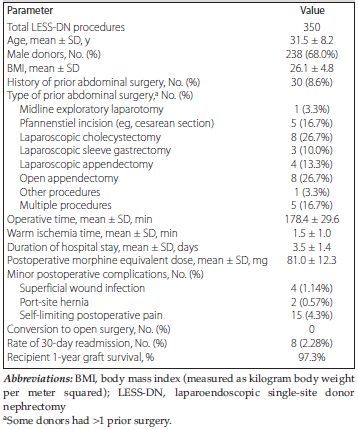
Table 1. Cohort Characteristics and Outcomes of Laparoendoscopic Single- Site Donor Nephrectomy
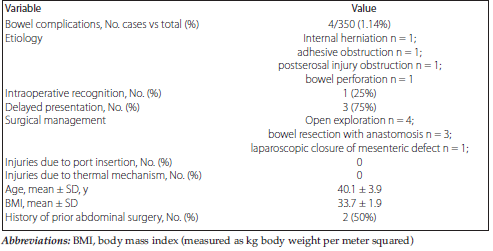
Table 2. Bowel Complications
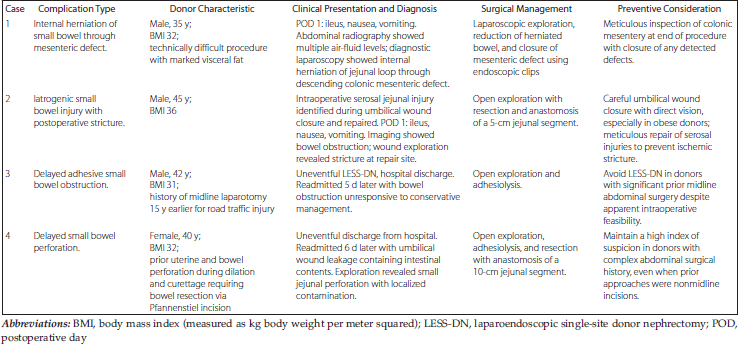
Table 3. Detailed Description of Bowel Complication Cases Following Laparoendoscopic Single-Site Donor Nephrectomy