Volume: 24 Issue: 4 April 2026
FULL TEXT
Expanding the Boundaries of Kidney Paired Donation: A Structured Review of Compatible Pair Participation
Compatible donor-recipient pairs are increasingly participating in kidney paired donation programs despite eligibility for direct living donor kidney transplant. Beyond addressing overt incompatibility, inclusion of compatible donor-recipient pairs is a strategy to optimize donor-recipient matching, mitigate major anatomical or immunologic disadvantages, and enable multiway or extended exchange chains. Evidence from national and regional registries has suggested that compatible donor-recipient pair participation expands the effective donor pool and improves access for highly sensitized and other hard-to-match recipients. We conducted a structured synthesis of global literature examining compatible pair participation in kidney paired donation programs, focusing on reported clinical outcomes, program-level effects, ethical considerations, and operational models. We comprehensively searched PubMed, Embase, Scopus, and the Cochrane Library and identified studies published between January 2000 and June 2025 reporting on compatible donor-recipient pairs that had specific data. From our search, we included 24 studies from North America, Europe, Asia, and Australia, which encompassed >2500 compatible donor-recipient pairs. Across programs, compatible donor-recipient pairs comprised a proportion of kidney paired donation transplants and were associated with increased program activity. Where reported, participation was driven by the pursuit of superior outcomes, including improved HLA matching, access to younger or lower-risk donors, or avoidance of specific immunologic mismatches, alongside altruistic considerations. Short-term patient and graft outcomes for recipients of compatible donor-recipient pairs were comparable to conventional living donor kidney transplants in reported cohorts. Overall, the evidence supported strategic inclusion of compatible pairs to enhance kidney paired donation program capacity and improve access for highly sensitized and hard-to-match recipients without compromising short-term outcomes.
Key words : Living donor kidney transplantation, Living donor outcomes, Organ exchange programs, Paired exchange chains, Transplant ethics
Introduction
Kidney transplantation is the definitive treatment for end-stage kidney disease, conferring superior survival and quality of life compared with long-term dialysis. However, a persistent imbalance between organ demand and supply, which is particularly pronounced in low- and middle-income countries, continues to limit access to transplant. Kidney paired donation (KPD), also referred to as kidney exchange or swap transplantation, was developed to overcome ABO blood group and HLA incompatibilities by enabling donor-recipient exchanges between 2 or more medically incompatible pairs, allowing each recipient to receive a compatible graft.1-3 Contemporary policy analyses have emphasized that sustainable expansion of paired exchange requires removal of structural and logistical disincentives for programs and patients, alongside robust ethical and legal frameworks aligned with the World Health Organization Guiding Principles.4,5
Although originally designed for incompatible pairs, KPD programs have increasingly included compatible donor-recipient pairs (CPs), defined as pairs of patients eligible for direct transplant who elect exchange participation to achieve anticipated recipient benefit, such as improved HLA matching, avoidance of adverse viral serostatus mismatch, access to younger or lower-risk donors, or logistical advantages. As participants in exchange pools, CPs may act as chain enablers, either by accepting harder-to-match donors or by contributing more readily matchable donors, thereby increasing pool flexibility and facilitating longer or more complex exchange chains, particularly for highly sensitized or blood group O recipients.1,6 Evidence from national and regional registries consistently associates CP inclusion with increased transplant activity and improved matching opportunities for immunologically disadvantaged candidates.6,7
This evolution, although operationally advantageous, introduces important ethical and programmatic considerations, including equity, prioritization, and donor burden. Ethical integration of CPs requires frameworks grounded in autonomy, beneficence, and justice to ensure voluntary participation, transparency, and fairness.4 Given the heterogeneity of available evidence, spanning registry analyses, simulation studies, and multicenter clinical reports, we conducted this review to synthesize the global experience and to clarify motivations for CP participation, assess reported outcomes, and examine the ethical, logistical, and policy considerations relevant to the sustainable incorporation of CPs into KPD programs.
Materials and Methods
Study design
We conducted this structured evidence synthesis using a systematic search methodology in accordance with the PRISMA 2020 (Preferred Reporting Items for Systematic Reviews and Meta-Analyses) guidelines.8 The protocol was developed a priori and informed by relevant principles of the Cochrane Handbook for Systematic Reviews of Interventions (version 6.4) and complied with the Indian Council of Medical Research 2024 Addendum on Ethical Requirements for Systematic Reviews. Only publicly available, de-identified data were analyzed; therefore, institutional ethics committee approval was not required in accordance with Indian Council of Medical Research guidance.
Inclusion and exclusion criteria
Inclusion criteria were studies that reported on living donor kidney transplant pairs in which the donor and recipient were medically or immunologically compatible but elected to participate in a KPD program; interventions that included altruistic chains and extended matching schemes; comparator studies of direct transplant within the CP or incompatible pairs in KPD (when used for subgroup analysis); showed outcomes, such as graft or patient survival, HLA match quality, waiting time measures, chain extension, ethical considerations, and cost-related analyses; and had the following study types: prospective or retrospective cohort studies, registry-based studies, simulation models, and ethics-focused qualitative analyses. Studies were English-language full-text studies published between January 2000 and June 2025.
We excluded studies that were limited exclusively to incompatible pairs, editorials, expert commentaries, conference abstracts without primary data, pediatric-only cohorts unless CP participation was explicitly reported, non-English texts, or reports lacking sufficient methodological detail.
Search strategy
We conducted a comprehensive search of PubMed/MEDLINE, Embase, and the Cochrane Central Register of Controlled Trials (CENTRAL), supplemented by manual reference checking of included articles and relevant reviews. Both Medical Subject Headings terms and free-text key words were used, including: "compatible pairs," "kidney paired donation" OR "KPD," "swap transplant," "kidney exchange," "paired kidney donation," "compatible donor-recipient pair" AND "kidney transplantation," and "living donor exchange" AND "compatible." The final PubMed search string was ("compatible pair" OR "compatible pairs") AND ("kidney paired donation" OR "kidney exchange" OR "kidney swap" OR "paired kidney donation"). We exported records to EndNote (Clarivate Analytics) and removed duplicates before screening.
Study selection
Two reviewers independently screened titles and abstracts, followed by full-text review against predefined eligibility criteria. Disagreements were resolved through discussion or consultation with a third reviewer. The selection process is illustrated in a PRISMA 2020 flow diagram (Figure 1). In total, 24 full-text studies were included, spanning registry-based cohorts, simulation modeling, and ethics-focused qualitative analyses. To address heterogeneity, 8 key variables were prespecified: author and year, country or registry, study design, sample size, number of compatible pairs, overall patient and graft outcomes, compatible pair-specific outcomes, and other salient findings. Studies reporting all 8 variables were grouped separately, with simulation-only studies retained and labeled as "simulation" in the evidence tables.
Data extraction
We used a piloted, standardized data extraction form to collect information on study characteristics (author, year, country, design, sample size), CP inclusion criteria, number and type of transplants involving CPs, reported clinical outcomes (including graft or patient survival and rejection rates where available), ethical or policy themes, modeling outputs or simulation metrics (if applicable), and registry or database sources. Two reviewers independently extracted data, with discrepancies resolved by consensus.
Quality assessment
Given the heterogeneity of study designs, we appraised methodological quality and risk of bias by using design-appropriate tools, including the Newcastle-Ottawa Scale for observational studies, the CHEERS checklist for economic evaluations, and the CASP Qualitative Checklist for ethics-focused analyses. No study was excluded solely on the basis of quality; rather, methodological limitations were considered in the interpretation and synthesis of findings.
Data synthesis
Because of substantial clinical and methodological heterogeneity, we did not perform quantitative pooling. Instead, we performed a structured narrative synthesis. Studies were grouped according to (1) motivations for CP participation; (2) reported clinical outcomes of CP recipients, including comparisons with direct transplant where such data were available; (3) programmatic effect on matching rates and exchange chain length; (4) ethical and logistical considerations; and (5) national or regional policy frameworks. We presented findings in tables presenting studies reporting all 8 prespecified variables and studies missing 1 or more variables, to ensure transparency regarding data completeness.
Results
Our study included 24 studies with extractable CP-specific data from North America, Europe, Asia, Australia, and Latin America. Five studies reported all 8 prespecified variables (Table 1); these studies comprised fully reported clinical cohorts and 1 simulation-based analysis that directly evaluated CP-specific matching advantages. The remaining 19 studies documented participation of CPs but lacked one or more prespecified variables, most commonly the number of CPs or CP-specific clinical outcomes (Table 2). Simulation and modeling studies are explicitly identified as "simulation" within the tables to distinguish algorithmic analyses from studies reporting observed transplant outcomes.
Motivations and willingness of compatible pairs to participate in kidney paired donation
Across registry-based analyses, mixed-methods studies, and single-center cohorts, CPs entered KPD primarily for anticipated recipient-centered benefit, with altruistic motivations reported variably across study designs.9-11 Reported motivations included pursuit of improved HLA matching,10 access to younger or lower-risk donors,11 and avoidance of specific immunologic or viral mismatches.10
Studies evaluating decision-making processes demonstrated that participation was more likely when the expected benefit to the intended recipient was clear and predictable.10 Conversely, participation was less likely when concerns existed regarding logistical complexity, uncertainty in exchange-chain completion, or potential delays to transplant.10 Measures aimed at maintaining financial neutrality, including reimbursement for travel and lost wages, were associated with higher acceptance, whereas direct financial incentives were not consistently associated with participation.10
Single-center clinical series reporting CP participation included approximately 10 to 50 CPs per program.11 These cohorts consistently demonstrated a reciprocal benefit model, whereby compatible recipients received kidneys from donors who were younger or better immunologically matched than their original intended donors, whereas their original donors enabled transplant for otherwise incompatible or highly sensitized recipients within the same exchange framework.11,12
Impact of compatible pairs on match rates and chain expansion in kidney paired donation
Registry-based studies demonstrated that CP incorporation increased the likelihood of identifying feasible matches during allocation runs, with the most pronounced benefits observed among blood group O candidates and highly sensitized recipients, who otherwise experience limited match opportunities.1,7,13 In these programs, CP donors, often more broadly compatible, enabled transplant for immunologically disadvantaged recipients, whereas CP recipients accepted harder-to-match kidneys within the same exchange framework.7,13
Simulation and modeling studies further showed that allocation algorithms incorporating CPs and chain-based strategies generated higher overall transplant yield and greater pool efficiency, with disproportionate gains for highly sensitized candidates.1,2,14 In nonsimultaneous extended altruistic donor chain models, CP recipients frequently functioned as bridge recipients, allowing their associated donors to extend exchange sequences beyond those achievable through purely simultaneous matching structures.1,2
At the program level, national KPD systems reported that CP inclusion facilitated larger and more stable active pools, increased match frequency, and reduced positive crossmatches through computer-optimized matching processes.15 Compatible pairs have also been incorporated into high-complexity exchange configurations, including large multiway exchanges and selected cross-border kidney exchange programs, where they functioned as integral participants in sustaining extended exchange chains.2,16
Clinical outcomes in compatible pair recipients participating in kidney paired donation
Available evidence indicates that CP recipients participating in KPD achieve short- and medium-term clinical outcomes comparable to those shown for conventional living donor kidney transplant, with outcomes largely reflecting donor-recipient matching characteristics rather than exchange participation itself.7,17-19 Reported outcome differences were primarily associated with donor age, comorbidity burden, HLA profile, and viral serostatus rather than the mechanism of donation.10,11
Single-center clinical series demonstrated that CP recipients entering KPD frequently received kidneys from donors who were younger or better immunologically matched than their original intended donors, without evidence of compromised short-term graft function.10,11 Registry-level analyses further supported these observations, reporting high patient and graft survival across exchanges involving CPs, comparable to outcomes observed after standard living donor kidney transplant.17-19 In clinical decision-making, evaluation of proposed exchanges for CP recipients was informed by established predictive tools, including the Living Donor Kidney Donor Profile Index and validated living donor graft survival calculators that integrate donor and recipient characteristics.20,21
However, despite favorable short-term outcomes, robust comparative data that have shown superior long-term graft or patient survival for CP recipients compared with direct living donor transplant remain limited. Consequently, potential advantages related to donor age, HLA matching, or other donor factors should be interpreted cautiously in the absence of long-term, controlled comparative analyses.22,23
Ethical, legal, and psychological considerations in compatible pair participation
Inclusion of CPs in KPD programs raises ethical considerations related to autonomy, equity, governance, and psychosocial impact, which have been examined across survey-based, registry-linked, and policy-oriented studies.4,5
Mixed-methods and survey-based studies demonstrated that CP willingness to participate in KPD was context dependent and primarily influenced by perceived benefit to the intended recipient, clarity of the exchange process, and confidence in program governance.9,10 Willingness to participate was higher when programs addressed logistical neutrality, including reimbursement for travel and wage loss, and when counseling clearly explained exchange pathways and potential trade-offs.9,10 Conversely, uncertainty regarding exchange completion, perceived inequity in organ quality, or concern about delays to transplantation were associated with lower acceptance, underscoring the ethical importance of noncoercive, fully informed decision-making.9,10
Governance structures were consistently reported as central to ethical implementation of CP participation in KPD. National and regional programs described the routine use of standardized immunological assessment, centralized matching algorithms, and predefined allocation rules to promote safety, equity, and reproducibility in exchange practices.18,24-26 Mandatory pre-exchange verification processes, central coordination, and protocolized donor evaluation were emphasized as safeguards to minimize immunological risk and protect donor welfare.24-26
Legal and policy frameworks governing CP participation varied substantially across jurisdictions. Some systems restricted living donation to genetically or emotionally related donors or required case-by-case authorization for exchange participation, which could delay or limit KPD activity.5,27 Other jurisdictions explicitly incorporated principles of utility, justice, and fairness into KPD allocation policy and enabled broader participation through national or regional coordination.5,28 Policy analyses further highlighted the ethical need for transparency regarding organ-quality trade-offs and structured patient education to support informed participation, particularly in complex or cross-border exchange programs.28,29
Global and Indian programmatic experience with compatible pairs in kidney paired donation
Operational models for integrating CPs into KPD programs vary across jurisdictions, reflecting differences in legislation, health care infrastructure, and cultural attitudes toward living donation.26,28
In India, CPs have been incorporated into large-scale KPD initiatives operating within a predominantly living donor and low deceased donor context.27 Reports from Indian programs have shown that most exchanges are driven by ABO incompatibility, with CP inclusion used to expand matching opportunities within exchange pools.27,30 Participation of CPs has also been described as a strategy to avoid selected ABO-incompatible or positive crossmatch combinations, thereby reducing reliance on desensitization in resource-constrained settings.30,31
Internationally, high-volume single-center programs have described the operational role of CPs within established KPD systems, including their use in facilitating tailored matches for recipients with high calculated panel-reactive antibody (cPRA) values.22,32 These programs also reported incorporation of CPs into long-distance and multicenter exchanges involving sensitized and ABO-incompatible recipients.22,32
National registry-based programs have increasingly integrated CP participation into routine matching frameworks. Registry analyses reported that inclusion of CPs was associated with broader matching opportunities for highly sensitized patients, particularly when combined with high-resolution HLA typing and virtual crossmatching strategies.6,18
European kidney exchange programs have described collaborative frameworks designed to harmonize allocation practices and expand exchange pools across participating centers.26,28 In the United States and other regions, national networks and institutional programs have reported inclusion of CPs within local and inter-hospital exchange systems.26,33 In Latin America, regional reviews have emphasized the need for cross-border agreements to address ethical and logistical barriers to KPD expansion, noting that CPs, although fewer in number, may contribute to extending match potential within developing exchange frameworks.29
Integration of compatible pairs with ABO-incompatible transplantation and desensitization strategies
Integration of KPD with ABO-incompatible transplantation and desensitization strategies has been explored as a multipronged approach to expand access to transplantation for immunologically disadvantaged recipients. Within this framework, CPs serve as a crucial enabler of more favorable matching, potentially avoiding the need for intensive antibody-removal protocols where feasible.6 This is particularly relevant for highly sensitized patients with high cPRA levels, for whom finding a compatible donor is exceedingly difficult.
Registry analyses and modelling studies have described the strategic inclusion of CPs in exchange chains involving ABO-incompatible and highly sensitized recipients, enabling multicenter and long-distance exchanges that improve access to better-matched donors.2,22 In nonsimultaneous and extended chain configurations, CP recipients may accept harder-to-match kidneys, allowing their associated donors, often immunologically less constrained, to extend chains and facilitate transplant for recipients with higher immunologic risk.2,22
In the Indian context, program-level reports have described frequent operational overlap between KPD and ABO-incompatible transplantation within a predominantly living donor environment.27,30,31
High-volume centers in other regions have reported similar operational strategies. Single-center and registry-linked analyses have described the use of tailored matching approaches incorporating CPs to facilitate transplantation for recipients with high cPRA values within multi-participant exchange chains.13,17,32 Across these studies, CP participation was associated with broader matching opportunities, particularly for blood group O and highly sensitized candidates, without direct evidence of increased immunologic risk attributable to CP involvement.13,17,32
Collectively, these reports have suggested that KPD-based strategies, including exchange chains incorporating CPs, may complement desensitization-based approaches by providing alternative pathways to transplant for selected high-risk recipients, while allowing recipients with lower immunologic barriers to proceed with conventional or ABO-incompatible transplant as appropriate.6,22
Discussion
This review positions CP participation in KPD as a system-level optimization strategy rather than an intervention aimed at improving outcomes for individual compatible recipients.34-36 Evidence from registry-informed analyses and simulation studies indicated that CP inclusion alters exchange architecture by introducing immunologically flexible donors and recipients, thereby reducing structural bottlenecks that disproportionately affect highly sensitized and blood group O candidates.34,36 Importantly, the benefit of CP participation is not contingent on demonstrable superiority of graft or patient survival for compatible recipients compared with direct living donation.34
Concerns regarding uncertainty in wait times and potentials for delayed transplant among CPs are supported by the literature and underscore the conditional nature of CP benefit.34,37 Studies have consistently shown higher acceptance of CP participation in programs with frequent matching runs, mature logistics, transparent exit mechanisms, and clearly articulated contingency plans.37 In contrast, in settings with infrequent matching or limited coordination, CP participation may introduce uncertainty without proportional recipient benefit, reinforcing the need for individualized counseling rather than universal recommendation.34
Ethically, CP participation challenges traditional dyadic models of living donation by introducing indirect reciprocity and multi-party benefit.35 Ethical analyses have supported CP inclusion only when programs ensure voluntariness, protect against implicit coercion, and maintain financial neutrality for donors, particularly in complex or prolonged exchange chains.35,38 Safeguards such as withdrawal rights, prioritization guarantees following chain failure, and transparent disclosure of trade-offs have been described as essential but are not uniformly implemented across programs.34,38
The interplay between CP-inclusive KPD, ABO-incompatible transplantation, and desensitization strategies highlights the need for integrated, patient-centered allocation frameworks. Available evidence has supported KPD, including chains incorporating CPs, as a complementary alternative to desensitization in selected patients, particularly where immunologic barriers are extreme or where cost, toxicity, or infrastructure limit desensitization feasibility.38 However, the absence of comparative long-term outcome and cost-effectiveness data precludes definitive guidance on optimal sequencing of these strategies.34
From a policy perspective, CP participation exposes disparities in regulatory readiness and system maturity across regions.37 High-income settings increasingly emphasize algorithmic optimization, registry harmonization, and granular immunologic data integration, whereas low- and middle-income countries continue to face legal, infrastructural, and financial barriers that constrain scale and sustainability.37,39 In jurisdictions such as India, where living donation predominates, CP participation offers pragmatic advantages but remains vulnerable to regulatory ambiguity and inconsistent donor protection mechanisms.37,40
This review also identified critical evidence gaps that limit stronger inference regarding CP participation.34 Long-term graft survival, patient-reported outcomes, and psychosocial effects specific to CP recipients have been infrequently reported, and existing registries often lack data on declined offers, aborted exchanges, and decision-making processes.34 Addressing these gaps will require purpose-designed registries and prospective data collection strategies explicitly focused on CP participation.39
In summary, CP participation in KPD should be understood as a strategic system-level intervention that enhances exchange efficiency and equity when embedded within robust ethical, operational, and regulatory frameworks.34,36
Conclusions
Incorporation of CPs into KPD programs represents a system-level strategy to enhance matching flexibility and expand exchange opportunities for hard-to-match recipients. Available evidence indicates that such participation does not compromise recipient outcomes when implemented within structured programs. With appropriate counseling, ethical safeguards, and programmatic governance, inclusion of compatible pairs offers a pragmatic and ethically sound approach to strengthening living donor transplant.
References:
- Gentry SE, Montgomery RA, Segev DL. Kidney paired donation: fundamentals, limitations, and expansions. Am J Kidney Dis. 2011;57(1):144-151. doi:10.1053/j.ajkd.2010.10.005
CrossRef - PubMed - Rees MA, Kopke JE, Pelletier RP, et al. A nonsimultaneous, extended, altruistic-donor chain. N Engl J Med. 2009;360(11):1096-1101. doi:10.1056/NEJMoa0803645
CrossRef - PubMed - Park K, Moon JI, Kim SI, Kim YS. Exchange donor program in kidney transplantation. Transplantation. 1999;67(2):336-338. doi:10.1097/00007890-199901270-00027
CrossRef - PubMed - Garg N, Habbouche J, Gordon EJ, Liapakis A, Jesse MT, Lentine KL. Practical and ethical considerations in kidney paired donation and emerging liver paired exchange. Am J Transplant. 2025;25(11):2292-2302. doi:10.1016/j.ajt.2025.07.2459
CrossRef - PubMed - Lentine KL, Waterman AD, Cooper M, et al. Expanding opportunities for living donation: recommendations from the 2023 Santander Summit to Ensure Donor Protections, Informed Decision Making, and Equitable Access. Transplantation. 2025;109(1):22-35. doi:10.1097/TP.0000000000005124
CrossRef - PubMed - Ferrari P, Cantwell L, Ta J, Woodroffe C, D'Orsogna L, Holdsworth R. Providing better-matched donors for HLA mismatched compatible pairs through kidney paired donation. Transplantation. 2017;101(3):642-648. doi:10.1097/TP.0000000000001196
CrossRef - PubMed - Chipman V, Cooper M, Thomas AG, et al. Motivations and outcomes of compatible living donor-recipient pairs in paired exchange. Am J Transplant. 2022;22(1):266-273. doi:10.1111/ajt.16821
CrossRef - PubMed - Page MJ, McKenzie JE, Bossuyt PM, 3t al. The PRISMA 2020 statement: an updated guideline for reporting systematic reviews. BMJ. 2021;372:n71. doi:10.1136/bmj.n71
CrossRef - PubMed - Hendren E, Gill J, Landsberg D, Dong J, Rose C, Gill JS. Willingness of directed living donors and their recipients to participate in kidney paired donation programs. Transplantation. 2015;99(9):1894-1899. doi:10.1097/TP.0000000000000533
CrossRef - PubMed - Bingaman AW, Wright FH, Jr., Kapturczak M, Shen L, Vick S, Murphey CL. Single-center kidney paired donation: the Methodist San Antonio experience. Am J Transplant. 2012;12(8):2125-2132. doi:10.1111/j.1600-6143.2012.04070.x
CrossRef - PubMed - Flechner SM, Thomas AG, Ronin M, et al. The first 9 years of kidney paired donation through the National Kidney Registry: characteristics of donors and recipients compared with national live donor transplant registries. Am J Transplant. 2018;18(11):2730-2738. doi:10.1111/ajt.14744
CrossRef - PubMed - Ferrari P, Hughes PD, Cohney SJ, Woodroffe C, Fidler S, D'Orsogna L. ABO-incompatible matching significantly enhances transplant rates in kidney paired donation. Transplantation. 2013;96(9):821-826. doi:10.1097/TP.0b013e3182a01311
CrossRef - PubMed - Organ Procurement and Transplantation Network. OPTN/UNOS Kidney Paired Donation Pilot Program: state of the Pilot Program, October 2010–March 31, 2014. https://optn.transplant.hrsa.gov/media/pfmlim3f/kpd_report.pdf
CrossRef:
PubMed:
- Veale JL, Capron AM, Nassiri N, et al. Vouchers for future kidney transplants to overcome “chronological incompatibility” between living donors and recipients. Transplantation. 2017;101(9):2115-2119. doi:10.1097/TP.0000000000001744
CrossRef - PubMed - Bozek DN, Dunn TB, Kuhr CS, et al. Complete chain of the first global kidney exchange transplant and 3-yr follow-up. Eur Urol Focus. 2018;4(2):190-197. doi:10.1016/j.euf.2018.07.021
CrossRef - PubMed - Melcher ML, Leeser DB, Gritsch HA, et al. Chain transplantation: initial experience of a large multicenter program. Am J Transplant. 2012;12(9):2429-2436. doi:10.1111/j.1600-6143.2012.04156.x
CrossRef - PubMed - Cole EH, Nickerson P, Campbell P, et al. The Canadian kidney paired donation program: a national program to increase living donor transplantation. Transplantation. 2015;99(5):985-990. doi:10.1097/TP.0000000000000455
CrossRef - PubMed - Ferrari P, Fidler S, Holdsworth R, et al. High transplant rates of highly sensitized recipients with virtual crossmatching in kidney paired donation. Transplantation. 2012;94(7):744-749. doi:10.1097/TP.0b013e3182612967
CrossRef - PubMed - Massie AB, Leanza J, Fahmy LM, et al. A risk index for living donor kidney transplantation. Am J Transplant. 2016;16(7):2077-2084. doi:10.1111/ajt.13709
CrossRef - PubMed - Ashby VB, Leichtman AB, Rees MA, et al. A Kidney graft survival calculator that accounts for mismatches in age, sex, HLA, and body size. Clin J Am Soc Nephrol. 2017;12(7):1148-1160. doi:10.2215/CJN.09330916
CrossRef - PubMed - Basu A, Prieto M, Kosberg C, et al. Ten years of kidney paired donation at Mayo Clinic: the benefits of incorporating ABO/HLA compatible pairs. Transplantation. 2020;104(6):1229-1238. doi:10.1097/TP.0000000000002947
CrossRef - PubMed - de Klerk M, Keizer KM, Claas FH, Witvliet M, Haase-Kromwijk BJ, Weimar W. The Dutch national living donor kidney exchange program. Am J Transplant. 2005;5(9):2302-2305. doi:10.1111/j.1600-6143.2005.01024.x
CrossRef - PubMed - Johnson RJ, Allen JE, Fuggle SV, Bradley JA, Rudge C, Kidney Advisory Group UKTN. Early experience of paired living kidney donation in the United Kingdom. Transplantation. 2008;86(12):1672-1677. doi:10.1097/TP.0b013e3181901a3d
CrossRef - PubMed - Hanto RL, Reitsma W, Delmonico FL. The development of a successful multiregional kidney paired donation program. Transplantation. 2008;86(12):1744-1748. doi:10.1097/TP.0b013e3181909035
CrossRef - PubMed - Biro P, Haase-Kromwijk B, Andersson T, et al. Building kidney exchange programmes in Europe-an overview of exchange practice and activities. Transplantation. 2019;103(7):1514-1522. doi:10.1097/TP.0000000000002432
CrossRef - PubMed - Bastos J, de Barros Machado DJ, Megale Moreira R, Fernandes Ferreira G, David-Neto E. Kidney paired donation in Latin America and the Caribbean: an update. Transplantation. 2024;108(6):1257-1258. doi:10.1097/TP.0000000000005029
CrossRef - PubMed - Kute VB, Gumber MR, Patel HV, et al. Outcome of kidney paired donation transplantation to increase donor pool and to prevent commercial transplantation: a single-center experience from a developing country. Int Urol Nephrol. 2013;45(4):1171-1178. doi:10.1007/s11255-012-0323-9
CrossRef - PubMed - Akkina SK, Muster H, Steffens E, Kim SJ, Kasiske BL, Israni AK. Donor exchange programs in kidney transplantation: rationale and operational details from the North Central donor exchange cooperative. Am J Kidney Dis. 2011;57(1):152-158. doi:10.1053/j.ajkd.2010.06.012
CrossRef - PubMed - Montgomery RA, Zachary AA, Ratner LE, et al. Clinical results from transplanting incompatible live kidney donor/recipient pairs using kidney paired donation. JAMA. 2005;294(13):1655-1663. doi:10.1001/jama.294.13.1655
CrossRef - PubMed - Yabu JM, Pando MJ, Busque S, Melcher ML. Desensitization combined with paired exchange leads to successful transplantation in highly sensitized kidney transplant recipients: strategy and report of five cases. Transplant Proc. 2013;45(1):82-87. doi:10.1016/j.transproceed.2012.08.007
CrossRef - PubMed - Gentry SE, Montgomery RA, Swihart BJ, Segev DL. The roles of dominos and nonsimultaneous chains in kidney paired donation. Am J Transplant. 2009;9(6):1330-1336. doi:10.1111/j.1600-6143.2009.02622.x
CrossRef - PubMed - Liu W, Treat E, Veale JL, Milner J, Melcher ML. Identifying opportunities to increase the throughput of kidney paired donation. Transplantation. 2015;99(7):1410-1415. doi:10.1097/TP.0000000000000527
CrossRef - PubMed - Segev DL, Kucirka LM, Gentry SE, Montgomery RA. Utilization and outcomes of kidney paired donation in the United States. Transplantation. 2008;86(4):502-510. doi:10.1097/TP.0b013e3181812f85
CrossRef - PubMed - Fortin MC, Gill J, Allard J, Ballesteros Gallego F, Gill J. Compatible donor and recipient pairs' perspectives on participation in kidney paired donation programs: a mixed-methods study. Can J Kidney Health Dis. 2021;8:20543581211058932. doi:10.1177/20543581211058932
CrossRef - PubMed - de Klerk M, Kal-van Gestel JA, Roelen D, et al. Increasing kidney-exchange options within the existing living donor pool with CIAT: a pilot implementation study. Transpl Int. 2023;36:11112. doi:10.3389/ti.2023.11112
CrossRef - PubMed - Altun E, Yavuz M. Long-term outcomes of kidney paired donation transplantation: a single center retrospective cohort study. Transplant Proc. 2023;55(2):325-331. doi:10.1016/j.transproceed.2023.02.007
CrossRef - PubMed - Shrestha CP, Bhandari TR, Adhikari R, Baral H, Verma RK, Shrestha KK. Living donor kidney paired exchange: an observational study. Ann Med Surg (Lond). 2022;78:103761. doi:10.1016/j.amsu.2022.103761
CrossRef - PubMed - Weng FL, Grogan T, Patel AM, Mulgaonkar S, Morgievich MM. Characteristics of compatible pair participants in kidney paired donation at a single center. Clin Transplant. 2017;31(6). doi:10.1111/ctr.12978
CrossRef - PubMed - Roth AE, Sonmez T, Unver U. Efficient kidney exchange: coincidence of wants in markets with compatibility-based preferences. Am Econ Rev. 2007;97(3):828-851. doi:10.1257/aer.97.3.828
CrossRef - PubMed - Blumberg JM, Gritsch H, Veale JL. Kidney paired donation: advancements and future directions. Curr Opin Organ Transplant. 2011;16(4):380-384. doi:10.1097/MOT.0b013e328348bfe2
CrossRef - PubMed

Volume : 24
Issue : 4
Pages : 293 - 301
DOI : 10.6002/ect.2026.0059
From the 1Department of Nephrology, All India Institute of Medical Sciences, Nagpur, Maharashtra, India; the 2Department of Nephrology, Jawaharlal Nehru Medical College, Datta Meghe Institute of Higher Education and Research, Wardha, Maharashtra, India; the 3Department of Nephrology, Saraswati Kidney Care Centre, Nagpur, Maharashtra, India; the 4Department of Nephrology and Transplantation, Institute of Kidney Diseases and Research Center–Dr. H L Trivedi Institute of Transplantation Sciences, Ahmedabad, Gujarat, India; the 5Department of Urology and Transplant Surgery, Max Super Specialty Hospital, Nagpur, Maharashtra, India; the 6Transplant Department, SCMJF, Juiz de Fora, Brazil; the 7Department of Surgery, Groote Schuur Hospital, University of Cape Town, Cape Town, South Africa; the 8Health Sector and College of Medicine, Qatar University, Doha, Qatar; the 9Department of Nephrology, Institute of Liver and Biliary Sciences, Vasant Kunj, New Delhi, India; and the 10SSM Health Saint Louis University Hospital Transplant Center, Saint Louis University School of Medicine, St. Louis, MO, USA
Acknowledgements: The authors have not received any funding or grants for this work. The authors declare no conflicts of interest related to this work. Unrelated to this work, K. L. Lentine receives consulting fees from CareDx and speaker honoraria from Sanofi. K. L. Lentine is a senior scientist of the Scientific Registry of Transplant Recipients (SRTR), scientific director of the SRTR Living Donor Collective, past chair of the American Society of Transplantation Living Donor Community of Practice, co-chair of the NLDAC Advisory Group, member of the American Society of Nephrology Transplant Committee, and member of the National Kidney Foundation Transplant Advisory Committee.
Corresponding author: Vivek B. Kute, Department of Nephrology and Transplantation, Institute of Kidney Diseases and Research Center–Dr. H L Trivedi Institute of Transplantation Sciences, Ahmedabad 380016, Gujarat, India
E-mail: drvivekkute@rediffmail.com
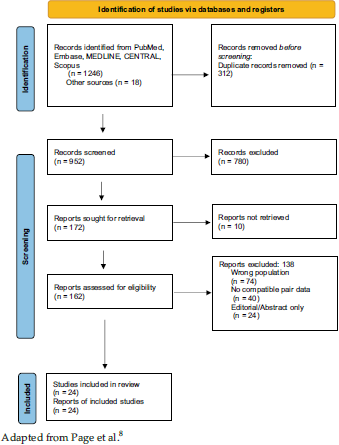
Figure 1. PRISMA 2020 Flow Diagram Showing the Study Selection for This Systematic Review
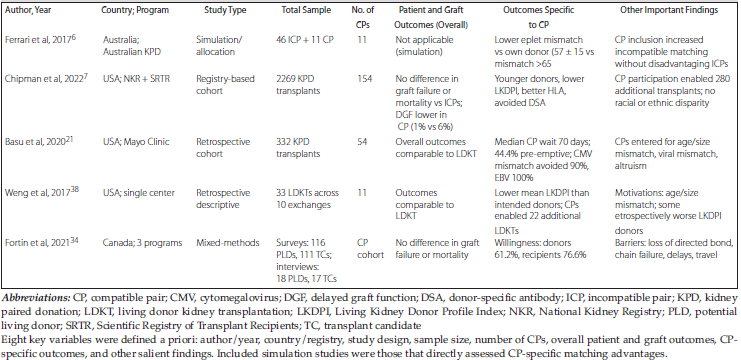
Table 1. Compatible Pair-Focused Studies Demonstrating Biological, Clinical, and System-Level Benefits of Inclusion in Kidney Paired Donation Programs
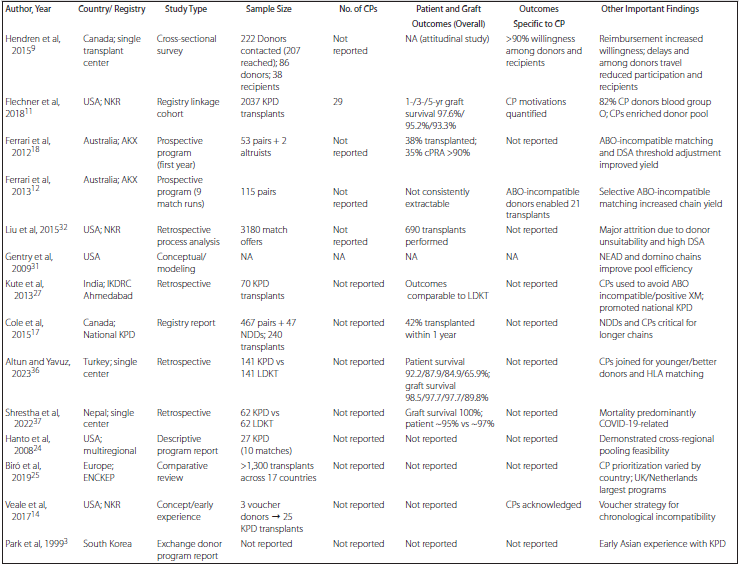
Table 2. Registry-Based, Programmatic, National, and Policy-Level Evidence Supporting Inclusion of Compatible Pairs in Kidney Paired Donation Programs
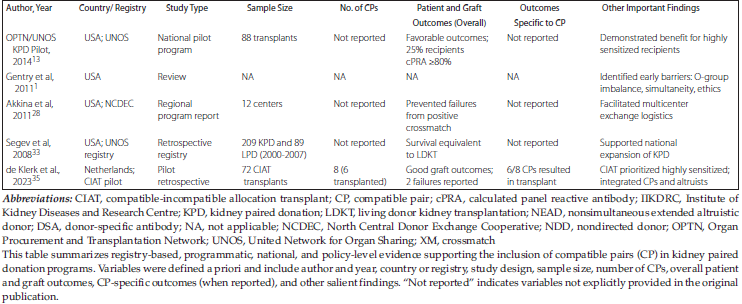
Table 2(Cont). Registry-Based, Programmatic, National, and Policy-Level Evidence Supporting Inclusion of Compatible Pairs in Kidney Paired Donation Programs