Volume: 24 Issue: 10 October 2026
FULL TEXT
Parvovirus B19-Associated Recurrent Severe Anemia in a Pediatric Kidney Transplant Recipient: Diagnostic Challenges and Therapeutic Considerations
Parvovirus B19 infection is an increasingly recognized cause of severe anemia in solid-organ transplant recipients, particularly during the first year posttransplant. We report a 13-year-old renal transplant recipient who developed progressive, transfusion-dependent normocytic anemia at month 6 post-transplant. Initial serologic testing for parvovirus B19 was negative, and the absence of overt hemolysis complicated the diagnostic evaluation. Bone marrow biopsy revealed giant pronormoblasts with characte-ristic intranuclear inclusions suggestive of parvovirus infection. Polymerase chain reaction demonstrated a markedly elevated viral load (2.7 × 10⁹ copies/mL), confirming the diagnosis. The patient was treated with intravenous immunoglobulin and reduction of immunosuppression, resulting in hematologic recovery. However, recurrent high-level viremia occurred during follow-up, requiring a total of 3 courses of intravenous immunoglobulin and careful adjustment of maintenan-ce immunosuppressive therapy. Despite consideration of conversion to a mammalian target of rapamycin inhibitor, tacrolimus-based therapy was continued with close monitoring of trough levels. Sustained hema-tologic remission was ultimately achieved by indivi-dualized immunosuppressive management. This case highlights the limitations of serologic testing in immunosuppressed hosts, underscores the central role of polymerase chain reaction in diagnosis, and emphasizes that dynamic optimization of immuno-suppressive burden, rather than mandatory calcine-urin inhibitor withdrawal, may be sufficient to control recurrent parvovirus B19 infection in pediatric kidney transplant recipients.
Key words : Immunosuppression, Infection, Intravenous immunoglobulin, Renal transplant
Introduction
Parvovirus B19 is a small, nonenveloped, single-stranded DNA virus belonging to the Parvoviridae family and is the prototype erythrovirus. The virus selectively infects erythroid progenitor cells in the bone marrow via the P antigen, leading to suppression of erythropoiesis.1 In immunocompetent individuals, infection is typically self-limited; however, in immunosuppressed patients (particularly solid-organ transplant recipients), persistent viremia may develop, resulting in pure red cell aplasia and severe anemia.2
The incidence of parvovirus B19 infection in kidney transplant recipients has been reported to range between 1% and 12%, although the true pre-valence is likely underestimated as result of under-recognition and the absence of routine molecular screening. The highest risk period is within the first year after transplant, when immunosuppressive therapy is most intense. Because inflammatory responses are attenuated in transplant recipients, clinical manifestations may be subtle, and diagnosis can be delayed.3
Here, we describe a pediatric renal transplant recipient who developed recurrent severe anemia due to parvovirus B19 infection, illustrating diagnostic challenges and therapeutic considerations in the transplant setting. This case was also presented as a poster presentation at the 56th Annual Meeting of the European Society for Paediatric Nephrology (ESPN), Valencia, Spain, 2024.
Case Report
A 13-year-old male patient who had undergone living donor kidney transplant at another center presented to the Pediatric Nephrology outpatient clinic at Ankara Bilkent City Hospital with prog-ressive fatigue during month 6 posttransplant. Records showed that kidney transplant had been performed from a living related donor. The donor was a fourth-degree relative (cousin) of the recipient and was aged >18 years at the time of transplant.
The patient’s maintenance immunosuppressive regimen consisted of prednisolone, tacrolimus, and mycophenolic acid.
Physical examination revealed marked pallor of the skin and mucous membranes. Blood pressure was normal, and mild tachycardia was noted. Laboratory evaluation demonstrated severe anemia with a hemoglobin level of 5.6 g/dL and hematocrit of 17%. Mean corpuscular volume was within normal limits, consistent with normocytic anemia. Renal function was stable, except for a mild elevation in serum creatinine compared with baseline. Peripheral blood smear showed normocytic, nor-mochromic anemia without dysplasia. There was no laboratory evidence of hemolysis.
Initial evaluation included autoimmune markers and viral studies. Antinuclear antibody and anti-dsDNA tests were negative. Results of BK virus polymerase chain reaction (PCR) in blood and urine were negative. Parvovirus B19 immunoglobulin (Ig) M and IgG serologies were negative. Additional viral markers were noncontributory.
Despite red blood cell transfusions, the patient remained transfusion-dependent, and hemoglobin declined further to 4.8 g/dL. Given the persistent unexplained severe anemia, bone marrow aspiration and biopsy were performed. Histopathologic exami-nation demonstrated approximately 70% cellularity with numerous large pleomorphic pronormoblasts containing prominent nucleoli and characteristic intranuclear inclusions, strongly suggestive of parvovirus B19 infection. Quantitative PCR for parvovirus B19 revealed a markedly elevated viral load of 2.7 × 10⁹ copies/mL, confirming the diagnosis. Results of cytomegalovirus PCR were negative.
Treatment was initiated with intravenous im-munoglobulin (IVIG) at a dose of 400 mg/kg/day for 5 consecutive days. In parallel, immunosuppressive therapy was minimized to facilitate viral clearance; mycophenolate sodium was reduced from 360 mg twice daily to 360 mg once daily, whereas tacrolimus was continued with monitoring of trough levels. Hemoglobin increased to 10.6 g/dL and subse-quently reached 14.0 g/dL, accompanied by a marked decline in viral load.
Approximately 3 months later, despite initial virologic improvement, the patient demonstrated ris-ing parvovirus B19 viral load (4.2 × 10¹⁰ copies/mL), although hemoglobin remained relatively stable (lowest 12.2 g/dL). Given concern for viral reacti-vation, a second course of IVIG was administered.
Six months later, the patient developed a hema-tologic relapse with hemoglobin decreasing to 6.9 g/dL, accompanied by a significant increase in viral load (2.3 × 10¹¹ copies/mL). The patient received a third course of IVIG.
After the patient received the third IVIG course, the patient’s hemoglobin level increased to 10.9 g/dL and subsequently stabilized at 14.7 g/dL at the 6-month follow-up. At 18 months, hemoglobin was 16.7 g/dL, with sustained clinical remission. Tacrolimus discontinuation and conversion to everolimus were considered because of concerns about persistent viral replication under calcineurin inhibitor therapy. However, as hemoglobin levels improved rapidly and hemolytic parameters nor-malized after IVIG administration, modification of maintenance immunosuppression was deferred. In addition, sustained access to everolimus could not be reliably ensured, as the patient was of foreign origin and lacked stable reimbursement coverage. Therefore, tacrolimus-based therapy was maintained. Hemog-lobin levels subsequently stabilized, and no further relapses were observed during follow-up.
Graft function also remained stable throughout the entire clinical course (Table 1). Serum creatinine levels stayed within the patient’s baseline range, and no clinical or biopsy-proven acute rejection episodes were observed. No rejection-directed therapy was required during follow-up.
Discussion
Parvovirus B19 is a well-recognized cause of severe anemia in kidney transplant recipients. Infection is common in childhood; approximately 50% of children by 15 years of age and nearly 70% of adults have detectable antibodies against parvovirus B19.4 Transmission occurs via respiratory secretions, close contact, transplacental spread, blood products, and organ transplant.
In immunosuppressed patients, particularly kidney transplant recipients, parvovirus B19 infection may result from primary infection, reactivation of latent virus, or persistent viremia. The virus exerts direct cytotoxic effects on erythroid progenitors, leading to suppression of erythropoiesis and, in severe cases, pure red cell aplasia.5 Immunosuppressive therapy impairs T-cell-mediated viral clearance, predisposing patients to prolonged high-level viremia.6 The risk of clini-cally significant viral replication is highest within the first year posttransplant.
Clinical manifestations in transplant recipients are often subtle. Fatigue and pallor are the most common findings. Anemia is typically normocytic and frequently unresponsive to erythropoietin therapy. Leukopenia and thrombocytopenia may occur in 37% and 21% of patients, respectively; although pancytopenia is not universal.7 Severe organ involv-ement such as myocarditis, interstitial pneumonia, or encephalitis has been reported but remains uncommon. Because patients who are immunosup-pressed may fail to mount an adequate antibody response, serologic testing may be falsely negative; IgM is positive in only approximately 75% of solid-organ transplant recipients at presentation, and IgG positivity does not reliably distinguish active infection.7 Therefore, PCR detection of viral DNA in blood is considered the diagnostic gold standard in transplant recipients.8
Bone marrow examination provides additional diagnostic support. The presence of erythrob-lastopenia and characteristic giant pronormoblasts with intranuclear inclusions is highly suggestive of parvovirus B19 infection.6 In our patient, negative serology combined with typical bone marrow morphology and markedly elevated viral load established the diagnosis.
Intravenous immunoglobulin remains the main-stay of therapy. The commonly used regimen is 400 mg/kg/day IVIG for 5 consecutive days.2,6 Reduction of immunosuppression is frequently recommended; however, the risk of acute rejection must be carefully balanced.9 Zhong and colleagues reported that, among solid-organ transplant reci-pients with parvovirus B19 infection between 1990 and 2021, 91.4% received IVIG, 53.8% were treated with IVIG combined with immunosuppression reduction, and the overall recurrence rate was 17.5%.10 Relapse rates of up to 33% have been reported, particularly in primary infections and in patients who received polyclonal T-cell depleting therapy.11
The optimal immunosuppressive strategy remains uncertain. Huang and colleagues reported that 75% of infections occurred within the first 2 weeks after kidney transplant and identified associations with basiliximab and thymoglobulin use.12
Several reports have suggested that conversion from calcineurin inhibitors or mycophenolate-based regimens to mammalian target of rapamycin (mTOR) inhibitors, particularly everolimus, may facilitate viral control in refractory cases.13,14 These observations have led to the hypothesis that mTOR inhibitor-based regimens may provide improved immunologic control of parvovirus replication. However, evidence is largely limited to isolated case reports, and pediatric data remain scarce.14
In our patient, conversion to everolimus was considered because of persistent high-level viremia; however, this modification was ultimately not implemented. Instead, immunosuppression was carefully minimized, with reduction of mycop-henolate dosage and close monitoring of tacrolimus trough levels. Notably, sustained hematologic remission was achieved under tacrolimus-based therapy following 3 courses of IVIG.
This case highlights several clinically relevant points: recurrence may occur despite appropriate IVIG therapy; dynamic adjustment of overall immunosuppressive burden is crucial; prolonged pediatric follow-up is essential to detect relapse; and durable remission may be achieved without complete withdrawal of calcineurin inhibitors. Unlike pre-viously reported cases in which conversion to mTOR inhibitors appeared necessary for viral control, our experience suggests that individualized immunosup-pressive optimization may be sufficient in selected pediatric transplant recipients.
Given the broad differential diagnosis of post-transplant anemia, including medication-related marrow suppression and viral infections such as cytomegalovirus or parvovirus B19, early PCR testing should be considered in pediatric kidney transplant recipients presenting with severe or transfusion-dependent anemia, particularly within the first year posttransplant.15,16 Close longitudinal monitoring remains essential, as relapse continues to represent a significant clinical concern.
Conclusions
Parvovirus B19 infection should be considered in all kidney transplant recipients presenting with severe, unexplained, transfusion-dependent, or erythropoietin-unresponsive normocytic anemia, particularly within the first year posttransplant. Serologic testing may be unreliable in immuno-suppressed patients, and PCR remains the most sensitive diagnostic modality.
Management primarily consists of IVIG admi-nistration combined with careful, individualized adjustment of immunosuppressive therapy. Our case demonstrates that sustained hematologic remission may be achieved through repeated IVIG courses and judicious reduction of overall immunosuppressive burden, even without complete withdrawal of calcineurin inhibitors.
Early molecular diagnosis and tailored immuno-suppressive strategies are essential to prevent prolonged morbidity and relapse, particularly in pediatric transplant recipients, in whom stan-dardized management algorithms remain limited.
References:
- Rogo LD, Mokhtari-Azad T, Kabir MH, Rezaei F. Human parvovirus B19: a review. Acta Virol. 2014;58(3):199-213. doi:10.4149/av_2014_03_199
CrossRef - PubMed - Perry O, Ellis R, Dang S, John GT, Hendry S, Ng MS. A rare case of parvovirus infection causing pure red cell aplasia in a kidney-pancreas transplant recipient. Nephrology (Carlton). 2025;30(7):e70066. doi:10.1111/nep.70066
CrossRef - PubMed - Porignaux R, Vuiblet V, Barbe C, et al. Frequent occurrence of parvovirus B19 DNAemia in the first year after kidney transplantation. J Med Virol. 2013;85(6):1115-1121. doi:10.1002/jmv.23557
CrossRef - PubMed - Thongprayoon C, Khoury NJ, Bathini T, et al. Epidemiology of parvovirus B19 and anemia among kidney transplant recipients: a meta-analysis. Urol Ann. 2020;12(3):241-247. doi:10.4103/UA.UA_89_19
CrossRef - PubMed - Waldman M, Kopp JB. Parvovirus B19 and the kidney. Clin J Am Soc Nephrol. 2007;2(Suppl 1):S47-56. doi:10.2215/CJN.01060307
CrossRef - PubMed - Shankar M, Shetty V, Kumar DS, Sreedhara CG. Silent saboteur: parvovirus B19 (B19V) and its impact on refractory post-transplant anemia. Front Med (Lausanne). 2025;12:1686727. doi:10.3389/fmed.2025.1686727
CrossRef - PubMed - Pakkyara A, Jha A, Al Salmi I, et al. Persistent anemia in a kidney transplant recipient with parvovirus B19 infection. Saudi J Kidney Dis Transpl. 2017;28(6):1447-1450. doi:10.4103/1319-2442.220846
CrossRef - PubMed - de Oliveira Simões F, Goncalves H, Sá R, et al. Parvovirus B19-induced pancytopenia: a case report of aplastic crisis. Cureus. 2024;16(12):e76660. doi:10.7759/cureus.76660
CrossRef - PubMed - Mascia G, Argiolas D, Carta E, Ibba S, Piredda GB. Successful treatment of anemia with anaplastic and microangiopathic characteristics in a kidney transplant recipient with parvovirus B19 infection: a case report. Transplant Proc. 2020;52(5):1619-1622. doi:10.1016/j.transproceed.2020.02.077
CrossRef - PubMed - Zhong Q, Zeng J, Lin T, Song T. The detection, treatment of parvovirus B19 infection induced anemia in solid organ transplants: a case series and literature review of 194 patients. Transfus Clin Biol. 2022;29(2):168-174. doi:10.1016/j.tracli.2021.12.005
CrossRef - PubMed - Beckhoff A, Steffen I, Sandoz P, Hirsch HH, Schaub S. Relapsing severe anaemia due to primary parvovirus B19 infection after renal transplantation: a case report and review of the literature. Nephrol Dial Transplant. 2007;22(12):3660-3663. doi:10.1093/ndt/gfm531
CrossRef - PubMed - Huang Q, Wang Y, Chen R, et al. Parvovirus B19 infection in kidney transplant recipients: a prospective study in a teaching hospital in Shanghai, China. Transpl Immunol. 2022;74:101667. doi:10.1016/j.trim.2022.101667
CrossRef - PubMed - Rodríguez-Espinosa D, Esforzado N, Hermida E, et al. A case of recurrent anemia due to chronic parvovirus B19 infection in a kidney transplant recipient. Can everolimus make a difference? CEN Case Rep. 2021;10(3):388-392. doi:10.1007/s13730-021-00575-0
CrossRef - PubMed - Sabanci M, Taşdemir M, Öksüz B, Altuner Torun Y, Sütçü M, Özkaya O. Managing recurrent parvovirus B19-associated anemia after a pediatric kidney transplant. Pediatr Nephrol. 2024;39(10):2923-2925. doi:10.1007/s00467-024-06378-6
CrossRef - PubMed - Carraturo A, Catalani V, Ottaviani D, et al. Parvovirus B19 infection and severe anemia in renal transplant recipients. ScientificWorldJournal. 2012;2012:102829. doi:10.1100/2012/102829
CrossRef - PubMed - Bentata Y. Parvovirus B19 in kidney transplantation: key points and essential pitfalls to know. Infect Dis (Lond). 2021;53(6):404-408. doi:10.1080/23744235.2021.1893379
CrossRef - PubMed

Volume : 24
Issue : 10
Pages : 853 - 856
DOI : 10.6002/ect.2026.0044
From the 1Department of Pediatric Nephrology, Faculty of Medicine, Başkent University; the 2Department of Pediatric Infectious Diseases, Ankara Bilkent City Hospital; the 3Department of Pediatric Hematology, Ankara Bilkent City Hospital; the 4Department of Pediatric Nephrology, Ankara Bilkent City Hospital; and the 5Department of Pediatric Nephrology, Gazi University, Ankara, Türkiye
Acknowledgements: The authors have not received any funding or grants in support of the presented research or for the preparation of this work and have no declarations of potential conflicts of interest.
Corresponding author: Özlem Yüksel Aksoy, Department of Pediatric Nephrology, Faculty of Medicine, Başkent University, Ankara, Türkiye
E-mail: ozlem_yurtsever@yahoo.com; ozlemaksoy@baskent.edu.tr
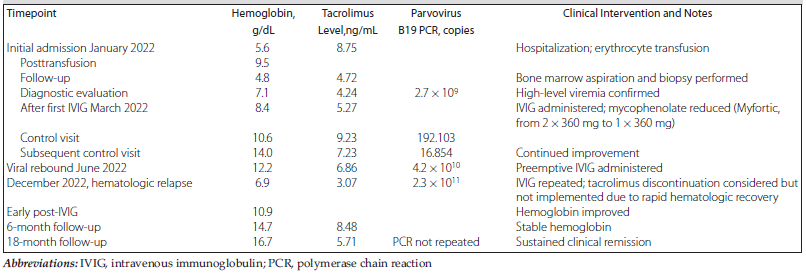
Table 1. Clinical Course of Parvovirus B19-Associated Anemia Under Tacrolimus-Based Immunosuppression