Volume: 23 Issue: 9 September 2025
FULL TEXT
Psychometric Properties and Transcultural Adaptation of Turkish Version of the Basel Assessment of Adherence to Immunosuppressive Medication Scale
Objectives: This study aimed to translate BAASIS (Basel Assessment of Adherence to Immunosuppressive Medication Scale) into Turkish and to test the psychometric properties of the translated Turkish version of the instrument.
Materials and Methods: In this single-center cross-sectional study, we included 100 kidney transplant recipients in a university hospital in a western city of Turkiye. The Translation and Cultural Adaptation Report from Professional Society for Health Economics and Outcomes Research was used for the transcultural adaptation of BAASIS to Turkish. We tested the validity of the BAASIS Turkish version by the level of evidence according to the American Educational Research Association guidelines: content validity, internal structure, and relations to other variables. We calculated item-total correlations of the BAASIS Turkish version to examine internal consistency reliability.
Results: The content validity index score of BAASIS was calculated as 1.00, indicating agreement between the experts. Exploratory factor analysis evaluated the internal structure of BAASIS, and the coefficients for inter-item correlations ranged from 0.170 to 0.395. The Immunosuppressive Treatment Adherence Scale and the BAASIS nonadherent scores were significantly correlated (r = 0.673, P < .001). The coefficients for item-total correlation analyses ranged from 0.160 to 0.470.
Conclusions: The BAASIS Turkish version has ac-ceptable psychometric properties. The scale can be used in clinical practice and research projects in transplantation to assess immunosuppressive medi-cation adherence.
Key words : BAASIS, Immunosuppression, Medication adherence, Scale, Transplant recipient, Validation
Introduction
The primary goals of the care of transplant recipients are to preserve graft functions, prevent potential complications, such as rejection, enhance quality of life, and improve survival. Achieving these goals depends on adherence to the medical regimen of transplant recipients.1,2 Transplant recipients struggle with a complex treatment regimen as they must take multiple medications for years and lifelong immuno-suppressants. Considering the need for transplant recipients to adhere strictly to immunosuppressive medication use, medication adherence becomes a crucial aspect of long-term posttransplant care.3,4 The Consensus on Managing Modifiable Risk in Transplantation (COMMIT) group defines medica-tion adherence as the fifth vital sign in transplant follow-up care.5
The most recent medication adherence taxonomy (ABC taxonomy) defined medication adherence as “the process by which patients take their medication as prescribed.” The ABC taxonomy indicates that medication adherence consists of 3 interrelated phases: initiation, implementation, and discontinuation.6 The initiation phase occurs when a patient takes her/his first dose of prescribed medication. The imple-mentation phase refers to “the extent to which a patient’s dosing corresponds to the prescribed dosing regimen, from initiation until the last dose is taken.” The issues related to medication use in the implementation phase are “late,” “skipped,” “extra,” or “reduced” doses or “drug holidays.” The discon-tinuation phase refers to “the moment that the patient discontinues his/her medication regimen on their initiative.” The duration between the time of initiation and the moment the last dose is taken is called persistence. When the transplant recipient does not adhere to the 3 phases in various ways, this is referred to as medication nonadherence.3,6 Medica-tion nonadherence is defined as “deviation from the prescribed medication regimen sufficient to influence adversely the regimen’s intended effect.”7 Various studies have reported the prevalence of nonadherence to immunosuppressive medications.1,8-10 Transplant-specific study results are not available on nonad-herence in the initiation phase, but nonadherence has been reported to be around 15% in chronically ill patients.11 The BRIGHT study found implementation nonadherence to immunosuppressants in 17.3% of heart transplant recipients in view of taking (dosage and timing), drug holidays, and dose alteration.12 In the same study, the prevalence of nonadherence to immunosuppressants for the discontinuation phase was reported as 0.5%.12
Various measurement methods are used to evaluate the medication adherence of transplant recipients.3 Measurement methods are classified on 2 axes: vertical and horizontal. The vertical axis extends from more biased to more reliable methods, and the horizontal axis expresses data richness from limited information to richer information.3,13,14 Therapeutic drug monitoring, directly observed therapy, and pharmacy refill data are reliable measurement methods but provide limited information. Automated compilation of dosing history data, including electronic monitoring and ingestible smart sensors, is reliable for generating rich information about medication adherence; however, the usability and acceptability of these methods within routine care warrant further investigation. Patient diaries and retrospective questionnaires are the most commonly used methods to assess medication adherence because of their ease of use and inexpensiveness. In addition, these methods are reported to involve a greater bias risk. Self-reported questionnaires, which are retrospective questionnaires, can assess initiation, implementation, and persistence of medication adherence, depending on the content of the items.3,13
A systematic review of self-report tools and COMMIT guideline has recommended “The Basel Assessment of Adherence to Immunosuppressive Medication Scale” (BAASIS) as a self-report ques-tionnaire in transplantation.5,15 The COMMIT group also recommended the Immunosuppressant Therapy Adherence Scale (ITAS) and the Simplified Medication Adherence Questionnaire; however, the validity of these tools has been reported to be suboptimal.5
Immunosuppressant Therapy Adherence Scale is a valid and reliable measurement tool that has been adapted into the Turkish.16 The Scale includes questions about immunosuppressive medication use among transplant recipients over the past 3 months. The scoring of the scale is based on the frequency of nonadherence to medication use over 3 months. Difficulty in patients accurately recalling the past 3 months complicates the use of the ITAS. Reports have recommended BAASIS as a valuable instru-ment for clinical practice and transplant research projects.3,5,15,17,18 This instrument provides an advantage over other measurement tools in terms of monitoring of medication adherence among transplant recipients in initiation, implementation, and discontinuation aspects. The BAASIS evaluates immunosuppressive medication adherence in terms of taking, timing, dosing, and persistence with a small number of questions. In addition, BAASIS focuses on the past 4 weeks, which can make it easier for participants to recall. The scoring of the scale is also quite easy. These features of BAASIS make the scale practical for clinical use.
The psychometric properties of BAASIS were investigated in the meta-analysis of Denhaerynck and colleagues.19 The study showed that BAASIS has good validity and reliability in assessing medication adherence in transplant recipients.18 The instrument is available in a written version and a patient interview. The latest 6-item version of BAASIS assesses implementation (4 items), discontinuation (1 item), and initiation of related comedications (1 item added in 2019).19,20 The instrument’s validity was reported in some single-center studies, but the psychometric properties of the instrument need to be investigated for different populations.21,22
Although BAASIS is currently translated into 11 languages, the latest 6-item version of the instrument has not been translated into Turkish yet.20 Given that no other scale in Turkey is available that addresses medication adherence in the aspects of initiation, implementation, and discontinuation, this study aimed to translate BAASIS into Turkish and to test the validity of the translated Turkish version of BAASIS. Research questions and hypotheses to test the validity and reliability of BAASIS are listed in (Table 1).
Materials and Methods
Study design and participants
We conducted a single-center cross-sectional study at a kidney transplant center in a university hospital in the western part of Turkiye. The study sample consisted of 100 kidney transplant recipients. The participants included in the study fulfilled the following inclusion criteria: being 18 years or older, able to understand and speak Turkish, and living for more than 3 months after transplant surgery. In addition, recipients who had undergone a multiorgan transplant or retransplant and had psychiatric disorders were excluded. In the determination of sample size in scale development/adaptation studies, to look at the item-total score correlation, it is recommended that the sample size is between 100 and 200 participants, or 5 to 10 times the number of items in the scale.23,24 Therefore, this study’s sample size for the 6-item scale consisted of 100 kidney transplant recipients.
Transcultural adaptation of BAASIS to Turkish
The study used the ISPOR Translation and Cultural Adaptation Report25 to translate BAASIS into Turkish. The framework for describing each step in the translation process includes 10 steps: (1) preparation, (2) forward translation, (3) reconciliation, (4) back translation, (5) back translation review, (6) harmonization, (7) cognitive debriefing, (8) review of cognitive debriefing results and finalization, (9) proofreading, and (10) final report.25
Psychometric properties
Assessments of reliability and validity are recom-mended for studying psychometric properties of self-report instruments by the American Educational Research Association, the American Psychological Association, and the National Council on Measu-rement in Education.26 In this study, validity and reliability analyses of the Turkish version of BAASIS were carried out for this framework.
Validity
Validity is a unitary concept based on various types of validity evidence: (1) evidence based on test content, (2) evidence based on response processes, (3) evidence based on internal structure, (4) evidence based on relations to other variables, and (5) evidence based on consequences of testing.26 According to this framework, evidence based on test content, internal structure (construct validity), and relations to other variables (concurrent validity) were used to establish the validity of the Turkish version of BAASIS.
Evidence based on test content (content validity)
The expert panel evaluated the content validity to assess whether each item in the scale and the entirety of the scale were suitable for measurement and represent the area to be measured. Expert opinions were obtained according to the conceptual framework of ABC taxonomy.6,19 In addition, the expert panel evaluated whether the instrument’s items were straightforward and easy to understand.27 Three transplant nurses, 3 medical doctors working in the field of transplantation, a Turkish language specialist, and a quantification and consideration specialist took part in the expert panel. Experts were asked to evaluate each item of BAASIS in terms of the following criteria: (1) whether the item measures the targeted structure, (2) whether the item is related to the structure but unnecessary, and (3) whether the item does not measure the targeted structure. The items’ content validity indexes were calculated using the Lawshe method.28
Internal structure (construct validity)
To deter-mine the scale’s construct validity, item and exploratory factor analyses were performed. In the item analysis, the items’ relations with the mea-surement tool and how much the items contributed to the measurement tool were determined.26,29 Factor loadings and inter-item correlations were calculated. Factor loadings were expected to be at least 0.30.30
Evidence-based on relations to other variables (concurrent validity)
Concurrent validity refers to analyses of the rela-tionship between test scores and other variables.26The ITAS, which was previously developed and conceptually related to the attitude to be measured, was used to analyze concurrent validity.16,31 Some previous studies have reported the use of ITAS for concurrent validity.18,32,33 The ITAS is the only international instrument adapted to Turkish to assess the medication adherence of transplant recipients; therefore, it was used to test concurrent validity. The relationship between the rate of nonadherence of the 2 instruments was evaluated by applying the 2 instruments to the same sample.
Reliability
Internal consistency analysis was used to evaluate the reliability of the Turkish version of BAASIS. The correlation coefficient for item-total correlation was calculated. Items that have an item-total correlation value greater than 0.20 can be retained in the instrument due to their effective differentiating characteristics.35,36
Data collection instruments
We collected data by using a survey of a patient information, the Turkish version of BAASIS, and ITAS.
Patient information form
For analysis of demographic characteristics, we used a structured questionnaire to obtain information on age, biological sex, marital status, education, employ-ment, donor type, and etiology of kidney failure.
The BAASIS instrument
The instrument was developed by the Leuven-Basel Adherence Research Group to assess adherence to immunosuppressive medications in adult and adolescent transplant recipients.20 The BAASIS is a self-report instrument that is conceptually based on the ABC taxonomy and has been validated in transplant populations.19,20 The latest version of the instrument includes 6 items to assess imple-mentation, discontinuation, and initiation of related co-medications. Initiation (item 5) is assessed with a “yes/no” answer. The implementation phase is assessed through items 1a, 1b, 2, and 3 with a “yes/no” answer. Each item focuses on a different aspect of medication adherence (item 1a is taking, item 1b is drug holidays, item 2 is timing or regularity of medication intake, and item 3 is dose reduction). If patients answer “yes” to items 1a, 1b, 2, or 3, patients are asked to answer about the frequency of implementation problems in 5 response categories. Persistence (discontinuation) is assessed by item 4 with a “yes/no” answer. A “yes” response to items 1a, 1b, 2, or 3 indicates a problem with implementation. We calculated the proportion of patients who answered “yes” for each of these items. A “yes” answer to 1 or more implementation item is considered nonadherence. A “yes” to item 4 indicates the nonpersistence of immunosuppressive medication use. Although 2 versions of BAASIS are available (interview or written), the interview form is recom-mended, which is completed conducted by a health care professional and transplant recipient.20 Although both forms were translated into Turkish, we used the interview form to collect data.
Immunosuppressant Therapy Adherence Scale
Immunosuppressant Therapy Adherence Scale is a reliable and accessible instrument developed in the United States in 2005 by Chisholm and colleagues to assess immunosuppressant therapy adherence of transplant recipients.31 Madran and colleagues performed Turkish reliability and validity study of the instrument.16 The scale includes 4 items that question adherence of organ transplant patients to immunosuppressant therapy in the 3 months before administration of the scale. Items are rated on a 4-point Likert-type scale. The frequency of failing in adherence is scored from 3 to 1. Three points refer to 0% nonadherence, 2 points to 0% to 20%, 1 point to 21% to 50%, and 0 points to >50%. We added scores obtained from each item, with possible scores ranging from 0 to 12. Higher scores indicate higher adherence rates.16 The Cronbach alpha of the Turkish version of the scale was reported as 0.65, and the item correlation value was between 0.27 and 0.69.16
Data collection process
Data were collected during regular visits of kidney transplant recipients in posttransplant outpatient clinics. The kidney transplant recipients who were informed about the study and agreed to participate in the study were interviewed face-to-face in the outpatient clinics. Researchers with experience in the use of the data collection instruments applied the data collection tools to transplant recipients.
Data analyses and study process
We used IBM SPSS for data analyses. We used frequency distribution and descriptive statistics to describe sample characteristics. We evaluated content validity by calculating content validity indexes of items based on expert views. We performed exploratory factor analysis to determine the internal structure (construct validity) of the instrument. We calculated Kaiser-Meyer-Olkin (KMO) values and performed Bartlett test to determine whether data were suitable for factor analysis. The KMO value must be higher than 0.60, and Bartlett test required significance at P < .01. We used Spearman rank correlation to estimate correlations between BAASIS and ITAS scores to explore evidence based on relations to other variables. Item-total correlations were calculated to examine internal consistency.
Ethical considerations
Written formal permission to adapt BAASIS into Turkish was obtained from authors the original tool via electronic mail. Ethics committee approval (dated 18.06.2019, No. GO19/683) and written institutional permission were obtained. A researcher informed each patient about the purpose and scope of the research. Informed consent was obtained from all individual participants included in the study.
Results
Transcultural adaptation of BAASIS to Turkish
The ISPOR Translation and Cultural Adaptation Report was used for the transcultural adaptation of BAASIS to Turkish.25 The following was performed for each step defined in the framework: (1) for preparation, the study group was determined and permission was obtained for Turkish adaptation of BAASIS; (2) for forward translation, BAASIS was translated to Turkish by 2 people who spoke Turkish and English; (3) for reconciliation, the first Turkish version was evaluated by the researchers; (4) for back translation, the Turkish form was translated back to English by 2 people; (5) for back translation review, the back translation was reviewed by the researchers; (6) for harmonization, the back-translated and original forms were compared and evaluated; (7), for cognitive debriefing, the instrument was tested on 5 kidney transplant patients as a pilot application; (8) for review of cognitive debriefing results and finalization, the pilot results were evaluated by researchers, with no further editing found to be necessary; (9) for proofreading; the opinions of 8 people consisting of language experts and field experts were obtained; and (10) for the final report, the instrument was finalized by evaluating the expert opinions.
Patient characteristics
Median age of transplant recipients was 46.5 years (interquartile range, 38.0-57.7 y). Most transplant recipients were men (60.0%), married (70.0%), had a primary school education (54.0%), and unemployed (51%). In addition, most received organs from deceased donors (52.0%), and etiology of kidney failure was mainly “unknown” (38.0%) (Table 2). Responses to data collection items and rates of transplant recipients with adherence and no adherence to medications per BAASIS are shown in (Table 3). The medication nonadherence rate among the recipients was 69%. Only one participant responded “yes” to item 4 (persistence), and none of the participants indicated item 5 (initiation).
Content validity of psychometric measurements
After the translation step was completed, the experts evaluated the items to test the language validity of the scale. The Turkish items were sent to 8 experts in the field. The experts recommended minor revisions for the items to make them easier to understand for the Turkish population, and the researcher revised items based on the experts’ recommendations. The content validity index score was calculated as 1.00, indicating agreement among the 8 experts.
Internal structure (construct validity) of psycho-metric measurements
Exploratory factor analysis was used to evaluate the construct validity of the instrument. When the KMO value and the Bartlett test results were examined before these analyses, KMO (0.627) and Bartlett test (26.498) showed significance (P < .001). Factor loadings and inter-item correlations of BAASIS are shown in (Table 4) and (Table 5).
Evidence-based relations to other variables (concurrent validity) in psychometric measurements
The ITAS was used to test the concurrent validity of the instrument. The ITAS and BAASIS nonadherent scores were significantly correlated (r = 0.673, P < .001).
Reliability: internal consistency of psychometric measurements
Item-total correlations was performed to determine the internal consistency of the measurements ob-tained from the Turkish version of BAASIS (Table 6). The corrected item-total correlation coefficients for 4 items ranged from 0.160 to 0.470.
Discussion
Various methods are used to assess medication adherence in organ transplant recipients.14,15 Among these methods, the self-report method is seen as the most practical because it is easy to apply and inexpensive.37 Studies have reported BAASIS to be an appropriate valid and reliable self-report tool for clinical practice and research projects in transplantation.3,5,15,19 The 6-item version of BAASIS, based on the ABC taxonomy, can assess initiation, implementation, and persistence of medication adherence.19,20 The instrument can be completed as an interview or alone and is short and feasible for implementation in routine care. This study described the adaptation of BAASIS to Turkish and evaluated the psychometric properties of the BAASIS Turkish version. Analyses of psychometric properties demonstrated that the Turkish version of the instrument has acceptable psychometric properties to measure medication nonadherence to immuno-suppressant therapy in transplant recipients.
The transcultural adaptation of BAASIS was conducted in accordance with the guidelines outlined in the ISPOR Translation and Cultural Adaptation Report.25 The BAASIS has been translated into Brazilian Portuguese, Japanese, Czech, Dutch, French, German, Italian, Korean, Norwegian, Spanish, and Swedish languages by using a forward-backward translation approach based on standard translation protocols.20,22,38 The BAASIS consortium has recommended following ISPOR Translation and Cultural Adaptation Report during the translation process.20 For the transcultural adaptation of BAASIS to Turkish in this study, the steps described in that report were successfully followed.
Content, construct, and concurrent validity methods have been used to validate the Turkish version of BAASIS.26 During content validity analysis in this study, minor adjustments were made to prevent potential misunderstandings in the instrument; however, no major revision was required in translation of items. The content validity analysis suggested that the translation was reasonably acceptable. A validity method similar to ours, that is, using the proposals of an expert committee, was used in adaptation of a Brazilian-Portuguese version of BAASIS.22
Our study analyzed the inter-item correlations and factor loadings to evaluate construct validity. Results showed that the relationships between the items were acceptable. The correlation coefficients for item 4 were lower compared with the other items. This result can be attributed to the fact that only 1 participant answered “yes” to item 4. Exploratory factor analysis demonstrated that all items had factor loadings above 0.30. The factor loading of item 4 was found to be lower than the others. When item 4 was excluded, no significant changes were observed in the factor loadings of the other items. Therefore, item 4 was retained in the Turkish version of BAASIS, and the original structure of the instrument was preserved. Similar results have been reported by Marsicano and colleagues.22
In a meta-analysis, Denhaerynck and colleagues reported that the methods used to evaluate the concurrent validity of BAASIS included other self-report instruments, blood assays, collateral reports, and psycho-behavioral constructs.19 The self-report instruments used for this purpose were Immuno-suppressant Therapy Adherence Scale, Morisky Medication Adherence Scale, Measure of Adherence to Treatment, and Immunosuppressant Therapy Adherence Scale.19 In our study, ITAS was used to evaluate concurrent validity, with a significant correlation found between the Turkish version of BAASIS and ITAS. In the study of the Brazilian-Portuguese version of BAASIS, a similar method was performed with a different instrument (ie, Measure of Adherence to Treatment Scale), which showed a strong correlation.22 In a validation study of a Japanese version of BAASIS, the medication event monitoring system and the 12-item Medication Adherence Scale were used to evaluate concurrent validity.38 The Japanese version of BAASIS showed good concurrent validity with the medication event monitoring system and a slight concurrent validity with the “medication compliance” subscale of the 12-item Medication Adherence Scale.38 Some studies have recommended that electronic monitoring be used as the standard method for assessment of medication adherence because of its superior sensitivity.3,39,40 However, the medication event monitoring system is not available in Turkiye and thus was not used to evaluate concurrent validity in the present study.
Item-total correlation, which is one of the statistical methods for assessing internal consistency, was used to evaluate the reliability of the Turkish version of BAASIS. The internal consistency of the BAASIS Turkish version was found to be adequate to assess immunosuppressive medication adherence in transplant recipients in Turkiye. Results showed that the corrected item-total correlation of item 4 was below 0.20. This outcome is thought to have occurred because only 1 transplant recipient answered “yes” to item 4 (99 answered “no”). Therefore, to preserve the original structure of BAASIS, item 4 remained in the Turkish version of the instrument. In the validation study of the Japanese version of BAASIS, because BAASIS was not based on a reflective model but on a formative model, the internal consistency of the instrument was not analyzed.38 In the study of the Brazilian-Portuguese version of BAASIS, internal consistency was tested by calculating the Cronbach alpha coefficient (0.70). Cronbach alpha describes the extent to which all of the items in a test measure the same concept or construct.41 The 6-item version of BAASIS assesses 3 different phases of medication adherence (initiation, implementation, and persistence) as conceptualized by the ABC taxonomy.19,20 Therefore, Cronbach alpha coefficient was not used in the internal consistency analysis in our study.
Our study had several limitations. First, the study had a limited sample size and included only kidney transplant recipients. Second, the ITAS was used to evaluate concurrent validity. The ITAS is not based on the ABC taxonomy and assesses a mix of behavior and reasons for nonadherence. However, the ITAS is the only international instrument adapted to Turkish to assess medication adherence in transplant recipients; therefore, it was used to test concurrent validity. Third, no participant indicated item 5, which assesses initiation according to the ABC taxonomy, therefore, item 5 was not included in the statistical analysis.
Conclusions
The 6-item version of BAASIS, when adapted to Turkish, showed acceptable psychometric properties to assess the immunosuppressive medication adhe-rence of transplant recipients in clinical practice and research projects.
References:
- Dew MA, DiMartini AF, De Vito Dabbs A, et al. Rates and risk factors for nonadherence to the medical regimen after adult solid organ transplantation. Transplantation. 2007;83(7):858-873. doi:10.1097/01.tp.0000258599.65257.a6
CrossRef - PubMed - De Geest S, Denhaerynck K, Dobbels F, Oppenheimer F. Clinical and economic consequences of non-adherence to immunosuppressive drugs in adult solid organ transplantation. Compliance in Solid Organ Transplantation. International Transplantation Updates. Permanyer Publications; 2011.
CrossRef - PubMed - De Geest S, Ribaut J, Denhaerynck K, Dobbels F. Adherence management in transplantation: creating impact in real-world setting based on state of the art evidence. In: Cukor D, Cohen S, Kimmel PL, eds. Psychosocial Aspects of Chronic Kidney Disease : Exploring the Impact of CKD, Dialysis, and Transplantation on Patients. Elsevier; 2021:409-448.
CrossRef - PubMed - Serper M, Patzer RE, Reese PP, et al. Medication misuse, nonadherence, and clinical outcomes among liver transplant recipients. Liver Transpl. 2015;21(1):22-28. doi:10.1002/lt.24023
CrossRef - PubMed - Neuberger JM, Bechstein WO, Kuypers DR, et al. Practical recommendations for long-term management of modifiable risks in kidney and liver transplant recipients: a guidance report and clinical checklist by the Consensus on Managing Modifiable Risk in Transplantation (COMMIT) Group. Transplantation. 2017;101(4S Suppl 2):S1-S56. doi:10.1097/TP.0000000000001651
CrossRef - PubMed - Vrijens B, De Geest S, Hughes DA, et al. A new taxonomy for describing and defining adherence to medications. Br J Clin Pharmacol. 2012;73(5):691-705. doi:10.1111/j.1365-2125.2012.04167.x
CrossRef - PubMed - Fine RN, Becker Y, De Geest S, et al. Nonadherence consensus conference summary report. Am J Transplant. 2009;9(1):35-41. doi:10.1111/j.1600-6143.2008.02495.x
CrossRef - PubMed - Gokoel SR, Gombert-Handoko KB, Zwart TC, van der Boog PJM, Moes D, de Fijter JW. Medication non-adherence after kidney transplantation: a critical appraisal and systematic review. Transplant Rev (Orlando). 2020;34(1):100511. doi:10.1016/j.trre.2019.100511
CrossRef - PubMed - De Geest S, Burkhalter H, Bogert L, et al. Describing the evolution of medication nonadherence from pretransplant until 3 years post-transplant and determining pretransplant medication nonadherence as risk factor for post-transplant nonadherence to immunosuppressives: the Swiss Transplant Cohort Study. Transpl Int. 2014;27(7):657-666. doi:10.1111/tri.12312
CrossRef - PubMed - De Bleser L, Dobbels F, Berben L, et al. The spectrum of nonadherence with medication in heart, liver, and lung transplant patients assessed in various ways. Transpl Int. 2011;24(9):882-891. doi:10.1111/j.1432-2277.2011.01296.x
CrossRef - PubMed - Lemstra M, Nwankwo C, Bird Y, Moraros J. Primary nonadherence to chronic disease medications: a meta-analysis. Patient Prefer Adherence. 2018;12:721-731. doi:10.2147/PPA.S161151
CrossRef - PubMed - Helmy R, Scalso de Almeida S, Denhaerynck K, et al. Prevalence of medication nonadherence to co-medication compared to immunosuppressants in heart transplant recipients: findings from the international cross-sectional BRIGHT study. Clin Ther. 2019;41(1):130-136. doi:10.1016/j.clinthera.2018.11.007
CrossRef - PubMed - Vrijens B, Urquhart J. Methods for measuring, enhancing, and accounting for medication adherence in clinical trials. Clin Pharmacol Ther. 2014;95(6):617-626. doi:10.1038/clpt.2014.59
CrossRef - PubMed - Osterberg L, Blaschke T. Adherence to medication. N Engl J Med. 2005;353(5):487-497. doi:10.1056/NEJMra050100
CrossRef - PubMed - Dobbels F, Berben L, De Geest S, et al. The psychometric properties and practicability of self-report instruments to identify medication nonadherence in adult transplant patients: a systematic review. Transplantation. 2010;90(2):205-219. doi:10.1097/TP.0b013e3181e346cd
CrossRef - PubMed - Madran B, Karayurt O, Spivey C, Burns M. Immunosuppressant therapy adherence scale for transplant recipients: the study of validity and reliability. Turk Klinik J Nurs. 2016;8. doi:10.5336/nurses.2015-48479
CrossRef - PubMed - Tong A, Oberbauer R, Bellini MI, et al. Patient-reported outcomes as endpoints in clinical trials of kidney transplantation interventions. Transpl Int. 2022;35:10134. doi:10.3389/ti.2022.10134
CrossRef - PubMed - Haupenthal F, Doberer K, Bauernfeind F, et al. Predictive validity of the Basel Assessment of Adherence to Immunosuppressive Medication Scale (BAASIS©) after renal transplantation (Abstract 3028). Nephrol Dial Transplant. 2024;39(Supplement_1):gfae069-0966-3028. doi:10.1093/ndt/gfae069.966
CrossRef - PubMed - Denhaerynck K, Dobbels F, Kostalova B, De Geest S, Consortium B. Psychometric properties of the BAASIS: a meta-analysis of individual participant data. Transplantation. 2023;107(8):1795-1809. doi:10.1097/TP.0000000000004574
CrossRef - PubMed - Institute of Nursing. The Basel Assessment of Adherence to Immunosuppressive Medication Scale (BAASIS©). 2022. Accessed June 14, 2022. https://baasis.nursing.unibas.ch/
CrossRef - PubMed - Lieb M, Hepp T, Schiffer M, Opgenoorth M, Erim Y. Accuracy and concordance of measurement methods to assess non-adherence after renal transplantation - a prospective study. BMC Nephrol. 2020;21(1):114. doi:10.1186/s12882-020-01781-1
CrossRef - PubMed - Marsicano Ede O, Fernandes Nda S, Colugnati F, et al. Transcultural adaptation and initial validation of Brazilian-Portuguese version of the Basel assessment of adherence to immunosuppressive medications scale (BAASIS) in kidney transplants. BMC Nephrol. 2013;14:108. doi:10.1186/1471-2369-14-108
CrossRef - PubMed - MacCallum RC, Widaman KF, Preacher KJ, Hong S. Sample size in factor analysis: the role of model error. Multivariate Behav Res. 2001;36(4):611-637. doi:10.1207/S15327906MBR3604_06
CrossRef - PubMed - Sencan H. Reliability and Validity in Social and Behavioral Measurements. Seckin Publishing; 2005.
CrossRef - PubMed - Wild D, Grove A, Martin M, et al. Principles of good practice for the translation and cultural adaptation process for patient-reported outcomes (PRO) measures: report of the ISPOR task force for translation and cultural adaptation. Value Health. 2005;8(2):94-104. doi:10.1111/j.1524-4733.2005.04054.x
CrossRef - PubMed - American Educational Research Association, APA, National Council on Measurement in Education (AERA, APA, & NCME). Standard for educational and psychological testing. 2014. Accessed August 2023. https://www.apa.org/science/programs/testing/standards
CrossRef - PubMed - Sireci SG, Faulkner-Bond M. Promoting validity in the assessment of English learners. Rev Res Educ. 2015;39(1):215-252. doi:10.3102/0091732X14557003
CrossRef - PubMed - Lawshe CH. A quantitative approach to content validity. Pers Psychol. 1975;28(4):563-575. doi:10.1111/j.1744-6570.1975.tb01393.x
CrossRef - PubMed - Algina J, Penfield RD. Classical test theory. In: Millsap R, Maydeu-Olivares A, eds. The SAGE Handbook of Quantitative Methods in Psychology. SAGE Publications Ltd; 2009:93-122. doi:10.4135/9780857020994
CrossRef - PubMed - Tavakol M, Wetzel A. Factor analysis: a means for theory and instrument development in support of construct validity. Int J Med Educ. 2020;11:245-247. doi:10.5116/ijme.5f96.0f4a
CrossRef - PubMed - Chisholm MA, Lance CE, Williamson GM, Mulloy LL. Development and validation of the immunosuppressant therapy adherence instrument (ITAS). Patient Educ Couns. 2005;59(1):13-20. doi:10.1016/j.pec.2004.09.003
CrossRef - PubMed - Ducci J, De Simone P, Denhaerynck K, Dobbels F, De Geest S. Clinical consequences of subclinical non adherence to immunosuppression after liver transplantation (Abstract O280). Transplant International. 2013;26(Suppl 2):146.
CrossRef - PubMed - Schmid-Mohler G, Thut MP, Wuthrich RP, Denhaerynck K, De Geest S. Non-adherence to immunosuppressive medication in renal transplant recipients within the scope of the Integrative Model of Behavioral Prediction: a cross-sectional study. Clin Transplant. 2010;24(2):213-222. doi:10.1111/j.1399-0012.2009.01056.x
CrossRef - PubMed - Streiner DL, Norman GR. Health Measurement Scales: A Practical Guide to Their Development and Use. Oxford University Press; 2008. doi:10.1093/acprof:oso/9780199231881.001.0001
CrossRef - PubMed - Rust J, Kosinski M, Stillwell D. Modern Psychometrics: The Science of Psychological Assessment. Taylor and Frances/Routledge; 1989. doi:10.4324/9781315637686
CrossRef - PubMed - Pallant JF, Tennant A. An introduction to the Rasch measurement model: an example using the Hospital Anxiety and Depression Scale (HADS). Br J Clin Psychol. 2007;46(Pt 1):1-18. doi:10.1348/014466506x96931
CrossRef - PubMed - DiMatteo MR. Variations in patients' adherence to medical recommendations: a quantitative review of 50 years of research. Med Care. 2004;42(3):200-209. doi:10.1097/01.mlr.0000114908.90348.f9
CrossRef - PubMed - Kosoku A, Iwai T, Masuda H, et al. Reliability and validity of the Japanese version of the Basel Assessment of Adherence to Immunosuppressive Medications Scale in kidney transplant recipients. Transplant Direct. 2023;9(3):e1457. doi:10.1097/TXD.0000000000001457
CrossRef - PubMed - Henriksson J, Tyden G, Hoijer J, Wadstrom J. A prospective randomized trial on the effect of using an electronic monitoring drug dispensing device to improve adherence and compliance. Transplantation. 2016;100(1):203-209. doi:10.1097/TP.0000000000000971
CrossRef - PubMed - Dobbels F, De Bleser L, Berben L, et al. Efficacy of a medication adherence enhancing intervention in transplantation: the MAESTRO-Tx trial. J Heart Lung Transplant. 2017;36(5):499-508. doi:10.1016/j.healun.2017.01.007
CrossRef - PubMed - Tavakol M, Dennick R. Making sense of Cronbach’s alpha. Int J Med Educ. 2011;2:53-55. doi:10.5116/ijme.4dfb.8dfd
CrossRef - PubMed

Volume : 23
Issue : 9
Pages : 612 - 620
DOI : 10.6002/ect.2024.0090
From the 1Surgical Nursing Department, Hacettepe University Faculty of Nursing, Ankara, Turkiye; the 2Surgical Nursing Department, Dokuz Eylul University Faculty of Nursing, Izmir, Turkiye; and the 3Nursing Department, Fenerbahce University Faculty of Health Sciences, Istanbul, Turkiye
Acknowledgements: The authors thank Prof. Sabina De Geest for reviewing the manuscript. The authors have not received any funding or grants in support of the presented research or for the preparation of this work and have no declarations of potential conflicts of interest.
Corresponding author: Zeliha Ozdemir Koken, Surgical Nursing Department, Hacettepe University Faculty of Nursing, Adnan Saygun Street, D-Block, 1.Floor, 06100 Samanpazari/Ankara, Turkiye
E-mail: ozdemir.z@hotmail.com

Table 1.Research Questions and Study Hypotheses
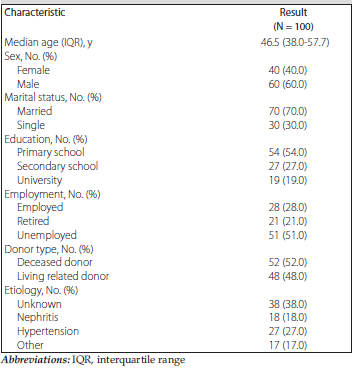
Table 2.Patient Characteristics
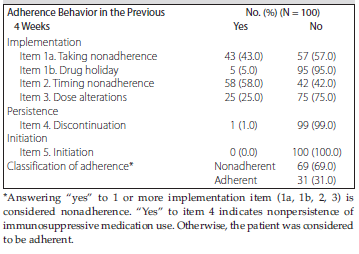
Table 3.Self-Reported Medication Adherence Measured Using BAASIS
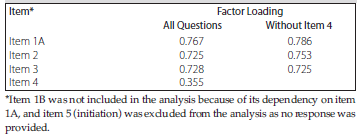
Table 4.Factor Loading of the BAASIS Turkish Version

Table 5.Inter-Item Correlations of the BAASIS Turkish Version
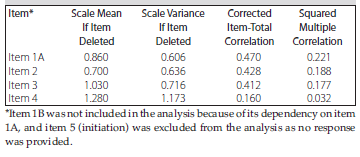
Table 6.Item-Total Correlations of the Turkish Version of BAASIS