Volume: 23 Issue: 8 August 2025
FULL TEXT
Objectives: On-site normothermic machine perfusion of the liver may require hepatic arterial reconstruction. The effect of arterial reconstruction on the deve-lopment of primary ischemic cholangiopathy has not been fully elucidated in liver transplants with organs donated after circulatory death. The aim of this study was to evaluate the effect of normothermic machine perfusion with arterial reconstruction at the onset of ischemic cholangiopathy in liver transplants with organs donated after circulatory death.
Materials and Methods: We retrospectively reviewed 93 patients who had received liver transplants donated after circulatory death for the period from 2015 to 2023 at a single institution. The primary endpoint was the onset of primary ischemic cholangiopathy within 1 year after donation after circulatory death liver transplant, excluding secondary ischemic cholangiopathy due to arterial complications.
Results: Normothermic machine perfusion was used for 71 cases, whereas standard cold storage was applied for 22 cases. Arterial reconstruction was performed in 14.1% of cases versus 27.3% of cases without normothermic machine perfusion. The cumulative onset of ischemic cholangiopathy was 7.0% versus 27.2% without normothermic machine perfusion (P = .013). In the group with normothermic machine perfusion, competing risk analyses demonstrated that the cumulative ischemic cholangiopathy onset rate
was significantly higher in the group with arterial reconstruction (30.0%) versus without arterial recons-truction (3.3%) (P < .003). Total cold ischemia time and cold ischemia time between liver recovery and normothermic machine perfusion initiation were significantly longer in the group with arterial reconst-ruction (P < .001), without significant differences in arterial flow on normothermic machine perfusion and other relevant factors.
Conclusions: In donation after circulatory death liver transplant recipients with normothermic machine perfusion, arterial reconstruction is a risk factor for developing ischemic cholangiopathy, likely mediated by cold ischemia time prolongation.
Key words : Artificial perfusion, Cold ischemia time, Extended criteria donor liver, Ischemic cholangiopathy, Liver transplantation
Introduction
The use of normothermic machine perfusion (NMP) of the liver is rapidly growing in popularity and thereby has enabled the substantial expansion of
the donor pool and subsequent number of recipient candidates. Normothermic machine perfusion potentially reduces the risks of critical conditions, including primary nonfunction of the liver, early liver graft dysfunction, and primary ischemic cholan-giopathy (IC) in liver transplant (LT).1,2 However, NMP may still carry unique risks for developing IC, such as increased duration of total cold ischemia time (CIT), increased duration of CIT before initiation of NMP (pre-NMP CIT), multiple rounds of ischemia-reperfusion, or warm ischemia of the liver in NMP conduit malfunction cases.
Hepatic arterial reconstruction (AR) is required in cases for which more than 2 separated arterial conduits exist due to variants of the hepatic artery to avert warm ischemia injury.3 Two methods are used to prevent warm ischemia injury on NMP: (1) surgical reconstruction with anastomosis, including both definitive reconstruction and temporary recons-truction with subsequent definitive reconstruction before implant; or (2) tubing technique to connect the arteries temporarily,4 in addition to creating multiple arterial outlets in the NMP machine. On-site definitive surgical reconstruction is used at our institution because this procedure can avoid an additional period of CIT. The risks for IC would be higher in cases of on-site NMP with AR, where surgeons and surgical tools are limited and transportation is required. In addition, the presence of variants of the artery and subsequent reconstruction may lead to prolongation of donor hepatectomy time (DHT) and CIT, which has been shown to worsen LT outcomes.5,6 However, the effect of hepatic AR prior to NMP on the development of IC has not been fully elucidated.
Therefore, we sought to investigate the effects of NMP after AR on the onset of primary IC, excluding secondary IC due to arterial complications, to faci-litate safe NMP practices in the field of LT.
Materials and Methods
Study population
We retrospectively enrolled LT recipients who had received donation organs after circulatory death (DCD) during the period from January 2015 to December 2023 at Massachusetts General Hospital.
All research was performed in a manner that conformed with the Declaration of Istanbul and the Declaration of Helsinki. The ethics committee of Massachusetts General Hospital approved this study; all enrolled patients provided informed consent at the time of surgery. The DCD LT cases were divided into groups based on the use of NMP (NMP+) versus standard cold storage (NMP-) and LT with AR (AR+) and LT without AR (AR-). The onset of clinically relevant primary IC (non-anastomotic biliary strictures without compromising hepatic arterial flow), diagnosed by magnetic resonance cholangiography and/or endoscopic retrograde cholangiography and/or percutaneous transhepatic cholangiography, was considered the primary endpoint, in the short-term within 1 year after DCD LT, excluding secondary IC due to arterial complications. All patients in this cohort were followed up 1 year after LT. Types of IC were categorized according to a previous study.7 In our study population there were IC with diffuse necrosis, multifocal progressive IC, and confluence dominant IC. Types of biliary complications (BCs) were defined as anastomotic strictures, excluding IC or bile leak.
Arterial reconstruction
Livers were procured with the entire length of the celiac artery and variant hepatic arteries in a standard fashion. For application of on-site NMP, prior to AR, standard back-table preparation of the liver was performed in all cases. Aberrant arteries were carefully identified and skeletonized. The AR was performed for all replaced hepatic arteries; there was no case where a replaced artery was discarded. As an inflow outlet, the splenic artery stumps or the gastroduodenal artery stumps were used according to the size of aberrant arteries in this study. The AR was performed using
7-0 or 8-0 polypropylene sutures with the aid of surgical loupes on a back table by expert surgeons in microsurgery. Arterial cannulation was performed from the celiac trunk so that a typical aberrant left hepatic artery could be perfused through the left gastric artery without reconstruction. In a case where the left gastric artery arose from the aorta directly, the artery was reconstructed in the same fashion.
Normothermic machine perfusion
A commercially available NMP device (Organ Care System Liver; Transmedics) was used for this study. The NMP was performed according to a previous report,1 with liver grafts placed on NMP for at least 1.5 hours after resuscitating those temperatures at 34 °C. All transplanted liver grafts showed a downtrend in lactate and production of bile. For NMP liver grafts, pre-NMP CIT was defined as the duration from the recovery of the liver from a donor until NMP initiation. Total CIT was defined as the sum of pre-NMP CIT and the time from pump disconnection to initiation of graft anastomosis in recipients.
Biliary reconstruction
Choledochocholedochostomy was performed in all enrolled cases. In brief, the posterior wall was sutured continuously, and the anterior wall was sutured interruptedly or continuously using 6-0 monofilament sutures without biliary stents.
Statistical analyses
We used the t test and Mann-Whitney U test for analyses of mean values (with SD) and median values (with IQR) of continuous variables, respectively. We compared categorical data of each group using the χ2 test. We calculated cumulative incidence of BC and IC using the Fine-Gray model. In the cumulative incidence calculations, the event was IC onset, and the competing event was death, retransplant without IC, and secondary IC due to arterial issues. P < .05 was considered statistically significant. We used R software (version 4.0.4; February 15, 2021) to perform statistical analyses.
Results
For this study, 93 cases, including 22 NMP- cases, were selected. During the follow-up period, no differences were shown in patient survival (Figure 1A) and graft survival (Figure 1B), between the
NMP+ and NMP- groups (P = .21, P = .085, respectively). Importantly, the median donor age in the NMP+ group (38 years; range 26-53 years) was notably higher than that in the NMP- group (29.5 years; range 12-51 years) (P<.01) however, no significant differences were shown in donor body mass index (29.0 ± 6.3 vs 28.3 ± 7.1), donor sex (male vs female, 52/19 vs 7/15), the percentage of livers with macrosteatosis greater than or equal to 10% (16.9% vs 4.5%), recipient age (59 years [range, 52-64 y] vs 60 years [range, 45-74 y]), and Model for End-Stage Liver Disease scores (20.3 ± 7.0 vs 17.1 ± 7.1) betweenthe 2 groups. There was no major difference in the cumulative incidence of BC between the NMP+ group at 22.5% (16/71) and the NMP- group at 18.2% (4/22) (P = .64) (Figure 1C). Importantly, the cumulative incidence of IC was 7.0% (5/71) for the NMP+ group versus 27.3% (6/22) for the NMP- group (P<.002)(Figure 1D)Together, these data suggested that NMP contributed to better outcomes regarding the onset of IC, despite the use of older DCD livers.
In total, 17.2% (16/93) of cases required AR: 15 cases had replaced right hepatic artery and 1 case had replaced right hepatic artery and replaced left hepatic artery. We observed that 14.1% of NMP+ cases (10/71) required AR, whereas AR on the back table was performed in 27.3% (6/22) in the NMP- group. The NMP procedure was used in 62.5% (10/16) of AR+ cases. Characteristics of donors and recipients based on AR status (+/-) and IC status (+/-) are shown in Table 1. Both arterial and portal flows, monitored by NMP at 2 hours after initiation of NMP, were comparable between the AR+ and AR- groups (660 ± 140 and 1960 ± 290 mL/min vs 600 ± 100 and 1940 ± 130 mL/min, respectively) (Table 1). In the NMP+ group, no significant differences were shown in patient survival (P = .66) (Figure 2A); however, the overall graft survival of the AR+ group was lower, but not significant, versus the AR- group (P = .053) (Figure 2B).
Within the NMP+ group, competing risk analyses demonstrated that AR did not have a significant effect on BC (P = .28) (Figure 2C). However, the cumulative IC onset rate was significantly higher in the AR+ group versus the AR- group (30.0% [3/10] vs 3.3% [2/61], respectively; P<.003) (Figure 2D). Regarding the type of IC in the AR+ group, 2 patients were diagnosed with IC with diffuse necrosis (Figure 3, A and B) and 1 with multifocal progressive IC (Figure 3C). These recipients required redo LT due to liver dysfunction. The hepatic arteries of these patients were carefully evaluated by contrast computed tomography and visually observed at the time of redo LT. However, there was no sign that extrahepatic arterial flow was compromised.
Pre-NMP CIT in the AR+ group was significantly longer (167.6 ± 38.6 min) versus the AR- group (112.6 ± 24.6 min) (P < .001); however, no significant differences were shown in donor age, donor warm ischemic time, DHT, degree of steatosis, and recipient implant time (Table 1). In the NMP- group, there was no clear difference in CIT between the AR+ (375.2 ± 89.4 min) and AR- groups (329.6 ± 112.7 min) (P = .39). On the other hand, both pre-NMP CIT and total CIT were significantly longer in recipients with IC (n = 5), versus in recipients without IC (n = 66) (pre-NMP CIT, 160.6 ± 42.4 vs 117.3 ± 30.4 [P = <.004]; total CIT, 197.0 ± 27.5 vs 132.0 ± 35.9 min [P <.001]). Arterial flow on NMP was also equivalent between the group with IC (640 ± 130 mL/min) versus the group without IC (710 ± 140 mL/min) (P = .26) (Table 1). A receiver operator characteristic curve analysis showed that target pre-NMP CIT at 113 minutes yielded 100% sensitivity and 57.6% specificity with the area under the curve of 0.85 to predict the IC onset. Overall, these results suggested that AR with NMP is a risk factors for the onset of IC, mostly due to the prolongation of CIT.
As a control, within the NMP- group, AR did not contribute to the onset of BC (AR+ group, 20% [2/10] and AR- group, 26.2% [16/61] (P = .72). There was also a higher cumulative IC onset rate in the AR+ group (33.3% [2/6] vs the AR- group 6.3% [1/16]), although it was not significant due to the limited sample size.
Discussion
Several parameters have been recognized as liver viability markers, including lactate, bile pH, and the amount of bile in the context of NMP.8,9 However, bile duct ischemic insult may not result in disturbance in these parameters immediately, because hepatocytes can still be viable and ischemic damage of the bile duct may not become apparent within few hours.10 Thus, it is difficult to predict the onset of IC relying on these parameters alone and it is necessary to identify other risk factors for primary IC.
Based on our findings, hepatic AR prior to NMP was a risk factor for developing primary IC in DCD LT. We further demonstrated that the increased risk of primary IC after AR prior to NMP is related to an increase in CIT. In our study, 3 of 5 cases were consistent with prolonged CIT related IC, because the entire liver grafts were affected. One case of IC could have been a result of AR malfunction, since the patient’s IC manifested as right lobe dominant diffuse necrosis. Excluding this case based on the assumption of warm ischemic damage while on NMP, our analysis still found the same effect of CIT on IC (not shown). It can be argued, therefore, that the prolongation of CIT is one of the risk factors for IC.
The procedure of AR itself can prolong pre-NMP CIT, and the existence of variant arteries may also increase the DHT, depending on the recovery procedures. Other studies have also suggested that longer CIT is associated with worse graft outcomes without NMP.6,11 However, the ideal CIT specifically for DCD liver grafts with NMP had not previously been investigated, making our investigation of vital importance. The receiver operating characteristic curve analysis demonstrated that the minimization of pre-NMP CIT is essential because the risk of IC increase when pre-NMP CIT reaches 113 minutes, according to our cohort. In other words, there was no primary IC case with CIT less than 113 minutes.
Several studies have reported that prolonged DHT negatively affects graft and patient survival of DCD LT without NMP.5,12 Furthermore, DHT is advocated to be less than 22 to 60 minutes.5,12-14 Although the NMP+ group did not show a significant effect of DHT on IC, the entire cohort demonstrated that recipients with IC had longer DHT versus those without IC. Thus, it is likely that a larger cohort might demonstrate a significant effect of DHT on the development of IC with the utilization of NMP. Regardless of CIT and DHT, warm ischemic injury due to improper reconstruction and positioning that limits arterial flow on NMP can increase the risk of IC, although this was not a focus of our present study.15
Several countermeasures could address the potential associated risk factors discussed above. First, it is reasonable to employ 2 recovery surgeons so that a surgeon at the back table can begin the procedure immediately after the liver is recovered, to minimize CIT, while the other surgeon completes the donor surgery. Second, especially for DCD with no preoperative vascular imaging, liver and pancreas (the head of the pancreas) en bloc recovery, including the superior mesenteric artery with an aortic cuff and the hepatogastric ligament, would be beneficial to minimize DHT and the chance of injuries in aberrant arteries. It can be argued that additional dissection on the back table does not cause a significant prolongation in CIT, considering the time frame of DHT versus the duration of the back table. Third, design of reconstruction and precise anastomosis are essential. Finally, positioning on the NMP should be carefully checked, and all problems, such as twists or bleeding, should be addressed in a timely manner. As an alternative, if materials and surgeons to perform a proper reconstruction are limited, then a tubing technique could be an alternative strategy for on-site AR and NMP. Furthermore, it would be also useful to create multiple outlets for hepatic arteries and cannulate the main and aberrant hepatic arteries, respectively. This facilitates the definitive reconstruction after NMP.
Our study had several limitations, including the small study sample. There are other variables thatwe did not assess due to the small sample size that could affect LT outcomes and IC development. For example, younger donor age has been shown to have a protective effect on LT outcomes with longer CIT.16 Further analysis with the accumulated data may enable us to use portable NMP selectively. Some other factors affecting the development of BC are not clear, as the rates of BC were similar between the NMP+ and NMP- cohorts.
Of note, the use of NMP in LT has numerous advantages, such as broadening the donor pool not to exclude elderly donors and increasing the utilization rate of other marginal livers.17,18 However, our study showed that an unintended consequence when using NMP is the increased risk of IC in patients who underwent AR. Safe, quick reconstruction and inves-tigation of the liver grafts on NMP are essential to prevent future IC. To maximize the beneficial effects of NMP, awareness of these consequences and implementation of reasonable countermeasures are crucial.
References:
- Longchamp A, Nakamura T, Uygun K, Markmann JF. Role of machine perfusion in liver transplantation. Surg Clin North Am. 2024;104:45-65. doi:10.1016/j.suc.2023.07.001
CrossRef - PubMed - Markmann JF, Abouljoud MS, Ghobrial RM, et al. Impact of portable normothermic blood-based machine perfusion on outcomes of liver transplant: the OCS Liver PROTECT randomized clinical trial. JAMA Surg. 2022;157:189-198. doi:10.1001/jamasurg.2021.6781
CrossRef - PubMed - Hiatt JR, Gabbay J, Busuttil RW. Surgical anatomy of the hepatic arteries in 1000 cases: Ann Surg. 1994;220:50-52. doi:10.1097/00000658-199407000-00008
CrossRef - PubMed - Li SF, Nave JB, Hostetler C, et al. Using IV-tubing “bridge” from splenic artery to superior mesentery artery to create a single arterial cannulation for normothermic machine perfusion when donor liver has replaced right hepatic artery. Am J Case Rep. 2023;24:e940437. doi:10.12659/AJCR.940437
CrossRef - PubMed - Bekki Y, Kozato A, Kusakabe J, et al. Impact of the donor hepatectomy time on short-term outcomes in liver transplantation using donation after circulatory death: a review of the US national registry. Clin Transplant. 2022;36:e14778. doi:10.1111/ctr.14778
CrossRef - PubMed - Mathur AK, Heimbach J, Steffick DE, Sonnenday CJ, Goodrich NP, Merion RM. Donation after cardiac death liver transplantation: predictors of outcome. Am J Transplant. 2010;10:2512-2519. doi:10.1111/j.1600-6143.2010.03293.x
CrossRef - PubMed - Croome KP, Mathur AK, Aqel B, et al. Classification of distinct patterns of ischemic cholangiopathy following DCD liver transplantation: distinct clinical courses and long-term outcomes from a multicenter cohort. Transplantation. 2022;106:1206-1214. doi:10.1097/TP.0000000000003928
CrossRef - PubMed - Melandro F, De Carlis R, Torri F, et al. Viability criteria during liver ex-situ normothermic and hypothermic perfusion. Medicina (Kaunas). 2022;58(10):1434-1446. doi:10.3390/medicina58101434
CrossRef - PubMed - Mergental H, Stephenson BTF, Laing RW, et al. Development of clinical criteria for functional assessment to predict primary nonfunction of high-risk livers using normothermic machine perfusion. Liver Transpl. 2018;24:1453-1469. doi:10.1002/lt.25291
CrossRef - PubMed - Li J, Lu H, Zhang J, Li Y, Zhao Q. Comprehensive approach to assessment of liver viability during normothermic machine perfusion. J Clin Transl Hepatol. 2022;11:466-479. doi:10.14218/JCTH.2022.00130
CrossRef - PubMed - Paterno F, Guarrera JV, Wima K, et al. Clinical implications of donor warm and cold ischemia time in donor after circulatory death liver transplantation. Liver Transpl. 2019;25:1342-1352. doi:10.1002/lt.25453
CrossRef - PubMed - Farid SG, Attia MS, Vijayanand D, et al. Impact of donor hepatectomy time during organ procurement in donation after circulatory death liver transplantation: the United Kingdom experience. Transplantation 2019;103:e79-e88. doi:10.1097/TP.0000000000002518
CrossRef - PubMed - Hobeika MJ, Glazner R, Foley DP, et al. A step toward standardization: results of two national surveys of best practices in donation after circulatory death liver recovery and recommendations from The American Society of Transplant Surgeons and Association of Organ Procurement Organizations. Clin Transplant. 2020;34:e14035. doi:10.1111/ctr.14035
CrossRef - PubMed - Goussous N, Alvarez-Casas J, Dawany N, et al. Ischemic cholangiopathy postdonation after circulatory death liver transplantation: donor hepatectomy time matters. Transplant Direct. 2021;8:e1277. doi:0.1097/TXD.0000000000001277
CrossRef - PubMed - Mergental H, Laing RW, Kirkham AJ, et al. Transplantation of discarded livers following viability testing with normothermic machine perfusion. Nat Commun. 2020;11:2939. doi:10.1038/s41467-020-16251-3
CrossRef - PubMed - Grąt M, Wronka KM, Patkowski W, et al. Effects of donor age and cold ischemia on liver transplantation outcomes according to the severity of recipient status. Dig Dis Sci. 2016;61:626-635. doi:10.1007/s10620-015-3910-7
CrossRef - PubMed - Shubin AD, Feizpour CA, Hwang CS, Hanish SI, Raschzok N, Wang BK. Normothermic machine perfusion for older transplant recipients. Artif Organs. 2023;47:1184-1191. doi:10.1111/aor.14519
CrossRef - PubMed - Shen C, Cheng H, Zong T, Zhu H. The role of normothermic machine perfusion (NMP) in the preservation of ex-vivo liver before transplantation: a review. Front Bioeng Biotechnol. 2023;11:1072937. doi:10.3389/fbioe.2023.1072937
CrossRef - PubMed

Volume : 23
Issue : 8
Pages : 535 - 541
DOI : 10.6002/ect.2025.0140
From the 1Division of Transplant Surgery, Massachusetts General Hospital, Harvard Medical School, Boston, Massachusetts; the 2Sackler School of Medicine at Tel Aviv University, Tel Aviv, Israel; the 3Division of Transplant Surgery, Department of Surgery, University of Arkansas for Medical Sciences, Little Rock, Arkansas; and the 4Penn Transplant Institute, the University of Pennsylvania, Philadelphia, Pennsylvania, USA
Acknowledgements: The authors have not received any funding or grants in support of the presented research or for the preparation of this work and have no declarations of potential conflicts of interest.
Corresponding author: Tsukasa Nakamura, 4301 W. Markham St. Little Rock, AR, USA
Phone: +1 501 686 5164
E-mail: tnakamura@uams.edu
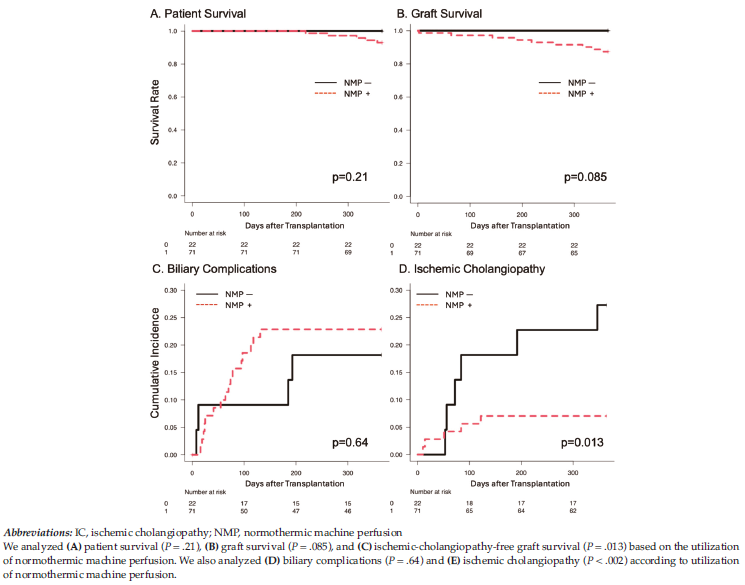
Figure 1. Differences in Patient Survival, and Graft Survival, and the Cumulative Incidence of Biliary Complications and Ischemic Cholangiopathy in Patients With or Without Normothermic Machine Perfusion

Figure 2. Differences in Patient Survival and Graft Survival With or Without Arterial Reconstruction and Competing Risk Analysis of the Effect of Hepatic Arterial Reconstruction in the Group With Normothermic Machine Perfusion
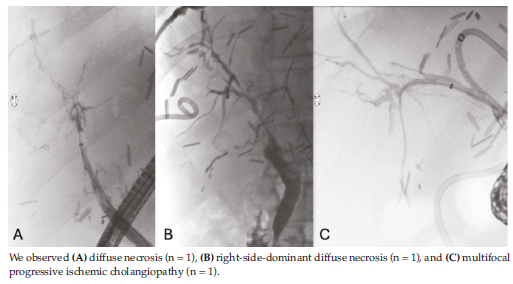
Figure 3. Endoscopic Retrograde Cholangiopancreatography Images of Patients Who Developed Different Types of Ischemic Cholangiopathy After Normothermic Machine Perfusion
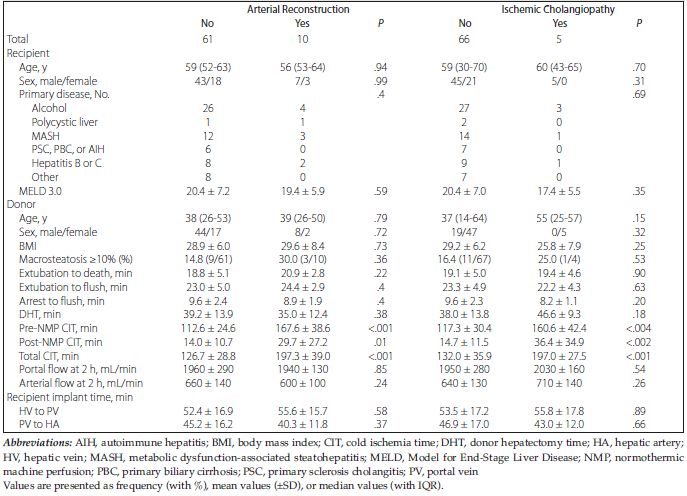
Table 1. Demographics and Clinical Characteristics of Donors and Recipients Based on Hepatic Arterial Reconstruction Status or Ischemic Cholangiopathy Development in the Group With Normothermic Machine Perfusion