Volume: 23 Issue: 7 July 2025
FULL TEXT
Objectives: Liver transplantation is the only curative treatment for end-stage liver disease. Biliary complications, such as strictures, bile leaks, and stones, occur in up to 25% of cases and are a major source of morbidity. Biliary complication rates have been shown to be increased in high-acuity liver transplants. Here, we assessed biliary complications at a single institution (University of Oklahoma Health, Oklahoma, USA), focusing on patients with acute-on-chronic liver failure.
Materials and Methods: Our retrospective analysis included liver transplant recipients seen from July 1, 2020, to June 30, 2023; we compared outcomes between those with and without acute-on-chronic liver failure. Patients were followed for at least 1 year posttransplant.
Results: Among 116 included patients, 21 (18.1%) developed biliary complications. Complications included 7 biliary leaks and 15 biliary strictures requiring intervention. Of 56 patients (48%) with acute-on-chronic liver failure, 8 (14.2%) developed biliary complications, compared with 13 (21.7%) without acute-on-chronic liver failure. Cold ischemia time was significantly longer (P = .05) and Model for End-Stage Liver Disease scores were significantly lower (P = .03) in patients with versus without biliary complications. Patients with complications also had higher preoperative cannabis use (19% vs 5%; P = .05) and postoperative readmission rates (3.0 vs 1.0; P = .01) versus patients without biliary complications. One-year graft and patient survival rates were 95.7% and 95.7%, respectively.
Conclusions: Despite an almost 50% rate of acute-on-chronic liver failure in our cohort, 18.1% of patients had posttransplant biliary complications, similar to the literature. Remarkably, patients with acute-on-chronic liver failure experienced fewer biliary complications than those without, potentially because of a multidisciplinary team approach and the strategic use of adjunct treatments like plasma exchange and continuous renal replacement therapy. This highlights the critical role of comprehensive, individualized care in improving outcomes for transplant patients with high-risk of complications.
Key words : Biliary leaks, Biliary strictures, Liver transplant, Outcomes
Introduction
Liver transplant (LT) is the only curative treatment for patients with end-stage liver disease and certain hepatic malignancies. In 2022, the United States saw an all-time high of over 9500 LTs performed, reflecting the growing demand for LT because of the increasing prevalence of chronic liver disease.1
Among challenging groups of patients under-going LT are those with acute-on-chronic liver failure (ACLF), a syndrome defined by acute deterioration of liver function superimposed on an underlying chronic liver condition. Acute-on-chronic liver failure is associated with high short-term mortality, with patients exhibiting distinct clinical characteristics, such as increased rate of systemic inflammation, multiorgan failure, and severe progression of liver disease. Although the presentation of ACLF can resemble decompensated cirrhosis, the pathophysiology differs because of the increased likelihood of systemic inflammatory response and organ dysfunction.
Acute-on-chronic liver failure is generally defined and graded based on the number of organ failures present. Specific definitions vary, with the European Association for the Study of the Liver-Chronic Liver Failure (EASL-CLIF) consortium, North American Consortium of the Study of End-Stage Liver Disease, and Asian Pacific Association for the Study of the Liver all providing slightly different diagnostic criteria.2 The variability in definitions and diagnostic criteria across different regions highlights the complexity in recognizing and managing ACLF in the context of LT. The EASL-CLIF criteria were used for defining and characterizing ACLF in this study, and determination of organ failures for each of the 6 systems was made using EASL-CLIF criteria.
Despite advances in surgical technique and posttransplant care, biliary complications continue to be a major source of morbidity and mortality after LT. Incidence can range from 10% to 30%, with increased risk in living donor LT recipients.3 Care must be taken to recognize and intervene, as biliary complications are associated with retransplant and mortality rates as high as 13% and 19%, respectively. Biliary complications include anastomotic strictures, nonanastomotic strictures, bile leaks, bile duct stones, and sphincter of Oddi dysfunction. In this study, we evaluated the incidence of clinically significant biliary complications, such as bile leaks and biliary strictures, at our institution, with a focus on identifying risk factors and outcomes in patients with ACLF. By analyzing a single-center cohort, we aimed to provide insights into the unique challenges faced by this complex patient population.
Materials and Methods
Study cohort
This study was approved by the University of Oklahoma Institutional Review Board (under IRB 16269) and received a waiver of informed consent under this Institutional Review Board decision. We conducted this work in accordance with both the Declarations of Helsinki and Istanbul. We included patients who underwent deceased donor orthotopic LT at our institution (University of Oklahoma Health, Oklahoma City, OK, USA), from July 1, 2020, to June 30, 2023. Patients who had repeat transplants were excluded from this cohort analysis, with only primary transplants included. Median follow-up was 389 days (range, 262-509 days). Presence and classification of ACLF was determined using the EASL-CLIF criteria. Length of stay was determined by the length of admission during which an LT took place. Intensive care unit (ICU) lengths of stay were determined by the time spent in the ICU before transplant for optimization and work-up. Time from diagnosis to treatment of complications was defined as the number of days from initial transplant to diagnosis or intervention. Rejection was identified by pathologic assessment of the biopsied liver, and rejection date was set as the day of biopsy. All patients received LTs from deceased donors. No patients were excluded based on age, etiology of liver disease, or other clinical or sociodemographic factors.
Clinical procedure
All patients underwent a standard LT work-up, including imaging, cardiac risk stratification, social support, and financial assessments. Each recipient was discussed and selected in a multidisciplinary team setting to ensure patient success. Patients underwent orthotopic LT via a standard chevron incision. All anastomoses were completed at time of transplant. Biliary anastomoses were performed in a standard running fashion after edges were trimmed at common bile duct/common hepatic duct level using an end-to-end technique with absorbable monofilament suture in all patients. All patients in this cohort underwent duct-to-duct anastomosis at time of index operation. The decision to close fascia at time of initial transplant was made intraoperatively based on patient acuity, presence of posttransfusion coagulopathy, intraoperative course, and patient stability.
Data collection and follow-up
We collected patient data on demographics, liver disease etiology, and biochemical parameters such as serum bilirubin, Model for End-Stage Liver Disease-sodium (MELD-sodium) scores, body mass index (BMI, calculated as weight in kilograms divided by height in meters squared), and organ failure as defined by the EASL-CLIF criteria.4 Specific definitions for organ failure included the following: creatinine >2 mg/dL or need for renal replacement therapy to indicate renal failure, total bilirubin >12.0 mg/dL to indicate hepatic failure, requirement for vasopressor support at the time of transplant to indicate circulatory failure, international normalized ratio >2.5 to indicate coagulation failure, grade III or IV hepatic encephalopathy (West-Haven criteria5) to indicate cerebral failure, and PaO2/FiO2 ratio <200 with mechanical ventilation requirements to indicate pulmonary failure.
Comorbidity data included hypertension, diabetes, coronary artery disease, and tobacco and cannabis use. Operative notes provided details on perfusion times, intraoperative transfusion requirements, and donor liver status.
All patients had at least 1 year of follow-up, with posttransplant complications assessed through review of follow-up documentation. We extracted data from both Meditech and Epic electronic medical records due to an institutional switch during the data collection period.
Statistical analyses
We performed bivariate analysis to assess demog-raphic and clinical differences between comparison groups. For categorical variables, we used χ2 and Fisher exact tests to evaluate associations. We analyzed continuous variables with the t test for normally distributed data and with the Wilcoxon rank-sum test for nonnormally distributed data. P < .05 was considered statistically significant.
Results
Patient cohort characteristics
The study included 116 patients; basic characteristics are listed in Table 1. Mean age at transplant was 45 years, and average BMI was 28.3. The most common etiology of hepatic dysfunction was alcohol-associated cirrhosis (65.5%), followed by metabolic-associated steatohepatitis. Table 2 lists disease etiologies of patients. The median MELD at time of transplant was 33 (range, 27-38). Fifty-nine patients (50.9%) required ICU admission before transplant, with median preoperative ICU length of stay of 10 days (range, 3-17 days). All but 2 patients received organs from donation after brain death donors; these 2 patients received organs from donation after cardiac death donors.
Median cold ischemia time was 400 minutes (range, 356-444 min), whereas mean warm ischemia time was 47.0 minutes. No organs in the cohort underwent machine perfusion. Thirty-eight patients (32.8%) required intraoperative continuous renal replacement therapy (CRRT). Fourteen patients (12.1%) developed postoperative bleeding requiring intervention, and 10 patients (8.7%) developed a complication involving the hepatic arterial anas-tomosis. Median length of hospital stay was 15 days (range, 6-24 days), with significant variation. Among 71.6% of patients who required readmission at some point after transplant, median time to readmission was 66 days (range, 8-125 days). Forty-nine patients (42%) were readmitted within 90 days of transplant. In the first year posttransplant, 5 patients (4.3%) died and 5 patients (4.3%) exper-ienced graft failure requiring retransplant. In addition, 20 patients (17.2%) developed biopsy-proven rejection, with median time to rejection of 219 days (range, 48-390 days).
Cohort patients with acute-on-chronic liver failure
Acute-on-chronic liver failure was present in 56 of 116 patients in this cohort. Table 3 details the classification of severity of ACLF. Sixty patients (51.7%) were classified as ACLF 0. Fifty-six patients were classified into stages 1-3 based on the number of organ failures. Specifically, 22 (19.0%) had ACLF 3, 23 (19.8%) had ACLF 2, and 11 (9.5%) had ACLF 1. Table 4 lists distribution of ACLF by organ failure.
Among failed organ systems, the most common was renal (46 patients; 39.7%). Hepatic failure and coagulation failure were the next most common, with 33 patients (28.4%) and 23 patients (19.8%), respectively. Pulmonary failure was the least common organ system failure (2 patients; 1.7%). Survival rates were 100% for patients with ACLF 1 and 2 and 86.4% for those with ACLF 3 at 1 year.
Biliary complications and treatment
Of the 116 patients, 21 experienced a post-LT biliary complication with an overall complication rate of 18.1%. Six patients (5.2%) developed a biliary leak, 14 (12.1%) developed a stricture, and 1 (0.9%) had both a leak and subsequent stricture. Among the 7 patients with leaks, 2 (28.6%) were repaired at delayed closure, 3 (42.9%) were managed endoscopically with stent placement, and 2 (28.6%) required reoperation. Three of the 7 leak events were in patients who had ACLF at the time of transplant. Of the 15 patients with strictures, 12 (80%) were treated endoscopically and 3 were diagnosed by magnetic resonance cholangio-pancreatography. All strictures were managed with endoscopic retrograde cholangiopancreatography and stent placement. Median time to diagnosis was 7 days (range, 5-17 days) for leaks and 44.5 days (range, 13-280 days) for strictures.
Biliary complications in patients with acute-on-chronic liver failure
Acute-on-chronic liver failure was present at the time of LT in 48% of patients (56/116 patients) included in this study. Among the 56 patients in the ACLF group, 9 developed posttransplant biliary complications (3 patients with biliary leaks and 6 patients with biliary strictures). In comparison, 12 of 60 patients without ACLF developed posttransplant biliary complications (8 with biliary leaks, 3 with biliary strictures, and 1 who developed an early biliary leak followed by a later biliary stricture). The presence of ACLF was not a significant risk factor for the development of biliary complications. In fact, patients with ACLF experienced lower rates of biliary complications, although this did not reach statistical significance. Figure 1 displays Kaplan-Meier curves tracking time free of biliary comp-lications for patients with and without ACLF. Patients with ACLF who developed biliary compli-cations did so primarily within 100 days of transplant, whereas patients without ACLF continued to develop complications up to 400 days posttransplant.
Comparison of patients with and without biliary complications
The patient cohort was divided based on the presence of biliary complication to assess for differences in clinical characteristics and outcomes. Table 5 sum-marizes these findings. Key differences between the groups included the following. Patients with biliary complications had a significantly lower median MELD score at transplant (28 vs 34; P = .04). A higher proportion of patients with biliary comp-lications reported cannabis use before transplant (19.1% vs 5.3%; P = .05). The biliary complication group had a significantly longer cold ischemia time (424 vs 390 min; P = .03). Although the difference in warmischemia time between the 2 groups was higher in the group with biliary complications (50.8 vs 46.2 min), the difference was not significant (P = .08).
No significant differences in age, comorbidity, or presence of ACLF were found between the 2 groups. No significant differences were shown in rates of postoperative hypotension (28.6% vs 20.2%; P = .39), transfusion requirements (7 vs 7 units; P = .53), or vascular complications (19.1% vs 6.4%; P = .07) between the 2 groups. Patients with biliary comp-lications had significantly more readmissions than those without complications (median number of 3.0 vs 1.0; P = .01). No significant differences between groups were shown in 1-year mortality (9.5% vs 3.2%; P = .22), rejection rate (19.1% vs 16.8%; P = .76), or graft failure rate (9.5% vs 3.2%; P = .22).
In the multivariable analysis conducted to inves-tigate adjusted predictors of biliary complication, only 2 covariates were included in the model because of the limited number of events (n = 21 patients with biliary complications). The results indicated that neither cold ischemia time (adjusted odds ratio of 1.00; 95% CI, 0.998-1.01; P = .197) nor arterial complications (adjusted odds ratio of 3.13; 95% CI, 0.78-12.49; P = .107) were significantly associated with the occurrence of biliary complications.
Discussion
Biliary complications after LT continue to be a challenge despite major advances in surgical techniques and postoperative care. This study demonstrated a cohort complication rate of 18.1%, consistent with literature reports.6,7 This rate is notable given that our patient population had a significantly higher proportion of ACLF (50% of our cohort) compared with the national average of 10% to 25%. This higher rate of ACLF may contribute to the increased complexity and risk of biliary complications posttransplant.
To our knowledge, this study is one of the first to explore post-LT biliary complications specifically in patients with ACLF. Patients with ACLF are critically ill at time of transplant, and great effort is needed to optimize care for these patients and offer the lifesaving treatment within a short window of opportunity to transplant. Historically, ACLF was considered a contraindication for LT because of high mortality associated with multiorgan failure, and transplant was considered futile in such critically ill patients. However, recent research has shifted this view, showing that LT can be a curative treatment for ACLF, with 1-year mortality rates ranging from 52% to 93%, depending on the severity of ACLF.8,9 This contrasts with the high 28-day mortality (up to 85%) for ACLF patients who do not receive a transplant.10 Previous work has shown that, in high-acuity LTs, the need for multiorgan support, including CRRT and pressors to optimize hypotension during the perioperative period, may increase the risk of postoperative complications, including biliary complications.11 This state of hypoperfusion and/or vasoconstriction due to pressors should theoretically lead to decreased blood flow to the biliary anasto-mosis site, placing these patients at higher risk of developing anastomotic leak or stricture. Despite these physiological concerns, our study did not find ACLF to be a significant risk factor for the deve-lopment of biliary complications after LT. In addition, multivariate analysis did not show the presence of any independent predictors of biliary complication development.
Previous studies highlighted that the 1-year survival among patients with ACLF who had LT ranged from 79% to 89% depending on the ACLF grade.12 In our cohort, patients with ACLF had a 1-year survival rate of 95%, with all ACLF mortalities occurring in patients with ACLF grade 3. Interestingly, complication rates posttransplant were lower or similar in ACLF patients compared with non-ACLF patients in our patient cohort. The exact cause of this finding is uncertain but may be linked to the aggressive pretransplant organ support optimization, including critical care resources like plasma exchange, CRRT, and pre-habilitation. Our institution’s success with patients with ACLF is largely attributed to careful patient and organ selection, optimization, and collaboration between transplant and critical care teams. Future studies examining the effects of preoperative critical care in reducing ACLF severity before transplant are crucial for improving outcomes in this high-risk patient group.
Our study also found a significant difference in cannabis use between patients with and without posttransplant biliary complications (19.0% vs 5.0%; P = .05). Cannabis use in LT patients and its effect on LT outcomes is gaining attention. Cannabis use is becoming more prevalent with the changing legal landscape in the United States, as many states move toward medical and recreational legalization of the substance. Few studies have investigated the effects of cannabis use on LT outcomes. In a 2020 study, Guorgui and colleagues noted that cannabis users had higher MELD scores and were more likely to require ICU admission pretransplant but found no significant difference in posttransplant biliary complications.13 In vitro studies have shown that compounds found in cannabis, including CBD and THC, may modulate the metabolism of calcineurin inhibitors and mycophenolate mofetil, common antirejection medications.14 However, no studies have shown any clinically significant rates of rejection or graft dysfunction among cannabis users.
Our study assessing biliary complications in ACLF patients provides insight into how ACLF influences the development of biliary leaks and strictures. It is evident from our study that a multidisciplinary approach with appropriate use of adjunct treatments like plasma exchange and CRRT can improve outcomes of patients with ACLF. Our study showed a lower rate of biliary complications among patients with ACLF, with a 16% complication rate compared with 20% in patients without ACLF. However, the study had some limitations. The retrospective design limited causal analysis, and the single-center nature may reduce generalizability, especially given the high ACLF rates in our cohort. The small sample size, limited to patients with at least 1 year of follow-up, also constrained findings. Future work should focus on expanding the cohort and investigating the long-term effects of ACLF on biliary complications.
References:
- Kwong AJ, Kim WR, Lake JR, et al. OPTN/SRTR 2022 annual data report: liver. Am J Transplant. 2024;24(2):S176-S265. doi:10.1016/j.ajt.2024.01.014
CrossRef - PubMed - Bajaj JS, O'Leary JG, Lai JC, et al. Acute-on-chronic liver failure clinical guidelines. Am J Gastroenterol. 2022;117(2):225-252. doi:10.14309/ajg.0000000000001595
CrossRef - PubMed - Fasullo M, Patel M, Khanna L, Shah T. Post-transplant biliary complications: advances in pathophysiology, diagnosis, and treatment. BMJ Open Gastroenterol. 2022;9(1). doi:10.1136/bmjgast-2021-000778
CrossRef - PubMed - European Association for the Study of the Liver. EASL clinical practice guidelines on acute-on-chronic liver failure. J Hepatol. 2023;79(2):461-491. doi:10.1016/j.jhep.2023.04.021
CrossRef - PubMed - Vilstrup H, Amodio P, Bajaj J, et al. Hepatic encephalopathy in chronic liver disease: 2014 practice guideline by the American Association for the Study of Liver Diseases and the European Association for the Study of the Liver. Hepatology. 2014;60(2):715-735. doi:10.1002/hep.27210
CrossRef - PubMed - Moy BT, Birk JW. A review on the management of biliary complications after orthotopic liver transplantation. J Clin Transl Hepatol. 2019;7(1):61-71. doi:10.14218/JCTH.2018.00028
CrossRef - PubMed - Girotra M, Soota K, Klair JS, Dang SM, Aduli F. Endoscopic management of post-liver transplant biliary complications. World J Gastrointest Endosc. 2015;7(5):446-459. doi:10.4253/wjge.v7.i5.446
CrossRef - PubMed - Xia L, Qiao ZY, Zhang ZJ, et al. Transplantation for EASL-CLIF and APASL acute-on-chronic liver failure (ACLF) patients: the TEA cohort to evaluate long-term post-Transplant outcomes. EClinicalMedicine. 2022;49:101476. doi:10.1016/j.eclinm.2022.101476
CrossRef - PubMed - Li X, Zhang L, Pu C, Tang S. Liver transplantation in acute-on-chronic liver failure: timing of transplantation and selection of patient population. Front Med (Lausanne). 2022;9:1030336. doi:10.3389/fmed.2022.1030336
CrossRef - PubMed - Sacleux SC, Saliba F. How to optimize the results of liver transplantation for acute-on-chronic liver failure. Life (Basel). 2023;13(5). doi:10.3390/life13051152
CrossRef - PubMed - Kaldas FM, Korayem IM, Russell TA, et al. Assessment of anastomotic biliary complications in adult patients undergoing high-acuity liver transplant. JAMA Surg. 2019;154(5):431-439. doi:10.1001/jamasurg.2018.5527
CrossRef - PubMed - Belli LS, Duvoux C, Artzner T, et al. Liver transplantation for patients with acute- on-chronic liver failure (ACLF) in Europe: results of the ELITA/EF-CLIF collaborative study (ECLIS). J Hepatol. 2021;75(3):610-622. doi:10.1016/j.jhep.2021.03.030
CrossRef - PubMed - Guorgui J, Ito T, Markovic D, et al. The impact of marijuana use on liver transplant recipients: a 900 patient single center experience. Clin Transplant. 2021;35(4):e14215. doi:10.1111/ctr.14215
CrossRef - PubMed - Kriss M, Shingina A, Hamel S, Winder GS. Cannabis use in liver transplant candidates and recipients. Liver Transpl. 2024;30(5):530-543. doi:10.1097/LVT.0000000000000335
CrossRef - PubMed

Volume : 23
Issue : 7
Pages : 466 - 472
DOI : 10.6002/ect.2025.0076
From the 1Department of Surgery, University of Oklahoma Health Sciences Center; the 2Department of Surgery, Medical University of South Carolina, Charleston, South Carolina; the 3Department of Surgery, Center for the Advancement of Research Excellence in Surgery, University of Oklahoma Health Science Center; and the 4Department of Surgery, Division of Transplant Surgery, University of Oklahoma Health Sciences Center, Oklahoma City, Oklahoma, USA
Acknowledgements: The authors have not received any funding or grants in support of the presented research or for the preparation of this work and have no declarations of potential conflicts of interest.
Corresponding author: Rachel Davis Bouvette, 800 Stanton L Young Boulevard, Suite 9000, Oklahoma City, OK 73014, USA
E-mail: rachel-davis@ouhsc.edu
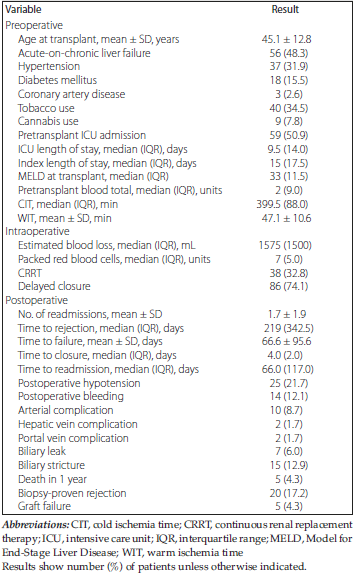
Table 1. Pretransplant Demographic, Clinical, and Laboratory Data of All Study Patients
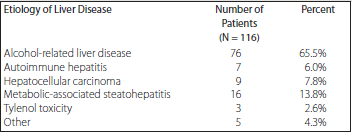
Table 2. Liver Dysfunction Etiology
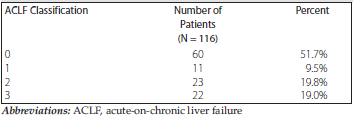
Table 3. Acute-on-Chronic Liver Failure Classification
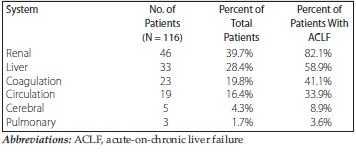
Table 4. Body System Failure in Patients With Acute-on-Chronic Liver Failure
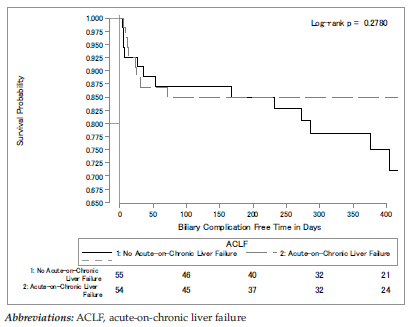
Figure 1. Kaplan- Meier Survival Curve

Table 5. Comparison by Presence of Posttransplant Biliary Complication