Volume: 23 Issue: 3 March 2025
FULL TEXT
Objectives: Lymphatic complications are a common (up to 30%) surgical complication after renal transplant. Both lymphocele and lymphorrhea have been extensively studied, but solutions are still sought. We designed a prospective randomized study to determine the effect of multiple intraoperatively performed peritoneal fenestrations on lymphatic complications after renal transplant.
Materials and Methods: Over an 18-month period, we randomized eligible recipients for living donor renal transplant into 2 groups: group 1 had small preventive peritoneal fenestrations (10 of 2 cm each) after graft implant, and group 2 had no fenestrations. We examined lymphatic complications (primary outcome), age, male versus female distribution, hemodialysis duration, body mass index, operation time, acute rejection, delayed graft function, warm ischemia time, and hospital stay. We compared results with t tests or χ2 test/the Fisher exact test.
Results: The 2 groups (10 in group 1 and 14 in group 2) were comparable with respect to demographic and clinical parameters, including operation time, warm ischemia time, and cold ischemia time; however, duration of preoperative dialysis was significantly less in group 1 (12.3 ± 2.8 vs 21.0 ± 4.6 mo; P < .001). Lymphocele, lymphorrhea and overall lymphatic complications were not significantly different between the groups, except for postoperative drain output, which was lower in group 1 than in group 2. No intestinal obstruction, ascitic leak, or bowel injury was reported in group 1 or group 2. On univariate analysis, none of the studied factors significantly affected lymphatic complications.
Conclusions: Preventive peritoneal fenestrations are a safe, feasible, and effective way of minimizing lymphatic complications; however, more studies with larger sample sizes are required.
Key words : Kidney transplant, Lymphocele, Lymphorrhea, Peritoneal fenestrations, Postrenal transplant
Introduction
Chronic kidney disease is a major public health problem in India because of the rapid increase in the incidence of diabetes mellitus, hypertension, and metabolic syndrome. More than 200 000 new cases of end-stage renal disease are recorded annually, which require renal replacement therapy in the form of dialysis (hemodialysis or peritoneal dialysis) or renal transplant (RT). Only about 10% of the patients are able to receive RT, which offers better outcomes than hemodialysis. Living donor renal transplant (LDRT) is the major (~86%) type of transplant, as opposed to deceased donor renal transplant (DDRT) in the west, because of sociocultural and infrastructural concerns.1,2
In both LDRT and DDRT, lymphatic complications (LCs) are a common postoperative problem and include both excessive and prolonged drainage (lymphorrhea) and lymphocele. These complications result mainly from damage to lymphatic vessels along the external iliac vessels during dissection with incomplete ligation.3,4 These LCs induce protein and immunity loss and may lead to loss of graft function and prolonged hospital stay.5 The reported incidence of LCs varies from 0.6% to 51%, occurring between 4 and 8 weeks after transplant.6-8 Delayed graft function, acute rejection, obesity (body mass index [BMI] >24 kg/m2), high-dose steroid treatment, donor age, warm ischemia duration, number of arteries in donor kidney, and retransplant are all risk factors for LCs.9-12 Lymphoceles are usually detected from compressive symptoms and signs like graft dysfunction, deep venous thrombosis, limb edema, bladder outlet obstruction, or pain. Symptomatic lymphoceles require diagnostic imaging and surgical or radiological intervention. Recent classifications from grade A to grade C help in deciding the severity and management strategy for lymphoceles.13
Lymphatic complications can be minimized by meticulous surgical technique, especially during dissection of the recipient’s iliac artery and vein during preparation for implantation, by careful ligation and fulguration of all lymphatic channels. Other preventive strategies include compression therapy, appropriate immunosuppressive regimens, use of hemostatic biomaterial or povidine-iodine, and peritoneal fenestration (PF).14-19 For treatment of established symptomatic lymphoceles occurring many weeks after transplant, laparoscopic deroofing has emerged as the best option, creating a peritoneal window to allow free flow and absorption into the intraperitoneal cavity.7 Prophylactic PF borrows from this idea of intraperitoneal lymphatic absorption. With gradual refinements in technique and size of pores, PF is now one of the most popular preventive surgical techniques.19-21 Potential complications after PF like herniation, adhesions, and intestinal obstruction can be avoided by making small openings, and these can be kept patent by metal clips.20,21
Over the years, our center has decreased the rate of LCs from about 30% to less than 10%. Using our earlier experience, we have optimized the postoperative management of the recipient and limited the perivascular dissection of the external iliac bed.9,22 In a bid to further improve outcomes, we have designed a prospective randomized study to evaluate the role of PFs in the graft bed in the prevention of LCs.
Materials and Methods
We conducted a prospective randomized study of patients seen in our transplant unit of a tertiary care hospital in north India between January 1, 2021, and June 30, 2022. The institutional ethics committee approved the study (F. No.TP [MD/MS] [158/2020]/IEC/ABVIMS/RMLH/425; December 22, 2020), as per the Declaration of Helsinki. We included all adult patients (≥18 years) undergoing LDRT at our institute; patients provided written informed consent. Patients in whom LCs could not be assessed for any reason and those with pretransplant lower abdominal scar were excluded from the study. We used computer-generated random number tables for randomization and the sealed envelope technique for allocation concealment. Group 1 was the study group in which multiple small PFs were performed after graft implantation; group 2 was the control group without PF.
In our study, lymphocele was defined as a swelling detected clinically or radiologically or causing symptoms (edema, hypertension, pain, fever, thrombophlebitis, mass, hydronephrosis, delayed graft function) at least 1 week postoperatively; lymphorrhea was defined as lymphatic fluid in drain/bag (with creatinine level comparable to serum) >50 mL at least 1 week postoperatively. Patients underwent postoperative follow-up at 1 week, 2 weeks, and 6 weeks.
As per the standard hospital protocol, participants underwent preoperative donor and recipient evaluation, which consisted of the medicolegal component per the National Organ and Tissue Transplant Organization1 and written consent for surgery and anaesthesia. This was followed by a complete medical work-up, which included general physical examination; blood grouping; serology for cytomegalovirus, HIV, HBsAg, and hepatitis C virus; complete hemogram; liver and kidney function tests; serum electrolytes and serum proteins; chest radiograph, electrocardiogram, and echocardiogram; kidney, ureter, and bladder radiography; urine routine microscopy and culture; and screening for malignancies (carcinoma cervix, breast, lung). Donors underwent specific investigations like computed tomography angiography for renal vessels and DTPA nuclear isotope scan for differential evaluation of both kidneys. Both donors and recipients underwent HLA matching. Recipients were also screened for thrombosis of the jugular and iliac systems using Duplex scans.
Experienced professionals performed the operative procedures; all cases were open donor nephrectomies, with heterotopic implantation into the right iliac vessels. End-to-side vascular anastomosis was the standard for graft-to-recipient artery and vein, whereas the ureter was joined by using a stented extravesical modified Lich-Gregoir tunneled ureteroneocystostomy. Group 1 recipients had at least 10 PFs of size 2 cm, by lifting up the peritoneum with 2 artery forceps and incising in between them. Inserting artery forceps through the first fenestration allowed safer subsequent openings, ensuring no visceral injury (Figure 1). These fenestrations were performed just before completion of the implantation procedure and were postulated to allow flow of fluid from the extraperitoneal space to intraperitoneal space.
We recorded all operative and postoperative details and complications. In the postoperative period, we recorded serial measurements of blood pressure, pulse rate, temperature, respiratory rate, intake, urine output, abdominal drain output, and serum creatinine. Patients had renal graft Doppler studies to chart vascular flow and graft size, and we collected peak systolic velocity, end-diastolic flow, acceleration time, and resistive index measurements. We also recorded specific complications like hemorrhage, pulmonary infections, surgical site infections, urinary tract infections, and myocardial infarction. Serum tacrolimus levels were assessed at postoperative days 0, 4, and 14. Patients had graft biopsy for delayed graft function when other vascular and urologic etiologies were ruled out. We compared LCs between group 1 and group 2.
Statistical analyses
After data collection in tabular form, we expressed continuous data as mean ± SD and categorical data as absolute numbers and percentages. We used Kolmogorov-Smirnov tests to assess normality of the data. We compared continuous variables by using t tests (for parametric) or Mann-Whitney U tests (for nonparametric) and categorical variables by using the χ2 or Fisher exact test. We used Microsoft Excel and SPSS version 27.0 for analyses. For all statistical tests, we calculated 95% CI. P < .05 was considered statistically significant. Before regression analysis, we tested the model for efficacy by verifying it according to standard criteria like likelihood ratio test and Hosmer-Lemeshow goodness-of-fit test. For sample size calculation, we hypothesized the effect size was 10% (difference between proportions of LCs in control group of 20% and test group of 10%), power was 80%, and significance level was 0.05. This yielded a sample size of 78 (39 in each group). The effect size was extrapolated from our previous study and similar studies.5,9,10
Results
Demographic and clinical features of the 2 groups are shown in Table 1. Most patients in both the groups were aged 18 to 33 years and were men. Hypertension was the most common etiology in group 1 (70.0%) and group 2 (71.4%). Blood group O positive was common in group 1 and group 2 (40.0% and 50.0%, respectively). Body mass index was lower in group 1, although not significantly different from group 2. No demographic or clinical parameters in donors were significantly different between the 2 groups; in recipients, only duration of preoperative dialysis was different between groups.
Table 2 lists transplant outcomes in the 2 groups with respect to acute rejection, urine output, and LCs. Group 2 had a higher proportion of lymphorrhea, lymphocele, and LCs compared with group 1, although differences were not significant (P > .05). The cumulative input of intravenous fluid on postoperative day 0 and day 1 was lower in group 1 than in group 2, whereas from postoperative day 2 onward the cumulative input was higher in group 1 than group 2, although differences were not significant (P > .05). Urine output on postoperative day 0 was higher in group 1 than in group 2, whereas, from postoperative day 1 to day 4, the urine output was lower in group 1 than in group 2; from postoperative day 4 onward, the urine output was again higher in group 1 than in group 2, although differences were not significant (P > .05). No other outcomes were significantly different between the 2 groups.
We analyzed risk factors associated with LCs (lymphorrhea and lymphocele) in total patients in both groups (n = 24). Using the various models to test for appropriateness for binary logistic regression, we found that sample size did not permit accurate application of logistic regression. Hence, we conducted comparisons with t test or χ2 test to examine the commonly implicated factors (Table 3). None of the factors was significantly associated with LCs.
Discussion
Renal transplant is the treatment of choice for end-stage renal disease and has proven to be better than other forms of renal replacement therapy. Living donor renal transplant constitutes more than 80% of transplants in India1,2 and is a sensitive undertaking as it involves potential surgical complications to both a healthy individual (donor) and the recipient. Recipients also face immunological and infection complications. Lymphatic complications are a common early problem in recipients. Both lymphorrhea (prolonged drain output) and lymphoceles increase morbidity and slow recovery and may also lead to graft dysfunction.23,24 Excessive lymph production and seepage can occur during dissection of the renal hilum during donor surgery and with dissection of the iliac vessels during recipient preparation for transplant.
Our groups had well-matched demographic variables. The most common causes of end-stage renal disease in our cases were hypertensive and diabetic nephropathy. In India, sociocultural patterns result in more female donors (>80%) and male recipients, and this was reflected in our study.1 Another specific feature of our cases was the long wait time for transplant and long preoperative dialysis intervals (12-24 mo). Operation time, warm ischemia time, and cold ischemia time were comparable between group 1 and group 2. Lymphorrhea, as indicated by the drain output on different postoperative days, was lower in group 1 than in group 2, although differences were not significant (P > .05). This could be because of our small sample size, which had been limited by COVID-19 pandemic restrictions at that time.
In our study, rate of lymphorrhea (10.0% in group 1 and 28.6% in group 2) was comparable to results in similar studies (26%-36%),3,25-27 which noted that LCs should be assessed by both drain output (lymphorrhea) and formation of lymphocele. The rate of lymphocele in our patients appears to be lower (10.0% in group 1 and 14.3% in group 2) than other studies (20%-40%), probably because of our shorter follow-up period.11,28,29 Diabetes mellitus and acute rejection were more associated with lymphocele (66.7% vs 14.3% [P = .099] and 33.3% vs 4.8% [P = .239], respectively), whereas BMI was lower in patients with lymphocele (33.3% vs 66.7%, P = .533).
Lymphatic complications then and now
In our previous study, rate of LCs was 27%.9 Other earlier studies (5-8 years previously) reported similar rates of LCs. In our series, almost all arterial anastomoses were performed end-to-side with the external iliac artery, and this warranted perivascular craniocaudal dissection of at least 5 cm. This led to optimum warm ischemia times in our experience and easier learning curves.12,22 However, after the importance of limiting perivascular dissection was realized, our rates of LCs have subsequently decreased to 10% to 15%. Other present studies have reported rates of <10%, even 3% in some series.30-33 This is possible with preventive surgical techniques.
Surgical prevention of lymphatic complications
Studies on surgical prevention of LCs have evolved substantially over the past 2 decades. In the 2000s, studies mainly aimed to identify risk factors for lymphoceles, which included lymphatic seepage from the donor graft hilum and recipient iliac vessels bed.3,4,9,12 Hence, differences between open and laparoscopic donor nephrectomy were not substantial in this regard.33 Consensus was also shown that lymphocele alone should not be the only outcome parameter; rather both lymphocele and lymphorrhea should be observed and prevented.9,27 Other risk factors appear to result from inflammatory or immune reactions on the transplanted kidney, as evidenced by increased LCs in acute graft rejection, increased warm ischemia times (supernumerary arteries), high-dose steroids, DDRT procedures (which involve more bench dissection), more intensive fluid therapy in the recipient, increased hemodialysis duration, and diabetes.3,9,10,30 Minimizing these factors can provide optimal practices in the postoperative period. Meticulous surgical technique by careful ligation/fulguration of perivascular lymphatics can decrease the incidence of LCs.9,12 However, there will still be some lymphatic production. Absorption and desiccation of this fluid are the current focus of many studies.
Table 4 summarizes the present approach and evidence with respect to surgical techniques used to prevent LCs, which include sclerosant agents like povidone-iodine, polypropylene mesh hood closure, prolonged drainage, suture ligation, use of energy devices like bipolar or electrocautery or ultrasonic shears, anastomosis to common iliac vessels, PF with or without metal clips, compression stockings, hemostatic material packing, and anterior rectus sheath approach.30-33,35-37 Despite the conduct of various meta-analyses on the subject, data are heterogeneous, and more multicentric studies are needed. The most consistent evidence is in favor of 2 techniques. One is the use of bipolar devices, including LigaSure, to seal the lymphatics during dissection, which has been compared with silk ligation and electrocauterization in 3 studies.19,31,32,33 Peritoneal fenestration is, however, the most promising technique. This is a simple and convenient way to help in postoperative internal drainage and absorption of excessive lymph. Previously, a large peritoneal window was used, which was similar in length to skin incision.21 However, complications and the potential herniation of bowel loops had shifted most authors to adopt multiple PFs. There is not much increase in operative time, as also experienced by our team. Modifications in the technique have included placement of circumferential metal clips around the peritoneal opening to prevent early closure of the opening.19,20
The use of omental interposition through the PF can help in lymphatic absorption.35 With more evidence after completion of ongoing trials,20 PF may emerge as a useful adjunct to RT to prevent common LCs. Because most data on PFs are from only a few institutions (eg, Heidelberg, Germany), more multicenter and geographically distributed studies are needed.
Limitations
Our study had only 24 patients because of constraints of the COVID-19 pandemic at that time. A larger sample size would have contributed to logistic regression analysis. Our study was intended as an initial pilot study to assess feasibility of the approach. Subsequent studies are needed with larger sample size and longer follow-up period. The rates of DDRT are disappointingly low at our center. Having more DDRT patients included would have allowed subset analysis of these patients, leading to more meaningful data.
Conclusions
We identified a mismatch between the donor and recipient aorta in the previous HTX surgery, resulting in an unusual dissection in the recipient. Thus, as with other aortic dissections, the cardiac team must be prepared for various scenarios. Timely surgical intervention is crucial for outcome optimization, and careful management of hypertension due to immunosuppression therapy is essential for improvement of patient prognosis.
References:
- National Academy of Medical Sciences (India). NAMS task force report on organ donation and transplantation. Ann Natl Acad Med Sci (India). 2024;60:71-87. doi:10.25259/ANAMS_TFR_02_2024
CrossRef - PubMed - Rampersad C, Ahn C, Callaghan C, et al. Organ donation and transplantation registries across the globe: a review of the current state. Transplantation. 2024;108(10):e321-e326. doi:10.1097/TP.0000000000005043
CrossRef - PubMed - Inoue T, Saito M, Narita S, et al. Evaluation of persistent lymphatic fluid leakage using a strategy of placing a drain after kidney transplantation: a statistical analysis to assess its origin. Transplant Proc. 2017;49(8):1786-1790. doi:10.1016/j.transproceed.2017.06.021
CrossRef - PubMed - Ranghino A, Segoloni GP, Lasaponara F, Biancone L. Lymphatic disorders after renal transplantation: new insights for an old complication. Clin Kidney J. 2015;8(5):615-622. doi:10.1093/ckj/sfv064
CrossRef - PubMed - Ebadzadeh MR, Tavakkoli M. Lymphocele after kidney transplantation: where are we standing now? Urol J. 2008;5(3):144-148.
CrossRef - PubMed - Atray NK, Moore F, Zaman F, et al. Post transplant lymphocele: a single centre experience. Clin Transplant. 2004;18 Suppl 12:46-49. doi:10.1111/j.1399-0012.2004.00217.x
CrossRef - PubMed - Bailey SH, Mone MC, Holman JM, Nelson EW. Laparoscopic treatment of post renal transplant lymphoceles. Surg Endosc. 2003;17(12):1896-1899. doi:10.1007/s00464-003-8814-5
CrossRef - PubMed - Goel M, Flechner SM, Zhou L, et al. The influence of various maintenance immunosuppressive drugs on lymphocele formation and treatment after kidney transplantation. J Urol. 2004;171(5):1788-1792. doi:10.1097/01.ju.0000121441.76094.6f
CrossRef - PubMed - Agarwal N, Kumar GR, Singh Rana AK, Mubeen A, Dokania MK. Predictors of lymphatic complications following renal transplant: a prospective study involving predominantly living donor transplants from India. Cureus. 2021;13(8):e17133. doi:10.7759/cureus.17133
CrossRef - PubMed - Ulrich F, Niedzwiecki S, Fikatas P, et al. Symptomatic lymphoceles after kidney transplantation - multivariate analysis of risk factors and outcome after laparoscopic fenestration. Clin Transplant. 2010;24(2):273-280. doi:10.1111/j.1399-0012.2009.01073.x
CrossRef - PubMed - Lipay MA, Noronha Ide L, Vidonho Junior A, Romao Junior JE, Campagnari JC, Srougi M. Lymphocele: a possible relationship with acute cellular rejection in kidney transplantation. Sao Paulo Med J. 1999;117(6):238-242. doi:10.1590/s1516-31801999000600003
CrossRef - PubMed - Ciancio G, Tabbara MM, Gonzalez J, Alvarez A, Gaynor JJ. Surgical modifications to the conventional kidney transplant technique: the Miami Transplant Institute approach in a retrospective cohort study. Int J Surg. 2024;110(8):4839-4849. doi:10.1097/JS9.0000000000001457
CrossRef - PubMed - Mehrabi A, Kulu Y, Sabagh M, et al. Consensus on definition and severity grading of lymphatic complications after kidney transplantation. Br J Surg. 2020;107(7):801-811. doi:10.1002/bjs.11587
CrossRef - PubMed - Nowak K, Bonninghoff R, Geiger M, Post S, Schnulle P, Schwarzbach M. Compression stockings limit the incidence of postoperative lymphocele in kidney transplantation. In Vivo. 2013;27(4):561-564.
CrossRef - PubMed - Tammaro V, Vernillo A, Dumani X, et al. Prevention of fluid effusion in kidney transplantation with the use of hemostatic biomaterials. Transplant Proc. 2014;46(7):2203-2206. doi:10.1016/j.transproceed.2014.07.048
CrossRef - PubMed - Chandrasekaran D, Meyyappan RM, Rajaraman T. Instillation of povidone iodine to treat and prevent lymphocele after renal transplantation. BJU Int. 2003;91(3):296. doi:10.1046/j.1464-410x.2003.04028.x
CrossRef - PubMed - Layman RE, McNally M, Kilian C, et al. Does opening the peritoneum at the time of renal transplantation prevent lymphocele formation? Transplant Proc. 2006;38(10):3524-3526. doi:10.1016/j.transproceed.2006.10.182
CrossRef - PubMed - Syversveen T, Midtvedt K, Brabrand K, Oyen O, Foss A, Scholz T. Prophylactic peritoneal fenestration to prevent morbidity after kidney transplantation: a randomized study. Transplantation. 2011;92(2):196-202. doi:10.1097/TP.0b013e318220f57b
CrossRef - PubMed - Sabagh M, Sabetkish N, Fakour S, et al. Methods to prevent lymphocele after kidney transplantation: Seeking the optimal technique for avoiding a preventable complication. Transplant Rev (Orlando). 2024;38(4):100877. doi:10.1016/j.trre.2024.100877
CrossRef - PubMed - Golriz M, Sabagh M, Mohammadi S, et al. PREventive effect of FENestration with and without clipping on post-kidney transplantation lymphatic complications (PREFEN): study protocol for a randomised controlled trial. BMJ Open. 2020;10(10):e032286. doi:10.1136/bmjopen-2019-032286
CrossRef - PubMed - Mihaljevic AL, Heger P, Abbasi Dezfouli S, Golriz M, Mehrabi A. Prophylaxis of lymphocele formation after kidney transplantation via peritoneal fenestration: a systematic review. Transpl Int. 2017;30(6):543-555. doi:10.1111/tri.12952
CrossRef - PubMed - Rana AK, Agarwal N, Hanumanthappa VM, Dokania MK. A prospective comparison of end-to-side and end-to-end renal transplant arterial anastomosis in living donor transplants from an Indian Centre. Ind J Transpl. 2020;14(2):125-129. doi:10.4103/ijot.ijot_16_20
CrossRef - PubMed - Heer MK, Clark D, Trevillian PR, Sprott P, Palazzi K, Hibberd AD. Functional significance and risk factors for lymphocele formation after renal transplantation. ANZ J Surg. 2018;88(6):597-602. doi:10.1111/ans.14343
CrossRef - PubMed - Singh Rana AK, Agarwal N, Kumar P. Recognition of acute page kidney following renal transplant: varied etiologies requiring high clinical suspicion. Saudi J Kidney Dis Transpl. 2021;32(4):1134-1140. doi:10.4103/1319-2442.338287
CrossRef - PubMed - Marcen R, Orofino L, Pascual J, et al. Delayed graft function does not reduce the survival of renal transplant allografts. Transplantation. 1998;66(4):461-466. doi:10.1097/00007890-199808270-00008
CrossRef - PubMed - Mazzucchi E, Souza AA, Nahas WC, Antonopoulos IM, Piovesan AC, Arap S. Surgical complications after renal transplantation in grafts with multiple arteries. Int Braz J Urol. 2005;31(2):125-130. doi:10.1590/s1677-55382005000200006
CrossRef - PubMed - Derweesh IH, Ismail HR, Goldfarb DA, et al. Intraoperative placing of drains decreases the incidence of lymphocele and deep vein thrombosis after renal transplantation. BJU Int. 2008;101(11):1415-1419. doi:10.1111/j.1464-410X.2007.07427.x
CrossRef - PubMed - Asim M, Nauman A. Symptomatic lymphocele developing soon after acute renal allograft rejection: coincidental or causal connection? Clin Kidney J. 2013;6(6):643-645. doi:10.1093/ckj/sft125
CrossRef - PubMed - Dubeaux VT, Oliveira RM, Moura VJ, Pereira JM, Henriques FP. Assessment of lymphocele incidence following 450 renal transplantations. Int Braz J Urol. 2004;30(1):18-21. doi:10.1590/s1677-55382004000100004
CrossRef - PubMed - Golriz M, Sabagh M, Emami G, et al. Prophylactic peritoneal fenestration during kidney transplantation can reduce the type C lymphocele formation. J Clin Med. 2021;10(23). doi:10.3390/jcm10235651
CrossRef - PubMed - Sigdel PR, Gnyawali D, Thapa J, et al. Bipolar vessel sealing system versus silk ligation of lymphatic vessels in renal transplant recipient lymphatic complications: a randomized controlled trial. Int Urol Nephrol. 2021;53(12):2477-2483. doi:10.1007/s11255-021-03003-5
CrossRef - PubMed - Simforoosh N, Tabibi A, Rad HM, Gholamrezaie HR. Comparison between bipolar lymphatic vessels cautery and suture ligature in prevention of postrenal transplant lymphocele formation: a randomized controlled trial. Exp Clin Transplant. 2019;17(1):26-30. doi:10.6002/ect.2017.0207
CrossRef - PubMed - Sabagh M, Weber S, Sabetkish N, et al. Modified peritoneal fenestration as a preventive method for lymphocele after kidney transplantation: a preliminary report. J Clin Med. 2024;13(19). doi:10.3390/jcm13195878
CrossRef - PubMed - Tefik T, Ciftci HS, Kocak T, et al. Effect of donor nephrectomy technique on recipient lymphatic drainage. Transplant Proc. 2015;47(5):1282-1286. doi:10.1016/j.transproceed.2015.04.079
CrossRef - PubMed - Kannan D, Thangarasu M, Paul R, Meenashi Sundaram P, Raghavan D. Peritoneal window with omental interposition as a prophylactic measure to prevent post-renal transplant lymphocele: a pilot study. Cureus. 2024;16(9):e68406. doi:10.7759/cureus.68406
CrossRef - PubMed - El Hennawy HM, Safar O, Al Atta E, et al. Prophylactic sclerotherapy for lymphatic complications after living donor renal transplant: a single-center experience. Exp Clin Transplant. 2024;22(1):17-21. doi:10.6002/ect.2023.0320
CrossRef - PubMed - Matrisch L, Lapshyn H, Nitschke M, Rau Y. Electrocauterization versus ligation of lymphatic vessels to prevent lymphocele development after kidney transplantation-a meta-analysis. J Pers Med. 2024;14(3). doi:10.3390/jpm14030256
CrossRef - PubMed

Volume : 23
Issue : 3
Pages : 174 - 181
DOI : 10.6002/ect.2025.0007
From the 1Department of Surgery, Atal Bihari Vajpayee Institute of Medical Sciences (ABVIMS) and Dr. Ram Manohar Lohia Hospital (RMLH), Delhi, India; 2Now with the Department of Surgery, ESI Hospital and PG Institute, Faridabad; the 3Transplant Unit, Department of Surgery, Atal Bihari Vajpayee Institute of Medical Sciences (ABVIMS) and Dr. Ram Manohar Lohia Hospital (RMLH), Delhi, India
Acknowledgements: The authors have not received any funding or grants in support of the presented research or for the preparation of this work and have no declarations of potential conflicts of interest
Corresponding author: Nitin Agarwal, Room 304, Guest House Building, Atal Bihari Vajpayee Institute of Medical Sciences (ABVIMS) and Dr. Ram Manohar Lohia Hospital (RMLH), Baba Kharak Singh Marg, Delhi 110001, India
Phone: +91 0112 3405066
E-mail: drnitinagarwal76@gmail.com
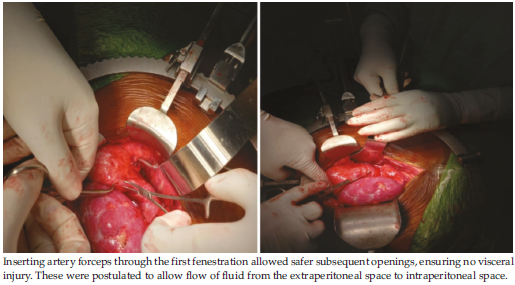
Figure 1. At Least 10 Peritoneal Fenestrations of 2 cm Were Created After Completion of Graft Implantation Into the Iliac Vessels by Lifting the Peritoneum With 2 Artery Forceps and Incising Between Them
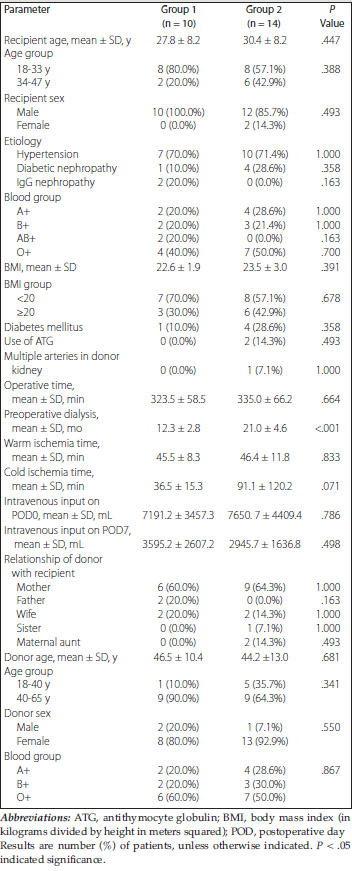
Table 1. Demographic and Clinical Features of Renal Transplant Recipients in Group 1 (Peritoneal Fenestration Group) and Group 2 (No Peritoneal Fenestration)
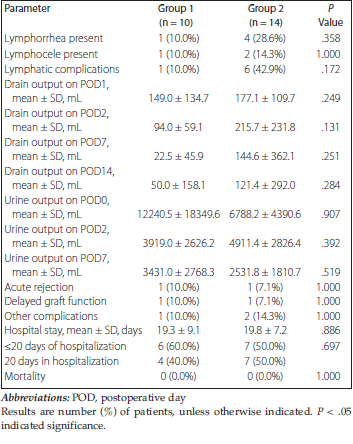
Table 2. Lymphatic Complications and Other Outcome Parameters of Renal Transplant Recipients in Group 1 (Peritoneal Fenestration Group) and Group 2 (No Peritoneal Fenestration)
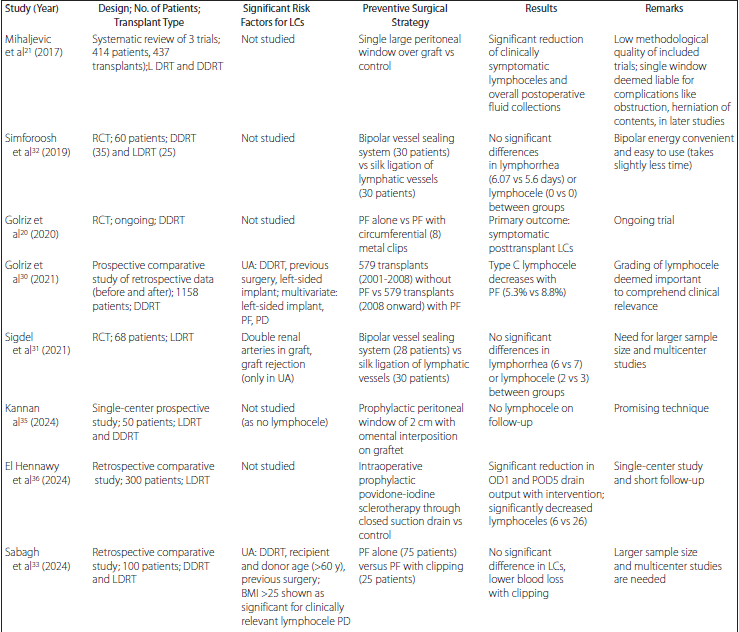
Table 4. Studies Evaluating the Role of Surgical Strategies in the Prevention of Lymphatic Complications After Renal Transplant