Volume: 23 Issue: 10 October 2025
FULL TEXT
ABO-incompatible living donor liver transplantation is an important option to expand the donor pool but carries a higher risk of antibody-mediated rejection. Elevated preoperative isoagglutinin titers and postoperative rebound are major concerns, although their clinical significance remains uncertain. Here, we report a 66-year-old woman with hepatitis B-related cirrhosis and hepatocellular carcinoma who underwent ABO-incompatible living donor liver transplant with a right lobe graft (760 g; graft-to-recipient weight ratio of 1.13) donated by her daughter (blood type B → O). Preoperative anti-B immunoglobulin G and immunoglobulin M titers were 1:1024 and 1:32, respectively. After 11 plasma exchange sessions, titers decreased to immunoglobulin G 1:32 and immunoglobulin M 1:2 on the day of transplant. Splenectomy was not performed. Postoperatively, antibody titers rebounded (peak immunoglobulin G 1:128, immunoglobulin M 1:4) but gradually declined, whereas liver function tests, tacrolimus levels, and inflammatory markers remained stable during 2 years of follow-up. No antibody-mediated rejection, graft dysfunction, or infectious complications were observed. This case suggests that rebound of anti-ABO isoagglutinin titers after ABO-incompatible living donor liver transplant does not inevitably lead to antibody-mediated rejection or graft failure.
Clinical and biochemical indicators may provide more reliable guidance than antibody titers alone. The findings support individualized decision-making and underscore the need for standardized treatment strategies in ABO-incompatible living donor liver transplantation.
Key words : Antibody titers, Case report, Graft failure, Isohemagglutinins
Introduction
ABO-incompatible living donor liver transplantation (ABO-iLDLT) has become a practical approach to expand the donor pool in regions with organ shortages. Advances in desensitization and immuno-suppression have improved outcomes; however, antibody-mediated rejection (AMR) remains a key immunologic challenge, and its definition and mana-gement continue to evolve.1,2 The incorporation of rituximab has significantly enhanced survival in recipients with chronic liver disease and acute liver failure. Nevertheless, perioperative strategies differ across centers, including decisions regarding splenectomy, biopsy indications, and rescue therapy thresholds. No universally accepted guideline has yet been established.3-6 The clinical effects of post-transplant isoagglutinin rebound remain debated. Some investigators associate rebound with AMR and graft dysfunction, whereas others report stable function despite high titers.7,8 These divergent findings raise the question of whether antibody titers alone should drive intervention. Here, we describe an ABO-iLDLT case (B→O) performed despite extremely high preoperative titers. Although posto-perative rebound occurred, the patient maintained stable graft function without AMR for 2 years. This case supports the importance of evaluating antibody levels in conjunction with biochemical and clinical data and provides evidence for splenectomy-free protocols under structured desensitization.3,5
The study was conducted ethically in accordance with the World Medical Association Declaration of Helsinki and approved by the Institutional Review Board of Clinical Trial Center in Pusan National University Hospital (IRB No.2306-011-128). Informed written consent was obtained from the patient for publication of this report and accompanying images.
Case Report
The recipient was a 66-year-old woman with hepa-titis B-related cirrhosis and hepatocellular carcinoma (mUICC stage I). Preoperative computed tomog-raphy (CT) demonstrated a cirrhotic liver with a 13-mm LR-5 hepatocellular carcinoma lesion at the dome of segment 8, previously treated with transarterial chemoembolization (Figure 1, A and B). The donor was her 42-year-old daughter. Donor volumetry indicated a whole liver weight of 1185 g, with right and left lobes measuring 770 g and 415 g, respectively, leaving a remnant of 35%. The estimated graft-to-recipient weight ratio was 1.13.
Graft biopsy showed ~5% macrovesicular steatosis. A modified right lobe graft weighing 760 g was implanted. Cold ischemia time was 67 minutes, and operative duration was 490 minutes. Pretransplant isoagglutinin titers were markedly elevated (anti-B immunoglobulin G [IgG] 1:1024; immunoglobulin M [IgM] 1:32).
After the institutional ABO-iLDLT protocol (Figure 2), the patient underwent 11 plasma exchange sessions, reducing titers to IgG 1:32 and IgM 1:2 on the day of transplant. Rituximab was administered preoperatively, and splenectomy was not performed. Postoperatively, the patient remained in the intensive care unit for 6.5 days. Doppler ultrasonography on postoperative day 2 (POD2) demonstrated patent portal and hepatic veins, appropriate hepatic arterial resistive index, and a triphasic venous waveform.
Follow-up CT scans at 2 weeks and 1 year showed no graft-related abnormalities (Figure 1, C-F). The patient was discharged on POD21, and the donor recovered uneventfully. During follow-up, isoag-glutinin titers rebounded to IgG 1:128 and IgM 1:4 within the first month but declined thereafter.
At 2 years, titers had stabilized at IgG 1:32 and IgM 1:2 (Figure 3). Liver function tests and tacrolimus trough levels remained within target ranges (Figure 4). Hematologic indices and C-reactive protein, assessed alongside perioperative transfusions, showed no significant abnormalities (Figure 5). Because laboratory parameters were stable and CT scans revealed no biliary dilatation or vascular abnormalities, neither liver biopsy nor magnetic resonance cholangiopancreatography was performed. No AMR, graft dysfunction, or infectious complica-tions occurred during the 2-year posttransplant obser-vation period.
Discussion
This case demonstrated that postoperative rebound of anti-ABO isoagglutinins does not necessarily result in AMR or graft dysfunction after ABO-iLDLT. Contemporary reviews have emphasized that, although diagnostic frameworks for liver AMR have advanced, sensitivity and specificity remain imperfect, and interpretation requires integration of serologic, biochemical, and histopathologic findings.1,2 Since the incorporation of rituximab-based desensitization, outcomes of ABO-iLDLT have improved in both chronic liver disease and acute liver failure, yet perioperative strategies remain heterogeneous among centers (eg, plasmapheresis schedules, biopsy thresholds, rescue interventions). Reports underscore this variability and the lack of consensus, reinforcing the need for individualized care.3-6
The clinical significance of isoagglutinin rebound remains uncertain. Some series have associated rebound with AMR and graft dysfunction, whereas others, including our case, demonstrated stable outcomes despite elevated titers. Thus, antibody levels alone may not be reliable predictors without supporting biochemical or clinical evidence.7,8 Our case also supported the safety of splenectomy-free protocols under structured desensitization. Previous studies have confirmed that favorable outcomes can be achieved without splenectomy or local infusion therapy when rituximab, plasma exchange, and immunosuppression are used.3,9 From a mechanistic standpoint, Banff initiatives have refined criteria for liver AMR by incorporating serology, histology, and complement activity. Nonetheless, sensitivity and specificity remain less validated than in kidney transplant, underscoring that therapeutic choices should rely on multimodal assessment rather than antibody titers alone.9,10
Beyond B-cell depletion and plasma exchange, therapies such as complement inhibition and plasma cell-directed agents are under investigation in solid-organ transplantation. Although liver-specific evidence is limited, these treatments may be reserved for biopsy-proven AMR rather than isolated serologic rebound.11 For patients with postoperative isoag-glutinin rebound but stable liver tests and imaging, close monitoring rather than immediate intervention may be safe. Escalation should be reserved for biochemical or clinical deterioration, guided by standardized criteria and multidisciplinary consensus.
Our case is notable for the exceptionally high preoperative titers, detailed documentation of rebound kinetics, and 2-year stability without splenectomy, thus adding to the limited evidence questioning titer-driven interventions. Study limitations included the single-case nature and absence of protocol biopsy during rebound; however, persistently normal liver tests, tacrolimus exposure, and imaging strongly argue against subclinical AMR.
Conclusions
We showed that ABO-incompatible LDLT may achieve favorable outcomes without AMR or graft injury, even in the setting of markedly elevated preoperative isoagglutinin titers and postoperative rebound. These findings support interpreting anti-body levels in conjunction with clinical and biochemical parameters and favor a conservative, protocol-based approach without splenectomy.
References:
- Lakshmi VU, Balakrishnan D, Narmadha MP, Sudhindran S. Antibody-mediated rejection in liver transplantation—an unresolved puzzle. J Liver Transplant. 2024;13:100200. doi:10.1016/j.liver.2024.100200
CrossRef - PubMed:
- Toomer KH, Gurakar A, Oshima K. Antibody-mediated rejection in post-liver transplant clinical care: are we there yet for timely diagnosis and treatment? J Liver Transplant. 2024;16:100236. doi:10.1016/j.liver.2024.100236
CrossRef - PubMed:
- Ikegami T, Tsunematsu M, Furukawa K, et al. Living donor liver transplantation using ABO-incompatible grafts for chronic and acute liver failure. Surg Today. 2025;55(10):1347-1352. doi:10.1007/s00595-025-03100-3
CrossRef - PubMed - Jadaun SS, Agarwal S, Gupta S, Saigal S. Strategies for ABO incompatible liver transplantation. J Clin Exp Hepatol. 2023;13(4):698-706. doi:10.1016/j.jceh.2022.12.008
CrossRef - PubMed - Song GW, Lee SG, Hwang S, et al. ABO-incompatible adult living donor liver transplantation under the desensitization protocol with rituximab. Am J Transplant. 2016;16(1):157-170. doi:10.1111/ajt.13444
CrossRef - PubMed - Hirukawa K, Shinoda M, Hasegawa Y, et al. Long-term outcomes following ABO-incompatible living donor liver transplantation for acute liver failure: a single-center experience of over 20 years. Surg Today. 2023;53(10):1160-1172. doi:10.1007/s00595-023-02678-w
CrossRef - PubMed - Lee WC, Lee CF, Wu TH, et al. Clinical relevance of isoagglutinin rebound in adult ABO-incompatible living donor liver transplantation. J Pers Med. 2021;11(12):1300. doi:10.3390/jpm11121300
CrossRef - PubMed - Moon HH. Overcoming high pre-transplant isoagglutinin titers using high-dose immunoglobulin, salvage plasmapheresis, and booster rituximab without splenectomy in ABO-incompatible living donor liver transplantation: a case report. Kosin Med J. 2022;37(2):163-168. doi:10.7180/kmj.21.036
CrossRef - PubMed:
- Demetris AJ, Bellamy CO, Hubscher SG, et al. 2016 Comprehensive update of the Banff Working Group on liver allograft pathology: introduction of antibody-mediated rejection. Am J Transplant. 2016;16(10):2816-2835. doi:10.1111/ajt.13909
CrossRef - PubMed - Ronca V, Wootton G, Milani C, Cain O. The immunological basis of liver allograft rejection. Front Immunol. 2020;11:2155. doi:10.3389/fimmu.2020.02155
CrossRef - PubMed - Sun J, Yu Y, Huang F, et al. Network meta-analysis of pharmacological treatment for antibody-mediated rejection after organ transplantation. Front Immunol. 2024;15:1451907. doi:10.3389/fimmu.2024.1451907
CrossRef - PubMed

Volume : 23
Issue : 10
Pages : 671 - 675
DOI : 10.6002/ect.2025.0231
From the Division of Hepatobiliary and Pancreatic Surgery, Department of Surgery, Pusan National University School of Medicine, Biomedical Research Institute, Pusan National University Hospital, Busan, Korea
Acknowledgements: This work was supported by clinical research grant from Pusan National University Hospital in 2025. The authors have no declarations of potential conflicts of interest.
Corresponding author: Byeong Gwan Noh, Division of HBP Surgery and Transplantation, Department of Surgery, Biomedical Research Institute and Pusan National University Hospital, Pusan National University School of Medicine, 179 Gudeok-ro, Seo-gu, Busan 49241, Korea
Phone: E-mail: sagerbk@naver.com
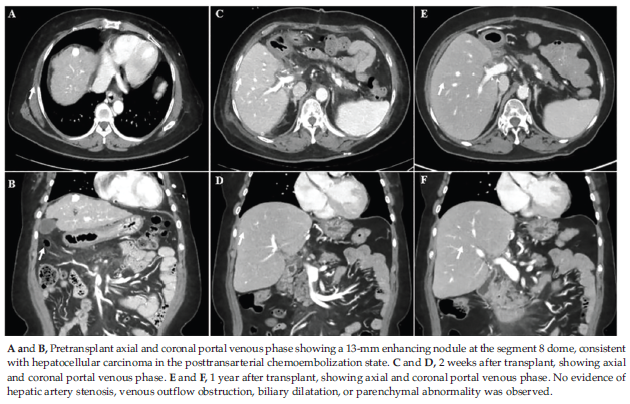
Figure 1. Representative Computed Tomography Images Before and After ABO-Incompatible Living Donor Liver Transplant
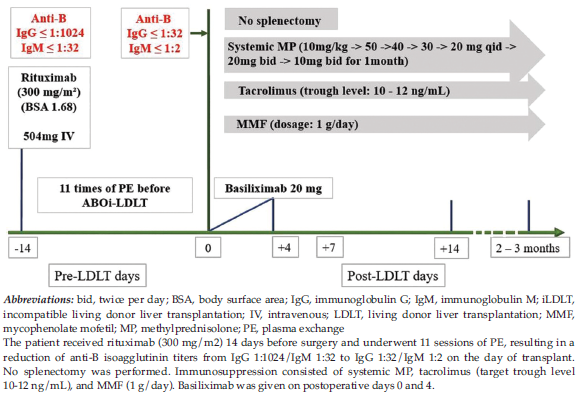
Figure 2. Institutional ABO-Incompatible Living Donor Liver Transplant Protocol
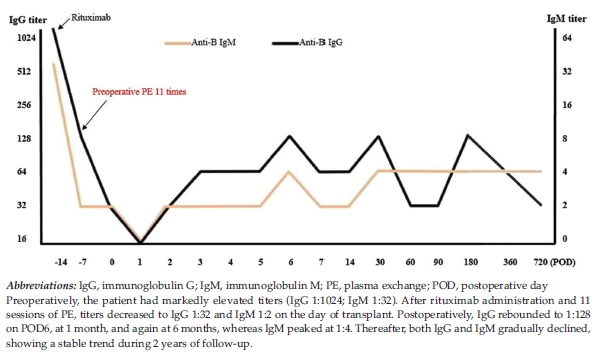
Figure 3. Titer Measurements Showing Stabilized Immunoglobulin G and Immunoglobulin M at 2 Years
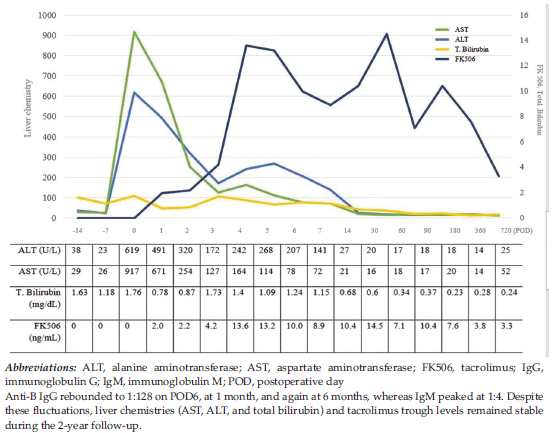
Figure 4. Liver Function Tests and Tacrolimus Trough Levels Before and After Transplant
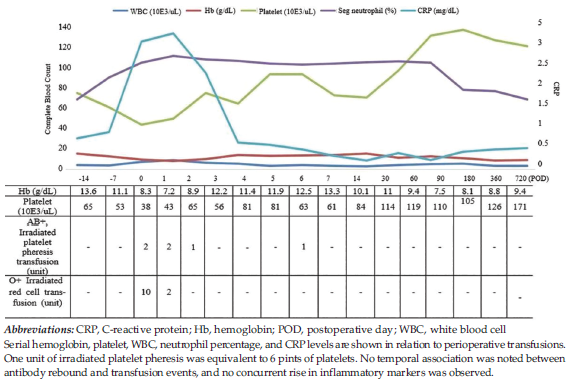
Figure 5. Hematologic Indices, C-Reactive Protein, and Perioperative Transfusions Before and After Transplant