Volume: 23 Issue: 10 October 2025
FULL TEXT
Objectives: Living donor liver transplant offers a solution to organ shortages and long waiting times while providing favorable outcomes for recipients. In this study, we evaluated the physical, emotional, and social outcomes, as well as the overall satisfaction, of living liver donors at a single transplant center.
Materials and Methods: We conducted a study of donors from 2008 to 2025. In our retrospective study, a custom telephone survey was used to assess physical, emotional, and social outcomes. The custom telephone survey, adapted from previously validated instruments, assessed postoperative quality of life, including physical and mental health, complications, and satisfaction. We extracted clinical data from medical records.
Results: Among donors surveyed, donor complication rate was 17%, with most indicated minor and self-limited complications. No donor deaths occurred. Postoperative quality of life was high, with 88% reporting feeling the same or better after donation. Common physical complaints included malaise, bloating, and scar discomfort; emotional symptoms included fear and anxiety (reported by 29% and 27% of donors, respectively) but resolved spontaneously. All donors expressed satisfaction (61% were very satisfied), and 93% would recommend donation.
Conclusions: Living donor liver transplant is a safe and viable option for addressing organ shortages when performed in experienced centers with comprehensive donor evaluation and support. Donors reported high satisfaction and rapid return to baseline function, although emotional symptoms were not uncommon in the early postoperative period. These findings support the need for structured, long-term follow-up, including repeated assessments of donor well-being, to ensure continued safety and satisfaction.
Key words : Liver transplant, Living donor, Posttransplant complications, Quality of life survey
Introduction
The increasing use of living donors for liver transplant is primarily driven by the shortage of deceased donor grafts together with the resultant increasing mortality for patients on wait lists. Living donor liver transplantation (LDLT) offers several advantages and solutions to these problems. With LDLT, wait times can be minimized, organ quality can be preoperatively determined, and ischemia times can be reduced, all contributing to improved outcomes compared with deceased-donor transplant.1
Living donation is the most altruistic human act. Therefore, the ability to ensure safety and well-being of donors is a central responsibility of any liver transplant program. A comprehensive understanding of the short-term and long-term effects on donor quality of life (QOL) is essential and must be integrated into mandatory follow-up procedures after donation.
In this study, living liver donors were surveyed to evaluate their QOL after hepatectomy for liver transplant with a living donor. We retrospectively evaluated patient medical records.
Materials and Methods
We included patients who underwent living donor hepatectomy at our center between January 2008 and May 2025. By Argentinean law, donor eligibility required a biological relationship with the recipient, age ≥18 years, and blood type compatibility. Exclusion criteria included underlying liver disease, positive hepatitis serologies, significant anatomical variations necessitating complex reconstruction, small-for-size graft risk, or any medical condition that increased the likelihood of donor complications.
All potential donors at our center undergo multidisciplinary evaluation, including assessments by a hepatologist, cardiologist, transplant surgeon, social worker, and psychologist. Candidates deemed suitable are then reviewed by the liver transplant board. Potential living donors and recipients are evaluated by 2 different groups. All candidates are informed of the risks of living liver donation, including that donation is a one-time procedure and that they could withdraw consent at any point prior to surgery.
Ethical approval for this study was obtained from the Institutional Review Board of our hospital (no. 778/19).
Data collection and analysis
We designed a custom survey for this study based on previously validated instruments used to assess living liver donor outcomes, including the Short Form-36, the Medical Outcomes Study, the USC Donor Quality of Life Survey, the Lahey Clinic Donor Survey, and a donor-specific survey (Table 2). We contacted donors included in our study by telephone and asked them to complete a follow-up survey evaluating postoperative physical, emotional, and social outcomes after donation. To maintain confidentiality, each donor was assigned a numerical code (1-41) based on the chronological order of their surgery. We note that the variability in time since donation may have influenced recall and should be considered when interpreting the results.
We categorized postoperative complications by using the Dindo-Clavien classification (grades I to IV).2 We used SPSS version 26 for statistical analyses. We presented data as means ± SD unless otherwise noted. We evaluated the following variables as potential predictors of donor outcomes: donor characteristics (age, sex, body mass index [BMI; (calculated as weight in kilograms divided by height in meters squared], Caprini score, relationship to recipient) and donation-associated factors (donor and recipient complications, recipient mortality).
Results
Among 585 liver transplants performed at our center, 51 (9%) involved living donors. One case required a dual graft, resulting in a total of 52 living donor grafts. Of these, 41 donors (79%) completed the follow-up survey and formed our study population, including the 2 donors used for the dual graft liver transplant. Of the 41 donors, 25 (61%) were women; mean age at donation was 30 ± 7 years. Mean BMI was of 23.8, and Caprini score was 3. Of the 40 transplants performed (29 in pediatric and 11 in adult recipients), 32 (80%) were elective procedures.
Of the 29 adult-to-pediatric cases (73%), the donors were most commonly the recipients’ parents (25 donors, 83%), followed by uncles (3 donors, 11%), a grandparent (1 donors, 3%), and a sibling (1 donor, 3%). Among the 11 adult-to-adult cases, 10 donors (91%) were the recipients’ children and 1 donor (9%) was a sibling. Transplant etiologies are presented in Figure 1. Regarding their marital status, 16 donors (39%) were single, 13 donors (32%) were in a relationship, 10 donors (24%) were married, and 2 donors (5%) were divorced. Thirty donors (73%) had children: 16 (53%) had 1 child, 7 (23%) had 2 children, 5 (17%) had 3 children, and 2 (7%) had 4 children.
Educational attainment varied; a minority had only elementary education (10% incomplete, 2% complete); high school (8% incomplete, 34% complete) and college (12% incomplete, 32% complete) attainment levels were more common. One donor (2%) had postgra-duate education.
At the time of surgery, 38 donors (93%) were employed: 20 (53%) full-time and 18 (47%) part-time. Five donors (13%) were required to resign from their jobs before surgery in order to complete the donation process.
Twenty-five donors (61%) underwent left lateral segmentectomy, 8 (20%) underwent left hepatectomy, and 7 (17%) underwent right hepatectomy. Open surgery was performed in 33 cases (80%). Among the 8 donors (20%) who underwent laparoscopic surgery, conversion to open surgery was required in 3 cases (38%). The reasons for conversion included presence of an annular segment I, which complicated dissection of the inferior vena cava, a large right liver lobe, and technical difficulty during liver parenchymal transection.
The mean ± SD operative time was 331 ± 88 minutes, with mean time of open procedures of 310 ± 80 minutes and mean time of laparoscopic procedures of 430 ± 63 minutes. The Pringle maneuver was not used in any donor. Abdominal drainage was placed in 37 donors (90%) and was typically removed on the first postoperative day. Blood transfusions were required in 5 donors (12%): 4 received 1 unit and 1 received 2 units. The median stay in an intensive care unit was 1 day (range, 0-4 days), and the median gene-ral hospital ward stay was 2 days (range, 1-6 days).
Postoperative laboratory evaluation showed transient elevations in liver enzymes and mild alterations in coagulation and hematologic parameters. The median peak arginine aminotransferase and alanine aminotransferase levels were 217 U/L (range, 105-1019 U/L) and 270 U/L (range, 109-1659 U/L), respectively. Total bilirubin peaked at a median of 1.1 mg/dL (range, 0.5-5.0 mg/dL), and alkaline phosphatase had a median peak of 63 U/L (range, 35-198 U/L). The lowest postoperative prothrombin activity was median of 72% (range, 39-97), and platelet counts reached a median nadir of 219 ×109/L (range, 108-322 ×109/L). All laboratory abnormalities resolved within 6 months in all donors.
Postoperative complications occurred in 8 cases (19%; P = .009) and were classified as grade I (n = 3, 7.3%), grade II (n = 2, 5%), grade IIIa (n = 1, 2.4%), grade IIIb (n = 1, 2.4%), and grade IVa (n = 1, 2.4%). One donor (2.4%) had a conservatively managed biliary fistula, and 2 donors (4.8%) developed intra-abdominal fluid collections; of these, 1 was treated with percutaneous drainage and the other with medi-cal therapy. Two donors (4.8%) required reoperation: 1 for hemoperitoneum and 1 for pyloric syndrome (Table 1). No incidences of donor mortality occurred.
Regarding counseling before donation, 18 donors (44%) reported understanding “almost everything,” 17 (41%) reported “complete understanding,” and 6 (15%) reported “limited understanding.” Nevertheless, 36 donors (88%) felt the medical team adequately explained the process. Postoperative QOL was rated highly: 36 donors (88%) felt the same as before surgery, whereas 5 (12%) felt better. Symptoms rated as “very inconvenient” included malaise, bloating, abdominal pain, scar discomfort, and rib pain (n = 3, 7.3%). Common symptoms rated as “inconvenient” (any degree) included weight changes and malaise (n = 16, 39%), bloating (n = 14, 34%), and nausea or vomiting (n = 11, 27%) (Figure 2). Twelve donors (29%) reported postoperative pain was worse than expected (Figure 3). All donors resumed physical activity and social life within 2 months. Of the 33 donors (87%) who took leave from work to undergo the procedure, all returned to their jobs before donation within the same 2-month period, once cleared to work by the transplant team.
In terms of mental health, 12 donors (29%) reported fear, 11 (27%) anxiety, 10 (24%) sleep disturbances, and 4 (10%) depression (Figure 4). These symptoms occurred within 3 months after discharge and resolved spontaneously without medication. Regarding self-esteem, 24 donors (59%) reported improvement and 3 (7%) reported a decline (not related to recipient’s transplant outcome). Distribution of reported mood changes after surgery are shown in Figure 5.
When asked about their understanding of the donation procedure, 17 donors (41%) reported fully understanding the procedure, 18 (44%) stated they understood the procedure to some extent, and 6 (15%) indicated they did not understand the procedure. Despite this variability in perceived understanding, most donors (n = 36; 88%) felt that the procedure had been correctly explained to them, whereas only 5 (12%) expressed dissatisfaction with the explanation that they received. When asked who had explained the process, 24 donors (59%) identified the surgeon as the primary source of information, and 17 (41%) reported receiving explanations from multiple members of the medical team. At follow-up, 25 donors (61%) reported being very satisfied with their experience. Three donors (7%) expressed regret; of these, 2 cases involved recipients who died within the first week postoperatively, and 1 case involved a recipient who required retransplant. Nevertheless, 38 donors (93%) stated that they would recommend living donation to others.
Among recipients, 5 recipients (12.5%) required retransplant: 2 for vascular thrombosis, 1 for primary nonfunction, 1 for small-for-size syndrome, and 1 for chronic rejection. There were 4 recipient deaths (10%), which included 2 within 30 days posttransplant and 2 during later follow-up. Recipient and graft survival rates at 1, 5, 10, and 15 years were 93%/90%, 93%/84%, 93%/84%, and 82%/78%, respectively (Figure 6).
Discussion
Our single-center experience adds to the growing body of evidence of LDLT as a safe and ethically acceptable procedure when performed in experienced centers with comprehensive donor evaluation and support systems. In our cohort, there was no donor mortality and a 17% complication rate, most of which were minor and self-limiting. These findings were consistent with previously published series,3-6 including the experience of Emiroglu and colleagues, who reported similar outcomes in their single-center analysis of 101 LDLTs.7 Prior work has reported donor morbidity ranging from 17% to 40%.8
Most physical symptoms in our study, including malaise, bloating, and pain, were transient. This result is consistent with findings from Hsu and colleagues, who noted that the most common long-term complaints were incision site discomfort, including throbbing, itching, and numbness.9 All donors in our cohort resumed normal activities within 2 months, with literature reporting functional recovery between 3 and 6 months10 or up to 1 year after the procedure according to Hesimov and colleagues.11 The Japanese Liver Transplantation Society reported persistent physical symptoms in 10% of donors at 1 year.12
In our series, transient emotional symptoms such as fear (29%), anxiety (27%), and sleep disturbances (24%) were commonly reported, but all resolved without medical intervention. These rates are higher than those described by Kimura and colleagues.13 Donors whose recipients experienced poor outcomes reported higher levels of guilt, emphasizing the need for targeted psychosocial support.5 Despite the physical and emotional demands of donation, overall donor satisfaction was high, with 61% of donors reporting being very satisfied, 39% being satisfied, and 93% indicating they would recommend donation (even among those whose recipients died in the early postoperative period). These results highlight the importance of thorough counseling before donation and sustained support after donation.3,14-16 Recipient survival rates in our center were comparable to those reported by Fukuda and colleagues.17
In alignment with findings by Lendoire and colleagues18 in patients undergoing liver resection for benign disease, our donors most frequently identified the surgeon as the person who provided the most comprehensive explanation of the donation process. These findings underscore the importance of clear and consistent communication during the preoperative period, as well as the critical role of the surgical team in guiding donors through the informed consent process.
The first pediatric LDLT in Argentina was performed in 1992, marking a pivotal advancement in the country’s transplant history. This was followed by the first adult LDLT in 1998. Our center initiated its pediatric LDLT program in 1995 and adult program in 2001. Although a critical component of our transplant efforts is the living donation program, particularly in pediatric cases, broader acceptance of living donation in Argentina remains limited. Cultural attitudes, limited public education, and ongoing misconceptions about the risks of donation contribute to a general reluctance, especially among potential adult donors. In contrast, pediatric living donation is more readily embraced, often motivated by the immediate and compelling need to save a child’s life. These disparities highlight the need for targeted public awareness and education initiatives to foster a stronger culture of living donation in the country.
Our study provides valuable insights into the outcomes and experiences of living liver donors at our center, demonstrating the safety and high satisfaction associated with LDLT. Despite the risks of major surgery, no donor deaths and few severe complications occurred. Most donors returned to normal activities quickly and reported good posto-perative QOL. We propose to validate these findings in a larger cohort. Although the survey was specifically designed for the LDLT population and included questions on both physical and mental health, repeated assessments during the postoperative period are recommended to better understand how donor QOL changes over time. High levels of preoperative understanding likely contributed to overall satisfaction and low level of regret. Although emotional symptoms were common early on, they resolved without long-term effects, supporting the idea that short-term psychological distress is a normal part of recovery.
In analyses of US data from the United Network for Sharing Organs of LDLT recipients, Cotter and colleagues reported graft and patient survival rates of 88.4% and 93.4% at 1 year and 78.1% and 83.8% at 5 years, respectively.19 Similarly, the experience by Haberal and colleagues in 2006 showed favorable results, with graft and patient survival rates exceeding 90% in their liver transplant program, more than 60% of which were living donor cases.20 These results align closely with those observed at our own center, underscoring the consistency of outcomes across institutions and supporting the effectiveness of LDLT as a durable therapeutic option.
Our study had some limitations, including a relatively small sample size and the retrospective nature of the data collection. In addition, the time elapsed since donation varied widely among participants, which may influence recall accuracy and the reporting of QOL measures. The follow-up period was also variable, limiting our ability to assess long-term outcomes consistently across the cohort. These factors may affect the generalizability and inter-pretation of the results.
Conclusions
Our findings underscore the importance of com-prehensive counseling before donation and long-term psychosocial support, particularly when managing donor expectations and coping with recipient complications. The educational and demographic diversity among donors suggests that individuals from varied backgrounds can navigate donation successfully when adequately supported. Overall, LDLT, when performed in experienced centers with strong perioperative care, is associated with excellent donor outcomes. Continued investments in education, mental health support, and long-term follow-up are essential to ensure ethical, safe, and sustainable living donor programs.
References:
- Fisher RA. Living donor liver transplantation: eliminating the wait for death in end-stage liver disease? Nat Rev Gastroenterol Hepatol. 2017;14(6):373-382. doi:10.1038/nrgastro.2017.2
CrossRef - PubMed - Dindo D, Demartines N, Clavien PA. Classification of surgical complications: a new proposal with evaluation in a cohort of 6336 patients and results of a survey. Ann Surg. 2004;240(2):205-213. doi:10.1097/01.sla.0000133083.54934.ae
CrossRef - PubMed - Ghobrial RM, Freise CE, Trotter JF, et al; A2ALL Study Group. Donor morbidity after living donation for liver transplantation. Gastroenterology. 2008;135(2):468-476. doi:10.1053/j.gastro.2008.04.018
CrossRef - PubMed - Abecassis MM, Fisher RA, Olthoff KM, et al; A2ALL Study Group. Complications of living donor hepatic lobectomy--a comprehensive report. Am J Transplant. 2012;12(5):1208-1217. doi:10.1111/j.1600-6143.2011.03972.x
CrossRef - PubMed - Butt Z, Dew MA, Liu Q, et al. Psychological outcomes of living liver donors from a multicenter prospective study: results from the Adult-To-Adult Living Donor Liver Transplantation Cohort Study2 (A2ALL-2). Am J Transplant. 2017;17(5):1267-1277. doi:10.1111/ajt.14134
CrossRef - PubMed - LaPointe Rudow D, DeLair S, Feeley T, et al. Longterm impact of living liver donation: a self-report of the donation experience. Liver Transplant. 2019;25(5):724-733. doi:10.1002/lt.25402.
CrossRef - PubMed - Emiroglu R, Sevmis S, Moray G, Savas N, Haberal M. Living-donor liver transplantation: results of a single center. Transplant Proc. 2007;39(4):1149-1152. doi:10.1016/j.transproceed.2007.02.052
CrossRef - PubMed - Benzing C, Schmelzle M, Oellinger R, et al. Living-donor liver transplant: an analysis of postoperative outcome and health-related quality of life in liver donors. Exp Clin Transplant. 2018;16(5):568-574. doi:10.6002/ect.2017.0108
CrossRef - PubMed - Hsu HT, Hwang SL, Lee PH, Chen SC. Impact of liver donation on quality of life and physical and psychological distress. Transplant Proc. 2006;38(7):2102-2105. doi:10.1016/j.transproceed.2006.07.021
CrossRef - PubMed - Middleton PF, Duffield M, Lynch SV, et al. Living donor liver transplantation--adult donor outcomes: a systematic review. Liver Transpl. 2006;12(1):24-30. doi:10.1002/lt.20663
CrossRef - PubMed - Hesimov I, Kirimker EO, Duman B, et al. Health-related quality of life of liver donors: a prospective longitudinal study. Transplant Proc. 2018;50(10):3076-3081. doi:10.1016/j.transproceed.2018.07.018
CrossRef - PubMed - The Japanese Liver Transplantation Society. Liver transplantation in Japan-registry by the Japanese Liver Transplantation Society. Jpn J Transplant. 2005;40(6):518-526.
CrossRef:
PubMed:
- Kimura H, Onishi Y, Sunada S, et al. Postoperative psychiatric complications in living liver donors. Transplant Proc. 2015;47(6):1860-1865. doi:10.1016/j.transproceed.2015.06.021
CrossRef - PubMed - DuBay DA, Holtzman S, Adcock L, et al. Adult right-lobe living liver donors: quality of life, attitudes and predictors of donor outcomes. Am J Transplant. 2009;9(5):1169-1178. doi:10.1111/j.1600-6143.2009.02614.x
CrossRef - PubMed - Humphreville VR, Radosevich DM, Humar A, et al. Longterm health-related quality of life after living liver donation. Liver Transpl. 2016;22(1):53-62. doi:10.1002/lt.24304
CrossRef - PubMed - Azoulay D, Bhangui P, Andreani P, et al. Short- and long-term donor morbidity in right lobe living donor liver transplantation: 91 consecutive cases in a European Center. Am J Transplant. 2011;11(1):101-110. doi:10.1111/j.1600-6143.2010.03284.x
CrossRef - PubMed - Fukuda A, Sakamoto S, Shigeta T, et al. Clinical outcomes and evaluation of the quality of life of living donors for pediatric liver transplantation: a single-center analysis of 100 donors. Transplant Proc. 2014;46(5):1371-1376. doi:10.1016/j.transproceed.2013.12.054
CrossRef - PubMed - Lendoire M, Martin A, Montes L, et al. Patient perspectives and overall satisfaction after liver resection for benign disease. J Gastrointest Surg. 2024;28(5):679-684. doi:10.1016/j.gassur.2024.02.019
CrossRef - PubMed - Cotter TG, Minhem M, Wang J, et al. Living donor liver transplantation in the United States: evolution of frequency, outcomes, center volumes, and factors associated with outcomes. Liver Transpl. 2021;27(7):1019-1031. doi:10.1002/lt.26029
CrossRef - PubMed - Haberal M, Buyukpamukcu N, Telatar H. Liver transplantation: experience at our center. Transplant Proc. 2006;38(7):2111-2116. doi:10.1016/j.transproceed.2006.06.035
CrossRef - PubMed

Volume : 23
Issue : 10
Pages : 657 - 664
DOI : 10.6002/ect.2025.0194
From the 1Transplant and Immunology Department, Yale University, New Haven, CT, USA; the 2Institute of Multiorgan Transplantation, Hepatobiliary Surgery and Hepatic Transplantation, Hospital Universitario Fundación Favaloro, Buenos Aires, Argentina; the 3Pediatric Liver Transplant, the Intestinal Care and Transplantation Center, Medstar Georgetown University Hospital, Washington, DC, USA; and the 4Hepatology, Liver Transplantation, Hospital Universitario Fundación Favaloro, Buenos Aires, Argentina
Acknowledgements: The authors have not received any funding or grants in support of the presented research or for the preparation of this work and have no declarations of potential conflicts of interest.
Corresponding author: Maria Florencia Fernandez, Yale University, New Haven, CT, USA
Phone: +1 203 249 4892
E-mail: maría.f.fernandez@yale.edu
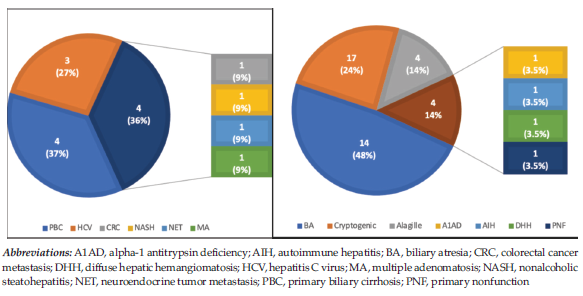
Figure 1. Indications for Liver Transplant in Adult (left) and Pediatric (right) Patients
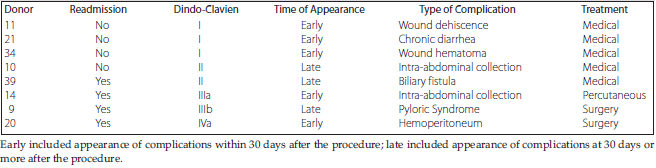
Table 1. Postoperative Complications
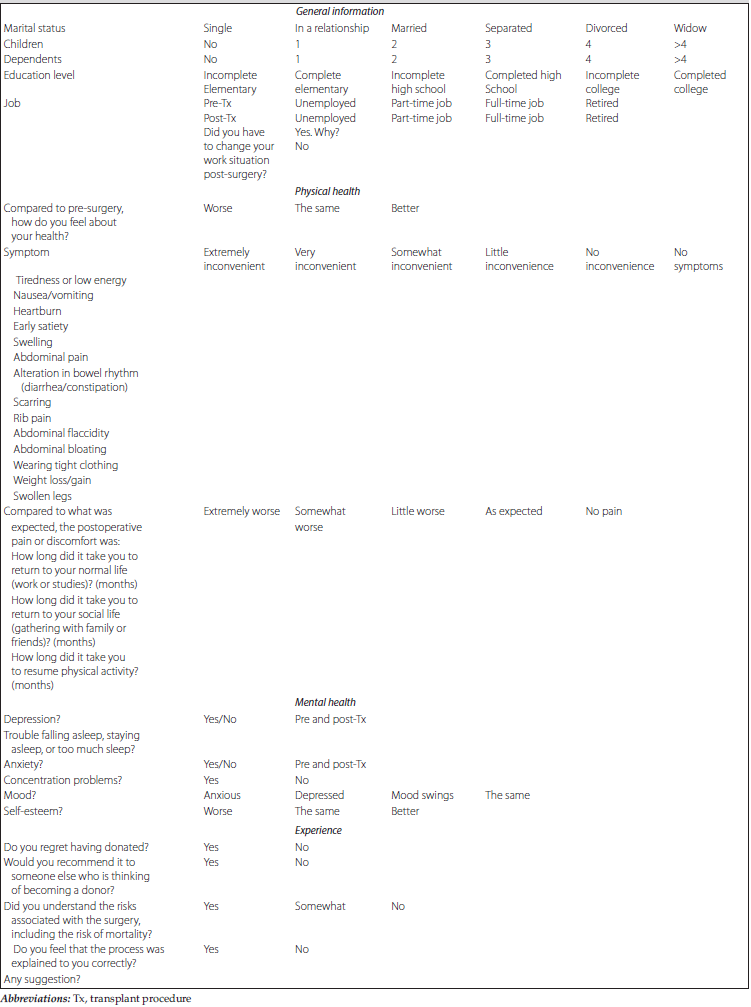
Table 2. Survey Adapted to Assess the Physical and Mental Quality of Life in Living Liver Donors
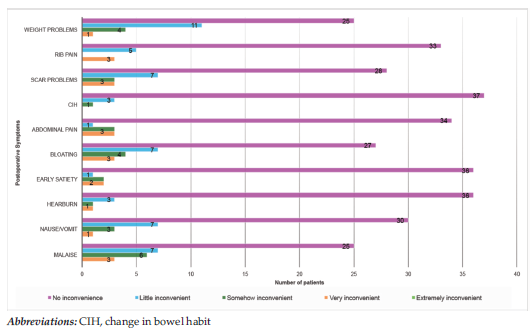
Figure 2. Postoperative Complications

Figure 3. Comparison of Postoperative Pain With Preoperative Expectations
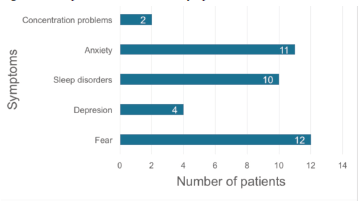
Figure 4. Postoperative Mental Health Symptoms
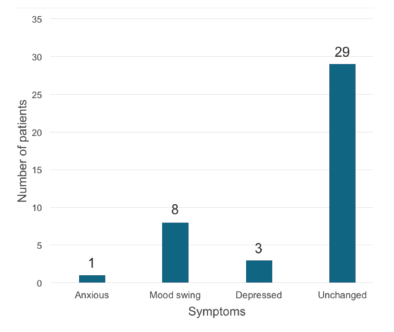
Figure 5. Postoperative Mood-Related Symptoms Reported by Patients
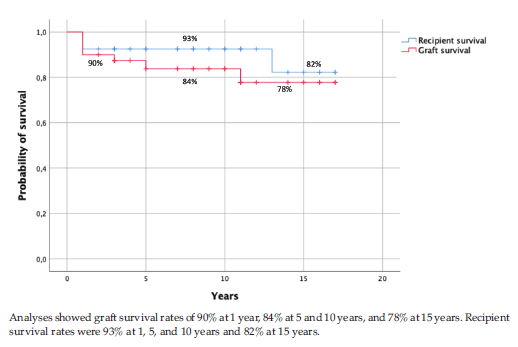
Figure 6. Kaplan-Meier Analysis