Volume: 21 Issue: 11 November 2023
FULL TEXT
Monkeypox (mpox) infection is usually a self-limiting disease; however, kidney transplant recipients may be at a higher risk of serious complications, due to their immunosuppressed status. Nevertheless, the reported mpox cases in transplant recipients are very few, thus data on the clinical course and prognosis details of mpox in transplant recipients are scarce. Indeed, only 2 cases of mpox in kidney transplant recipients have been reported: one patient achieved good clinical recovery, and the other patient experienced a disseminated form of the disease with urinary and gastrointestinal complications. Yet, both patients recovered fully with no allograft involvement. Here, we report a case and images of a 46-year-old male patient, with a history of posttraumatic splenectomy in 1999 and a living related kidney transplant in 2010, who presented to us with fever, sore throat, and skin rash. After thorough examination, a throat swab sent for mpox DNA polymerase chain reaction was positive; similarly, a cutaneous swab taken from a skin lesion was positive for mpox by DNA polymerase chain reaction, although he had no history of recent travel or contact with mpox cases. Our patient received supportive care and made a good clinical recovery with no disease sequelae. In this report, we describe the patient’s clinical course and outcome, as well as photographic illustrations of skin lesion progression. With the present outbreak of mpox cases, clinicians should consider mpox in differential diagnoses of skin rash in immunosup-pressed patients. Early identification of the infection, through viral detection by DNA polymerase chain reaction from samples taken from the skin rash, is necessary to facilitate a prompt diagnosis.
Key words : Kidney transplantation, Mpox virus, Skin rash
Introduction
Monkeypox (mpox) is a zoonosis caused by the monkeypox virus, an orthopox virus similar to smallpox, and causes a disease similar to smallpox but less severe.1 Although smallpox was eradicated in 1980, mpox continues to occur in people living in tropical rainforests of central and west Africa.1 After decades of quiescence, mpox has re-emerged as an outbreak that began in May 2022.2 The World Health Organization (WHO) declared the mpox outbreak to be an international health emergency on July 23, 2022, after over 16?000 cases were reported from 75 countries, including 5 deaths.3 Moreover, the WHO has recommended a new preferred term “mpox” as a synonym for this disease.1
Transplant recipients may acquire mpox infection through direct contact with skin-to-skin cutaneous lesions, sexual transmission, or respiratory droplets by exposure to infected individuals.4,5 In the literature, only a few cases of mpox infection in immuno-compromised patients have been reported to date.
Case Report
Informed consent was obtained from the patient for his images and other clinical information to be reported in the journal.
Here, we report the case of a 46-year-old male patient from the United Arab Emirates who had a history of posttraumatic splenectomy in 1999. He underwent a living related kidney transplant in 2010, in Germany, and the donor was his brother. His native kidney disease was focal segmental glomerulosclerosis. After transplant, he had been maintained on tacrolimus and mycophenolate. Steroids were withdrawn rapidly after the transplant. Additionally, he developed posttransplant diabetes mellitus and was maintained on the combination of glucagon-like peptide 1 plus pioglitazone and sodium-glucose cotransporter-2 inhibitors (empagliflozin and metformin). He had excellent allograft function with a creatinine level of 0.7 to 0.8 mg/dL and an estimated glomerular filtration rate (Chronic Kidney Disease Epidemiology Collaboration method) of 110.5 mL/min/1.73 m2, with a minimum proteinuria protein-to-creatinine ratio of 299 mg/g.
He was admitted in May 2023 with a history of fever, severe sore throat, and diarrhea of 4 days duration. He reported no history of recent travel; however, he had contact with his son, who had severe diarrheal illness but with no skin rashes.
Upon presentation, he was ill in appearance, febrile with a temperature of 38 °C, blood pressure 119/74, pulse 114 beats/min, respiration 18 breaths/min, height 170 cm, weight 87.8 kg, and saturation of blood oxygen 99%.
Physical examination, apart from pharyngeal swelling, was unremarkable. Furthermore, an incidental finding of maculopapular skin rash was noted across the scalp, shoulders, and arms. According to the patient, the rash appeared 2 weeks earlier, and he had remained otherwise asymptomatic. The rash appeared first on the scrotum and then spread to the entire body. The rash was well defined, multiple, and erythematous; some areas appeared with skin-tone papules and nodules with central umbilication; and some areas appeared with crusted lesions on an erythematous base. The rash was scattered across the body but was absent from the palms of the hands and soles of the feet. On genitalia, the papules showed coalescence and formed a plaque over the scrotum. No lesions were noted on the oral mucosa.
The laboratory findings are shown in Table 1, and the rash (at the neck) is shown in Figure 1. Chest radiography revealed accentuated vascular markings in both lung fields, with no definite air space opacities.
The patient was examined and assessed by the dermatologist, who proposed a differential diagnosis of varicella zoster virus, mpox, or herpetic lesions. The patient was started empirically on antibiotics for the high inflammatory markers and fever. Further investigations showed negative test results for cytomegalovirus immunoglobin M and no reactivity for rapid plasma reagin. The results for all of the following tests were negative: HIV1 and HIV2 antigen/antibody; herpes simplex virus 1 DNA polymerase chain reaction (PCR); blood herpes simplex virus 2 DNA PCR; blood varicella zoster virus DNA PCR; Cryptococcus neoformans antigen; Cryptococcus quantification antibodies; and blood Epstein-Barr virus DNA PCR. The gastrointestinal panel was positive for Sapovirus. A throat swab sent for mpox DNA polymerase chain reaction was positive; similarly, a cutaneous swab taken from a skin lesion (cutaneous) was positive for mpox by DNA polymerase chain reaction. On further inquiry, he had no history of recent travel or contact with mpox cases.
The infectious disease unit was consulted, but there was no active treatment for mpox, so he was continued on antibiotics. We ceased his mycophenolate while he was an inpatient but continued his treatment with tacrolimus. The patient made a remarkable recovery; his inflammatory markers trended down, and he had normal allograft functions throughout. He was discharged from the hospital and transitioned to home isolation. Figure 2 and Figure 3 show the course progression of the rash, which faded over the subsequent 3 weeks:
Discussion
Infection with mpox is usually self-limiting; however, it can be serious in immunocompromised individuals. The incubation period is estimated to be 2 to 20 days, with most cases appearing at 9.1 days.3,6,7 The disease classically lasts for 2 to 4 weeks.8 The clinical syndrome is characterized by fever with other prodromal symptoms, such as malaise, myalgias, and headache, together with lymphadenopathy and rash. Fever can occur before or after the appearance of the rash. Respiratory symptoms such as sore throat (as in our patient), nasal congestion, pharyngitis, or cough can occur.5
Skin rashes are characteristically described as firm or rubbery, well-circumscribed, and deep-seated, which often develop umbilication (resembling a dot on the top of the lesion). Skin rashes can be located on the face, hands, feet, chest, mouth, and genital and anorectal areas. The rash develops simultaneously on various sites and can be confined to only a few lesions or a single lesion or can be disseminated across many sites on the body (as in our patient).6 The lesions progress through 4 stages (macular, papular, vesicular, and pustular) and then forms scabs that resolve during a course of 2 to 3?weeks.9-11 Lesions confined only to the genital area can be confused with other sexually transmitted infections.11 Whenever possible, samples should be taken directly from the skin rash, crusts, fluid, or biopsy if necessary. Viral DNA PCR is the preferred method for detection of the mpox virus.1,12
The immunosuppressed status of kidney transp-lant recipients could represent a higher risk to develop subsequent complications after infection. Complications of mpox can include encephalitis, sight-threatening keratitis, pneumonitis, secondary bacterial infections, and death; these potential complications are based on reported observations of severe complications in immunocompromised HIV-infected patients.4,5,8 Yet the reported transplant cases are very few, thus data of the clinical course and prognosis of mpox in transplant recipients are scarce. Indeed, only 2 cases of mpox in kidney transplant recipients have been reported in the literature: one patient achieved a good recovery,13 and the other case was a disseminated form of the disease with urinary and gastrointestinal complications, in the form of urine retention, proctitis, and secondary bowel obstruction.14 Yet both patients recovered fully with no allograft involvement.
Treatment of mpox in renal transplant recipients is mainly supportive to relieve symptoms, manage complications, and prevent long-term sequelae.2-4 There is presently no standardized approach to manage immunocompromised patients with mpox in terms of reducing immunosuppression reduction, and no specific protocol has been established. We reduced the immunosuppressants in our patient by temporary cessation of mycophenolate therapy, based on previous observational research of COVID-19 infection management. Even before the skin rash was fully resolved in our patient, mycophenolate was restarted by the time the patient was discharged. Antiviral medications can be used to reduce illness duration and symptom severity; nevertheless, there is no antiviral therapy approved by the United States Food and Drug Administration for the mpox tirus.6 A few investigational antiviral medications drugs are available, under the guidance of infectious disease specialists, such as Tecovirimat, an antiviral drug that was developed for smallpox.4,8 There is, however, limited availability of tecovirimat. Additionally, reduc-tion of tacrolimus and sirolimus levels are suggested, because these are weak inducers of cytochrome P450 3A and 2B6 and contraindicated in patients with glomerular filtration rate of <30 mL/min.8 There have also been reports of mpox cases treated with cidofovir and brincidofovir.5 However, the effectiveness of these medications is not well established in renal transplant patients, and further research is necessary.13 No antiviral therapy was started here since infectious disease specialists recommended none. The vaccinia immunoglobulin intravenous (human) is available under expanded access protocol from the Center for Disease Control for treatment of mpox cases. Nonetheless, this treatment has not been studied in kidney transplant recipients.4,8,15
Given the limited evidence for the therapeutic efficacy of these investigational medications, transplant infectious disease specialists together with the primary transplant provider, should be involved in the patient’s treatment decisions.
Conclusions
With the present outbreak of mpox cases, clinicians should consider mpox in the differential diagnoses of skin rash in immunosuppressed patients. Early identification of the infection, through viral DNA PCR detection in the skin rash, is necessary to facilitate a prompt diagnosis.
References:
- World Health Organization. Mpox (monkeypox). Accessed December 7, 2023. https://www.who.int/news-room/fact-sheets/detail/monkeypox
CrossRef - PubMed - Hraib M, Jouni S, Albitar MM, Alaidi S, Alshehabi Z. The outbreak of monkeypox 2022: an overview. Ann Med Surg (Lond). 2022;79:104069. doi:10.1016/j.amsu.2022.104069
CrossRef - PubMed - Centers for Disease Control and Prevention. Mpox. Accessed December 7, 2023. https://www.cdc.gov/poxvirus/monkeypox/symptoms/index.html
CrossRef - PubMed - Al Jurdi A, Kotton CN. Monkeypox in transplant recipients: no breaks between outbreaks. Transplantation. 2022;106(11):e512-e513. doi:10.1097/TP.0000000000004337
CrossRef - PubMed - Adler H, Gould S, Hine P, et al. Clinical features and management of human monkeypox: a retrospective observational study in the UK. Lancet Infect Dis. 2022;22(8):1153-1162. doi:10.1016/S1473-3099(22)00228-6
CrossRef - PubMed - Centers for Disease Control and Prevention. Key characteristics for identifying Mpox. Accessed December 7, 2023. https://www.cdc.gov/poxvirus/monkeypox/clinicians/clinical-recognition.html
CrossRef - PubMed - Guzzetta G, Mammone A, Ferraro F, et al. Early estimates of monkeypox incubation period, generation time, and reproduction number, Italy, May-June 2022. Emerg Infect Dis. 2022;28(10):2078-2081. doi:10.3201/eid2810.221126
CrossRef - PubMed - American Society of Transplantation. Monkeypox FAQS for transplant community. August 4, 2022. Accessed July 14, 2023. https://www.myast.org/monkeypox-faqs-transplant-community#3
CrossRef - PubMed - Farahat RA, Sah R, El-Sakka AA, et al. Human monkeypox disease (MPX). Infez Med. 2022;30(3):372-391. doi:10.53854/liim-3003-6
CrossRef - PubMed - McCollum AM, Damon IK. Human monkeypox. Clin Infect Dis. 2014;58(2):260-267. doi:10.1093/cid/cit703
CrossRef - PubMed - Ortiz-Martinez Y, Rodriguez-Morales AJ, Franco-Paredes C, et al. Monkeypox: a description of the clinical progression of skin lesions: a case report from Colorado, USA. Ther Adv Infect Dis. 2022;9:20499361221117726. doi:10.1177/20499361221117726
CrossRef - PubMed - Boan P. Monkeypox a concern for donor-derived infection? Transplantation. 2023;107(2):303-304. doi:10.1097/TP.0000000000004445
CrossRef - PubMed - Heis F, Heis M, Khan M, Ashok M. Monkeypox in a renal transplant recipient: is it a hazard for immunocompromised patients? Eur J Case Rep Intern Med. 2023;10(6):003857. doi:10.12890/2023_003857
CrossRef - PubMed - Attieh RM, Brumble L, Elwasila SM, Wadei HM. Disseminated monkeypox infection in a kidney transplant recipient: a case report. Transplant Proc. 2023;55(3):667-671. doi:10.1016/j.transproceed.2023.02.031
CrossRef - PubMed - NHS Blood and Transplant. INF1640/1. Monkeypox and organ transplantation. Rapid assessment. Accessed July 15, 2023. https://nhsbtdbe.blob.core.windows.net/umbraco-assets-corp/26782/inf16401.pdf
CrossRef - PubMed

Volume : 21
Issue : 11
Pages : 913 - 916
DOI : 10.6002/ect.2023.0222
From the 1Department of Nephrology, Dubai Hospital, Dubai Academic Health Corporation; and the 2Department of Dermatology, Rashid Hospital, Dubai Academic Health Corporation, Dubai, United Arab Emirates
Acknowledgements: The authors have not received any funding or grants in support of the presented research or for the preparation of this work and have no declarations of potential conflicts of interest.
Corresponding author: Fakhriya Alalawi, Academic Department of Medicine at DMC, Department of Nephrology, Dubai Hospital, Dubai Academic Health Corporation, Dubai, United Arab Emirates
E-mail: fjalalawi08@yahoo.co.uk
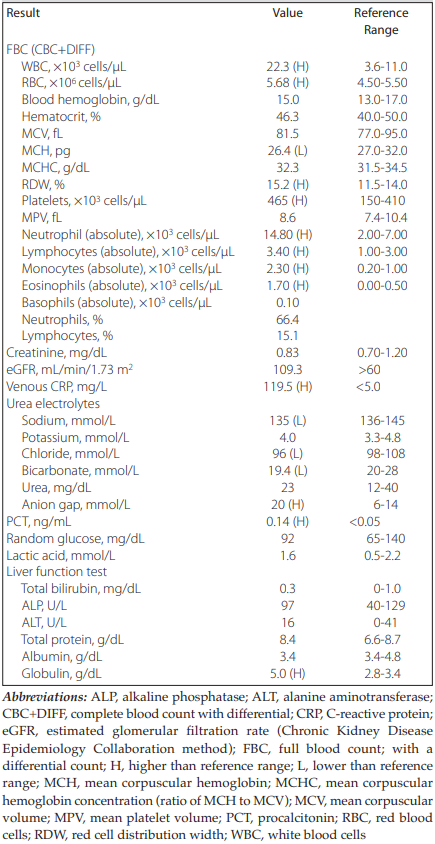
Table 1. Laboratory Findings Upon Presentation
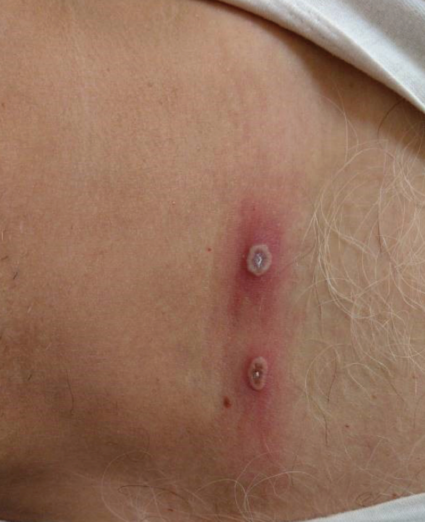
Figure 1. Umbilicated Papular Rash at the Neck, Upon Presentation
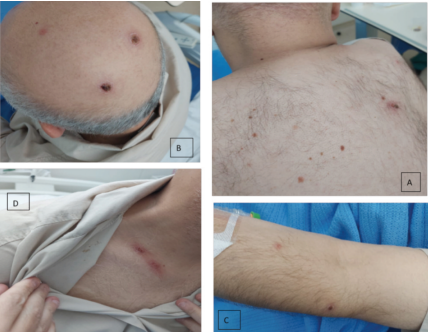
Figure 2. Mpox Rash After 8 Days of Presentation
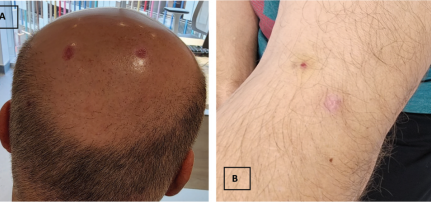
Figure 3. Healed Rash Over the Scalp and Left Arm at Follow-Up Visit, 35 days After Presentation