Volume: 21 Issue: 11 November 2023
FULL TEXT
Impact and Consequences of Recipient Gastroduodenal Artery Ligation Before Hepatic Artery Anastomosis During Orthotopic Liver Transplantation
Abstract
Objectives: The recipient’s gastroduodenal artery is often ligated before the hepatic artery anastomosis during orthotopic liver transplant, to gain either mobility or length of recipient’s hepatic artery, potentially protecting the anastomosis by preventing “steal syndrome.” In this study, our aim was to evaluate the consequences of gastroduodenal artery ligation and its effect on prevention of hepatic artery thrombosis.
Materials and Methods: We retrospectively analyzed deceased-donor orthotopic liver transplant procedures (n = 210) performed at a single center between January 2016 and July 2021 to compare outcomes between recipients with (group 1) and recipients without (group 2) gastroduodenal artery ligation. Group 1 included 78 patients (37%), in which the recipient’s common hepatic artery was used for arterial anastomosis; group 2 included 132 patients (63%), in which the right hepatic artery or the proper hepatic artery was used for arterial anastomosis. Occurrences of hepatic artery thrombosis, posto-perative hyperamylasemia, nausea and vomiting, and delayed feeding were compared between the groups.
Results: There was no incidence of hepatic artery thrombosis reported in either group. In group 1, 31 patients (39.7%) were reported to have postoperative hyperamylasemia, ranging from 200 to 4700 U/L accompanied by delayed feeding, whereas, in group 2, only 16 of 132 patients (12%) had postoperative hyperamylasemia, ranging from 200 to 1400 U/L
(P < .01).
Conclusions: Ligation of recipient’s gastroduodenal artery is not associated with decreased risk of hepatic artery thrombosis compared with nonligation. However, the procedure does have consequences in the form of possible postoperative hyperamylasemia, leading to delayed feeding probably due to decreased oral tolerance.
Key words : Hepatic artery thrombosis, Postoperative hyperamylasemia, Splenic artery steal syndrome
Introduction
Hepatic artery (HA) anastomosis is the most critical component of liver transplant with immediate and long-term implications on graft and patient survival based on its patency. Documented incidence of hepatic artery thrombosis (HAT) after liver transplant has been as high as 12% of adult liver transplant recipients in earlier series.1 However, with impro-vement of techniques, the current incidence ranges from 2% to 4%.2 Of the multiple factors responsible for early HAT, the anastomotic technique still remains an important factor. Various techniques used by different surgeons are end-to-end anastomosis between celiac axis stem of graft and recipient common hepatic artery (CHA), graft right hepatic artery (RHA) to the recipient CHA, use of donor HA with splenic patch, use of a patch at the division of donor gastroduodenal artery (GDA), use of donor HA with aortic patch to the recipient CHA, use of infrarenal conduit, and use of supraceliac conduit.3 However, HAT has been shown to be associated with all of the techniques, with varying degrees, and no particular technique has shown a statistically significant result.3 Performing tension-free anastomosis by ensuring adequate length and mobilization of artery, ligation of branch vessels to ensure good blood flow at the anastomotic site to prevent steal, and meticulous anastomosis techniques are important technical considerations for prevention of HAT.4-7 When HA anastomosis is performed during orthotopic liver transplant, the recipient’s GDA is often ligated to increase the length of the recipient’s artery for anastomosis and also to potentially avoid the steal phenomenon.8,9 There are reports of graft hypo-perfusion requiring procedures at times due to these steal phenomena, which are reported to be due to either GDA or splenic artery steal syndrome and may require interventions to augment HA flow.10-12 However, these reports are anecdotal and limited by a small numbers of cases. There has been no large series, to our knowledge, evaluating the effects of GDA ligation during liver transplant, specifically with whole organ deceased-donor liver allografts. We aimed to evaluate the effects of GDA ligation in recipients of orthotopic liver transplant. The primary outcome evaluated was the incidence of HAT. Secondary outcomes assessed included the effects on recipients’ postoperative parameters, namely, hyperamylasemia, nausea and vomiting and delayed feeding.
Materials and Methods
Patients included in this retrospective study had provided detailed and informed consent. This study received approval from our institutional review board. All deceased-donor orthotopic whole liver transplants performed at a single center between January 2016 and July 2021 were retrospectively analyzed. The surgical technique of liver transplant included both bicaval replacement and the piggyback technique. End-to-end HA anastomosis was performed either in a continuous or an interrupted fashion using a fine 7-0 Prolene suture based on surgeon’s preference. In the case of replaced vessels, especially right replaced HA, an arterial reconstruction was performed on the bench where donor-replaced right HA was anastomosed to the graft HA’s GDA or splenic stump. All recipients had single anastomosis to the recipient artery. For evaluation of outcomes, we divided recipients into 2 groups: group 1 included patients who had GDA ligation, and group 2 included patients who did not have GDA ligation during the transplant. Occurrence of HAT, postoperative hyperamylasemia (POHA), postoperative nausea and vomiting (PONV), and delayed feeding were assessed in both groups. Feeding was considered delayed if patients were not started on a diet until 5 days postsurgery, which was considered standard in liver transplant recipients. Continuous variables were compared using the t test, and categorical variables were compared using the Pearson chi-square test.
Results
During the study period, our center performed 210 deceased-donor orthotopic liver transplants. Demographic data of orthotopic liver transplant recipients are listed in (Table 1). Group 1 consisted of 78 recipients, in which the common HA was used for arterial anastomosis. Group 2 consisted of 132 recipients, in which anastomosis was performed using either the right HA or the proper HA. Among the total patients, 162 patients (77.1%) did not have replaced or accessory vessels. Of 48 patients (22.9%) with replaced vessels, 28 (13.3%) had right replaced/accessory, 18 (8.6%) had left replaced/accessory, and 2 (0.8%) had both right and left replaced/accessory vessel. Of these 48 patients with replaced vessels, 18 (23.1%) were in group 1 and 30 (22.7%) were in group 2. We found no incidence of HAT in either of the 2 groups. Group 1 had 31 patients (47%) with POHA (ranging from 200 to 4700 U/L), and group 2 had 30 patients (25.4%) with POHA (ranging from 200 to 1400 U/L) (P = .003). Nineteen patients (24.4%) in group 1 required tube feeds compared with 14 patients (10.6%) in group 2 (P = .01). Thirty-eight patients (4.7%) in group 1 had PONV in the early postoperative period compared with 17 patients (12.9%) in group 2 (P = .001). Feeding was delayed in 23 patients (29.5%) in group 1 compared with 9 patients (6.8%) in group 2 (P = .001) (Table 2).
Discussion
Hepatic artery thrombosis and hepatic artery stenosis are dreaded complications of liver transplant surgery that can occur in the early and the late phase. Hepatic artery thrombosis can lead to fulminant liver failure, delayed biliary leak and biliary sepsis, relapsing bacteremia, ischemic strictures, cholangitis, graft dysfunction, and multiorgan failure.13 It leads to bile duct injury and necrosis, which can frequently be followed by bacterial translocation, sepsis, and death.3,13 The incidence of HAT has significantly decreased over the years from 42% (in children) and 12% (in adults) to 4.4% and 2%, respectively,3,14 likely because of improvements in surgical technique, organ preservation, and graft and patient selection. However, there are other causes of early HAT, like rejection and decreased flow through the HA.15 Various authors have described the occurrence of steal syndrome with both GDA steal and splenic artery steal responsible for poor flow across HA anastomosis.8-12 The reported incidence of HAT is low but may be up to 0.6%.16 Our study did not show any significant change in incidence of HAT in patients with either ligation of GDA or no ligation. Replaced or accessory vessels present in the donor liver and bench reconstruction may increase the risk of arterial thrombosis.x17,18 However, in our analysis, we did not see an increased incidence of HAT with bench reconstruction to enable single anastomosis to the recipient’s artery, irrespective of whether recipient GDA was ligated or not. Among our patients, GDA ligation led to higher incidence of hyperamylasemia and delay in enteral nutrition. Delayed feeding observed in the cohort was most likely attributed to this subtle pancreatitis with resultant pyloric spasm that resulted in delay in ability to start enteral nutrition. Patients with GDA ligation had increased incidence of nausea and vomiting, contributing to increased length of stay in the hospital among other factors. Our results suggest that recipient GDA ligation for HA anastomosis is not a mandatory step in liver transplant and can be avoided with the benefit of decreased POHA, PONV, and early feeding. Limitations to our study include other factors that may contribute toward POHA. With dissection in the HA bed to expose the common HA or to gain extra length on the artery, placement of a retractor blade in that vicinity may agitate the pancreas, leading to some degree of inflammation in that region and associated pancreatitis. There may be other causes of PONV and delayed feeding in our orthotopic liver transplant recipients, such as medications, frailty, delayed gastric emptying, prolonged encephalopathy, or postoperative intensive care or delirium; however, correlation with hyperamylasemia cannot be overlooked for reasons stated above. In addition, this symptomatology has a broad etiology base, making it difficult to do any multivariate analysis to have accurate reason.
Conclusions
Patients who did not have ligation of recipient GDA before HA anastomosis during liver transplant did not have increased incidence of HAT. However, GDA ligation may lead to significant hyperamylasemia, which can be a cause of upper gastrointestinal symptoms in the early postoperative period and can be a subject of interest for future studies.
References:
- Wozney P, Zajko AB, Bron KM, Point S, Starzl TE. Vascular complications after liver transplantation: a 5-year experience. AJR Am J Roentgenol. 1986;147(4):657-663. doi:10.2214/ajr.147.4.657
CrossRef - PubMed - Bekker J, Ploem S, de Jong KP. Early hepatic artery thrombosis after liver transplantation: a systematic review of the incidence, outcome and risk factors. Am J Transplant. 2009;9(4):746-757. doi:10.1111/j.1600-6143.2008.02541.x
CrossRef - PubMed - Mourad MM, Liossis C, Gunson BK, et al. Etiology and management of hepatic artery thrombosis after adult liver transplantation. Liver Transpl. 2014;20(6):713-723. doi:10.1002/lt.23874
CrossRef - PubMed - Abbasoglu O, Levy MF, Testa G, et al. Does intraoperative hepatic artery flow predict arterial complications after liver transplantation? Transplantation. 1998;66(5):598-601. doi:10.1097/00007890-199809150-00008
CrossRef - PubMed - Eipel C, Abshagen K, Vollmar B. Regulation of hepatic blood flow: the hepatic arterial buffer response revisited. World J Gastroenterol. 2010;16(48):6046-6057. doi:10.3748/wjg.v16.i48.6046
CrossRef - PubMed - Sevmis S, Boyvat F, Aytekin C, et al. Arterial steal syndrome after orthotopic liver transplantation. Transplant Proc. 2006;38(10):3651-3655. doi:10.1016/j.transproceed.2006.10.145
CrossRef - PubMed - Nussler NC, Settmacher U, Haase R, Stange B, Heise M, Neuhaus P. Diagnosis and treatment of arterial steal syndromes in liver transplant recipients. Liver Transpl. 2003;9(6):596-602. doi:10.1053/jlts.2003.50080
CrossRef - PubMed - Jiménez-Rodríguez R, Martínez JA, Artacho GS, Bravo MG. Liver graft necrosis caused by a gastroduodenal arterial steal syndrome. Rev Esp Enferm Dig. 2009;101(6):446-447.
CrossRef - PubMed - Nishida S, Kadono J, DeFaria W, et al. Gastroduodenal artery steal syndrome during liver transplantation: intraoperative diagnosis with Doppler ultrasound and management. Transpl Int. 2005;18(3):350-353. doi:10.1111/j.1432-2277.2004.00065.x
CrossRef - PubMed - Lima CX, Mandil A, Ulhoa AC, Lima AS. Splenic artery steal syndrome after liver transplantation: an alternative technique of embolization. Transplant Proc. 2009;41(5):1990-1993. doi:10.1016/j.transproceed.2009.01.086
CrossRef - PubMed - Vogl TJ, Pegios W, Balzer JO, Lobo M, Neuhaus P. [Arterial steal syndrome in patients after liver transplantation: transarterial embolization of the splenic and gastroduodenal arteries]. Rofo. 2001;173(10):908-913. doi:10.1055/s-2001-17592
CrossRef - PubMed - Langer R, Langer M, Scholz A, Felix R, Neuhaus P, Keck H. [The splenic steal syndrome and the gastroduodenal steal syndrome in patients before and after liver transplantation]. Aktuelle Radiol. 1992;2(2):55-58.
CrossRef - PubMed - Crossin JD, Muradali D, Wilson SR. US of liver transplants: normal and abnormal. Radiographics. 2003;23(5):1093-1114. doi:10.1148/rg.235035031
CrossRef - PubMed - Tzakis AG, Gordon RD, Shaw BW, Jr., Iwatsuki S, Starzl TE. Clinical presentation of hepatic artery thrombosis after liver transplantation in the cyclosporine era. Transplantation. 1985;40(6):667-671. doi:10.1097/00007890-198512000-00019
CrossRef - PubMed - Abou El-Ella K, Al Sebayel M, Ramirez C, Hussien R. Outcome and risk factors of hepatic artery thrombosis after orthotopic liver transplantation in adults. Transplant Proc. 2001;33(5):2712-2713. doi:10.1016/s0041-1345(01)02157-1
CrossRef - PubMed - Stange BJ, Glanemann M, Nuessler NC, Settmacher U, Steinmuller T, Neuhaus P. Hepatic artery thrombosis after adult liver transplantation. Liver Transpl. 2003;9(6):612-620. doi:10.1053/jlts.2003.50098
CrossRef - PubMed - Soliman T, Bodingbauer M, Langer F, et al. The role of complex hepatic artery reconstruction in orthotopic liver transplantation. Liver Transpl. 2003;9(9):970-975. doi:10.1053/jlts.2003.50167
CrossRef - PubMed - Xue Z, Chen M, Zhang X, et al. Analysis of early hepatic artery thrombosis after liver transplantation. ANZ J Surg. 2018;88(3):172-176. doi:10.1111/ans.13911
CrossRef - PubMed

Volume : 21
Issue : 11
Pages : 879 - 882
DOI : 10.6002/ect.2023.0270
From the 1Division of Abdominal Transplant, Department of Surgery, UNC School of Medicine, Chapel Hill, North Carolina; and the 2Department of Global Health, University of North Carolina, Chapel Hill, North Carolina, USA
Acknowledgements: The authors have not received any funding or grants in support of the presented research or for the preparation of this work and have no declarations of potential conflicts of interest.
Corresponding author: Chirag S. Desai, Department of Surgery, UNC School of Medicine4024 Burnett Womack Building, Chapel Hill, NC 27599, USA
E-mail: chirag_desai@med.unc.edu
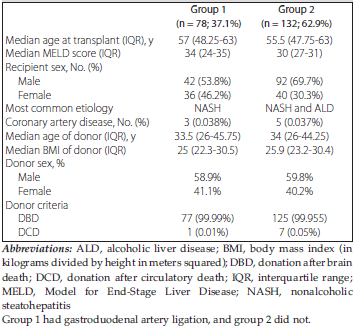
Table 1.Demographic Data of Liver Transplant Recipients and Donors (N = 210)
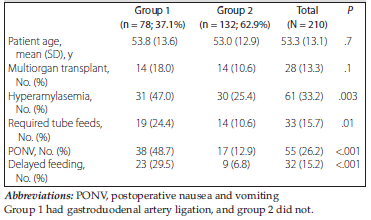
Table 2.Comparison Between Group 1 and Group 2