Volume: 18 Issue: 4 August 2020
FULL TEXT
Objectives: We aimed to investigate the accuracy of the Milan, University of
California San Francisco, and Up-to-7 criteria in predicting tumor recurrence
after liver transplant for hepatocellular carcinoma.
Materials and Methods: For this study, 165 patients with deceased-donor liver
transplant for hepatocellular carcinoma were evaluated. The Milan, University of
California San Francisco, and Up-to-7 criteria were calculated based on explant
pathology.
Results: Tumor recurrence rate after liver transplant was 14.6%. Of 165 patients, 115 (70%) were within Milan, 131 (79%) were within University of California San Francisco, and 135 (82%) were within Up-to-7 criteria. The odds ratio of tumor recurrence in patients outside versus within criteria for Milan, University of California San Francisco, and Up-to-7 was 3.6 (95% confidence interval, 1.5-9.1; P = .005), 7.5 (95% confidence interval, 2.5-19.3; P < .001), and 7.5 (95% confidence interval, 2.9-19.6; P < .001) times higher, respectively. The sensitivity of being outside of Milan in predicting tumor recurrence was comparable to University of California San Francisco and Up-to-7 criteria (56.5%, 56.5%, and 52.2%, respectively). Specificity was highest in Up-to-7 (87.3%) versus 85.2% for University of California San Francisco and 73.9% for Milan criteria. The area under the curve for Milan, University of California San Francisco, and Up-to-7 criteria was 0.63, 0.65, and 0.63.
Conclusions: Application of standard criteria has significantly improved prediction of hepatocellular carcinoma recurrence. However, these criteria are inadequate, supporting the importance of other factors, including tumor biology. Research is ongoing in discovering novel biomarkers as predictors of tumor recurrence.
Key words : Cancer recurrence, Explant pathology, Transplant eligibility
Introduction
Hepatocellular carcinoma (HCC) is the 5th most common cancer in men, the 7th most common cancer in women, and is the second leading cause of cancer-related mortality in the world.1,2 Although there are multiple treatment modalities for HCC, including transarterial chemoembolization (TACE), radiofrequency ablation, and surgical resection, liver transplant (LT). The later is an attractive option, particularity in patients with cirrhosis, as it is both curative and addresses the underlying chronic liver disease.2,3
Recurrence of HCC is a dreaded and ominous event after LT.4 It is associated with a significant decrease in post-LT survival and has limited therapeutic options.5 When LT was first accepted as a treatment option for patients with HCC in the 1980s, there were no published criteria to guide patient selection, and the rate of postoperative cancer recurrence was reported to be high as 70%.6,7 These initial disappointing results led centers to reconsider the feasibility of transplant in patients with HCC. However, subsequent reports of satisfactory survival among patients with incidental findings of small HCCs on explant pathology prompted efforts to develop criteria to select LT candidates with the lowest risk of tumor recurrence, which could thus optimize utilization of this scarce resource.8-10
Therefore, standard criteria were designed to aid in appropriate patient selection for LT in patients with HCC. The Milan criteria (MC) were first described in 1996, in a pivotal study that established LT as a viable treatment option for HCC.11 In this study, transplant eligibility criteria were as follows: a single lesion ≤ 5 cm or 3 or fewer lesions all < 3 cm and no evidence of macrovascular invasion, lymph node involvement, or extrahepatic metastasis. The MC were subsequently adopted by the United Network of Organ Sharing and are currently the criterion standard in transplant programs to select and list patients with HCC for LT.12
Since the introduction of MC, additional models have been proposed to safely expand the indications for LT in patients with HCC in an effort to include more patients without compromising recurrence-free survival. In 2001, the University of California San Francisco (UCSF) criteria were published, which expanded tumor size criteria. Thus, transplant eligibility criteria were as follows: single tumor ≤ 6.5 cm in diameter or up to 3 lesions each ≤ 4.5 cm in diameter with a total diameter of ≤ 8 cm.13 In this study, patients with HCC who fell within the more liberal UCSF criteria had posttransplant survival rates comparable to those who fell within MC. Subsequently, Mazzaferro and associates described the “Up-to-Seven” model (otherwise known as the “New Milan criteria”) as follows: the sum of the total number of HCC lesions plus the size of the largest tumor in centimeters up to 7.14 The 5-year survival rate of those who fell within these criteria was also shown to be comparable to MC.13,14 The definitions of the MC, UCSF criteria, and Up-to-7 criteria are summarized in Table 1.
In the present study, we aimed to assess how well the MC, UCSF, and Up-to-7 criteria can predict tumor recurrence in our patient population following deceased-donor LT for HCC.
Materials and Methods
Study population
We retrospectively studied 170 patients who underwent LT with a diagnosis of HCC
at the Johns Hopkins University Comprehensive Liver Transplant Center between
2005 and 2015. We excluded 4 patients who underwent living-donor LT and 1
patient due to quality of data. Thus, 165 total patients were included in the
final analysis. Clinical characteristics, including age, sex, and tumor
recurrence, and explant pathology, including tumor size, were obtained from
patient medical records.
Pathology
Data regarding number and size of the tumors were collected based on the explant
pathology. In addition, data on percent necrosis for each tumor were calculated.
The MC, UCSF, and Up-to-7 criteria were calculated based on the original size of
the tumors on pathology. All 3 criteria were then recalculated based on the
amount of necrosis and percentage of viable tumor after downstaging post-TACE.
Statistical analyses
Categorical variables are reported as percentages, and continuous variables are
reported as medians and ranges. To evaluate the diagnostic value of MC, UCSF,
and Up-to-7 criteria, we determined the sensitivity, specificity, positive
predictive value, and negative predictive value. The overall predictive
performance of MC, UCSF, and Up-to-7 were measured by area under the receiver
operating characteristic curve (AUC). Statistical significance was based on P <
.05. Statistical analyses were performed using STATA version 13 (StataCorp,
College Station, TX, USA). Logistic regression analysis was used to determine
associations between MC, UCSF, and Up-to-7 criteria and tumor recurrence after
deceased-donor LT. For comparison between AUC of MC, UCSF, and Up-to-7 criteria,
the Delong nonparametric approach was applied.15
Results
Study population
Characteristics of the 165 included patients are summarized in Table 2. The mean
age was 59 years, and 127 patients (77%) were males. Milan, UCSF, and Up-to-7
criteria were evaluated based on explant pathology as described in the Materials
and Methods section pre-TACE (original tumor size) and post-TACE. In total, 115
patients (70%) were within
MC based on explant pathology, and 50 patients (30%) were outside of MC.
Overall, 131 patients (79%) were within UCSF criteria, and 135 patients (82%)
were within Up-to-7 criteria. All 115 (70%) patients who were within MC were
also within
UCSF and Up-to-7 criteria (Table 3). There were
27 patients (16%) who were outside of all 3 criteria. In addition, there were 13
patients who were within UCSF and Up-to-7 criteria but fell outside of
MC. Three patients who were within UCSF were
also outside of Up-to-7. On the other hand, 7 patients who were within Up-to-7
were not within UCSF criteria (Table 3; pre-TACE). The above information was
recalculated based on percent necrosis
and viable tumor as a result of post-TACE effect (Table 3).
Tumor recurrence and logistic regression analyses
We then applied logistic regression analysis to evaluate the association between
tumor recurrence and being outside of individual criteria. The overall rate of
HCC recurrence after LT within our population was 14.6%. The odds ratio (OR) of
tumor recurrence in patients outside of MC was 3.6 times higher than patients
who were within MC (95% confidence interval [CI], 1.5-9.1; P = .005) (Table 4).
The OR for UCSF criteria was 7.5 (95% CI, 2.5-19.3; P < .001), and the OR for Up-to-7 criteria was 7.5 (95% CI, 2.9-19.6;
P < .001)
(Table 4; pre-TACE). The ORs were comparable when post-TACE data were applied
(Table 4).
Predictive validity
Next, we determined the performance characteristics of the MC, UCSF, and Up-to-7
criteria. The 2-by-2 tables, pre-TACE and post-TACE, are shown in
Table 5. In addition, the sensitivity, specificity, positive predictive value,
negative predictive value, and AUC for the 3 criteria are summarized in
Table 6. The sensitivity for tumor recurrence
for patients outside of MC, UCSF, and Up-to-7 criteria pre-TACE was 56.5%,
56.5%, and
52.2%, respectively. The specificity was highest in Up-to-7 at 87.3% versus
85.2% for UCSF criteria
and 73.9% for MC. The positive predictive value was 40% for Up-to-7 and 38.2%
for UCSF versus 26% for MC. The negative predictive value was similar among the
3 criteria. The AUC for MC, UCSF criteria, and Up-to-7 criteria was 0.65, 0.71,
and 0.7, respectively (Table 6; pre-TACE). The above information was also
calculated based on percent necrosis and viable tumors as a result of post-TACE
effects (Table 6).
Downstaging after transarterial chemoembolization
The size and number of lesions were recalculated based on percent necrosis and
viable tumor on
explant pathology. The patients were then recategorized into MC, UCSF criteria,
and Up-to-7 criteria based on this information. On the basis of explant
pathology post-TACE, 19 patients were downstaged to MC, 8 patients were
downstaged to UCSF
criteria, and 11 patients were downstaged to Up-to-7 criteria. The post-TACE
sensitivity for tumor recurrence for patients outside of MC, UCSF, and
Up-to-7 criteria dropped to 41.7%, 41.7%, and 33.3%, respectively. However, the
specificities increased to 85.1%, 88.7%, and 92.2%, respectively. The
post-TACE AUC for MC, UCSF, and Up-to-7
criteria decreased to 0.63, 0.65, and 0.63, respectively (Table 6).
Comparison of areas under the curve
To compare the AUCs for MC, UCSF, and Up-to-7 criteria, we applied the Delong
nonparametric approach.15 There were no statistical differences between AUCs of
the 3 criteria, for both pre- and post-TACE data, in predicting tumor recurrence
after LT.
Discussion
Liver transplant remains one of the main treatment options in patients with cirrhosis and HCC, and it is a particularly attractive option because it also generally cures the underlying cirrhosis.16 After the development of MC in 1996, outcomes of LT for HCC have improved drastically. In the original series of 48 patients, in which the average follow-up was 26 months (range, 9-54), 35 patients who fell within MC were compared with 13 patients whose tumors were outside of the criteria. The overall mortality rate was reported as 17%. The 4-year overall and recurrence-free survival rates in patients who met the criteria were 85% and 92%, respectively, compared with 50% and 59% in patients whose tumors were outside of the criteria.11 The MC have since been further validated.17 In a 2009 study that included 4482 patients with HCC who were on wait lists for LT, 65% received a LT. The 1- and 5-year survival rates in patients within MC were 89% and 61%, respectively, compared with 70% and 32% in those who exceeded the MC.18 Overall, tumor recurrence can occur in 15% to 20% of patients after LT, who then have limited curative treatment options.19
Although the MC have been widely adapted by many transplant centers, it has been proposed that MC may be too restrictive, thus preventing patients from receiving a potentially lifesaving treatment such as LT.20-22 Therefore, various groups have attempted to expand beyond the MC through “extended criteria.”23-26 Two of the more commonly used criteria are the UCSF criteria13 and the Up-to-7 criteria.14
In a 2001 study from the University of California San Francisco, 70 patients with HCC who underwent LT over a 12-year period were evaluated. Patients who fell within the UCSF criteria had 1- and 5-year survival rates of 90% and 75.2% compared with a 1-year survival rate of 50% in patients who fell outside the criteria. In addition, in a univariate analyses, an alpha-fetoprotein (AFP) level of > 1000 ng/mL, total tumor diameter of > 8 cm, age ≥ 55 years, and poor differentiation grade were significant predictors of decreased survival. On multivariate analysis, only pT4 tumor stage and total tumor diameter remained statistically significant. The overall HCC recurrence after LT in this population was reported to be 11.4%.13,27
In the study describing the Up-to-7 criteria, 1112 patients with HCC who were outside of MC were evaluated and were compared to 444 patients with tumors within MC. Patients who were outside of the MC and received transplants had a 5-year overall survival rate of 53.6% compared with 73.3% for patients who met the criteria. Of 1112 patients, 454 (41%) had microvascular invasion. The presence of microvascular invasion doubled the hazard ratio for tumor recurrence. A subset of 283 patients who fell within the Up-to-7 criteria (7 as the sum of the size of the largest tumor in centimeters and the number of tumors) without microvascular invasion achieved a 5-year overall survival of 71.2%, which was comparable to those who fell within MC.14
In our single-center retrospective study of 165 patients, we aimed to evaluate the accuracy of MC, UCSF, and Up-to-7 criteria in predicting HCC recurrence after LT. Given that there was evidence of necrosis in most explants as a result of prior TACE, we have described the results as pre-TACE and post-TACE based on the pathology reports. Limitations of our study include its retrospective nature and small sample size. However, the sensitivities for predicting tumor recurrence were comparable between pathologic MC, UCSF, and Up-to-7 at 56.5%, 56.5%, and 52.2%. In addition, the specificities of MC, UCSF, and Up-to-7 were 74.5%, 85.1%, and 87.2% (Table 5 and Table 6). In other words, when a patient is within the criteria, the tests are relatively reliable in predicting patients who will not have HCC recurrence following LT. However, when a patient is outside of the criteria, the tests do poorly in predicting tumor recurrence. After we considered percentage of necrosis, the sensitivity of the tests dropped further and the specificities slightly increased. The AUC ranges for MC, UCSF, and Up-to-7 criteria were 0.63 to 0.65, 0.65 to 0.71, and 0.63 to 0.7, respectively. Similar to our findings, in a recent study of 339 patients, C statistics results for radiologic MC and UCSF criteria for prediction of HCC recurrence after LT were 0.63 and 0.57, respectively.28 In addition, in a study of 865 HCC patients, Agopian and associates showed similar prediction of tumor recurrence with C statistics of MC and UCSF criteria (C statistics 0.64).29 Although these criteria have significantly improved the outcomes of LT in patients with HCC, it appears that they are still not ideal in predicting tumor recurrence, suggesting that criteria solely based on tumor size and number of lesions have limitations and are inadequate.
It is now apparent that tumor biology is an important feature that determines tumor behavior in both the transplant and nontransplant settings.19 Investigators have attempted to address this by studying different biomarkers to predict tumor recurrence after LT for HCC.30,31 Alpha-fetoprotein and des-gamma-carboxy prothrombin (DCP) have been established as specific tumor markers for HCC,32 and AFP has been increasingly accepted as a marker for poor prognosis in HCC after LT.33 In a study by Hameed and associates, predictors of HCC recurrence included vascular invasion, pathologic tumor stage beyond UCSF criteria, and AFP level > 1000 ng/mL (hazard ratio of 4.5; 95% CI, 1.3-15.3; P = .02).34 Another study evaluated the predictive value of AFP and DCP in combination with MC criteria for HCC recurrence after LT. The hazard ratios were 3.5 for DCP > 7.5 ng/mL and 2.8 for AFP ≥ 250 ng/mL. When biomarkers were evaluated in combination with the tumor being outside of MC, the hazard ratio was increased from 2.6 to 8.6 for tumors outside the MC and AFP ≥ 250 ng/mL and from 3.5 to 7.2 for tumors outside the MC and DCP ≥ 7.5 ng/mL.35 In a study by Halazun and colleagues, pretransplant Model of Recurrence After Liver Transplant scores were used to evaluate recurrence-free survival. Three independent predictors were used, including neutrophil-to-lymphocyte ratio ≥ 5, AFP > 200 ng/mL, and tumor size > 3 cm. In this study, pretransplant Model of Recurrence After Liver Transplant scores were superior to MC in predicting tumor recurrence after LT (C statistic of 0.82 compared with 0.63).28
Based on these observations, it is becoming more evident that novel tumor biomarkers are needed to predict tumor behavior and recurrence after LT. Newer technologies are being actively investigated in patients with HCC, such as genomic sequencing and liquid biopsy.36 Application of these new technologies in clinical practice, including in the field of LT, has yet to be established.37 Genomic studies have revealed the mutational profile of HCC, which involves various molecular pathways.38 In a study from Nault and associates, a 5-gene signature score that incorporated expression levels of HN1, RAN, RAMP3, KRT19, and TAF9 could predict prognosis in patients with HCC after liver resection.39 Liquid biopsy, a new concept that refers to collection of molecular information from cancer byproducts from peripheral blood circulating tumor cells, DNA, or RNA,36,37 has also been investigated. In a study of 46 patients with HCC who were undergoing liver resection or transplant, 7 patients had circulating DNAs. Tumor recurrence and metastatic disease were significantly higher in patients with circulating DNA than in the DNA-negative group. Multivariate analyses identified circulating DNA as an independent predictor of microvascular invasion of portal vein.40
In summary, after the introduction of MC and other extended criteria in patients with HCC, tumor recurrence after LT has significantly decreased. However, the accuracy of these tools is still not optimal (AUC between 0.63 and 0.70). These criteria focus mainly on tumor volume and do not factor in tumor biology. Recent advancements in newer technologies have shown promise in discovering novel biomarkers as potential predictors of tumor recurrence after LT.
References:
- Mittal S, El-Serag HB. Epidemiology of hepatocellular carcinoma: consider the population. J Clin Gastroenterol. 2013;47 Suppl:S2-S6.
CrossRef - PubMed - Yu SJ. A concise review of updated guidelines regarding the management of hepatocellular carcinoma around the world: 2010-2016. Clin Mol Hepatol. 2016;22(1):7-17.
CrossRef - PubMed - Sharr WW, Chan SC, Lo CM. Section 3. Current status of downstaging of hepatocellular carcinoma before liver transplantation. Transplantation. 2014;97 Suppl 8:S10-S17.
CrossRef - PubMed - Valdivieso A, Bustamante J, Gastaca M, et al. Management of hepatocellular carcinoma recurrence after liver transplantation. Transplant Proc. 2010;42(2):660-662.
CrossRef - PubMed - Roayaie S, Schwartz JD, Sung MW, et al. Recurrence of hepatocellular carcinoma after liver transplant: patterns and prognosis. Liver Transpl. 2004;10(4):534-540.
CrossRef - PubMed - Iwatsuki S, Gordon RD, Shaw BW, Jr., Starzl TE. Role of liver transplantation in cancer therapy. Ann Surg. 1985;202(4):401-407.
CrossRef - PubMed - O'Grady JG, Polson RJ, Rolles K, Calne RY, Williams R. Liver transplantation for malignant disease. Results in 93 consecutive patients. Ann Surg. 1988;207(4):373-379.
CrossRef - PubMed - Bismuth H, Chiche L, Adam R, Castaing D, Diamond T, Dennison A. Liver resection versus transplantation for hepatocellular carcinoma in cirrhotic patients. Ann Surg. 1993;218(2):145-151.
CrossRef - PubMed - Iwatsuki S, Starzl TE, Sheahan DG, et al. Hepatic resection versus transplantation for hepatocellular carcinoma. Ann Surg. 1991;214(3):221-228; discussion 228-229.
CrossRef - PubMed - Ringe B, Pichlmayr R, Wittekind C, Tusch G. Surgical treatment of hepatocellular carcinoma: experience with liver resection and transplantation in 198 patients. World J Surg. 1991;15(2):270-285.
CrossRef - PubMed - Mazzaferro V, Regalia E, Doci R, et al. Liver transplantation for the treatment of small hepatocellular carcinomas in patients with cirrhosis. N Engl J Med. 1996;334(11):693-699.
CrossRef - PubMed - Wald C, Russo MW, Heimbach JK, Hussain HK, Pomfret EA, Bruix J. New OPTN/UNOS policy for liver transplant allocation: standardization of liver imaging, diagnosis, classification, and reporting of hepatocellular carcinoma. Radiology. 2013;266(2):376-382.
CrossRef - PubMed - Yao FY, Ferrell L, Bass NM, et al. Liver transplantation for hepatocellular carcinoma: expansion of the tumor size limits does not adversely impact survival. Hepatology. 2001;33(6):1394-1403.
CrossRef - PubMed - Mazzaferro V, Llovet JM, Miceli R, et al. Predicting survival after liver transplantation in patients with hepatocellular carcinoma beyond the Milan criteria: a retrospective, exploratory analysis. Lancet Oncol. 2009;10(1):35-43.
CrossRef - PubMed - DeLong ER, DeLong DM, Clarke-Pearson DL. Comparing the areas under two or more correlated receiver operating characteristic curves: a nonparametric approach. Biometrics. 1988;44(3):837-845.
CrossRef - PubMed - Felga G, Evangelista AS, Salvalaggio PR, et al. Hepatocellular carcinoma recurrence among liver transplant recipients within the Milan criteria. Transplant Proc. 2012;44(8):2459-2461.
CrossRef - PubMed - Kumaran V. Role of liver transplantation for hepatocellular carcinoma. J Clin Exp Hepatol. 2014;4(Suppl 3):S97-S103.
CrossRef - PubMed - Pelletier SJ, Fu S, Thyagarajan V, et al. An intention-to-treat analysis of liver transplantation for hepatocellular carcinoma using organ procurement transplant network data. Liver Transpl. 2009;15(8):859-868.
CrossRef PubMed: https://www.ncbi.nlm.nih.gov/pubmed/19642139
- Guerrero-Misas M, Rodriguez-Peralvarez M, De la Mata M. Strategies to improve outcome of patients with hepatocellular carcinoma receiving a liver transplantation. World J Hepatol. 2015;7(4):649-661.
CrossRef - PubMed - Kornberg A. Liver Transplantation for hepatocellular carcinoma beyond Milan criteria: multidisciplinary approach to improve outcome. ISRN Hepatol. 2014;2014:706945.
CrossRef - PubMed - Colombo M, Sangiovanni A. Treatment of hepatocellular carcinoma: beyond international guidelines. Liver Int. 2015;35 Suppl 1:129-138.
CrossRef - PubMed - Rude MK, Crippin JS. Liver transplantation for hepatocellular carcinoma. Curr Gastroenterol Rep. 2015;17(3):11.
CrossRef - PubMed - Bhoori S, Mazzaferro V. Current challenges in liver transplantation for hepatocellular carcinoma. Best Pract Res Clin Gastroenterol. 2014;28(5):867-879.
CrossRef - PubMed - Xu X, Lu D, Ling Q, et al. Liver transplantation for hepatocellular carcinoma beyond the Milan criteria. Gut. 2016;65(6):1035-1041.
CrossRef - PubMed - Onaca N, Davis GL, Goldstein RM, Jennings LW, Klintmalm GB. Expanded criteria for liver transplantation in patients with hepatocellular carcinoma: a report from the International Registry of Hepatic Tumors in Liver Transplantation. Liver Transpl. 2007;13(3):391-399.
CrossRef - PubMed - Menon KV, Hakeem AR, Heaton ND. Review article: liver transplantation for hepatocellular carcinoma - a critical appraisal of the current worldwide listing criteria. Aliment Pharmacol Ther. 2014;40(8):893-902.
CrossRef - PubMed - Yao FY, Xiao L, Bass NM, Kerlan R, Ascher NL, Roberts JP. Liver transplantation for hepatocellular carcinoma: validation of the UCSF-expanded criteria based on preoperative imaging. Am J Transplant. 2007;7(11):2587-2596.
CrossRef - PubMed - Halazun KJ, Najjar M, Abdelmessih RM, et al. Recurrence after liver transplantation for hepatocellular carcinoma: a new MORAL to the story. Ann Surg. 2017;265(3):557-564.
CrossRef - PubMed - Agopian VG, Harlander-Locke M, Zarrinpar A, et al. A novel prognostic nomogram accurately predicts hepatocellular carcinoma recurrence after liver transplantation: analysis of 865 consecutive liver transplant recipients. J Am Coll Surg. 2015;220(4):416-427.
CrossRef - PubMed - Sapisochin G, Bruix J. Liver transplantation for hepatocellular carcinoma: outcomes and novel surgical approaches. Nat Rev Gastroenterol Hepatol. 2017;14(4):203-217.
CrossRef - PubMed - Feng J, Wu J, Zhu R, et al. Simple risk score for prediction of early recurrence of hepatocellular carcinoma within the Milan criteria after orthotopic liver transplantation. Sci Rep. 2017;7:44036.
CrossRef - PubMed - Toyoda H, Kumada T, Tada T, Sone Y, Kaneoka Y, Maeda A. Tumor markers for hepatocellular carcinoma: simple and significant predictors of outcome in patients with HCC. Liver Cancer. 2015;4(2):126-136.
CrossRef - PubMed - Charriere B, Maulat C, Suc B, Muscari F. Contribution of alpha-fetoprotein in liver transplantation for hepatocellular carcinoma. World J Hepatol. 2016;8(21):881-890.
CrossRef - PubMed - Hameed B, Mehta N, Sapisochin G, Roberts JP, Yao FY. Alpha-fetoprotein level > 1000 ng/mL as an exclusion criterion for liver transplantation in patients with hepatocellular carcinoma meeting the Milan criteria. Liver Transpl. 2014;20(8):945-951.
CrossRef - PubMed - Chaiteerakij R, Zhang X, Addissie BD, et al. Combinations of biomarkers and Milan criteria for predicting hepatocellular carcinoma recurrence after liver transplantation. Liver Transpl. 2015;21(5):599-606.
CrossRef - PubMed - Yin CQ, Yuan CH, Qu Z, Guan Q, Chen H, Wang FB. Liquid biopsy of hepatocellular carcinoma: circulating tumor-derived biomarkers. Dis Markers. 2016;2016:1427849.
CrossRef - PubMed - Labgaa I, Villanueva A. Liquid biopsy in liver cancer. Discov Med. 2015;19(105):263-273.
PubMed

Volume : 18
Issue : 4
Pages : 463 - 469
DOI : 10.6002/ect.2017.0288
From the 1Division of Gastroenterology and Hepatology-Transplant Hepatology, the
2Division of Transplant Surgery, the 3Department of Anesthesiology and Critical
Care, the 4Division of Pathology, and the 5Division of Radiology, Johns Hopkins
University School of Medicine, Baltimore, Maryland, USA
Acknowledgements: The authors have no conflicts of interest to declare. This
work was funded by the National Center for Research Resources and the National
Center for Advancing Translational Sciences of the National Institutes of Health
through Grant 1UL1TR001079. The authors thank Carol Thompson, MS, MBA, Johns
Hopkins Biostatistics Center, Johns Hopkins Bloomberg School of Public Health,
for assistance with biostatical analyses.
Corresponding author: Ahmet Gurakar, Section of Gastroenterology/Hepatology,
Johns Hopkins University School of Medicine, 720 Rutland Avenue, Ross Research
Building Suite 918A, Baltimore, Maryland 21205, USA
Phone: +1 410 614 3369
E-mail: aguraka1@jhmi.edu
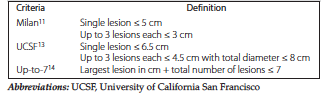
Table 1. Milan Criteria, University of California San Francisco Criteria, and Up-to-7 Criteria Definitions for Liver Transplant
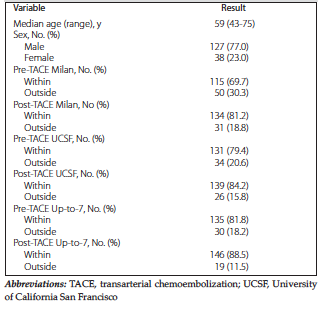
Table 2. Characteristics of Study Patients (N = 165)
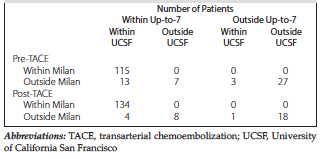
Table 3. Distribution of Study Patients Based on Criteria Before and After Transarterial Chemoembolization
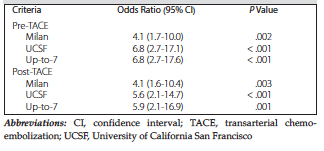
Table 4. Odds Ratios of Recurrence of Hepatocellular Carcinoma for Patients With Tumors That Were Outside of the Criteria for Liver Transplant Before and After Transarterial Chemoembolization
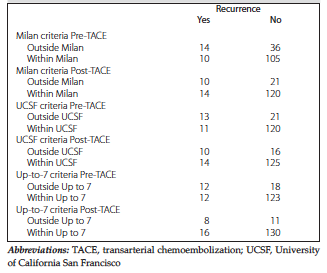
Table 5. Relationship Between Milan, University of California San Francisco, and Up-to-7 Criteria for Liver Transplant Before and After Transarterial Chemoembolization and Tumor Recurrence
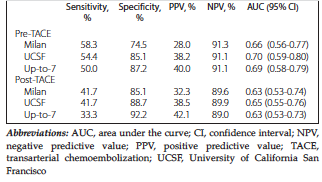
Table 6. Performance Characteristics of Criteria Before and After Transarterial Chemoembolization in Predicting Likelihood of Tumor Recurrence