Volume: 17 Issue: 1 February 2019
FULL TEXT
Objectives: Rat models of renal transplant are used to investigate immunologic processes and responses to therapeutic agents before their translation into routine clinical practice. In this study, we have described details of rat surgical anatomy and our experiences with the microvascular surgical technique relevant to renal transplant by employing donor inferior vena cava and aortic conduits.
Materials and Methods: For this study, 175 rats (151 Lewis and 24 Fisher) were used to establish the Fisher-Lewis rat model of chronic allograft injury at our institution. Anatomic and technical details were record-ed during the period of training and establishment of the model.
Results: A final group of 12 transplanted rats were studied for an average duration of 51 weeks for the Lewis-to-Lewis isografts (5 rats) and 42 weeks for the Fisher-to-Lewis allografts (7 rats). Functional measure-ments and histology confirmed the diagnosis of chronic allograft injury.
Conclusions: Mastering the anatomic details and microvascular surgical techniques can lead to the successful establishment of an experimental renal transplant model.
Key words : Animal model, Kidney transplant, Translational research
Introduction
Renal transplant (RT) is the best form of renal replacement therapy for end-stage renal disease because it can improve quality of life, has a survival advantage, and is cost effective.1 The present success of RT has evolved through advancements in the milestones of surgical techniques relevant for RT, understanding of the immunologic processes, immunosuppressive agents, tissue typing and cross-match techniques, and ongoing research in the field of induction of tolerance, xenotransplantation, and organ bioengineering.2 Experimental RT in rats has played a vital role in enhancing the understanding of the immunologic processes and application of immunosuppressive agents in clinical human RT.3-5 For a successful RT in rats, in addition to paying attention to the pre-, intra-, and postoperative care of donors and recipients, a thorough understanding of the details of the anatomy is mandatory to successfully complete donor nephrectomy and recipient RT procedures.
In rats, the anatomy of the retroperitoneum and the blood supply to the kidney, ureter, and bladder resemble those of humans; therefore, the principles of dissection during organ retrieval and implantation are similar. Lack of appropriate experience and skill is conducive to complications in donors and recipients and early transplant failure.6
Our group has been involved in establishing a rat model of chronic allograft injury (CAI), and the experience gained during its successful establishment has been invaluable. Here, we describe the details of the surgical anatomy of the rat and our experience with microvascular surgical techniques of donor neph-rectomy and implantation in the recipient by employing donor aortic and inferior vena cava conduits, which are relevant to experimental RT in rats.
Materials and Methods
Animals
Male inbred Fisher (RT11v1) and Lewis (RT11) rats weighing 250 to 300 g were
purchased from Harlan UK (Bicester, UK). All experiments were performed in
accordance with the protocols of the Animals Scientific Procedures Act of 1986
and with approval from the Home Office (UK). A total of 175 rats (151 Lewis and
24 Fisher) were used to master the anatomy and surgical techniques of RT and to
establish the rat model of CAI.
Anesthesia procedures
Anesthesia was induced by isoflurane (5% in oxygen, 4 L/min) and maintained on
isoflurane (3% in oxygen, 1 L/min) following a subcutaneous injection of
buprenorphine (50 μg/kg). Core body tem-perature was measured with a rectal
probe and maintained at 35°C to 37°C using a thermostat blanket (Harvard
Apparatus UK; Cambridge, UK). Subcutaneous injection of normal saline (3 mL), in
both the donor and recipient before start of surgery, was associated with
intraoperative deaths due to hypotension. Hence, after a series of experiments,
we developed a protocol in which normal saline (2 L bolus followed by continuous
infusion at 6 mL/h) was infused via cannulation of the internal jugular vein in
the donor and recipient, leading to survival and satisfactory renal function.
Transplant protocol
The left kidney was harvested from Fisher or Lewis donor rats and transplanted
into Lewis rats, thereby generating the Fisher-Lewis allografts and Lewis-Lewis
isografts, respectively. During the initial 2-year period of training and
evaluation, all rats (n = 84) were killed immediately after completion of
procedures. This helped significantly to gain insight into the anatomy of the
donor and recipient rats relevant to RT. Once significant microvascular
expertise was achieved, recipient rats were saved from death. All saved RT
recipient rats (n = 33) were given cyclosporine (Novartis UK; Camberley, UK) at
5 mg/kg subcutaneously for 10 days, which was followed by right native
nephrectomy. Transplanted rats were killed, and kidneys were retrieved when the
animal’s physical condition indicated the development of uremia, as reflected by
a decrease in body weight and physical condition in accordance with the Home
Office Project License or after 52 weeks.7
Results
The transplant procedures were carried out in batches. The final batch of RTs (n = 12) were followed up for examination of CAI. The average study duration for the Lewis-to-Lewis isografts was 51 weeks (n = 5), and the average duration for the Fisher-to-Lewis allografts was 42 weeks (n = 7). Functional measurements and histology confirmed the diagnosis of CAI. The outcome details are described elsewhere.7 Here, the anatomy of the kidney, ureter, and urinary bladder relevant to RT in rats and the steps of surgery related to donor nephrectomy and RT in the recipient are described in detail and illustrated with appropriate line diagrams and photographs taken during the procedures.
Anatomy
A midline laparotomy incision extending from the xiphisternum to the symphysis
pubis was made (Figure 1a). The bowel was exteriorized and covered with warm
moist swabs to prevent fluid and heat loss. The retroperitoneum over the aorta,
the inferior vena cava (IVC), and the left kidney were exposed by retracting the
bowel, liver, and the abdominal wall with self-retaining (West) and Langenbeck
retractors. Compression of the IVC by the retractors should be avoided to
prevent decreased venous return and hypotension. Dissection of the
retroperitoneum was performed using sharp and blunt dissections with 2
microdissection forceps and baby swab sticks.8
Figure 1b and 1c and Figure 2 show detailed anatomy of the arterial and venous systems related to donor nephrectomy and recipient RT. The left renal artery invariably has adrenal and ureteric branches, where the former requires ligation before division to prevent bleeding and the latter required preservation to maintain the blood supply to the ureter. In addition, the ureter was supplied by branches from testicular and superior vesical artery. We observed 3 or 4 pairs of lumbar arteries arising from the lateral aspect of the abdominal aorta.
The left renal vein receives tributaries from the adrenal, testicular, and lumbar veins. In Lewis rats, the left renal vein crosses the anterior surface of the aorta before draining into the IVC. The venous drainage of the ureter also occurred into the testicular and superior vesical veins. We observed 3 or 4 pairs of lumbar veins draining into the IVC. In Fisher 344 rats, the left renal vein had a retroaortic course and the IVC lay on the anterior surface of the aorta in several cases.
Donor nephrectomy
Mobilization of aorta and inferior vena cava
The segment of aorta above and below the origin of the renal artery was
mobilized and held in slings (5/0 Vicryl). Similarly, the IVC was mobilized
above and below the renal vein. The lumbar arteries arising from the aorta and
the lumbar veins draining into the IVC were mobilized, ligated with 5/0 Vicryl,
and divided. Diathermy coagulation of these vessels should be avoided because of
risk of leakage of perfusion fluid from high pressure generated during perfusion
in the donor and bleeding in the recipient during reperfusion.
Mobilization of left kidney
The kidney was mobilized, leaving behind a thin rim of perinephric fat for
holding the kidney during dissection and for anchoring the kidney to the psoas
muscle in the recipient to prevent kinking of the renal vessels. Caution was
taken not to diathermize any bleeding point close to the renal artery, as heat
generated from the diathermy can lead to thrombosis of the renal artery and
thrombosis of renal cortical vessels. The adrenal and lumber vessels were
ligated in situ with 5/0 Vicryl and divided.
Assessment of renal vessels
The technique of nephrectomy was guided by the number of renal vessels and the
proposed technique of vascular anastomosis. Multiple renal arteries in the donor
and recipient precluded end-to-end, cuff, or sleeve anastomosis techniques. In
this situation, employment of aortic conduit with the multiple renal arteries
makes the RT feasible. Likewise, in the presence of multiple renal veins, use of
IVC conduits makes the anasto-mosis feasible.
Mobilization of the ureter
Ureters without a bladder cuff
The ureter, which runs along the medial border of psoas muscle, lateral to the
aorta on the left and lateral to the IVC on the right, was mobilized from the
lower pole of the kidney to the lateral wall of the bladder, preserving the
periureteric fat and blood vessels. Blood vessels supplying the ureter from the
branches of the lumber vessels should be ligated individually with 6/0 Vicryl
and divided away from ureter. Coagulation of the blood vessels with diathermy
should be avoided to prevent thermal injury and ureteric necrosis.
Ureters with a bladder cuff
Preservation of the testicular vessels close to the ureter helps maintain blood
supply. The testicular vessels were tied with 5/0 Vicryl superior to the vas
deferens and divided. The vas deferens was divided by diathermy. The bladder was
freed from the seminal vesicle on its posterior aspect and from the prostate at
its neck. The superior vesical artery crossed the ureter at its lower third,
giving a branch to the ureter. The main trunk of the superior vesical artery was
ligated and divided as far away from the ureter as possible. The vessels
sup-plying the seminal vesicle, vas deferens, and prostate were ligated with 5/0
Vicryl and divided (Figure 2).
The right ureter was isolated, ligated with 5/0 Vicryl, and divided. The urethra was isolated, ligated with 5/0 Vicryl, and divided. At the time of anastomosis in the recipient, the bladder was transacted, leaving a cuff around the lower end of the ureter that facilitated anastomosis to the dome of the recipient bladder. The cuff of the bladder attached to the ureter should be kept as small as possible to prevent avascular necrosis, which can lead to urine leak and calculi formation. It is important to preserve as much soft tissue around the ureterovesical junction as possible (Figure 3).
In situ perfusion of the donor kidney
Heparin (300 U) was given intravenously into the IVC using a 30 standard wire
gauge needle. The needle entry site was pressed with a swab to achieve
hemostasis. The IVC was occluded with a microvascular clamp to prevent backflow
of blood into the kidney. After 3 minutes, the infrarenal aorta was ligated with
5/0 Vicryl. A microvascular clamp was applied to the infrarenal aorta proximal
to the site of cannulation, and an arteriotomy was made to allow cannulation
with a 1F polythene catheter. The catheter was connected to a 20-mL syringe
containing kidney perfusion fluid (eg, University of Wisconsin solution), which
was introduced into the aorta through the arteriotomy and secured with a 5/0
Vicryl ligature. The suprarenal aorta proximal to the left renal artery was
ligated with 5/0 Vicryl. Gentle perfusion was continued until the effluent in
the renal vein was clear and the kidneys appeared pale in color (Figure 4). The
kidney was stored in ice-cold preservative solution.
Renal transplant in recipient rats
The steps of access to the retroperitoneum are the same as described for donor
nephrectomy. The extent of mobilization of the recipient renal vessels, the
aorta, and IVC depended on the type of vascular anastomoses envisaged. There are
several techniques of vascular anastomoses that are described elsewhere.9 The
technique adopted by the authors included use of aortic and IVC conduits, which
are described here in detail.
Native left nephrectomy
The upper third of the ureter was dissected close to the lower pole of the
kidney, ligated in continuity with 5/0 Vicryl, and divided. The kidney was
mobilized by dissecting the perinephric fat and the renal vessels. If
end-to-end, cuff, or sleeve techniques of vascular anastomoses were envisaged,
the renal vessels were dissected individually and controlled with microvascular
clamps. If aortic and IVC conduits were to be used, as practiced by the authors,
the renal vessels were ligated en mass with 5/0 Vicryl distal to the adrenal
vessels and divided, leaving a cuff of hilar fat or renal tissue to prevent
slipping of ligature (Figure 5a and 5b).
Arterial anastomosis
The infrarenal aorta and IVC were mobilized and held in pairs of 5/0
Vicryl slings. Sufficient lengths of aorta and IVC were mobilized to allow
application of 2 pairs of micro-vascular clamps during the vascular anastomoses.
During mobilization of the aorta, all lumbar arteries were preserved, as some
may be the major source of arterial supply to the spinal cord and if divided may
result in ischemia of the spinal cord and paraplegia. Similarly, division of the
lumbar veins may result in intense venous congestion in the lower limbs and
genitalia; hence, these should be preserved. Temporary control of the lumbar
arteries and veins can be obtained with 5/0 Vicryl slings removed after
completion of the anastomosis.
The kidney was placed within the abdomen and covered with a cold gauze swab. Ice slush was placed over the swab to keep the kidney cold. The end of the donor aorta was anastomosed to the side of the recipient aorta using 10/0 nylon continuous suture (Figure 5c). To reduce the clamping time of the aorta and ischemic injury to the hind limbs, the circulation to the hind limbs was restored as soon as possible after completion of arterial anastomosis by applying a microvascular clamp on the donor aortic segment just distal to the anastomosis, and the 2 clamps on the recipient aorta were removed. Any bleeding from the arterial anastomosis was secured by applying pressure with a cotton swab or surgical gauze (Ethicon, West Somerville, NJ, USA). Occasionally, an extra suture with 10/0 Prolene was required to secure hemostasis. Reclamping of the recipient aorta should be avoided as much as possible as this leads to severe ischemia-reperfusion injury both to the lower limbs and to the transplanted kidney, which manifests as paraparesis or paraplegia and a nonfunctioning kidney. This can also lead to acute lung injury and death.
Venous anastomosis
Two microvascular clamps were applied to the IVC, and a venotomy was made
matching with the lumen of the donor IVC conduit. At first, the IVC was
punctured with a 25 standard wire gauge needle, and the hole was enlarged with a
pair of microvascular scissors. The lumen was flushed with saline. The end of
the donor IVC conduit was anastomosed with the side of the recipient IVC using
continuous 10/0 Prolene suture (Figure 5d). The clamps on the IVC were released
first, followed by the clamp on the donor aortic segment. Most of the bleeding
from the venous anastomosis will stop with application of gentle pressure with a
swab.
Ureteric anastomosis
It is important to align the ureter and avoid twist in the ureter to prevent
obstruction to blood supply. The dome of the recipient bladder was held with a
bulldog clamp, and cystotomy was made. A full thickness anastomosis between the
donor bladder cuff and the recipient bladder was performed using 6/0 continuous
Vicryl suture. The bulldog clamp on the recipient bladder was removed, and the
integrity of the anastomosis was assessed by squeezing the bladder gently, as
this still contained some urine produced by the right kidney. If any leak was
demonstrated, reinforcement sutures were placed using interrupted 6/0 Vicryl.
Fixation of the transplant
To reduce mobility of the RT and kink of the transplant renal vessels and
ureter, the kidney was anchored to the retroperitoneum by suturing the
perinephric fat to the psoas muscle with 6/0 Vicryl suture. The abdomen was
closed in 2 layers, which included mass closure of the abdominal muscles with
continuous 3/0 Vicryl and skin with interrupted 3/0 Vicryl horizontal mattress
sutures. The wound was infiltrated with bupivacaine solution (1 mL of 0.025%
bupivacaine).
Postoperative care
Pure oxygen was administered until rats were fully awake. The rat was kept in a
warm incubator at 37°C until fully mobile and subsequently transferred to its
cage where a warm environment was maintained overnight by use of a heat lamp.
Right nephrectomy
Ten days after RT, a contralateral right nephrectomy was performed through a
flank incision. A 3-cm-long oblique incision was made over the right renal angle
at a 45-degree angle to the axis of the 12th rib. After muscles were divided,
the kidney was delivered through the wound. The capsule of the kidney was opened
with dissecting forceps, and the kidney itself was squeezed out of the capsule,
thereby preserving the adrenal gland. The renal vessels were tied off at the
hilum with 5/0 Vicryl and divided as close to the kidney as possible, leaving
behind a cuff of tissue distally to secure the ligature. The kidney was removed,
and the hilum was checked for any bleeding. The muscles were approximated with
continuous and skin with interrupted horizontal mattress 3/0 Vicryl sutures
(Figure 6). The wound was infiltrated with bupivacaine and painted with
betadine. The rat was kept in a warm incubator at 37°C until fully recovered and
subsequently returned to its cage.
Discussion
Based on our own experience gained while establishing the rat model of CAI, we have described the details of the anatomy and microsurgical techniques relevant to the donor nephrectomy and RT in a rat model. To establish successful experi-mental models of RT in rats, donor nephrectomy with preservation of the renal vessels and the ureter without any injury is of paramount importance. Likewise, implantation of the retrieved kidney in the recipients should be performed with technical precision. To accomplish these objectives, it is imperative for the surgeon to be familiar with the anatomy of renal vessels, including their variations, blood supply of the ureter, and related structures in the retroperitoneum.
The success of RT is dependent on the quality of the harvested kidney. During donor nephrectomy, the perfusion of the donor kidney with cold preservation fluid is important for clearance of blood from the kidney and reduction of ischemia-reperfusion injury. The operating time must be kept as short as possible in both donor and recipient rats to avoid hemodynamic instability that can result from prolonged anesthetic time, blood loss, hypothermia, and dehydration from exposure of the viscera to the atmosphere.10 In human transplant procedures, the hemodynamics of the donors and recipients are maintained by close monitoring and administration of inotropes and fluids, which is not done in rats.
We attempted to perform vascular anastomoses with end-to-end anastomosis and cuff anastomosis techniques as well as use of aortic and IVC conduits. Because of high failures and difficulties encountered with the end-to-end anastomosis and cuff techniques, we instead used aortic and IVC conduits, which allowed us to achieve a high success rate and which will allow continuation of RT research. In their study of IVC conduits that were anastomosed end-to-side to the recipient IVC, Blom and associates observed RT survival of 87% and 80% at 3 and 120 days, respectively. Vascular patency was 80% at 120 days, and histologic examination revealed normal renal architecture and parenchyma, with no evidence of ischemic injury.11 In another RT study, Karatzas and associates used donor aortic and IVC conduits and observed 87% survival rate at 2 weeks posttransplant with no evidence of vascular injury.12 The advantages of using the aortic and IVC conduits include ease of identification of the vascular lumens and performance of vascular anastomoses, better preservation of ureteric blood supply, less incidence of anastomotic stenosis, and feasibility of transplanting kidneys with multiple renal vessels.9
End-to-end anastomosis of the donor and recipient ureters, with or without stents, require technical precision and can be associated with stenosis and urine leak. As in our study, the use of the donor bladder cuff has facilitated restoration of the urinary tract continuity with ease of anastomosis.13,14 In our experience, urine leak was encountered in one RT, which was associated with mortality. Native nephrectomy of the right kidney performed after 10 days of RT can provide the kidney time to recover from acute kidney injury. However, simultaneous removal of both native kidneys during RT has been associated with successful outcomes.15
It is important to appreciate that anatomic variations in the number and dispositions of renal blood vessels, aortas, and IVCs can exist in rats belonging to the same or different species. There are several rat RT models created by combining species of rats that have been tailored for the investigation of specific immunologic processes and responses to intervention.16,17 Grau and associates have described a technique in which both kidneys from a rat can be utilized for transplants with successful outcomes.18
In conclusion, complications after RT in rats can be categorized into general, vascular, and urologic types that result from long transplant time, hypothermia, significant intraoperative blood loss, anastomosis failure, and ureteral anastomoses with stents or cannulas, which increase the risk of calculus formation.16,19 For the development of a successful and reproducible model of RT in rats, it is essential for the surgical team to acquire expertise; however, this particular expertise has a steep learning curve. A staged microvascular surgical training program intended for prospective surgeons provides the best training opportunity.20 It is imperative to have a detailed understanding of the surgical anatomy, anesthesia, maintenance of fluid balance, and temperature regulation in addition to the precise microvascular surgical technique, all of which can significantly affect the outcomes.
References:
- Shrestha A, Shrestha A, Basarab-Horwath C, McKane W, Shrestha B, Raftery A. Quality of life following live donor renal transplantation: a single centre experience. Ann Transplant. 2010;15(2):5-10.
PubMed - Shrestha B, Haylor J, Raftery A. Historical perspectives in kidney transplantation: an updated review. Prog Transplant. 2015;25(1):64-69, 76.
CrossRef - PubMed - Hanaoka K, Kawato Y, Kubo K, et al. A chronic renal rejection model with a fully MHC-mismatched rat strain combination under immunosuppressive therapy. Transpl Immunol. 2016;38:19-26.
CrossRef - PubMed - Joosten SA, van Dixhoorn MG, Borrias MC, et al. Antibody response against perlecan and collagen types IV and VI in chronic renal allograft rejection in the rat. Am J Pathol. 2002;160(4):1301-1310.
CrossRef - PubMed - Anderson ND, Wyllie RG, Shaker IJ. Pathogenesis of vascular injury in rejecting rat renal allografts. Johns Hopkins Med J. 1977;141(3):135-147.
PubMed - Lemke A, Noriega M, Roske AM, et al. Rat renal transplant model for mixed acute humoral and cellular rejection: Weak correlation of serum cytokines/chemokines with intragraft changes. Transpl Immunol. 2015;33(2):95-102.
CrossRef - PubMed - Shrestha B, Butt I, Da Silva M, et al. Upregulation of transglutaminase and epsilon (gamma-glutamyl)-lysine in the Fisher-Lewis rat model of chronic allograft nephropathy. Biomed Res Int. 2014;2014:651608.
CrossRef - PubMed - Martins PN. Kidney transplantation in the rat: a modified technique using hydrodissection. Microsurgery. 2006;26(7):543-546.
CrossRef - PubMed - Shrestha B, Haylor J. Review of Surgical Techniques of Experimental Renal Transplantation in Rats. Exp Clin Transplant. 2017;15(4):373-380.
PubMed - Engelbrecht G, Kahn D, Duminy F, Hickman R. New rapid technique for renal transplantation in the rat. Microsurgery. 1992;13(6):340-344.
CrossRef - PubMed - Blom D, Orloff MS. A more versatile and reliable method for renal transplantation in the rat. Microsurgery. 1998;18(4):267-269.
CrossRef - PubMed - Karatzas T, Santiago S, Xanthos T, de Faria W, Gandia C, Kostakis A. An easy and safe model of kidney transplantation in rats. Microsurgery. 2007;27(8):668-672.
CrossRef - PubMed - Carmignani G, Farina FP, De Stefani S, Maffezzini M. A new technique for end-to-end ureterostomy in the rat, using an indwelling reabsorbable stent. Microsurgery. 1983;4(4):229-232.
CrossRef - PubMed - Khauli RB, Novick AC, Choi HK, Stowe NT, Straffon RA. Preservation of the ureteral blood supply in rat renal transplantation. Microsurgery. 1983;4(4):225-228.
CrossRef - PubMed - Oesterwitz H, Althaus P, May G, Schroder K, Strobelt V, Kaden J. Microvascular surgery in experimental and clinical kidney transplantation. Int Urol Nephrol. 1983;15(4):347-357.
CrossRef - PubMed - Pahlavan PS, Mehrabi A, Kashfi A, et al. Guidelines for prevention and management of complications following kidney transplantation in rats. Transplant Proc. 2005;37(5):2333-2337.
CrossRef - PubMed - Li SD, Hu Y, Ye P, et al. Establishment of an acute rejection model by transplanting both renal grafts into two different rats using a modified method of ureterovesical anastomosis. Transplant Proc. 2013;45(2):666-671.
CrossRef - PubMed - Grau V, Steiniger B. Transplantation of both kidneys from one donor rat. Lab Anim. 2003;37(2):162-165.
CrossRef - PubMed - D'Silva M, Gittes RF, Wolf P, et al. Rat kidney transplantation update with special reference to vesical calculi. Microsurgery. 1990;11(2):169-176.
CrossRef - PubMed - Zhou S, Li E, He J, Weng G, Yuan H, Hou J. Staged microvascular anastomosis training program for novices: transplantation of both kidneys from one rat donor. Chin Med J (Engl). 2014;127(4):712-717.
CrossRef - PubMed

Volume : 17
Issue : 1
Pages : 18 - 25
DOI : 10.6002/ect.2017.0061
From the Division of Renal Transplantation, Sheffield Kidney Institute,
Northern General Hospital, Sheffield S5 7AU, United Kingdom
Acknowledgements: The authors have no sources of funding for this study
and have no conflicts of interest to declare.
Corresponding author: Badri Man Shrestha, Division of Renal
Transplantation, Sheffield Kidney Institute, Herries Road, Sheffield, S5 7AU,
United Kingdom
Phone: +44 114 2434343
E-mail:
shresthabm@doctors.net.uk
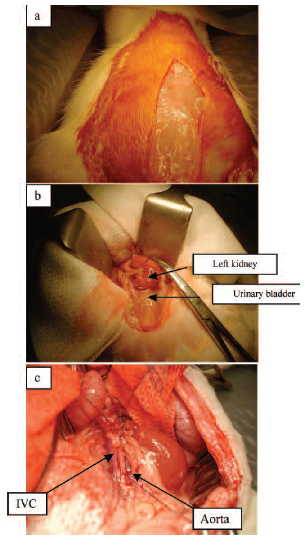
Figure 1. Steps of Dissection Showing Incision on Abdomen (a), Kidney and Urinary Bladder Mobilized (b), and Aorta and Inferior Vena Cava (IVC) Skeletonized and Held in Slings (c)
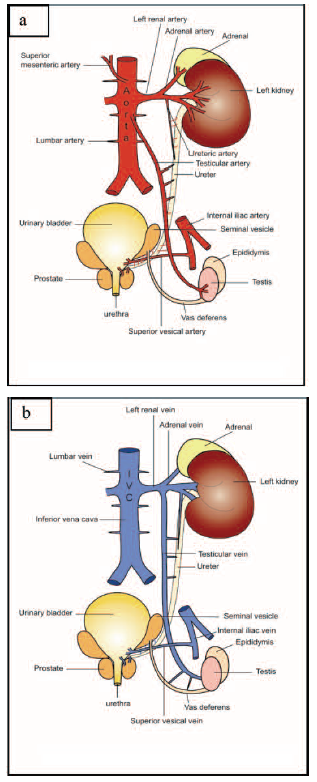
Figure 2. Arterial (a) and Venous (b) Anatomy of Rat Relevant to Donor Nephrectomy and Renal Transplant in Recipient
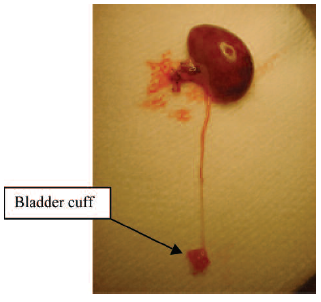
Figure 3. Retrieved Kidney Showing the Bladder Cuff Attached to Ureter
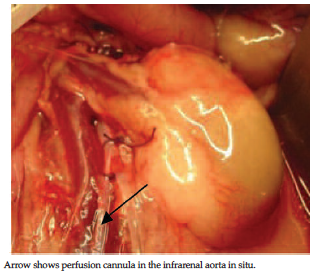
Figure 4. Pale Appearance of Kidney After Perfusion With University of Wisconsin Solution
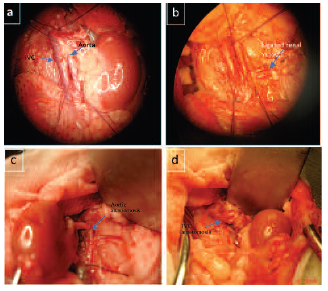
Figure 5. Retroperitoneum Showing Inferior Vena Cava (IVC), Aorta, and Left Kidney (a), After Left Nephrectomy (b), Anastomosis of the Donor Aortic Conduit and Recipient Aorta (c), and Anastomosis of the Donor IVC Conduit and Recipient IVC (d)
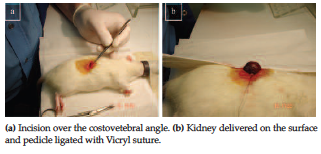
Figure 6. Right Native Nephrectomy in Recipient