Volume: 16 Issue: 2 April 2018
FULL TEXT
Objectives: Renal transplant is the criterion standard for treatment of end-stage renal disease. The effects of disparities between men and women on renal transplant outcomes have been evaluated in many studies but with debatable results. It has been suggested that female kidney donors have poor outcomes after transplant compared with male kidney donors, especially when implanted in a male recipient. The aim of the study was to evaluate the effects of sex on living-donor kidney transplant outcome.
Materials and Methods: The data of 979 patients who underwent living-donor kidney transplant from January 2000 to December 2010 at a single center were reviewed retrospectively. The patients were divided into 4 groups according to recipient and donor sex: male donor-to-male recipient (n = 307), male donor-to-female recipient (n = 132), female donor-to-male recipient (n = 411), and female donor-to-female recipient (n = 129). We compared the demographic characteristics, posttransplant rejection and complications, and graft and patient survival rates among the groups.
Results: Male recipients were older than female recipients, whereas male donors were younger than female donors (P < .001). No statistically significant differences were shown regarding recipient body mass index, ischemia time and time to diuresis, and acute and chronic rejection rates between the groups. Graft (P = .947) and patient (P = .421) survival rates were comparable between groups.
Conclusions: Donor and recipient sex had no significant effect on outcomes of living-donor renal allograft recipients.
Key words : Graft survival, Renal transplant, Survival
Introduction
There are many factors that determine renal transplant outcomes; one factor is donor and recipient sex.1,2 It has been suggested that outcomes for female kidneys after transplant is poor versus male kidneys, especially when implanted in a male recipient.3,4 Explanations of the effects of sex on renal transplant may include immunologic and nonimmunologic factors.
On the basis of the hyperfiltration hypothesis, the transplant of inadequate renal mass, as in the case of transplant of a female kidney to a male recipient, may be associated with a higher risk of renal graft failure.5 Several studies have evaluated the relation between allograft survival and the ratio of donor kidney weight to recipient weight. A low donor kidney-to-recipient weight ratio (< 2.3 g/kg) has been associated with an increased risk of glomerulosclerosis, proteinuria, and long-term allograft loss.6 In addition, some studies have suggested that female kidneys are more antigenic and more prone to rejection episodes7 or that a smaller female kidney size is more prone to more ischemic injury, immunologic reaction, or nephrotoxicity.8
Sex hormones are also important factors that may explain the effects of patient sex on renal transplant outcomes. Sex hormones have a role in renal hemodynamics, including mesangial cell proliferation, extracellular matrix metabolism, and the synthesis and release of vasoactive substances, cytokines, and other growth factors, which in turn are capable of altering the progression of renal disease.9 Estrogen has been shown to have a renal protective effect, whereas testosterone has been shown to have a significant role in renal damage.10,11 The effects of disparities based on donor and recipient sex on outcomes of renal transplant procedures have been evaluated in many studies but with debatable results.1,2
Are kidneys of female donors inferior to kidneys of male donors? This question has thus far no definitive answer. In this study, we evaluated the impact of sex on both graft and patient survival among living-donor renal allograft recipients.
Materials and Methods
This study was approved by our ethics committee. Between January 2000 and December 2010, 979 living-donor kidney transplant procedures were carried out at the Mansoura Urology and Nephrology Center. The recipients shared at least one HLA haplotype with their donors. All donors and recipients were followed at our center and evaluated clinically and by standard biochemical, serologic, and radiologic methods.
Study design
All transplant patients were enrolled in the study. Patients were divided
according to recipient and donor sex into 4 groups: male donor to male recipient
(n = 307), male donor to female recipient (n = 132), female donor to male
recipient (n = 411), and female donor to female recipient (n = 129).
Clinical data
We reviewed patient records and files to obtain clinical data, including any
pretransplant variables. The 4 groups were compared regarding demographic
characteristics, acute and chronic rejection, posttransplant complications, and
patient and graft survival.
Immunosuppressive regimen
All patients received calcineurin inhibitors (cyclosporine or tacrolimus),
steroids, and mycophenolate mofetil. Induction therapy in the form of
basiliximab was used in all patients.
Statistical analyses
All values are expressed as mean values ± standard deviation or as percentages.
For univariate analysis; t test and one-way analysis of variance were used to
analyze differences between groups. Multivariate analysis was performed using
the Cox proportional hazards regression model to identify the most significant
variables in predicting graft survival. Patient and graft survival rates were
determined using the Kaplan-Meier method. Statistical analyses were performed
with SPSS software (SPSS: An IBM Company, version 16.0, IBM Corporation, Armonk,
NY, USA). P < .05 was considered to be statistically significant.
Results
Table 1 presents the demographic characteristics of donors and recipients. Female recipients (with female donors) were significantly younger than the other groups. Female donors (female recipients) were older than donors in other groups (P < .001). The body mass index (BMI) was significantly higher in female donors (P < .001). There were no statistically significant differences regarding recipient BMI, ischemia time, time to diuresis, and HLA-DR mismatch among the 4 groups. Most patients had 2 HLA class I mismatches. Having 0 mismatches was more common in the male donor-to-male recipient group (P = .003). There were no significant differences regarding creatinine clearance measured on last follow-up in recipients (P = .413) and no statistically significant differences regarding acute rejection (P = 0.289) and chronic rejection rates (P = .667) (Table 2).
The incidence of posttransplant hypertension was significantly higher among male recipients (P = .008). Occurrences of other posttransplant complications, including diabetes mellitus, infection, and malignancy, were not significantly different among the 4 groups (Table 3).
Table 4 shows the multivariate analysis of different risk factors affecting graft function and survival. None of the analyzed variables reached statistical significance. Kaplan-Meier analysis of patient (P = .947) and graft (P = .421) survival curves showed no significant differences among the 4 groups (Figures 1 and 2).
Discussion
Renal transplant is the best treatment option for patients with end-stage renal disease. The outcomes have greatly improved with progress in immunologic work-up, immunosuppressive therapy, and surgical techniques. However, there are some hidden factors that need analysis and interpretation for better outcomes. Several studies have analyzed the effects of donor and recipient sex on renal allograft survival.12-18 However, the results have been debatable and controversial.
Here, we studied the impact of disparities in donor/recipient sex on living-donor renal transplant outcomes among 979 patients who were seen at the Mansoura Urology and Nephrology Center. Our results confirm that patient sex had no effect on graft and patient survival in short- and long-term follow-up. Graft function in terms of creatinine clearance at last follow-up was similar among all groups.
In a study of 293 living-donor kidney transplant recipients, the authors concluded that female kidneys performed as well as male kidneys. In living-donor procedures, the transplanted kidneys adapt to the recipient’s body size and demands independent of donor sex with no detrimental effects in renal function and outcome up to mid-long term.19
Vavallo and associates reported that sex had no effect on short- or long-term graft and patient survival in deceased-donor kidney transplant procedures. Serum creatinine was found to be lower in the male donor-to-female recipient group than in the other groups. The difference was not statistically significant after the third year posttransplant.20
Other studies have found that graft and patient survival rates of female donors to male recipients were lower than in the other groups. This was due to high rates of early posttransplant rejection.3,4 In another study of 195 000 kidney transplant recipients, Gratwohl and colleagues reported that transplant of male kidneys into female recipients is associated with an increased risk of graft failure. This was due to the effect of histocompatibility H-Y antibodies in female recipients of male donor organs.21
Acute and chronic rejection episodes are one of the most important factors affecting patient and graft survival. However, our results showed no significant difference regarding any type of rejection. This can be explained by the good HLA matching and the fact that most procedures used living related donations. In contrast to our results, Meier-Kriesche and colleagues reported a higher risk of acute rejection for female recipients and a higher risk of chronic rejection in males.15 This may be due to more intense stimulation of the immune system in a high-estrogen environment, as suggested by some studies.22
In our study, we found no differences among the groups regarding ischemia time, time to diuresis, and recipient BMI. Although BMI of donors showed statistical significance with multivariate analysis, it was found to have no significant effect on graft survival. Other studies concluded that BMI is significantly different among patients but has no significant prediction of graft survival.20 Glyda and colleagues reported that the mean BMI of donors and recipients had no significant effect on 5-year graft survival.23 In recipients with high BMI, it was found that obesity is associated with high risk of posttransplant complications, pancreas and kidney graft loss, and patient death.24
HLA matching is an important factor that affects graft survival. Despite the statistical significance of our results, multivariate analyses revealed that HLA mismatch had no significant effect on graft survival among our groups. This was also previously reported.23
Posttransplant complications were comparable among the 4 groups except for posttransplant hypertension, which was statistically significant but had no effect on survival, as shown by multivariate analyses.
Differences between recipient and donor age can be an important factor in kidney transplant. It has been found to have an adverse effect on graft outcomes after living-donor renal transplant.25 However, other researchers found no significant effect.20 Our results showed that age of donor and recipient was significantly different among the 4 groups but with no significant effect on survival by multivariate analysis.
Conclusions
We found no significant disparities between donor and recipient sex that affected outcomes of living-donor renal transplant. Donor age and BMI discrepancy were nonimmunologic factors that could have played important roles in determining our results.
References:
- Reed E, Cohen DJ, Barr ML, et al. Effect of recipient gender and race on heart and kidney allograft survival. Transplant Proc. 1992;24(6):2670-2671.
PubMed - Oh CK, Kim SJ, Kim JH, Shin GT, Kim HS. Influence of donor and recipient gender on early graft function after living donor kidney transplantation. Transplant Proc. 2004;36(7):2015-2017.
CrossRef - PubMed - Vereerstraeten P, Wissing M, De Pauw L, Abramowicz D, Kinnaert P. Male recipients of kidneys from female donors are at increased risk of graft loss from both rejection and technical failure. Clin Transplant. 1999;13(2):181-186.
CrossRef - PubMed - Zeier M, Dohler B, Opelz G, Ritz E. The effect of donor gender on graft survival. J Am Soc Nephrol. 2002;13(10):2570-2576.
CrossRef - PubMed - Brenner BM, Milford EL. Nephron underdosing: a programmed cause of chronic renal allograft failure. Am J Kidney Dis. 1993;21(5 Suppl 2):66-72.
CrossRef - PubMed - Giral M, Foucher Y, Karam G, et al. Kidney and recipient weight incompatibility reduces long-term graft survival. J Am Soc Nephrol. 2010;21(6):1022-1029.
CrossRef - PubMed - Zhou YC, Cecka JM. Effect of sex on kidney transplants. Clin Transpl. 1989:361-367.
PubMed - Iguro T, Okazaki H, Sato T, Jimbo M, Oguma S. The effect of donor age and sex on cyclosporine associated nephrotoxicity. Transplant Proc. 1989;21(1 Pt 2):1554-1555.
PubMed - Silbiger SR, Neugarten J. The impact of gender on the progression of chronic renal disease. Am J Kidney Dis. 1995;25(4):515-533.
CrossRef - PubMed - Park KM, Kim JI, Ahn Y, Bonventre AJ, Bonventre JV. Testosterone is responsible for enhanced susceptibility of males to ischemic renal injury. J Biol Chem. 2004;279(50):52282-52292.
CrossRef - PubMed - Verzola D, Gandolfo MT, Salvatore F, et al. Testosterone promotes apoptotic damage in human renal tubular cells. Kidney Int. 2004;65(4):1252-1261.
CrossRef - PubMed - Alonso A, Oliver J, N.C.T GEE de la NCT. Chronic allograft nephropathy: causes of death and mortality risk factors-a review of the last decade in Spain. Transplant Proc. 2004;36(3):765-767.
CrossRef - PubMed - Fuggle SV, Allen JE, Johnson RJ, et al. Factors affecting graft and patient survival after live donor kidney transplantation in the UK. Transplantation. 2010;89(6):694-701.
CrossRef - PubMed - Richie RE, Niblack GD, Johnson HK, et al. Factors influencing the outcome of kidney transplants. Ann Surg. 1983;197(6):672-677.
CrossRef - PubMed - Meier-Kriesche HU, Ojo AO, Leavey SF, et al. Gender differences in the risk for chronic renal allograft failure. Transplantation. 2001;71(3):429-432.
CrossRef - PubMed - Kouli F, Morrell CH, Ratner LE, Kraus ES. Impact of donor/recipient traits independent of rejection on long-term renal function. Am J Kidney Dis. 2001;37(2):356-365.
CrossRef - PubMed - Oien CM, Reisaeter AV, Leivestad T, Dekker FW, Line PD, Os I. Living donor kidney transplantation: the effects of donor age and gender on short- and long-term outcomes. Transplantation. 2007;83(5):600-606.
CrossRef - PubMed - Büchler M, al Najjar A, Duvallon C, et al. Role of donor characteristics on long-term renal allograft survival. Transplant Proc. 1997;29(5):2345.
CrossRef - PubMed - Tent H, Lely AT, Toering TJ, et al. Donor kidney adapts to body dimensions of recipient: no influence of donor gender on renal function after transplantation. Am J Transplant. 2011;11(10):2173-2180.
CrossRef - PubMed - Vavallo A, Lucarelli G, Spilotros M, et al. Impact of donor-recipient gender on kidney graft and patient survival: short- and long-term outcomes. World J Urol. 2014;32(3):709-714.
CrossRef - PubMed - Gratwohl A, Dohler B, Stern M, Opelz G. H-Y as a minor histocompatibility antigen in kidney transplantation: a retrospective cohort study. Lancet. 2008;372(9632):49-53.
CrossRef - PubMed - Paavonen T. Hormonal regulation of immune responses. Ann Med. 1994;26(4):255-258.
CrossRef - PubMed - Glyda M, Czapiewski W, Karczewski M, Pieta R, Oko A. Influence of donor and recipient gender as well as selected factors on the five-year survival of kidney graft. Pol Przegl Chir. 2011;83(4):188-195.
CrossRef - PubMed - Sampaio MS, Reddy PN, Kuo HT, et al. Obesity was associated with inferior outcomes in simultaneous pancreas kidney transplant. Transplantation. 2010;89(9):1117-1125.
CrossRef - PubMed - Kostakis ID, Moris DN, Barlas A, et al. Impact of donor and recipient age difference on long-term allograft survival after living donor renal transplantation: analysis of 478 cases. Clin Transplant. 2013;27(6):838-843.
CrossRef - PubMed

Volume : 16
Issue : 2
Pages : 133 - 137
DOI : 10.6002/ect.2016.0253
From the Nephrology Department, Urology and Nephrology Center, Mansoura
University, Mansoura, Egypt
Acknowledgements: The authors have no funding or conflicts of interest to
declare.
Corresponding author: Yasser Elsayed Matter, PO Box 35516, Urology and
Nephrology Center, Mansoura University, Mansoura, Egypt
Phone: +20502202222
E-mail: yassermatter86@gmail.com
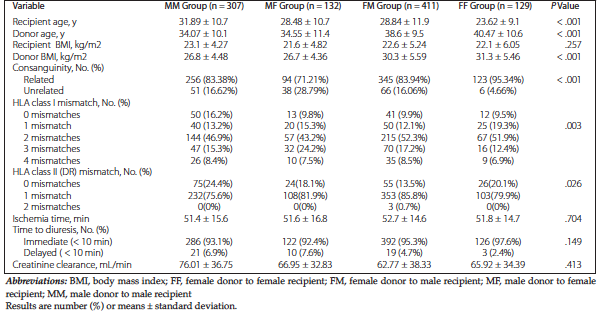
Table 1. Donor and Recipient Characteristics Across the Donor-Recipient Male and Female Combinations
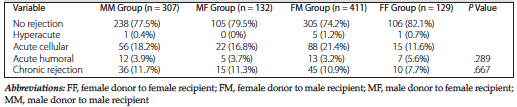
Table 2. Number and Type of Rejection Episode
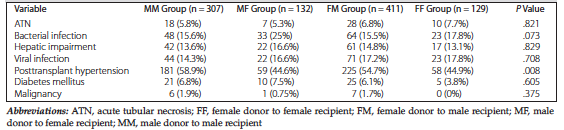
Table 3. Number of Posttransplant Complications
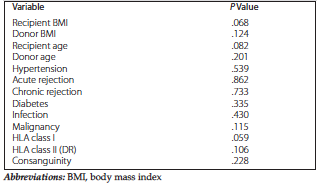
Table 4. Multivariate Analysis of Risk Factors
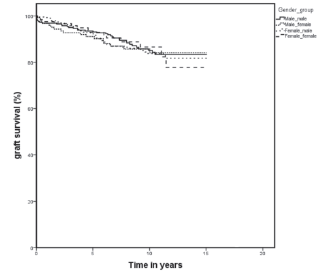
Figure 1. Kaplan-Meier Graft Survival Curve Stratified by Male and Female Recipient-Donor Groups
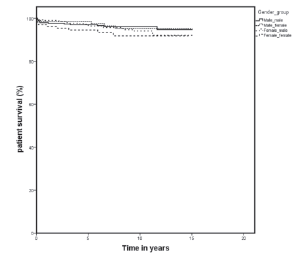
Figure 2. Kaplan-Meier Patient Survival Curve Stratified by Male and Female Recipient-Donor Groups