Volume: 15 Issue: 3 June 2017
FULL TEXT
Objectives: Costimulatory molecules are important factors determining the outcome of transplant. The aim of the present study was to investigate the effect of CTLA-4, CD28, PD-1, and ICOS gene polymorphisms on the outcome of kidney transplant.
Materials and Methods: A total of 172 kidney transplant recipients were included in this study. There were 45 recipients (26%) who experienced acute rejection. The CTLA-4, PD-1, ICOS, and CD28 gene polymorphisms were evaluated by polymerase chain reaction and restriction fragment length polymorphism methods.
Results: There were no differences between kidney transplant recipients with or without acute rejection in the distribution of genotypes and alleles of studied costimulatory molecules. Significant associations were observed between the AA genotype and the A allele of CTLA-4 1661 (P = .04, P = .05) and also CT and TT genotypes of PD-1.9 in the male compared with female subgroup of patients, with low frequency in the acute rejection group (P = .03; P = .04). Significant associations were observed between the AA genotype and the A allele of CTLA-4 -1661 (P = .02; P = .01) and also GA genotype of PD-1.3 (P = .03) in the male subgroup compared with female subgroup with low frequency of acute rejection. A significant association was observed between TC genotype of CD28 in the female compared with male subgroup of patients with high frequency of acute rejection (P = .05).
Conclusions: The above results suggest that genetic polymorphisms of costimulatory molecules function as sex-dependent risk factors for development of acute rejection. Further studies are needed in different populations.
Key words : End-stage kidney disease, Inducible costimulator, Genetics, Programmed cell death
Introduction
Successful clinical transplant depends, in part, on the immune process that mediates rejection of the transplanted organ. Allograft rejection is a complex phenomenon involving interactions between multiple cell types and a complex variety of factors.1 In this process, T cells play a major role in recognizing the alloantigen in the context of the major histocompatibility complex molecule associated with the donor organ.2 The T-cell–mediated immune response plays an important role in transplant outcome.3 In T cell full activation, 3 separate signals are needed. The first signal is provided by the T-cell receptor and human leukocyte antigens (HLAs), the second signal is from costimulatory molecules, and the third signal is from cytokines.4 Therefore, CD28 binding with B7 ligand is responsible for T-cell activation, but B7 also can bind to B7 ligand competitor, known as the competing inhibitory receptor cytotoxic T-lymphocyte associated antigen 4 (CTLA-4). The CD28, CTLA-4, inducible costimulator (ICOS), and programmed cell death 1 (PD-1) are members of the T-cell regulatory molecular family located close to each other on the chromosome region 2q33-37.5 In addition, it was shown that CTLA-4 and ICOS genes are associated with susceptibility to several autoimmune diseases such as type 1 diabetes, celiac disease, and multiple sclerosis.6-8 As a result, several investigations have been performed on this gene region to trace its genetic susceptibility to autoimmune diseases.
The CTLA-4 is a T-cell negative regulator with the major function to inhibit T-cell activation and proliferation.9 Few studies have evaluated the effect of CTLA-4 gene polymorphism on the outcome of liver transplant. The association of CTLA-4 and acute rejection (AR) of liver allografts has been shown in 3 separate studies,6,10-12 but another study by Muro and coworkers did not demonstrate this association.13 Therefore, it was proposed that genetic variation of costimulatory genes may regulate the level of immune activation and modulate graft rejection susceptibility. The most commonly studied CTLA-4 single nucleotide polymorphisms (SNPs) are promoter -318 C.T and exon 1+49 A.G, of which the A allele CTLA+49 A.G gene polymorphism was reported as a risk allele in liver transplant patients.5 In contrast, the T-allele CTLA-4-318 gene polymorphism was associated with reduced AR in kidney transplant.14 Several researchers have examined whether genetic polymorphisms in the CTLA-4 gene are associated with various conditions such as autoimmune diseases.15-19 In particular, some studies of genetic polymorphisms in human liver and kidney transplant have suggested that CTLA-4 may play a minor role in allograft rejection.7,20 Many of the reports have been inconclusive21; therefore, they can be considered as substantial genes for determining non-HLA risk related to organ transplant. Costimulatory molecules are important in regulating immune response, and polymorphisms are associated with the expression or function of these molecules in some parts of the genes for these molecules.22
Some experiments could indicate the main role of costimulatory molecules in immunologic tolerance. The ICOS is a T-cell positive regulator that can regulate helper T-cell differentiation.23 Its functions also are involved in B-cell development and antibody secretion.24 Previous studies indicated that ICOS gene polymorphism was related to autoimmune diseases such as celiac disease,6 diabetes,25 and multiple sclerosis,26 and may affect graft rejection of organ transplants.27 Anti-ICOS therapy could be helpful to clarify the effect of the ICOS costimulatory pathway on the development of a rejection episode.27 ThePD-1 gene is another costimulatory molecule. In the PD-1 gene, several important polymorphic sites have been observed, such as 2 sites in the exon 5 region (PD-1.9 +7625C.T, PD-1.5 +7785C.T), and 1 site in the intron region (PD-1.3, +7146G.A).28 The association of PD-1 polymorphisms with autoimmune diseases has previously been addressed.29,30
The CD28 provides a positive costimulatory signal for T-cell proliferative responses after being expressed on T-cells.31 There are several polymorphisms in the CD28 gene that may affect the intensity of T-cell–mediated immunity, resulting in various autoimmune diseases and the occurrence of posttransplant allograft rejection.5,10 Moreover, CD28 gene polymorphism affects the inhibitory/activating functions of CD28.32 The position of CTLA-4, CD28, ICOS, and PD-1 in chromosome 2 is shown in Figure 1.
We studied the relation between costimulatory gene polymorphisms and their effect on graft outcome because of the role of functional CTLA-4, CD28, ICOS, and PD-1 polymorphisms in AR and the immune response.
Materials and Methods
Patients
A total of 172 kidney transplant recipients were included in this study. They
had undergone a transplant between 2006 and 2010 at the Transplant Center of
Nemazi Hospital, affiliated with Shiraz University of Medical Sciences. They
were investigated for graft outcome and AR episodes for ≥ 3 months. In this
study, the patients were divided into 2 groups: rejection and nonrejection. The
Ethics Committee of Shiraz University of Medical Sciences approved the protocol,
which conformed to the ethical guidelines of the 1975 Helsinki Declaration, and
a written informed consent was obtained from all subjects.
Donors were selected on the basis of ABO blood group compatibility, and all patients were negative for lymphocytotoxic crossmatches. Rejection episodes were identified by an expert nephrology team, based on approved clinical diagnostic criteria and confirmed by needle biopsy and elevated serum creatinine and blood urea nitrogen levels.33 The standard immunosuppressive regimen for all 172 recipients included cyclosporine (5 mg/kg initially, then a maintenance dosage of 2 to 2.5 mg/kg; cyclosporine level was 50 to 150 ng/mL), prednisolone (120 mg/d initially, tapering to 10 mg/d), and mycophenolate mofetil (1000 mg twice daily). Acute rejection was treated initially with intravenous steroids, and steroid-resistant rejection was treated with muromonab-CD3 monoclonal antibody.
DNA extraction
The buffy coat of whole blood from kidney transplanted patients was available in
the sample bank of Shiraz Transplant Research Center. Genomic DNA was extracted
from buffy coat using a kit (QIAamp DNA Mini Kit, Qiagen, Düsseldorf, Germany)
according to the manufacturer’s instructions.
Genotyping
We selected 4SNPs from the CTLA-4 gene (rs5742909, 162 bp upstream from the
first nucleotide of the 5′untranslated region, also known as -318 C.T; rs733618,
-1722 T.C; rs4553808, -1661 A.G, an exonic SNP; rs231775, exon 1, Thr17Ala, also
known as +49A.G), 2SNPs from PD-1 gene (PD-1.3 rs11568821 A.G Intron SNP; PD-1.9
rs2227982C.T exon SNP), 1SNP from ICOS gene (1720 C.T), and 1SNP from CD28gene
in chromosome 2q33-37 (rs3116496, IVS3+17 C.T). Costimulatory molecule gene
polymorphisms were evaluated by polymerase chain reaction (PCR) using a thermal
cycler (Eppendorf, Hamburg, Germany). The PCR cycles, product size, and primers
were summarized in Table 1. The PCR restriction fragment length polymorphism
(RFLP) method was performed for PD-1.3 A/G, PD-1.9 C/T,34,35 CD28 +17
C/T,36 CTLA-4 (-1722 T/C, -1661 A/G, -318 C/T, +49 A.G),37,38
and +1720 C.T in 10 μL reaction mixtures.6 After PCR, the products
were digested by restriction enzymes and the amplified products were monitored
by agarose gel electrophoresis and ethidium bromide staining.
Statistical analyses
Allele and genotype frequencies were calculated in patients and controls by
direct gene counting. Analysis was performed using software (SPSS, Version 16,
SPSS Inc., Chicago, IL, USA). The frequencies of the alleles and genotypes were
compared in the 2 groups by chi-square test and Fisher exact test. Odds ratios
(ORs) and 95% confidence intervals (CI) for relative risks were calculated. A
probability of P < .05 was considered statistically significant, and all
reported P values were 2-tailed. Linkage disequilibrium (LD) and Hardy-Weinberg
were estimated (LD2SNPing program V 2.0; http//www.bio.kuas.edu.tw.LD2SN Ping),
and haplotypes were evaluated (Arlequin V311, University of Berne, Germany).
Survival was estimated by Kaplan-Meier method, and survival curves were compared
with log-rank test.
Results
In 172 consecutive recipients, 65.69% recipients were male (age range, 10-79 y) and 34.30% recipients were female (age range, 10-69 y). The mean ages of the patients who had normal kidney function or experienced an AR episode after 3 months of follow-up were 39.03 ± 14.72 y and 36.16 ± 12.97 y. Male-to-female ratio was 0.8 in the rejection group and 2.7 in the nonrejection group. Allele and genotype frequencies for CTLA-4, CD28, ICOS1720, PD-1.3, and PD-1.9 were determined in 45 kidney transplant recipients who had AR and 127 without acute rejection (non-AR group). Except for CTLA-4-318 and PD-1.9 genotypes in the AR group, all other genotypes were in agreement with Hardy-Weinberg equilibrium in both patient groups. Armitage trend test was used to check the association of genotypes with AR whenever the Hardy-Weinberg equilibrium did not meet. However, the significance of this allele and genotype did not survive the Bonferroni adjustment, which suggested the striking of the threshold of P from .05 to .017.
There were no significant differences between AR and no AR kidney transplant recipients in the distribution of genotypes and alleles of studied costimulatory molecules (Table 2). After classification of recipients according to sex, significant association was observed between AA genotype and A allele of CTLA-4 -1661 in the male group with low frequency in AR patients (P = .04; OR = 0.41; 95% CI = 0.15-1.08; study power = 52%) (P = .05; OR = 1.93; 95% CI = 0.92-4.05; study power = 42%). Significant association was observed between CT and TT genotype of PD-1.9 in the male group with low frequency in AR patients (P = .03; OR = 3.19; 95% CI= 0.92-11.01; study power = 43%) (P = .04; OR = 0.00; 95% CI = 0.00-1.50; study power = 94%) (Table 2). The kidney recipients according to subgroup living and deceased donors, in patients receiving allograft from a deceased donor, a significant association was observed between AA genotype and A allele of CTLA-4 -1661 in the male group compared with low frequency in AR patients (P = .02; OR = 0.26; 95% CI = 0.07-0.97; study power = 70%) (P = .01; OR = 2.64; 95% CI = 1.07-6.55; study power = 60%). A significant association was observed between GA genotype of PD-1.3 compared with low frequency in AR patients (P = .03; OR = 0.26; 95% CI = 0.06-1.05; study power = 71%). A significant association was observed between TC genotype of CD28 in the female group compared with high frequency in AR patients (P = .05; OR = 4.00; 95% CI = 0.75-23.03; study power = 39%) (Table 3).
In patients receiving an allograft from a living donor, a significant association was observed between TC genotype of CTLA-4 -1722 compared with high frequency in AR patients in the female group (P = .04;OR = undefined; 95% CI = undefined; study power = 20%) (Table 4). The CTLA-4-1722 T.C, -1661A.G, -318 C.T, +49 A.G, CD28 C.T, PD-1.3 A.G, PD-1.9 C.T, and ICOS1720 haplotypes were found in the AR and no AR patients. The frequencies of haplotype 3 and 5 were greater in the AR than no AR patients (P = .002; P = .00008). The frequencies of haplotype 12 were greater in the no AR than AR patients (P = .05) (Table 5). Compared with the AR group, the frequencies of haplotype 1, 6, 7 were higher and haplotypes 3, 5 were lower in no AR patients (P = .00; P = .00). Figure 2 shows the LD observed with CTLA-4 (-1661) and PD-1.9 gene polymorphism (D' = 0. 572; P < .007).
Evaluation of the association of transplant patient survival with costimulatory gene polymorphisms (CTLA-4, CD28, PD-1, ICOS) showed that only CTLA-4 gene -1772 polymorphism was significantly associated with survival rate in transplant patients (P = .02) and the allograft AR group (P = .002) (Table 6 and Figure 3). There was no difference in survival between the other genotypes studied.
Discussion
Costimulatory molecules are important factors determining the outcome of transplant. Host ability to express costimulatory molecules may be affected by costimulatory molecule gene polymorphisms. Therefore, the effect of some PD-1, CTLA-4, and CD28 polymorphisms on the onset and evolution of several autoimmune diseases, such as lupus erythematous, type-1 diabetes, and Graves disease, has been widely investigated.39,40 However, there have been no studies in the literature about the role of CTLA-4, PD-1, ICOS, and CD28 variants and haplotypes in kidney allografts simultaneously. The aim of the present study was to investigate the effect of CTLA-4, CD28, PD-1, and ICOS gene polymorphisms on the outcome of kidney transplant. The most widely studied polymorphisms of CTLA-4 are the -1722, -1661, -318, and +49 A-to-G transitions.41
In this study, we showed that the AA genotype and the A allele of CTLA-4 -1661 had a less significant frequency in the male AR patients. In addition, a significant association was observed between CT and TT genotypes of PD-1.9 in the male group, with less frequency in AR patients. After grouping the kidney recipients according to living and deceased donors, in the patients who received allografts from deceased donors, a significant association was observed between TC genotype of CD28 in the female group with high frequency in AR patients, and a significant association was observed between GA genotype of PD-1.3 with low frequency in AR patients.
In the group receiving allografts from living patients, a significant association was observed between TC genotype of CTLA-4 -1722 with high frequency in AR patients. In previous studies, association of CTLA-4 and AR of liver allograft has been observed.6,10,12 However, Muro and coworkers did not observe this association.13 The CTLA-4 exon 1, where the +49 polymorphism is located, encodes the leader peptide of the protein responsible for CTLA-4 trafficking to the endoplasmic reticulum. Traditionally, the A allele has been identified as the protective allele, and the G allele has been considered to be associated with greater susceptibility to autoimmune diseases; however, the reported results are controversial.42,43 Kusztal and associates similarly indicated that there was no association between CTLA-4-318 and CD28 with AR, but they observed an association between CTLA-4+49 and AR in a white population.44 Kim and associates have shown that there was no association between CTLA-4-318 and AR, but conversely, the association of CTLA-4+49 A/G with AR was observed in Korean patients.21 In an alternative study on CD28/CTLA-4/ICOS gene polymorphism effects on the kidney transplant outcome, it was observed that ICOS gene was associated with rejection,7 but Dmitrienko and coworkers did not observe any association between CTLA-4 and AR.45 The present findings do not support the hypothesis indicating that the CTLA-4 polymorphism is involved in kidney transplant outcome. Krichen and associates investigated the association of CTLA-4-318, +49AG, and CD28 gene polymorphisms with renal transplant outcomes.19 The results did not show any significant differences between the genotypes or allele distribution and AR or noAR patients. The CTLA-4 CT60 G allele and liver AR were related in the study by Muro and coworkers,13 but in another study, Azarpira and associates did not observe any association between CTLA-4 CT60 and liver AR.46 Marder and associates studied the association of CTLA-4-318, +49AG, and CD28 gene polymorphisms with liver transplant outcomes. Although no significant differences were observed between CTLA-4-318 and CD28, significant differences between CTLA-4+49AG and liver transplant outcomes were detected.47 In another study, the GG genotype at the leader sequences and A/G heterozygote at -1661 of the promoter region of CTLA-4 were significantly associated with gastric cancer and oral squamous cell carcinoma.48 In our study, we observed the AA genotype and A allele of CTLA-4 -1661 in the male group with less frequency in AR patients.
In conclusion, the 4 genes CTLA-4, CD28, ICOS, and PD-1 appear to regulate T-cell activation of the costimulatory pathway that affects kidney transplant outcome. This study was performed with a small group of patients, and to our knowledge, it is the first study about the association between the CD28/CTLA-4/ICOS/PD-1 in Iranian patients. Additional studies are required to confirm and extend the present results.
References:
- Stepkowski SM. Immunobiology of allograft rejection. In: Kahan BD, Ponticielli C, eds. Principles and Practice of Renal Transplantation. Malden, MA: Blackwell Science Inc;2000:41-87.
- Dai Z, Lakkis FG. The role of cytokines, CTLA-4 and co-stimulation in
transplant tolerance and rejection. Curr Opin Immunol. 1999;11:504-508.
CrossRef - PubMed - Kasiske BL, Cangro CB, Hariharan S, et al. The evaluation of renal
transplant candidates: clinical practice guidelines. Am J Transplant. 2001;1
(Suppl 2):3-95.
PubMed - Takemoto S, Port FK, Claas FH. HLA matching for kidney transplantation.
Hum Immunol. 2004;65:1489-1505.
CrossRef - PubMed - Karimi M.H, Motazedian M, Abedi F, Yaghobi R, Geramizadeh B,
Nikeghbalian S. Association of genetic variation in co-stimulatory molecule
genes with outcome of liver transplant in Iranian patients. Gene.
2012;504:127-2.
CrossRef - PubMed - Haimila K, Smedberg T, Mustalahti K, Maki M, Partanen J, Holopainen P.
Genetic association of coeliac disease susceptibility to polymorphisms in
the ICOS gene on chromosome 2q33. Genes Immun. 2004;5:85-92.
CrossRef - PubMed - Haimila K, Turpeinen H, Alakulppi NS, Kyllönen LE, Salmela KT, Partanen
J. Association of genetic variation in inducible costimulator gene with
outcome of kidney transplantation. Transplantation. 2009;87:393-396.
CrossRef - PubMed - Kristiansen OP, Larsen ZM, Pociot F. CTLA-4 in autoimmune diseases— a
general susceptibility gene to autoimmunity? Genes Immun. 2000;1:170-184.
CrossRef - PubMed - Salomon B, Bluestone JA. Complexities of CD28/B7: CTLA4 costimulatory
pathways in autoimmunity and transplantation. Annu Rev Immunol.
2001;19:225-252.
CrossRef - PubMed - De Reuver P, Pravica V, Hop W, et al. Recipient CTLA-4 +49 G/G genotype
is associated with reduced incidence of acute rejection after liver
transplantation. Am J Transplant. 2003;3(12):1587-1594.
CrossRef - PubMed - Minguela A, Marín L, Torío A, et al. CD28.CTLA-4 and CD80.CD86
costimulatory molecules are mainly involved in acceptance or rejection of
human liver transplant. Hum Immunol. 2000;61:658-669.
CrossRef - PubMed - Slavcheva E, Albanis E, Jiao Q, et al. Cytotoxic T-lymphocyte antigen 4
gene polymorphisms and susceptibility to acute allograft rejection.
Transplantation. 2001;72:935-940.
CrossRef - PubMed - Muro M, Rojas G, Botella C, et al. CT60 A.G marker of the 3′-UTR of the
CTLA4 gene and liver transplant. Transplant Immunol. 2008;18:246-249.
CrossRef - PubMed - Wiśniewski A, Kusztal M, Magott-Procelewska M, et al. Possible
association of cytotoxic T-lymphocyte antigen 4 gene promoter single
nucleotide polymorphism with acute rejection of allogeneic kidney
transplant. Transplant Proc. 2006;38(1):56-58.
CrossRef - PubMed - Azizi E, Massoud A, Amirzargar AA, et al. CTLA4 gene polymorphism in
Iranian patients with ankylosing spondylitis. J Clin Immunol.
2010;30(2):268-271.
CrossRef - PubMed - Fernández-Mestre M, Sánchez K, Balbás O, et al. Influence of CTLA-4 gene
polymorphism in autoimmune and infectious diseases. Hum Immunol.
2009;70(7):532-535.
CrossRef - PubMed - Birlea SA, Laberge GS, Procopciuc LM, Fain PR, Spritz RA. CTLA4 and
generalized vitiligo: two genetic association studies and a meta-analysis of
published data. Pigment Cell Melanoma Res. 2009;22(2):230-234.
CrossRef - PubMed - Tsai ST, Huang CY, Lo FS, et al. Association of CT60 polymorphism of the
CTLA4 gene with Graves' disease in Taiwanese children. J Pediatr Endocrinol
Metab. 2008;21(7):665-672.
CrossRef - PubMed - Kim YO, Kim HJ, Kim SK, Chung JH, Hong SJ. Association of the
CD28/CTLA4/ICOS polymorphisms with susceptibility to rheumatoid arthritis.
Clin Chem Lab Med. 2010;48(3):345-353.
CrossRef - PubMed - Krichen H, Sfar I, Jendoubi-Ayed S, et al. Genetic polymorphisms of
immunoregulatory proteins in acute renal allograft rejection. Transplant
Proc. 2009;41(8):3305-3307.
CrossRef - PubMed - Kim HJ, Jeong KH, Lee SH, et al. Polymorphisms of the CTLA4 gene and
kidney transplant rejection in Korean patients. Transpl Immunol.
2010;24(1):40-44.
CrossRef - PubMed - Pons Miñano JA, Ramírez Romero P, Robles Campos R, Sánchez Bueno F,
Parrilla Paricio P. Tolerance and chimerism in liver transplantation. Rev
Esp Enferm Dig. 2007;99(6):343-350.
PubMed - Wu J, Tang JL, Wu SJ, Lio HY, Yang YC. Functional polymorphism of CTLLA4
and ICOS genes in allogeneic hematopoietic stem cell transplantation. Clin
Chim Acta. 2009;403:229-233.
CrossRef - PubMed - Inman BA, Frigola X, Dong H, Kwon ED. Costimulation, coinhibition and
cancer. Curr Cancer Drug Targets. 2007;7:15-30.
CrossRef - PubMed - Ihara K, Ahmed S, Nakao F, et al. Association studies of CTLA-4, CD28,
and ICOS gene polymorphisms with type 1 diabetes in the Japanese population.
Immunogenetics. 2001;53(6):447-454.
CrossRef - PubMed - Castelli L, Comi C, Chiocchetti A, et al. ICOS gene haplotypes correlate
with IL10 secretion and multiple sclerosis evolution. J Neuroimmunol.
2007;186(1-2):193-198.
CrossRef - PubMed - Ozkaynak E, Gao W, Shemmeri N, et al. Importance of ICOS-B7RP
1costimulation in acute and chronic allograft rejection. Nat Immunol.
2001;2(7):591-596.
CrossRef - PubMed - Velázquez-Cruz R, Orozco L, Espinosa-Rosales F, et al. Association of
PDCD1 polymorphisms with childhood-onset systemic lupus erythematosus. Eur J
Hum Genet. 2007;15(3):336-341.
CrossRef - PubMed - Kroner A, Mehling M, Hemmer B, et al. A PD-1 polymorphism is associated
with disease progression in multiple sclerosis. Ann Neurol. 2005;58
(1):50-57.
CrossRef - PubMed - Schuchmann M, Meyer RG, Distler E, et al. The programmed death
(PD)-1/PD-ligand 1 pathway regulates graft-versus-host-reactive CD8 T cells
after liver transplantation. Am J Transplant. 2008;8 (11):2434-2444.
CrossRef - PubMed - Chen L. Co-inhibitory molecules of the B7-CD28 family in the control of
Tcell immunity. Nat Rev Immunol. 2004;4(5):336-347.
CrossRef - PubMed - Kouki T, Sawai Y, Gardine CA, Fisfalen ME, Alegre ML, DeGroot LJ. CTLA-4
gene polymorphism at position 49 in exon1 reduces the inhibitory function of
CTLA-4 and contributes to the pathogenesis of Graves’ disease. J Immunol.
2000;165 (11):6606-6611.
CrossRef - PubMed - Solez K, Colvin RB, Racusen LC, et al. Banff 07classification of renal
allograft pathology: updates and future directions. Am J Transplant.
2008;8(4):753-760.
CrossRef - PubMed - Liu X, Hu LH, Li YR, Chen FH, Ning Y, Yao QF. Programmed cell death
1gene polymorphisms is associated with ankylosing spondylitis in Chinese Han
population. Rheumatol Int. 2011;31:209-213.
CrossRef - PubMed - Isabel F, Juan J, Francisco B. Association of PDCD1 with susceptibility
to systemic lupus erythematosus evidence of population-specific effects.
Arthritis Rheum. 2004;50:2590-2597.
CrossRef - PubMed - Dilmec F, Ozgonul A, Uzunkoy A, Akkafa F. Investigation of CTLA-4 and
CD28gene polymorphisms in a group of Turkish patients with colorectal
cancer. Int J Immunogenet. 2008;35:317-321.
CrossRef - PubMed - Wang L, Li D, Fu Z, Li H, Jiang W, Li D. Association of CTLA-4 gene
polymorphisms with sporadic breast cancer in Chinese Han population. BMC
Cancer. 2007;7:173.
CrossRef - PubMed - Yousefipour G, Erfani N, Momtahan M, Moghaddasi H, Ghaderi A. CTLA4 exon
1and promoter polymorphisms in patients with multiple sclerosis. Acta Neurol
Scand. 2009;120:424-429.
CrossRef - PubMed - Ueda H, Howson JM, Esposito L, et al. Association of the T-cell
regulatory gene CTLA4 with susceptibility to autoimmune disease. Nature.
2003;423(6939):506-511.
CrossRef - PubMed - Cunninghame Graham DS, Wong AK, McHugh NJ, Whittaker JC, Vyse TJ.
Evidence for unique association signals in SLE at the CD28-CTLA4-ICOS locus
in a family-based study. Hum Mol Genet. 2006;15(21):3195-3205.
CrossRef - PubMed - Pérez-García A, De la Cámara R, Román-Gómez J, et al. CTLA-4
polymorphisms and clinical outcome after allogeneic stem cell
transplantation from HLA-identical sibling donors. Blood.
2007;110(1):461-467.
CrossRef - PubMed - Rueda B, Zhernakova A, López-Nevot MA, et al. CTLA4/CT60 polymorphism is
not relevant in susceptibility to autoimmune inflammatory intestinal
disorders. Hum Immunol. 2005;66(3):321-325.
CrossRef - PubMed - Monne M, Piras G, Palmas A, et al. Cytotoxic T-lymphocyte antigen-4
(CTLA-4) gene polymorphism and susceptibility to non-Hodgkin's lymphoma. M J
Hematol. 2004;76(1):14-18.
CrossRef - PubMed - Kusztal M, Kościelska-Kasprzak K, Drulis-Fajdasz D, et al. The influence
of CTLA-4 gene polymorphism on long-term kidney allograft function in
Caucasian recipients. Transpl Immunol. 2010;23(3):121-4.
CrossRef - PubMed - Dmitrienko S, Hoar DI, Balshaw R, Keown PA. Immune response gene
polymorphisms in renal transplant recipients. Transplantation.
2005;80(12):1773-1782.
CrossRef - PubMed - Azarpira N, Malekhosseini SA, Aghdaie MH, Daraie M. CTLA4 CT60 A/G gene
polymorphism in liver transplant recipients. Exp Clin Transplant.
2010;8(3):210-213.
PubMed - Marder B, Schröppel B, Murphy B. Genetic variability and
transplantation. Curr Opin Urol. 2003;13(2):81-89.
CrossRef - PubMed - Hou R, Cao B, Chen Z, et al. Association of cytotoxic T
lymphocyte-associated antigen-4 gene haplotype with the susceptibility to
gastric cancer. Mol Biol Rep. 2010;37:515-520.
CrossRef - PubMed

Volume : 15
Issue : 3
Pages : 295 - 305
DOI : 10.6002/ect.2014.0253
From the Transplant Research Center, Shiraz University of Medical Sciences,
Shiraz, Iran
Acknowledgements: The authors have no conflicts of interest to declare.
This work was supported by a grant from Transplant Research Center of Shiraz
University of Medical Sciences. The authors thank Dr. Nasrin Shokrpour for
editorial assistance and Mrs. Sareh Roosta for statistical analysis at Center
for Development of Clinical Research of Nemazee Hospital.
Corresponding author: Mohammad Hossein Karimi, Associate Professor of
Immunology, Transplant Research Center, Shiraz University of Medical Sciences,
Shiraz, Iran
Phone: +98 713 647 3954
Fax: +98 713 647 3954
E-mail: Karimimh@sums.ac.ir
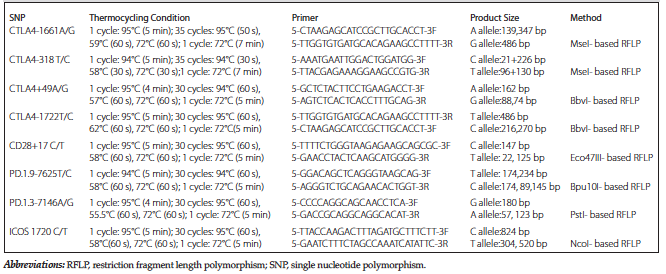
Table 1. The Polymerase Chain Reaction Thermocycling Condition, Primers, Product Size, and Types of Polymerase Chain Reaction for ICOS, CD28, PD.1, and CTLA4
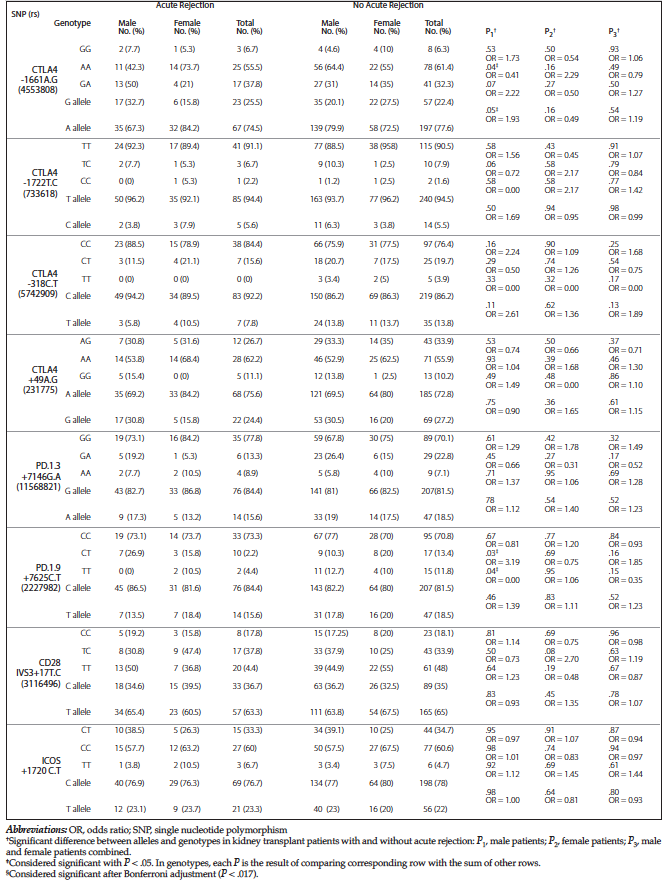
Table 2. The frequencies of CTLA4 (−318 C.T, -1722 T.C, -1661 A.G, +49A.G), PD.1 (PD.1.3 A.G, PD.1.9 C.T), ICOS (1720 C.T), and CD28 (IVS3+17 C.T) Genotypes and Alleles in Kidney Transplant Patients With and Without Acute Rejection*
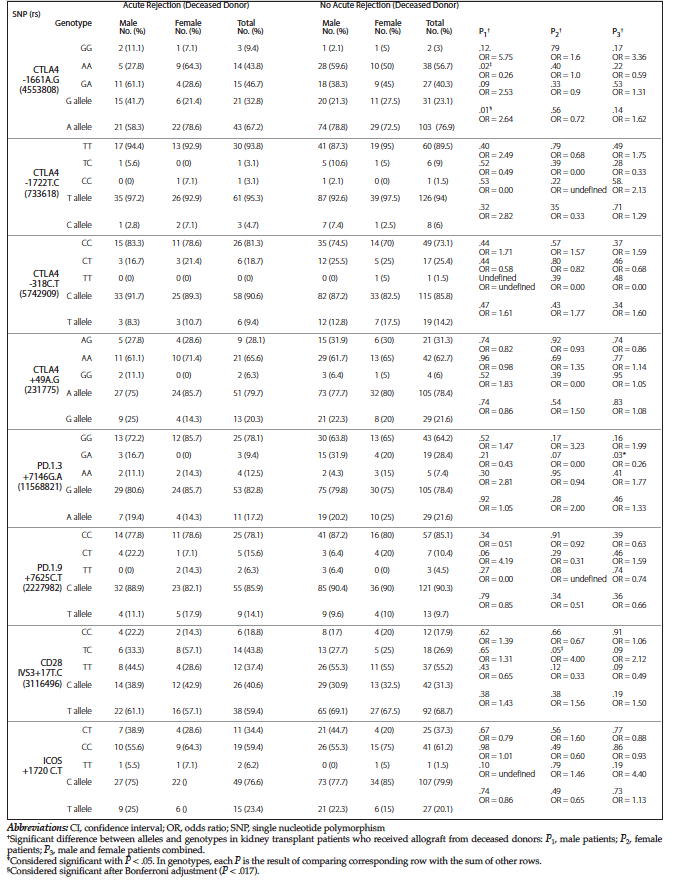
Table 3. The Frequencies of CTLA4 (−318 C.T, -1722 T.C, -1661 A.G, +49A.G), PD.1 (PD.1.3 A.G, PD.1.9 C.T), ICOS (1720 C.T), and CD28 ( IVS3+17 C.T)Genotypes and Alleles in Kidney Transplant Patient Received Allograft from Deceased Donors*
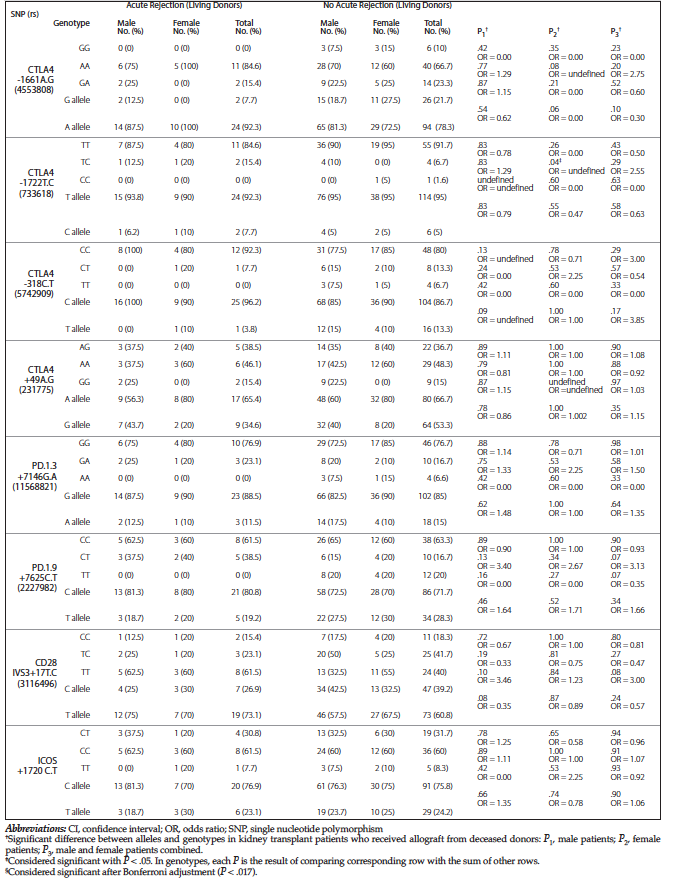
Table 4. The Frequencies of CTLA4 (-318 C.T, -1722 T.C, -1661 A.G, +49A.G), PD.1 (PD.1.3 A.G, PD.1.9 C.T), ICOS (1720 C.T) and CD28 (IVS3+17 C.T) Genotypes and Alleles in Kidney Transplant Patient Received Allograft From Living Patients*
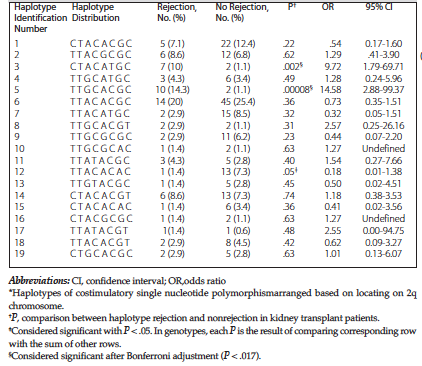
Table 5. Haplotype Frequency of CD28 IVS3+17T.C, CTLA4 (-1722 T.C, -1661 A.G, -318 C.T, +49 A.G), ICOS (+1720C.T) and PD.1 (PD.1.3G.A, PD.1.9 C.T) Polymorphisms in Rejection and Nonrejection Patients*
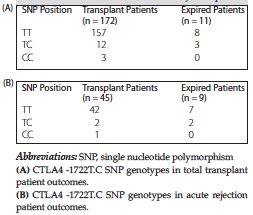
Table 6. Survival Outcomes After Kidney Transplant
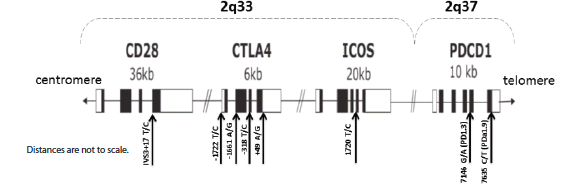
Figure 1. Location of Genetic Polymorphisms in the Chromosomal Region 2q33 Harboring the CD28, CTLA4, and ICOS and the Chromosomal Region 2q37 Harboring PD.1 Genes.
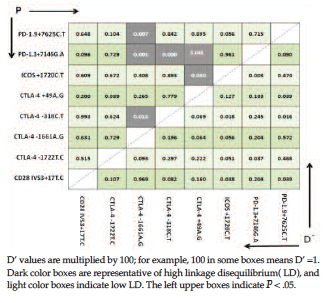
Figure 2. Linkage Disequilibium Plot of Costimulatory Molecule Polymorphisms in D’ Value
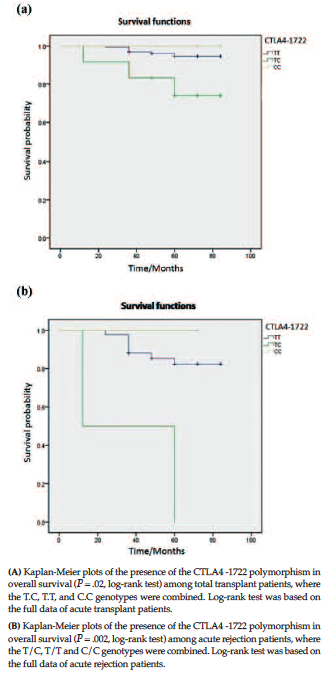
Figure 3. Kaplan-Meier Method