Volume: 15 Issue: 3 June 2017
FULL TEXT
Objectives: Our objective was to study the clinico-pathologic correlations in BK virus nephropathy.
Materials and Methods: We conducted a retrospective study of all patients with biopsy-proven polyoma (BK) virus infection. We compared their survival and renal outcomes versus BK virus-negative patients with biopsy-proven graft rejection. Histopathologic characterization by a blinded nephropathologist was performed.
Results: BK nephropathy was found in 10 patients biopsied for graft dysfunction. All virus-positive patients received antithymocyte globulin induction therapy compared with only 59.3% of the BK-negative group (P = .06). The percentage of patients in the BK-negative group who received acyclovir was significantly higher than that in the BK-positive group (P = .01). After a mean observation period of 6.8 ± 3.2 years, 70% of the BK group had functioning grafts compared with 68% in the BK-negative group (P = .9) with similar 3-year graft survival in the 2 groups (80% and 90%; P = .8). Within the BK group, graft survival was better in the older group (P = .005) and in those with deceased donor kidney grafts (P = .016). Patients in the BK-negative group were heavier (mean weight of 64.3 ± 12.1 vs 46.7 ± 20.6 kg; P = .003). None of the histopathologic features studied had any effect on renal prognosis.
Conclusions: The risk factors for developing BK nephropathy were use of antithymocyte globulin, lower weight, and not using acyclovir as early prophylaxis. Within the BK nephropathy group, better graft survival was observed in deceased donor kidney recipients and in older patients. The viral load and polyoma virus nephropathy stage did not affect graft survival in this small sample study.
Key words : Kidney, Transplant, Clinicopathological
Introduction
Recent studies have suggested the involvement of the polyoma BK virus infection as an increasing cause of kidney graft loss. It was found that approximately 30% to 60% of renal grafts with BK virus-associated nephropathy (BKVAN) develop irreversible graft failure.1
BK virus affects almost 80% of the general population without being symptomatic or causing any disease.1 The virus usually disseminates to the kidneys and urinary tracts of affected individuals and remains there for the rest of their lives without causing symptoms. It is only when someone becomes immunocompromised that the infection may become serious with the reactivation of the virus, causing renal dysfunction and BK virus infection, which may eventually lead to graft loss. This occurs in 5% of kidney transplant patients within the first year.2,3 It initially manifests as gradual deterioration in renal function and then ends with the loss of kidney graft in approximately 40% to 60% of affected patients.2
The use of immunosuppressive therapy is the most significant risk factor for developing BKVAN.2 Decreasing the level of immunosuppressive therapy in patients with BKVAN has been shown to be effective in reducing reactivation of the virus; however, this can lead to acute graft rejection.1 Other risk factors associated with posttransplant BK virus replication include old age, male sex, diabetes mellitus, and HLA mismatching.2
The recurrence and prognosis of BK virus infection in retransplant after a previous graft loss due to BK virus have not been investigated thoroughly except for 2 reports in 2 patients in the United States in which second transplants were not affected again by the BK virus.4,5
Detailed histopathologic features of renal biopsy in this condition have not yet been fully studied. In this study, we investigated the demographics, presentation, and prognosis and their relation to specific histopathologic features in all cases of biopsy-proven BKVAN at our center between 2005 and 2011.
Materials and Methods
We conducted a retrospective chart review of all patients with biopsy-proven polyoma BK virus infection (BK-positive group) at King Abdulaziz Medical City, Riyadh, Kingdom of Saudi Arabia between 2005 and 2011. Patients with multiorgan transplant or incomplete medical records were excluded. Demographic data were extracted. Clinical presentation details, indication for kidney biopsy, laboratory findings at presentation, natural history of the disease, changes in graft function, and response to therapy were all recorded.
Similar data were collected in patients who had renal biopsy at the same time as the BK-positive patients with similar graft dysfunction due to rejection and who were BK negative (BK-negative group).
Histopathologic examination
Histopathologic examinations in all biopsies were independently carried out for
the purpose of this study by 2 nephropathologists blinded to the renal and
patient outcomes and to the renal function at the time of biopsy. This
examination on formalin-fixed, paraffin-embedded renal allograft biopsies was
performed using 2-μm-thick sections mounted on an uncoated glass slide and
stained with conventional hematoxylin and eosin stain, as well as periodic acid
Schiff with and without diastase, methenamine silver, and Masson trichrome
stains. We performed routine immunohistochemical staining analyses for polyoma
virus (dilution 1:200, clone Pab416; Abcam, Cambridge, UK) and C4d (dilution
1:40, polyclonal, Abcam) on formalin-fixed and paraffin-embedded 5-μm-thick
sections.
The data collected included (1) adequacy of the biopsy (numbers of glomeruli and blood vessels in the sampled tissue), (2) proposed Banff criteria for polyoma virus nephropathy (PVN) staging system, (3) and presence or absence of concurrent allograft rejection. Similar pathologic studies were done for the BK-negative group.
The BK-positive and BK-negative cases and control cases were reviewed according to pathologic parameters.
The 10 positive biopsy cases for PVN were further evaluated for viral load score and PVN pathologic stage; both of these parameters were proposed at the 2009 Banff allograft meeting6 and revised or discussed in 2011 and 2013 Banff working group meetings.7
The viral load score was divided into 3 tiers, which calculated viral inclusion in tubules by morphology and immunohistochemistry as follows: score 1 ≤ 1%, score 2 = 1% to 10%, and score 3 ≥ 10%.
The PVN staging scheme was divided into 3 categories, with stage A indicating early changes, stage B indicating active nephropathy, and stage C indicating late sclerosing changes.
Kidney dysfunction was considered to have occurred when serum creatinine levels rose by more than 25% from baseline and/or dialysis became necessary. The BK-positive group was also subdivided into 2 subgroups based on whether their renal function deteriorated or remained stable. These 2 subgroups were compared regarding any existing differences in histopathologic features, demographic data, type of transplant, duration posttransplant, immunosuppressive therapy regimen given, and use of antiviral medication. The BK-positive and BK-negative groups were also compared for renal prognosis.
All data were collected using a predesigned data collection form, and all information was entered into Excel spreadsheets and transferred thereafter to the SPSS program for analysis (SPSS: An IBM Company, IBM Corporation, Armonk, NY, USA). Descriptive statistics such as means ± standard deviation, median, percentages, and frequencies were used to summarize the demographic data of kidney transplant patients, the underlying causes of kidney failure before transplant, allograft status, and onset of rejection posttransplant. For comparisons between categorical data, we used Fisher exact probability test because of the relatively small sample size. Multiple logistic models were used to identify the risk factors associated with BK virus and kidney transplant rejection. P values < .05 were considered significant. For continuous data, we used independent sample t test. Kidney survival was calculated using Kaplan-Meier analyses.
Results
At our center, 269 kidney transplants were performed from 2005 to 2011. Of these total transplant patients, 10 had biopsy-proven BK virus infection (3.7%).
When we compared patients in the BK-positive group versus those in the BK-negative group, we found no differences in mean ages at transplant (28.5 ± 19.9 vs 39.0 ± 12.6 y; P = .65) or the mean duration on dialysis before transplant (6.8 ± 3.2 vs 6.2 ± 2.9 y; P = .56), as shown in Table 1.
Moreover, the mean serum creatinine levels at baseline, at 6 months, and at the end of follow-up were not statistically different between the 2 groups as was the mean rise in serum creatinine per year (Table 1).
However, patient weights at transplant were significantly lower in the BK-positive group versus the BK-negative group (46.7 ± 20.6 vs 64.3 ± 12.1 kg; P = .003), as were the weights at 1 year posttransplant (53.9 ± 21.5 vs 73.5 ± 14.3 kg; P = .003). However, the actual weight gains at 1 year posttransplant for the 2 groups were not statistically significantly different (P = .26), as shown in Table 1.
We found no significant differences between the 2 groups in terms of sex (P = .97), number of previous transplants (P = .54), patient survival rates at end of follow-up (100% vs 88.9%; P = .27), frequency of functioning grafts at the end of follow-up (70% vs 68%; P = .9), presence of proteinuria (P = .85), presence of hematuria (P = .46), and type of maintenance immunosuppressive therapy used (P = .4) (Table 2).
All of the patients in the BK-positive group received antithymocyte globulin (ATG) induction therapy, whereas only 59.3% of patients in the BK-negative group received ATG (P = .06). Furthermore, the risk of BK virus was much less in those who received acyclovir as an antiviral prophylaxis compared with those who did not receive it (0% vs 44.4%; P = .01). Other parameters between the 2 groups were not significantly different, as shown in Table 2.
We compared the BK-positive group who had stable renal function with the BK-positive group who had renal function deterioration in terms of sex, baseline serum creatinine levels, presence of proteinuria, presence of hematuria, weight at transplant, graft ultrasonography findings, ATG therapy at induction, and type of maintenance immunosuppression (Table 3). Graft survival was superior in BK patients who received deceased donor kidneys compared with living donations (P = .016) and with older age (P = .005). Other factors associated with graft survival are presented in Table 3.
When we compared outcomes of graft survival and graft function in the BK virus graft with the control group, we found no difference in 3-year graft survival rates (80% vs 90%; P = .8) (Figure 1) and in serum creatinine levels at the end of follow-up (132.6 ± 39 vs 120.3 ± 4.4 mmol/L; P = .7).
We also analyzed the pathologic findings in the BK virus group (Table 4). Most patients (40%) had stage 2 acute kidney injury at time of biopsy, 30% had stage 1, and 30% had stage 3 kidney injury. In addition, 80% of biopsied kidneys had severe interstitial infiltration, corresponding with poorer prognosis. Furthermore, according to the international Banff classification to assess severity of renal allograft rejection, 30% had stage 1, 30% had stage 2, and 40% had stage 3 (Table 4).
Discussion
Recent studies have suggested the involvement of polyoma BK virus infection as an increasing cause of kidney graft loss. However, to the best of our knowledge, no studies have been published about the contribution of BK virus in Saudi transplant patients. The reported prevalence of polyoma BK virus infections varies between 13% and 29%.8-11 In our study, we found the prevalence among those transplanted to be 3.1%. The existing variation in reported prevalence is due to the methodology of diagnosis, as some use biopsy whereas others use polymerase chain reaction. The rate of graft loss after polyoma BK virus infection has been reported to be 14%12 and 46%.13 In our study, it was found to be 30%. The mean time between the date of transplant and diagnosis of BK virus on biopsy in our study of 19.3 ± 19 months was similar to that reported in the literature.11,12
Our study was able to review and correlate pertinent clinical and histopathologic characteristics of BK virus with contribution to transplant loss or renal function deterioration among a fair number of patients. We also compared these outcomes between patients with BK virus infection and patients with biopsy-proven graft dysfunction of similar magnitude at entry to the study.
When we compared our findings with other published studies of BK virus infection in kidney graft recipients, we found a few interesting differences. The mean age in our BK virus group was younger than that reported by other studies.13 Moreover, in previous related studies, there were no mentions of patient weight at transplant or at 1 year after transplant. In our study, weight was a possible risk factor for the development of BKVAN. In one study, 3 of 8 patients received ATG induction therapy.8 However, those 8 patients had positive BK viremia and not biopsy proven. In another study, 11 of 14 biopsy-proven BKVAN transplant recipients (78.5%) received induction therapy but of another type (basiliximab).12 Furthermore, a previous report showed that 4 of 5 biopsy-proven BKVAN transplant recipients received induction therapy (3 basiliximab and 1 ATG).14 Compared with these studies, our study showed that BK virus occurred in all patients who received ATG induction therapy. Therefore, we propose that ATG induction therapy is a significant risk factor for the development of BK virus infection.
We also assessed the role of antiviral therapy against BK virus. Prophylaxis with acyclovir, but not ganciclovir, in our study seems to be protective against development of BK virus, as none of those who had BK virus received it. Unfortunately, other studies did not report the use of antivirals as prophylaxis against BK virus.
Graft survival in our study was similar to another study.13 However, our study had a longer follow-up, with a mean of 6.8 ± 3.2 years (up to 12 years in some patients). When graft survival and graft function in the BK virus graft were compared with the control group, we found no difference, as the 3-year graft survival rates were 80% and 90% (P = .8) and serum creatinine levels at the end of follow-up were 132.6 ± 39 mmol/L and 120.3 ± 4.4 mmol/L (P = .7).
We also compared our pathologic findings with those reported in other studies, and there were a few differences. When it came to interstitial infiltration, most of our biopsies (80%) were in the severe stage, compared with 0% in another study.11 Also, in our study, 20% of biopsies had mild, 30% had moderate, and 30% had severe tubular atrophy and interstitial fibrosis, whereas in the same mentioned study,11 60% had mild, 40% had moderate, and none had severe tubular atrophy and interstitial fibrosis.
The limitation of our study included its retrospective nature and the relatively small number of patients. Among the risk factors that we found were use of ATG as immunosuppressive induction and lower body weight at transplant, with the early use of acyclovir having a protective effect against development of BK nephropathy. When we compared 3-year graft survival and graft function in the BK virus graft versus control results, we found no differences, as the 3-year graft survival rates were 80% versus 90% (P = .8).
Conclusion
Our findings suggest the involvement of ATG induction therapy, the lack of antiviral prophylaxis therapy, and lower weight at transplant as significant risk factors for the development of BK virus infection. The factors that affected renal function and survival in BK-positive patients were having a deceased donor kidney and age at transplant.
The pathologic study of viral load and PVN stage did not have results that could affect the prognosis of the graft in this small sample study. Similar findings were reported previously.15 Additional prospective analyses in larger sample sizes are needed for better clinicopathologic study.
References:
- Hariharan S. BK virus nephritis after renal transplantation. Kidney Int. 2006;69(4):655-662.
- Barraclough KA, Isbel NM, Staatz CE, Johnson DW. BK Virus in Kidney Transplant Recipients: The Influence of Immunosuppression. J Transplant. 2011;2011:750836.
- van Aalderen MC, Heutinck KM, Huisman C, ten Berge IJ. BK virus infection in transplant recipients: clinical manifestations, treatment options and the immune response. Neth J Med. 2012;70(4):172-183.
- Poduval RD, Meehan SM, Woodle ES, et al. Successful retransplantation after renal allograft loss to polyoma virus interstitial nephritis. Transplantation. 2002;73(7):1166-1169.
- Ginevri F, Pastorino N, de Santis R, et al. Retransplantation after kidney graft loss due to polyoma BK virus nephropathy: successful outcome without original allograft nephrectomy. Am J Kidney Dis. 2003;42(4):821-825.
- Sar A, Worawichawong S, Benediktsson H, Zhang J, Yilmaz S, Trpkov K. Interobserver agreement for Polyomavirus nephropathy grading in renal allografts using the working proposal from the 10th Banff Conference on Allograft Pathology. Hum Pathol. 2011;42(12):2018-2024.
- Haas M, Sis B, Racusen LC, et al. Banff 2013 meeting report: inclusion of c4d-negative antibody-mediated rejection and antibody-associated arterial lesions. Am J Transplant. 2014;14(2):272-283.
- Soleymanian T, Keyvani H, Jazayeri SM, et al. Prospective study of BK virus infection and nephropathy during the first year after kidney transplantation. Iran J Kidney Dis. 2014;8(2):145-151.
- Hirsch HH, Knowles W, Dickenmann M, et al. Prospective study of polyomavirus type BK replication and nephropathy in renal-transplant recipients. N Engl J Med. 2002;347(7):488-496.
- Bressollette-Bodin C, Coste-Burel M, Hourmant M, Sebille V, Andre-Garnier E, Imbert-Marcille BM. A prospective longitudinal study of BK virus infection in 104 renal transplant recipients. Am J Transplant. 2005;5(8):1926-1933.
- Ghafari A, Lessan-Pezeshki M, Taghizadieh M, Rahimi E. BK polyoma virus nephropathy among Iranian renal transplant recipients. Transplant Proc. 2008;40(1):193-195.
- Kim YJ, Jeong JC, Koo TY, et al. Impact of combined acute rejection on BK virus-associated nephropathy in kidney transplantation. J Korean Med Sci. 2013;28(12):1711-1715.
- Vasudev B, Hariharan S, Hussain SA, Zhu YR, Bresnahan BA, Cohen EP. BK virus nephritis: risk factors, timing, and outcome in renal transplant recipients. Kidney Int. 2005;68(4):1834-1839.
- Harza M, Tacu D, Mitroi G, et al. Polyomavirus BK-associated nephropathy after kidney transplantation: a single-center retrospective analysis. Rom J Morphol Embryol. 2014;55(1):123-128.
- Nishi S. Polyomavirus nephropathy - recent pathological diagnostic problems and the report from the 2011 Banff meeting. Clin Transplant. 2012;26 Suppl 24:9-12.

Volume : 15
Issue : 3
Pages : 289 - 294
DOI : 10.6002/ect.2016.0093
From the 1King Saud Bin Abdulaziz University for Health Sciences,
the 2King Abdulaziz Medical City, the 3King Khalid
University Hospital, King Saud University, the 4King Abdulaziz
Medical City, and the 5King Saud Bin Abdulaziz University for Health
Sciences, Riyadh, Saudi Arabia
Acknowledgements: The authors declare that they have no sources of
funding for this study, and they have no conflicts of interest to declare.
Corresponding author: Abdulla Al Sayyari, King Saud Bin Abdulaziz
University for Health Sciences, PO Box 22490, Riyadh 11426, Saudi Arabia
Phone: +966 01 208 8069
E-mail: aaalsayyari@gmail.com
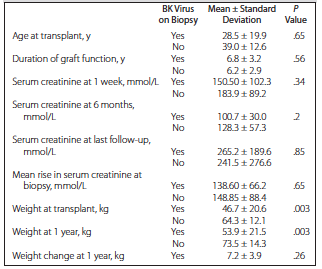
Table 1. Characteristics of Patients with BK Virus on Biopsies and Those With Negative Biopsies
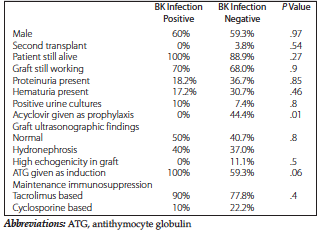
Table 2. Comparison of BK Virus-Positive and BK Virus-Negative Patients Regarding Clinical Characteristics and Immunosuppressive Agents
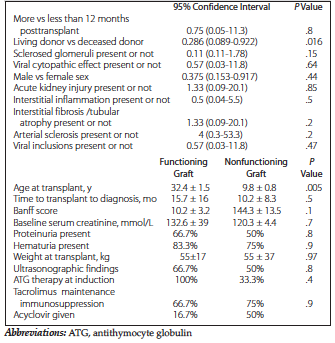
Table 3. Factors Affecting Graft Survival in BK Virus Group
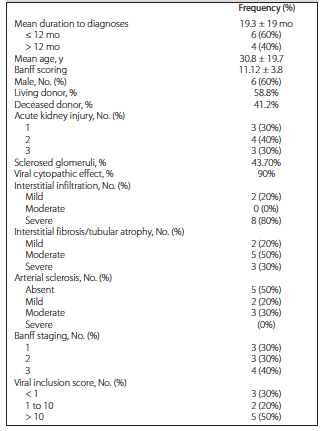
Table 4. Pathologic Factors in BK Virus Renal Biopsies
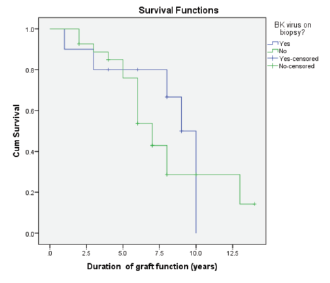
Figure 1. Kaplan-Meier Survival Curve