Volume: 15 Issue: 3 June 2017
FULL TEXT
Objectives: Our objective was to study the outcomes of hepatitis C-positive renal transplant recipients compared with hepatitis C-negative renal transplant recipients.
Materials and Methods: We reviewed the outcomes of hepatitis C-positive kidney transplant recipients compared with hepatitis C virus-negative recipients from the United Network for Organ Sharing/Organ Procurement and Transplantation Network database for transplants from 2000 to 2004 with follow-up until 2012. Of 61 775 recipients, 3334 were hepatitis C positive at time of transplant.
Results: Hepatitis C-positive recipient status was significantly associated with male gender (70.1% vs 58.6%), deceased donor type (73.9% vs 56.6%), African American race (55.7% vs 26.8%), recipient age, increased duration of pretransplant dialysis (mean 724 days vs 624), previous transplant (19.4% vs 11.5%), donor hepatitis C positivity, delayed graft function (23.9% vs 16.0%), and all-cause hospitalizations. All-cause unadjusted, death-censored graft survival and patient survival were all significantly lower in hepatitis C-positive recipients (P < .0001). One-year acute rejection rates were higher in the hepatitis C-positive group (17.2% vs 14.6%; P = .001). Within the hepatitis C-positive group, graft survival was inferior for those who received a hepatitis C-positive donor kidney compared with a hepatitis C-negative donor kidney and those who received a deceased-donor kidney as compared with a living-donor kidney. In multivariate and Cox regression analyses, the adjusted hazard ratio for graft failure for hepatitis C positive was 1.34 (P < .001, 95% confidence interval, 1.31-1.37).
Conclusions: Even in today’s era, this updated analysis still shows major inferior outcomes in hepatitis C-positive transplant recipients. Hence, aggressive treatment for hepatitis C before and after should be considered.
Key words : Hepatitis C, Kidney transplant, Graft survival
Introduction
Hepatitis C is a common health problem worldwide.1 The prevalence of hepatitis C virus (HCV) infection in patients with chronic kidney disease (CKD) and in kidney transplant recipients is significantly higher than in the general population,2,3 and it is associated with increased morbidity and mortality.3 The United States Renal Data System (USRDS) analysis of 36 956 patients between 1996 and 2001 demonstrated a 6.8% prevalence of HCV infection4 among kidney transplant recipients.
When it comes to patient survival, some studies have shown that hepatitis C virus-positive (HCV+) patients who receive a kidney transplant have better patient survival than those who remain on a wait list5 or remain on dialysis.6 At the same time, several studies have suggested that HCV+ end-stage renal disease patients on maintenance hemodialysis7 and after kidney transplant8,9 have an increased relative risk of death compared with HCV-negative controls. As for graft survival, many previous studies demonstrated that HCV seropositive patients have lower patient and graft survival than seronegative patients after kidney transplant.8,10 Most of these studies are from the prior decade with older immunosuppression strategies and single center.
There has been no recent large-scale outcome study in today’s era of immunosuppression with long-term graft outcomes. It is also possible now that with the advent of direct antihepatitis C antiviral agents available that the prevalence of HCV+ will decrease in the future or its effect on kidney outcomes may change. Therefore, to better determine whether there has been any difference in the long-term outcomes compared with previous data and whether donor and recipient characteristics remain important in patient and graft survival in HCV+ kidney transplant recipients, a historical cohort study of the Organ Procurement and Transplantation Network/United Network for Organ Sharing databases was conducted.
Materials and Methods
A historical cohort analysis of adult kidney transplant recipients in the Organ Procurement and Transplantation Network/United Network for Organ Sharing databases from January 1, 2000, to December 31, 2004, was performed. Pediatric transplants and combined multiorgan transplants were excluded. Follow-up graft and patient survival data were until the last available reported or December 2012. We chose this time to be able to study long-term graft outcomes.
All recipients without valid hepatitis C serologies were excluded. No details on the methods for determining positive hepatitis C serology were available but presumably were based on hepatitis C ELISA results. Patient characteristics and treatment factors were those at the initiation of end-stage renal disease. Information on use or results of antibiotics, antivirals, or interferon therapy, alcohol, tobacco, confirmatory serologic testing, liver or renal biopsy specimens, or radiologic procedures was not available. Maintenance medications also were not assessed because the combined follow-up information available on hepatitis C status and immunosuppressive medications was insufficient for analysis.
Statistical significance was defined as < .05. Univariate analysis was performed with chi-square test for categorical variables and t test for continuous variable. Multivariate analysis with step-wise logistic regression was performed with HCV+ as dependent factor.
Graft survival was calculated as the time from date of transplant until death, return to dialysis, lost to follow-up, last follow-up visit, or retransplant.
Kaplan-Meier analysis was used to determine patient and graft survival comparing HCV+ and HCV-negative recipients. All analyses were performed using SPSS 22.0 (SPSS, Inc., Chicago, IL, USA).
Results
During the study period, 61 775 recipients were identified with valid HCV serologies (P = positive or N = Negative). In this group, 3334 recipients (5.4%) were HCV+. Table 1 shows the results of univariate analysis of factors associated with HCV+ recipients. Notable associations were African American race, male gender, deceased donor transplant, history of diabetes, increased wait list duration, higher level of HLA mismatch, recipient on dialysis, hospitalizations within 90 days before transplant, higher number of donation after cardiac death transplants, lower number of expanded criteria donor transplants, higher rates of coinfection with hepatitis B, and receiving a HCV+ donor kidney.
Significant donor demographics, which were higher in the HCV+ group, included receiving kidneys from a donor with a history of hypertension, cocaine use, and cancer. There were no differences in donor age or donor history of diabetes or terminal creatinine. There was significantly higher rate of acute rejection within 6 months and 1 year, delayed graft function, death with functioning graft, and acute rejection or noncompliance as cause of graft failure in the HCV+ group.
On multivariate Cox regression analysis, HCV+ recipient status was an independent risk factor for graft failure as shown in Table 2.
Kidney transplant patients who were added to the liver transplant wait list in the follow-up data available in the Organ Procurement and Transplantation Network database September 2013 are shown in Table 3. The total number of recipients who were added to the liver transplant wait list is 207. Of 3314 HCV+ kidney transplant recipients, 70 (2.1%) were on the liver transplant wait list. However, the HCV-negative kidney transplant recipients (N = 57 839) had only 137 (0.2%) recipients added to the liver transplant wait list.
Causes of death were identified for both groups and are shown in Table 4. Relative risks for infection or cardiovascular disease causing death were not significantly different between HCV+ and HCV-negative groups. Relative risk for liver failure as a cause of death was significant at 6.0 (95% confidence interval, 4.05-8.89; P < .0001). Cause of graft failure is also shown in Table 5. Relative risk for infection, recurrent disease, and chronic rejection causing graft failure were not significantly different between HCV+ and HCV-negative groups. Relative risk for liver failure as a cause of graft failure was significant at 4.2 (95% confidence interval, 1.51-11.64; P < .005). Details of the individual causes of death and graft failure are shown in Tables 4 and 5.
Figure 1, A and B, shows the Kaplan-Meier plot of uncensored and death-censored graft survival with a statistically significant inferior graft survival for HCV+ recipients. Among all HCV+ recipients, graft survival was also inferior as expected for deceased-donor transplant versus living-donor transplant patients (Figure 2). Uncensored graft survival was inferior for HCV+ recipients when subanalyzed within deceased-donor or living-donor transplants (P < .05) (Figure 3, A and B) and race (P < .05) (Figure 4). Within the HCV+ recipients, the outcomes were further inferior when they received a HCV+ donor kidney (Figure 5). Expanded criteria donor type of transplant was significant (P < .05) (Figure 6), but there was no difference between males and females (P = .15). Patient survival was significantly higher in HCV-negative group (Figure 7).
Discussion
The prevalence of HCV infection is estimated to be approximately 2.4% worldwide with high geographic variability, ranging from < 0.5% in Northern Europe up to 15% in Egypt.11 Transmission is via blood contact and consequently is higher in hemodialysis patients who later receive a kidney transplant than in the general population.3
Multiple complications can occur as a result of being HCV+ in kidney transplant patients, including liver disease, de novo and recurrent glomerulonephritis and new-onset type 2 diabetes mellitus. These complications may affect graft and patient survival.3,8 Studies have shown conflicting results regarding kidney transplant outcomes in HCV+ recipients. One study in Spain did not show an effect on patient survival among HCV+ kidney transplant recipients.12 Other larger long-term studies have shown inferior graft and patient outcomes for HCV+ kidney transplant recipients.8,13
Hepatitis C virus-positive kidney recipients have inherent demographic and medical risk factors that put them at higher risk for inferior graft survival. However, it is also possible that overall immunosuppression in HCV+ recipients was maintained at a lower level, to avoid progression of HCV disease14,15 or cirrhosis, which may have led to chronic rejection. Although there was no significant difference in the cause of graft failure due to chronic rejection, the fact that the survival curves start separating early suggests that HCV does have an effect and shifts the timeline of graft failure.
Our results expectedly did show other traditional risk factors for graft loss such as race, rejection within 1 year, and expanded criteria donor type. It however did not show donor HCV+ status as independent risk factor for graft loss unlike some other studies in the past.16 Hepatitis C virus-positive end-stage renal disease patients were more likely to receive high-risk kidneys.
Regarding the fact that few patients were listed for liver transplant after kidney transplant suggests that there may be selection bias of those with less advanced disease since those patients may have liver disease for a long time without progression. That may indicate that their immune system was able to control the infection and limit the progression of fibrosis. Patients with advanced fibrosis are likely sicker and likely will not be listed for a kidney transplant alone and may have been referred to combined liver-kidney transplant. Most programs would have taken a thorough evaluation of the HCV+ status of each patient at the time of listing, which usually included liver biopsy and portal pressure measurements before accepting them for a kidney alone transplant.
To our knowledge, our study is the first large study to analyze the cause of death and cause of graft failure from the national database to include liver complications, although we compared liver-related complications to the HCV-negative group. As such, there never will be a prospective or controlled study to compare such outcomes in HCV+ with or without transplant. Two meta-analyses have shown that HCV+ kidney transplant recipients have a 79% higher risk of all-cause mortality versus HCV-negative kidney transplant recipients.8,10 The only other study that used the national database in a manner similar to our study was by Batty and associates in 2001, which studied patients from 1994 to 1997 with a follow-up to 36 months.17 Their results were similar to ours, and in fact our study extends their results up to the 13-year follow-up available. Hence, despite after 10 years of better surgical techniques, better immunosuppression, better strategies to manage complications, and better selection of HCV+ candidates, the outcomes have not changed.
The natural history of HCV progression posttransplant is not well-established and could be variable. Immunosuppression has the permissive effect on viral replication, and the potential to accelerate preexisting live 1-year disease or reactivate quiescent disease. Small studies have shown that HCV+ kidney transplant recipients do show a higher rate of change in their fibrosis score as early as 3 to 4 years after transplant, which is higher than for immunocompetent HCV recipients but lower than for liver alone HCV+ transplant recipients.18 It is also quite clearly shown that HCV+ recipients have a higher incidence of posttransplant diabetes, which likely may affect graft and patient outcomes.19
The limitations of our analysis are partly detailed in the Methods, namely, hepatitis serology methodology could not be confirmed and the clinical details of recipients were not known. Information on liver biopsy and HCV viral load results were likewise not available. Immunosuppression changes over time were not able to be captured, which may have affected graft outcomes if they were handled differently in HCV+ recipients. Unfortunately, we do not know whether any of the HCV+ recipients received treatment for HCV given the fear of triggering rejection. Interferon therapy is associated with a higher risk of rejection and hence may be used only in HCV for life-threatening liver-related complications. With the new HCV treatments, this is probably less of a problem for the future. Nevertheless, the study does describe the outcomes of the largest sample of renal transplant recipients with positive hepatitis C serologies as is likely possible. It thus minimized referral bias and sampling error.
Our study has the longest follow-up reported for graft and patient outcomes. The information provided in the present study should prove useful to clinicians and patients alike and may serve as a benchmark for future studies of HCV+ recipients who are treated either before or after receiving a kidney transplant. Clearly, more effective therapies that are available for HCV should be used, ideally before the kidney transplant if possible or soon after transplant. Low estimated glomerular filtration rate limits the use of interferon-based regimens for treatment of HCV+, but the new interferon-free regimens offer promising new perspectives for HCV+ kidney transplant recipients as a treatment option. They are known to have greater efficacy and have a better adverse effect profile. The combination of sofosbuvir and simeprevir might be an option, as clinical studies of these regimens have shown promising results.20 It is of special interest for transplant patients that sofosbuvir has no effect and simeprevir only mild inhibitory effects on the hepatic CYP3A4 enzyme.21 Other drug combinations are available; the choice to use a specific combination of drugs is influenced by HCV genotype, renal function, severity of liver disease, and the immunosuppression regimen used for kidney transplant.22
In conclusion, this study confirms that even under modern immunosuppression management HCV+ status remains an independent risk factor for graft loss; this may be due to some immune dysregulation caused by the presence of the virus. However, because graft loss due to HCV is low, other traditional factors of graft loss are still the major determinates in the HCV+ population. Given the inferior outcomes in HCV+ patients, every HCV infected patient on a wait list for kidney transplant should be considered for antiviral therapy to reduce HCV-associated posttransplant morbidity and mortality as the new interferon-free agents are promising. Future studies should be done to compare to ours to see whether treating HCV decreases the inferior patient and graft survival rates, which have unfortunately remained unchanged in the past 2 decades.
Conclusions
The content is the responsibility of the authors alone and does not necessarily reflect the views or policies of the Department of Health and Human Services, nor does mention of trade names, commercial products, or organizations imply endorsement by the US Government.
References:
- Brody H. Hepatitis C. Nature. 2011;474(7350):S1.
CrossRef - PubMed - Tsui JI, Vittinghoff E, Shlipak MG, O'Hare AM. Relationship between
hepatitis C and chronic kidney disease: results from the Third National
Health and Nutrition Examination Survey. J Am Soc Nephrol.
2006;17(4):1168-1174.
CrossRef - PubMed - Baid-Agrawal S, Pascual M, Moradpour D, Frei U, Tolkoff-Rubin N.
Hepatitis C virus infection in haemodialysis and kidney transplant patients.
Rev Med Virol. 2008;18(2):97-115.
CrossRef - PubMed - Abbott KC, Bucci JR, Matsumoto CS, et al. Hepatitis C and renal
transplantation in the era of modern immunosuppression. J Am Soc Nephrol.
2003;14(11):2908-2918.
CrossRef - PubMed - Bloom RD, Sayer G, Fa K, Constantinescu S, Abt P, Reddy KR. Outcome of
hepatitis C virus-infected kidney transplant candidates who remain on the
waiting list. Am J Transplant. 2005;5(1):139-144.
CrossRef - PubMed - Sezer S, Ozdemir FN, Akcay A, Arat Z, Boyacioglu S, Haberal M. Renal
transplantation offers a better survival in HCV-infected ESRD patients. Clin
Transplant. 2004;18(5):619-623.
CrossRef - PubMed - Fabrizi F, Martin P, Dixit V, Bunnapradist S, Dulai G. Meta-analysis:
Effect of hepatitis C virus infection on mortality in dialysis. Aliment
Pharmacol Ther. 2004;20(11-12):1271-1277.
CrossRef - PubMed - Fabrizi F, Martin P, Dixit V, Bunnapradist S, Dulai G. Hepatitis C virus
antibody status and survival after renal transplantation: meta-analysis of
observational studies. Am J Transplant. 2005;5(6):1452-1461.
CrossRef - PubMed - Mathurin P, Mouquet C, Poynard T, et al. Impact of hepatitis B and C
virus on kidney transplantation outcome. Hepatology. 1999;29(1):257-263.
CrossRef - PubMed - Fabrizi F, Martin P, Dixit V, Messa P. Meta-analysis of observational
studies: hepatitis C and survival after renal transplant. J Viral Hepat.
2014;21(5):314-324.
CrossRef - PubMed - Negro F, Alberti A. The global health burden of hepatitis C virus
infection. Liver Int. 2011;31 (Suppl 2):1-3.
CrossRef - PubMed - Gentil Govantes MA, Rodriguez-Benot A, Sola E, et al. Trends in kidney
transplantation outcome: the Andalusian Kidney Transplant Registry,
1984-2007. Transplant Proc. 2009;41(5):1583-1585.
CrossRef - PubMed - Rostami Z, Nourbala MH, Alavian SM, Bieraghdar F, Jahani Y, Einollahi B.
The impact of Hepatitis C virus infection on kidney transplantation
outcomes: A systematic review of 18 observational studies: The impact of HCV
on renal transplantation. Hepat Mon. 2011;11(4):247-254.
PubMed - Everson GT. Impact of immunosuppressive therapy on recurrence of
hepatitis C. Liver Transpl. 2002;8(10 Suppl 1):S19-S27.
CrossRef - PubMed - Hanafusa T, Ichikawa Y, Kishikawa H, et al. Retrospective study on the
impact of hepatitis C virus infection on kidney transplant patients over 20
years. Transplantation. 1998;27;66(4):471-476.
PubMed - Kucirka LM, Singer AL, Ros RL, Montgomery RA, Dagher NN, Segev DL.
Underutilization of hepatitis C-positive kidneys for hepatitis C-positive
recipients. Am J Transplant. 2010;10(5):1238-1246.
CrossRef - PubMed - Batty DS Jr, Swanson SJ, Kirk AD, Ko CW, Agodoa LY, Abbott KC. Hepatitis
C virus seropositivity at the time of renal transplantation in the United
States: associated factors and patient survival. Am J Transplant.
2001;1(2):179-184.
CrossRef - PubMed - Kamar N, Rostaing L, Selves J, et al. Natural history of hepatitis C
virus-related liver fibrosis after renal transplantation. Am J Transplant.
2005;5(7):1704-1712.
CrossRef - PubMed - Kasiske BL, Snyder JJ, Gilbertson D, Matas AJ. Diabetes mellitus after
kidney transplant in the United States. Am J Transplant. 2003;3(2):178-185.
CrossRef - PubMed - A SPECIAL MEETING REVIEW EDITION: Advances in the Treatment of Hepatitis C Virus Infection from The Liver Meeting 2013: The 64th Annual Meeting of the American Association for the Study of Liver DiseasesNovember 1-5, 2013 • Washington DCSpecial Reporting on:• Simeprevir plus Sofosbuvir with or without Ribavirin Produces High SVR Rates in Genotype 1 HCV Infection• Novel Interferon- and Ribavirin-Free Regimen Results in SVR12 Rates of Over 90% in HCV Genotype 1b Infection• Studies Confirm Efficacy of Adjunctive Simeprevir in Difficult-to-Treat HCV Genotype 1 Subpopulations• All-Oral Therapy with Sofosbuvir Plus Ribavirin Produces High SVR Rates in Patients Coinfected with HCV and HIV• Faldaprevir Combined with Pegylated Interferon and Ribavirin Demonstrates High Efficacy in DifficuIt-to-Treat HCV Infection• Once Daily Sofosbuvir/Ledipasvir Combination Elicits Rapid Decline in HCV RNAPLUS Meeting Abstract SummariesWith Expert Commentary by: Ira M. Jacobson, MD Weill Cornell Medical College, New York, New York. Gastroenterology & Hepatology. 2014;10(1 Suppl 1):1-19.
- Tischer S, Fontana RJ. Drug-drug interactions with oral anti-HCV agents
and idiosyncratic hepatotoxicity in the liver transplant setting. J Hepatol.
2014;60(4):872-884.
CrossRef - PubMed - Kwo PY, Mantry PS, Coakley E, et al. An interferon-free antiviral
regimen for HCV after liver transplantation. N Engl J Med.
2014;371(25):2375-2382.
CrossRef - PubMed

Volume : 15
Issue : 3
Pages : 282 - 288
DOI : 10.6002/ect.2015.0296
From the 1Department of Medicine, Division of Nephrology, and the
2Department of Medicine, Division of Gastroenterology and Hepatology,
Indiana University, Indianapolis, Indiana, USA
Corresponding author: Asif Sharfuddin, 950 W. Walnut St, R2-202,
Indianapolis, IN 46202, USA
Phone: +1 317 944 4370
Fax: +1 317 944 4319
E-mail: asharfud@iu.edu
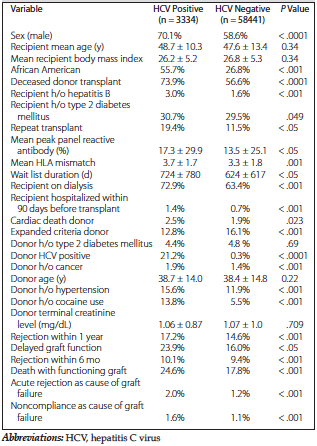
Table 1. Recipient Characteristics
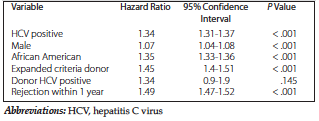
Table 2. Multivariate Cox Regression Analysis for Independent Risk Factors for Graft Loss
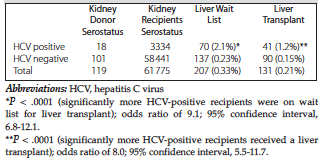
Table 3. Liver Transplant Wait List Recipients and Their Hepatitis C Virus Status
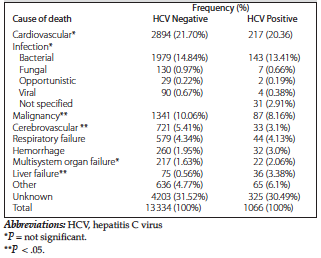
Table 4. Cause of Death
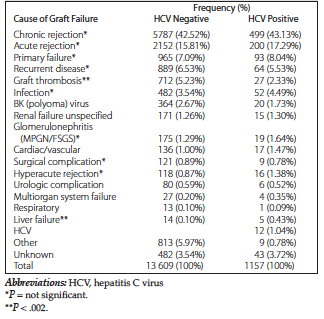
Table 5. Cause of Graft Failure
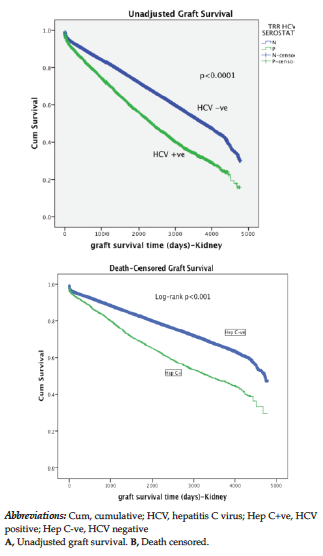
Figure 1. Kaplan-Meier Plot for Graft Survival in Hepatitis C Virus-Positive and Hepatitis C Virus-Negative Recipients
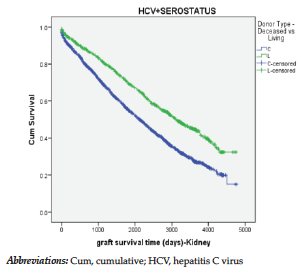
Figure 2. Unadjusted Kaplan-Meier Plot for Graft Survival in Hepatitis C Virus-Positive Recipients From Living And Deceased Donors
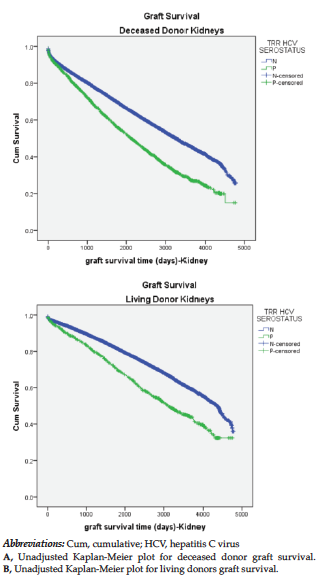
Figure 3. Unadjusted Kaplan-Meier Plots for Survival in Hepatitis C VirusPositive and Hepatitis C Virus-Negative Grafts From Deceased and Living Donors
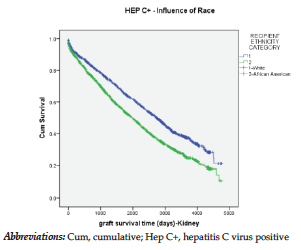
Figure 4. Unadjusted Kaplan-Meier plot for Graft Survival in African American and Caucasian Recipients Who Are Hepatitis C Virus Positive
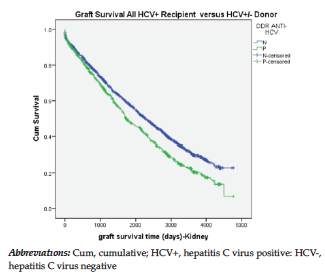
Figure 5. Unadjusted Kaplan-Meier plot for Hepatitis C Virus Recipients: Effect of Donor Serostatus on Graft Survival
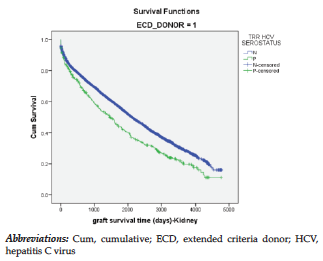
Figure 6. Unadjusted Kaplan-Meier Plot for Expanded Criteria Donors: Graft Survival for Hepatitis C Virus-Positive Versus Hepatitis C Virus-Negative Recipients
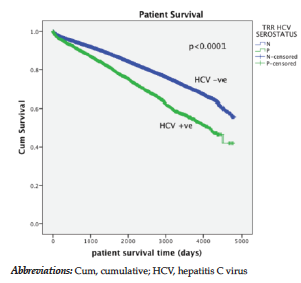
Figure 7. Unadjusted Kaplan-Meier Plot for Patient Survival