Volume: 15 Issue: 2 April 2017
FULL TEXT
Objectives: This study aimed to assess whether donor age would increase the risk of cardiovascular comorbidities during the first few years after donation. Cardiovascular risk was calculated using the QRISK tool (University of Nottingham and EMIS, Nottingham, UK).
Materials and Methods: Data were collected from 221 living renal transplant donors at St. George’s University Hospital NHS Foundation Trust between 2008 and 2012 before and after donation (at 6, 12, and 24 mo). QRISK scores were calculated for each patient at these time points before stratifying our patients into 2 cohorts: cohort A (age ≤ 59 y) and cohort B (age ≥ 60 y). QRISK scores were then compared using unpaired t tests.
Results: Before donation, mean QRISK scores were 3.4% in cohort A and 12.4% in cohort B (P < .001). At 6, 12, and 24 months after kidney donation, the risks were 3.3% and 12.2% (P < .001), 3.8% and 13.6% (P < .001), and 5% and 15.4% (P < .001) in cohort A versus cohort B.
Conclusions: When we analyzed risk before donation, both age groups showed a significant increase in cardiovascular risk at 24 months. This subtle increase in cardiovascular risk in the 2 groups may be attributed to changing patient demographics, such as the increasing age of patients, rather than the donation itself. Elderly kidney donors, therefore, are a key source of donation after satisfactory cardiovascular work-up. However, elderly kidney donors will require long-term postoperative follow-up care and specific counseling aimed at reducing modifiable cardiovascular risk factors.
Key words : Aging, Kidney transplant, Expanding living donor pool
Introduction
Living-donor kidney transplant is the criterion standard treatment for end-stage renal disease, primarily because it is associated with improved graft and patient survival compared with transplant from a deceased donor.1,2 However, living kidney donation involves major surgery for a previously healthy individual, without any physical health benefit to the donor. In addition, kidney donation predictably leads to a reduction in the donor’s renal function3 with relative increases in proteinuria and blood pressure greater than those attributable to the normal aging process.4,5 These factors are associated with an increased risk for cardiovascular morbidity and mortality.6
The increased demand for renal transplants on the background of organ shortage has led to the use of elderly donors, defined generally as those who are 60-years-old and older. These donors can be a good resource for organ transplant but are at increased health-related risks compared with nondonors of the same age.7-9
During the early stages of living-donor kidney programs, advanced age was widely considered as an absolute contraindication, mainly as it was deemed to increase long-term morbidity and mortality.10,11 Patients with advanced age also were more likely to be excluded from donation because of the presence of comorbidities.11 To minimize both short-term and long-term complications, an extensive donor work-up is performed before donation. A low threshold is set for screening potential living donors for cardiovascular disease, and various tests, such as exercise electrocardiograms, echocardiograms, myocardial perfusion scans, and coronary angiograms, may be employed depending on the indication.12 However, to date, there remains a clear lack of consensus on whether to promote elderly kidney donation, especially when complication rates in these donors are considered.4 Increasingly, elderly kidney donation has become a norm in clinical practice; however, the effect of this donation on the donor’s cardiovascular status has not been well studied, particularly before and after donation.
In an effort to aid such decisions, this study aimed to determine whether the donor’s age increases the risk of medical comorbidities, especially cardiovascular diseases, in the first few years after donation. To the best of our knowledge, no other study has reviewed cardiovascular risk in kidney donors during the first few years after donation using the QRISK equation (University of Nottingham and EMIS, Nottingham, UK). In addition, we also compared the cardiovascular disease risk shown in elderly kidney donors with those shown in a younger group. This comparison was performed to assess whether further discussion regarding cardiovascular morbidity is required with the donor before kidney donation.
In our study, cardiovascular disease risk was calculated with the QRISK tool. This predicts the risk of a cardiovascular event in a 10-year window by using the patient’s age, smoking status, self-assigned ethnicity, systolic blood pressure, ratio of total serum cholesterol to high-density lipoprotein level, body mass index, family history of coronary heart disease in a first-degree relative, and diagnosis of rheumatoid arthritis, type 2 diabetes mellitus, and chronic renal disease.13 This tool was developed in 2007 and is now widely considered as superior to the Framingham equation.14
Materials and Methods
This retrospective study used data collected from living renal transplant donors at St. George’s University Hospital NHS Foundation Trust London United Kingdom between January 2008 and December 2012. The study was conducted according to the guidelines of the Declaration of Helsinki. Data were accessed via the hospital patient database and patient medical records. Data collected included donor age, sex, ethnicity, smoking status, diabetes status, heart disease status, blood pressure, cholesterol levels, and body mass index at different time points, including before donation and after donation at 6, 12, and 24 months. Data for each donor were then individually analyzed for cardiovascular risk at that particular time point using the online QRISK score calculator. Kidney donors were then stratified into 2 main cohorts based on age: ≤ 59 years old (cohort A) and ≥ 60 years old (cohort B). An unpaired t test was then used to compare QRISK scores between the 2 age groups at the time of donation and 6, 12, and 24 months after donation. Finally, a paired t test was used to compare QRISK scores as the patients progressed through follow-up. Statistical analyses were performed with GraphPad Prism software (La Jolla, CA, USA), and statistical significance was inferred at P < .05.
Results
Patient demographic results recorded before donation are shown in Table 1. Our study included 221 living kidney donors: 176 patients in cohort A and 45 patients in cohort B. Two patients were excluded from this study because of loss of their initial work-up and follow-up data. The average body mass index in both cohorts was comparable (26 ± 0.3 kg/m2; P = .509), placing both groups in the overweight category. In cohort A, patients had an average systolic blood pressure of 127 mm Hg, and only 3% of donors were clinically hypertensive (defined as those receiving treatment). In cohort B, patients had an average systolic blood pressure of 130 mm Hg, with 13% of donors receiving treatment for hypertension (P = .0926). Treated hypertension refers to patients classified as stage 1 or above in the National Institute of Health Care and Excellence (London, UK) hypertension management pathway. No patients had been diagnosed with type 2 diabetes mellitus.
Before donation, the mean 10-year cardiovascular risk, as assessed by a QRISK calculation, was 3.4% in cohort A compared with 12.4% in cohort B (P < .001) (Figure 1A). At 6, 12, and 24 months after donation, the risks were measured as 3.3% and 12.2% (P < .001) (Figure 1B), 3.8% and 13.6% (P < .001) (Figure 1C), and 5% and 15.4% (P < .001) (Figure 1D) in cohort A versus cohort B.
No significant increases in cardiovascular risk were observed when groups were compared separately at 6 and 12 months after donation. At 24 months, both groups showed a significant increase in cardiovascular risk, as assessed by QRISK scores, compared with scores before donation (P < .001) (Figure 2).
Discussion
In this study, 80% of the kidney donors in our patient groups were less than 60 years old. This is similar to the national statistics on kidney transplant activity, which shows that 81% of kidney donors are less than 60 years old.15 We estimate that the proportion of elderly kidney donors will increase in the future, driven mainly by the increasing size of the transplant wait list.10
Our results suggest that, before donation, elderly donors (age > 60 y) have an 8.4% increased risk of a cardiovascular event in a 10-year period compared with younger donors. At 6 months after donation, the risk difference is 8.7%. At 12 months after donation, the cardiovascular risk difference is 9.2% in the elderly cohort compared with the younger cohort. Finally, at 24 months, the risk difference is 10.2%. This subtle increase in cardiovascular risk between the 2 groups may be attributed to the increasing age of patients, which has a more significant effect on the QRISK calculation (and therefore total cardiovascular risk) at ages greater than 64 years old.10 This does not rule out elderly patients as donors; rather, these results demand vigorous predonation cardiac investigations, long-term postoperative care, and specific counseling for lifestyle modifications to reduce modifiable cardiovascular risk factors. In absolute terms, although we report a clear difference in overall 10-year cardiovascular disease risk between the 2 cohorts, no patients in either group developed any cardiovascular event in the 24-month follow-up.
Within each cohort of patients, the increase in cardiovascular risk becomes significant at 24 months after donation compared with baseline levels before donation. Because of the time frame in which the changes are first observed, this may not be attributed to only the kidney donation; rather, it may be because of changing demographics, such as advancing age.
In the literature, there is a lack of a consensus regarding the influence of advanced age on complication rates. A recent article described that, in donors ≥ 70 years old, mortality rate was in fact lower than in a younger cohort of donors.8 This was attributed to a more cautious and selective work-up of the donors.8 In another study that examined the safety and efficacy of the laparoscopic nephrectomy, no significant differences in complication rates or overall length of hospital stay were found in older versus younger donors.9 Friedman and associates, however, showed that overall hospital stay in older donors increased on average by 0.2 days.10 When longer-term complication risks were examined, older age was also found to predict higher rates of gastrointestinal, respiratory, and infection-related complications.10 These findings indicate the importance of informed consent and more vigorous postoperative care for elderly kidney donors; however, they do not signify an absolute contraindication to donation.
It is important to also consider the recipient of the transplanted elderly kidney, especially regarding long-term outcomes. The literature, again, lacks any real consensus, with various conflicting reports. For example, a systematic analysis of 22 studies found no real difference in outcomes in grafts from older donors compared with those from younger donors.11 However, other studies have shown poorer graft outcomes, which were associated with higher levels of complications.8 With increasing demand for organs, longer wait times, and more frequent deaths when waiting for organs, this lack of consensus promotes elderly kidney donation.
Although this study successfully highlighted the long-term cardiovascular risk in both an elderly and younger donor population, there were some limitations. First, we presented outcome data during a 24-month follow-up. A longer follow-up would provide a stronger level of evidence, although this could pose significant difficulties, including loss of patient follow-up. There is a clear need for further investigations regarding the influence of donor age on kidney donation, which would be best achieved by means of a randomized controlled trial. Another potential limitation is that our results were obtained from 1 transplant center, which consists of 3 major hospitals. Further research is needed across other transplant centers to confirm the cardiovascular risks associated with advanced age kidney donation.
Conclusions
The long-term cardiovascular risk in an elderly group of donors was 15.2% compared with 5% in a younger population. This difference seems to correspond to donor age rather than the donation itself. Elderly kidney donation may be a key source of organs in the future. However, caution must be maintained when accepting elderly kidney donors, and a thorough work-up is required to reduce complications and improve outcomes.
References:
- Waterman AD, Morgievich M, Cohen DJ, et al. Living donor kidney
transplantation: improving education outside of transplant centers about
live donor transplantation---Recommendations from a Consensus Conference.
Clin J Am Soc Nephrol. 2015;10(9): 1659-1669.
CrossRef - PubMed - Schold J, Srinivas TR, Sehgal AR, Meier-Kriesche HU. Half of kidney
transplant candidates who are older than 60 years now placed on the waiting
list will die before receiving a deceased-donor transplant. Clin J Am Soc
Nephrol. 2009;4(7):1239-1245.
CrossRef - PubMed - Kasiske BL, Ma JZ, Louis TA, Swan SK. Long‐term effects of reduced renal
mass in humans. Kidney Int. 1995;48(3):814-819.
CrossRef - PubMed - Talseth T, Fauchald P, Skrede S, et al. Long term blood pressure and
renal function in kidney donors. Kidney Int. 1986;29(5):1072-1076.
CrossRef - PubMed - Toyoda M, Yamanaga S, Kawabata C, et al. Long-term safety of living
kidney donors aged 60 and older. Transplant Proc. 2014;46(2):318-320.
CrossRef - PubMed - Yilmaz BA, Caliskan Y, Yilmaz A, et al. Cardiovascular-renal changes
after kidney donation: one-year follow-up study. Transplantation.
2015;99(4):760-764.
CrossRef - PubMed - Englum BR, Schechter MA, Irish WD, et al. Outcomes in kidney transplant
recipients from older living donors. Transplantation. 2015;99(2):309-315.
CrossRef - PubMed - Lam NN, Lentine KL, Levey AS, Kasiske BL, Garg AX. Long-term medical
risks to the living kidney donor. Nat Rev Nephrol. 2015;11(7):411-419.
CrossRef - PubMed - Muzaale AD, Massie AB, Wang MC, et al. Risk of end-stage renal disease
following live kidney donation. JAMA. 2014;311(6):579-586.
CrossRef - PubMed - O’Brien B, Mastoridis S, Sabharwal A, Hakim N, Taube D, Papalois V.
Expanding the donor pool: living donor nephrectomy in the elderly and the
overweight. Transplantation. 2012;93(11):1158-1165.
CrossRef - PubMed - Ahmadi AR, Lafranca JA, Claessens LA, et al. Shifting paradigms in
eligibility criteria for live kidney donation: a systematic review. Kidney
Int. 2015;87(1):31-45.
CrossRef - PubMed - The British Transplantation Society and the Renal Association. United Kingdom guidelines for living kidney transplantation Web site. Published May 2011. Accessed December 16, 2015.
- Hippisley-Cox J, Coupland C, Vinogradova Y, et al. Predicting
cardiovascular risk in England and Wales: prospective derivation and
validation of QRISK2. BMJ. 2008;336(7659):1475-1482.
CrossRef - PubMed - Mahmood SS, Levy D, Vasan RS, Wang TJ. The Framingham Heart Study and
the epidemiology of cardiovascular disease: a historical perspective.
Lancet. 2014;383(9921):999-1008.
CrossRef - PubMed - NHS Blood and Transplant. Organ donation and transplantation activity report 2014-15. Web site.http://nhsbtmediaservices.blob.core.windows.net/organ-donation-assets/pdfs/activity_report_2014_15.pdf. Published May 2015. Accessed December 16, 2015.

Volume : 15
Issue : 2
Pages : 179 - 182
DOI : 10.6002/ect.2015.0373
From the 1St. Georges, University of London, London, United
Kingdom; the 2Croydon University Hospitals NHS Trust, London, United
Kingdom; and the 3St. Georges University Hospitals NHS Foundation
Trust, London, United Kingdom
Acknowledgements: The authors declare no conflicts of interest, and no
funding was received for this work.
Corresponding author: Abbas Ghazanfar, Renal Unit, St. George’s
University Hospitals NHS Foundation Trust, Blackshaw Road Tooting, London,
United Kingdom SW17 0QT
E-mail: a.ghazanfar@nhs.net
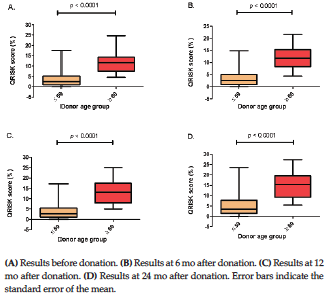
Figure 1. The QRISK scores of Patients in the ≤ 59 Year and ≥ 60 Year Age Groups
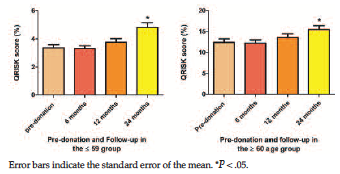
Figure 2. The Changing QRISK Scores of Patients in the ≤ 59 and ≥ 60 Age Groups Throughout Follow-up
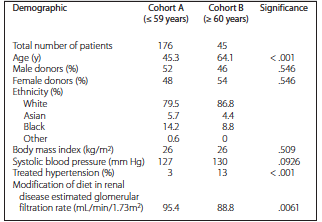
Table 1. Patient Demographics and Clinical Measurements of Living Donors Before Donation