Volume: 15 Issue: 2 April 2017
FULL TEXT
Objectives: Urinary tract infection is the most common type of bacterial infection in kidney transplant procedures, with adverse effects on graft and patient survival. We aimed to evaluate the risk factors of recurrent urinary tract infection in renal transplant recipients and its impact on patient and graft survival.
Materials and Methods: In a cohort of 1019 patients who were transplanted between 2000 and 2010 at Hamed Al-Essa Organ Transplant Center in Kuwait, 86% developed at least 1 episode of urinary tract infection, with only 6.2% of patients having recurrent infections. We compared patients with recurrent urinary tract infections (group 1) with those who had no recurrence (group 2) regarding their risk factors.
Results: Patients in group 1 were significantly younger than those in group 2 (34.9 ± 23 vs 42.8 ± 16 y; P < .001), with female preponderance (P < .001). The percentage of patients with thymoglobulin induction (21.5%) was significantly higher in group 1. Patients with pretransplant urologic problems experienced significantly more recurrent urinary tract infections (P < .001). Hepatitis C infections were significantly more prevalent among group 1 (10.8% vs 3.8%; P = .008). Long-term graft outcome (functioning and failed) were 78.5% and 21.5% in group 1 versus 85.1% and 13.9% in group 2 (P = .18). Patient outcomes (living and deceased donors) were 98.4% and 1.6% in group 1 versus 95.7% and 4.3% in group 2 (P = .187).
Conclusions: Adult females, thymoglobulin induction, pretransplant urologic problems, and hepatitis C infection were the risk factors of recurrent urinary tract infection among our renal transplant patients. However, recurrence did not adversely affect graft or patient survival.
Key words : Kidney transplant, Recurrence, Urinary tract infection
Introduction
Kidneys are the most frequently transplanted solid organs, and transplant rates would be even higher if donor supply matched demand. Since the first successful renal transplant was performed in the 1950s, understanding factors that improve graft outcome has advanced. Nevertheless, posttransplant urinary tract infections (UTIs) continue to be a source of morbidity and graft failure.1 Urinary tract infection is the most common type of bacterial infection contracted by recipients of renal allografts in the posttransplant period.2,3
However, recurrent UTI is frequent among kidney recipients and associated with multidrug resistance,4 and Klebsiella species virulence factors seem to be mostly responsible for developing upper UTIs in kidney transplant recipients.5 Moreover, in a unit where recurrent UTI incidence after kidney transplant was 72% and Klebsiella species was the prevailing uropathogen, nosocomial infection and multidrug-resistant bacteria appeared to be independent predictive factors.6
Fungi and viruses can also cause UTIs, but infections caused by these organisms are less common than those caused by bacteria. The reported incidence varies widely, likely due to differences in definition, diagnostic criteria, study design, and length of observation.7 In one study of 161 patients transplanted at a single center between 2003 and 2005, 41 patients (25%) developed at least one UTI.8 In another study that included 177 patients transplanted between 2000 and 2005, 75% of patients developed at least one UTI.9 The frequency of UTI varies from 30% to 79% in different studies, with approximately 60% of bacteremia originating from this site.7 Both Sqalli and associates8 and Hussain and associates10 reported similar incidences of UTI among their patients (42% and 46%). The primary goal in organ transplant is the achievement of good graft function simultaneously with prevention and effective treatment of infections.
Occurrence of UTIs depends on many factors such as age, female sex, comorbidity, type and amount of immunosuppression, urologic instrumentation, and/or length of follow-up after kidney transplant.8-10 Other local factors, including indwelling catheter, handling and trauma to the kidney and ureter during surgery, structural abnormalities of the native or transplanted kidneys, neurogenic bladder, renal insufficiency, and possible rejection, may also explain the high incidence of UTIs in renal transplant recipients.7,9 The typical microorganisms causing posttransplant UTIs are enteric gram-negative bacilli and enterococci and Klebsiella pneumonia and pseudomonas.11 Urinary tract infections may have an adverse effect on graft and patient survival. Robust definitions of UTIs, bacteriuria, bacteremia, and pyuria are important so that clinicians can communicate accurately. We have suggested the following definitions: a UTI is a pathologic invasion of urothelium that results in an inflammatory response, which might present clinically but can be defined on the basis of microscopy and culture. Bacteriuria is defined as at least 105 bacteria/mL of fresh unspun midstream urine.8 This definition has been contested by Stamm and associates12 who proposed a more sensitive definition of at least 102 bacteria/mL of urine. Both definitions are currently accepted. However, in asymptomatic transplant recipients, a pure culture of at least 102 bacteria/mL of urine with pyuria is diagnostic.
Asymptomatic bacteriuria should be defined as at least 105 bacteria/mL of urine (ideally from 2 separate samples). Bacteremia is presence of bacteria in the blood, confirmed by blood culture, which may be transient. Pyuria is at least 10 white blood cells per high-power field of unspun midstream urine.13 Pyuria is indicative of an inflammatory response in the urothelium, usually to pathogenic invasion. Pyuria can be associated with bacteriuria (bacterial UTI) or can be sterile (may be caused by tuberculosis, malignancy, or adjacent nonurinary tract pathology). An uncomplicated UTI is defined as infection in a healthy patient who has a structurally and functionally normal urinary tract. A complicated UTI is an infection in a patient who has renal tract abnormalities, virulent or atypical organisms, and sequelae such as pyelonephritis or septicemia. A recurrent UTI is defined as 3 or more UTIs in a 12-month period, resulting from infection with different strains of microbes. In transplant recipients, recurrent UTI can include asymptomatic episodes. A relapsing UTI is defined as resulting from failure to eradicate the original infection.13,14
Our goal in this study was to evaluate the risk factors of recurrent UTIs in renal transplant recipients who were seen at the Hamed Al-Essa Organ Transplant Center in Kuwait and to assess effects on patient and graft outcomes.
Materials and Methods
This study included 1019 kidney transplant recipients who received grafts and were followed-up at the Hamed Al-Essa Organ Transplant Center of Kuwait during the years from 2000 to 2012. We evaluated such patients for the possible risk factors of recurrent UTI. Data from patients who developed any episode of UTI were isolated and studied thoroughly, with special stress on risk factors of recurrent UTI (≥ 4 episodes per year or ≥ 2 per 6 months). The studied risk factors included patient age, sex, pretransplant urinary tract abnormalities, retransplant, type of induction and maintenance immunosuppression, associated comorbidities (including pretransplant diabetes mellitus, new-onset diabetes after transplant, ischemic heart disease), donor age and sex, and presence of viral infections especially hepatitis C, hepatitis B, and cytomegalovirus infections. All women were assessed gynecologically to exclude genital infections, whereas male patients were evaluated regarding prostatic enlargement by ultrasonographic imaging and prostatic-specific antigen.
Each patient who had recurrent UTI underwent repeated urine analysis and culture. A positive culture was considered when bacterial counts were more than 105 colony-forming units/mL. All patients were evaluated by plain radiography of the abdomen, abdominal ultrasonography, computed axial tomography of the abdomen, radionuclide scan using gallium isotope, and micturating cystourethrography.
Immunosuppressive regimens
All patients received triple immunosuppressive regimens consisting of
calcineurin inhibitor, mycophenolate mofetil, and corticosteroids. All
induction therapies were based on our protocol guidelines and transplant risk
factors. Immunologically high-risk patients (included retransplants, those with
panel reactive antibodies > 20%, or those who received a kidney from a deceased
donor) were given rabbit antithymocyte globulin (ATG; Thymoglobulin, Genzyme
Corp., Cambridge, MA, USA) at a dose of 1.0 mg/kg given daily (total of 5
doses). Other patients were given interleukin 2 receptor antagonists induction
using basiliximab (10 mg/m2 intravenously as a bolus within 2 hours of
engraftment on day 0 and a second dose of 10 mg/m2 on day 4 of transplant).
Patients with zero HLA mismatches received neither rabbit ATG nor interleukin 2
receptor antagonist induction. Corticosteroids were initiated intraoperatively
as methylprednisolone at 250 to 1000 mg according to body weight, with 1 mg/kg
to a maximum of 60 mg/d from day 1, tapered down to low-dose prednisone (0.1-0.5
mg/kg/d) by 3 months posttransplant. Target 12-hour whole blood trough
concentrations for tacrolimus were as follows: 10 to 12 ng/mL during the first 2
weeks, 8 to 10 ng/mL from week 3 to the end of month 3, and 5 to 8 ng/mL
thereafter. Target 12-hour whole blood trough concentrations for cyclosporine
were as follows: 200 to 250 ng/mL during weeks 1 to 6, 150 to 200 ng/mL during
months 2 and 3, 125 to 150 ng/mL during months 4 to 6, and then 75 to 125 ng/mL
thereafter until the end of the year. During ATG induction, doses of calcineurin
inhibitors were minimized, although a return to full dose was made 2 days before
discontinuation of the induction regimen. All patients received mycophenolate
mofetil, with initial doses of 600 mg/m2 by mouth twice daily. Doses were
titrated for efficacy versus toxicity and followed up by measuring the
mycophenolic acid level. Graft failure was defined as a situation where any
other form of renal replacement therapy had to be started. Death with
functioning graft was not considered as graft failure. The estimated glomerular
filtration rate was computed using the Modification of Diet in Renal Disease
equation. Patients were considered to have delayed graft function if they
required dialysis within the first week after transplant.
All cytomegalovirus (CMV)-positive recipients and CMV-negative recipients of kidneys from CMV-positive donors were given prophylaxis with valganciclovir for the first 6 months after transplant. All patients received prophylaxis against Pneumocystis jiroveci with sulfamethoxazole/trimethoprim for 6 months. All patients had blood polymerase chain reaction for BK virus at 6 months and 1 year after transplant and every year thereafter.
Acute rejection was biopsy proven, and the diagnosis was made according to Banff classification 2007 and treated according to our protocol. Borderline rejections were included in the analyses if treated as acute rejection.
Statistical analyses
Statistical analyses were conducted using SPSS version 20.0 (SPSS, Chicago,
IL, USA). Qualitative data are presented as number and percent, and quantitative
data are presented as means and standard deviation. The t test was used to
compare means and standard deviations of the studied groups. Categorical data
were compared using the chi-squared test. Graft and patient survival rates were
computed using Kaplan-Meir curves. P values were considered significant
if < .05.
Results
Our study included 1019 renal transplant recipients who were followed-up at the Hamed Al-Essa Organ Transplant Center of Kuwait from 2000 to 2012. Of these, 847 patients (86%) developed at least 1 episode of UTI, with 64 patients (6.2%) developing recurrent UTI. We compared the patients who had recurrent UTI (group 1) versus those who had no or nonrecurrent UTI (group 2) regarding their risk factors (Table 1). Patients in group 1 were significantly younger than those in group 2, with mean age of 34.9 ± 23 versus 42.8 ± 16 years (P < .001); however, the 2 groups were comparable regarding donor sex, as most received their grafts from male donors (76.6%, P > .05). We observed that 57.6% of transplant recipients were male patients, with female patients representing the majority of group 1 and male patients representing the majority of group 2 (P < .001). Of the studied patients, 78 (9.2%) were pediatric patients (< 18 y old), 51.6% were adults (> 18 to < 40 y), 26.6% were middle-age adults (≥ 40 to < 60 y), and 7.6% were older than 60 years. We did not find any significant differences between the 2 groups regarding their type of dialysis (either hemodialysis or peritoneal) as most were hemodialyzed (75% vs 74.1%), whereas the minority underwent peritoneal dialysis pretransplant (4.7% vs 9.5%) in both groups.
We found that the number of patients who received their grafts from deceased donors experienced more recurrent UTIs; however, this result was not significant (P = .35; Table 1). We observed no significant differences between the 2 groups regarding type of kidney donors, with nearly 50% receiving their graft from unrelated donors (P > .05; Table 1). In addition, the percentage of patients who were transplanted preemptively was significantly higher in group 1 (20.3%) versus group 2 (16.3%) (P < .05).
Despite that no significant differences were found between the 2 groups regarding mean number of HLA mismatches (3.51 ± 1.5 and 3.58 ± 1.4; P = .17), we found that the percentages of patients who were transplanted without induction (8.8%) or who received basiliximab (39.9%) were significantly higher in group 2 (P = .002). Moreover, those who received lymphocyte-depleting agents (60.6%) were significantly higher in group 1. However, the type of maintenance immunosuppression was comparable in both groups (P = .5).
Regarding the original kidney disease, we observed that the percentage of patients with pretransplant urologic problems was higher in group 1 than in group 2 (P < .001).
In Table 2, we found that hepatitis C infection was significantly more prevalent among group 1 patients (10.8%) than in group 2 patients (3.8%) (P = .008); however, we found no significant differences between the 2 groups regarding patients with hepatitis B virus or BK virus infection (P > .05). In addition, the 2 groups were comparable regarding those with osteoporosis (P > .05). Similarly, pretransplant CMV infection accounted for 6.7% of the total patients, although no significant differences were shown between the groups. As shown in Table 2, we found that pretransplant diabetes was more prevalent in patients in group 2 (35.5%) versus group 1 (16.9%). Rate of patients with ischemic heart disease was significantly higher in group 2 (19.9%) than in group 1 (7.9%) (P =.002).
As shown in Table 3, we observed that the 2 groups were comparable regarding time of graft outcome and level of graft function, as represented by serum creatinine levels at 1 year (P > .05). Moreover, we found no significant differences between the 2 groups regarding graft and patient outcomes (P > .05).
Discussion
Although there is general agreement that UTIs occurring 6 months or later after transplant are relatively benign and can be treated with short-term antibiotics, some studies have demonstrated that late UTIs might be associated with increased risk of mortality and graft loss.15 This latter finding was a result of a retrospective cohort study of 28 942 Medicare primary renal transplant recipients in the United States Renal Data System database, which studied the effects of early (ie, within 6 mo) versus late (ie, beyond 6 mo after transplant) posttransplant UTIs on patient survival and graft loss. The group concluded that late UTIs did not herald a benign outcome. Moreover, Pellé and associates16 added that late UTIs after transplant were associated with worse long-term patient survival, with transplant pyelonephritis seeming to be an independent risk factor for poorer long-term graft outcomes. However, a retrospective analysis of renal transplant recipients found no association between UTI and graft or patient survival.17
This observational cohort retrospective study involved patients seen at the Hamed Al-Essa Organ Transplant Center of Kuwait to assess the risk factors and outcomes of recurrent UTI in our kidney transplant patients. The prevalence of UTI in our renal transplant recipients reached 86%, but recurrent UTI was only 6.2%. The high prevalence of UTI compared with recurrent UTI may be attributed to the definitions that we used and the long follow-up. The incidence of UTIs is highly variable in other studies, with ranges between 6% and 86% in some studies10,17 and from 10% to 98% in another study.13 This variability of UTIs was attributed to variations in study design, local outbreaks, definitions, and diagnostic criteria.
We found that recurrent UTI was significantly higher in women (P < .001), which were matched with those reported by Mitra and Alangaden18 and Chuang and associates19 who concluded that recurrent UTIs were common among young healthy women, even though they generally had anatomically and physiologically normal urinary tracts. Moreover, women with recurrent UTIs have an increased susceptibility to vaginal colonization with uropathogens, which is due to a greater predisposition for uropathogenic coli forms to adhere to uroepithelial cells. Risk factors for recurrent UTI in such patients include sexual intercourse, use of spermicidal products, having a first UTI at an early age, and having a maternal history of UTIs. Again, this finding was matched with what was reported by Bispo and associates20 that female sex was the only risk factor for UTIs in their population. They added that Escherichia coli was the most frequently isolated agent.
We observed that the prevalence of recurrent UTIs is rather higher in adults than in elderly and childhood age groups, and this can be explained by higher sexual activity in adult patients. However, this result was not matched in a study by Chuang and associates19 who observed increased incidence of UTIs in an older age group and even considered old age as a risk factor for UTIs.
In our study, the number of patients with recurrent UTI was significantly higher in those who received ATG induction versus others who did not receive induction or received basiliximab. These results are similar to what was reported by Brennan and associates21 who concluded that, among patients at high risk for acute rejection or delayed graft function or who received a renal transplant from a deceased donor, induction therapy with ATG, compared with basiliximab, reduced the incidence and severity of acute rejection but increased adverse effects, including infection and malignancy. Moreover, we found that patients with hepatitis C have significantly increased risk to develop recurrent UTIs, an observation that might need further study to be explained, although it may be due to the added immunosuppressive effect of hepatitis C virus infection.
Surprisingly, we observed that recurrent UTIs were significantly lower among patients with pretransplant ischemic heart disease and pretransplant diabetes mellitus, an observation that might be attributed to more hygienic awareness in these patients than in other groups of patients.
Camargo and associates22 reported in their series that different risk factors (older age, previous pregnancy, kidneys from expanded criteria donors, and biopsy-proven acute rejection episodes) were risk factors for posttransplant UTI. Demographic differences could explain these different risk factors.
Ariza-Heredia and associates23 reported high incidence of UTI, despite our practice of early ureteral and Foley catheter removal, in their cohort of predominantly living donor kidney transplant recipients. They added that female sex and prior recurrent UTI or urologic abnormalities were predisposing factors, whereas sulfamethoxazole/trimethoprim use had a protective role, an important policy that has improved outcomes in our renal transplant recipients with UTIs. These clinically relevant findings should guide clinicians in optimizing prevention strategies against UTIs in kidney transplant recipients.
We could not find any increased risk associated with osteoporosis, tuberculosis, hypertension, anemia, and new-onset diabetes after transplant, donor type, patient age or sex, or dialysis type. In addition, we did not illicit any significant negative effects of recurrent UTI on either patient or graft survival.
Despite the higher prevalence of recurrent UTIs shown in the cohort of Camargo and associates22 (44%), patient and graft outcomes were not adversely affected, and this was matched with outcomes in our cohort, with even lower recurrent UTI prevalence (6%).
This favorable outcome might be attributed to prompt and aggressive use of broad-spectrum intravenous antibiotics for treatment of both UTI and its complication (septicemia and septic shock) and our policy of giving 6 months of prophylactic antibiotics after each attack of pyelonephritis. Moreover, most of our patients with UTIs had community-onset disease, which has a relatively promising outcome.24 Our results were in harmony with those reported by Lim and associates,25 who adopted the same principle even in kidney transplant recipients with renal calculi or in cases of antibiotic-resistant microorganisms.
Conclusions
Recurrent UTI among renal transplant recipients is not uncommon, and its risk factors among our cohort included adult age, female sex, thymoglobulin induction, pretransplant urologic problems, and hepatitis C infection. However, it did not show any increased short-term or long-term adverse effects on graft or patient survival, possibly because of our antibiotic policy.
References:
- Alangaden GJ, Thyagarajan R, Gruber SA, et al. Infectious complications
after kidney transplantation: current epidemiology and associated risk
factors. Clin Transplant. 2006;20(4):401-409.
CrossRef - PubMed - Satish R, Gokulnath. Intractable urinary tract infection in a renal
transplant recipient. Saudi J Kidney Dis Transpl. 2009;20(3):458-461.
PubMed - Vidal E, Cervera C, Cordero E, et al. Management of urinary tract
infection in solid organ transplant recipients: Consensus statement of the
Group for the Study of Infection in Transplant Recipients (GESITRA) of the
Spanish Society of Infectious Diseases and Clinical Microbiology (SEIMC) and
the Spanish Network for Research in Infectious Diseases (REIPI). Enferm
Infecc Microbiol Clin. 2015;33(10):679.e671-679 e621.
CrossRef - PubMed - Bodro M, Sanclemente G, Lipperheide I, et al. Impact of antibiotic
resistance on the development of recurrent and relapsing symptomatic urinary
tract infection in kidney recipients. Am J Transplant. 2015;15(4):1021-1027.
CrossRef - PubMed - Golebiewska J, Tarasewicz A, Debska-Slizien A, Rutkowski B. Klebsiella
spp urinary tract infections during first year after renal transplantation.
Transplant Proc. 2014;46(8):2748-2751.
CrossRef - PubMed - Silva C, Afonso N, Macario F, Alves R, Mota A. Recurrent urinary tract
infections in kidney transplant recipients. Transplant Proc.
2013;45(3):1092-1095.
CrossRef - PubMed - Brayman KL, Stephanian E, Matas AJ, et al. Analysis of infectious
complications occurring after solid-organ transplantation. Arch Surg.
1992;127(1):38-47.
PubMed - Sqalli TH, Laboudi A, Arrayhani M, et al. Urinary tract infections in
renal allograft recipients from living related donors. Saudi J Kidney Dis
Transpl. 2008;19(4):551-553.
PubMed - Hussain Z, Rizvi SAH, Naqvi A, Zafar N, Ahmed E, Sultan S. Risk factors and adverse effects of urinary tract infections in live related allograft recipients (Abstract 1385 poster board session). Am J Transpl. 2003;507:141.
- Hussain A, Ewers C, Nandanwar N, et al. Multiresistant uropathogenic
Escherichia coli from a region in India where urinary tract infections are
endemic: genotypic and phenotypic characteristics of sequence type 131
isolates of the CTX-M-15 extended-spectrum-beta-lactamase-producing lineage.
Antimicrob Agents Chemother. 2012;56(12):6358-6365.
CrossRef - PubMed - Takai K, Tollemar J, Wilczek HE, Groth CG. Urinary tract infections
following renal transplantation. Clin Transplant. 1998;12(1):19-23.
CrossRef - PubMed - Stamm AM, Bettacchi CJ. A comparison of 3 metrics to identify health
care-associated infections. Am J Infect Control. 2012;40(8):688-691.
CrossRef - PubMed - de Souza RM, Olsburgh J. Urinary tract infection in the renal transplant
patient. Nat Clin Pract Nephrol. 2008;4(5):252-264.
CrossRef - PubMed - Pinheiro HS, Mituiassu AM, Carminatti M, Braga AM, Bastos MG. Urinary
tract infection caused by extended-spectrum beta-lactamase-producing
bacteria in kidney transplant patients. Transplant Proc. 2010;42(2):486-487.
CrossRef - PubMed - Abbott KC, Swanson SJ, Richter ER, et al. Late urinary tract infection
after renal transplantation in the United States. Am J Kidney Dis.
2004;44(2):353-362.
CrossRef - PubMed - Pelle G, Vimont S, Levy PP, et al. Acute pyelonephritis represents a
risk factor impairing long-term kidney graft function. Am J Transplant.
2007;7(4):899-907.
CrossRef - PubMed - Dupont PJ, Manuel O, Pascual M. Infection and chronic allograft
dysfunction. Kidney Int Suppl. 2010(119):S47-53.
CrossRef - PubMed - Mitra S, Alangaden GJ. Recurrent urinary tract infections in kidney
transplant recipients. Curr Infect Dis Rep. 2011;13(6):579-587.
CrossRef - PubMed - Chuang P, Parikh CR, Langone A. Urinary tract infections after renal
transplantation: a retrospective review at two US transplant centers. Clin
Transplant. 2005;19(2):230-235.
CrossRef - PubMed - Bispo A, Fernandes M, Toscano C, Marques T, Machado D, Weigert A.
[Urinary tract infections in a cohort of kidney transplant recipients]. Acta
Med Port. 2014;27(3):364-371.
CrossRef - PubMed - Brennan DC, Daller JA, Lake KD, Cibrik D, Del Castillo D, Thymoglobulin
Induction Study G. Rabbit antithymocyte globulin versus basiliximab in renal
transplantation. N Engl J Med. 2006;355(19):1967-1977.
CrossRef - PubMed - Camargo LF, Esteves AB, Ulisses LR, Rivelli GG, Mazzali M. Urinary tract
infection in renal transplant recipients: incidence, risk factors, and
impact on graft function. Transplant Proc. 2014;46(6):1757-1759.
CrossRef - PubMed - Ariza-Heredia EJ, Beam EN, Lesnick TG, Kremers WK, Cosio FG,
Razonable RR. Urinary tract infections in kidney transplant recipients: role
of gender, urologic abnormalities, and antimicrobial prophylaxis. Ann
Transplant. 2013;18:195-204.
CrossRef - PubMed - Cia CT, Li MJ, Li CW, et al. Community-onset bacteremia in kidney
transplant recipients: The recipients fare well in terms of mortality and
kidney injury. J Microbiol Immunol Infect. 2016;49(5):685-691.
CrossRef - PubMed - Lim JH, Cho JH, Lee JH, et al. Risk factors for recurrent urinary tract
infection in kidney transplant recipients. Transplant Proc.
2013;45(4):1584-1589.
CrossRef - PubMed

Volume : 15
Issue : 2
Pages : 157 - 163
DOI : 10.6002/ect.2016.0069
From the 1Hamed Al-Essa Organ Transplant Center, Kuwait; and the
2Urology and Nephrology Center, Mansoura University, Egypt
Acknowledgements: The authors declare that they have no sources of
funding for this study, and they have no conflicts of interest to declare. O
Gheith is currently at the Nephrology Department, Hamed Al-Essa Organ Transplant
Center, Kuwait.
Corresponding author: Osama Ashry Ahmed Gheith, Urology and Nephrology
Center, Mansoura University, Mansoura , Egypt; and working in Hamed Al-Essa
Organ Transplant
Center, Ibn Sina Hospital, Sabah area, Kuwait
Phone: +965 66 641 967
E-mail: ogheith@yahoo.com
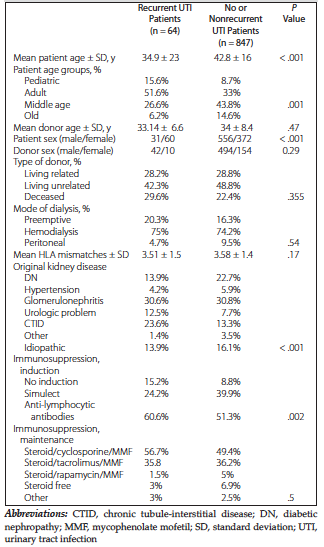
Table 1. Demographic Data of Patients in Our Study
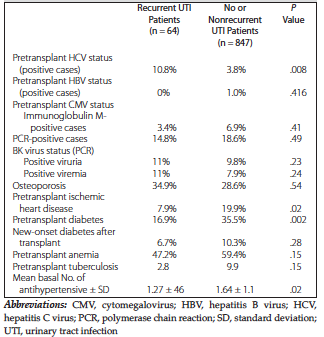
Table 2. Comorbid Conditions in Study Patients
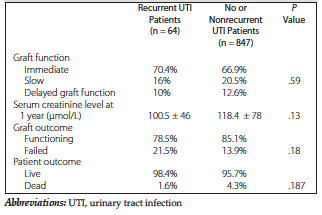
Table 3. Graft and Patient Outcomes