Volume: 14 Issue: 5 October 2016
FULL TEXT
Objectives: The optimal dose of rabbit antithymocyte globulin induction therapy in kidney transplant recipients with high immunologic risk lacks consensus. The purpose of this study was to evaluate the effect of using ideal body weight rather than total body weight for the weight-based dose calculations in this patient population.
Materials and Methods: Data were retrospectively collected on 89 adult patients who received rabbit antithymocyte globulin induction therapy for high immunologic risk kidney transplant. Hospital protocol changed from the use of cumulative rabbit antithymocyte globulin doses of 7.5 mg/kg total body weight to 7.5 mg/kg ideal body weight in 2009. Patients were separated into 2 cohorts based on the amount of rabbit antithymocyte globulin (in mg/kg total body weight) received. Rate of biopsy-proven acute rejection, patient survival, and allograft function were evaluated at 90 days and 1 year after transplant. Cost of induction therapy was also evaluated.
Results: Baseline demographics were predominantly similar between the 2 cohorts. No significant difference in maintenance immunosuppression was identified. Rates of biopsy-proven acute rejection at 90 days and 1 year were similar between ideal and total body weight cohorts (4.2% vs 0% at 90 days, P = .5; 8.7% vs 0% at 1 year, P = .13). Patient survival and allograft function were also similar. Median cost of rabbit antithymocyte globulin induction therapy per patient was lower in the ideal body weight cohort, but this difference was not statistically significant ($17 542 vs $19 934; P = .3).
Conclusions: Our results suggest that use of ideal body weight for dose calculations of rabbit antithymocyte globulin induction therapy in high immunologic risk kidney transplant recipients at 7.5 mg/kg results in low rates of acute rejection with a safety profile similar to that shown with a total body weight dosage. Use of ideal body weight for lower cumulative doses may still need further evaluation in this patient population.
Key words : Anti-rejection, Immunosuppression, Renal tranplant
Introduction
Induction therapy in the setting of renal transplant has become more prevalent over the past 2 decades, especially in patients who are at high immunologic risk for allograft rejection. The use of potent and directed agents at the time of transplant has led to decreased rates of early allograft rejection and has allowed for decreased intensity of maintenance immunosuppressive therapy.1 Although only US Food and Drug Administration-approved for treatment of acute rejection, rabbit antithymocyte globulin (rATG) has become a common agent in renal transplant induction therapy.2 Rabbit antithymocyte globulin is a polyclonal IgG that exhibits its effect primarily by depleting T lymphocytes in the blood and peripheral lymphoid tissue. The optimal regimen lacks consensus and varies based on institution protocol.3 Initially, its efficacy was shown with induction regimens involving 8 to 11 mg/kg rATG; however, more recently, dosing strategies of 6 to 7.5 mg/kg rATG have demonstrated efficacy with an improved safety profile.1,4,5 The most commonly used individual dose is 1.5 mg/kg of body weight, which is then repeated for 4 or 5 subsequent days. However, a pharmacokinetic study of rATG demonstrated that it does not distribute readily into adipose tissue, which has led to the question of whether regimens could be calculated using ideal body weight (IBW) rather than total body weight (TBW).6 Before 2012, Duke University Hospital kidney and pancreas transplant recipients with high immunologic risk would receive 1.5 mg/kg of rATG, starting intraoperatively and then followed by an additional 4 days, for a total of 7.5 mg/kg. In 2009, the regimen for rATG in this setting was changed to the use of IBW rather than TBW for dose calculations, based on the pharmacokinetic properties and a cost savings initiative.
In 2012, Tsapepas and colleagues evaluated dose variations in the setting of corticosteroid withdrawal after kidney transplant.7 One group of patients received 5 to 6 mg/kg, whereas the other received 6 mg/kg of total rATG therapy. In this retrospective analysis, the investigators found that small changes in total rATG administered appeared to significantly affect the incidence of biopsy-proven acute rejection (BPAR), resulting in 21.2% versus 11% (P = .04) in the 5 to 6 mg/kg versus 6 mg/kg groups respectively. Their conclusion was that an adequate rATG dose is associated with improved rejection-free graft survival and should be achieved for all patients.
In light of these findings, along with the changes in dosing weight protocol at Duke University Hospital, we sought to determine the effect of using IBW when calculating rATG doses on outcomes of kidney transplant recipients with high immunologic risk. In addition, there is no current literature that has evaluated the use of IBW dose strategies compared with TBW dose strategies; therefore, this investigation should provide further insight into the optimal dose strategy for rATG induction therapy.
Materials and Methods
We performed a retrospective cohort study of kidney transplant recipients with high immunologic risk who received rATG induction therapy at Duke University Hospital between January 1, 2006, and October 31, 2012. Patients were considered high immunologic risk for 1 of the following reasons: panel reactive antibody > 40%, second transplant with early graft loss, third or greater transplant, or physician discretion. Inclusion criteria for analyses included the following characteristics: (1) administration of 5 rATG doses of 1.5 mg/kg rounded to the 25 mg vial size within 7 days of transplant; (2) discharged on triple immunosuppression, including a calcineurin inhibitor (tacrolimus or cyclosporine), mycophenolate product, and steroids; and (3) age ≥ 18 years at time of transplant. Patients were excluded for the following reasons: (1) dose reduction of rATG due to leukopenia or thrombocytopenia, (2) enrollment in an interventional study, and (3) multiorgan transplant.
The electronic medical records of kidney transplant recipients with high immunologic risk who received 5 doses of rATG for induction therapy and who met the inclusion and exclusion criteria specified in the protocol were reviewed. Data were collected regarding baseline demographics, immunosuppressive medication regimens, and clinical outcomes. Baseline demographics included age, sex, race, TBW at time of transplant, IBW, height, peak panel reactive antibody, donor source, retransplant data, HLA antigen mismatch, and cold ischemia time. Ideal body weight was manually calculated based on sex and height listed at time of transplant using the following equation: 45.5 kg + 2.3 kg for each inch over 5 feet for females and 50 kg + 2.3 kg for each inch over 5 feet for males. Maintenance immunosuppressive regimens at 7 days, 30 days, 90 days, and 1 year after transplant were recorded as calcineurin inhibitor level (tacrolimus or cyclosporine), mycophenolate product dose converted to mycophenolate mofetil equivalents, and prednisone dose. Mycophenolic acid 180 mg was considered equivalent to mycophenolate mofetil 250 mg.
Clinical outcomes assessed were as follows: BPAR within the first 90 days and through 1 year after transplant, 90-day and 1-year patient survival, 90-day and 1-year allograft survival, type and severity of rejection, platelet, and white blood cell count nadirs within 10 days of transplant, renal function estimated by the abbreviated Modification of Diet in Renal Disease equation at 90 days and 1 year after transplant, rate of viral and fungal infections, and delayed graft function. In addition to clinical outcomes, the total cost of rATG induction therapy was assessed with adjustment to 2014 US dollars.
To evaluate the clinical outcomes between the TBW and IBW dose strategies, an a priori proxy marker of cumulative dose of 7.5 mg/kg TBW was determined to separate the patients into 2 groups. Patients who received cumulative doses ≥ 7.5 mg/kg TBW were placed into the TBW cohort and those who received < 7.5 mg/kg TBW were placed in the IBW cohort. The use of a proxy marker was based on the premise that the majority of kidney transplant recipients have a TBW greater than IBW. Patients who received dose reductions due to leukopenia and thrombocytopenia were excluded to assess dosing weight adjustments rather than toxicity-induced reductions. The primary endpoint was rate of first BPAR within the first 90 days after transplant.
Statistical analyses were performed using the chi-square test, the Fisher exact test, the 2-tailed t test, and the Wilcoxon rank sum test where appropriate. The study was reviewed and approved by the Duke Medicine Institutional Review Board before the study began and conformed to the ethical guidelines of the 1975 Helsinki Declaration.
Results
A total of 184 patients were identified as having received rATG within 7 days of kidney transplant between January 1, 2006, and October 31, 2012. Eighty-nine patients met the inclusion and exclusion criteria (Figure 1). Forty patients received a cumulative rATG dose of ≥ 7.5 mg/kg TBW and were assigned to the TBW cohort. Forty-nine patients received a cumulative rATG dose of < 7.5 mg/kg TBW and were assigned to the IBW cohort. Patient demographics and baseline characteristics are summarized in Table 1. The 2 groups were similar at baseline except for mean TBW, which was significantly higher in the IBW cohort. Thus, as expected, the IBW cohort group received significantly less cumulative rATG dose per TBW (6.7 vs 8.1 mg/kg TBW; P < .001). The use of expanded criteria donations were more common in the IBW cohort than in the TBW cohort (16.7% vs 9.4%; P = .7). Maintenance immunosuppression was consistent throughout the study period and is displayed in Table 2. Of 89 patients, 88 were maintained on tacrolimus at the time of discharge. One patient received sirolimus and was transitioned to tacrolimus before hospital discharge. Mean tacrolimus levels at 90 days were similar (8.8 vs 9.4 ng/mL; P = .4). Although not statistically significant, mean mycophenolate dose was less in the IBW cohort at 30 days (1792 mg vs 1931 mg; P = .07) and at 90 days (1469 mg vs 1694 mg; P = .08). No difference was seen in the prednisone dose.
For the primary endpoint of BPAR within the first 90 days, no statistically significant difference was observed between the groups; 2 episodes occurred in the IBW cohort versus no episodes in the TBW cohort (4.1% vs 0%; P = .5). In terms of severity of rejection, 1 episode was moderate acute cellular rejection (Banff 1997 grade IIB) and the other was an antibody-mediated rejection. At 1 year after transplant, the incidence of BPAR episodes was higher in the IBW cohort than in the TBW cohort (8.2% vs 0%); however, this difference was not statistically significant (P = .12). The additional rejection episodes included 1 borderline acute cellular rejection and 1 severe acute cellular rejection (Banff 1997 grade III). No statistically significant difference was seen at 90-day and 1-year mortality or with combined mortality or allograft failure between the cohorts. Clinical outcomes are displayed in Table 3.
Renal function was similar between the 2 cohorts throughout the study period. Delayed graft function occurred in 30% of the TBW cohort and 30.6% of the IBW cohort. Median renal function calculated by Modification of Diet in Renal Disease at 90 days was 53.9 mL/min in the TBW cohort and 54.5 mL/min in the IBW cohort (P = .4), with 1 year at 50.8 mL/min for TBW and 54.8 mL/min for IBW (P = .8). Cellular toxicities were similar between the TBW and IBW cohorts (mean white blood cell nadir count [109/L] of 4 vs 4.6, P = .3; mean platelet nadir count [109/L] of 118 vs 107, P = .2). Although not statistically significant, the IBW cohort had a higher incidence of polyomavirus infection at both 90 days and 1 year after transplant (16.7 % vs 10.5% at 1 y; P = .5). Between the IBW and TBW cohorts, cytomegalovirus viremia rates were similar at both 90 days (12.5% vs 5.1%; P = .3) and 1 year (37.5% vs 51.3%; P = .3). Fungal infection rates were also similar between cohorts (10.2% vs 5% at 90 d, P = .45; 14.3% vs 10% at 1 y, P = .8). Median cost of rATG induction therapy per patient was lower in the IBW cohort, but this difference was not statistically significant ($17 542 vs $19 934; P = .3) (Figure 2).
Discussion
This study is the first to compare the use of IBW with the use of TBW for calculation of rATG induction therapy dose in kidney transplant recipients with high immunologic risk. Although the IBW cohort had a higher incidence of BPAR episodes than the TBW cohort, it was not statistically different and was comparable to previous studies.4,5 The 2 cohorts were fairly well-matched in terms of age, sex, HLA antigen matching, and peak panel reactive antibody; however, some differences at baseline are of note. The total body weight of the IBW cohort was significantly higher than that of the TBW cohort (86.4 vs 75.7 kg; P = .008). In a recent observational cohort study, Curran and associates evaluated the effect of increased body mass index at time of transplant on graft outcomes and found that, in the 1151 patients evaluated, those with body mass index of ≥ 35 kg/m2 had an increased risk of BPAR versus those with a body mass index of 20 to 24.9 kg/m2 (hazard ratio 2.43; 95% confidence interval, 1.48-3.99) in an adjusted Cox proportional hazards model.8 This study is consistent with previous findings that obesity is associated with an increased risk of rejection.9 Furthermore, more patients in the IBW cohort were African American (67.3% vs 55%; P = .08), and 3 of the 4 rejections occurred in African American patients. Narayanan and associates recently demonstrated in a prospective study of 901 de novo kidney transplant recipients with immunosuppression of tacrolimus and mycophenolic acid that African Americans had an increased 1-year incidence of BPAR compared with non-African Americans (14.1% vs 7.5%; hazard ratio 1.93, 95% confidence interval, 1.19-3.09; P = .007).10 At baseline, the IBW cohort included more extended criteria donor kidney transplants than the TBW cohort (16.7% vs 9.4%; P = .7). Kim and associates evaluated the use of extended criteria donor kidney transplants (n = 42) compared with standard criteria donor kidney transplants (n = 364) at a single center and found a higher rate of 1-year rejection (23.5% vs 15.6%; P = .001).11 These data suggest that, at baseline, the IBW cohort may have been at an increased risk of rejection compared with the TBW cohort.
The tacrolimus-based maintenance immunosuppressive regimen was similar throughout the 1-year follow-up; however, the mean mycophenolate dose was less, although not statistically significant for the IBW cohort at 30 days and at 90 days but was similar at 1 year after transplant (1217 vs 1289 mg at 1 y; P = .7). Reasons for this difference may have been a higher incidence of polyomavirus detection, resulting in dose reductions, or a difference in tolerability for unknown reasons. However, in the patients who did have acute rejection, mycophenolate dose was 2000 mg daily for 3 of the 4 patients. The patient who did have severe acute cellular rejection (Banff 1997 grade III) at 240 days after transplant had a mycophenolate dose of 1000 mg daily and a tacrolimus level of < 2 ng/mL. This rejection was thought to be due to medication nonadherence.
Despite the higher incidence of BPAR in the IBW cohort, no difference was seen in renal function, graft survival, or patient survival. In addition, the IBW cohort had a higher incidence of polyomavirus infection, which is likely due to increased screening that occurred during the time period of IBW dose protocol. The other surprising result was the lack of significance in the cost difference of rATG between the 2 cohorts; however, the median was approximately $2400 less per patient in the IBW cohort. Reasons for this finding could be dose rounding to vial size, a higher TBW in the IBW cohort, and/or the small sample size did not provide enough power to show a difference.
In the setting of high-risk kidney transplant, Gurk-Turner and associates evaluated the use of rATG cumulative doses that were calculated with IBW but did not compare them to TBW-calculated doses. Patients who received > 7.5 mg/kg IBW (n = 63) had an overall 1-year incidence of BPAR episodes similar to patients who received ≤ 7.5 mg/kg IBW (n = 33) (8.8% vs 9.5%; P = .9).4 The corresponding mean cumulative rATG doses were 10.3 mg/kg IBW versus 5.7 mg/kg IBW. When this study is compared with our results, it is important to note that some distinct differences in the patient population evaluated exist. Over 70% of our patient population had a panel reactive antibody ≥ 40%, whereas this characteristic was only seen in 19% of the population in the Gurk-Turner and associates study. Furthermore, the African American population in our study was approximately 62% compared with 37% in the Gurk-Turner and associates study. Despite the differences in patient population, the overall rate of BPAR was less in our study even in both cohorts, which extends their results that cumulative doses < 7.5 mg/kg IBW provide a good efficacy and safety profile in kidney transplant recipients with high immunologic risk.
The use of even lower cumulative rATG doses has been investigated by Klem and associates, who evaluated low-exposure regimens of 4.5 mg/kg (n = 39) versus 6 mg/kg (n = 44) and found similar rates of BPAR at 1 year (10% vs 11%; P = 1).5 Dosing weight used was not specified in this study, and maintenance immunosuppression was different between the 2 groups, with the lower dose regimen being maintained more commonly on mycophenolate-based regimens compared with sirolimus-based regimens in the higher dose regimen. This patient population did have a large proportion with panel reactive antibody ≥ 20% (76%); however, it had a low proportion of African American recipients (18%). In addition, the study excluded patients who had delayed graft function, which composed 30% of our patient population. The observation that our incidence of BPAR was less than observed in the previous study despite a patient population that appears to be at higher risk of rejection suggests that the higher dose may provide more benefit, although this evaluation cannot be stated confirmatively.
A number of limitations for our study should be considered. First, the small sample size resulted in our study being underpowered to show a difference. A sample size calculation a priori demonstrated that 200 patients would be needed to show a 12.5% difference if the incidence of BPAR was 10% at baseline. Given the lower incidence of BPAR seen in the TBW cohort, an even larger sample size would have been needed to show such a difference. Second, the use of a proxy marker to determine which patients were assigned to the IBW and TBW cohorts may confound the data. It is possible that patients were dosed using TBW but due to the rounding down to the vial size resulted in the patient being assigned to the IBW cohort and vice versa. The choice to use the proxy marker rather than the date of transplant was decided before the study to eliminate issues with protocol deviation and assess the actual dose received. Of the rejections that occurred, 3 of the 4 occurred during the IBW dose protocol time period and 1 occurred before this change. Third, the retrospective single center study design does not allow us to fully evaluate any other reasons that may have led to differences in clinical outcomes.
Conclusions
In summary, the results of our study suggest that the use of IBW for calculating rATG induction therapy in kidney transplant recipients with high immunologic risk resulted in a low rate of BPAR with a safety profile similar to the TBW dose regimen. It extends the results of previous studies that have demonstrated that rATG cumulative doses of < 7.5 mg/kg IBW are safe and efficacious for a broader patient population, including those with higher panel reactive antibody and for the African American demographic group. This study also brings to light that certain patient populations may require higher cumulative doses and that further risk stratification may be necessary. Lastly, IBW dose regimens of cumulative doses < 7.5 mg/kg have yet to be fully evaluated in this high-risk population and should be used judiciously. Further study is warranted to confirm these results.
References:
-
Mourad G, Garrigue V, Squifflet JP, et al. Induction versus noninduction in renal transplant recipients with tacrolimus-based immunosuppression. Transplantation. 2001;72(6):1050-1055.
CrossRef - PubMed -
Gaber AO, Monaco AP, Russell JA, Lebranchu Y, Mohty M. Rabbit antithymocyte globulin (thymoglobulin): 25 years and new frontiers in solid organ transplantation and haematology. Drugs. 2010;70(6):691-732.
CrossRef - PubMed -
Mourad G, Morelon E, Noel C, Glotz D, Lebranchu Y. The role of Thymoglobulin induction in kidney transplantation: an update. Clin Transplant. 2012;26(5):E450-464.
CrossRef - PubMed -
Gurk-Turner C, Airee R, Philosophe B, Kukuruga D, Drachenberg C, Haririan A. Thymoglobulin dose optimization for induction therapy in high risk kidney transplant recipients. Transplantation. 2008;85(10):1425-1430.
CrossRef - PubMed -
Klem P, Cooper JE, Weiss AS, et al. Reduced dose rabbit anti-thymocyte globulin induction for prevention of acute rejection in high-risk kidney transplant recipients. Transplantation. 2009;88(7):891-896.
CrossRef - PubMed -
Bunn D, Lea CK, Bevan DJ, Higgins RM, Hendry BM. The pharmacokinetics of anti-thymocyte globulin (ATG) following intravenous infusion in man. Clin Nephrol. 1996;45(1):29-32.
PubMed -
Tsapepas DS, Mohan S, Tanriover B, et al. Impact of small variations in the delivered dose of rabbit antithymocyte induction therapy in kidney transplantation with early corticosteroid withdrawal. Transplantation. 2012;94(4):325-330.
CrossRef - PubMed -
Curran SP, Famure O, Li Y, Kim SJ. Increased recipient body mass index is associated with acute rejection and other adverse outcomes after kidney transplantation. Transplantation. 2014;97(1):64-70.
CrossRef - PubMed -
Ditonno P, Lucarelli G, Impedovo SV, et al. Obesity in kidney transplantation affects renal function but not graft and patient survival. Transplant Proc. 2011;43(1):367-372.
CrossRef - PubMed -
Narayanan M, Pankewycz O, El-Ghoroury M, et al. Outcomes in African American kidney transplant patients receiving tacrolimus and mycophenolic acid immunosuppression. Transplantation. 2013;95(4):566-572.
CrossRef - PubMed -
Kim JM, Kim SJ, Joh JW, et al. Is it safe to use a kidney from an expanded criteria donor? Transplant Proc. 2011;43(6):2359-2362.
CrossRef - PubMed

Volume : 14
Issue : 5
Pages : 511 - 517
DOI : 10.6002/ect.2015.0197
From the 1Department of Pharmacy; the 2Department of
Surgery; and the 3Department of Medicine, Duke University Hospital,
Durham, North Carolina, USA
Acknowledgements: The authors have no conflicts of interest to declare or
financial disclosures regarding the contents of this manuscript. Research
reported in this publication was supported by the National Center for Advancing
Translational Sciences of the National Institutes of Health under Award Number
UL1 TR001117. The content is solely the responsibility of the authors and does
not necessarily represent the official views of the National Institutes of
Health.
Corresponding author: Mary E Vacha, Duke University Hospital, Department
of Pharmacy, DUMC 3089, Durham, NC 27710, USA
Phone: +1 919 681 2414
Fax: +1 919 681 3895
E-mail: maryvacha@outlook.com
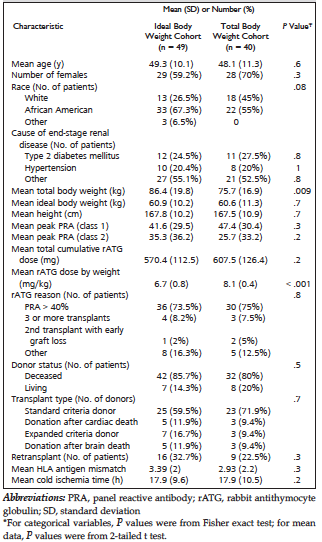 Table 1. Baseline Characteristics" style="margin-bottom: 10px; cursor: pointer">
Table 1. Baseline Characteristics
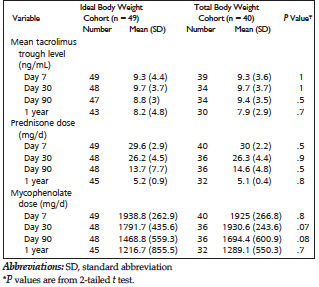
Table 2. Maintenance Immunosuppression
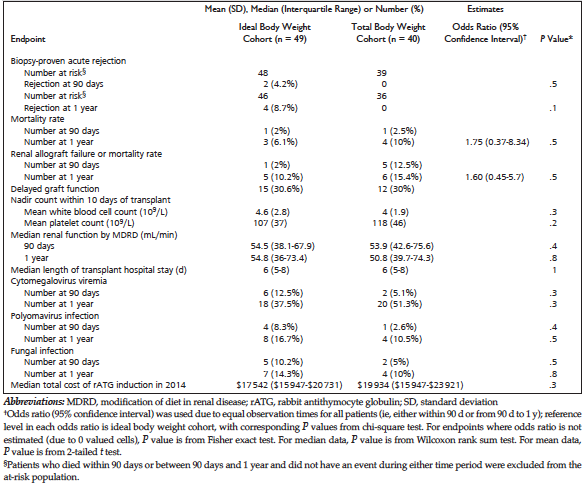
Table 3. Patient and Renal Allograft Outcomes
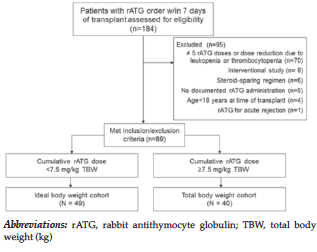
Figure 1. Flow Diagram Description of Patients Included and Excluded From the Overall Analysis
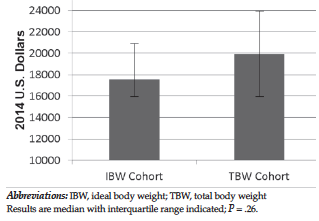
Figure 2. Total Cost of Rabbit Antithymocyte Globulin Induction Therapy in 2014 US Dollars