Volume: 14 Issue: 5 October 2016
FULL TEXT
Objectives: Intestinal perforation remains a clinical challenge and potentially lethal complication in renal transplant recipients. Immunosuppression not only places the patient at risk for intestinal perforation but also masks classic clinical symptoms and signs of acute abdominal pain, leading to delayed diagnosis and proper treatment. The aim of our study is to present the experience of our center on the treatment of intestinal perforation in renal transplant recipients.
Materials and Methods: This study reported 11 patients (0.52%) with intestinal perforation among a group of 2123 patients who received renal transplants in the Transplantation Unit at Laikon General Hospital in Athens, Greece from 1983 to August 2015.
Results: One patient died from septic shock before any surgery, and 3 patients died during the early postoperative period, resulting in a morality rate of 36.3%. All patients who died had a functioning graft. From the patients who were discharged, the mean follow-up was 16 months (range, 4-32 months).
Conclusions: Intestinal perforation after renal transplant is a major and potentially lethal complication. Clinical presentation is usually equivocal, and the transplant surgeon should be highly suspicious when treating a renal transplant recipient with acute abdominal pain, even in cases without other predisposing factors (diverticulitis, ischemic colitis, and so forth), so that this condition could be investigated and unmasked.
Key words : Diverticulitis, Immunosuppression
Introduction
Intestinal perforation (IP) after renal transplant is a major and dangerous complication. The interval time between IP and renal transplant varies from days after the transplant to years.1 Various predisposing factors leading to IP in renal transplant recipients have been suggested: immunosuppression, diverticulosis, uremia with reduced tissue strength and wound healing capacity, chronic constipation, and atherosclerotic changes of the colon.1 The symptoms and signs of IP are often absent or less impressive due to immunosuppressive therapy; steroids also impair the patient’s ability to localize or contain an abdominal infection, which can lead to delayed diagnosis and devastating clinical outcomes.1,2 Thus, there is a high mortality rate among renal transplant recipients with IP, ranging from 25% to 68%.3,4 However, recent studies have demonstrated decreased mortality ranges; this can be attributed to multiple factors such as awareness, decreased steroid use and improved antibiotics, better diagnostic tools, and earlier surgical solution.3-5
The aim of our study is to present the experience of our center on the epidemiology, clinical features, and treatment of IPs in renal transplant recipients.
Materials and Methods
From 1983 to August 2015, our Transplantation Unit at Laikon General Hospital (Athens, Greece) had 2123 patients who underwent renal transplant. Of these patients, 1069 received their grafts from deceased donors and 1054 from living-related donors. Eleven patients presented with IP, and their medical records were reviewed for age, gender, type of primary renal disease, type of renal transplant, immunosuppressive therapy, interval from transplant to colonic perforation, period between onset of symptoms and operative treatment, location of the perforation, clinical presentation, laboratory findings, type of operation, radiographic findings, and outcomes.
Additionally, we took into consideration the 3 eras of immunosuppression: (1) the azathioprine era from 1983 to the late 1980s, (2) the cyclosporine era from the late 1980s to present in which the calcineurin inhibitors cyclosporine and tacrolimus were the mainstay of recipient immunosuppression, and (3) the mammalian target of rapamycin inhibitor era starting in the year 2000.
The usual immunosuppressive regimen according to our clinic protocol was basiliximab or daclizumab induction and maintenance with methylprednisolone of 20 to 40 mg/d and dose reduction at 4 mg/d over 3 months, mycophenolate mofetil of 1000 to 2000 mg/d, and a calcineurin inhibitor such as cyclosporine (3-5 mg/kg/d) with a preferred level of a preferred level of cyclosporine of 800 to 1000 ng/mL or tacrolimus (0.05-0.1 mg/kg/d) with a preferred level of 6 to 8 ng/mL.
Results
In our unit, IP occurred in 11 patients (0.52%), with male-to-female patient ratio of 2.7/1 among 2123 renal transplant recipients. Mean age was 49 years (range, 33-65 years) at the time of perforation. Six of our patients (55%) had primary renal disease (glomerulonephritis), 2 had adult polycystic kidney disease, 2 had glomerulosclerosis, and 1 had renal hypoplasia.
Most patients (73%) received deceased donor kidney graft, with mean interval from transplant to perforation of 58 months. However, this interval had fluctuations over a wide range (5 days to 18 years).
A lack of classic signs and symptoms of IP in immunosuppressed renal transplant recipients leads to difficulties in diagnosis. Although abdominal pain was present in all of our patients with a wide variation in its severity, leukocytosis and radiographic findings pointing to perforation were lacking in 2 patients. Despite these difficulties, in most cases, the diagnosis was immediate and the patient underwent surgical treatment at the onset of symptoms. However, in 3 patients, surgical treatment was delayed from 3 to 8 days due to equivocal clinical picture.
The cause of perforation was diverticulitis in about half of the cases; however, ischemia (1 patient), tuberculosis ileitis (1 patient), perforation after colonoscopy in an ischemic background (1 patient), and spontaneous perforation (2 patients) were found as the remaining causes. Viral examination (Cytomegalovirus, varicella zoster virus, toxoplasma, Epstein-Barr virus) was negative for acute infection at the time of diagnosis.
The most common site of perforation was sigmoid colon (8 patients; 73%), with perforations of the jejunum, cecum, and terminal ileum occurring in the other 3 patients. Almost all patients who required surgical treatment had surgery, with the exception of 1 patient who died on sepsis before any therapeutic intervention.
The Hartmann procedure was performed in 7 of the 8 patients with sigmoid perforation (the other patient was the one who died before reaching surgical intervention). In 2 patients with small bowel perforation, segmental resection at the level of jejunum or terminal ileus with primary anastomosis was performed. In a patient with perforation in the cecum, right hemi-colectomy with ileotransverse anastomosis and loop ileostomy due to ischemic background were performed.
The most common immunosuppression regimen was cyclosporine, azathioprine, and methylprednisolone (50%); however, cyclosporine and methylprednisolone alone or in combination with mycophenolate mofetil were the immunosuppression regimen administered in 3 patients. Nine patients received calcineurin inhibitors (tacrolimus or cyclosporine). Three of the patients had previous acute rejection episodes (treated with ATG), and 4 patients were in chronic rejection status (diagnosis set by Modification of Diet in Renal Disease values and kidney biopsy).
The mortality rate was found to be high (36.4%); 2 patients died during the early postoperative period (30 days) due to septic shock and 1 due to multiple organ failure. One patient has remained (115th postoperative day) in the intensive care unit due to inability to wean from the ventilator. All patients who died had a functioning graft. From the patients who were discharged, the mean follow-up was 16 months (range, 4-32 months). No patient was lost during follow-up.
Table 1 summarizes the epidemiology and the clinical features of the renal transplant recipients who had IP.
Discussion
Intestinal perforation is a rare complication after renal transplant; it is estimated to occur in about 1% to 2%, according to various reports.6-8 According to Stelzner and associates,1 acute IP and chronic IP have been described as different clinical patterns. The acute pattern presents a few days or weeks after renal transplant, and it is largely attributable to diverticulitis or Cytomegalovirus.1,2,6 The chronic pattern presents years after renal transplant, and it is usually associated with diverticulitis or malignancies.1,6 In our series, most patients had the chronic form (91%), with IP related to posttransplant malignancy in only 1 patient.
Published literature has discussed many factors for IP: constipation, uremia, iatrogenic injuries, nonocclusive arterial ischemic disease, immunosuppression, and diverticulitis.1 Diverticulitis is the most frequent cause of colon perforation in renal transplant recipients.9-13 Various studies reported that the prevalence of colonic diverticulosis is significantly higher in patients with autosomal dominant polycystic kidney disease (ADPKD) than in the general population or patients on dialysis for other renal diseases.4,14-18 Prevalence rates vary from 53.5% to 83%, with the condition attributed to a congenital colonic defect or the secretory action from the renal cysts on the colonic wall.8 However, the extent of colonic diverticulitis and perforation does not seem to correlate with the primary renal disease.3
Three studies examined the incidence of progression to diverticulitis among 45 transplant recipients who were known to have diverticulosis before transplant. Diverticulitis with or without perforation occurred in 6% of patients, with 57% of these patients having ADPKD.15,19,20 In a very recent report, Scotti and associates4 described a series of 17 transplant patients with diverticular disease; 47% of these patients had ADPKD. The incidence of perforation was 1.25%, with 44% of these afflicted with ADPKD.4 In our series, although diverticulitis was the cause of perforation in half of the cases, only 2% had ADPKD.
Intestinal ischemia is a recognized complication after renal transplant. According to the literature, ischemia was the cause of IP in 15% of patients in a series of 85 cases of IP.8 Atherosclerosis and coagulation disorders are some aggravating factors in renal transplant recipients.8,21 In our series, 2 patients had ischemia as a cause for IP.
Regarding immunosuppressive agents, it is shown that steroids especially contribute to intestinal injury by decreasing connective tissue proliferation and by depressing cell-mediated immunity. Stelzner and associates1 reported that the incidence and outcome of IP were associated with intensity of immunosuppression. Patients who were exposed to a mean daily dose of corticosteroids that was 3 times higher were more likely to have a fatal outcome versus those who did not.1 Corticosteroids are now being used at lower doses or are being used only during the immediate postoperative period. The introduction of cyclosporine virtually revolutionized the field of renal transplant. Nevertheless, there has not been a lower incidence of major gastrointestinal complication despite the lower doses of methylprednisolone.3,8 The role of toxic tacrolimus levels contributing to IP is not clear. It is associated with diarrhea rather than constipation or obstruction.19 In our series, almost all patients (90%) were on calcineurin inhibitors at the time of IP, and all patients received corticosteroids according to our clinic immunosuppression protocol.
Immunosuppression can hide the typical symptoms and signs of perforation; steroids inhibit some pyrogenic interleukins and pain-inducing prostaglandins. Such patients may even be totally asymptomatic. Abdominal pain (96%), fever with or without chills (69%), and abdominal tenderness (80%) are the more common symptoms.22-24 Other more rare symptoms include diarrhea, constipation, nausea, vomiting, and rectal bleeding.22,23 All of our patients presented with abdominal pain, 40% had fever, and 30% had abdominal tenderness. The radiologic evaluation usually starts with radiographs, with the typical finding being the presence of free intra-abdominal air. Seven of our patients revealed pneumoperitoneum on radiographic imaging. In the literature, pneumoperitoneum is found in approximately 80% of patients with IP.24,25 However, a computed tomography scan should be required to establish the diagnosis.25
Perforation occurs more often in the sigmoid colon but can also occur in the midsigmoid region, cecum, transverse colon, and descending colon.14,26 A right side colon perforation after renal transplant is rare.6 Half of the patients in the series reported by Puglisi and associates25 showed the sigmoid colon as the perforation site. In our series, the most common site of perforation was also the sigmoid colon (70%).
Because of the possibility of resulting in a life-threatening condition, there is a need for aggressive prevention, including work-up for colonic diverticulosis (colonoscopy or barium enema); further elective colectomy in patients with diverticulosis who will undergo kidney transplant is inevitable.27 Scotti and associates4 suggested elective surgery and highlighted the need for abdominal computed tomography in patients who present with fever and abdominal pain, even if mild; these symptoms should prompt a high index of suspicion for early diagnosis and timely surgical treatment.
The optimal surgical approach for complicated colonic disease remains controversial. The lack of bowel preparation, resulting in intraluminal and intraperitoneal fecal contamination at the anastomotic site, is a significant problem when approaching the surgical technique. The most commonly used technique for a perforated sigmoid colon is the Hartmann procedure, which is especially used for cases of severely infected peritonitis.28 Scotti and associates4 used the Hartmann procedure in a series of 9 cases of perforated diverticulitis. Patient outcomes showed 0% mortality rate at 5-year follow-up.4 The primary anastomosis had not been performed to avoid the consequences of an anastomotic leak. However, the Hartmann procedure is often permanent and has frequent complications, and the morbidity associated with restoration of the intestinal continuity is high.3,28
Other techniques have also been used, such as resection and primary anastomosis with or without ileostomy. Golda and associates28 compared the surgical techniques and outcomes in immunosuppressed patients (79.2% had the Hartmann procedure) versus immunocompetent patients (61.9% had resection and primary anastomosis without ileostomy) undergoing surgery for perforated diverticulitis. Their outcomes suggested worse postoperative morbidity and mortality and higher rates of septic complications in immunosuppressed patients, in agreement with other studies.10-12,23 In their series, the mortality rate in immunosuppressed patients was 26.4% (28.1% for those having the Hartmann procedure versus 3.4% in those having resection and primary anastomosis with or without ileostomy) higher than the rate shown in the general population (6.3%), with rates in agreement with the literature (20%-23% for immunosuppressed vs 3% in immunocompromised patients).10-12,28-32 In our series, 60% of patients had the Hartmann procedure, with 2 deaths due to sepsis.
Before 1980, the reported mortality rate after perforation was very high.28-32 However, a number of factors such as improved awareness, improved radiologic imaging, early antibiotics, aggressive surgical intervention, and steroid-sparing immunosuppressant regimens lead to a pattern of decreasing mortality with time.
Sarkio and associates5 in a similar series of 18 IPs (spontaneous and iatrogenic) presented a mortality rate of 25%. The mean time of perforation after treatment was 5 months (early posttransplant period), which is different from our data where perforations were a late posttransplant complication.5 Table 2 summarizes current literature trends about the mortality rates after IP in renal transplant recipients.
Conclusions
Intestinal perforation after renal transplant is a major and potentially lethal complication. Immunosuppression, diverticulitis, and uremia are suspected as the main causes for this complication. Clinical presentation is usually equivocal, and the transplant surgeon should be highly suspicious when treating a renal transplant recipient with acute abdominal pain, even when other predisposing factors are present (diverticulitis, ischemic colitis), so that the condition can be investigated and unmasked.
References:
- Stelzner M, Vlahakos DV, Milford EL, Tilney NL. Colonic perforations
after renal transplantation. J Am Coll Surg. 1997;184(1):63-69.
PubMed - Church JM, Fazio VW, Braun WE, Novick AC, Steinmuller DR. Perforation of
the colon in renal homograft recipients. A report of 11 cases and a review
of the literature. Ann Surg. 1986;203(1):69-76.
CrossRef - PubMed - Dalla Valle R, Capocasale E, Mazzoni MP, et al. Acute diverticulitis
with colon perforation in renal transplantation. Transplant Proc.
2005;37(6):2507-2510.
CrossRef - PubMed - Scotti A, Santangelo M, Federico S, et al. Complicated diverticulitis in
kidney transplanted patients: analysis of 717 cases. Transplant Proc.
2014;46(7):2247-2250.
CrossRef - PubMed - Sarkio S, Halme L, Kyllonen L, Salmela K. Severe gastrointestinal
complications after 1,515 adult kidney transplantations. Transpl Int.
2004;17(9):505-510.
CrossRef - PubMed - Gachoka DN, Yu S, Kaw D. Caecum perforation after renal transplantation:
a case report and review of literature. Int Urol Nephrol.
2014;46(6):1141-1144.
CrossRef - PubMed - Bardaxoglou E, Maddern G, Ruso L, et al. Gastrointestinal surgical
emergencies following kidney transplantation. Transpl Int.
1993;6(3):148-152.
CrossRef - PubMed - Parnaby CN, Barrow EJ, Edirimanne SB, Parrott NR, Frizelle FA, Watson
AJ. Colorectal complications of end-stage renal failure and renal
transplantation: a review. Colorectal Dis. 2012;14(4):403-415.
CrossRef - PubMed - Catena F, Ansaloni L, Gazzotti F, et al. Gastrointestinal perforations
following kidney transplantation. Transplant Proc. 2008;40(6):1895-1896.
CrossRef - PubMed - Perkins JD, Shield CF, 3rd, Chang FC, Farha GJ. Acute diverticulitis.
Comparison of treatment in immunocompromised and nonimmunocompromised
patients. Am J Surg. 1984;148(6):745-748.
CrossRef - PubMed - Tyau ES, Prystowsky JB, Joehl RJ, Nahrwold DL. Acute diverticulitis. A
complicated problem in the immunocompromised patient. Arch Surg.
1991;126(7):855-858.
CrossRef - PubMed - Qasabian RA, Meagher AP, Lee R, Dore GJ, Keogh A. Severe diverticulitis
after heart, lung, and heart-lung transplantation. J Heart Lung Transplant.
2004;23(7):845-849.
CrossRef - PubMed - Koneru B, Selby R, O'Hair DP, Tzakis AG, Hakala TR, Starzl TE.
Nonobstructing colonic dilatation and colon perforations following renal
transplantation. Arch Surg. 1990;125(5):610-613.
CrossRef - PubMed - Dominguez Fernandez E, Albrecht KH, Heemann U, et al. Prevalence of
diverticulosis and incidence of bowel perforation after kidney
transplantation in patients with polycystic kidney disease. Transpl Int.
1998;11(1):28-31.
CrossRef - PubMed - McCune TR, Nylander WA, Van Buren DH, et al. Colonic screening prior to
renal transplantation and its impact on post-transplant colonic
complications. Clin Transplant. 1992;6(2):91-96.
PubMed - Scheff RT, Zuckerman G, Harter H, Delmez J, Koehler R. Diverticular
disease in patients with chronic renal failure due to polycystic kidney
disease. Ann Intern Med. 1980;92(2 Pt 1):202-204.
CrossRef - PubMed - Sharp CK, Zeligman BE, Johnson AM, Duley I, Gabow PA. Evaluation of
colonic diverticular disease in autosomal dominant polycystic kidney disease
without end-stage renal disease. Am J Kidney Dis. 1999;34(5):863-868.
CrossRef - PubMed - Lederman ED, McCoy G, Conti DJ, Lee EC. Diverticulitis and polycystic
kidney disease. Am Surg. 2000;66(2):200-203.
PubMed - Mayer AD, Dmitrewski J, Squifflet JP, et al. Multicenter randomized
trial comparing tacrolimus (FK506) and cyclosporine in the prevention of
renal allograft rejection: a report of the European Tacrolimus Multicenter
Renal Study Group. Transplantation. 1997;64(3):436-443.
CrossRef - PubMed - Pourfarziani V, Mousavi-Nayeeni SM, Ghaheri H, et al. The outcome of
diverticulosis in kidney recipients with polycystic kidney disease.
Transplant Proc. 2007;39(4):1054-1056.
CrossRef - PubMed - Dee SL, Butt K, Ramaswamy G. Intestinal ischemia. Arch Pathol Lab Med.
2002;126(10):1201-1204.
PubMed - Benoit G, Moukarzel M, Verdelli G, et al. Gastrointestinal complications
in renal transplantation. Transpl Int. 1993;6(1):45-49.
CrossRef - PubMed - Pirenne J, Lledo-Garcia E, Benedetti E, et al. Colon perforation after
renal transplantation: a single-institution review. Clin Transplant.
1997;11(2):88-93.
PubMed - Hwang SS, Cannom RR, Abbas MA, Etzioni D. Diverticulitis in transplant
patients and patients on chronic corticosteroid therapy: a systematic
review. Dis Colon Rectum. 2010;53(12):1699-1707.
CrossRef - PubMed - Puglisi BS, Kauffman HM, Stewart ET, Dodds WJ, Adams MB, Komorowski RA.
Colonic perforation in renal transplant patients. AJR Am J Roentgenol.
1985;145(3):555-558.
CrossRef - PubMed - Carson SD, Krom RA, Uchida K, Yokota K, West JC, Weil R, 3rd. Colon
perforation after kidney transplantation. Ann Surg. 1978;188(1):109-113.
CrossRef - PubMed - Reshef A, Stocchi L, Kiran RP, et al. Case-matched comparison of
perioperative outcomes after surgical treatment of sigmoid diverticulitis in
solid organ transplant recipients versus immunocompetent patients.
Colorectal Dis. 2012;14(12):1546-1552.
CrossRef - PubMed - Golda T, Kreisler E, Mercader C, Frago R, Trenti L, Biondo S. Emergency
surgery for perforated diverticulitis in the immunosuppressed patient.
Colorectal Dis. 2014;16(9):723-731.
CrossRef - PubMed - Lederman ED, Conti DJ, Lempert N, Singh TP, Lee EC. Complicated
diverticulitis following renal transplantation. Dis Colon Rectum.
1998;41(5):613-618.
CrossRef - PubMed - Squiers EC, Pfaff WW, Patton PR, Howard RJ. Early posttransplant colon
perforation: does it remain a problem in the cyclosporine era? Transplant
Proc. 1991;23(2):1782-1784.
PubMed - Nghiem DD, Corry RJ. Colorectal perforation in renal transplant
recipients. Am Surg. 1983;49(10):554-557.
PubMed - Guice K, Rattazzi LC, Marchioro TL. Colon perforation in renal
transplant patients. Am J Surg. 1979;138(1):43-48.
CrossRef - PubMed

Volume : 14
Issue : 5
Pages : 497 - 502
DOI : 10.6002/ect.2015.0282
From the Transplantation Unit, Laikon General Hospital, Athens, Greece
Acknowledgements: The authors report no conflicts of interest and
received no financial support in relation to this article. The paper is not
based on a previous communication or society or meeting presentation.
*Kyriaki Kakavia and Demetrios Moris contributed equally to this work.
Corresponding author: Demetrios N Moris, Anastasiou Gennadiou 56, 11474
Athens, Greece
Phone: +30 210 644 0590
E-mail: dimmoris@yahoo.com
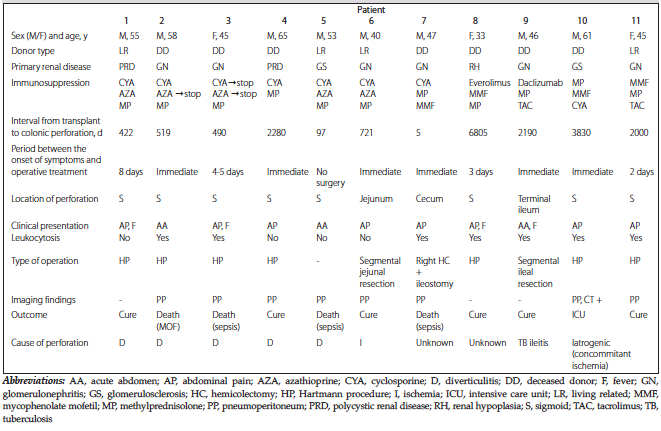
Table 1. Clinical Data and Outcomes for the 11 Transplant Recipients Who Developed Spontaneous Bowel Perforation
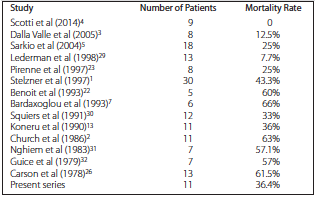
Table 2. Mortality Rates After Intestinal Perforation in Renal Transplant Recipients