Volume: 14 Issue: 3 June 2016
FULL TEXT
Objectives: Hyperparathyroidism, a frequent complication of chronic kidney disease, persists after renal transplant. Our aims were to examine the status of parathyroid hormone levels and to determine the clinical and biochemical risk factors of persistent hyperparathyroidism after transplant.
Materials and Methods: Our study included 44 pediatric renal transplant recipients with stable graft function. Median follow-up after transplant was 17.5 months (range, 12-126 mo). Patients did not receive routine vitamin D or calcium supplements after transplant, and none had undergone previous parathyroidectomy. Bone mineral densitometry of the lumbar spine was measured.
Results: Fifteen patients (34%) had parathyroid hormone levels greater than 70 pg/mL (normal range, 10-70 pg/mL). Duration of dialysis before transplant was longer in patients with persistent hyperparathyroidism. Mean serum bicarbonate levels were significantly lower in patients with persistent hyperparathyroidism than in patients without persistent hyperparathyroidism after transplant. A significant negative correlation was noted between parathyroid hormone level and serum bicarbonate level. Another significant negative correlation was shown between parathyroid hormone level and z score.
Conclusions: We found that persistent hyperparathyroidism is related to longer dialysis duration, lower serum bicarbonate level, and lower z score. Pretransplant dialysis duration is an important predictor of persistent hyperparathyroidism. Early identification of factors that contribute to persistent hyperparathyroidism after transplant could lead to treatment strategies to minimize or prevent its detrimental effects on bone health and growth in pediatric transplant recipients.
Key words : Bone mineral densitometry, Calcineurin inhibitors, Hypercalcemia
Introduction
Disturbances in mineral and bone metabolism are common in patients with chronic kidney disease. Patients with chronic kidney disease almost always develop secondary hyperplasia of the parathyroid glands, resulting in elevated blood levels of parathyroid hormone (PTH).1 Successful renal transplant represents the best available option to correct metabolic abnormalities in both adult and pediatric uremic patients. Nevertheless, successful renal transplant corrects the many metabolic abnormalities that occur with chronic kidney disease; however, even in patients with optimally functioning grafts, bone mineral metabolism disorders that developed before transplant can persist or even worsen if neglected or left untreated.2 About 45% to 50% of patients have persistence of secondary hyperparathyroidism at 1 year after successful transplant.3 The severity of posttransplant secondary hyperparathyroidism may range from an asymptomatic state of “inappropriate parathyroid hormone secretion,” to a more critical situation of refractoriness of parathyroid glands, to any form as a result of medical treatment, known as tertiary hyperparathyroidism. Previous studies in adult renal transplant recipients have suggested that the duration of dialysis treatment and the development of nodular and/or monoclonal hyperplasia of parathyroid glands are the most important factors determining the degree of secondary hyperparathyroidism after renal transplant.4 Chronic steroid treatment, “pulse” steroid therapy for acute rejection, calcineurin inhibitors, hyperlipidemia, and obesity are reported as additional factors.3 Our aim was to examine PTH levels in children after transplant and to determine the clinical and biochemical risk factors of persistent hyperparathyroidism.
Materials and Methods
Our study included 44 pediatric renal transplant recipients (24 girls and 20 boys) with stable graft function. Patients with any underlying musculoskeletal disorders (osteoarthritis, ankylosing spondylitis) unrelated to chronic kidney disease, dysfunction of the transplanted kidney (determined by a glomerular filtration rate of < 60 mL/1.73 m2 body surface area/min), incomplete records, or who were < 6 months posttransplant were excluded. Four patients with musculoskeletal disorders, 5 patients with transplant dysfunction, and 2 patients with incomplete records were excluded. Patients did not receive routine vitamin D or calcium supplements after transplant, and none had undergone previous parathyroidectomy. Information about age at transplant, number of transplants, graft survival, whether the kidney was from a deceased or living donor, immunosuppressive drugs, modality and duration of dialysis, and causes of renal failure were recorded.
The immunosuppressive protocol for pediatric renal transplant recipients consisted of prednisolone, calcineurin inhibitor (cyclosporine or tacrolimus), and mycophenolate mofetil. Twenty-nine patients were treated with cyclosporine and 15 patients with tacrolimus. Oral prednisolone (1.5 mg/kg/d) was administered postoperatively and then tapered to 10 mg/day at 1 month after surgery.
An early-morning fasting blood sample was obtained from patients to measure intact PTH, serum calcium, phosphorus, alkaline phosphatase, bicarbonate, creatinine, and calcineurin inhibitor levels. Intact PTH serum concentrations were assessed using a chemiluminescent immunoassay system (Immulite, Bayer-Siemens, NY, USA) (normal range, 10-70 pg/mL). Hyperparathyroidism after transplant was defined as an intact parathyroid hormone level exceeding the upper limit of the normal range for the assay employed in our laboratory (> 70 pg/mL). Glomerular filtration rate was calculated using serum creatinine and urine creatinine levels measured at 24-hour urine collection. Fractional excretion of sodium, tubular phosphate reabsorption, urinary calcium excretion, and urine and plasma anion gap were calculated. All serum and urine parameters were measured by standard automated methods.
In our patients, bone mineral density was measured by dual energy x-ray absorptiometry, using a Hologic QDR-4500A (Hologic, Bedford, MA, USA), with measurements taken at the lumbar spine. The instrument was equipped with specialized software that can adjust all measured scales for pediatric bone densitometry to determine. For our analyses, z scores were matched for age, sex, and body mass index.
Statistical analyses were performed with SPSS-11 software (SPSS: An IBM Company, version 1.0, IBM Corporation, Armonk, NY, USA). A P value < .05 indicated statistical significance.
Results
Patient characteristics
Median age of patients was 15.8 years (range, 6-20 y) at the time of transplant.
Mean duration of dialysis before transplant was 46.8 ± 31.7 months. In our study
group, 31 patients received a related living-donor allograft and 13 patients
received the allograft from a deceased donor. Median follow-up after transplant
was 17.5 months (range, 12-126 mo). In our patients, mean glomerular filtration
rate was 90.26 ± 29.78 mL/1.73 m2 body surface area/min. Only 2
patients had acidic pH values. Demographic data of patients are shown in Table
1.
Parathyroid hormone levels and other laboratory findings
Persistent hyperparathyroidism was shown in 15 patients (34%). We compared
demographic and laboratory parameters of patients with and without persistent
hyperparathyroidism after transplant. Both groups were similar for age at
transplant, sex, dialysis modality, allograft source, and pretransplant PTH
level. No patient in either group had graft rejection. Duration of dialyses
before transplant was longer in patients with persistent hyperparathyroidism
(36.81 ± 21.50 mo vs 28.44 ± 19.30 mo; P < .05) (Table 2).
We found no relation between posttransplant PTH levels and glomerular filtration rate, steroid doses, fractional excretion of sodium, and tubular phosphate reabsorption. Mean serum calcium, phosphate, and alkaline phosphatase levels were similar in patients with high and normal PTH levels. In the study patients, serum calcium levels were hypercalcemic (> 10.2 mg/dL) in 9 patients (20.4%), with 1 of these patients having hypercalciuria and 2 having persistent hyperparathyroidism. None of the patients had hypophosphatemia, although tubular phosphate reabsorption values were under 85% in 5 patients.
When serum bicarbonate levels were analyzed in the 9 hypercalcemic patients, levels were > 22 mmol/L in 5 patients, < 18 mmol/L in 2 patients, and between 18 and 22 mmol/L in 2 patients. The 2 patients who had serum bicarbonate levels < 18 mmol/L had acidosis. All other patients showed normal bicarbonate levels. Mean serum bicarbonate levels were significantly lower in patients with persistent hyperparathyroidism (18.9 ± 3.01 mmol/L) versus that shown in those without (21.8 ± 3.49 mmol/L; P < .05) (Table 3). A significant negative correlation was noted between PTH level and serum bicarbonate level (r = -0.30, P = .044) (Figure 1).
Mean z scores (-2.59 ± 1.73 vs -1.82 ± 1.17; P > .05) and mean bone mass density percentage (74.92 ± 14.80% vs 80.20 ± 12.70%; P > .05) were similar in patients with high and normal PTH levels. A significant negative correlation was shown between PTH level and z score (r = -0.31, P = .038) (Figure 2).
We found a significant positive correlation between intact PTH levels and serum tacrolimus levels (r = 0.23, P = .048); however, no relation was shown between cyclosporine and intact PTH levels. A significant correlation was not shown between z score and cyclosporine or tacrolimus level.
Discussion
Most patients undergoing renal transplant have preexisting renal osteodystrophy.5 Successful renal transplant normalizes metabolic and endocrine abnormalities, and it rapidly induces a partial reversibility of secondary hyperparathyroidism in patients with a mild or moderate form.6 The rise in biochemical bone parameters between 3 and 5 months occurs regardless of graft function, with normalization achieved only 1 year after transplant.7
About 45% to 50% of patients have secondary hyperparathyroidism 1 year after successful transplant.3 In our study group, in which median follow-up after transplant was 17.5 months, we found persistent hyperparathyroidism in 34% of our patients after successful transplant.
Several factors influence intact PTH levels after transplant, including age, sex, underlying renal disease, duration of dialysis, severity of preexisting hyperparathyroidism, and exposure to high doses of glucocorticoids and calcineurin inhibitors.5 In our study, patients with and without persistent hyperparathyroidism were similar regarding age at transplant, sex, dialysis modality, allograft source (living or deceased donor), and pretransplant PTH level. No patients had allograft rejection, and patients were not exposed to high doses of glucocorticoids.
Normal parathyroid cells are characterized by an extremely low turnover rate. In chronic renal failure, the increase in parathyroid mass is mainly due to enhanced cell proliferation and not cell hypertrophy. Slow development of hyperplasia in the parathyroid glands could explain the slow evolution of secondary hyperparathyroidism in patients on long-term dialysis before transplant. The parathyroid gland mass progressively grows over time in patients undergoing long-term dialysis. Time until regression of parathyroid hyperplasia after transplant is mainly related to the parathyroid gland mass.8 This outcome was confirmed by our findings. We demonstrated that patients with persistent hyperparathyroidism had a longer duration of dialysis before transplant.
Stempfle and associates showed that high-dose tacrolimus-based immunosuppression is associated with rapid bone loss. They concluded that the effects of tacrolimus on bone mineral density may be related to secondary hyperparathyroidism.9 We found a significant positive correlation between intact PTH levels and serum tacrolimus level, but a similar relation between cyclosporine and intact PTH levels could not be demonstrated. It has been suggested that cyclosporine increases bone turnover by inhibiting antiresorptive cytokines.10 However, a recent study in renal transplant did not support an adverse effect of cyclosporine on bone mass because cyclosporine monotherapy did not reduce bone mineral density 12 to 18 months after transplant.11 Our median follow-up after transplant was only 17.5 months, which could be why no correlation between cyclosporine and intact PTH levels was shown. Although no significant correlation was shown between z score and cyclosporine or tacrolimus levels, recent studies have demonstrated that there is less bone loss with tacrolimus than with cyclosporine.12 This finding agreed with the evidence about cyclosporine’s effect on bone loss. In our study, we could not show a statistically significant difference between mean z scores and mean percent bone mineral density between patients with and without persistent hyperparathyroidism; however, patients with persistent hyperparathyroidism had worse mean z score.
Persistent hyperparathyroidism after renal transplant is often complicated by overt hypercalcemia.13 In our study, serum calcium levels were hypercalcemic in 9 patients; however, only 2 of these patients had persistent hyperparathyroidism. It is well known that chronic metabolic acidosis stimulates calcium efflux from bone. The negative calcium balance observed in acidotic patients is due to calcium mobilization from bone, which can result in hypercalciuria.14 One of the 9 patients had hypercalciuria. We were not able to find a clear cause of the hypercalcemia in 7 of these 9 patients.
It has been found that high levels of intact PTH could increase urinary bicarbonate excretion, possibly resulting in systemic acidosis. Alkalosis may stimulate intact PTH secretion, and intact PTH may act directly on the renal tubule to lower bicarbonate reabsorption. Therefore, lowered bicarbonate reabsorption may be a consequence of stimulation of intact PTH secretion.15 Our finding of a negative correlation between PTH and serum bicarbonate levels agrees with these recent findings.
Our study revealed a relatively high prevalence of hyperparathyroidism in pediatric renal transplant recipients, suggesting a need to include periodic screening for these patients to facilitate early diagnosis. We also demonstrated that hyperparathyroidism causes lower serum bicarbonate levels. Our study suggested that pretransplant dialysis duration is an important predictor of persistent hyperparathyroidism; therefore, it is essential to treat hyperparathyroidism during dialysis. Early identification of the factors that contribute to persistent hyperparathyroidism after transplant may lead to development of treatment strategies to minimize or prevent its detrimental effects of persistent hyperparathyroidism on bone health and growth in pediatric transplant recipients.
References:
- National Kidney F. K/DOQI clinical practice guidelines for bone
metabolism and disease in chronic kidney disease. Am J Kidney Dis. 2003;42(4
Suppl 3):S1-201.
PubMed - Torres A, Lorenzo V, Salido E. Calcium metabolism and skeletal problems
after transplantation. J Am Soc Nephrol. 2002;13(2):551-558.
PubMed - Leca N, Laftavi M, Gundroo A, et al. Early and severe
hyperparathyroidism associated with hypercalcemia after renal transplant
treated with cinacalcet. Am J Transplant. 2006;6(10):2391-2395.
CrossRef - PubMed - Koch Nogueira PC, David L, Cochat P. Evolution of secondary
hyperparathyroidism after renal transplantation. Pediatr Nephrol.
2000;14(4):342-346.
CrossRef - PubMed - Sprague SM. Mechanism of transplantation-associated bone loss. Pediatr
Nephrol. 2000;14(7):650-653.
CrossRef - PubMed - Bonarek H, Merville P, Bonarek M, et al. Reduced parathyroid functional
mass after successful kidney transplantation. Kidney Int.
1999;56(2):642-649.
CrossRef - PubMed - Reinhardt W, Bartelworth H, Jockenhovel F, et al. Sequential changes of
biochemical bone parameters after kidney transplantation. Nephrol Dial
Transplant. 1998;13(2):436-442.
CrossRef - PubMed - Drueke TB. Cell biology of parathyroid gland hyperplasia in chronic
renal failure. J Am Soc Nephrol. 2000;11(6):1141-1152.
PubMed - Stempfle HU, Werner C, Siebert U, et al. The role of tacrolimus
(FK506)-based immunosuppression on bone mineral density and bone turnover
after cardiac transplantation: a prospective, longitudinal, randomized,
double-blind trial with calcitriol. Transplantation. 2002;73(4):547-552.
CrossRef - PubMed - Montalban C, de Francisco AL, Marinoso ML, et al. Bone disease in
long-term adult kidney transplant patients with normal renal function.
Kidney Int Suppl. 2003(85):S129-132.
CrossRef - PubMed - Torregrosa JV, Campistol JM, Montesinos M, Pons F, Martinez de Osaba MJ.
Evolution of bone mineral density after renal transplantation: related
factors. Nephrol Dial Transplant. 1995;10 Suppl 6:111-113.
CrossRef - PubMed - Bia M. Evaluation and management of bone disease and fractures post
transplant. Transplant Rev (Orlando). 2008;22(1):52-61.
CrossRef - PubMed - Messa P, Sindici C, Cannella G, et al. Persistent secondary
hyperparathyroidism after renal transplantation. Kidney Int.
1998;54(5):1704-1713.
CrossRef - PubMed - Ingulli E, Mistry K, Mak RHK. Acid-base homeostasis. In: Avner ED,
Harmon WE, Niaudet P, Yoshikawa N, eds. Pediatric Nephrology. 6th ed.
Heidelberg, Germany: Springer 2009;205-230.
CrossRef - Crumb CK, Martinez-Maldonado M, Eknoyan G, Suki WN. Effects of volume
expansion, purified parathyroid extract, and calcium on renal bicarbonate
absorption in the dog. J Clin Invest. 1974;54(6):1287-1294.
CrossRef - PubMed

Volume : 14
Issue : 3
Pages : 294 - 298
DOI : 10.6002/ect.2014.0157
From the 1Pediatric Nephrology Department, and the 2General
Surgery Department, Baskent University, Ankara, Turkey
Acknowledgements: The authors declare that they have no sources of
funding for this study, and they have no conflicts of interest to declare. The
authors are solely responsible for the content and writing of the paper.
Corresponding author: Kaan Gulleroglu, Baskent University, Pediatric
Nephrology Department, 54 Cadde No: 72/3, Bahcelievler Cankaya, Ankara, Turkey
06490
Phone: +90 532 647 2268
Fax: +90 312 215 7597
E-mail:
kaangulleroglu@yahoo.com
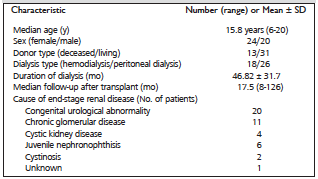
Table 1. Patient Characteristics
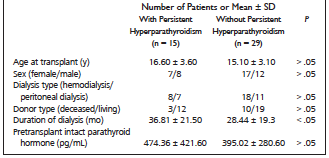
Table 2. Characteristics of Patients With and Without Persistent Hyperparathyroidism After Transplant
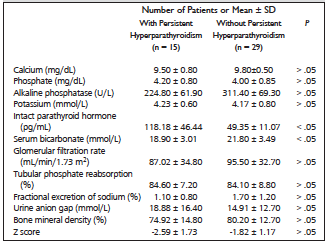
Table 3. Laboratory Values of Patients With and Without Persistent Hyperparathyroidism After Transplant
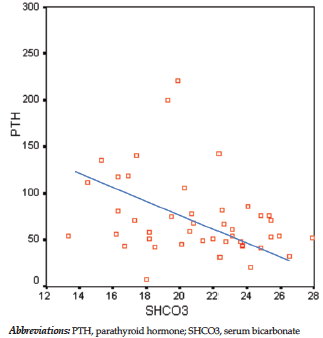
Figure 1. Correlation Between Parathyroid Hormone Level and Serum Bicarbonate Level
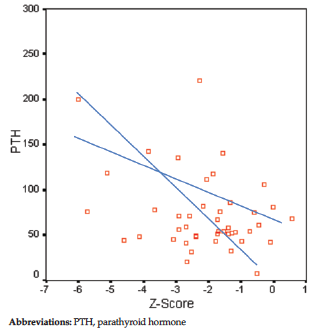
Figure 2. Correlation Between Parathyroid Hormone Level and Serum Bicarbonate Level