Volume: 14 Issue: 3 June 2016
FULL TEXT
Objectives: The study objective was to investigate the predictability and risk factors for the development of new-onset type 2 diabetes mellitus after transplant in the Saudi population.
Materials and Methods: This was a retrospective observational cohort study in adult kidney transplant recipients who developed new-onset type 2 diabetes mellitus after transplant. Patients with and without new-onset type 2 diabetes mellitus after transplant were compared for demographic factors, blood glucose levels at 4-hour intervals for 24 hours after transplant, and serum creatinine levels at 6 and 12 months after transplant.
Results: Of 279 patients included in our study, 15.5% developed new-onset type 2 diabetes mellitus after a mean follow-up of 4.6 ± 2.1 years after transplant. Patients with new-onset type 2 diabetes mellitus after transplant were significant older (P = .001), had a higher body mass index (P = .001), and had higher fasting blood glucose levels 24 hours after transplant (P = .03). No significant differences were observed regarding sex, transplant type, or serum creatinine levels at 6 and 12 months. Risk factors for new-onset type 2 diabetes mellitus after transplant are body mass index (P = .001; relative risk of 1.26), fasting blood glucose at 24 hours (P = .001; relative risk of 1.3), age (P = .001; relative risk of 1.44), and family history of diabetes mellitus (P = .001; relative risk of 31.3).
Conclusions: Risk factors for developing new-onset type 2 diabetes mellitus were age, heavier weight, body mass index, family history of diabetes mellitus, and having higher fasting blood glucose levels 24 hours after transplant, with family history of diabetes mellitus being an especially very high significant risk factor.
Key words : NODAT, Saudi, Risk
Introduction
New-onset type 2 diabetes mellitus after transplant (NODAT) develops in about 20% to 25% of patients who receive a kidney graft.1 The reported causes are multifactorial and include family history of diabetes mellitus, body mass index (BMI), rapid weight gain over the first 12 months after transplant, dose and type of immunosuppressive drugs given, male donors, and positive hepatitis C virus status.2
New-onset type 2 diabetes mellitus after transplant has been reported to be associated with a higher risk of mortality (especially cardiovascular related) and higher risk of graft failure, including failure due to diabetic nephropathy arising with NODAT.1-5 However, other reports did not find that an increased risk of graft loss after development of NODAT.1 One reason for this discrepancy may be due to the length of follow-up in the different studies.
Graft loss due to diabetic nephropathy can occur rather quickly after onset of NODAT. We have described 3 cases of NODAT, where nodular sclerosis and diffuse glomerulosclerosis led to graft failure within 5 years of transplant.6
The criteria for diagnosis of NODAT has been established by recent guidelines, which basically recommended that NODAT diagnoses follow World Health Organization and American Diabetes Association criteria for diagnosing diabetes in the general population.7
Although many of the risk factors in the development of NODAT have been determined, there is still a need to have a practical tool, with a reasonable degree of sensitivity and specificity, that could predict the development of NODAT early. Clearly, the earlier one can predict NODAT development, the quicker preventive, diagnostic, and therapeutic measures can be implemented.
Blood glucose levels do go up transiently and to varying degrees in the immediate posttransplant period as a result of operative stress and steroids, which are routinely administered during the surgical procedure. We hypothesized that the degree of the rise in such circumstances may also be a useful tool for the prediction of NODAT.
Therefore, this study was designed to determine whether the serum glucose levels in the immediate posttransplant period could be an independent risk factor alone or in combination with other confounding factors in the development of NODAT.
Materials and Methods
This was a retrospective observational cohort study. All adult patients transplanted in our center between January 2004 and January 2013 were included, provided that they had no history or evidence of pretransplant type 2 diabetes mellitus. Patients who lost their graft within 12 months of transplant were also excluded.
Data collected included age, sex, family history of diabetes mellitus, BMI, and the type of transplant. Fasting blood glucose (FBG) levels during pretransplant work-up and at 24 hours after transplant were recorded. Also recorded was the highest level of FBG reached during the first 24 hours after the transplant procedure, measured every 4 hours over that period. Fasting blood glucose levels at 6 months and 12 months after transplant were also recorded. Body mass index and weight measurements at 12 months were recorded. Serum creatinine levels were measured at 6 and 12 months.
Development of type 2 diabetes mellitus was diagnosed according to the criteria set out by recent guidelines, which basically follow World Health Organization and American Diabetes Association criteria for diagnosing diabetes in the general population.7 Our study received approval from the local Ethics Committee.
Statistical analyses
Statistical analyses were performed with SPSS software for Windows (SPSS: An
IBM Company, version 16.0, IBM Corporation, Armonk, NY, USA). Descriptive
statistics were generated. Significant differences between those who developed
NODAT and those who did not were calculated by independent sample tests for
continuous variables (age, BMI, weight, FBG levels and changes in them,
cholesterol, Ac1 hemoglobin, and creatinine levels) and by chi-square test for
categorical variables (sex, family history of diabetes mellitus, type of
transplant, and groups with BMI, age, weight, early FBG levels above and below
their respective medians). A P value ≤ .05 was considered statistically
significant. Common odds ratio estimate was evaluated using Mantel-Haenszel.
Multivariate analyses were used to evaluate the independent nature of any of the
risk factors.
Results
There were 279 patients included in the study. The mean age was 36.3 ± 13.2 years, and the mean BMI was 26.5 ± 7.2. The mean pretransplant FBG was 5.0 ± 0.8 mmol/L, which increased to 9.6 ± 4.8 mmol/L at 24 hours, with the mean highest level reached during the first 24 hours being 14.1 ± 8.3 mmol/L. The mean FBG levels dropped to 5.7 ± 2.0 mmol/L and 5.9 ± 2.2 mmol/L at 6 and 12 months after transplant.
Of 279 patients, 15.5% developed NODAT (13% males and 18.5% females; P = .2) after a mean follow-up of 4.6 ± 2.1 years. The group that developed NODAT was significantly older than the group that did not (43.6 ± 10.7 vs 34.2 ± 13.1 y; P = .001) and were heavier (78.8 ± 13.7 vs 66.9 ± 19.2 kg; P = .001) and had higher BMI (30.6 ± 5.0 vs 25.8 ± 7.0; P = .001). They also had a higher FBG level 24 hours after the transplant procedure (10.9 ± 4.1 vs 9.4 ± 4.9 mmol/L; P = .03), at 6 months (7.9 ± 3.7 vs 5.3 ± 1.0 mmol/L; P = .001), and at 12 months (9.0 ± 3.8 vs 5.3 ± 1.0 mmol/L; P = .001) after transplant (Table 1). No significant differences were observed between the 2 groups regarding height, FBG levels measured during pretransplant work-up, or serum creatinine levels at 6 or 12 months (Table 1).
The incidence of NODAT did not differ in male versus female patients (13% vs 18.5%; P = .2) or in those who received kidneys from living versus deceased donors (15.8% and 15.0%; P = .9). However, the incidence of NODAT was significantly higher in those with a family history of diabetes mellitus than in those without (37.2% vs 1.2%; P = .001; relative risk of 31.3; 95% confidence interval [CI], 7.7-126.8) (Table 2).
We found a significantly higher FBG level at 24 hours (10.5 ± 4.0 vs 8.8 ± 3.1 mmol/L; P = .002) and at 6 months (6.18 ± 2.8 and 5.27 ± 0.9 mmol/L; P = .003) in patients who were ≥ 35 years old than in those < 35 years old, but the highest FBG level in the first 24 hours was not significantly different (P = .1).
In the group that developed NODAT, 18.0% showed a FBG of ≥ 6 mmol/L at 24 hours compared with only 4% who had a measurement of < 6 mmol/L at 24 hours (P = .01; relative risk of 1.2 of developing NODAT; 95% CI, 1.08-1.27). In the group of patients with NODAT, 36.6% were ≥ 35 years old but only 8.8% of the patients who did not develop NODAT were ≥35 years old (P = .001; relative risk of 1.44 of developing NODAT; 95% CI, 1.22-1.7). In the NODAT group, 25.5% had a BMI ≥ 26.1 but only 5.9% of the patients who did not develop NODAT had a BMI of ≥ 26.1 (P = .001; relative risk of 1.26 of developing NODAT; 95% CI, 1.14-1.4) (Table 2).
Moreover, among those who developed NODAT, 23.2 % had a weight of ≥ 69 kg at the time of transplant but only 8.0% had a weight of < 69 kg (P = .001; relative risk of 1.26 of developing NODAT; 95% CI, 1.079-1.329). In this group, 37.7% had a family history of diabetes mellitus but only 1.2% had no family history (P = .001; relative risk of 31.3 of developing NODAT; 95% CI, 7.7-126.8) (Table 2).
The variables associated with significantly increased relative risks for developing NODAT (in increasing order of magnitude) are BMI (P = .001; relative risk of 1.26; 95% CI, 1.14-1.4), FBG at 24 hours (P = .001; relative risk of 1.3; 95% CI, 1.08-1.27), age (P = .001; relative risk of 1.44; 95% CI, 1.22-1.7), and family history of diabetes mellitus (P = .001; relative risk of 31.3; 95% CI, 7.7-126.8).
The risk was not affected by sex (P = .2; relative risk of 1.07; 95% CI, 0.96-1.18) or transplant donor type (P = 1.0; relative risk of 1.05; 95% CI, 0.597-1.84) (Table 2). These findings were further confirmed by performing bivariate correlation analysis). Multivariate analysis confirmed the independent nature of the increased risk due to family history of diabetes mellitus, age, and FBG level at 24 hours.
Discussion
In our group, the prevalence of NODAT after a mean follow-up of 4.6 years was 15.5%. In a study from the United States, NODAT prevalence was 26% at 3 years.2 We found that there was no difference in serum creatinine levels at 6 months and 12 months after transplant between those with NODAT and those without it. Other groups found a worse kidney function in patients with NODAT. In those reports, however, the follow-up was longer. A 12-year graft survival of only 48% was reported in patients who developed NODAT compared with 70% in those without NODAT, with type 2 diabetes mellitus being an independent and strong predictor of graft loss (relative risk of 3.72).8 In the same study, serum creatinine levels at 5 years were noted to be significantly lower in patients who did not develop NODAT.8
New-onset type 2 diabetes mellitus after transplant was reported to be more common in female graft recipients.1 In the present study, however, NODAT was of equal frequency between the sexes. In the Saudi general population, type 2 diabetes mellitus is slightly more prevalent in the male sex than the female sex.9
New-onset type 2 diabetes mellitus after transplant has been found to be associated with a significantly higher incidence of major cardiac events versus that shown in posttransplant patients who do not develop this disease (25% and 7% at 8 years) and with lesser survival at 8 years (63% and 80% at 8 years).3
We found that the patients who developed NODAT were on average about 10 years older than those who did not. The association between older age and NODAT development has been well-described previously.2
One of the strongest risk factors shown to be associated with the development of NODAT in our patients is family history of diabetes mellitus. In one study, it was reported that such a family history carries a 7-fold increased risk of developing the disease.7 In a study from Spain, the increased risk with a family history was estimated to be 51%.10 Our study, however, reveals that a first-degree family history of diabetes mellitus carries a huge risk of 31-fold.
General population studies in different ethnic groups showed that a parental family history of diabetes mellitus was associated with anywhere from 2-fold to 4-fold increased risk of developing the disease.11 Family history of diabetes mellitus in the Saudi population was found to be associated with a risk of almost 3-fold higher than in patients with no family history of the disease.12 However, it should be pointed out that this study was done in the early 1990s using random blood glucose levels as the diagnostic criteria. Moreover, the age-adjusted prevalence of diabetes mellitus was < 12% at the time12 compared with 31.6% as reported in 2011.9
There are reports that suggest that NODAT is more often seen in patients who receive a deceased-donor kidney transplant than in those who receive a living-donor kidney transplant.13 This was not the case in our series.
In a previous study in Saudi kidney transplant patients, we found the contributing factors for the development of NODAT to include male sex, older age, family history and obesity, type of immunosuppressive agent and total dose, and hepatitis C virus positive status.14
Early detection of NODAT would be useful as an effective preventive measure. Several approaches were recently suggested. Kuypers and associates suggested that a daily posttransplant oral glucose tolerance test every 5 hours could be useful in predicting later development of NODAT.15 Others have claimed that oral glucose tolerance tests performed 10 to 12 weeks after transplant has a better predictive value.16
A FPG level ≥ 126 (mg/100 mL) on day 5 posttransplant has also been suggested as a useful way to predict the later development of NODAT.17 One group used risk prediction models used in the general population for the development of type 2 diabetes mellitus to see their efficacy in predicting the development of NODAT. One of the models used in this study was the San Antonio Diabetes Prediction Model. The area under the curve-receiver operator characteristic curve of the San Antonio Diabetes Prediction Model score to predict NODAT was 0.807 (95% CI, 0.728-0.885; P < .001), with positive and negative predictive values of San Antonio Diabetes Prediction Model score over the 75th percentile of 31.2% and 93.7%.18
Our findings confirm some of the previously reported risk factors for NODAT, namely older patients, patients with higher BMI, and those with family history of diabetes mellitus. However, we found no differences associated with the sex of the patient or the type of transplant he or she received.
Our study suggests that first-degree family history of diabetes mellitus is highly predictive of development of NODAT in the Saudi population, more so than in other ethnic groups. Moreover, FBG level 24 hours after a transplant procedure has a predictive, although less robust, value.
Conclusions
In our patient group, 15.5% developed NODAT. Risk factors for developing NODAT were patients who were older, heavier, had higher BMI and glucose levels, had a family history of diabetes mellitus, and had higher FBG 24 hours after the transplant procedure. A highly significant risk factor was found to be family history of diabetes mellitus. No significant risk was found to be associated with FBG level measured during the pretransplant work-up or serum creatinine levels at 6 or 12 months. Similar NODAT incidences were observed among male and female patients and those who had living-donor and deceased-donor kidney transplants.
References:
- Pham PT, Pham PM, Pham SV, Pham PA, Pham PC. New onset diabetes after
transplantation (NODAT): an overview. Diabetes Metab Syndr Obes.
2011;4:175-186.
CrossRef - PubMed - Kasiske BL, Snyder JJ, Gilbertson D, Matas AJ. Diabetes mellitus after
kidney transplantation in the United States. Am J Transplant.
2003;3(2):178-185.
CrossRef - PubMed - Hjelmesaeth J, Hartmann A, Leivestad T, et al. The impact of
early-diagnosed new-onset post-transplantation diabetes mellitus on survival
and major cardiac events. Kidney Int. 2006;69(3):588-595.
CrossRef - PubMed - Boudreaux JP, McHugh L, Canafax DM, et al. The impact of cyclosporine
and combination immunosuppression on the incidence of posttransplant
diabetes in renal allograft recipients. Transplantation. 1987;44(3):376-381.
CrossRef - PubMed - Davidson JA, Wilkinson A, International Expert Panel on New-Onset
Diabetes after T. New-Onset Diabetes After Transplantation 2003
International Consensus Guidelines: an endocrinologist's view. Diabetes
Care. 2004;27(3):805-812.
CrossRef - PubMed - Owda AK, Abdallah AH, Haleem A, et al. De novo diabetes mellitus in
kidney allografts: nodular sclerosis and diffuse glomerulosclerosis leading
to graft failure. Nephrol Dial Transplant. 1999;14(8):2004-2007.
CrossRef - PubMed - Davidson J, Wilkinson A, Dantal J, et al. New-onset diabetes after
transplantation: 2003 International consensus guidelines. Proceedings of an
international expert panel meeting. Barcelona, Spain, 19 February 2003.
Transplantation. 2003;75(10 Suppl):SS3-24.
PubMed - Miles AM, Sumrani N, Horowitz R, et al. Diabetes mellitus after renal
transplantation: as deleterious as non-transplant-associated diabetes?
Transplantation. 1998;65(3):380-384.
CrossRef - PubMed - Al-Daghri NM, Al-Attas OS, Alokail MS, et al. Diabetes mellitus type 2
and other chronic non-communicable diseases in the central region, Saudi
Arabia (Riyadh cohort 2): a decade of an epidemic. BMC Med. 2011;9:76.
CrossRef - PubMed - Martinez-Castelao A, Hernandez MD, Pascual J, et al. Detection and
treatment of post kidney transplant hyperglycemia: a Spanish multicenter
cross-sectional study. Transplant Proc. 2005;37(9):3813-3816.
CrossRef - PubMed - Harrison TA, Hindorff LA, Kim H, et al. Family history of diabetes as a
potential public health tool. Am J Prev Med. 2003;24(2):152-159.
CrossRef - PubMed - Al-Nuaim AR. Prevalence of glucose intolerance in urban and rural
communities in Saudi Arabia. Diabet Med. 1997;14(7):595-602.
CrossRef - http://dx.doi.org/10.1002/(SICI)1096-9136(199707)14:7<595::AID-DIA377>3.0.CO;2-C
PubMed - Sumrani NB, Delaney V, Ding ZK, et al. Diabetes mellitus after renal
transplantation in the cyclosporine era--an analysis of risk factors.
Transplantation. 1991;51(2):343-347.
CrossRef - PubMed - Souqiyyeh MZ, Shaheen FA, Shiek IA, et al. Diabetes and renal
transplantation: Saudi experience. Saudi J Kidney Dis Transpl.
2000;11(1):25-30.
PubMed - Kuypers DR, Claes K, Bammens B, Evenepoel P, Vanrenterghem Y. Early
clinical assessment of glucose metabolism in renal allograft recipients:
diagnosis and prediction of post-transplant diabetes mellitus (PTDM).
Nephrol Dial Transplant. 2008;23(6):2033-2042.
CrossRef - PubMed - Pham PT, Pham PC. Assessing the risk of post-transplantation diabetes
mellitus with an oral glucose tolerance test. Nat Clin Pract Nephrol.
2008;4(11):600-601.
CrossRef - PubMed - Rodrigo E, Santos L, Pinera C, et al. Early prediction of new-onset
diabetes mellitus by fifth-day fasting plasma glucose, pulse pressure, and
proteinuria. Transplant Proc. 2011;43(6):2208-2210.
CrossRef - PubMed - Rodrigo E, Santos L, Pinera C, et al. Prediction at first year of
incident new-onset diabetes after kidney transplantation by risk prediction
models. Diabetes Care. 2012;35(3):471-473.
CrossRef - PubMed

Volume : 14
Issue : 3
Pages : 271 - 275
DOI : 10.6002/ect.2015.0230
From the 1King Saud Bin Abdulaziz University for Health Sciences,
Riyadh; the 2King Abdullah Dialysis Program, Medina Center, Medina;
the 3Department of Medicine, King Abdulaziz Medical City, Riyadh; the
4King Saud Bin Abdulaziz University for Health Sciences, Riyadh; the
5Saudi Centre for Organ Transplantation, Riyadh; and the 6Jeddah
Kidney Center, Jeddah, Saudi Arabia
Acknowledgements: No conflicts of interest have been declared by the
authors, and no funding was received for this study.
Corresponding author: Abdulla Al Sayyari, Professor of Medicine, King
Saud Bin Abdulaziz University for Health Sciences, POP Box 22490, Riyadh 11426,
Saudi Arabia
Phone: +966 1 252 0088
E-mail: aaalsayyari@gmail.com
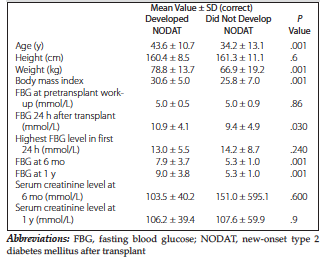
Table 1. Comparing Patients Who Developed New-Onset Type 2 Diabetes Mellitus After Transplant With Those Who Did Not
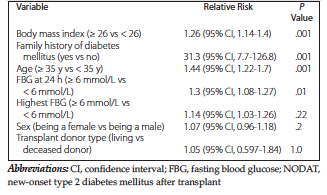
Table 2. Relative Risk of Fasting Blood Sugar at 24 Hours, Age, Body Mass Index, Sex, Type of Transplant, and Family History of Diabetes Mellitus in Development of New-Onset Type 2 Diabetes Mellitus After Transplant