Volume: 12 Issue: 4 August 2014
FULL TEXT
Objectives: There are numerous changes in inflammatory status that occur after a kidney transplant. Pentraxin 3 is a marker of inflammation, but little information is available about pentraxin 3 levels after a kidney transplant. We evaluated the relation between pentraxin 3 and other inflammatory markers including high sensitivity C-reactive protein, interleukin 6, and tumor necrosis factor α in kidney transplant recipients.
Materials and Methods: Adult patients (40 patients; aged, 18-80 y; mean age, 38 ± 10 y) who had a kidney transplant from living-related donors were studied. Patients who had comorbidities associated with chronic inflammation were excluded. Blood samples were obtained before starting immuno-suppressive treatment and 2 months after kidney transplant for measurement of pentraxin 3, high sensitivity C-reactive protein, interleukin 6, and tumor necrosis factor α levels.
Results: After transplant, mean levels of high sensitivity C-reactive protein and interleukin 6 decreased but levels of pentraxin 3 and tumor necrosis factor α did not change. There were significant correlations between interleukin 6 and high sensitivity C-reactive protein before transplant (r = 0.71; P ≤ .0001) and after transplant (r = 0.45; P ≤ .003). There was no correlation between tumor necrosis factor α and high sensitivity C-reactive protein before transplant, but there was a significant correlation between tumor necrosis factor α and high sensitivity C-reactive protein after transplant (r = 0.36; P ≤ .03). There was no correlation between interleukin 6 and pentraxin 3, tumor necrosis factor α and pentraxin 3, or high sensitivity C-reactive protein and pentraxin 3 before or after transplant.
Conclusions: After a kidney transplant, pentraxin 3 may not be useful in determining inflammatory status, and high sensitivity C-reactive protein may be better than pentraxin 3 as a marker of inflammation.
Key words : Chronic kidney disease, Inflammation, Interleukin 6, Tumor necrosis factor α
Introduction
Chronic kidney disease is characterized by chronic inflammation associated with increased morbidity and mortality. The chronic inflammation is evidenced by increased levels of C-reactive protein (CRP), interleukin 6 (IL-6), and fibrinogen and decreased levels of albumin and fetuin A.1 Causes of inflammation include primary kidney diseases, oxidative stress, malnutrition, immune activation by dialysis membranes, infections, and genetic factors.2,3 In addition, levels of IL-6 and tumor necrosis factor α (TNF-α) may be increased because of decreased renal clearance.
The cytokine IL-6 has proinflammatory effects and stimulates the synthesis of inflammatory proteins, activation of peripheral mononuclear cells, and differentiation of B cells. The cytokine TNF-α is a major proinflammatory cytokine that induces an acute phase response and activates adhesion and chemoattraction.
Early determination of inflammation is important in kidney transplant recipients who are at risk for graft rejection. Significant decreases in TNF-α, IL-6, and interleukin 21 levels may occur after kidney transplant in rats.4 In addition, IL-6 levels are strongly correlated with a malnutrition-inflammation score in patients after a kidney transplant.5 However, the effects of inflammation on graft function after a kidney transplant are unknown. The effect of inflammatory markers as predictors of acute rejection and graft failure has been studied.6,7 A study in IL-6 knockout rats showed longer graft survival and fewer episodes of rejection after a kidney transplant compared with normal rats.8 Increased urinary IL-6, tumor necrosis factor receptor 1, and vascular cell adhesion molecule 1 levels may predict early acute rejection.9
Pentraxins are a group of multimeric proteins that are involved in acute immunologic responses. Short pentraxins (CRP and amyloid P protein) are synthesized by the liver in response to inflammatory signals such as IL-6. Pentraxin 3 (PTX-3) is the prototype of long pentraxins (molecular weight, 440 kDa) and is produced in response to inflammatory signals in various organs and tissues including vascular endothelial cells, smooth muscle cells, macrophages, adipose tissue, and liver.10 It is present in renal proximal tubular cells, fibroblasts, and mesangial cells and it stimulates opsonization, degradation of apoptotic bodies, and activation of the complement cascade.11,12
The protein PTX-3 may reflect disease activity directly. The correlation between CRP and PTX-3 may be weak or not significant.13,14 In dialysis patients, PTX-3 levels are elevated and associated with albuminuria, endothelial dysfunction, and mortality.15-17 In addition, PTX-3 may have a more stable course than CRP.18 Cytokines, complement components, and fibrinolytic agents are released with the ischemia-reperfusion injury that occurs during transplant.19 However, the effects of PTX-3 during this injury have not been studied sufficiently.
In this study, we evaluated PTX-3 and high sensitivity CRP (hsCRP) levels and the correlation of these markers with levels of IL-6 and TNF-α, which have major roles in inflammation in kidney transplant recipients.
Materials and Methods
Patients
This was a prospective observational study performed with adult patients who had
kidney transplant from living-related donors from January to March 2012.
Consecutive kidney transplant recipients who had initial immunosuppression with
corticosteroids, tacrolimus, mycophenolate mofetil, and basiliximab induction
were selected for the study. Written informed consent was obtained from all
patients included in the study. Patients were excluded for age < 18 or > 80
years, comorbidities associated with chronic inflammation, chronic liver
disease, prior history of kidney transplant, malignancy, and absence of informed
consent. The study was approved by the local ethics committee, and the protocols
conformed to the ethical guidelines of the 1975 Declaration of Helsinki.
Data were recorded including patient age, sex, primary kidney disease (nephrosclerosis, chronic glomerulonephritis, chronic pyelonephritis, autosomal dominant polycystic kidney disease, amyloidosis, kidney stone disease, urologic problems, and unknown), dialysis type and duration before transplant, comorbidities (hypertension, diabetes mellitus, ischemic heart disease, and hyperlipidemia), history of smoking and alcohol use, and medical treatment. Body mass index and systolic and diastolic blood pressure were measured before transplant. Complications that occurred during the 2 months after transplant were recorded.
Serum and plasma samples were obtained before starting immunosuppressive treatment and 2 months after kidney transplant. Samples were measured for levels of glucose, urea, creatinine, uric acid, sodium, potassium, calcium, phosphorus, alanine aminotransferase, aspartate aminotransferase, parathyroid hormone, total protein, albumin, ferritin, leukocyte count, hemoglobin, hematocrit, platelet count, hsCRP, fibrinogen, PTX-3, IL-6, and TNF-α (Advia 2400 Chemistry System, Siemens AG, Erlangen, Germany) (ABX Pentra DX120, Horiba Medical, Montpellier, France). The hsCRP levels were measured with a turbidimetric method. Serum PTX-3, IL-6, and TNF-α levels were measured with a sandwich enzyme linked immunosorbent assay kit (Adipo Bioscience Inc., Santa Clara, CA, USA).
Statistical analyses
Statistical analyses were performed with SPSS software (SPSS: An IBM
Company, version 16.0, IBM Corporation, Armonk, NY, USA). Numerical parameters
were expressed as means ± standard deviation. Comparisons of groups for
parameters having normal distribution were performed with t test. Comparisons of
qualitative data were performed with a chi-square test. The Pearson product
moment correlation or the Spearman rank correlation was used to evaluate
correlations. Multivariate analysis was performed with linear regression.
Statistical significance was defined by P ≤ .05.
Results
There were 40 patients included in the study (Table 1). Most patients had dialysis before transplant (hemodialysis, 19 patients [48%]; peritoneal dialysis, 7 patients [18%]), and 14 patients (35%) had preemptive renal transplant. Baseline drugs included calcium channel blockers in 11 patients (28%), angiotensin-converting enzyme inhibitors in 3 patients (8%), acetylsalicylic acid in 3 patients (8%), β-blockers in 3 patients (8%), statins in 3 (8%) patients, and diuretics in 2 patients (5%). Nutritional supplements included vitamin D in 6 patients (15%), vitamin B12 in 4 patients (10%), and folate in 2 patients (5%).
There were no postoperative complications within 2 months after transplant in 37 patients. Postoperative complications in the other 3 patients included acute cellular rejection in 2 patients (including 1 patient who was treated with anti-thymocyte globulin because of resistance to steroid therapy) and hematoma formation at the incision site in 1 patient.
The laboratory studies showed a significant increase from before to after transplant in mean serum glucose, leukocyte count and platelet count and significant decrease in mean urea, creatinine, uric acid, potassium, calcium, phosphorus, total protein, albumin, high-sensitivity c-reactive protein (hsCRP), and IL-6 levels (Table 2 and Figure 1).
There were significant correlations between IL-6 and hsCRP before transplant (r = 0.71; P ≤ .0001) and after transplant (r = 0.45; P ≤ .003) (Figure 2). There was no correlation between TNF-α and hsCRP before transplant, but there was a significant correlation between TNF-α and hsCRP after transplant (r = 0.36; P ≤ .03). There was no correlation between IL-6 and PTX-3, TNF-α and PTX-3, or hsCRP and PTX-3 before or after transplant (Figure 3).
Discussion
There is need for markers that may quantify inflammation accurately in patients after a kidney transplant. The protein PTX-3 is an inflammatory marker that may be elevated in patients who have chronic kidney disease and may be associated with endothelial dysfunction, malnutrition, proteinuria, and increased mortality.15,16 Therefore, we evaluated PTX-3 as an inflammatory marker in kidney transplant patients before and after kidney transplant.
There are previous studies about the changes in inflammatory status after kidney transplant. In 23 patients who had kidney transplant, interleukin 2 and TNF-α levels decreased but IL-6 levels remained high after transplant.20 In another study, CRP, IL-6, interleukin 10, and TNF-α were decreased after transplant for 2 months.21 Another study showed decreased levels of IL-6 and TNF-α after transplant compared with the baseline values; CRP levels were decreased at 6 months and increased at 12 and 18 months after transplant.22 In the present study, IL-6 and hsCRP levels significantly decreased, but TNF-α and PTX-3 did not change after transplant (Table 2 and Figure 1).
In this study, we included only patients who had kidney transplant from live donors to avoid possible effects of the type of donor and immunosuppressive drugs used, and all included patients had the same immunosuppressive treatment protocol. The laboratory tests were performed at the end of the second month because the immunosuppressive therapy was decreased to maintenance levels at that time.
In critically ill patients who are admitted to intensive care units, PTX-3 levels are correlated with the severity of infection and disease, and PTX-3 may be better than CRP in determining the degree of tissue damage by infection and inflammation.13 In uremic patients, the relation between IL-6 and PTX-3 is stronger than the relation between IL-6 and CRP.15 In the present study, there were significant correlations noted between major inflammatory markers (IL-6 and TNF-α) and hsCRP, but there was no correlation between these markers and PTX-3. Therefore, the usefulness of PTX-3 as an inflammatory marker after a kidney transplant is questionable. The cytokine IL-6 was significantly correlated with hsCRP but not PTX-3 before and after transplant.
The protein PTX-3 is an acute phase reactant with the levels increasing from < 2 ng/mL to 200 to 800 ng/mL during endotoxemia, sepsis, and other inflammatory or infectious conditions. It reaches a peak level before CRP, and this may explain the absence of a correlation between PTX-3 and CRP in the present and previous studies.13,14
The major stimulus for PTX-3 production is IL-6, and the absence of a correlation between PTX-3 and other inflammatory markers may be related to immunosuppressive drugs. Glucocorticoid hormones have dual effects on PTX-3, inhibiting the production of PTX-3 in myeloid dendritic cells and increasing the production of PTX-3 by fibroblasts and endothelial cells.23 Mononuclear cells and dendritic cell are a major source of PTX-3 production.23 Therefore, when corticosteroid therapy is started and kidney transplant is performed, PTX-3 production may decrease because of lymphocyte depletion and may increase because of endothelial damage caused by surgical trauma. Further study is needed to evaluate PTX-3 levels in transplant recipients early and later after surgery. In addition, the effect of rejection on PTX-3 levels is unknown because of the small number of patients who had acute rejection in the present study. A previous study showed that PTX-3 expression in renal parenchyma may be increased during acute rejection episodes.24 The relation between PTX-3 levels and other immunosuppressive drugs is unknown.
The cytokines IL-6 and TNF-α are important in inflammation. Therefore, the absence of a correlation between PTX-3 and these markers suggests that PTX-3 may not be useful as a marker of inflammatory status in patients after kidney transplant. Measurement of hsCRP may be more useful than PTX-3, and further study is needed to determine the factors that affect PTX-3 production after a kidney transplant.
References:
- Honda H, Qureshi AR, Heimbürger O, et al. Serum albumin, C-reactive
protein, interleukin 6, and fetuin a as predictors of malnutrition,
cardiovascular disease, and mortality in patients with ESRD. Am J Kidney
Dis. 2006;47(1):139-148.
CrossRef - PubMed - Galle J, Seibold S, Wanner C. Inflammation in uremic patients: what is
the link? Kidney Blood Press Res. 2003;26(2):65-75.
CrossRef - PubMed - Himmelfarb J. Oxidative stress in hemodialysis. Contrib Nephrol.
2008;161:132-137.
CrossRef - PubMed - Cicora F, Roberti J, Lausada N, et al. Immunosuppression in kidney
donors with rapamycin and tacrolimus. Proinflammatory cytokine expression
[in Spanish].. Medicina (B Aires). 2012;72(1):3-9.
PubMed - Molnar MZ, Keszei A, Czira ME, et al. Evaluation of the
malnutrition-inflammation score in kidney transplant recipients. Am J Kidney
Dis. 2010;56(1):102-111.
CrossRef - PubMed - Stenvinkel P. Inflammation in end-stage renal disease: the hidden enemy.
Nephrology (Carlton). 2006;11(1):36-41.
CrossRef - PubMed - Butani L, Johnson J, Troppmann C, McVicar J, Perez RV. Assessment of
pretransplant inflammation in pediatric renal allograft recipients. Transpl
Int. 2005; 18(8): 949-953.
CrossRef -
PubMed 45 - Wang H, Guan Q, Lan Z, et al. Prolonged renal allograft survival by
donor interleukin-6 deficiency: association with decreased alloantibodies
and increased intragraft T regulatory cells. Am J Physiol Renal Physiol.
2012;302(2):F276-283.
CrossRef - PubMed - Reinhold SW, Straub RH, Krüger B, et al. Elevated urinary sVCAM-1, IL6,
sIL6R and TNFR1 concentrations indicate acute kidney transplant rejection in
the first 2 weeks after transplantation. Cytokine. 2012;57(3):379-388.
CrossRef - PubMed - Mantovani A, Garlanda C, Bottazzi B, et al. The long pentraxin PTX3 in
vascular pathology. Vascul Pharmacol. 2006;45(5):326-330.
CrossRef - PubMed - Nauta AJ, de Haij S, Bottazzi B, et al. Human renal epithelial cells
produce the long pentraxin PTX3. Kidney Int. 2005;67(2):543-553.
CrossRef - PubMed - Boehme M, Kaehne F, Kuehne A, et al. Pentraxin 3 is elevated in
haemodialysis patients and is associated with cardiovascular disease.
Nephrol Dial Transplant. 2007;22(8):2224-2229.
CrossRef - PubMed - Muller B, Peri G, Doni A, et al. Circulating levels of the long
pentraxin PTX3 correlate with severity of infection in critically ill
patients. Crit Care Med. 2001;29(7):1404-1407.
CrossRef - PubMed - Kovacs A, Tornvall P, Nilsson R, Tegnér J, Hamsten A, Björkegren. Human
C-reactive protein slows atherosclerosis development in a mouse model with
human-like hypercholesterolemia. Proc Natl Acad Sci USA.
2007;104(34):13768-13773.
CrossRef - PubMed - Tong M, Carrero JJ, Qureshi AR, et al. Plasma pentraxin 3 in patients
with chronic kidney disease patients: associations with renal function,
protein-energy wasting, cardiovascular disease, and mortality. Clin J Am Soc
Nephrol. 2007;2(5):889-897.
CrossRef - PubMed - Suliman ME, Qureshi AR, Carrero JJ, et al. The long pentraxin PTX-3 in
prevalent hemodialysis patients: associations with comorbidities and
mortality. QJM. 2008;101(5):397-405.
CrossRef - PubMed - Suliman ME, Yilmaz MI, Carrero JJ, et al. Novel links between the long
pentraxin 3, endothelial dysfunction, and albuminuria in early and advanced
chronic kidney disease. Clin J Am Soc Nephrol. 2008;3(4):976-985.
CrossRef - PubMed - Malaponte G, Libra M, Bevelacqua Y, et al. Inflammatory status in
patients with chronic renal failure: the role of PTX3 and pro-inflammatory
cytokines. Int J Mol Med. 2007;20(4):471-481.
PubMed - Silverstein DM. Inflammation after renal transplantation: role in the
development of graft dysfunction and potential therapies. Journal of Organ
Dysfunction. 2009;5(4):233-241.
CrossRef - - Lima JR, Salgado JV, Ferreira TC, Oliveira MI, Santos AM, Salgado Filho
N. Cystatin C and inflammatory markers in kidney transplant recipients. Rev
Assoc Med Bras. 2011;57(3):347-352.
CrossRef - PubMed - Simmons EM, Langone A, Sezer MT, et al. Effect of renal transplantation
on biomarkers of inflammation and oxidative stress in end-stage renal
disease patients. Transplantation. 2005;79(8):914-919.
CrossRef - PubMed - Cueto-Manzano AM, Morales-Buenrostro LE, Gonzáles-Espinoza L, et al.
Markers of inflammation before and after renal transplantation.
Transplantation. 2005;80(1):47-51.
CrossRef - PubMed - Mantovani A, Garlanda C, Doni A, Bottazzi B. Pentraxins in innate
immunity: from C-reactive protein to the long pentraxin PTX3. J Clin
Immunol. 2008;28(1):1-13.
CrossRef - PubMed - Imai N, Nishi S, Yoshita K, et al. Pentraxin-3 expression in acute renal
allograft rejection. Clin Transplant. 2012;26(Suppl 24):25-31.
CrossRef - PubMed

Volume : 12
Issue : 4
Pages : 295 - 299
DOI : 10.6002/ect.2013.0122
From the Departments of 1Nephrology, 2Internal Medicine, and 5Biochemistry,
Haseki Training and Research Hospital; the 3Department of Nephrology, Istanbul
University School of Medicine; the 4Department of Transplantation, Memorial
Hospital; and the 6Department of Nephrology, Bezmialem Vakif University, School
of Medicine, Istanbul, Turkey
Acknowledgements: This study was funded by the Istanbul Branch of the
Turkish Society of Nephrology. None of the authors have any conflicts of
interest.
Corresponding author: Meltem Gursu, Haseki Egitim ve Arastirma Hastanesi,
Nefroloji Klinigi, Adivar Caddesi, Aksaray, Fatih, Istanbul, Turkey
Phone: +90 505 295 3371
Fax: +90 212 529 4463
E-mail: drmeltemgursu@gmail.com
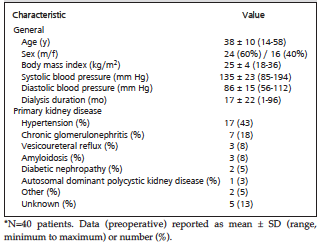
Table 1. Demographic and Clinical Characteristics Patients Who Had Kidney Transplant*
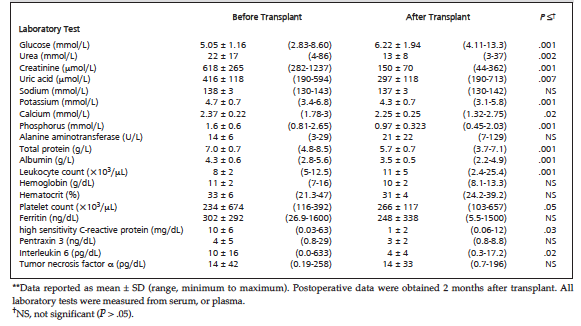
Table 2. Laboratory Tests in Patients Who Had Kidney Transplant*
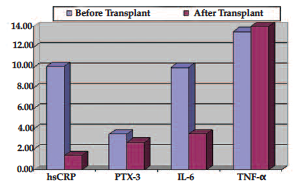
Figure 1. Graphic Presentation of Changes in Levels of hsCRP, PTX-3, IL-6,and TNF-αWith Renal Transplant
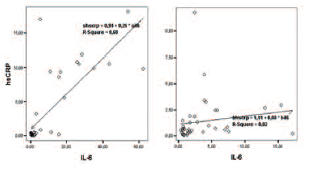
Figure 2. Correlation Between hsCRP and IL-6 Before and After Renal Transplant
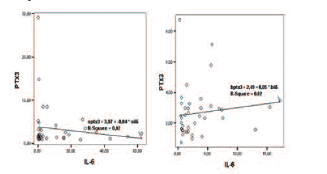
Figure 3. Correlation Between PTX-3 and IL-6 Before and After Renal Transplant