Volume: 12 Issue: 3 June 2014
FULL TEXT
Objectives: Portal vein thrombosis may complicate liver transplant. The purpose of this study was to analyze our cohort of transplanted recipients to evaluate the relation between preoperative portal vein thrombosis and patient and graft survival after liver transplant.
Materials and Methods: We retrospectively analyzed 209 patients who had liver transplant; 2 patients who had the diagnosis of portal vein thrombosis made during surgery were excluded. Patients were stratified in 2 groups according to whether they had (15 patients) or did not have portal vein thrombosis (192 patients) before liver transplant and were compared for early and late survival.
Results: In all 15 patients who had portal vein thrombosis, the Yerdel grade was I or II. Patients who had preoperative portal vein thrombosis had lower median survival (portal vein thrombosis, 47 mo; no portal vein thrombosis, 61 mo), frequency of total number of deaths (portal vein thrombosis, 4 [27%]; no portal vein thrombosis, 68 [35%]), and frequency of death within 3 months after transplant (portal vein thrombosis, 1 [7%]; no portal vein thrombosis, 23 [12%]). However, there was no significant difference between the 2 groups in patient or graft survival.
Conclusions: Low-grade portal vein thrombosis detected before liver transplant is not an absolute contraindication for liver transplant. Radiographic screening before liver transplant is recommended to minimize surgical difficulty.
Key words : Portal vein thrombosis, Liver transplant, Outcome, Thrombectomy
Introduction
Portal vein thrombosis is a potentially deadly complication of portal hypertension that may develop in cirrhotic patients. Portal vein thrombosis occurs in 2% to 15% candidates for liver transplant.1-3 Until 1985, portal vein thrombosis was an absolute contraindication for liver transplant.1,4 At present, portal vein thrombosis is not a contraindication for surgery, but it must be detected before liver transplant to minimize the risks of surgery. Furthermore, it is unknown whether the presence of portal vein thrombosis could compromise the early and late postoperative course in the liver transplant recipient.
The purpose of the present study was to evaluate the relation between preoperatively detected portal vein thrombosis and early and late patient and graft survival after liver transplant.
Materials and Methods
Patients
A retrospective analysis was performed for the 209 liver transplants performed
at Sapienza University of Rome from January 2001 to December 2009. The 2
patients who had the diagnosis of portal vein thrombosis made during surgery
were excluded from the analysis. Patients were stratified in 2 groups according
to whether they had (15 patients) or did not have (192 patients) portal vein
thrombosis before liver transplant. The 2 groups were compared for clinical
variables including early and late survival. The study was approved by the
Ethical Review Committee of the institute. All protocols conformed with the
ethical guidelines of the 1975 Helsinki Declaration. Informed consent was
obtained from all subjects.
Diagnosis and grading of portal vein thrombosis
During the waiting time before transplant, all patients were examined every 3
months to allow exclusion of any patients having contraindication for liver
transplant. Radiologic examination used to detect portal vein thrombosis
included magnetic resonance imaging, dynamic computed tomography, and Doppler
ultrasonography. Degree and extent of portal vein thrombosis were classified
according to the Yerdel grade: grade I, minimal or partial portal vein
thrombosis confined to < 50% vessel lumen; grade II, > 50% occlusion of the vein
including total occlusion; grade III, complete occlusion of portal vein and
proximal superior mesenteric vein thrombosis; and grade IV, complete portal vein
thrombosis and complete proximal and distal superior mesenteric vein
thrombosis.5
Statistical analyses
Data analyses were performed with statistical software (SPSS, version 16.0 for
Windows, SPSS Inc., Chicago, IL, USA). Survival was measured from transplant
until death or most recent follow-up. Survival curves were constructed using
Kaplan-Meier method and compared with log-rank test. Statistical significance
was defined by P ≤ .05.
Results
Patients who had or did not have preoperative portal vein thrombosis had similar ages, causes of liver failure, Model for End-stage Liver Disease score, graft and donor type, frequency of acute rejection, length of stay, and Clavien-Dindo classification (Table 1). Although median patient survival time and frequency of graft loss and death were lower in patients who had than did not have portal vein thrombosis (Table 1), log-rank test showed no significant difference between the 2 groups in patient or graft survival (Figure 1).
In the 15 patients who had portal vein thrombosis, most patients were in Yerdel grade I (Table 1). Treatment of portal vein thrombosis included thrombectomy in 10 patients and endovenectomy in 5 patients, and no vascular resection was performed. In all 15 patients, subcutaneous heparin prophylaxis was given for 6 weeks after transplant.
Discussion
In the early 1980s, portal vein thrombosis was considered a contraindication to liver transplant.1 Because the first patient had liver transplant despite having portal vein thrombosis,4 different technical options have been described for portal reconstruction.6-10 In patients who have partial portal vein thrombosis (Yerdel grade I or II), it is possible to perform a direct terminoterminal portal vein anastomosis after portal thrombo-endovenectomy.11 In the present patients, we observed only limited extension of thrombosis, and all patients consented to this surgical solution.
The 1-year patient survival in the present study (> 80%) is comparable with that reported previously (57% to 87%).12 In all patients, the grade of portal vein thrombosis reported by imaging studies was confirmed at surgery. The frequency of progression of portal vein thrombosis (12% to 64%)13,14 is associated with prolonged waiting time from the most recent imaging study to liver transplant; in the present study, the mean time from the most recent imaging study to liver transplant was 2.6 months (range, 1-7 mo), indicating good scheduling adopted in our preoperative liver transplant outpatient clinic.
In conclusion, Yerdel grade I to II portal vein thrombosis is no longer a contraindication for liver transplant. Patients who have Yerdel grade I to II portal vein thrombosis have early and late survival similar to patients who have no portal vein thrombosis. However, portal vein thrombosis remains a challenge for the surgeon when it is not diagnosed before surgery or when it extends during the time from the most recent imaging study to liver transplant. Routine examination before liver transplant is recommended to minimize surgical difficulty during transplant.
References:
- Germanova D, Lucidi V, Buggenhout A, et al. Liver transplantation in cases of
portal vein thrombosis in the recipient: a case report and review of the various
options. Transplant Proc. 2011;43(9):3490-3492.
CrossRef - PubMed - Orlando G, De Luca L, Toti L, et al. Liver transplantation in the presence of
portal vein thrombosis: report from a single center. Transplant Proc.
2004;36(1):199-202.
CrossRef - PubMed - Tao YF, Teng F, Wang ZX, et al. Liver transplant recipients with portal vein
thrombosis: a single center retrospective study. Hepatobiliary Pancreat Dis Int.
2009;8(1):34-39.
PubMed - Shaw BW Jr, Iwatsuki S, Bron K, Starzl TE. Portal vein grafts in hepatic
transplantation. Surg Gynecol Obstet. 1985;161(1):66-68.
PubMed - Yerdel MA, Gunson B, Mirza D, et al. Portal vein thrombosis in adults
undergoing liver transplantation: risk factors, screening, management, and
outcome. Transplantation. 2000;69(9):1873-1881.
CrossRef - PubMed - Van Thiel DH, Schade RR, Starzl TE, et al. Liver transplantation in adults.
Hepatology. 1982;2(5):637-640.
CrossRef - PubMed - Tzakis A, Todo S, Stieber A, Starzl TE. Venous jump grafts for liver
transplantation in patients with portal vein thrombosis. Transplantation.
1989;48(3):530-531.
CrossRef - PubMed - Varma CR, Mistry BM, Glockner JF, Solomon H, Garvin PJ. Cavoportal
hemitransposition in liver transplantation. Transplantation. 2001;72(5):960-963.
CrossRef - PubMed - Paskonis M, Jurgaitis J, Mehrabi A, et al. Surgical strategies for liver
transplantation in the case of portal vein thrombosis - current role of
cavoportal hemitransposition and renoportal anastomosis. Clin Transplant.
2006;20(5):551-562.
CrossRef - PubMed - Baker TB, Jay CL, Fryer JP, Abecassis MM. Transplant renoportal vein conduit
for complete mesenteric thrombosis: a case report. Am Surg.
2010;76(9):1016-1019.
PubMed - Pan C, Shi Y, Zhang JJ, et al. Single-center experience of 253 portal vein
thrombosis patients undergoing liver transplantation in China. Transplant Proc.
2009;41(9):3761-3765.
CrossRef - PubMed - Wu TH, Lin YS, Lee CF, et al. Clinical analysis and strategy for liver
transplantation in patients with pre-existing portal vein thrombosis. Chang Gung
Med J. 2011;34(4):426-434.
PubMed - Robles R, Fernandez JA, Hernández Q, et al. Eversion thromboendovenectomy in
organized portal vein thrombosis during liver transplantation. Clin Transplant.
2004;18(1):79-84.
CrossRef - PubMed - Dumortier J, Czyglik O, Poncet G, et al. Eversion thrombectomy for portal
vein thrombosis during liver transplantation. Am J Transplant.
2002;2(10):934-938.
CrossRef - PubMed

Volume : 12
Issue : 3
Pages : 238 - 240
DOI : 10.6002/ect.2013.0257
From the Department of General Surgery and Organ Transplantation, Umberto I
Policlinic of Rome, Sapienza University of Rome, Rome, Italy
Acknowledgements: GBLS and QL wrote the paper and analyzed the data; PBB and MR
participated in the critical evaluation of the paper. The authors have no
conflicts of interest to declare.
Corresponding author: Giovanni B. Levi Sandri, MD, Department of General Surgery
and Organ Transplantation, Umberto I Policlinic of Rome, Sapienza University of
Rome, Viale del Policlinico 155, 00161, Rome, Italy
Phone: +39 33 9700 4855
Fax: +39 6 4997 0401
E-mail:
gblevisandri@gmail.com
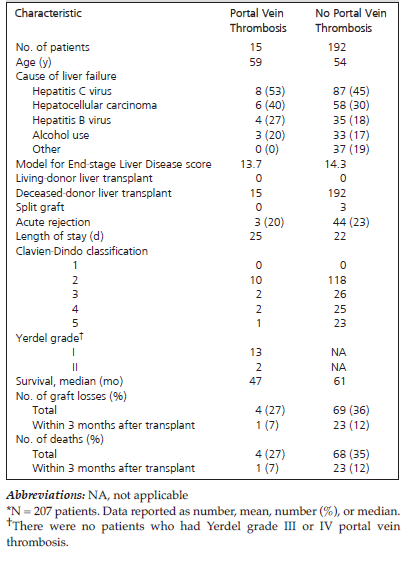
Table 1. Clinical Characteristics of Liver Transplant Recipients With And Without Preoperative Portal Vein Thrombosis*
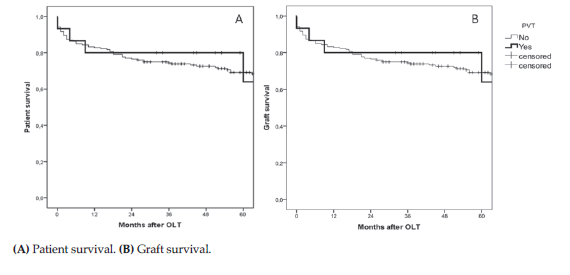
Figure 1. Patient and Graft Survival in Liver Transplant Recipients With And Without Preoperative Portal Vein Thrombosis