Volume: 12 Issue: 3 June 2014
FULL TEXT
Objectives: Erectile dysfunction is common after kidney transplant. The phosphodiesterase-5 inhibitors are the primary drugs for the treatment of erectile dysfunction. The purpose of this study was to evaluate the efficacy and safety of these drugs in the treatment of erectile dysfunction after kidney transplant.
Materials and Methods: Randomized controlled trials were identified and extracted from MEDLINE, the Web of Science, Cochrane Central, and reference lists. The database search, quality assessment, and data extraction were performed independently by 2 reviewers. Eligible studies were randomized controlled trials and quasi-randomized controlled trials. Treatment efficacy was assessed with the International Index of Erectile Function score.
Results: There were 3 studies identified that satisfied inclusion criteria. The International Index of Erectile Function score for phosphodiesterase-5 inhibitors increased ≥ 9 points compared with placebo (mean difference, 11.81; 95% confidence interval: 9.14-14.48; P < .00001). There were no differences between the phosphodiesterase-5 inhibitors and placebo in the incidence of adverse events, creatinine levels, or concentrations of cyclosporine or tacrolimus.
Conclusions: Phosphodiesterase-5 inhibitors are effective and safe in treating erectile dysfunction after kidney transplant. Phosphodiesterase-5 inhibitors do not cause changes in kidney function or immunosuppressive drug concentrations after kidney transplant and may be used as the first-line treatment for erectile dysfunction in kidney transplant recipients.
Key words : Cyclosporine, Sildenafil, Vardenafil, Tacrolimus, Tadalafil
Introduction
Erectile dysfunction (ED) is defined as the inability to achieve and/or maintain an erection sufficient for satisfactory sexual performance or intercourse.1 Erectile dysfunction is a sensitive topic that may cause feelings of embarrassment and shame. The frequency of ED in the general population is greater than previously believed, and the frequency is greater (50%) in uremic patients.2 Erectile dysfunction is an important medical problem that may affect quality of life and cause anxiety, loss of self-confidence, poor self-image, depression, and loss of self-esteem. The mental stress resulting from ED may affect the interaction of patients with family members and others.3
Erectile dysfunction is a complex sexual disorder with organic, psychological, or mixed factors. Men (25%-56%) may have persistent ED despite successful kidney transplant.2,4-6 Although some health care providers believe that kidney transplant may improve erectile function by improving endocrine, metabolic, and psychological problems, others have reported no improvement of erectile function after kidney transplant.7 Treatment of ED in kidney transplant recipients may require attention to (1) sexual function satisfactory to the patient; (2) avoiding interference with current or future function of a kidney transplant; (3) avoiding drug interactions; and (4) minimizing the risk of infection from treatment.8
The phosphodiesterase-5 (PDE-5) inhibitors sildenafil, vardenafil, and tadalafil are drugs used in treating ED. There is concern that PDE-5 inhibitors may cause drug interactions and may affect levels of immunosuppressive drugs and graft function after kidney transplant. The purpose of this systematic review and meta-analysis of published data was to determine the efficacy and safety of PDE-5 inhibitors in the treatment of kidney transplant recipients who have ED.
Materials and Methods
A literature search was performed independently by 2 reviewers with 3 electronic databases (MEDLINE, the ISI Web of Knowledge, and the Cochrane Central Register of Controlled Trials) from database setup to present. The following search terms were used to identify relevant studies: sildenafil or sildenafil citrate or Viagra, vardenafil or vardenafil hydrochloride or Levitra, tadalafil or Cialis, or mirodenafil or udenafil or phosphodiesterase type 5 inhibitors; renal transplant or kidney transplant; and erectile dysfunction or ED. In addition, we manually searched the reference lists of the identified reports, reviews, and other relevant publications. The inclusion criteria are as follows: Graft function was stable. Erectile dysfunction was not due to cardiovascular disease, trauma, and anatomic abnormalities. All titles and abstracts were screened by 2 reviewers, and selected articles (full text) were screened as needed. When more than one publication about a randomized controlled trial was found, only the paper with the most complete data was assessed. Differences about the search results were resolved by consulting a third reviewer.
Reported efficacy of PDE-5 inhibitors was evaluated from the International Index of Erectile Function (IIEF) score,9 and safety was evaluated from creatinine level, creatinine clearance, drug concentrations, and adverse events. Relevant data were extracted by 2 reviewers using the method of the Cochrane Center.10 The baseline and endpoint data were assessed in the meta-analysis. When data were missing, we attempted to contact the trial investigators to request the missing data. When missing data could not be obtained but the information in the study reports was sufficient, we estimated the missing results by calculating confidence intervals (CI), t statistics, P values, or variance for the experimental and control groups. When the missing data were not important or could not be obtained, the analysis was left blank. We evaluated heterogeneity using fixed-effects model when I2 < 50% or P > .1, or random-effects model when I2 > 50% or P < .1. Subgroup analysis was performed to evaluate heterogeneity. If the number of included literatures more than 5, publication bias was tested with software (STATA, StataCorp, College Station, TX, USA, Version 12).
Results
Literature review
In the 304 studies identified from the databases and manual search, there
were 3 randomized controlled trials (total, 172 patents) that satisfied
inclusion criteria for the meta-analysis (Figure 1).2,11,12 The 3
studies included studies of vardenafil (2 studies) or sildenafil (1 study)
against placebo (Table 1).2,11,12
Efficacy
All 3 studies reported the change in the IIEF score from baseline to endpoint.2,11,12
In 2 studies (total, 99 patients) that evaluated vardenafil against placebo, ED
was assessed using IIEF questions 1 to 5 and 15.2,12 In the study (64
patients) that evaluated sildenafil against placebo, ED was assessed using the 5
domains of the IIEF survey. Therefore, we used subgroup analysis to eliminate
heterogeneity. The IIEF score at the endpoint was 26.5 for vardenafil, 22.3 for
sildenafil, and 13.3 for placebo (both studies). The pooled mean change was 25
for PDE-5 inhibitors and 13 for placebo. The MD (mean difference) for change in
the IIEF score for PDE-5 inhibitor against placebo was 13.2 (95% CI: 12.1-14.3)
for vardenafil and 9.0 (95% CI: 7.4 10.7) for sildenafil. Pooling the data for
vardenafil and sildenafil demonstrated a benefit for a change in the IIEF score
from baseline in favor of the PDE-5 inhibitors (random-effects model; MD, 11.8;
95% CI: 9.1-14.5; P < .00001) (Figure 2).
Safety
Details about adverse events (such as headache, palpitations, flushing, and
dyspepsia) were reported in 2 studies (total, 103 patients).2,11 The
relative risk of adverse events for vardenafil against placebo was not
significant for vardenafil (relative risk, 1.27; 95% CI: 0.33-4.93, NS), but it
was significant for sildenafil (relative risk, 4.50; 95% CI: 1.05-19.22; P =
.04). There were 18 patients (PDE-5 inhibitor group, 13 patients [25%]; placebo
group, 5 patients [9.8%]) who had an adverse event. Pooling of the 2 studies
showed no statistical difference between PDE-5 inhibitors and placebo
(fixed-effects model; relative risk, 2.54; 95% CI: 0.97-6.62; I2 = 38%; NS)
(Figure 3). Only 1 patient discontinued treatment with sildenafil because of
adverse events (visual hallucinations).11
All 3 studies evaluated the change in creatinine level associated with PDE-5 inhibitors from baseline to the endpoint.2,11,12 Heterogeneity was not observed in the subgroup or overall analysis (I2 = 0%). The mean creatinine level at the endpoint was similar for vardenafil (107.8 μmol/L [1.22 mg/dL]), placebo (107.8 μmol/L [1.22 mg/dL]), sildenafil (130.8 μmol/L [1.48 mg/dL]), and placebo (123.8 μmol/L [1.40 mg/dL]). The pooled creatinine level was 115.8 μmol/L (1.31 mg/dL) for PDE-5 inhibitor and 114.9 μmol/L (1.30 mg/dL) for placebo. The MD in creatinine level for vardenafil was 0.00 mg/dL (95% CI: -0.14-0.14) and 7.1 μmol/L (0.08 mg/dL) (95% CI: -0.10-0.26) for sildenafil. Pooling the 3 studies showed no difference between the PDE-5 inhibitors and placebo (fixed-effects model; mean difference, 0.03; 95% CI: -0.08-0.14; NS) (Figure 4A).
The change in the creatinine clearance from baseline for vardenafil was evaluated in 2 studies (total, 99 patients).2,12 Heterogeneity was not observed in the analysis (I2, 0%). The mean creatinine clearance for vardenafil (70 mg/min) and placebo (74 mg/min) showed mean difference of the change -4.44 mg/min (95% CI: -10.34 to 1.46), and there was no significant difference between PDE-5 inhibitors and placebo (Figure 4B).
Cyclosporine concentration for patients who had PDE-5 inhibitors or placebo was reported in all 3 studies (total, 125 patients).2,11,12 The mean concentration of cyclosporine was similar between vardenafil (191 ng/mL) and placebo (197 ng/mL) and between sildenafil (91 ng/mL) and placebo (90 ng/mL). The pooled mean cyclosporine concentration for PDE-inhibitors was 142 ng/mL and 139 ng/mL for placebo. The mean difference for vardenafil was -6.21 (95% CI: -26.08-1.65; I2 = 39%; NS) and for sildenafil was 1.00 (95% CI: -4.00-6.00; NS). Pooling the data for vardenafil and sildenafil showed no significant difference between the PDE-5 inhibitors and placebo (fixed-effects model; mean difference, 0.57; 95% CI: -4.28-5.42; I2 = 5%; NS) (Figure 5).
Only 1 study (38 patients) reported tacrolimus concentration for PDE-5 inhibitors and placebo.12 The mean difference of the change was -0.99 ng/mL (95% CI: -1.63-1.45; NS) (Figure 6).
Discussion
Before kidney transplant, ED may be caused by organic damage from chronic renal failure and hemodialysis or emotional disorders. The treatment of ED may include psychotherapy, hormone therapy, vacuum constriction devices, corpus cavernosum injection with drugs or vasoactive factors, surgery, penile prostheses, and oral medication. Corpus cavernosum injection with vasoactive drugs has been used successfully in treating kidney transplant recipients who have ED, but oral drug treatment is more effective than penile injection.13
The PDE-5 inhibitors have been studied extensively in the general population, improve erectile response, and are well tolerated in men who have mild to severe ED from various causes.14 The most common adverse events include headache, flushing, dyspepsia, myalgia, and back pain. The risks of serious cardiovascular events and anterior ischemic optic neuropathy caused by PDE-5 inhibitors are not clear. The American College of Physicians has issued clinical practice guidelines and has recommended PDE-5 inhibitors for men who seek treatment for ED and who do not have contraindications to these drugs.15
The present results showed that PDE-5 inhibitors may significantly improve the IIEF score when compared with placebo. No significant difference was observed between kidney transplant recipients and non-transplant patients in the effectiveness of the PDE-5 inhibitors in treating ED. No statistically significant difference was observed in the incidence of adverse events between the PDE-5 inhibitors and placebo. In addition, immunosuppressive drug concentrations and graft function were similar between patients who received PDE-inhibitors or placebo.
The pooled mean IIEF score for PDE-inhibitors was 25.0 and for placebo was 13.29. Therefore, compared with the placebo groups, the IIEF score for patients who received PDE-5 inhibitors increased by ≥ 9 points. At present, an increase of 5 points is considered a clinically meaningful response.16 Therefore, the data suggest that PDE-5 inhibitors are an effective treatment for ED after kidney transplant. The Global Efficacy Questionnaire showed that 66% of renal transplant recipients believed that treatment had improved their erections (patients who were not transplant recipients, 73%).17 The PDE-5 inhibitors significantly may improve erectile function scores but they may not improve sexual desire or frequency.17-19
Calcineurin inhibitors (CNIs), including cyclo-sporine and tacrolimus, are immunosuppressive drugs that are used commonly after kidney transplant. These drugs are metabolized primarily by the cytochrome P450 enzyme (CYP3A4 and CYP3A5) in the liver and small intestine.20-22 Drugs the induce or inhibit CYP3A may change the pharmacokinetics properties of these immunosuppressive drugs. The metabolism of PDE-5 inhibitors occurs primarily by CYP3A4 in the liver, and PDE-5 inhibitors may affect the concentration of the immunosuppressive drugs.23 However, concomitant administration of PDE-5 inhibitors and CNIs does not cause significant changes in the blood levels of CNIs.17,20 Furthermore, the CNIs, which are substrates of CYP3A4, do not inhibit the metabolism of PDE-5 inhibitors.17 The present study showed no difference in cyclosporine or tacrolimus concentration between patients who received PDE-5 inhibitors or placebo, consistent with previous studies.22,24,25
The PDE-5 inhibitors are the first-line treatment for ED, and these drugs mostly are eliminated in stool (80%) and less frequently in urine (13%). The nephrotoxicity of CNIs is associated with renal vasoconstriction with nitric oxide, and PDE-5 inhibitors may increase glomerular filtration rate via nitric oxide.22 The present study showed no difference in mean creatinine between patients who received PDE-5 inhibitors or placebo. Previous studies reported changes in creatinine clearance (mg/min) between patients who received PDE-5 inhibitors or placebo, but there were no differences observed between the 2 groups in the present study.2,12
The strengths of the present study included the systematic search of medical databases, data extraction, analysis, and study quality assessment by 2 independent review participants. Limitations of the present study included the lack of large patient samples and long-term studies that evaluated treatment of ED in kidney transplant patients. There was 1 study that had a crossover design, and it was difficult to assess study quality because study methods were not reported adequately. Heterogeneity was observed for some outcomes. In addition, no trial provided a direct comparison of the different classes of PDE-5 inhibitors to determine the optimal drug for treating ED after kidney transplant. Therefore, treatment of sexual dysfunction in kidney transplant patients has received inadequate attention, and large multicenter clinical trials are needed for further evaluation of the efficacy and safety of PDE-5 inhibitors in the treatment of ED after kidney transplant.
In summary, PDE-5 inhibitors may improve ED and the IIEF score after kidney transplant. In the present study, the PDE-5 inhibitors and placebo had a similar frequency of adverse events. In addition, immunosuppressive drug concentrations and graft function were similar between patients who received PDE-inhibitors or placebo. Therefore, the present study suggests that PDE-5 inhibitors are effective and safe and may be used as first-line treatment for ED after kidney transplant.
References:
- NIH Consensus Conference. Impotence. NIH Consensus Development Panel on
Impotence. JAMA. 1993;270(1):83-90.
CrossRef - PubMed - Yang J, Ju W, Zeng FQ, Xiao YJ, Zhang XP, Xiao CG. Efficacy and safety of vardenafil for kidney transplant recipients with erectile dysfunction [in Chinese]. Zhonghua Nan De Xue. 2008;14(10):911-913.
- Rosas SE, Joffe M, Franklin E, et al. Association of decreased quality
of life and erectile dysfunction in hemodialysis patients. Kidney Int.
2003;64(1):232-238.
CrossRef - PubMed - Diemont WL, Vruggink PA, Meuleman EJ, Doesburg WH, Lemmens WA, Berden
JH. Sexual dysfunction after renal replacement therapy. Am J Kidney Dis.
2000;35(5):845-851.
CrossRef - PubMed - Malavaud B, Rostaing L, Rischmann P, Sarramon JP, Durand D. High
prevalence of erectile dysfunction after renal transplantation.
Transplantation. 2000;69(10):2121-2124.
CrossRef - PubMed - Salonia A. Sildenafil citrate: a safe and effective treatment for
erectile dysfunction after renal transplantation? Nat Clin Pract Nephrol.
2007;3(2):80-81.
CrossRef - PubMed - Kleinclauss F, Kleinclauss C, Bittard H. Erectile dysfunction in renal
failure patients and renal transplant recipients [in French]. Prog Urol.
2005;15(3):447-455.
PubMed - Barry JM. Treating erectile dysfunction in renal transplant recipients.
Drugs. 2007;67(7):975-983.
CrossRef - PubMed - Rosen R C, Riley A, Wagner G, Osterloh IH, Kirkpatrick J, Mishra A. The
international index of erectile function (IIEF): a multidimensional scale
for assessment of erectile dysfunction. Urology. 1997;49(6):822-830.
CrossRef - PubMed - The Cochrane Collaboration Handbook: Version 3.0. San Antonio Cochrane Center. 1996.
- Sharma RK, Prasad N, Gupta A, Kapoor R. Treatment of erectile
dysfunction with sildenafil citrate in renal allograft recipients: a
randomized, double-blind, placebo-controlled, crossover trial. Am J Kidney
Dis. 2006;48(1):128-133.
CrossRef - PubMed - Demir E, Balal M, Paydas S, Sertdemir Y, Erken U. Efficacy and safety of
vardenafil in renal transplant recipients with erectile dysfunction.
Transplant Proc. 2006;38(5):1379-1381.
CrossRef - PubMed - Martin-Morales A, Haro JM, Beardsworth A, Bertsch J, Kontodimas S; EDOS
Group. Therapeutic effectiveness and patient satisfaction after 6 months of
treatment with tadalafil, sildenafil, and vardenafil: results from the
erectile dysfunction observational study (EDOS). Eur Urol.
2007;51(2):541-550.
CrossRef - PubMed - Tsertsvadze A, Fink HA, Yazdi F, et al. Oral phosphodiesterase-5
inhibitors and hormonal treatments for erectile dysfunction: a systematic
review and meta-analysis. Ann Intern Med. 2009;151(9):650-661.
CrossRef - PubMed - Qaseem A, Snow V, Denberg TD, et al. Hormonal testing and pharmacologic
treatment of erectile dysfunction: a clinical practice guideline from the
American College of Physicians. Ann Intern Med. 2009;151(9):639-649.
CrossRef - PubMed - Carson CC, Hatzichristou DG, Carrier S, et al. Erectile response with
vardenafil in sildenafil nonresponders: a multicentre, double-blind,
12-week, flexible-dose, placebo-controlled erectile dysfunction clinical
trial. BJU Int. 2004;94(9):1301-1309.
CrossRef - PubMed - Barrou B, Cuzin B, Malavaud B, et al. Early experience with sildenafil
for the treatment of erectile dysfunction in renal transplant recipients.
Nephrol Dial Transplant. 2003;18(2):411-417.
CrossRef - PubMed - Seibel I, Poli De Figueiredo CE, Telöken C, Moraes JF. Efficacy of oral
sildenafil in hemodialysis patients with erectile dysfunction. J Am Soc
Nephrol. 2002;13(11):2770-2775.
CrossRef - PubMed - Rendell MS, Rajfer J, Wicker PA, Smith MD. Sildenafil for treatment of
erectile dysfunction in men with diabetes : a randomized controlled trial.
Sildenafil Diabetes Study Group. JAMA. 1999;281(5):421-426.
CrossRef - PubMed - Christ B, Brockmeier D, Hauck EW, Friemann S. Interactions of sildenafil
and tacrolimus in men with erectile dysfunction after kidney
transplantation. Urology. 2001;58(4):589-593.
CrossRef - PubMed - Roy JN, Lajoie J, Zijenah LS, et al. CYP3A5 genetic polymorphisms in
different ethnic populations. Drug Metab Dispos. 2005;33(7):884-887.
CrossRef - PubMed - Langtry HD, Markham A. Sildenafil: a review of its use in erectile
dysfunction. Drugs. 1999;57(6):967-989.
CrossRef - PubMed - Gresser U, Gleiter CH. Erectile dysfunction: comparison of efficacy and
side effects of the PDE-5 inhibitors sildenafil, vardenafil and tadalafil -
review of the literature. Eur J Med Res. 2002;7(10):435-446.
PubMed - Goldstein I, Krane RJ. Diagnosis and therapy of erectile dysfunction. In: Campbell’s Urology. 6th ed. Philadelphia, PA: WB Saunders; 1992:3071-3072.
- Warrington JS, Von Moltke LL, Shader RI, Greenblatt DJ. In vitro
biotransformation of sildenafil (Viagra) in the male rat: the role of
CYP2C11. Drug Metab Dispos. 2002;30(6):655-657.
CrossRef - PubMed

Volume : 12
Issue : 3
Pages : 184 - 189
DOI : 10.6002/ect.2013.0150
From the First Affiliated Hospital of Wenzhou Medical College, Organ
Transplantation Center, Wenzhou, Zhejiang, China
Acknowledgements: The authors have no conflicts of interest to disclose,
and there was no funding for this study.
Corresponding author: Xia Peng, The First Affiliated Hospital of Wenzhou
Medical College, Organ Transplantation Center, Wenzhou City, Zhejiang Province,
China
Phone: +86 1 380 669 8869
E-mail: pengxia602@gmail.com
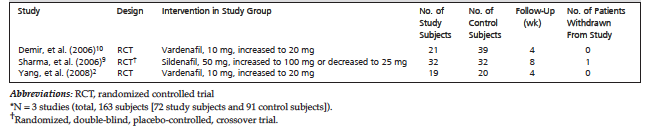
Table 1. Characteristics of Studies Included in the Meta-Analysis About the Use of Phosphodiesterase-5 Inhibitors To Treat Erectile Dysfunction in Patients Who Had Kidney Transplant*
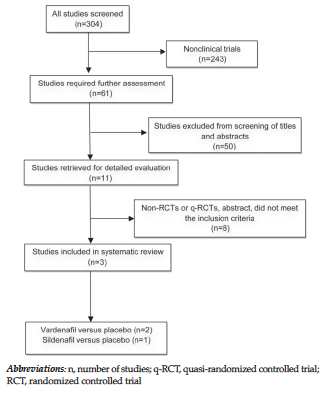
Figure 1. Flowchart of Literature Search and Identification of Studies for the Meta-Analysis
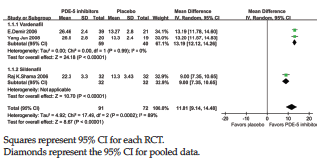
Figure 2. Forest Plot of Change in the International Index of Erectile Function Score from Baseline to Endpoint in Patients Who Had Erectile Dysfunction After Kidney Transplant
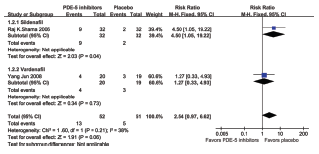
Figure 3. Forest Plot of Change in Adverse Events From Baseline To Endpoint in Patients Who Had Erectile Dysfunction After Kidney Transplant
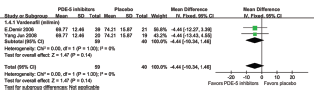
Figure 4A. Forest Plot of Change in Creatinine Level From Baseline To Endpoint in Patients Who Had Erectile Dysfunction After Kidney Transplant
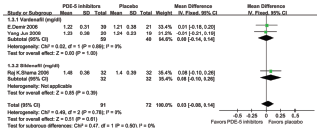
Figure 4B. Forest Plot of Change in Creatinine Clearance From Baseline To Endpoint in Patients Who Had Erectile Dysfunction After Kidney Transplant
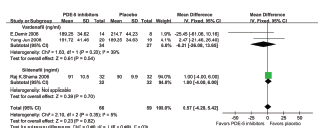
Figure 5. Forest Plot of Change in Cyclosporine Concentration From Baseline To Endpoint in Patients Who Had Erectile Dysfunction After Kidney Transplant
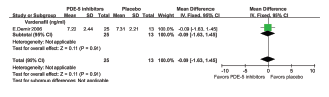
Figure 6. Forest Plot of Change in Tacrolimus Concentration From Baseline To Endpoint in Patients Who Had Erectile Dysfunction After Kidney Transplant